


Table of Contents
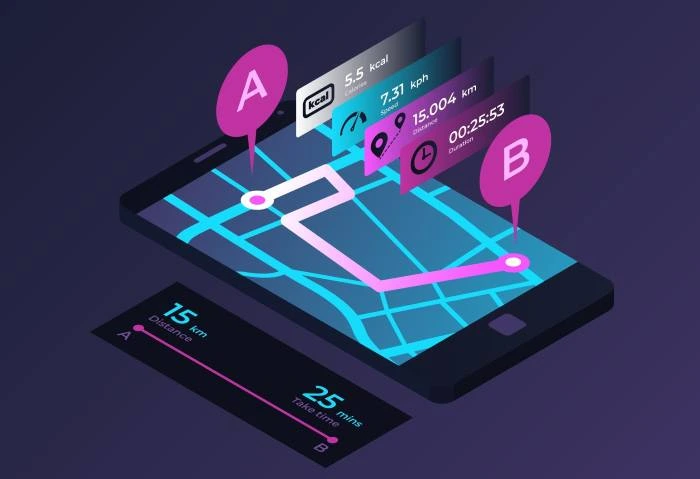
Route optimization is the process of creating an efficient directional plan from a point of origin and covering the specified locations. It is purpose-driven and can focus on generating the fastest, shortest, most fuel-efficient, or most cost-effective plan. In simple words, the traditional routing systems are rule-based and can deliver results in fixed formats.
AI route optimization makes it feasible for the system to adapt knowledge from every ride due to the capacity of analyzing the relative database. It considers real-time constraints like weather or traffic and also forecasts the possible shortcomings before putting out the output.
AI route optimization is an advanced technological integration of machine learning and predictive analytics with the tool. While the standard routing systems work on static conditions, the AI-powered tools can dynamically deliver results after analyzing the actual conditions and possibilities.
The algorithms working in the background can consider multiple conditions. It can reduce delivery time, save fuel consumption, avoid tolls, choose weather-friendly roads, and consolidate different criteria to ensure successful transit.
The AI route planner is a multi-faceted software. It has the capability to manage logistics in warehouses, driver assignment, optimizing delivery routes, in-house delivery service, fleet management, and handling various field services.
AI route optimization is the latest and most efficient mechanism for automating logistics and transportation tasks. Integration of artificial intelligence with the traditional routing system is proving beneficial, not just in task completion, but also in business enhancement.
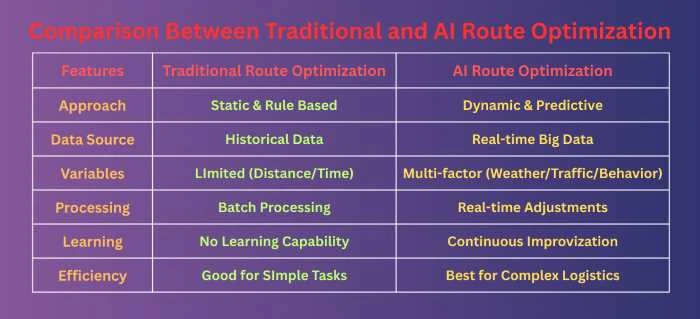
There are some notable advantages of having AI-powered route optimization software for fulfilling the logistics and transportation tasks.
What is ETA and ETD? Do they impact routing in logistics and transportation?
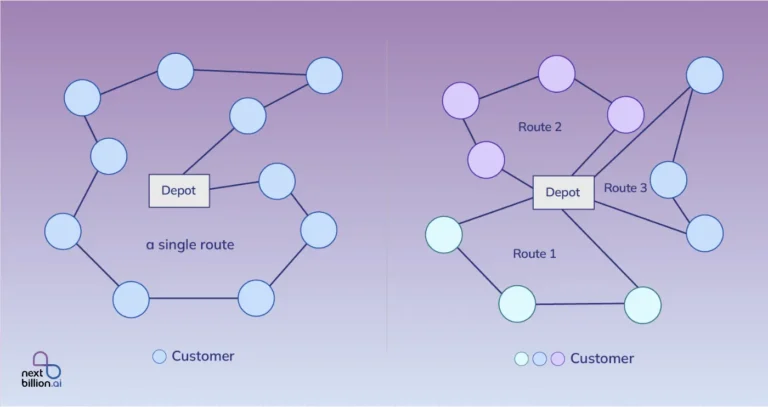
AI route optimization is a systematic process of designing a transportation path to cover multiple stoppages. The routes are thoughtfully generated without any manual intervention.
The AI-powered routing tool is way ahead of the programmed versions of the routing system because the algorithms learn continuously from the datasets and enhance on the basis of transitional requirements. It acts as an assistant that knows when to compromise with the slightly longer alternative route if the shorter one has multiple tolls or attracts seasonal traffic.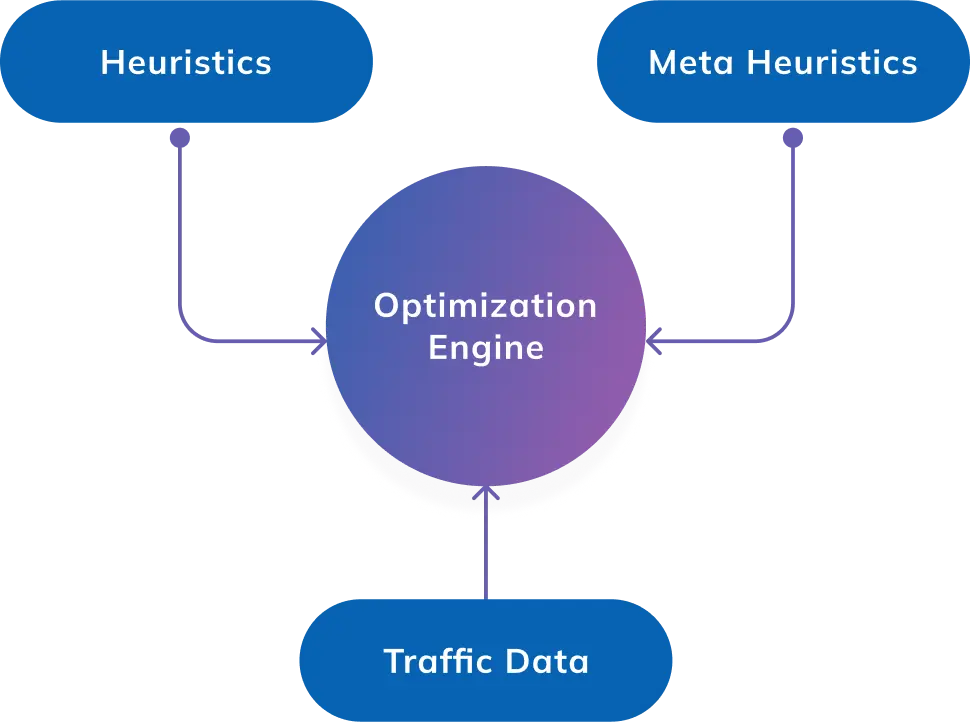
Algorithms working behind the AI routing systems create a meaningful solution for delivery data that can swiftly adapt to real-time scenarios. Here is a brief analysis of the process of AI route optimization software.
Also read: Why timezone-aware route optimization matters for global logistics?
It is critical to understand the essential components in AI routing that ensure trusted and efficient task completion. These elements complete the entirety of optimization with decisions that justify the accuracy of output and establish definite customer satisfaction.
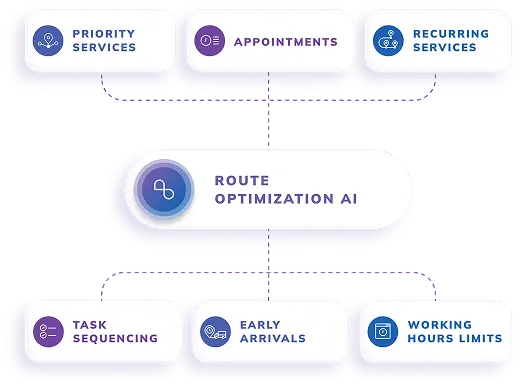
AI routing has definitive relevance in jobs that involve the movement of people or goods through different GPS locations in a calculated time frame.
Courier deliveries, supply chains, emergency services, NEMT, and essential public services like snow plowing are among the most common segments that deliver higher performance with the AI route optimization system.
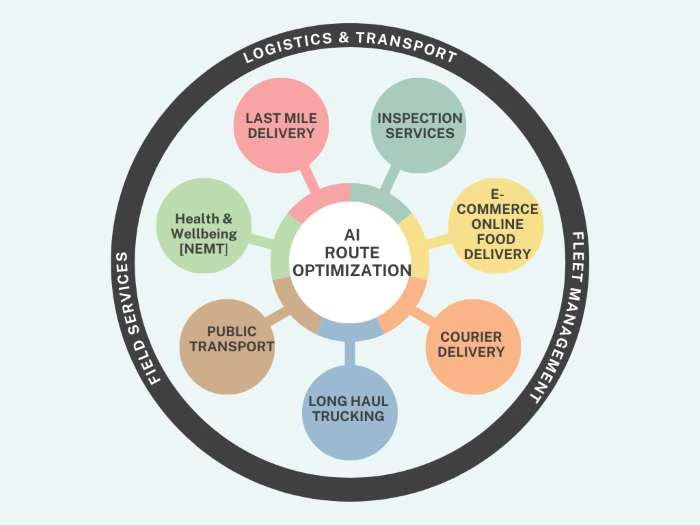
The pre-designed transit directions for last-mile deliveries, fleet operations, or field services focus on cutting distance, reducing travel time, asserting live scenarios on the road, or improving customer experience.
Also read: how to reduce last mile delivery costs using AI technology?
The logistics industry covers a vast scope in managing transportable goods from one place to another. But the role of AI route optimization is not limited to generating route plans. In fact, it serves in the entire operation, from receiving goods at the center to finally dropping them at the delivery point.
Retail, e-commerce, manufacturing, healthcare & pharmaceuticals, food, automotive, oil & gas, and agriculture are among the industries that have a dire need for AI route optimization.
The operational procedure of the logistics involves multiple steps where AI route optimization has a critical role in the overall deployment of the tasks.
Warehouse Glossary: Key Terms and Common Acronyms Explained
Goods and carrier service providers cannot depend on one or two delivery vans or trucks to fulfill the delivery targets. With a growing number of orders, it becomes evident for the companies to have a wide range of delivery vehicles in their fleet.
A group of vehicles attached to a service, usually for delivery purposes, is considered a fleet. There isn’t a particular category of vehicle. A fleet can have multiple delivery vans, trucks, bikes, etc. as a single unit for completing the transit orders.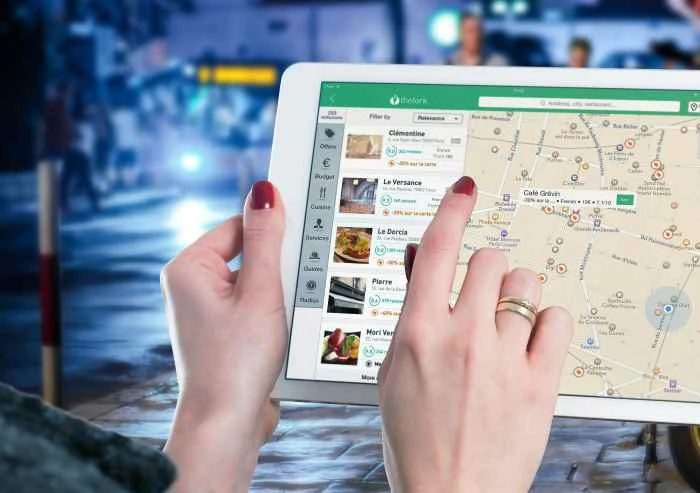
The logistics and transport industry runs 24/7. It means at any point in time some vehicles from the fleet are moving in the middle of their delivery journey, while others are waiting at any of the company’s hubs for their next call.
Therefore, a systematic approach automates the whole process of managing the fleets. The AI route optimization API effectively monitors the vehicles to improve their safety, efficiency, cost of ownership, and compliance.
The tool automates the whole process of fleet management and can be understood in a brief segmented review.
Read: Real-time Deviation Alerts: What they are and why every fleet needs them.
Field services are the prime subject of the AI route optimization system. Irrespective of whether the transportation involves delivery of products, transporting people from one place to another, or serving on the spot, the movement is considered under field services.
There is a wide scope for companies that are willing to choose a business plan and serve in the field rather than managing an office for sales or manufacturing. Online food or grocery deliveries are among the prominent business plans.
Likewise, pharmacy delivery, non-emergency medical transport (NEMT), on-road repair/maintenance of vehicles, road cleaning services, waste recycling, pipeline or gasline inspection teams, long-haul trucking, etc. are some of the common examples of field services.
Read about: Medical transport business: Requirements for NEMT provider
AI route optimization plays a critical role in the seamless management of field services.
NextBillion is among the fastest-growing AI-powered routing software with global footprints. We provide an enterprise-grade AI route optimization platform and serve businesses of all sizes. Within 5 years our company has emerged as an expert in the location technology and is trusted by startups and big brands like Xplor, Meditab, DB, F.W. Webb Company, and 150+ others.
We create next-generation, AI-powered mapping and routing solutions to meet the specific operational challenges of courier deliveries, warehouses, field services, and fleet management.
We offer a highly customizable and cost-effective tool that can handle complex logistics and transportation tasks with ease and reliability. Our flexible APIs can optimize mobility workflows, generate efficient route plans, and manage loads to dispatch fleets.
NextBillion.ai is offering a high-performing, AI-powered solution for leaders in the logistics and transportation industry. Our AI routing software serves long-haul and last-mile deliveries, manages field services to match perfect staff with the required skills, eliminates inefficient routes, minimizes transit costs, and ensures on-time deliveries.
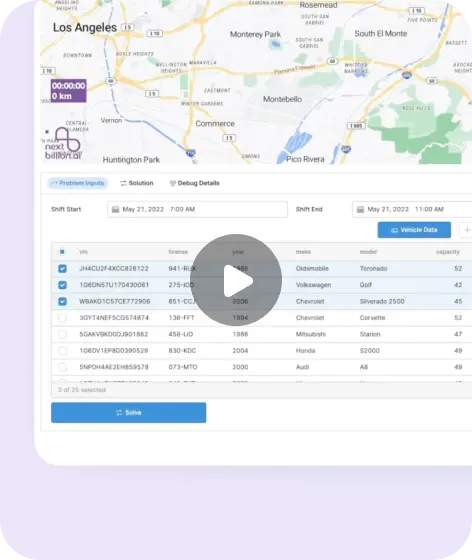
The NextBillion AI routing tool understands your fleet to plan optimized routes.
Also read: Role of AI and LLMs in Freight Permit Processing.
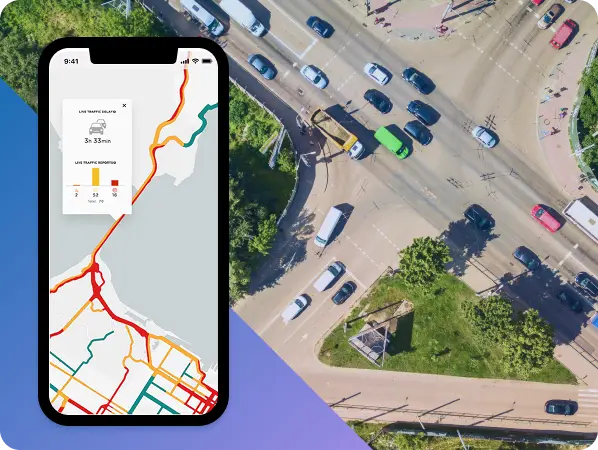
The AI route optimization system by NextBillion serves the entire operational activity of the logistics and transport business. We have also segmented the APIs to simplify task-specific workloads.
A brief analysis on the feasibility of NextBillion API solutions for various services and departments.
Route Optimization API
It is the core software in location technology, which meets the business requirements of generating efficient routes. It saves delivery time, fuel energy, and unrequited movement, while the routes are also safe and regulated.
Because our route optimization software is AI-powered, it can also think at the very moment in the middle of the transportation task. The tool decides itself to readjust the route plan in times of sudden traffic congestion or potential risk of road rush.
Even while handling logistical operations at the inventory, new parcels or packs of orders get quickly routed categorically to the racks.
Driver Assignment API
The Driver Assignment API is capable of analyzing the required driving skills for particular goods or people transport and accordingly assigns the best available driver to complete the task.
Its features include choosing drivers with matching skills who can handle the assigned vehicle on the road and can drive the required distance or travel time with ease.
It allows the drivers to take back-to-back trips while also acknowledging their shifts. The tool also suggests backup options in case of unavailability of the assigned driver. The assignments can be prioritized to match the high-value orders with preferred vehicles.
Clustering API
The role of the Clustering API is to put together the orders that are in close connectivity to each other. While this is just one constraint, the user or dispatcher can add situations like short distance, travelling time, or orders in a locality.
It finds a geolocation within each cluster from a chosen central point. The purpose is to supply the clustered orders at the central location from where they can be distributed to the customers.
The cluster algorithms can also identify a central point depending upon the constraints, which helps in swift logistics operations and optimizes the supply chain.
What is Supply Chain Route Optimization?
Directions API
The Directions API is helpful in field services for finding an optimal route between two specific locations. It can understand the real-time traffic conditions to find optimal routes and predict ETAs.
You can also review for safe and legal directions for a specific load or vehicle type. It can take suggestions to avoid U-turns, tolls, schools, etc.
Distance Matrix API
The Distance Matrix API is capable of finding the distance or arrival time between locations. It is not limited to one-to-one spots but can extract the required details in one-to-many and many-to-many formats.
It means that this powerful API can find the travelling distance and ETA from each origin to each destination. With the flexibility to compute up to 5000 X 5000 points, it can manage a high volume of use cases.
You can customize the route preferences for compliances, tolls, lanes, etc. with optimization for real-time and historical traffic data. It allows adding multiple constraints like travel modes, load types, vehicle specifics, etc.
Snap to Roads API
The API can snap the different locations on the map to analyze the connecting roads to these points. It helps in reviewing the most feasible route taken by delivery agents in the past to cover these locations. Additionally, it also provides the segment-wise speed limit of the preferred route.
Isochrone API
The Isochrone API is a perfect solution for extracting routes to the destinations that can be reached within a specific time frame from a particular location. It also showcases the points that have similar travelling distances from a certain point.
The results are displayed as contour lines on the map, and dispatch managers from logistics companies use the API to analyze the serviceable points within their range in respect of time or distance.
Navigation API
The Navigation API is highly beneficial for service providers working in the field to transport people and goods. The purpose of the tool is to provide an interactive route visualization to the drivers. It becomes easier to manage the fleet on specific delivery tasks.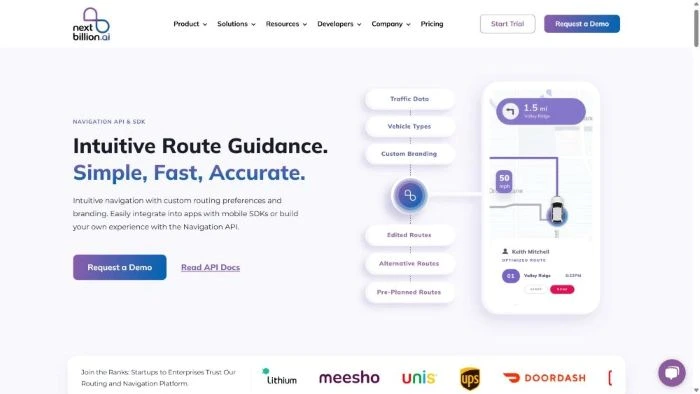
The Navigation SDK lets the developers add turn-by-turn navigation on the digital device. It is helpful in last-mile deliveries and various other field operations, as it lets the drivers receive accurate instructions to reach the destination.
The Navigation Flexible API is an additional functionality for precision, customization, and advanced navigation constraints. It fetches the live traffic feed with historical data to calculate the route along with vehicle-specific parameters and routing preferences.
Also read: 5 best route planner apps for Android
Route Report API
The Route Report API provides eminent knowledge about the past transportation assignments completed by the team. It lets the managers extract a detailed report about the specific routes taken by the drivers on each task.
You can find out the total distance covered between different locations, the time taken for task completion or between two or more points, the maximum speed in different segments, etc. The report can have segments on the basis of area, state, or country. It also tells you about the number of tolls, bridges, or tunnels and enables fine comparison between multiple routes.
Batch Routing API:
The Batch Routing API is a perfect solution for fleets waiting for their next transit assignments. It synchronizes the ERP data with the Isochrone API and provides multiple routing requests in a single step. During high volumes of delivery orders, the tool can enhance the routing process and dispatch the vehicles within the scheduled time.
Live Tracking API:
The Live Tracking API enables monitoring the fleet on the route. It is highly powerful in processing real-time data and provides an accurate status of the asset at the location.
Not just the managers but even the clients/customers can also track the position of the vehicle. Additionally, you can get alerts about the vehicles or drivers when they reach a particular point or are in close distance from the destination.
Geofence API:
The Geofence API is designed for fleet management, asset monitoring, and other logistics services in the field. It enables the dispatchers to create virtual walls on the route map to control the movement of the assigned vehicles.
Our API alerts the drivers when they cross the geofence with the vehicle and also notifies the dispatch managers about the event. It allows you to create boundaries of any shape and anywhere on the digital map. The logistics department at manufacturing centers can also control the movement of delivery vehicles in a specific area of the plant using the geofence technology.
Route Reconstruction API:
With the Route Reconstruction API, the dispatch managers can find out about the actual route taken by the driver between two waypoints. It helps to know the details like distance covered or geometry of the route during a completed trip.
Route Dispatch API:
The Route Dispatch API is an instant function for the dispatch managers to share the assigned routes with tasks, locations, breaks, and layovers directly with the drivers on their digital devices. It assists the drivers with transit instructions, proof of task completion forms, and route navigation.
Document API
The Document API enhances the feasibility of the routing task by enabling the addition of essential documents to the route plan. It provides templates to add fields like names and product types with validation rules like signatures or codes for generating proof of delivery forms at the delivery location.
Maps:
The Maps function enables creating interactive route maps for the drivers. The Vector Tiles API lets you add road names or places in the form of lines and points. The Raster Tiles API creates a grid format of pixels to add relevant images of the locations. The maps are displayed as a grid of images on the map-based platforms.
The Static Images API generates the actual image of the route map, which can be displayed directly on the web or mobile app without an interactive control.
Road Segments API:
The Road Segments API serves an important feature for the field services. It can extract detailed information about the road network within a specified geography or circulated area on the map. You can find out details like the list of roads, their shapes, midpoints, maximum permitted speed, and other such critical attributes.
Road Editor API:
The Road Editor API is offered with an enterprise plan for the Road Restriction Tool. It enables the dispatchers to add road restrictions or instructions for turnings, speed limits, closures, parking zones, etc. The route customization enables smooth navigation for the drivers.
Traffic Incidents API:
The Traffic Incidents API serves another prominent function for the logistics and transport industry. It provides real-time information about the updates, incidents, or newly added modifications on the road segments.
It is a powerful tool with the ability to provide a list of incidents or enable the search of incidents based on time slots or specific categories. You can virtually enclose an area and fetch all the events or changes and their impact on the traffic or time delays in the vehicle’s movement.
Places API:
The Places API can be used for searching unknown locations on the map, especially when limited information is available about their address.
The Forward Geocode API can extract the geo-coordinates of a place or an area.
The Reverse Geocode API provides the exact address from the given coordinates.
The Geocode Postcode API retrieves the coordinates from the postal code.
The Structured Geocode API can get the name of the place out of a structured address.
The Batch Geocode API can search multiple places with up to 100 queries in a single request.
The Multi-Geocode gives a breakthrough in special cases by showing the address and coordinates from multiple data sources.
The Autosuggest API suggests places from incomplete queries, while the Autocomplete API completes the possible locations to search from the entered queries.
The Places Lookup API finds the details of POI, address, or street by its unique identifier and provides postal details with coordinates, access points, contacts, etc.
The Discover API finds matching places from incomplete addresses, while the Browse API allows adding some filters for advanced search.
The Search Along Route API shows the point of interest near the travel path.