


Table of Contents
In earlier times, delivery processes depended on the route maps and the driver’s familiarity with the region. But the latest routing tools embedded with artificial intelligence are capable of generating optimized route plans to ease the delivery tasks. 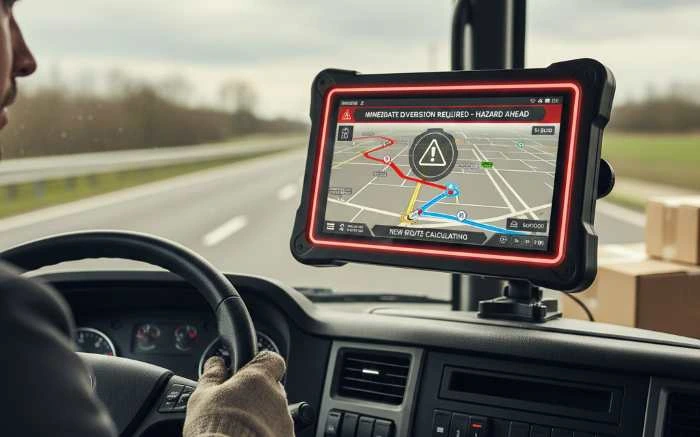
The drivers receive navigational instructions and are supposed to follow the directed path. Their movements can be tracked through the location tracking system, which is attached to every delivery vehicle.
The system is precisely programmed for live tracking the vehicle’s movement and uses telematics data with GPS technology to trace the vehicle’s location. The moment these vehicles move outside the permitted route, the real-time deviation alert system sends a notification to the load dispatch team.
And without wasting a second, the team can connect with the drivers to inquire about the issue.
Also read: Role of AI and LLMs in Freight Permit Processing.
Logistics companies have a standard policy for the field jobs, such as, keeping eight to ten hours of working, adding stoppages for refueling or food, load optimization, safe handling, etc.
The dispatch managers provide assistance in the form of route maps and instructions. They need to ensure that parcels or products stay intact and the delivery vehicles move safely without breaking the regulations.
But vehicles not following the directed road networks can have multiple repercussions over service costs, delivery schedules, load safety, vehicle performance, etc.
Some common issues are faced after route deviation of delivery vehicles that significantly impact the logistics and transportation business.
Cost enhancement: Logistics companies use route optimization tools to generate highly cost-effective route plans. Vehicles deviating from the instructed direction may directly impact the profit margins of the company.
Instant notification through the real-time deviation alert system lets the dispatch managers inquire about the reason for the deviation. Timed action and instructions to the drivers can definitely save excessive charges.
Read: How to reduce last-mile delivery costs using AI technology?
Safety & Security: Load and vehicle security are among the prime considerations of the routing tools when generating an optimized route for the delivery task. There are multiple security risks if a delivery vehicle deviates from the selected path.
Real-time deviation alerts assure the dispatchers about the security of the cargo. Even if the drivers change the route for any reason, the system notifies the office, and they can instantly connect to the drivers to find out the valid reason. The team can still assist the drivers to join a safe point as soon as possible and instruct them on further steps.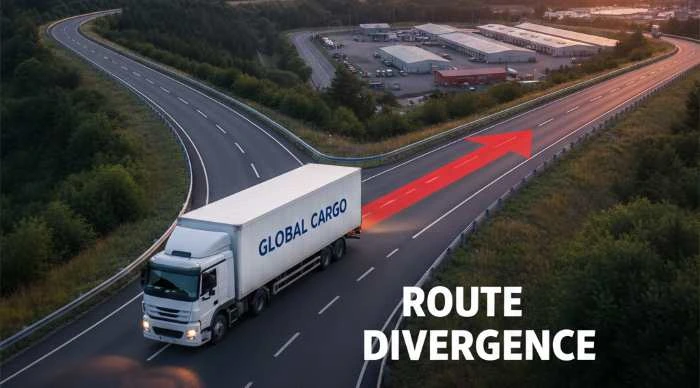
Delayed delivery: The route optimization APIs integrated with the telematics data can assess the targeted deliveries on the task. It calculates the possibility of successful deliveries through each unit of delivery vehicle and creates an accurate transit plan, which includes waiting time, refueling, etc. Alternate routes can potentially put you far from one or more delivery locations and thus delay them.
Real-time deviation alerts give sufficient time to the dispatch team to analyze the alternate route, and they can use the routing tool immediately to generate a new plan. They can notify the customers about the delays and share an updated ETA. The delivery receivers can readjust their time slots as per the updated information and stay available for the delivery agents.
Also read: What is ETA and ETD: Do they impact routing in logistics and transport?
Regulatory issues: Commercial vehicles do not always have permission to move on regular routes. Usually 18-wheeled trucks or bigger delivery vehicles need a license from the FTA and DOT to comply with the permitted hours for transit. The government transport departments make the regulations to control the traffic movement while ensuring the safety of the region.
Real-time deviation alerts are highly critical in such cases when random route changes can create havoc situations for the drivers and ruin the delivery schedules. The dispatch managers can acknowledge route deviation timely and avoid further troubles with permits and Hazmat risks.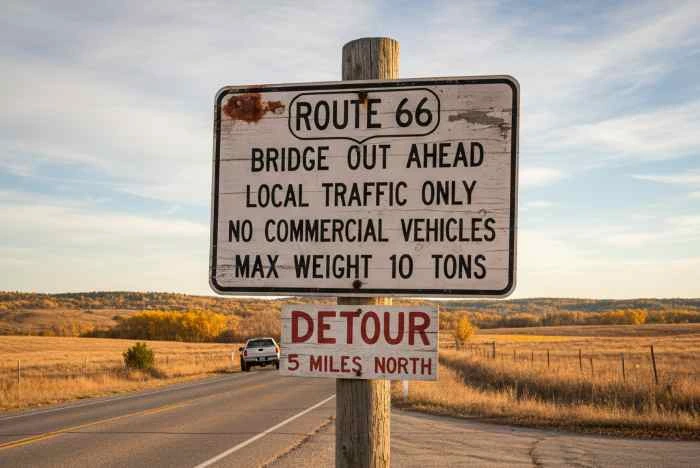
Driver’s accountability: Once the delivery tasks are assigned to the drivers, they stand accountable for successfully completing the delivery schedules. Deviating from the navigation route has multiple consequences, and drivers are directly answerable for violating the instructions of the dispatch manager.
With the route deviation alert system, the dispatch team can confront the drivers the moment they tend to turn on a different path. They can inquire about the reason or warn them before they make a mistake.
Route improvisation: AI-powered routing tools learn and adapt knowledge from large data sets. Every route plan and real-time assessment while on the journey adds a parameter to get better after each task. Hence, the route chosen by the tool is genuinely the most efficient and suitable plan, and deviating from the route would most probably be a wrong decision of the drivers.
Real-time route deviation alerts can help recover from the crisis by letting the dispatcher analyze the problem and reroute the task.
NextBillion perfectly understands the business essentials of logistics and transport companies. It provides API solutions that are thoughtfully segmented to automate the delivery process and generate complete control for the managers.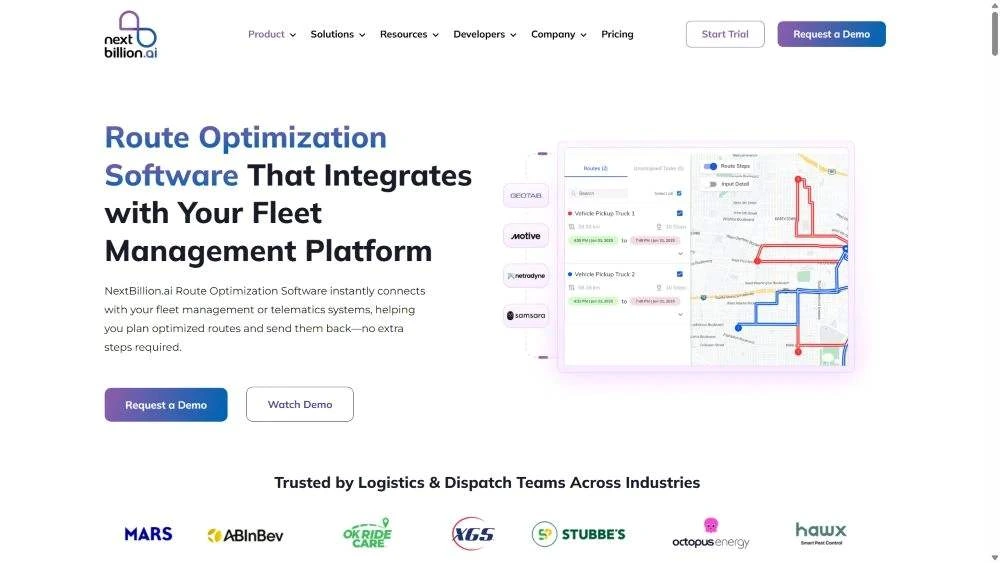
The live-tracking and geofences API deliver credible results in managing and monitoring the fleet movements. There are different segments of tools, which are significantly designed to create systematic improvements in detecting the vehicle on the pre-established path.
The procedures are transparent and continuous, leaving behind zero percent possibility of the vehicle going off the route. Even a slight deviation gets notified at the dispatch center and the authority can take instant action on the task
NextBillion route optimization API is the leader in logistics tech. We are working globally with a wide range of logistics clients and have been serving in the industry for more than half a decade now.
Our routing tool assists in managing loads, delivery schedules, and efficient transportation. It also facilitates the administrators to monitor the movements of the cargos and control the entire procedure from the central point.
NextBillion offers an AI-powered routing tool to generate route plans. It learns from past trips, preferences, stop sequences, and other factors to enhance the performance.
The tool enables locating the exact movement of the delivery vehicles while they are on the task. It is highly capable of sending real-time deviation alerts to the dispatch department whenever the driver turns to an unplanned road network. We have significant API solutions for route assessment and delivery management. The dispatch manager can utilize them to readjust the task before it is too late.
Route Optimization API:
Route Optimization API is the core routing solution for logistics businesses and assures the dispatchers generate a foolproof transit plan for the delivery vehicles. The tool keeps gathering analytical data from each trip and assesses live traffic data, locations, weather, and delivery conditions. 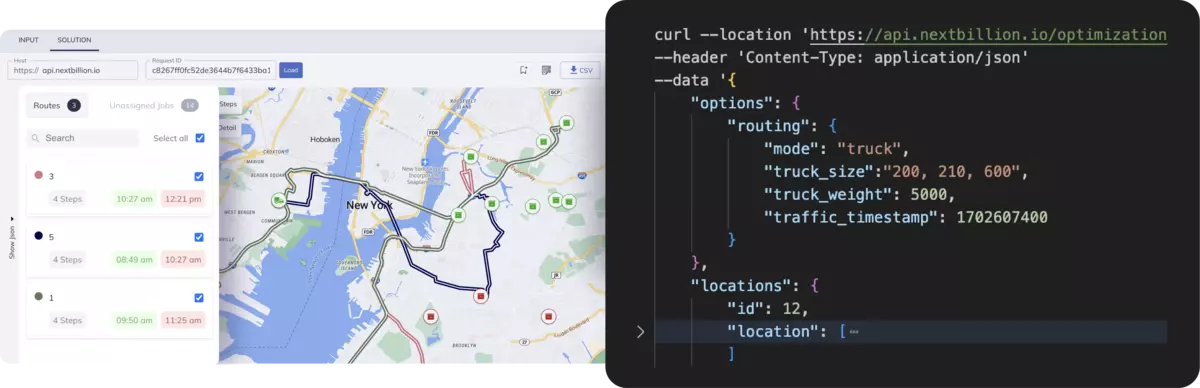
There are minimal chances of route flaws until an unprecedented situation appears that potentially disturbs the swift movement on the chosen road.
If the driver has diverted the vehicle away from the given plan without any convincing reason, you can ask them immediately to turn back and join the route.
But if the route deviation is genuine, you can recalibrate the whole task within seconds. It would not just find the new and effective route to fulfill the deliveries but also ensure that the route is safe and legally permissible.
Driver Assignment API:
The Driver Assignment API can fetch the details about the drivers. It has critical parameters about the driver’s attendance, availability for the route, total working hours per week, route experience, and other factors.
After the route deviation, you can still save the trip by analyzing the ability of the driver and automating the assigning process. You can reassign the task to the same or a different driver who can better perform in difficult conditions.
Clustering API
The Clustering API is designed to simplify the delivery process. It creates multiple groups of the orders based on the area, zones, load type, or other constraints chosen by the dispatch team. They can separate orders with critical permits, specific delivery dates, or locations with accessibility time slots. 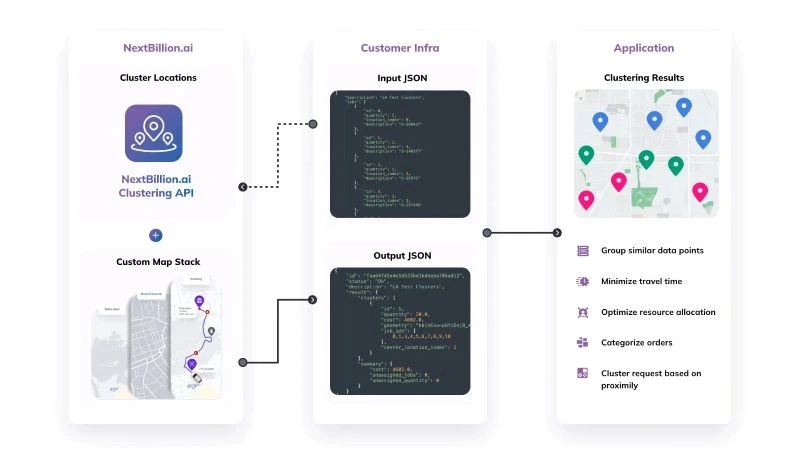
If the driver deviates from the optimized route, you can use the cluster API to segregate orders. It becomes easier to find out orders that are quickly reachable without violating the rules. You can fix the maximum orders that can possibly be scheduled from the changed route and cluster them according to their location, building, or region.
Directions API
The Directions API helps in generating the most efficient route between two destinations. It facilitates looking up the shortest, fastest, legally permitted (in case of HAZMAT), or traffic-free movement towards a chosen destination.
After deviating from the optimized route plan for any critical reason, the delivery driver needs accurate instructions to reach a point from where they can rejoin the original route plan and complete the delivery task. The dispatch team can use the Directions API to get the closest path to reach the pending delivery location.
The first destination could be the central point in the cluster at which the driver can request a new optimized route to cover all the delivery locations.
Distance Matrix API
It can analyze a large matrix of data, usually 5000X5000, and generate an optimized route between any two spots. Often the delivery drivers deviate from the route and get clueless about choosing a location from where maximum deliveries can be completed.
With the Distance Matrix API, it becomes feasible to find the optimum points of the delivery orders that should necessarily be completed.
Snap-to-Road API
The concept behind the Snap-to-Road API is to take a virtual record of the path taken by delivery vehicles during a task completion. The information gathered is beneficial in cases when the locations and routes are difficult for transportation.
Often dispatchers find it troublesome to assign huge delivery trucks on a particular route. In such cases, delivery trips that are documented and snapped properly can provide sufficient information to improvise on past failures and comfortably cross the potential barriers.
With the Snap-to-Road API, you can reroute the delivery vehicles that deviated from the path for any reason. You can learn about the issues that befell the new route during an old delivery transportation. It would help manage another route to avoid further deviation while fixing the pending orders.
Isochrone API
The Isochrone API helps in spotting the locations that are similar in distance from the delivery vehicle’s position or can be reached within the same timeframe.
You can use the Isochrone API to point out urgent deliveries and their accessibility from the deviated route. The drivers can take the guidance to target locations that are closer in distance or take less time to reach.
Navigation API
The Navigation API is an essential tool for logistics and transportation businesses. It enables the dispatchers to add route navigation on a digital device, and the drivers can conveniently follow the directed path to reach a particular destination.
The tool adds a live navigation facility on a virtual map, which significantly reduces the stress and efforts of the drivers in completing the delivery tasks. You can also manage constraints like vehicle-specific navigation to actualize the feasibility of weighted or HAZMAT movement on a regulated route.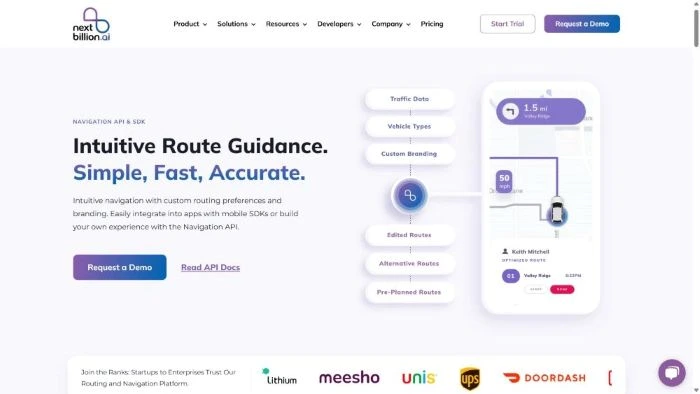
NextBillion provides a Drivers App for mobile accessibility and additionally offers an SDK file to let the logistics company personalize the route navigation experience.
The dispatch team receives notification from the real-time deviation alert system and instantly tracks the position of the drivers to add further instructions. Drivers can review the newly added routes and freely navigate to reach the destination from an alternate path.
Route Report API
The Route Report API is an essential tool, as it provides a complete report of the delivery trip. The report has information about travel time, distance covered, number of turns, tolls, tunnels, etc. It also gives details about the stoppages or turns taken by the driver.
You can review the report for complete details about the journey and investigate why the driver changed the route.
Live Tracking API
Live tracking is another prominent tool for the logistics and transportation industry, as it enables finding the exact position of the delivery vehicles in real-time. The dispatch team can continuously monitor the movements of the vehicles and know the behavior or travelling pattern of the drivers.
While the real-time deviation alerts keep the team informed about the transit issues, they can simultaneously have dedicated staff to track the vehicles and not wait for the notifications.
Geofence API
The Geofence API has a critical role in building a virtual wall for the transit vehicles, making them move only on the set path. It is a parallel tool for a real-time deviation alert system and has the purpose of limiting the vehicle’s movement inside the wall. Whenever the driver changes the route, the tool will alert them and also notify the back office. The dispatch team at the center can connect with the driver and assist them quickly to get on the right track.
Route Reconstruction API
The role of the Route Reconstruction API is in recreating the entire journey of the delivery vehicles. It serves the purpose of research and analysis once the task is completed. The office staff can study the pattern of vehicle’s movement, distance covered between two spots, travelling time, etc.
When the delivery driver genuinely has to change the route while fulfilling the task, the team can find out later about a feasible route to reach the client and avoid further troubles for the drivers.
Route Dispatch API
The Route Dispatch API lets the dispatch staff share the complete instructions about the delivery task directly on the driver’s mobile device. They can additionally share essential documents, licenses, or proof-of-delivery forms along with the route plan, which the drivers or delivery agents can access digitally.
In case of route deviation, the team can contact the drivers for taking new instructions and share updated route plans on their devices. If required, they can also send permits that are required on the new route plan and avoid regulatory issues.
Documents API
The Documents API is useful for transit and delivery businesses, as it allows creating digital forms. These forms or proof-of-delivery templates can be uploaded directly along the route plan.
After missing the original route and driving through a different path to fulfill the orders, the drivers can request essential documents such as delivery proof forms, cancellation requests, or acknowledgments for late deliveries.
Maps API
The Maps API is a tool to generate an advanced version of the route maps to assist the delivery agents in their task. It has vector tiles, raster tiles, and static images featured for making the maps informative.
You can add specific location names or images of specific locations, such as actual images of the bank, hospital, or school. When the driver moves across these places, it becomes easier to find a particular delivery location.
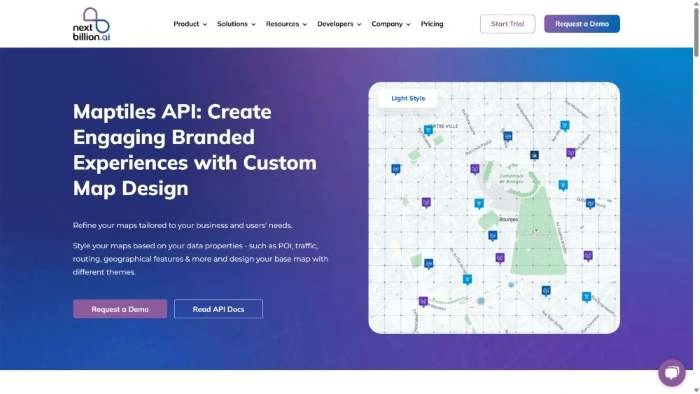
If an inexperienced driver accidentally deviates from the route, you can make the navigation map more interactive to let the person find the places comfortably.
Road Segment API
The Road Segment API has multiple usages for the delivery drivers and dispatch team. It enables making virtual segments of an area and looking for information like names of roads, central points, speed limits, driving directions, number of lanes, etc. You can make a square or circular shape on the route map to get the details.
If the delivery vehicle deviates from the route and moves in an unknown road network, you can quickly use the Road Segment API to find out where they are moving. You can instruct them to be careful about certain clauses or places, or instruct them to find a location on a particular road.
Road Editor API
The Road Editor API is primarily used for adding transit instructions on the navigation map. You can guide the drivers to drive slowly in front of the school and wait till 8:00 PM before entering the highway, making U-turns, parkings, etc.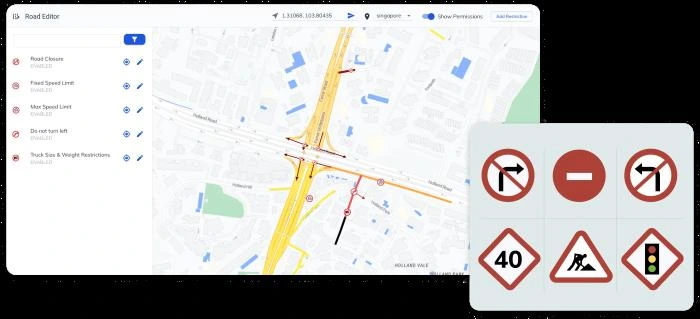
It is highly beneficial if the delivery vehicle has entered a restricted zone after deviating from the route, and the driver needs quick instructions to move safely and regulated on an unfamiliar route.
Places API
The Places API acts as a powerful tool in locating different places on the map that are otherwise not searchable on the route map. This tool can fetch the destination’s geo coordinates from the latitude/longitude details, incomplete address, or landmarks.
You can use the Places API tool when the driver has deviated from the original route. It can locate specific delivery destinations and get a suitable route to cover them.