

- BLOG
Route Optimization for Solid Waste Management – Ultimate Guide in 2026
Published: June 21, 2024 | Updated: December 18, 2025
Route Optimization API
Optimize routing, task allocation and dispatch
Distance Matrix API
Calculate accurate ETAs, distances and directions
Directions API
Compute routes between two locations
Driver Assignment API
Assign the best driver for every order
Routing & Dispatch App
Plan optimized routes with 50+ Constraints
Product Demos
See NextBillion.ai APIs & SDKs In action
AI Route Optimization
Learns from Your Fleet’s Past Performance
Platform Overview
Learn about how Nextbillion.ai's platform is designed
Road Editor App
Private Routing Preferences For Custom Routing
On-Premise Deployments
Take Full Control of Your Maps and Routing
Trucking
Get regulation-compliant truck routes
Fleet Management
Solve fleet tracking, routing and navigation
Middle Mile Delivery
Optimized supply chain routes
Construction
Routes for Construction Material Delivery
Oil & Gas
Safe & Compliant Routing
Food & Beverage
Plan deliveries of refrigerated goods with regular shipments
Table of Contents
Route optimization in solid waste management is the process of making waste collection as efficient as possible for the waste vehicle. It helps logistics companies increase their operational efficiency, reduce fuel consumption, and minimize the risks of delays in collecting solid waste.
In 2025, solid waste management faces increasing demands for efficiency, cost-effectiveness, and sustainability. Route optimization has emerged as the best solution to streamline waste collection processes.
In this article, I have explained how solid waste management operations can achieve greater efficiency and contribute to a cleaner, more sustainable future by implementing route optimization.
Route optimization in solid waste brings numerous advantages that enhance the overall operations. Some of the key benefits are:
Route optimization in solid waste management significantly reduces operational costs. One of the primary benefits is fuel savings, as optimized routes mean waste collection vehicles travel fewer miles, directly reducing fuel consumption and extending vehicle lifespan due to less wear and tear.
Shorter and more efficient routes enable waste collection crews to complete tasks in less time, reducing overtime and labor costs. This efficiency allows for better allocation of human resources. Additionally, with less wear and tear on vehicles, maintenance costs and the need for repairs are reduced, further lowering expenses in waste management.
Optimized routes create consistent and reliable collection schedules, enhancing predictability for residents and businesses and ensuring waste is collected regularly and on time. This increases customer satisfaction.
In emergencies or special requests, optimized routing allows for quicker, more flexible responses. By systematically covering all areas and optimizing paths, the likelihood of missed collections is significantly reduced, ensuring timely waste collection.
Route optimization enhances operational efficiency in waste management. Advanced tools dynamically adjust routes in real-time based on traffic, road closures, or unforeseen events, ensuring the most efficient paths. This adaptability allows waste collection to continue smoothly despite disruptions.
Route optimization uses data and analytics, providing valuable insights for informed decision-making and efficiency improvement. Managers can better allocate resources, such as the appropriate number of vehicles and personnel, to specific routes based on need.
Route optimization significantly improves safety. By creating shorter, more efficient routes, the time drivers spend on the road is reduced, lowering the risk of fatigue-related accidents. Optimization tools consider road safety, selecting routes that avoid hazardous areas and heavy traffic, and enhancing safety for drivers and the community.
Compliance with local traffic regulations and restrictions is easier with optimized routes, reducing the risk of fines and legal issues. Route optimization not only enhances efficiency and cost-effectiveness but also ensures operations are safe and sustainable.
Route optimization improves operational efficiency at waste management depots. Continuously updating and re-optimizing routes ensures the entire waste collection system operates at peak efficiency.
This dynamic approach allows depots to respond promptly to changes such as traffic conditions, road closures, or varying waste volumes, ensuring routes are always optimized for current conditions.
Despite all its features, route optimization in solid waste faces many challenges. Some of the complex challenges are:
Optimizing routes for solid waste collection involves multiple objectives that need to be balanced. The key variables include travel distance, travel time, cost of collection, and social costs. Each of these parameters needs to be minimized simultaneously, which can be conflicting and complex.
For instance, minimizing travel distance may not always result in the shortest travel time due to traffic conditions, and reducing costs might impact service quality or increase social costs such as accident risks.
Travel distance and time are critical factors in route optimization. The goal is to connect the starting point of the collection truck to the disposal site while collecting the maximum number of bins.
Travel time is influenced by the time taken to empty bins, which depends on their weight, and the time spent traversing streets and highways, which is affected by traffic volume and the number of intersections.
Achieving optimal routes that minimize both travel distance and time requires sophisticated modeling of road networks and real-time traffic data, which can be technically demanding.
The cost of waste collection is a significant parameter, especially when private contractors are involved. Optimizing costs involves keeping operations within business hours and maximizing the utilization of trucks.
This includes managing the size and number of trucks efficiently, as fewer trucks operating near capacity are preferable to more trucks with lower utilization. Balancing operational costs while ensuring timely and efficient waste collection requires careful planning and resource allocation.
NextBillion.ai is one of the most prominent players in the market, offering advanced route optimization capabilities for waste management companies. As an API and SDK-first organization, its solution can easily be deployed on-prem within a week.
Let’s take a scenario where you want to optimize waste management for this problem statement—a waste collection agency operating out of a single depot in a city, handling 200 waste bins across 8 regions in a 5-hour shift starting at 07:00. The trucks have a capacity of 100 cubic meters and collect three types of waste: solid, organic, and medical, from residential, commercial, and hospital locations.
I’ll be using NextBillion.ai’s Route Optimization API to optimize waste collection routes and Web Maps SDK to visualize the data on a map.
This step allows you to compile information about vehicles, depots, collection locations and end locations for your waste management operations.
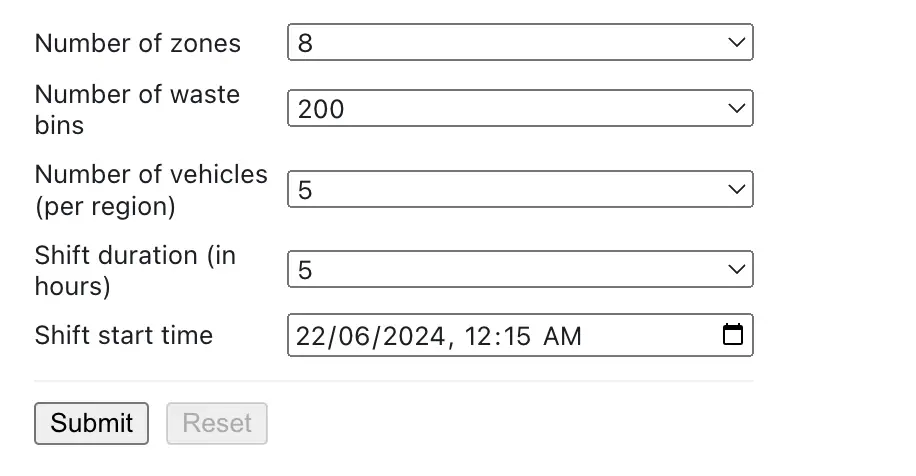
Once the input data is set, you can submit and visualize the data on the map.
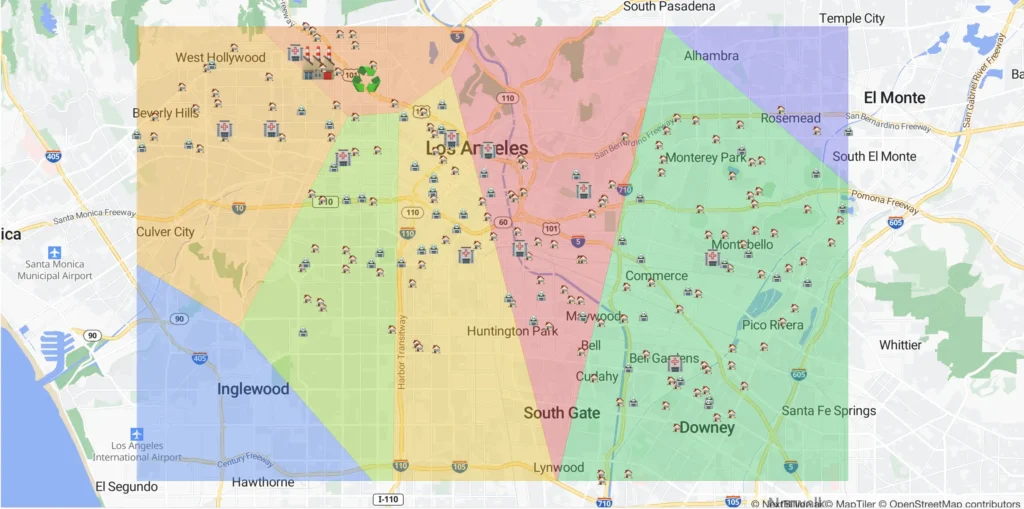
The above image represents 8 zones in different colors, residential locations, hospitals and commercial locations.
You can assign priorities based on location type. For example, residential properties have priority 0, businesses have priority 1, and hospitals have priority 2.
Now you need to allocate trucks in a manner that meets the following criteria:
Now that you have set all the input parameters, you will now send this data to route optimization API to generate optimized result while keeping all the constraints and objective.
The API will generate route results for all 30 trucks and assign the task accordingly zone-wise.
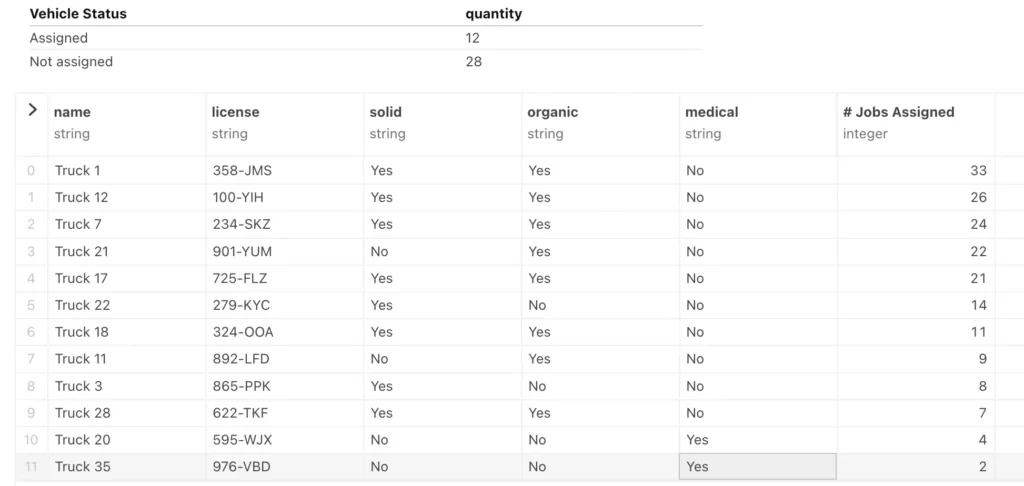
This image shows the number of trucks that were assigned tasks and the number of trucks not assigned.
By keeping the number of trucks to the minimum, the API ensures that the operation is cost-effective and efficient.
The following image demonstrates the result generated by the API zone wise.
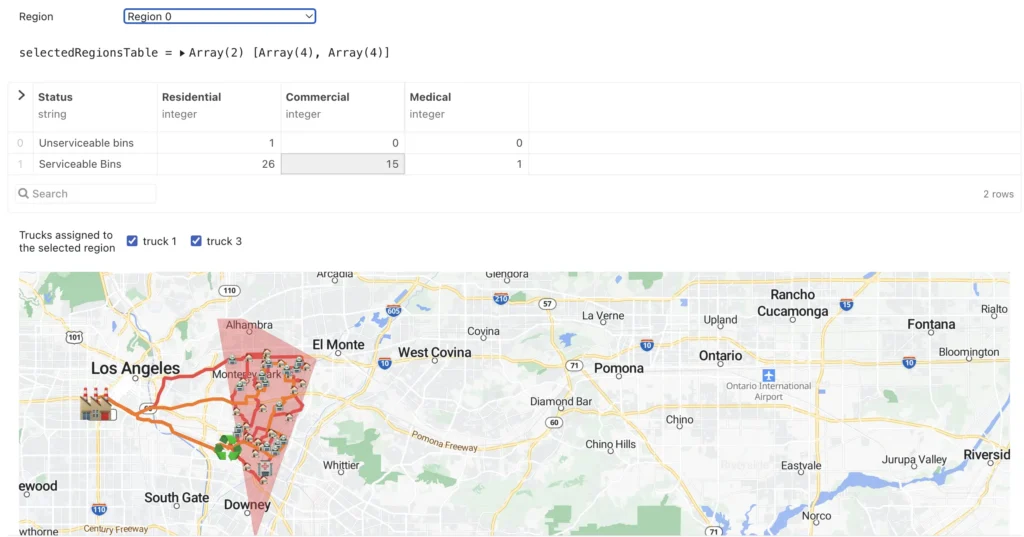
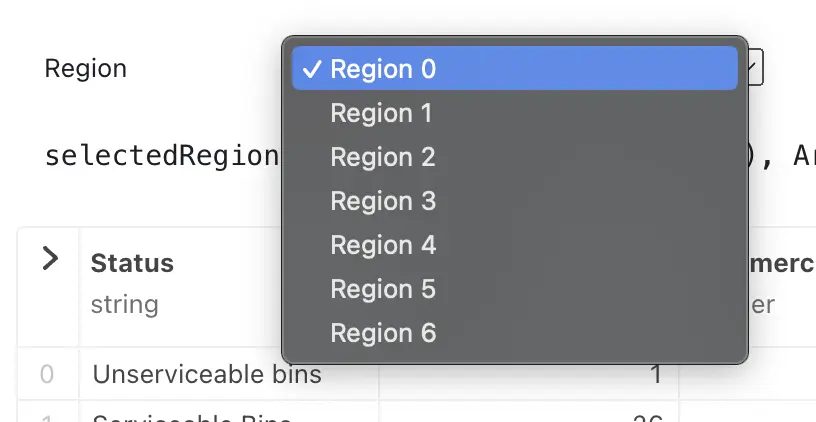
You can check the results of each zone by selecting the region.
Now that we have optimized routes for each assigned truck and zone, some of the waste collection locations might remain unassigned. In this case, you can submit a route optimization request again to make the routes more efficient.
For example, out of 200 bins, 18 were unassigned, but you can reassign these bins by submitting the input data once again. After the re-optimization request, all 18 unassigned bins are assigned to one truck, i.e., Truck 33
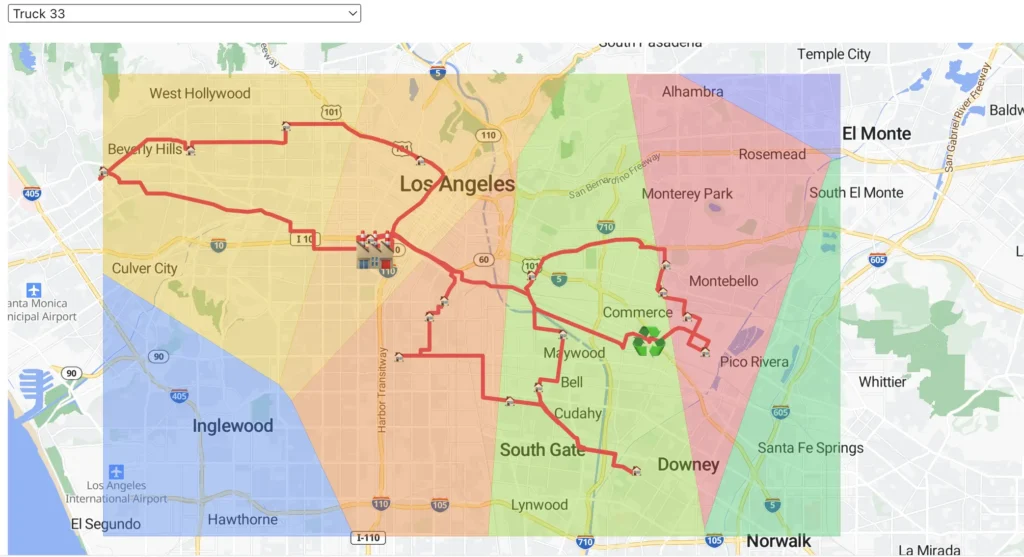
In this manner, NextBillion.ai’s Route Optimization API can be used to solve complex and dynamic solid waste management routing problems.
If you want to try the tool yourself, then get your API key and Access the live tool via Notebook.
Shivangi is a seasoned Technical Writer with a passion for simplifying technical concepts. With over 5 years of experience, she specializes in crafting clear and concise documentation for various technical products and platforms.