
Location Reasoning AI

Give your AI agents
real-world location intelligence

Help your AI agents and copilots answer location-based questions with reliable routing, travel time, distance, traffic, and geospatial calculations.
banner

Location Reasoning Built
for AI Agents

Trustworthy Answers, Grounded in the Real World

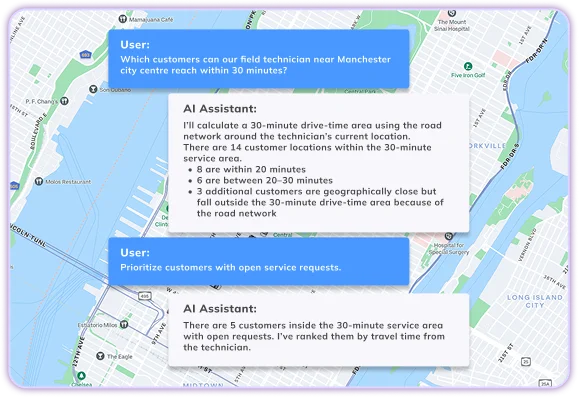
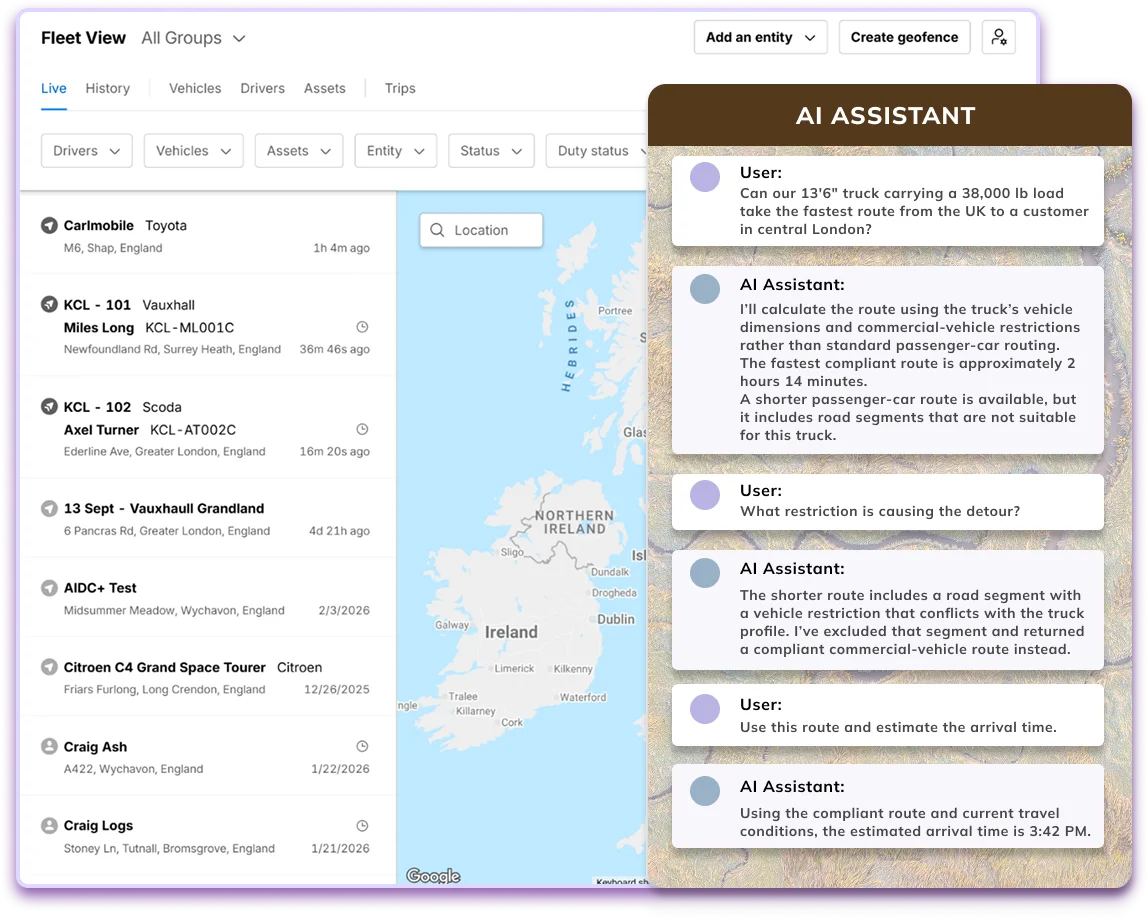
Ground your agents with deterministic calculations for routing, travel-time, distance, traffic, and geospatial data.
generate-optimal-routes

Agent-ready location
tools

Give your AI applications access to routing, Distance Matrix, Isochrones, Geofencing, and Route Optimization through APIs and agent-friendly integrations.

Operational location reasoning

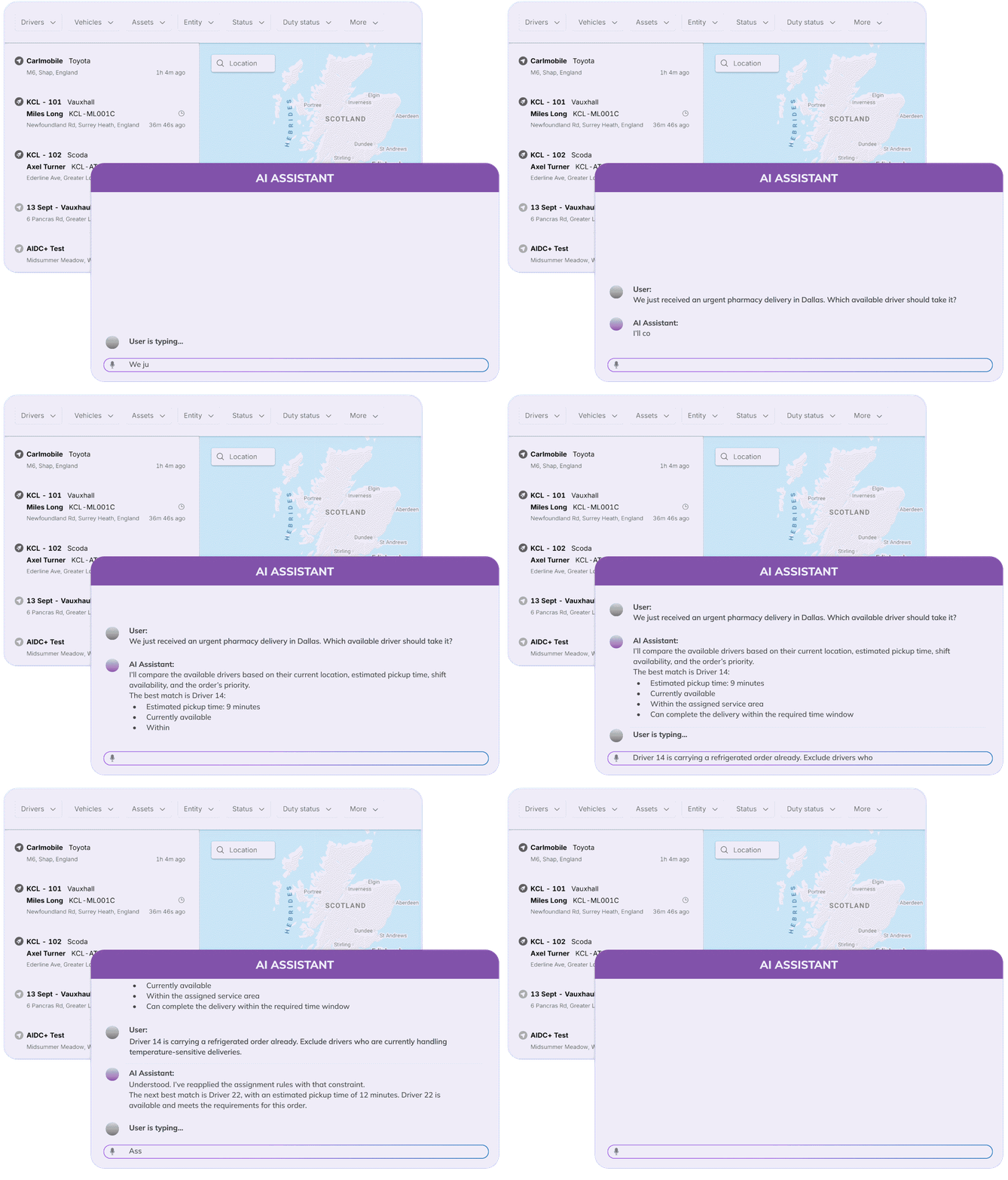
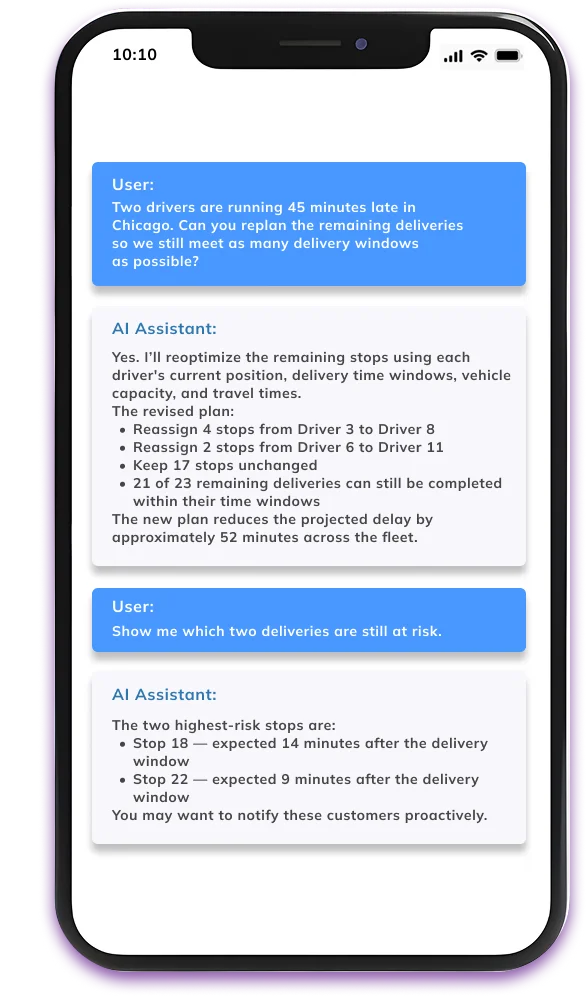
Go beyond simple map queries. Help agents compare routes, assign jobs, optimize routes, evaluate geofences, and make real-world operational decisions.
generate-optimal-routes

Logistics product managers and developers
love NextBillion.ai Location Reasoning AI

G2 Badge G2 Badge G2 Badge G2 Badge G2 Badge G2 Badge
G2 Badge G2 Badge G2 Badge G2 Badge

Build Smarter Location-Aware
AI Experiences

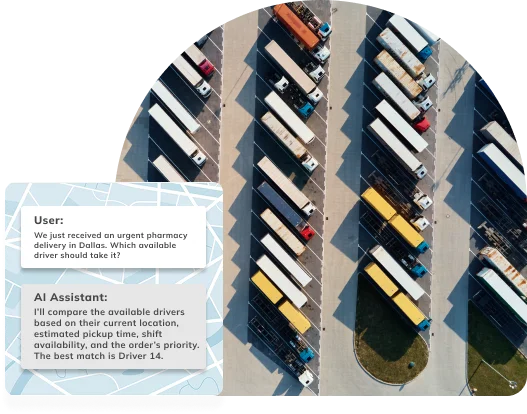
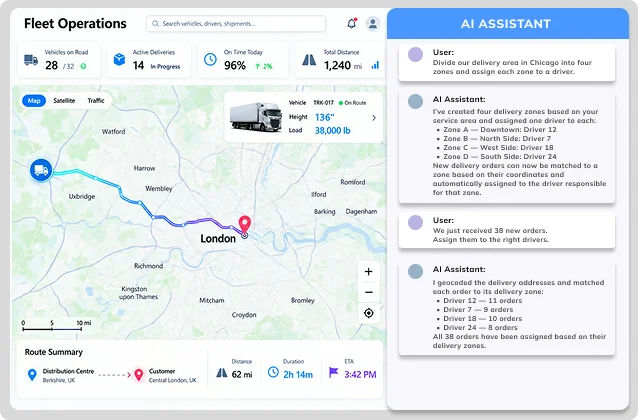
Fleet AI Copilots

Help an AI agent answer questions based on real travel time, location, schedules, and routing constraints.

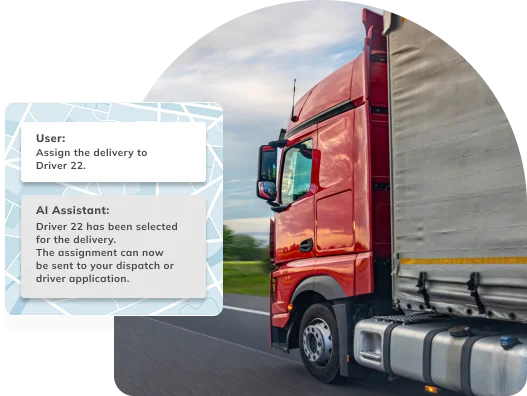
AI Dispatch Agents

Enable agents to calculate ETAs, compare routes, identify delivery risks, optimize stops, and make better fleet decisions.

Enterprise AI Assistants

Add real-world location intelligence to your AI products & copilots.
mobilize-your-workforce
efficiently-manage-fleets
generate-optimal-routes

Frequently asked questions

Features

Location Reasoning gives AI agents access to real-world routing, travel time, distance, traffic, and geospatial calculations so they can answer location-based questions more accurately.

Traditional APIs require developers to define each call and workflow. Location Reasoning makes those capabilities easier for AI agents to use as part of their own reasoning and tool-calling workflows.

LLMs are good at understanding intent, but they are not built to calculate routes, road distances, ETAs, or geographic constraints reliably. A location layer provides that real-world context.

Not reliably. Accurate travel time and road distance require routing engines, road-network data, traffic information, and other real-world inputs.

Agents can answer questions such as “Who can reach this customer fastest?”, “What is within 30 minutes?”, “Which route is best?”, or “How should these stops be assigned?”

Location Reasoning can use capabilities such as Routing, Distance Matrix, Geocoding, Isochrones, Route Optimization, and other location APIs depending on the workflow.

Yes. Traffic-aware routing and travel-time calculations can help agents make decisions based on current road conditions rather than static distance alone.

Yes. Agents can use road-network travel time instead of straight-line distance to compare drivers, technicians, stores, customers, or other locations.

Yes. The agent can combine your business data with travel-time and routing calculations to identify better candidates for a job or assignment.

Yes. Route Optimization can help agents plan and replan assignments across multiple vehicles, stops, jobs, and operational constraints.

Yes. Routing can account for commercial-vehicle requirements and road restrictions that standard passenger-car routing may not consider.

Yes. Depending on the use case, workflows can account for constraints such as time windows, capacities, vehicle requirements, service areas, and job requirements.

Yes. Location capabilities can be integrated into AI applications independently of the underlying LLM, as long as your application supports tool or API calls.

NextBillion.ai location capabilities can be exposed to AI agents as callable tools, allowing agents to invoke routing and geospatial functions when needed.

Yes. You can add location capabilities to an existing copilot, AI agent, workflow, or application without rebuilding your entire AI stack.

Location grounding gives the AI reliable geographic facts and calculations. Location reasoning uses those capabilities to answer questions or make decisions involving locations.

Common use cases include AI dispatchers, logistics copilots, field-service agents, travel assistants, fleet agents, sales assistants, and enterprise copilots.

Instead of asking the LLM to estimate distance, ETA, or route feasibility, the agent retrieves those results from a dedicated geospatial engine.

Teams can start with a single capability such as routing or travel-time calculations and expand to more complex workflows such as optimization as needed.

Pricing depends on the location capabilities and usage volume required by your application. Talk to our team to identify the right setup for your use case.

Ready to make your AI agents
location-aware?