

Table of Contents
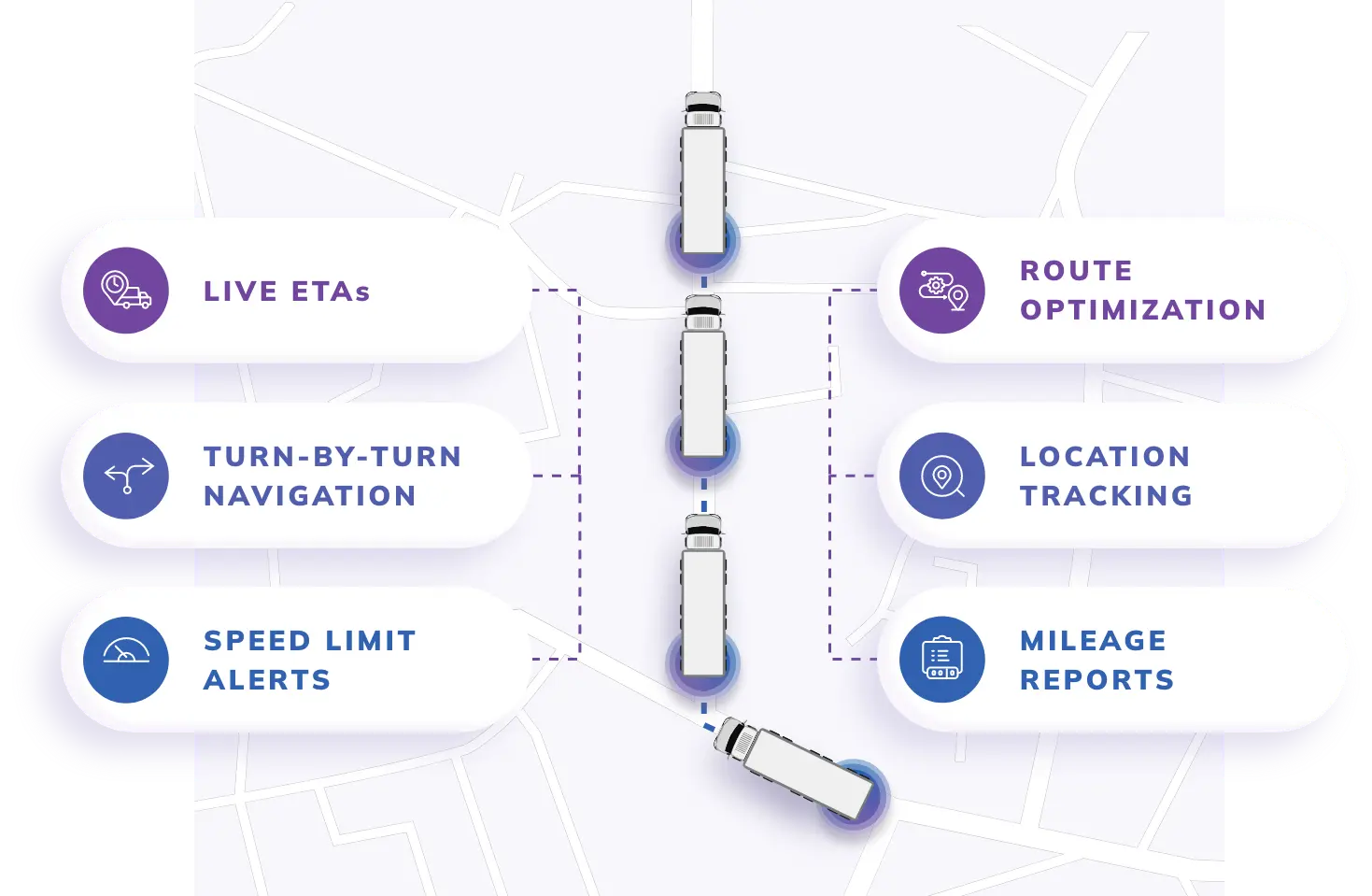
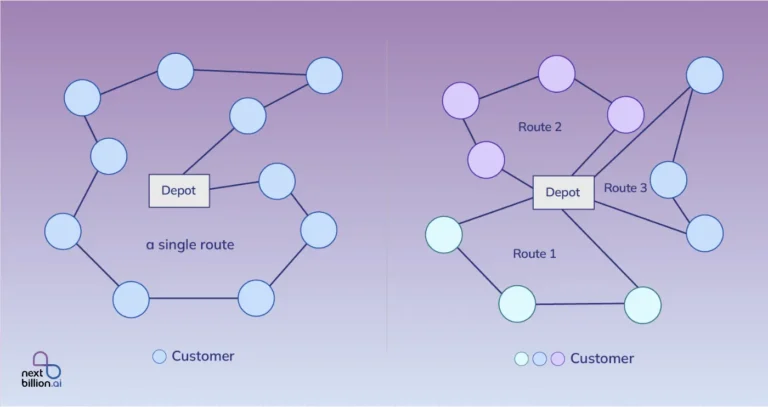
One of the most significant components of last-mile delivery, field service, courier operations, grocery delivery, furniture delivery, and B2B distribution is the creation of efficient multi-stop routes. A route can appear to be straightforward on the surface since it merely links several destinations on a map. In real practice, each route has a number of constraints simultaneously.
The goal is not to create the shortest-looking route. The real goal is to create a route that can be completed on time, within cost, within driver limits, and without unnecessary backtracking.
Here is a step-by-step planning process.
The planning process begins with the correct order data. Each delivery, pickup, service visit, return, or collection point must be considered a stop and have its own operational needs.
Each of the stops must contain:
This is necessary since the quality of the input is critical in route optimization. The driver can be held up at the gate due to a missing phone number. An incorrect package volume may overload a vehicle. A gap in time can cause a delivery to be too late in the sequence.
For example, two stops may appear similar on a route sheet. One may be a normal doorstep delivery that takes three minutes. The other may be a B2B delivery that needs security entry, dock approval, invoice stamping, and unloading support. Treating both stops equally creates an inaccurate route duration. Good route planning begins when every stop is defined properly before optimization starts.
After gathering the stop data, all of the addresses are to be checked and transformed into precise map coordinates. This is termed geocoding. It enables the routing system to know the exact position of the stop in the road network.
Address validation should check:
This step has a direct influence on the quality of routes. An inaccurate geocode can put a customer on the opposite side of a highway, at the incorrect society gate, or even several kilometres away from the actual location. A single mistake can consume drivers’ time and disrupt the whole delivery process.
Ambiguous addresses should also be dealt with by route planners. Many customers enter addresses that lack house numbers, have incomplete landmarks, or rely on pin drops. These addresses should be flagged and not discovered on the road by the driver. Accurate geocoding minimizes failed deliveries, customer calls, driver confusion, and unplanned kilometres.

A route optimization engine requires rules to develop feasible routes. These regulations are referred to as constraints. They inform the system what can and cannot be done in the real-world operations.
Important constraints include:
This step eliminates the possibility of the system drawing routes that appear to be mathematically efficient but do not work.
As an example, a car might be able to carry 100 parcels, but the driver might not be working more than eight hours. The driver can only realistically complete 65 stops with traffic, parking, and service time. The actual limit is driver time in this case.
Another example is vehicle compatibility. A small residential street might not accommodate a big truck. A refrigerated product cannot be allocated to a regular vehicle. A furniture delivery that involves heavy furniture cannot be given a bike route.
The route optimization is realistic due to constraints. They assist the system in coming up with routes that can be completed by the drivers.
Orders must be divided according to logic of operation before the individual routes are developed. This involves sorting orders based on depot, delivery region, type of service and flow of fulfillment.
Orders can be segmented by:
Segmentation makes planning less complicated. All orders should not be optimized by a dispatcher when different orders are subject to different operating rules.
For example, a grocery order that has a two-hour time window should not be casually combined with a regular next-day parcel route. A two-person furniture delivery should not be scheduled like a small ecommerce package. A cold-chain delivery requires a truck and schedule that preserve product quality.
This step generates cleaner planning batches. Cleaner batches generate better routes.
Once segmented, the stops are to be grouped into route groups. Clustering refers to the grouping of similar or close stops in such a way that they can be served by the same driver or vehicle.
Good clustering considers:
Basic clustering is the simplest form of clustering that simply groups together based on distance. Advanced clustering examines the reality of the ground road network and operating conditions.
For example, two stops can be near to each other in straight-line distance, but separated by a river, highway divider, flyover, traffic choke point, or restricted entry road. An effective route planner must not take into account only physical distance but also travel time.
Clustering also aids in minimizing overlap in routes. In the absence of clustering, two drivers can cross into the same area numerous times. This adds to fuel expenditure, confusion, and decreased productivity.
Effective clustering assigns every driver a specific area of service and enhances route management.
After having formed route groups, the groups should be matched with the appropriate vehicle. Vehicle assignment is important as the incorrect vehicle may render a route impossible despite the correct appearance of the stop sequence.
The assignment of vehicles should take into consideration:
For example, a compact van can be more suitable in close cities since it can navigate through narrow streets and find a place to park more conveniently. A bigger truck can be used to make fewer heavy deliveries over a larger radius. A two-wheeler can be effective in carrying light parcels but not with delicate, voluminous, or valuable products.
The loading sequence should also be taken into consideration when assigning vehicles. The last packages to be loaded should be early stop packages since the driver should be able to access them first. Poor loading logic can increase service time at every stop. The route should fit the vehicle, and the vehicle should fit the route.
Another significant element of the multi-stop route planning is driver assignment. Different drivers might take the same route but with the same vehicle due to experience, familiarity with the area, and familiarity with the customer.
The assignment of drivers should take into consideration:
A new driver might require a less complicated path with fewer complicated stops. A seasoned driver might be able to cope with a congested urban route. A driver who is familiar with a business area might be aware of gate regulations, parking areas, receiving times, and usual delays.
This enhances the quality of execution. It also lessens dispatcher reliance since the driver is more knowledgeable about the route context.
Availability should not be used as the sole basis for driver assignment. It must be founded on functional compatibility.
Estimated arrival time to each stop should be computed by the system after sequencing. Distance alone should not be the basis for calculating ETA. It must account for road speed, traffic, service time, waiting time, and route progression.
ETA planning is to involve:
Proper ETAs are beneficial to dispatchers and customers. Dispatchers can clearly monitor the feasibility of the route. Customers can get more credible delivery updates. Drivers are able to follow a realistic timetable.
Bad ETA calculation creates an illusion of control. A route can have 40 scheduled stops, though real completion can lag behind after the first few delays. The route must be updated on a continuous basis when planning ETAs.
Route optimization should be based on a definite business goal. Various logistics activities work towards varying results.
Typical objectives of common route optimization are:
The most appropriate goal is based on the business model. A grocery delivery business might be time-conscious and freshness-conscious. A courier company can specialize in the density of stops and speed of delivery. For a furniture delivery company, the capacity, unloading time, and customer appointment slots might be of high priority. A field service company can give priority to the skills of technicians and the length of job.
This is important since there are always trade-offs in optimization. Minimizing distance can augment late deliveries. The utilization of vehicles can overwork drivers. The importance of having urgent orders can lead to a higher total route cost. The routing system must be optimized to achieve the most important outcome of the operation.
A route without buffer time is fragile. It can only be successful when all the roads, customers, gates, and driver activities are faultless. Real delivery operations rarely work that way.
Buffer time should be added for:
Buffer time makes routes more realistic. It protects later stops from small early delays.
For example, a five-minute delay at a single stop might not be a big issue. With ten of these stops, the route could be 50 minutes behind schedule. Buffer time takes up these minor delays and safeguards customer commitments.
The buffer should not be random. It must be based on historical route information, zone challenge, type of stops, and familiar traffic patterns.
After the generation of routes, dispatchers are supposed to compare the workload among drivers. A balance of routes cannot be evaluated solely by the number of stops.
Balance in workload should take into consideration:
A driver with 35 bulky furniture stops could have a more difficult route than a driver with 60 small parcel stops. A driver who makes 40 stops in a congested area can finish quicker than a driver making 25 stops in expansive suburbs.
Balanced routes safeguard driver productivity and limit complaints. They also help managers determine whether the workload is distributed equally or not. Balanced routes enhance operational efficiency and driver morale.
Efficient multi-stop routing also depends on how the vehicle is loaded. A route can be well designed, but it can be loaded poorly, which eventually slows down all the stops.
The loading must be in the stop order. Last stop packages must be the first. First stops packages must remain close to the point of entry.
Plans to be loaded should take into account:
Poor loading leads to redundant search, damaged packages, frustration of the drivers and increased service time. Even an additional minute of each stop can result in a significant delay on a high-volume route. Thus, depot loading should be connected with route planning, not handled as a separate activity.
After reviewing routes and loading vehicles, it should be made clear to drivers what the route plans are. Drivers require more than a stop list. The dispatch of a good route must contain:
Clear instructions reduce dependency on dispatcher calls. They also assist drivers to make stops in less time and report problems uniformly.
The driver apps are convenient since they store the route information, navigation, updates on the status, customer data, and evidence of delivery within a single location. Always remember that the ultimate goal is to make execution simple for the driver.
After vehicles have been deployed on the road, dispatchers require real-time insight into the execution of routes.
Real-time monitoring must be performed to track:
This helps dispatchers detect issues in advance. A delay at the third stop may impact the tenth stop. A vehicle failure can impact other orders. A route deviation may increase distance and cause time window delays.
On-the-fly monitoring enables quicker decision-making. Before the problem gets larger, dispatchers can call the customer, reassign stops, alter the sequence, or guide the driver.
After route completion, the planners are supposed to compare the planned route with the actual execution. This is where the performance of routes can be measured.
Important comparisons include:
This comparison reveals where the route plan was accurate and where it failed. For example, if service time at apartment complexes is always higher than planned, future routes need more service buffer. If one area repeatedly causes delays after 5 PM, routes should avoid that area during that period. Planned versus actual analysis improves future route accuracy.
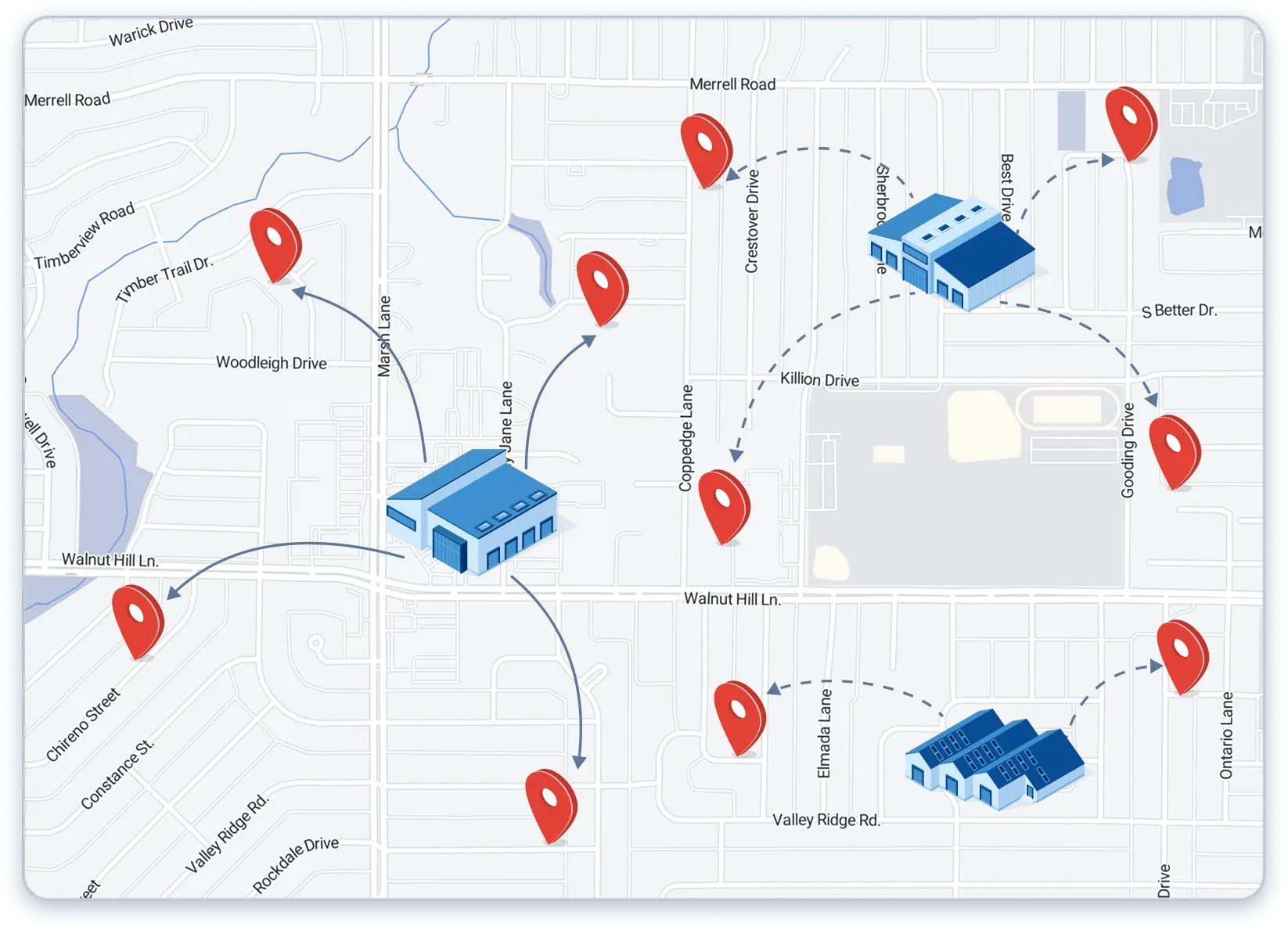
Multi-stop route planning is challenging when delivery teams have hundreds or thousands of orders, various types of vehicles, driver schedules, customer time windows, and varying road conditions in one day. This level of complexity sometimes cannot be handled by manual planning or simple map-based routing. This is exactly where NextBillion.ai helps logistics, delivery, and field service teams build routes that are practical, constraint-aware, and easier to execute on the road.
Our platform assists teams in developing multi-stop routes that consider actual delivery constraints, and not just the distance between stops. We assist in planning routes based on vehicle capacity, driver shift limits, service time, delivery windows, depot rules, priority orders, and route duration. This enables operations teams to go beyond fixed route sheets and develop routes based on real field conditions.
NextBillion.ai allows logistics teams to assign the correct stops to the correct vehicles, minimize unnecessary travel, prevent overloaded routes, and improve on-time delivery results. The system helps teams balance cost, speed, fleet usage, and customer commitments without necessarily relying on manual dispatcher judgment.
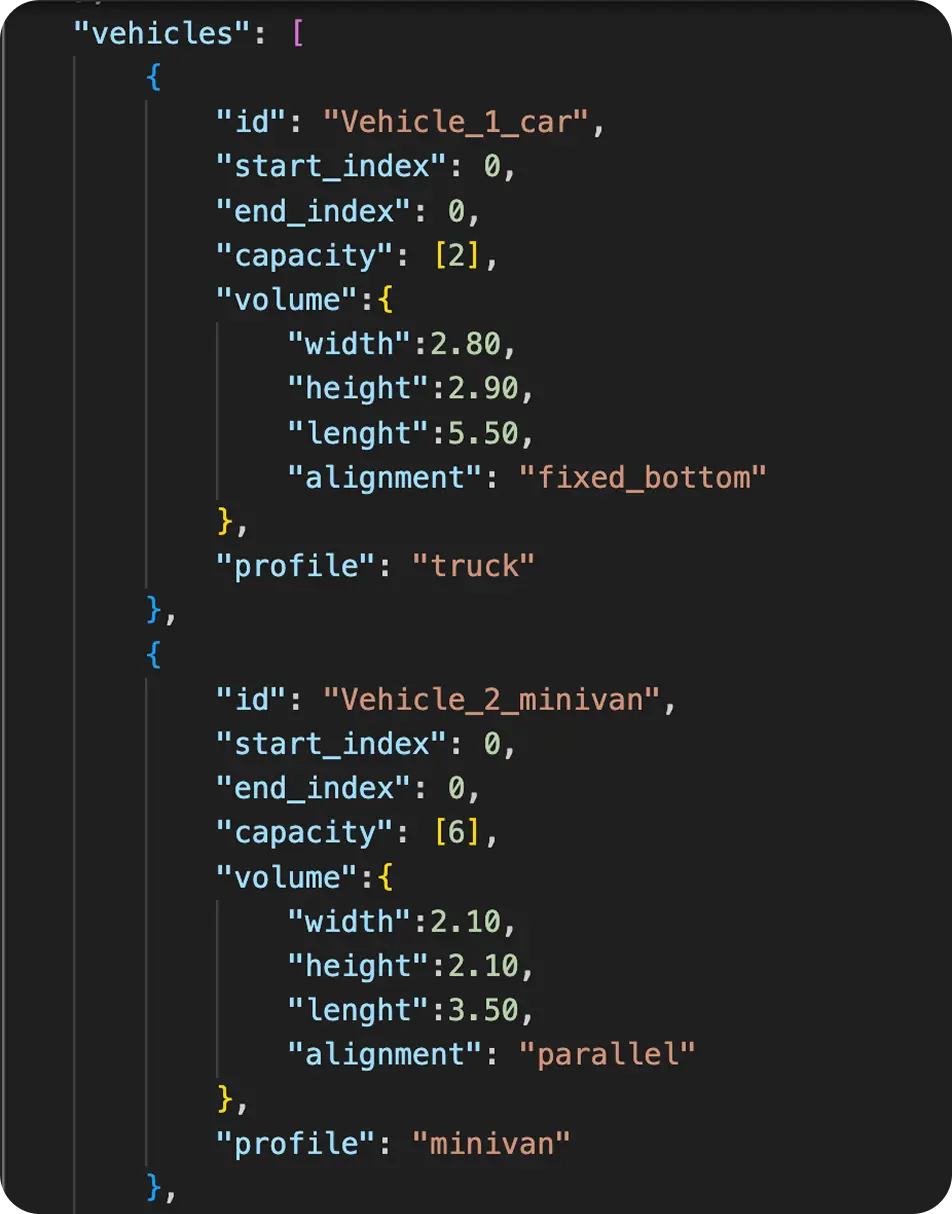
Delivery operations rarely go exactly as planned. The entire route sequence can be impacted by traffic delays, failed deliveries, urgent orders, customer rescheduling, vehicle issues, and road restrictions. We have a platform that allows dynamic route changes in order to enable the teams to react more quickly to changes throughout the day.
We assist dispatchers with updating ETAs, resetting stop sequences, reassigning tasks, and securing high-priority deliveries in case of exceptions. It is particularly handy with same-day delivery, grocery logistics, courier networks, field service, and high-volume urban operations where a single stop can impact many. Teams can also apply smarter routing logic, rather than rebuilding routes by hand, to continue operations.