

- BLOG
How Do Beverage Distributors Optimize Delivery Routes to Reduce Fuel Costs and Missed Deliveries?
Published: July 20, 2026
Route Optimization API
Optimize routing, task allocation and dispatch
Distance Matrix API
Calculate accurate ETAs, distances and directions
Directions API
Compute routes between two locations
Navigation API & SDK
Turn by Turn Instructions for Drivers & Technicians
Route Optimization Software
Plan optimized routes with 50+ Constraints
Product Demos
See NextBillion.ai APIs & SDKs In action
AI Route Optimization
Learns from Your Fleet’s Past Performance
Platform Overview
Learn about how Nextbillion.ai's platform is designed
Road Editor App
Private Routing Preferences For Custom Routing
On-Premise Deployments
Take Full Control of Your Maps and Routing
Table of Contents
Beverage distributors are always on the brink of losing their customers if they are unable to deliver the drink’s crates on time. The business involves managing the whole supply chain, inventory, transportation, etc., but above all, the catch is always to grab the thinning profit margin while maintaining growth and customer satisfaction.
Route optimization for beverage distributors proves effective in saving every extra mile driven or delayed delivery. A flourishing beverage distribution company tackles thousands of delivery orders each day. They manage customers’ expectations from different segments and diverse locations. Despite the critical pitfalls like driver shortage and fuel costs, reliable and fast deliveries are the soul of commitment.
Missed delivery windows not only disrupt retailer operations but also damage customer relationships and create costly repeat trips. Managing delivery trips based on static data through manual adjustments is disastrous for the field staff. They can no longer keep pace with today’s dynamic delivery landscape
Traffic congestion, last-minute order changes, vehicle capacity constraints, and driver availability require routing decisions that can adapt in real time. As a result, leading beverage distributors are turning to AI-powered route optimization solutions that continuously analyze real-world conditions, generate the most efficient delivery routes, and help reduce fuel costs while improving on-time performance.
In this article, we’ll explore how AI-driven route optimization enables beverage distributors to minimize unnecessary mileage, reduce missed deliveries, improve driver productivity, and build a more resilient and cost-effective delivery network.
Also read: Understanding Beverage Delivery Route Optimization
Beverage distributors are the middle persons between the product’s manufacturing unit and the retailers, restaurants, marts, and other such B2C centers. Every beverage company cannot manage its own delivery unit at different global locations, and retail stores or others cannot directly connect with multiple manufacturers.
Hence, beverage distributors have a major role in the supply chain system. They purchase products from producers, store them in warehouses, and deliver them to businesses such as grocery stores, convenience stores, restaurants, bars, hotels, and vending operators.
Read: How to start a grocery delivery business?
There are multiple tasks involved in beverage distribution:
Also read: What it takes to create an in-house delivery system?
The daily schedules in beverage distribution business | ||
Inventory management | Keeping a record of items in warehouses. | |
Order fulfillment | Picking and packing delivery orders. | |
Delivery operations | Delivery task execution using a fleet of trucks. | |
Sales and merchandising | Commitment with retailers, restocking shelves, and promoting new products. | |
Returns and collections | Handling returns/damaged goods, empty containers, and invoices. | |
Compliance | Following regulations for food safety, alcohol distribution, and transportation. | |
Beverage distributors have a tedious job with multi-dimensional responsibilities. The ERP systems are triggered with different segments of transportation and stock management. The specific constraints may include:
The prime objective of beverage distributors is to transport the drinks safely and timely to the desired destinations. The job of picking ordered items from the warehouse and dropping them to the customer’s point is similar to any other delivery assignments completed by different logistics companies.
But in reality, beverage distributors face operational challenges that make route planning significantly more complex than standard logistics.
Unlike parcel or general freight carriers, beverage distributors transport high-volume, heavy products to a diverse network of retailers, restaurants, bars, convenience stores, supermarkets, and hospitality businesses. Every stop comes with unique delivery requirements, making route optimization far more than simply finding the shortest path.
Standard logistics vs. Beverage delivery | ||
Aspects | Standard logistics | Beverage delivery |
Delivery Volume | Moderate orders, various sizes | Thousands of deliveries, high stop density |
Product Details | Varying weights and dimensions | Heavy, bulky products, often brittle glass, manage total weight |
Delivery Frequency | On-demand or scheduled | Multiple times a week to replenish retailer inventory |
Customer Base | Manufacturers, warehouses, businesses, or consumers | Grocery stores, supermarkets, restaurants, bars, convenience stores, hotels, and liquor retailers |
Delivery Time Windows | Generally flexible | Strictly manage receiving hours and retailer policies |
Route Complexity | Optimized for distance and delivery efficiency | Optimized for delivery windows, vehicle capacity, product mix, traffic, driver schedules, and customer priorities simultaneously |
Vehicle Capacity Constraints | Maximizing load utilization | Weight, pallet configurations, stacking rules, and product compatibility |
Operational Changes | Moderate route adjustments for new orders | Frequent last-minute changes, real-time dispatch modifications |
Driver Challenges | Standard route assignments | Hours of service compliance, and overtime are critical concerns |
Reverse Logistics | Limited return pickups | Regular collection of empty kegs, reusable bottles, crates, pallets, and returnable packaging that affect truck capacity |
Major Expenses | Transportation, labor, and warehousing costs | Fuel, missed orders, overtime, and fleet utilization impact profit margins |
Customer Expectations | On-time delivery and shipment visibility | On-time delivery, consistent replenishment, accurate ETAs, and minimal stockouts |
Role of Route Optimization | Improves transportation efficiency | Reduce fuel costs, minimize missed deliveries, maximize fleet productivity, and maintain service levels |
While both services are associated with goods transportation, dispatch managers at both ends deal with similar responsibilities. But beverage distributors certainly face greater critical situations as the transit task has strict time windows. Randomly navigating them to the stops can result in higher fuel consumption and thereby lower the profit margins.
High delivery density: Delivery trucks riding across a region can have multiple drop points in a small zone. Inefficient navigation by drivers can have multiple repurcussions like increased fuel consumption, missing delivery schedules, overtime, etc.
Read: Quick tips to hire delivery drivers.
Heavy loads and vehicle weight limits: Beverages in crates and cartons carry huge weight and are among the heaviest products transported in distribution networks. Vehicle weight limits, pallet configurations, and cube utilization are a prominent factor in route planning. Therefore, optimizing the load to genuinely utilize the vehicle’s capacity is just as important as optimizing distance.
Strict Delivery Windows: Usually all the retail shops, grocery chains, restaurants, bars, and other beverage selling points accept stocking on shelves during specific hours to avoid customers’ hustle during peak time. Missing these time slots can result in refused deliveries, additional delivery attempts, penalties, stock shortages, and customer dissatisfaction.
Frequent and Recurring Deliveries Often during specific seasons, popular drinks get consumed heavily by people. Beverages are one of the first grabs in festivities, functions, events, or simple get-togethers, and this demands regular stocking by distributors. Unlike many industries that ship products on demand, beverage distributors often operate recurring delivery schedules to replenish inventory multiple times each week. Routes must balance consistency with changing daily order volumes.
Mixed Product Requirements: A single delivery vehicle may be carrying soft drinks, bottled water, alcoholic beverages, energy drinks, and other beverages with different handling, stacking, and regulatory requirements. This adds another layer of complexity to vehicle loading and stop sequencing.
Dynamic Daily Changes: Beverage distributors can edit the task any time before the task begins or often during the journey by instructing the driver to drop a number of crates at a particular store and adjust the new orders with others on the list. This happens due to last-minute orders, weather events, promotional strategy, or other such reasons. Hence, static route plans fail and leave the driver on their own instincts.
Driver and Labor Constraints: Driver shortages continue to affect the industry, making it essential to maximize the productivity of every available driver. Efficient route planning helps reduce overtime, balance workloads, and increase the number of deliveries completed per shift.
Reverse Logistics: Many beverage distributors also manage reverse logistics, including collecting empty kegs, reusable bottles, pallets, and crates during deliveries. These return loads affect vehicle capacity and route planning in ways that standard logistics operations often don’t encounter.
Because of these operational challenges, beverage distribution requires intelligent route optimization that considers far more than distance. Modern AI-powered routing solutions evaluate vehicle capacity, delivery time windows, driver schedules, traffic conditions, recurring delivery patterns, and real-time operational changes simultaneously. The result is a delivery network that minimizes fuel costs, improves on-time performance, and enables distributors to serve more customers with the same fleet.
Read why holiday calendars matter in multi-region route planning.
Location technology has an incredible role for beverage distributors or dispatchers in any other logistics and transportation business. Its purpose is to locate the exact position of the receiving end or customer on a digital map of the desired area. Once the location is traced, the system designs an efficient route covering these points by dynamically utilizing the geographical data, mapping technology, and spatial analytics.
By combining maps with business data such as sales performance, customer locations, inventory levels, and demographic information, distributors gain actionable insights that support both operational efficiency and strategic planning.
Relying on regular mapping apps will never generate the desired results, which involve the complexities of multi-stop route optimization, territory management, customer segmentation, delivery scheduling, fleet monitoring, or integration with enterprise systems. Just the turn-by-turn navigation or traffic updates are genuinely not sufficient for beverage delivery task completion.
Accurate geocoding: It is essential for mapping systems to have all the locations and addresses converted into geographic coordinates. Every existing address or landmark has a latitudinal/longitudinal position on the digital map. Exact details allow the beverage delivery drivers to reach the correct location without wasting time and fuel. High-quality geocoding is particularly important for large facilities such as supermarkets, distribution centers, hotels, and restaurants that may have multiple access points.
Commercial vehicle routing: The routing tools are specifically designed for delivery vehicles and commercial trucks. Hence, during route optimization, a vehicle’s size, weight, cargo type, and other such factors are taken into consideration. Commercial routing reduces travel time, fuel consumption, and operational costs while improving delivery reliability.
Loading zones: Identifying and incorporating loading zone information into delivery planning helps drivers avoid illegal parking, reduce unloading delays, and improve operational efficiency. In busy urban environments, knowledge of available loading zones is essential for minimizing disruptions and ensuring timely deliveries to retailers, restaurants, and hospitality businesses.
Restricted roads: There are many specific roads with restrictions for heavy vehicles, delivery vans, or vehicles carrying specific loads. Beverage distribution systems must account for these restrictions during route planning to avoid fines, delays, and safety risks. Mapping intelligence continuously updates these restrictions to support compliant and efficient operations.
Truck dimensions: Certain roads, tunnels, underpasses, and bridges have physical limitations that prevent larger vehicles from passing safely. Beverage distributors must match vehicle specifications with road characteristics to prevent accidents, infrastructure damage, and costly delivery disruptions. Dimension-aware routing ensures that each vehicle follows roads suitable for its size and load.
Turn restrictions: One-way roads or limitations of turning movements are common at busy intersections and urban areas where large trucks require additional turning space or where traffic safety is a concern. Incorporating turn restrictions into routing algorithms improves driver safety, reduces traffic violations, prevents unnecessary delays, and ensures legal compliance throughout the delivery process.
Together, these location intelligence capabilities enable beverage distributors to create safe, efficient, and compliant delivery operations. Distributors can reduce operational costs, improve delivery accuracy, increase fleet productivity, and provide more reliable service to customers. Location intelligence has become an essential component of modern beverage distribution, providing capabilities that extend far beyond simple navigation.
While there are applications like Google Maps for simple route planning from Point A to B, C, D, and a few more, they are not useful for optimizing the route for specific conditions. Beverage distributors have to figure out a path that covers all the locations and follows the essential constraints.
But route optimization is far more than just managing static conditions. Now the routing tools apply advanced algorithms to assign deliveries, sequence stops, and utilize available fleet resources. These are capable of coordinating multiple vehicles, hundreds of delivery stops, strict schedules, and constantly changing road conditions, all while keeping transportation costs under control.
For beverage distributors, route optimization considers factors such as:
Modern AI-powered route optimization platforms evaluate all of these variables simultaneously. Using sophisticated optimization algorithms and real-time data, they can solve highly complex routing problems involving hundreds or even thousands of deliveries in seconds.
Also read: how to reduce last mile delivery costs using AI technology?
While there are few distributors that still rely on manual analysis to choose the delivery directions for their drivers, these are mostly the ones who serve on a small scale. But major firms in this sector have already transitioned their systems to integrate technological solutions. These are continuously upgrading the workflow to lead the market competition and translate more profit.
Parameters where route optimization makes a difference for beverage distributors.
Read: What is ETA and ETD? Do they impact routing in logistics and transportation?
The table below shows the typical workflow of beverage distribution in both the conditions of integrating and neglecting route optimization systems.
Beverage distribution workflow | ||
Steps | Without route optimization | With route optimization |
Dispatcher manually creates routes. | Customer orders are imported automatically. | |
Driver A travels 180 km with 18 stops. | Deliveries assigned based on area, truck capacity, and time windows. | |
Driver B travels 110 km with 10 stops. | Routes are balanced across all drivers. | |
Several deliveries arrive late. | Drivers receive optimized routes on a mobile app. | |
Drivers incur overtime. | Dispatchers monitor progress in real time. New orders are inserted dynamically | |
AI or artificial intelligence is a progressive technology that enables software solutions to predict an outcome based on past data. The accuracy levels improve by combining the historical and real-time data, and solutions are highly reliable in terms of optimization and efficiency in any particular context.
Beverage distributors make faster, data-driven decisions across routing, scheduling, fleet management, and customer service. AI continuously analyzes large volumes of real-time and historical data to optimize delivery performance. This allows beverage distributors to reduce transportation costs, improve on-time deliveries, enhance fleet utilization, and respond rapidly to changing road and market conditions.
NextBillion.ai route optimization API is not a traditional navigation tool for individuals to use in route navigation. Instead, it is specifically designed to handle complex logistics operations. It has the capacity to manage multi-stop deliveries, which is one of the prime requirements for beverage distributors.
It chooses efficient routes to avoid road repetitions/U-turns, reduce fuel consumption, improve fleet utilization, and ensure successful and on-time deliveries. The relevant constraints like the vehicle’s total weight or dimension, road restrictions, crowded regions, time windows, etc. are accepted as much as possible.
The integration of advanced AI and ML technology with the routing system empowers the NextBillion tool to continuously analyze traffic patterns, delivery data, and operational constraints to generate smarter routes and accurate ETA predictions. Its dynamic route optimization automatically recalculates routes when disruptions such as traffic congestion or road closures occur, minimizing delays without manual intervention.
NextBillion provides an API-first approach, which is a highly customizable architecture, and allows beverage distributors to integrate routing capabilities seamlessly with ERP, TMS, WMS, telematics, and Proof of Delivery (POD) systems. Combined with custom maps and enterprise-grade scalability, NextBillion.ai enables distributors to manage thousands of stops and large fleets efficiently, making it a powerful solution for modern beverage delivery operations.
Read how routing algorithms actually decide.
Critical features of route optimization for beverage distributors | |
Features | Purpose |
Multi-stop Optimization | Finds the most efficient sequence of delivery stops |
Vehicle Capacity Constraints | Assigns deliveries based on truck weight, volume, and load capacity |
Time-Window Support | Ensures customer-specific delivery schedules. |
Real-Time Traffic | Adjusts routes using live traffic conditions |
Driver Navigation | Provides turn-by-turn directions and optimized stop sequences. |
Fleet Tracking | Monitors vehicle locations and delivery progress in real time. |
Route APIs | Integrates routing with ERP, TMS, WMS, CRM, and other business systems. |
Custom Maps | Supports private roads, loading docks, truck restrictions, and custom routing rules. |
Territory Planning | Balances delivery zones and improves resource allocation. |
Proof of Delivery (POD) Integrations | Captures digital signatures, photos, timestamps, and GPS verification for completed deliveries. |
Scalability | Handles thousands of stops and hundreds of vehicles. |
API-First Architecture | Enables seamless integration, customization, and workflow automation across enterprise applications. |
NextBillion’s advanced optimization algorithms integrate real-time data with intelligent decision-making capabilities to manage complex delivery orders and fleet operations. The AI-powered system learns at each step and improvises while adapting to real-world logistics constraints to deliver more responsible solutions. The routing decisions become increasingly accurate, resulting in shorter travel times, improved resource utilization, and greater delivery reliability.
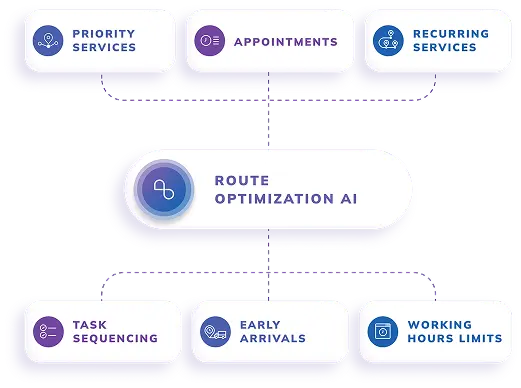
Predictive Traffic Analysis: It anticipates road conditions before and during deliveries and forecasts traffic patterns by combining multiple data sources. Planners can select the most efficient routes.
Predictive Traffic Analysis by NextBillion routing system | |
Historical traffic data | Identifies recurring congestion patterns based on previous travel records. |
Live traffic information | Detects accidents, road closures, construction work, and unexpected delays in real time. |
Time-of-day patterns | Predicts traffic conditions during peak hours, weekends, holidays, and special events. |
Machine Learning for Better Routing: It learns from operational data rather than relying solely on fixed optimization rules. With each task completion, the AI system identifies patterns that enhance future route planning.
Machine learning and patterns for NextBillion.ai | |
Driver behavior | Includes driving speed, preferred routes, and stop efficiency. |
Delivery durations | Accounts for unloading times, customer-specific service requirements, and seasonal variations. |
Customer preferences | Preferred delivery windows, receiving procedures, and recurring order patterns. |
AI-Driven Decision Making: NextBillion uses intelligent optimization techniques to evaluate multiple routing scenarios and identify the most cost-effective and operationally efficient solution based on business objectives and constraints.
ETA Prediction: By getting informed about the arrival of beverage delivery vehicles, the retailers keep the space free for swift operation. ETAs are valuable information in logistics. By combining GPS data, traffic conditions, weather information, delivery history, and route characteristics, AI continuously updates arrival estimates throughout each trip.
AI-powered ETA prediction improves | |
Customer communication | Provide accurate delivery updates and proactive notifications of delays. |
Delivery accuracy | Reduces missed delivery windows and improving scheduling precision. |
Fleet visibility | Enables dispatchers to monitor vehicle locations and delivery progress in real time. |
Highly Customizable Constraints: There are more than 50 routing parameters on the dashboard that enable businesses to model real-world constraints such as delivery time windows, vehicle skills, priorities, capacities, depots, and custom travel costs.
Automated Route Recalculation: AI enables NextBillion’s routing systems to respond immediately to the changing delivery conditions due to accidents, severe weather, road closures, vehicle breakdowns, or last-minute customer requests.
When disruptions occur in the NextBillion route optimization API:
This automated route recalculation eliminates the need for manual dispatcher intervention. Beverage distributors are able to maintain efficient operations even under rapidly changing conditions.
Enterprise Scalability: The NextBillion routing tool can optimize routes for up to 10,000 stops and supports very large distance matrices, making it suitable for enterprise-scale logistics and beverage distribution operations.
API-First Integration: Our tool can integrate seamlessly with Transportation Management Systems (TMS), Enterprise Resource Planning (ERP), Warehouse Management Systems (WMS), telematics platforms, and other enterprise applications through flexible APIs.
NextBillion uses advanced algorithms in determining the most efficient way to assign beverage delivery orders and sequence stops. Beverage distributors are empowered with an intelligent and adaptive delivery system that reduces operating costs, improves fleet productivity, increases on-time delivery performance, enhances customer satisfaction, and makes better operational decisions. The delivery procedures become increasingly efficient, with a significant competitive advantage in the beverage distribution industry.
In addition to generating optimized route plans, there are critical tasks such as load handling, PODs, stoppage clustering, etc. that are essential in effortlessly managing a beverage distribution business.
NextBillion’s API solutions are designed to assist with the systematic requirements of the logistics and transportation assignments. They can effectively automate the entire delivery cycle from end-to-end.
Here is a list of NextBillion’s API solutions that are critical for business distributors.
Route Optimization API
It helps manage complex delivery operations in beverage distribution. Constraints like multiple stops, large fleets, efficient loading on vehicles, or customer delivery time windows are optimized for a feasible combination on specific delivery tasks. The AI engine generates cost-effective routes by considering real-world constraints such as traffic conditions, commercial vehicle restrictions, service times, and delivery priorities. It can seamlessly integrate with an existing logistics management system and improve fleet utilization.
Driver Assignment API
Beverage distributors use it to assign drivers on different transit tasks. The tool helps in deciding relevant profiles based on the skills with specific categories of load and vehicle, experience on any particular route, and availability or attendance on the floor. It can also suggest backup drivers, if required.
Clustering API
It is the most practical application for beverage distributors. They can manage the delivery locations by creating multiple groups based on their reachability among each other. Retail stores, marts, beverage outlets, or restaurants as delivery points can be grouped together, keeping a central point or their distance and time to travel between each other. This helps in alloting drivers for specific areas and balancing the workload.
Directions API
It helps beverage distributors and truck drivers in determining the best route between two delivery locations. During urgent orders or a sudden change, this API proves to be a silver lining when customer satisfaction and instant order completion become inevitable.
Distance Matrix API
With a capacity to evaluate a 5000 X 5000 matrix, the API is capable of determining a reliable ETA and distance across each delivery location. This one-to-many and many-to-many transit estimation helps the beverage distributors in choosing the most reasonable delivery sequence with multiple stoppages.
Snap-to-road API
Beverage distributors need the Snap-to-road API to virtually create the actual path taken by the delivery person by aligning the GPS traces with the exact road conditions. It helps in deducing the fault that caused deliberate alteration in the plan by the driver.
Isochrones API
It helps in critical conditions when the beverage distributors wish to locate all the locations that can be reached from a specific point within a set timeframe. They use it while instructing a particular delivery vehicle to serve a certain location with the urgent orders.
Navigation API
These are undoubtedly needful for the delivery drivers to receive turn-by-turn instruction on the transit route. We also provide an SDK file for the developers to generate a navigation experience for the drivers.
Route Report API
It is a complete X-ray report of the delivery trip taken by the drivers. Beverage distributors use it to record the entire movement of the trucks from the warehouse to each location in sequence and reach the end point. The purpose is simply to have a blueprint about how the task was executed and understand the troubles.
Batch Routing API
Beverage distributors are overoccupied with managing multiple delivery vehicles, especially during peak hours. With the batch routing API, they are able to dispatch all the tasks in a single step.
Live Tracking API
It enables the beverage distributors and the customers to fetch the live location of the delivery vehicles. Real-time positions of the delivery vehicles are necessary in the current scenario to enhance transparency of the task or ensure security to the drivers by providing them help on the spot if a worse situation arises.
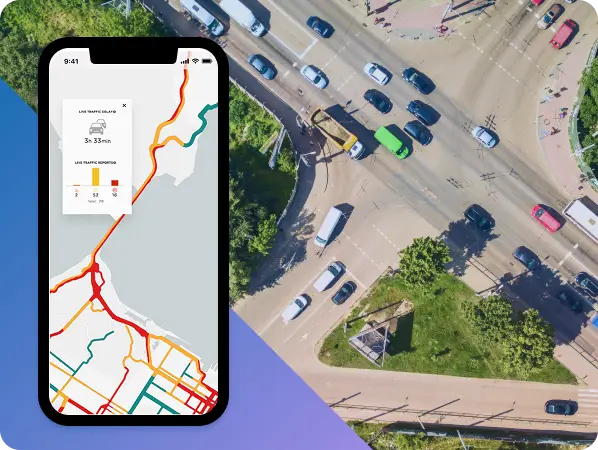
Geofence API
The dispatch managers in beverage distribution use it to control the movement of the delivery vehicles by creating a virtual boundary on the digital navigation map. The system automatically sends an alert message when the vehicle reaches near the restriction.
Route Reconstruction API
It reconstructs the trip route on the map taken during earlier delivery tasks by the drivers and is suitable for analyzing the critical points.
Route Dispatch API
Beverage distributors use it to share the delivery assignment along with essential details and documents directly on the driver’s digital device.
Documents API
It helps attach specific documents or templates like receipts or forms with the delivery assignments.
Maps:
It gives an option to use vector tiles, raster tiles, and static images to create informative digital maps with names and images of places and road networks.
Road Segment API:
With this API, the beverage distributors provide additional functionality to the drivers who can extract essential information about a section of road in real-time, such as max-speed, mid-points, etc.
Traffic incidents API
It can fetch the live traffic details along with recent incidents that occurred on the route or area and may hamper the traffic movement or road closures
Weather Forecast API
This is an accurate solution in predicting the weather conditions at global levels, and also receiving hourly/daily updates with essential information like temperature, wind, humidity, pressure, etc.
Road Editor API
Only available with enterprise edition, this API enables adding extra information on the route on any chosen route, such as “stay on your right,” “sharp turn ahead,” “speed below 30 mph,” etc.
Places API
Beverage distributors extensively use it to find the exact location of places with incomplete addresses. This tool can extract the location from landmarks, coordinates, or partial details shared by the customer on a phone call
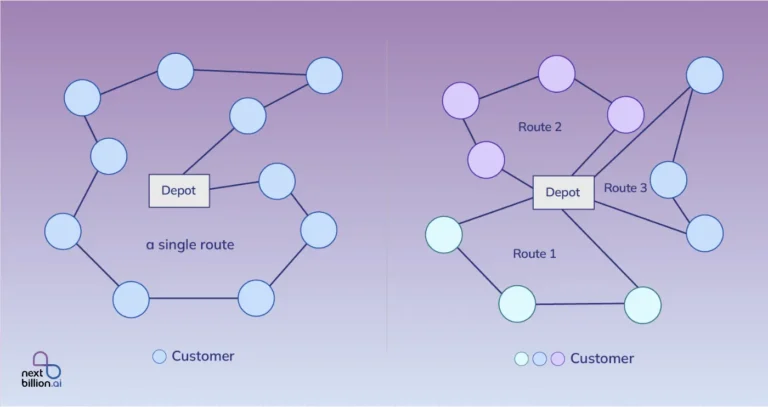
It is now understood that beverage logistics is far more complex than regular parcel delivery services. The beverage distributors have a lot more responsibilities than simply dropping-off the crates, such as safe, and on-time delivery through fastest route. There is barely a window for errors in the delivery procedures.
NextBillion combines intelligent routing with location intelligence, and therefore, our API-first platform is better and the fastest to build efficient, scalable, and resilient delivery operations. It makes smarter operational decisions across every delivery, every vehicle, and every route. With advanced routing algorithms, real-time location intelligence, and flexible APIs, businesses can streamline deliveries, lower operational costs, and deliver a more reliable customer experience.
A route optimization tool at any point is non-negotiable for transit business owners. While planning the delivery vehicle’s movement is necessary with a powerful routing tool, the beverage distributors also generate more profit with greater customer satisfaction after successful order completion. They can serve more customers with fewer resources while lowering operational costs.
AI-enabled tools have the capacity to analyze historical delivery data, live traffic conditions, driver behavior, and operational constraints. This helps in reoptimizing the route plans in real-time, i.e., when the delivery agents have started the journey and may face a sudden hindrance. NextBillion route optimization API can dynamically adjust routes when unexpected disruptions occur, helping maintain delivery schedules.
Route optimization identifies the most efficient delivery sequence, eliminates unnecessary mileage, avoids traffic congestion, and improves vehicle utilization. This results in lower fuel consumption and reduced transportation expenses.
Missed deliveries are commonly caused by poor route planning, traffic delays, inaccurate customer addresses, vehicle capacity issues, restricted road access, and failure to meet customer delivery time windows.
Consumer navigation apps like Google Maps are designed for personal travel and do not account for commercial vehicle restrictions, multi-stop optimization, delivery time windows, truck dimensions, vehicle capacities, or enterprise fleet management requirements. It means these tools are neither designed to generate optimize routes nor they can understand the complexities and constraints, such as, route restrictions, vehicle’s specifics, drop/pickup schedules, etc.
Beverage distributors should choose an AI-powered routing system with advanced algorithms to manage multi-stop optimization, vehicle capacity planning, time-window support, real-time traffic, fleet tracking, commercial vehicle routing, custom maps, route APIs, proof of delivery integration, and enterprise scalability.
NextBillion.ai provides an AI-powered route optimization API. It serves commercial vehicle routing, dynamic route recalculation, accurate ETA prediction, custom maps, and API-first integration. With all these customizations, the beverage distributors are able to reduce fuel costs, improve delivery accuracy, and efficiently manage large fleets.
Yes. Enterprise-grade route optimization platforms are designed to optimize thousands of delivery stops and hundreds of vehicles while integrating seamlessly with ERP, TMS, WMS, telematics, and other logistics systems.
Nitesh Malviya is a research-oriented professional with a background in Computer Science & Engineering. He served for 7 years as a software consultant and wrote passively in the tech niche before becoming a full-time technical writer.