

- BLOG
Best 7 Google Maps Alternatives & Competitors in 2026
Published: April 26, 2024 | Updated: December 18, 2025
Route Optimization API
Optimize routing, task allocation and dispatch
Distance Matrix API
Calculate accurate ETAs, distances and directions
Directions API
Compute routes between two locations
Driver Assignment API
Assign the best driver for every order
Routing & Dispatch App
Plan optimized routes with 50+ Constraints
Product Demos
See NextBillion.ai APIs & SDKs In action
AI Route Optimization
Learns from Your Fleet’s Past Performance
Platform Overview
Learn about how Nextbillion.ai's platform is designed
Road Editor App
Private Routing Preferences For Custom Routing
On-Premise Deployments
Take Full Control of Your Maps and Routing
Trucking
Get regulation-compliant truck routes
Fleet Management
Solve fleet tracking, routing and navigation
Middle Mile Delivery
Optimized supply chain routes
Construction
Routes for Construction Material Delivery
Oil & Gas
Safe & Compliant Routing
Food & Beverage
Plan deliveries of refrigerated goods with regular shipments
Table of Contents
Google Maps is used worldwide for basic route planning and complex route optimization scenarios, but is it suitable for organizations dealing with large and complex fleet management scenarios? If you are looking for a comprehensive list of Google Maps alternatives and competitors, you have come to the right place.
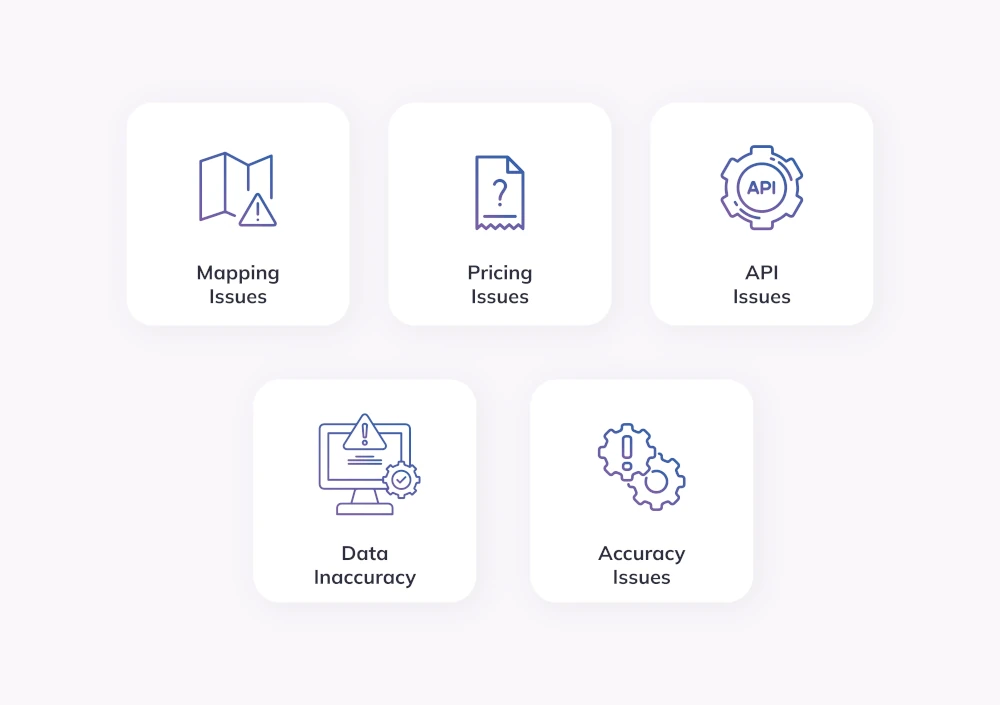
Google Maps might not be suitable for:
In this article, we have tested 7 route planning solutions like NextBillion.ai as Google Maps alternatives. Let’s explore each of these solutions in detail.
Google Maps is a widely used tool for navigation, but it’s not without flaws. Here are three reasons why you may want to think twice before trusting it completely.
One of the most concerning issues with Google Maps is its ability to track your location, even when you think you’ve turned off location services. Unless you also disable Web & App Activity in your Google account settings, Google continues to collect data about where you go. Every time you open Google Maps or other Google apps, timestamps are sent back to Google, creating a detailed timeline of your movements.
This data isn’t just stored; it’s used to serve you targeted ads based on your location history. For those concerned about privacy, this raises serious issues about the extent of control Google has over your personal information. Even if you aren’t using Google Maps actively, your location history could still be logged and used in ways you may not be aware of.
Google Maps excels at providing the fastest route to a destination, but it doesn’t always take into account the type of vehicle you’re driving. The app doesn’t differentiate between a heavy-duty truck, a motorbike, or a standard car. As a result, drivers may be directed down roads that aren’t suitable for their vehicle.
For instance, some roads may be too narrow for larger vehicles, or too steep for motorcycles, which can create dangerous situations. Furthermore, certain areas may have restrictions that aren’t adequately highlighted in Google Maps, such as weight limits for bridges or off-road paths unsuitable for regular cars. This lack of consideration can lead to hazards or delays, especially if you’re unfamiliar with the area.
While Google Maps relies on a vast amount of data to create accurate representations of roads, landmarks, and routes, that data comes with a degree of uncertainty. This uncertainty can vary significantly depending on the area. In cities, where data is frequently updated and verified, you’re likely to get a more accurate experience. However, in rural or remote regions, the data may be outdated, incomplete, or even incorrect.
Maps that rely on crowdsourced information are also prone to inaccuracies. A road might be listed as passable when it’s closed for construction, or a business might still be marked open long after it’s been shuttered. These gaps in data can lead to confusion, misdirected routes, or even dangerous scenarios where drivers are guided into inaccessible areas.
Google Maps is undeniably one of the most widely used mapping platforms globally, offering many features and functionalities. However, despite its popularity, users and businesses encounter several shortcomings, prompting them to seek alternatives.
Let’s dive into some key reasons why exploring alternative mapping solutions might be beneficial.
While Google Maps boasts extensive coverage, there are instances where users encounter mapping inaccuracies. These issues could range from outdated or missing information about businesses and points of interest to errors in navigation routes. For businesses relying heavily on accurate mapping data, such discrepancies can lead to customer dissatisfaction and operational inefficiencies.
Google Maps offers a free tier for basic usage, but businesses with high-volume usage or those requiring advanced features may find the pricing structure less favorable. The costs associated with premium features and increased usage can quickly escalate, potentially straining budgets, particularly for smaller businesses and startups.
Accuracy is paramount when it comes to mapping platforms, especially for industries such as logistics, transportation, and emergency services. Despite Google’s efforts to maintain accurate mapping data, discrepancies in location information, business listings, and routing algorithms can undermine the reliability of the service.
Google Maps API is widely used to embed maps and location-based services into websites and applications. However, developers often encounter limitations and restrictions that hinder customization and integration with existing systems. Alternative mapping solutions may offer more flexible APIs with fewer constraints, allowing for greater customization and seamless integration.
Inaccurate or outdated data can pose significant challenges for businesses relying on mapping platforms for decision-making and operations. Whether it’s incorrect business hours, outdated contact information, or missing locations, such inaccuracies can lead to customer frustration and lost opportunities. Exploring alternatives with reliable data sources and robust verification mechanisms can mitigate these risks.
One of the major drawbacks of using Google Maps is the way it tracks and stores your location data. Even with location services turned off, Google can still collect data through other services like Web & App Activity. This information is then used to build a detailed profile of your movements and habits, which is sold to advertisers for targeted marketing.
Another limitation of Google Maps is its reliance on a constant internet connection for full functionality. While Google does offer the ability to download maps for offline use, the experience is often limited. Features like real-time traffic updates, business hours, and reviews are unavailable offline, reducing the app’s effectiveness in areas with poor or no signal.
If you enjoy outdoor activities like hiking, cycling, or off-road driving, Google Maps often falls short. The app is built mainly for city navigation, and while it may display major trails, it needs detailed topographic maps or specialized routes for outdoor enthusiasts. This makes it less ideal for planning or navigating through wilderness areas.
While Google Maps remains a dominant player in the mapping industry, it’s essential for businesses to evaluate their mapping needs critically and consider alternatives that address their specific requirements. Whether it’s concerns about mapping accuracy, pricing, API limitations, or data integrity, exploring alternative mapping solutions can provide businesses with greater flexibility, reliability, and control over their location-based services.
By diversifying their mapping tools and adopting solutions that align with their unique needs, businesses can enhance customer experiences, optimize operations, and drive growth in an increasingly location-centric digital landscape.
These are the best Google Maps alternatives as per their key feature and use cases.
Alternative | Features | Pros | Cons | Rating |
NextBillion.ai | Advanced Truck Routing Support. Advanced Route Optimization Re-optimization feature | Telematics Integration. Flexible Pricing | Geocoding Limitation. | 4.7/5 |
MapQuest | Free route planning upto 26 stops. Automatics IRS calculation. | Ease of use. Visual Design | Ads can distracting | 4.0/5 |
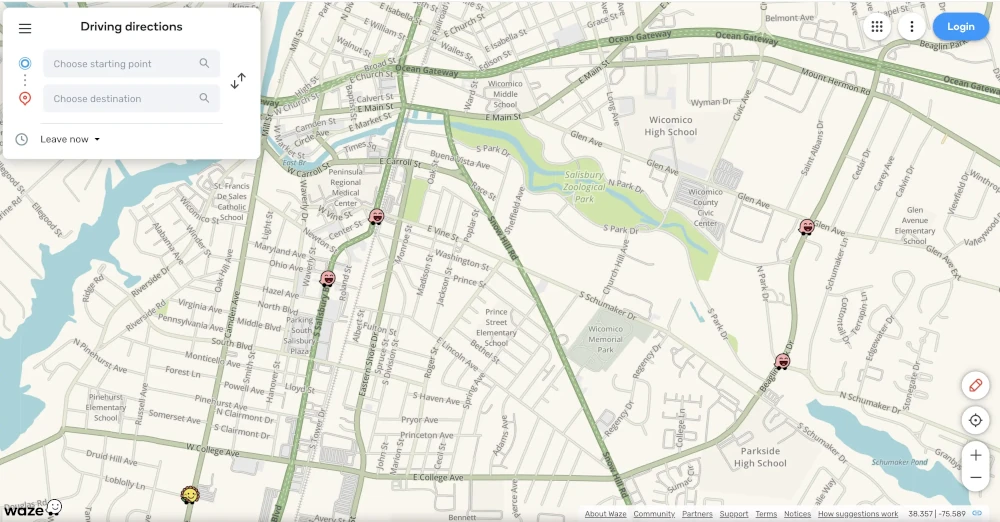
Waze | Real-Time Traffic Updates. Community-Driven. Carpooling. | Free to use. | Limited route planning capabilities | 3.8/5 |
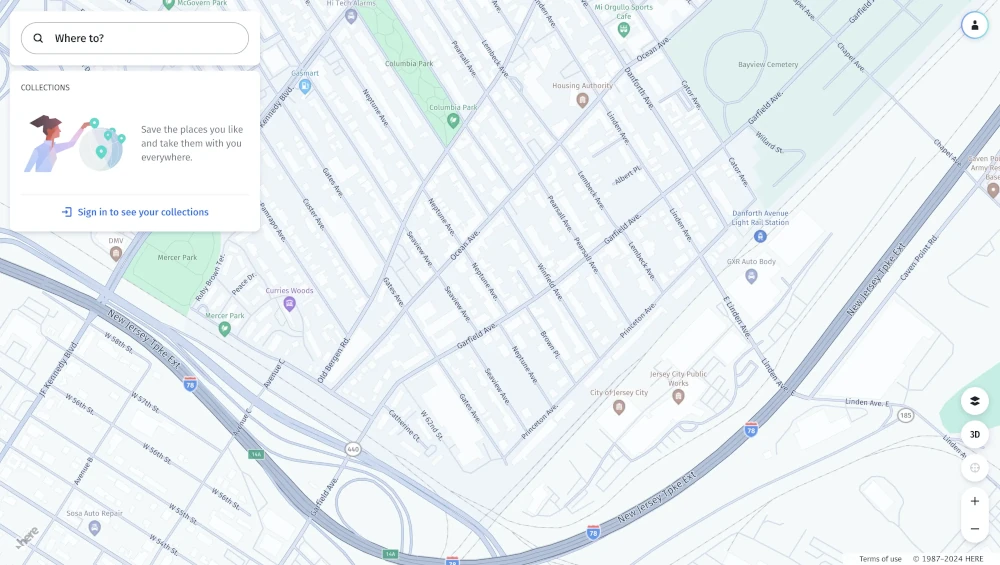
Here WeGo | Offline Maps. Public Transit Directions. Points of Interest. | Free to use | Interface Complexity | 4.0/5 |
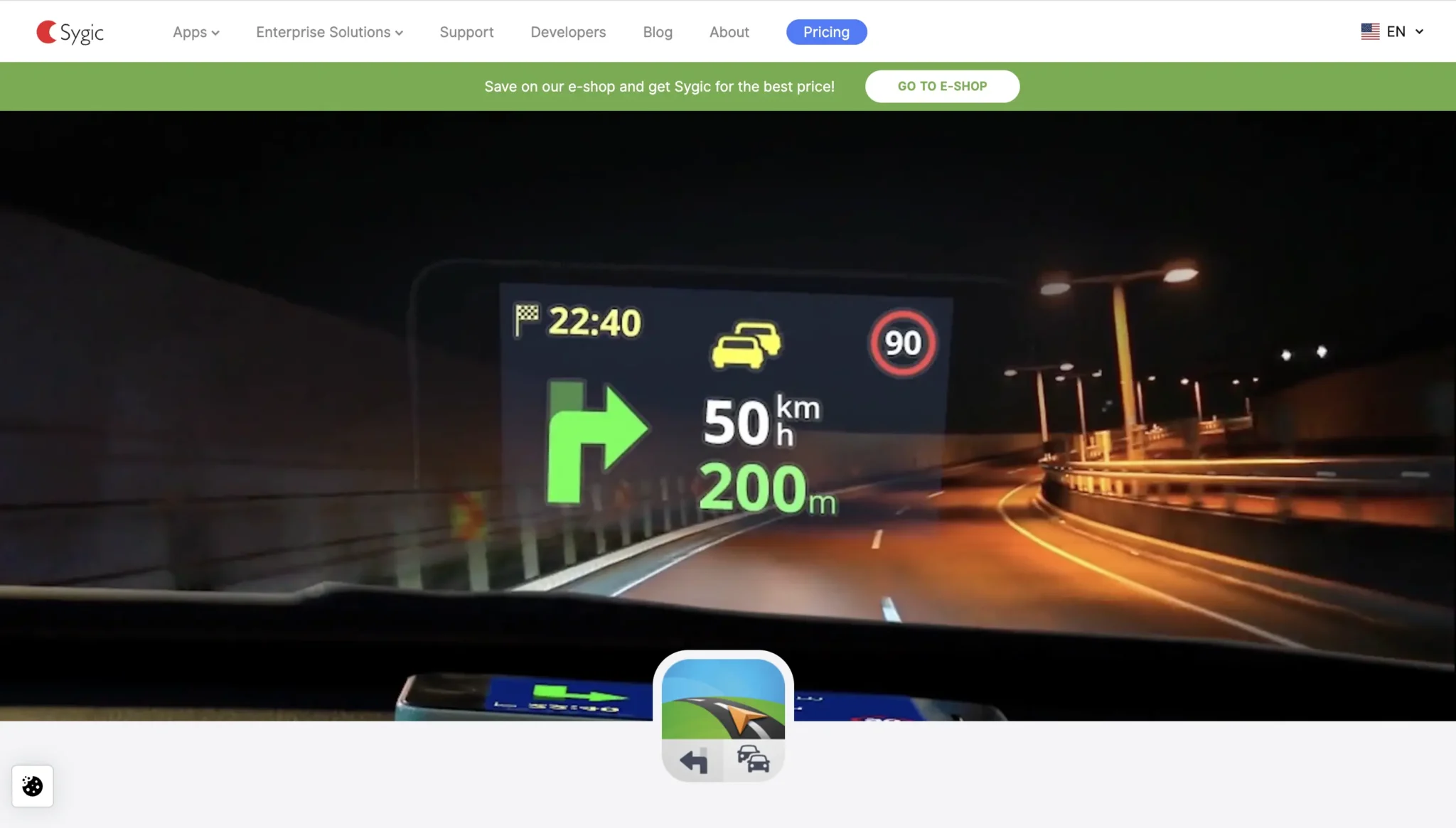
Sygic | Offline Maps. Dashcam. Family Locator. | Extensive Offline Maps. Advanced Navigation Features. | Subscription based Pricing. | 4.6/5 |
Maps.me | Turn-by-Turn Navigation. Points of Interest. OpenStreetMap Integration. | User-Friendly Interface Detailed Mapping Data | Limited Navigation Features Data Consumption | 4.1/5 |
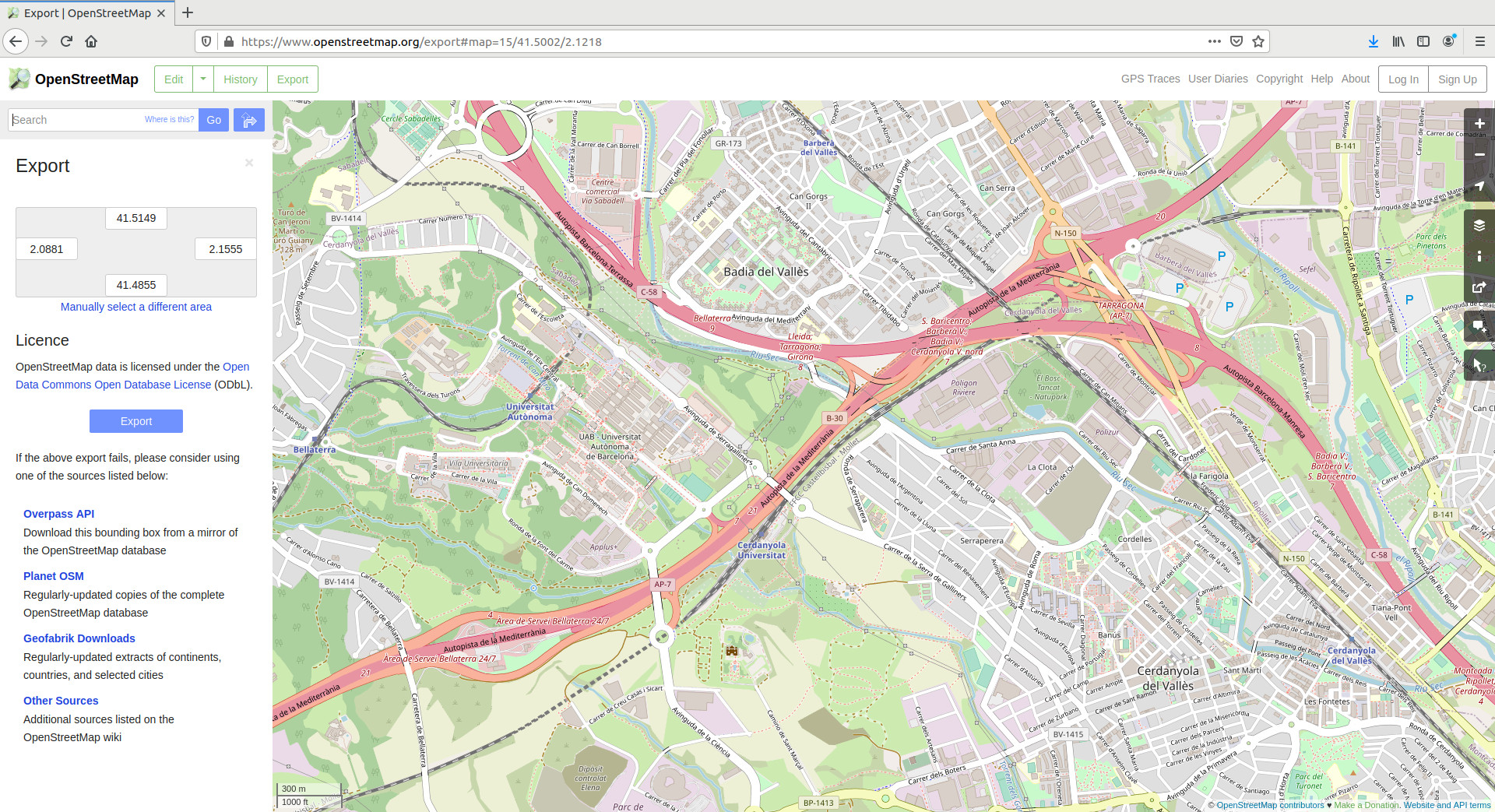
OpenStreetMap | Customizable Maps. Global Coverage. Open Data. | Free and Open Community-Driven | Steeper Learning Curve Limited Support | 3.8/5 |
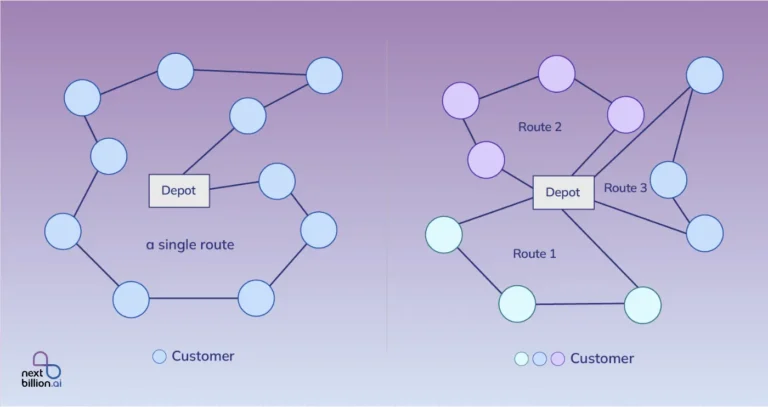
NextBillion.ai’s Route Optimization API offers advanced route planning capabilities for complex scenarios. This API is capable of solving multi (single) vehicle routing problems.
The API comprises two key components: the input data and the optimization engine. The input data contains information about elements such as jobs (stops or places to visit), vehicles (delivery trucks, vans, etc.), and shipments (pickup and delivery tasks). The optimization engine uses this data to craft the most efficient routes for your vehicles.
What sets the API apart is its ability to manage complex constraints and variables. Whether it’s considerations like capacity limitations, time windows for deliveries, or vehicle availability, the API accommodates these logistical needs. This adaptability enables businesses to tailor the route planning process precisely to their unique operational requirements, ensuring maximum efficiency and cost-effectiveness.
With this API, businesses can streamline their logistics operations, minimize resource wastage, and enhance overall productivity.
Let’s explore some of the key features that set the Route Optimization API apart.
The API offers a range of advanced features tailored for efficient trucking operations. It ensures compliance with truck-specific parameters like size, weight, and hazardous material restrictions, optimizing routes to avoid unsuitable roads.
With over 50 constraints available, the API efficiently manages fleets of multiple trucks, delivering optimized routes and schedules. It prioritizes safety by avoiding sharp turns and U-turns and provides routes suitable for hazardous cargo transportation.
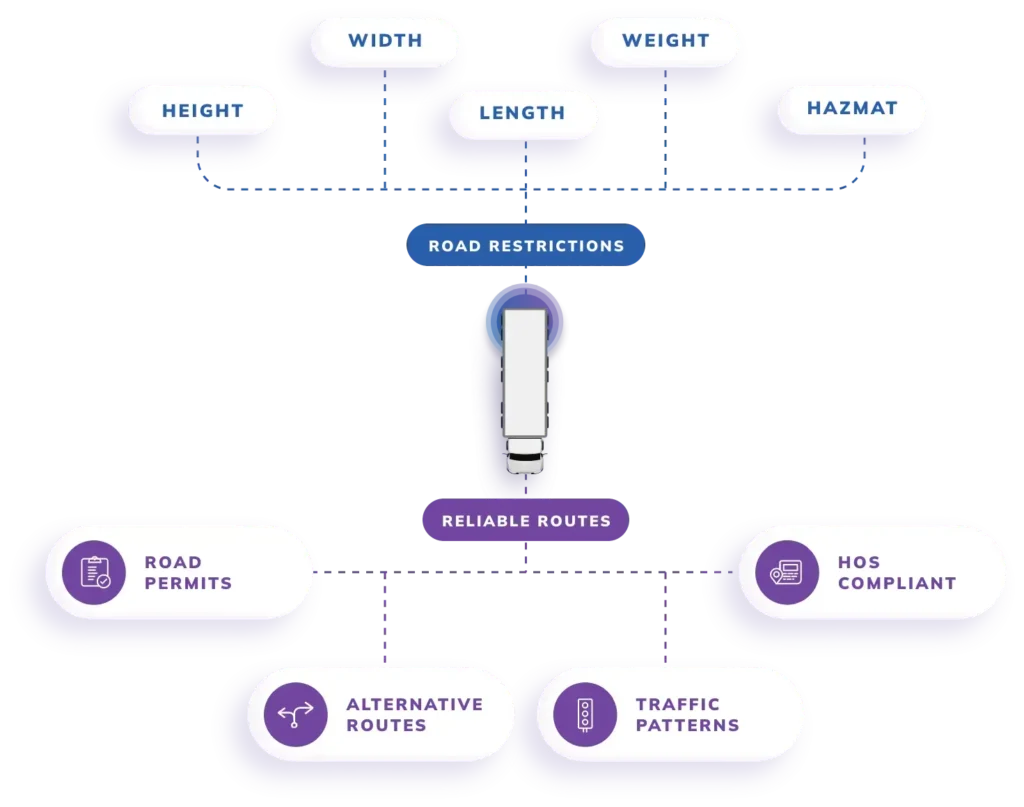
The API enables efficient planning of routes with multiple stops while ensuring trucks arrive precisely at curbsides. Post-trip analysis is simplified with route tracing functionality, allowing businesses to monitor route adherence and optimize future planning.
Service boundaries can be defined within specified constraints, and toll roads can be avoided to optimize cost-effectiveness. Additionally, the API considers weight limits when planning routes, ensuring compliance with regulatory requirements and smooth transportation operations.
The API integrates smoothly with telematics systems, making it easier for businesses to improve their logistics operations. With NextBillion.ai, businesses can link up their current Enterprise Cloud, Telematics, ERPs, and CRM platforms to access advanced features for optimizing routes and managing services better.
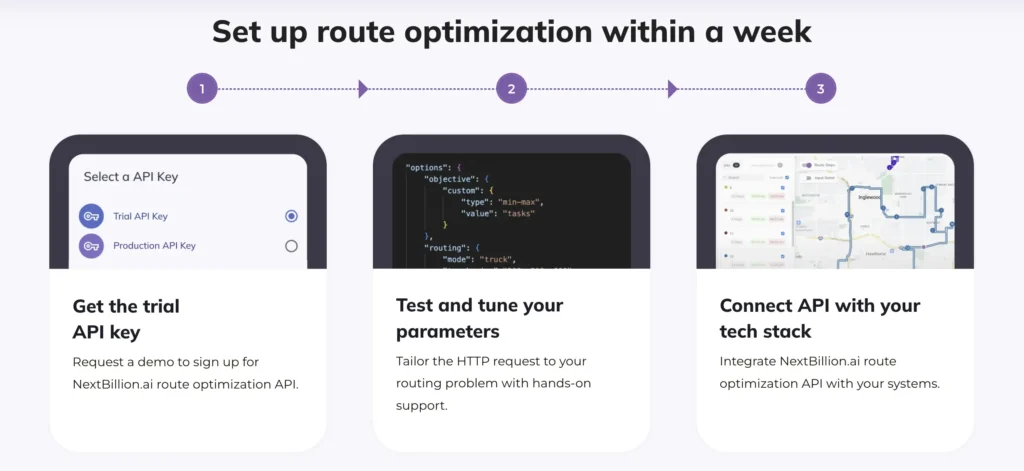
By connecting NextBillion.ai with telematics systems, businesses can use real-time data about where vehicles are, their routes, and how they’re performing. This connection allows for dynamic route planning that takes into account live traffic updates, the condition of vehicles, and how drivers are doing. This means you can plan routes more efficiently and be more responsive to changes as they happen.
NextBillion.ai‘s Route Optimization API offers a handy re-optimization feature, allowing users to tackle previously unassigned tasks by tweaking certain variables.
These variables could be things like adjusting the number of vehicles needed, changing vehicle schedules or capacities, or tweaking task time windows. Essentially, it’s about finding strategies to increase the likelihood of getting more tasks assigned.
Here’s how it works: Let’s say you’ve already run an optimization but ended up with some tasks left unassigned. With re-optimization, you can tweak your request using the strategies mentioned above and explicitly specify the tasks that were left out.
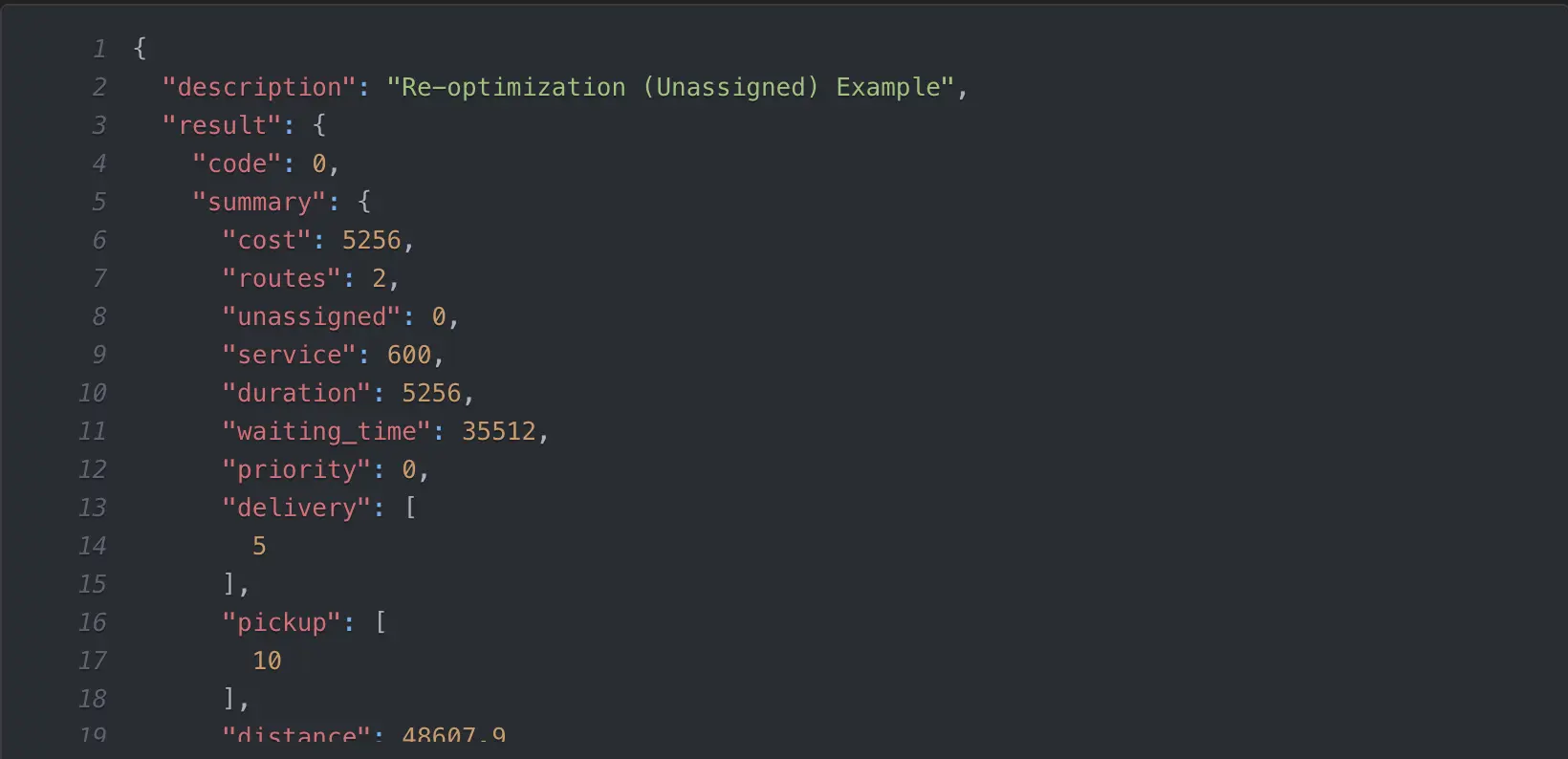
When you send this re-optimization request, the solver will try to fit these new tasks into the original plan with minimal changes. This allows businesses to quickly adjust their route plans, even at the last minute, without having to overhaul everything from scratch. It’s a convenient way to adapt to changing circumstances without major disruptions to your existing plans.
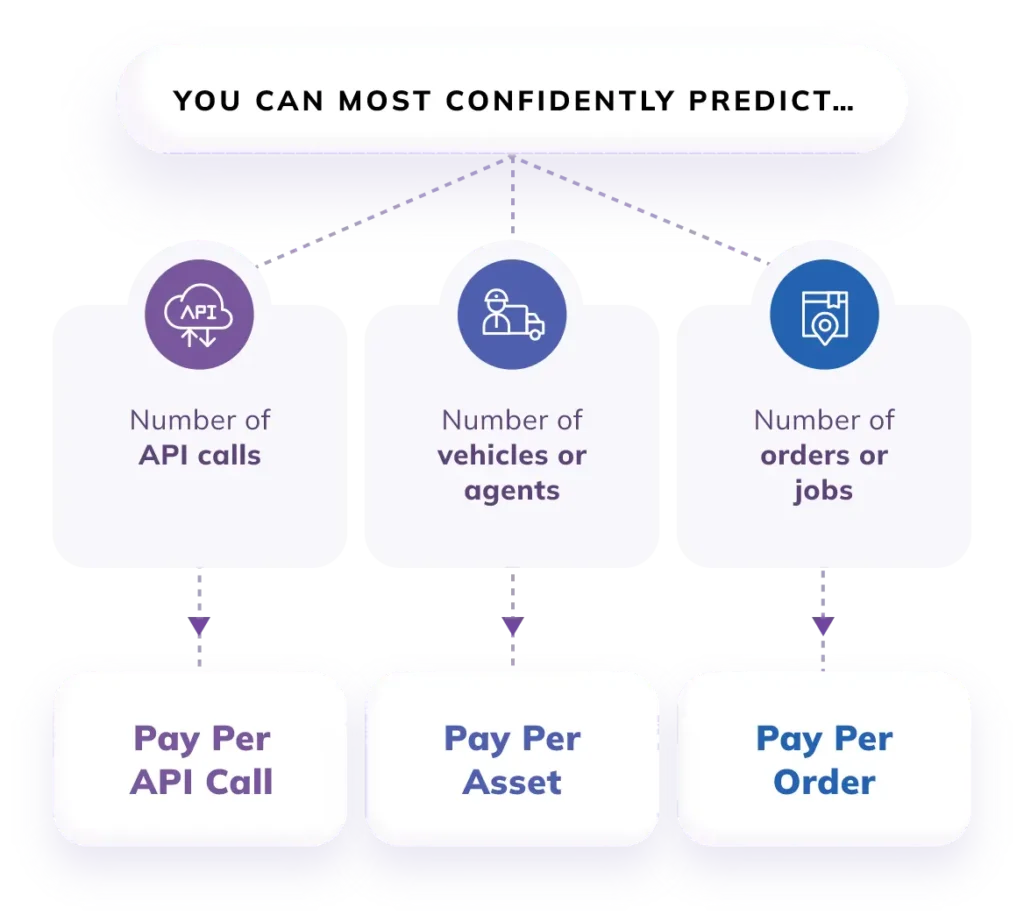
NextBillion.ai offers three different pricing models to meet the needs of different businesses:
API calls based: This is good for companies that need to make limited API calls.
Per Order: This is great for companies that get different amounts of orders.
Asset-based: Companies that manage fleets or assets can use this type of software.
NextBillion.ai also offers a customized pricing model that aligns with diverse business models and needs. This model enables businesses to predict operational costs by offering accurate cost modeling.
When comparing NextBillion.ai with Google Maps, several factors distinguish the two mapping solutions, making NextBillion.ai a preferred choice for businesses:
1. Customization and Flexibility: NextBillion.ai offers more customization options tailored to specific business needs compared to Google Maps. Businesses can fine-tune route optimization algorithms, integrate with various enterprise systems seamlessly, and adapt the platform to their unique requirements.
2. Advanced Optimization Features: While Google Maps provides basic route optimization capabilities, NextBillion.ai offers advanced optimization features such as re-optimization, dynamic task assignment, and real-time adjustments based on telematics data. These features enable businesses to achieve higher efficiency and responsiveness in logistics operations.
3. Telematics Integration: NextBillion.ai seamlessly integrates with telematics systems, allowing businesses to leverage real-time vehicle data for dynamic route optimization. This integration enhances efficiency and responsiveness by considering live traffic updates, vehicle conditions, and driver behavior, which Google Maps lacks.
4. Cost-Effectiveness: While Google Maps offers a free tier for basic usage, businesses with high-volume or specialized needs may find NextBillion.ai‘s pricing model more cost-effective. NextBillion.ai provides transparent pricing with flexible options, ensuring businesses pay only for the features and usage they require.
NextBillion.ai stands out as a comprehensive mapping and route planning solution for businesses seeking advanced customization, optimization features, telematics integration, enterprise-level support, data control, and cost-effectiveness.
While Google Maps remains a widely used mapping platform, businesses with specific needs and priorities may find NextBillion.ai better suited to their requirements.
Truck Routing Support: The API excels in providing advanced truck routing capabilities. It allows businesses to generate truck-compliant routes tailored to various truck types, considering factors such as weight, dimensions, and cargo specifications.
Flexible Pricing: NextBillion.ai offers a flexible pricing model that caters to businesses’ diverse needs and budgets.
Telematics Integration: The API seamlessly integrates with telematics systems, allowing businesses to leverage real-time vehicle data for dynamic route optimization.
While NextBillion.ai’s API offers numerous benefits, there are some limitations to consider:
Geocoding Limitations: The API cannot geocode addresses directly. Instead, users must provide location coordinates, which may not be user-friendly, especially for non-tech-savvy users.
Limited Driving Modes: NextBillion.ai’s Route Optimization API currently supports only car and truck driving modes. As a result, it does not cater to other transportation modes, such as bikes or multi-mode transportation.
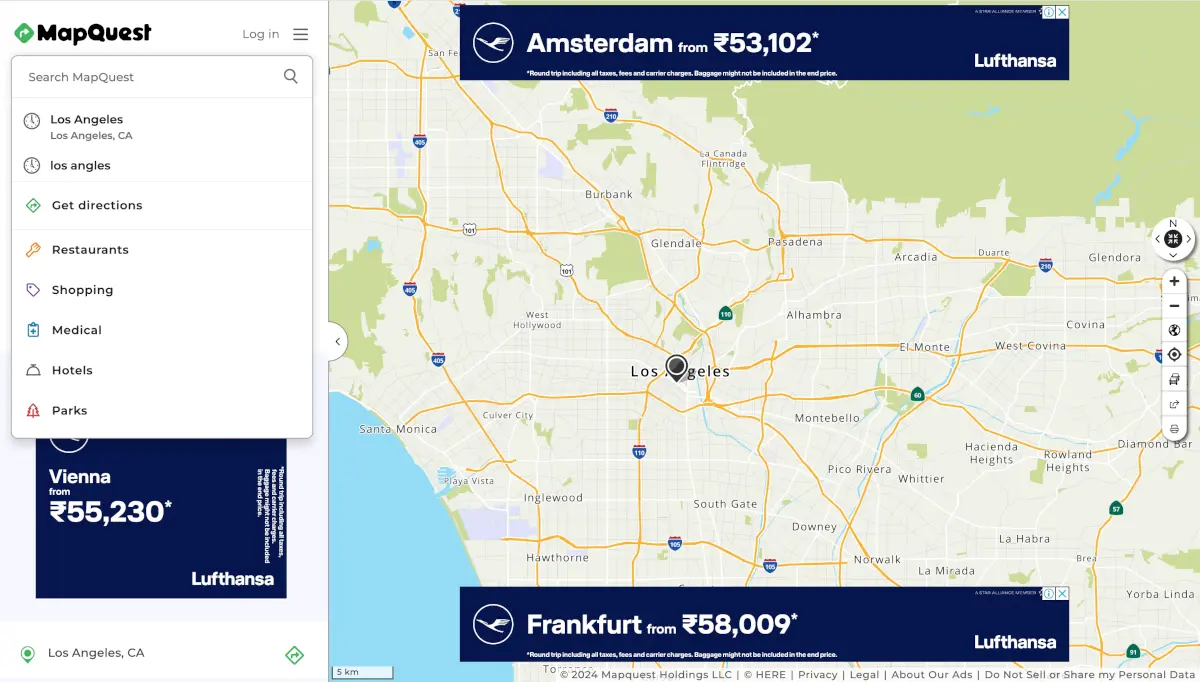
MapQuest is a free route planner planner tool that is capable of optimizing upto 26 stops.
MapQuest is best suited for small businesses that do not require complex route optimization capabilities. If you are someone who has a small in-house delivery around your area, then MapQuest is the tool you need.
MapQuest offers the following features:
MapQuest offers a range of pricing plans tailored to different user needs, from free basic services to premium options with advanced features.
Pricing Plans:
Pros:
Cons:
Waze is a popular navigation app famous for its crowd-sourced traffic data and community-driven features.
Waze caters to a broad audience, including commuters, travelers, and anyone looking for real-time navigation assistance. It’s particularly useful for drivers seeking accurate traffic updates, alternative routes, and crowd-sourced information about road conditions.
Waze offers the following features:
Waze is free to download and use, making it accessible to many users. It generates revenue through advertising and sponsored locations displayed on the app.
Pros:
Cons:
Here WeGo is a versatile mapping and navigation app that offers a range of features tailored to different user needs.
Here WeGo caters to a diverse audience, including commuters, travelers, and adventurers. It’s suitable for anyone looking for reliable navigation assistance, whether it’s for daily commutes, road trips, or exploring new cities.
Here WeGo is free to download and use, offering a wide range of features without any subscription fees. Additionally, users can download maps for offline use at no extra cost.
Pros:
Cons:
Sygic is a GPS navigation app renowned for its extensive feature set and user-friendly interface.
Sygic caters to a diverse audience, including drivers, travelers, and outdoor enthusiasts. It’s suitable for anyone seeking reliable navigation assistance, whether it’s for daily commutes, road trips, or off-road adventures.
Sygic offers a range of pricing options, including free basic features and premium subscriptions with additional features. Users can choose between monthly or annual subscription plans, with discounts available for long-term commitments.
A 12-month subscription to premium features will cost €17.99.
Pros:
Cons:
OpenStreetMap (OSM) is ideal for developers, businesses, and individuals seeking customizable mapping solutions. It caters to outdoor enthusiasts, researchers, and anyone needing detailed geographic information.
OpenStreetMap is free to use, but users may incur costs when using third-party services or APIs built on OSM data.
Pros
Cons
OpenStreetMap offers a powerful mapping solution, especially for users seeking flexibility and detailed geographic data.
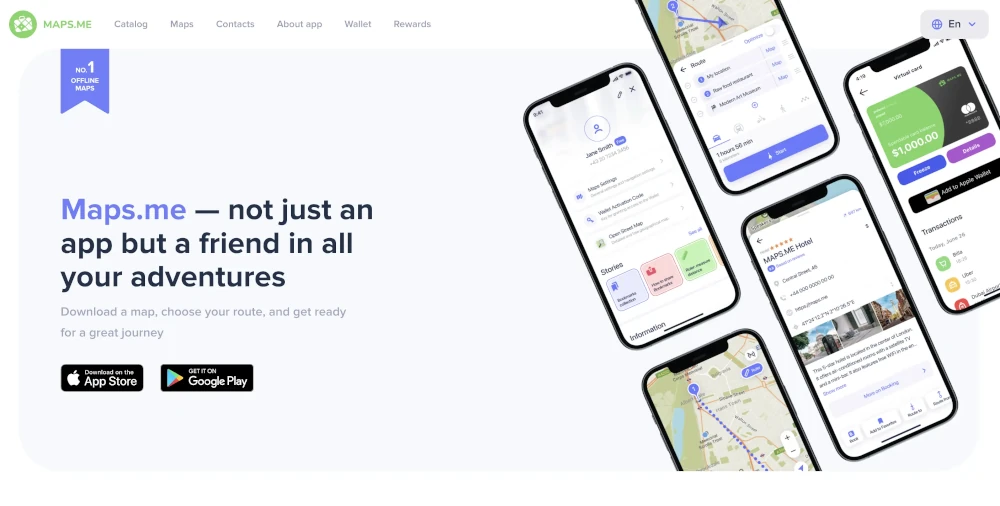
Maps.me is a popular mapping and navigation app renowned for its detailed offline maps and user-friendly interface.
Maps.me caters to a wide audience, including travelers, explorers, and commuters. It’s suitable for anyone seeking reliable navigation assistance, whether it’s for exploring new cities, navigating hiking trails, or commuting in areas with poor or no internet connectivity.
Maps.me is free to download and use, offering offline maps and basic navigation features at no cost. Additionally, users can purchase premium features such as real-time traffic updates and additional map layers through in-app purchases.
Pros:
Cons:
Now that we have listed Google Maps alternatives and competitors, it’s essential to test each tool to find the perfect fit for your needs.
If you prioritize advanced route optimization capabilities, NextBillion.ai emerges as the right choice. With its advanced features, Route Optimization API stands out as a comprehensive solution for efficient and effective route planning.
Shivangi is a seasoned Technical Writer with a passion for simplifying technical concepts. With over 5 years of experience, she specializes in crafting clear and concise documentation for various technical products and platforms.