


- BLOG
Best Freight Forwarding and Logistics Software in 2026
Published: March 20, 2026
Route Optimization API
Optimize routing, task allocation and dispatch
Distance Matrix API
Calculate accurate ETAs, distances and directions
Directions API
Compute routes between two locations
Driver Assignment API
Assign the best driver for every order
Route Optimization Software
Plan optimized routes with 50+ Constraints
Product Demos
See NextBillion.ai APIs & SDKs In action
AI Route Optimization
Learns from Your Fleet’s Past Performance
Platform Overview
Learn about how Nextbillion.ai's platform is designed
Road Editor App
Private Routing Preferences For Custom Routing
On-Premise Deployments
Take Full Control of Your Maps and Routing
Table of Contents
Freight forwarding is technically the middleman service between the seller and the transporter. It carries a range of tasks, such as load assessment, documentation, and shipment tracking. Similarly, freight brokerage is another growing sector in the logistics industry that fulfills career matching, commissions, negotiations, load posting, etc.
Increasing numbers of orders, fulfillment schedules, market competition, and distant delivery points are difficult to manage without automated systems. Because mere induction of spreadsheet tools can simplify the workload to some extent. But it can hardly tackle the limitations of manual analysis.
Fortune Business Insights has released a report on the market size of the global digital freight brokerage. It amounts to USD 9.73 billion this year in 2026. This represents significant growth from last year’s data of USD 7.61 billion. The segment is expected to reach up to USD 68.89 billion by 2034 at a CAGR of 27.73%.
Segmented logistics tools can systematize logistical transport and improve speed, accuracy, compliance, and profitability. But a freight management system is obligatory for companies handling parcels between different origins and destinations.
Logistics delivery becomes a complex process without effective freight operations software, which computes the data from multiple sources and streamlines the transit process.
Freight operation software encloses multiple components from booking the package to final delivery. The route optimization API plays a critical role in the entire transit procedure with scope to manage multi-stop freights, real-time tracking, or last-mile operations. It is the core element of goods transport and is integrated with tools like transportation management systems (TMS), freight brokerage platforms, and any other logistics software.
I have listed here the top freight forwarding and brokerage software companies serving in the global digital freight market to help you choose the best option for your business. But let’s first understand the fundamentals and features of freight operations technology.
Also read: Role of AI and LLMs in Freight Permit Processing.
While freight forwarding focuses on shipment coordination, carrier management, invoices, and documentation, freight operations is an umbrella term to conceptualize the entire logistical procedure of goods handling, transportation, and delivery.
The end-to-end workflow of freight operations includes a series of steps to successfully complete the logistical transport. A broad approach to the operation can be understood here.
Step 1. Customer Inquiry
Step 2. Freight Quotation
Step 3. Shipment Booking & Order Creation
Step 4. Documentation & Compliance
Step 5. Cargo Pickup From Origin
Step 6. Warehouse Handling
Step 7. Freight Transportation
Step 8. Shipment Tracking & Visibility
Step 9. Destination Handling & Customs Clearance
Step 10. Last-Mile or Final Delivery
Step 11. Billing & Settlement
Freight operations software is the central management system of logistics and transportation businesses. It serves as a complete facilitator and holds a wider concept to manage overall transit procedures.
The freight operations software is often referred to as a freight management system (FMS) or freight operating system, as it enables multiple operational tasks from a single dashboard. You can manage goods transportation, route planning & optimization, fleets, drivers, load dispatch, live tracking, real-time decisions, performance enhancement, and much more from a single platform.
Carriers, shippers, freight forwarders, or the full-fledged logistics service providers utilize an FMS system for end-to-end transportation process management.
Freight operations software is designed to fulfill the objective of logistics and transportation. It takes the responsibility of your business from order initiation to final billing after delivery task completion. It creates a coordination mechanism at different levels of the business process to enhance efficient workflow. The software has a wide structure to manage different elements; however, there are some critical segments that have greater significance in logistics.
The integration of a powerful routing solution delivers quick and efficient output for a specific business type. NextBillion’s route optimization API serves with additional tools for order segregation and analysis, efficient route plans, ETAs, live tracking of shipments, documentation templates, warehouse management, and other essential features to enhance logistics operations.
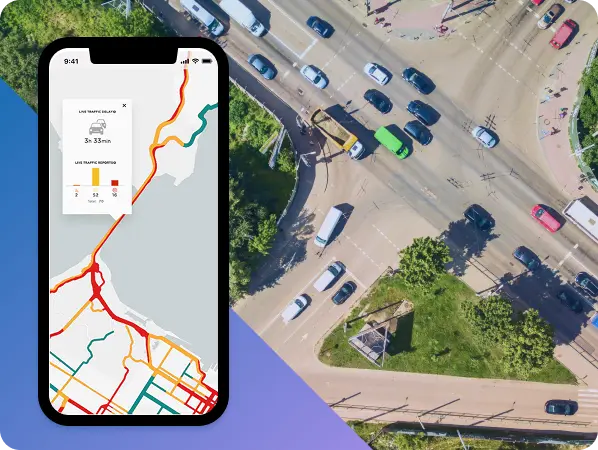
Orders and Shipments: It records the initial quotes on the orders, creates bookings, and establishes essential instructions shared by the client. Every pickup request is entered with shipping details, transit route, and pickup schedules.
Transportation Planning: The primary function of a transportation planning system is to generate an efficient route from its pickup point to the final destination. It can probably include multiple stoppages, such as hub stations, warehouses, or multiple pickups that fall in between. The tool can also select travel modes and carriers for different delivery schedules. The purpose is satisfactorily obtained by generating optimized route plans, load management, and best vehicle selection that eventually reduce transit time and cost.
Carriers, Rates, and Contracts: The software stores the complete profile of the available carriers, which includes their loading capacity, functional capabilities, compliance, and past performance. This helps in matching and managing the rate tables for stating accurate delivery quotations, adding surcharges, and logically applying the information for each shipment.
Documentation and Compliance: Instead of tabbing through different applications, you can actually create and manage transportation documents such as invoices, packing lists, B/L, AWB, proof of delivery, and other legal papers for route compliance. Effective freight operation software supports regulatory frameworks for quick customization and document validation.
Tracking and Visibility: The real-time vehicle tracking facilitated by routing solutions helps locate the exact position of the shipment and share status updates with the receiving ends, which invariably ensures transparency of the process. It constantly tracks the routes for GPS/telematics data and keeps notifying about the delays, holds, or failed deliveries.
Inventory and Handoffs: These software solutions can sync the freight data for inventory handling (loading/unloading) at the warehouses and manage the storage racks or cross-docking for handoffs to align with the inbound/outbound workflow.
Billing, Audit, and Analytics: You also do not have to switch applications for billing and auditing procedures. This tool automates freight invoicing procedures and audits rate validation, and all these features are accessible on the dashboard to review the reports.
Warehouse Glossary: Key Terms and Common Acronyms Explained
Global logistics companies heavily rely on freight operations software. But they are not the sole consumers of the tool. There are niche-specific service providers in the transportation industry that use this system to manage different goals, whether it is transportation, carrier matching, freight forwarding, or any other segment in the logistics chain. Let’s understand the type of companies or roles that utilize the freight operations software in specific logistics services.
Freight Forwarders: They are the logistics architects and take the responsibility to physically manage the deliverables through their journey, which usually falls across two or more countries. It may require arrangement of warehouses, packaging, or consolidation.
They use freight operations software to:
Third-Party Logistics Providers (3PLs): These companies have a business plan to handle the logistics workload of global enterprises that are willing to extend their services in multiple countries or regions without the fuss of managing staff, equipment, units, or local accessibility.
They use freight operations software to:
Freight Brokers: They are the first in the transit chain to initiate the business process. Freight brokers connect the shippers to the appropriate carrier services and arrange pickup of goods from the origin and drop-off at the destination.
They use the software to:
Carriers: Transport companies, which include truckers, LTL, FTL, airlines, or ocean carriers, use it for dispatch, routing, capacity management, and status updates.
Shippers: Large companies such as manufacturers, retailers, or e-commerce companies use it to track the outbound and inbound orders and expenditures.
Freight optimization software is the concept that the freight management system applies continuously to keep the transit mechanism effective and efficient. The purpose of the software is to automate route decisions, goods arrangements, and schedule fulfillment with the least and most justified cost.
In the process, the FOS connects with the TMS platforms to manage the maximum load on the trucks to avoid empty spaces and find the best possible route, which is the shortest distance to cover all the required stoppages, and thus, finish all the delivery schedules on the dashboard in the minimum transportation charges.
AI route optimization significantly improves transportation efficiency with its accurate analysis of the goods and delivery locations.
Also read: AI route optimization: Why it Matters for Logistics, Fleets, and Field Services
Load optimization on the trucks also reduces waiting time for the drivers in searching and arranging goods at the stoppage. In parallel to the route automation and goods handling, the FOS also predicts accurate ETAs that enhance customers’ experience with the services. Freight Operations Software delivers credible results in terms of work automation and task management. Here are the factors that tend to shape the potential of this system.
What is ETA and ETD? Do they impact routing in logistics and transportation?
Route Optimization: Logistics and transportation businesses thrive on delivering goods and services at the desired location in an estimated time. But with the bulk of orders and a mesh of road networks with specific constraints, it is essential to have a system that can design cost-effective and feasible route plans. While the documentation, freight brokerage, and compliances are critical components of the software, it is hard to achieve the desired results without route management.
Load Consolidation: Load management and consolidation is an important part of logistics. It simply means to adjust multiple consignments into one or a few large shipments that are routed in a specific direction. The analytical selection done by the software saves considerably on travel charges, fuel consumption, time, safety, and much more.
Reducing Empty Miles: One of the advantages of this composite software is utilizing the freight data for the most effective business transactions. The freight operations software centralizes the information about the delivery schedules from different hubs. It arranges the trucks in such a way that none of them have to wait a long time or return with empty cargo. Without any manual intervention, the truck drivers receive their orders from their next stoppages.
Accurate ETAs: With AI-powered routing, it is possible to estimate the times of arrival (ETAs) of the delivery trucks with the highest accuracy. The tool can sufficiently analyze the route difficulties, such as traffic conditions, weather, or roadblocks that can delay the movement of the vehicle, and accurately calculate the time required for the parcel to reach its destination.
We already know that in the freight brokerage process, the intermediary makes a deal between the shipper or the product seller and the transporter. On the other hand, a truck broker connects the shippers to the trucking companies offering goods movement service. Often the terms are used interchangeably. But there are some considerable differences between these services, and therefore, particular software systems are designed to furnish designated tasks.
Truck broker software is a specialized platform for the truck brokers to instantly get a list of available trucks on the site. Using the tool, they can easily offer transit plans to the shippers to carry the load to a desired location. Truckers can communicate with the carriers and drivers, schedule and dispatch shipments, and track deliveries on the road.
Freight broker software serves a broader purpose in the entire logistics business. It assists the freight brokers in coordinating shipments between the shippers and the carriers across different transportation modes. The service is not limited to truck or road transportation management, and brokers can handle the load distribution, track shipments, documentation, and billing through one platform. So along with truckload you can also manage rail, air, and ocean freights on this platform
Often large logistics companies have both these software systems for achieving higher efficiency in work management. While the freight broker software delivers sufficient output, truck broker software proves beneficial for multi-modal transportation, large truck networks, companies scaling their operations, or when 3PLs need coordination in day-to-day trucking.
Truck Broker Software vs. Freight Broker Software | ||
Feature | Truck Broker Software | Freight Broker Software |
Scope | Trucking only | All freight modes |
Primary user | Dispatchers, small brokers | Freight brokers, 3PL companies |
Transportation modes | Road, trucking | Truck, rail, air, ocean |
Complexity | Simpler | Advanced |
Use case | Load matching | Full logistics brokerage |
TMS, or Transportation Management System, as the name suggests, is the advanced digital solution designed for monitoring the movement of freight. It is the main or central platform for loads, carriers, pricing, billing, and tracking the goods through optimized channels, and it allows the freight brokers to enhance load capacity with less manual intervention.
The automation by TMS improves load planning, carrier selection, shipment tracking, and documentation with real-time details about the ongoing task.
Carrier Management: It is a tedious job for the logistics staff to extract the best output from the available carriers on the day-to-day transport assignments. The built-in tool allows posting loads, comparing carrier rates, and monitoring them digitally, which is also integrated on the load boards. It additionally manages the central database for insurance, contracts, compliance records, performance history, and fraud prevention checks.
Load Management: It facilitates creating and assigning loads to the appropriate carriers with quick and efficient analysis. The past history of goods and customer profiles helps avoid loading errors and automates the process. The quick quotation leads to booking followed by dispatch, and goods are delivered with an invoice without resuming data.
Freight Rate Management: TMS provides a systematic approach for reporting, analytics, and pricing intelligence. It can compare carrier rates and is highly capable of automatically structuring the delivery charges specific to the goods. The dashboard shows load volume, revenue, on-time performance, and profit margin by lane/customer/carrier.
Real-Time Shipment Tracking: The software allows live tracking of delivery vehicles. Along with that, you can dispatch the carriers, send rate confirmation, and share pickup/delivery details. The driver apps are linked to monitor the timeline of movement.
Integration with Other Systems: The Transport Management Software connects with the system ERP database (SAP), accounting tools, CRM, and warehouse management systems, allowing the brokers to manage logistics business from a central administration platform.
TMS serves some critical purpose in the entire logistics cycle. Here is the gist of how beneficial the TMS system is for freight brokers.
TMS is essential for the freight brokers to manage freight operations, improve visibility, and stay competitive.
Modern freight brokerage platforms are a complete automated solution. Brokers who were earlier using emails, phone calls, and spreadsheets are now working with real-time data and system integrations to streamline operations.
Manual interventions are minimizing, and automation is improving visibility with work efficiency. These platforms allow brokers to manage multiple logistics activities in different portions of the logistics lifecycle. They are equipped with tools to cover critical steps in a single dashboard and assist the brokers in a seamless workflow.
Prominent features of modern freight brokerage platforms.
Load Management: Brokers can digitally create, assign, and monitor the delivery of goods from pickup to delivery destinations through this centralized system.
Carrier Management: It helps brokers create and manage a network of carriers for various delivery tasks during new assignments and track delivery schedules.
Automated Documentation:
Instead of storing large volumes of paperwork, the tool facilitates managing a digital version of documents with analytical reports.
Analytics, Reporting, and Performance:
The real-time data reports help brokers make better decisions about business enhancements and potential. Data-driven decisions increase profitability rate.
API Integration: These platforms connect with logistics and transportation tools through API integrations.
Freight optimization, as we understand it, involves creating a cost-effective and time-saving method for moving goods. An informative database and advanced technological systems support the optimization process, leveraging multiple factors to automate the logistics and transportation workflow.
It is a complicated task involving mathematical, algorithmic, and systems-engineering techniques to generate optimized plans that serve logistics purposes efficiently. The freight optimization software makes efficient use of the carrying capacity of the trucks and adapts multi-modal transportation instead of road dependence. This saves travelling time and costs. And integration of artificial intelligence, or AI-powered tools, makes use of data for real-time adjustments on routing, loading, and compliance.
While minimizing cost and meeting constraints, some critical jobs in the workflow decided by the freight optimization software include
Freight operations involve a series of tasks done in order to create a process that finishes the logistics cycle on time, safely, legally, and at a good cost.
Load Planning:
Load planning or optimization is the perfect placement of shipments inside the truck, container, or warehouse. The motive is to put the parcels in a way that fits the maximum number of items in the space without compromising their safety or fragility. NextBillion’s API facilitates much more load optimization. The load adjustment plan makes it easy for the delivery agents to find them quickly during the scheduled drop at the location or pickup from the hubs.
The software evaluates all the key factors before generating an optimized plan.
The API’s job does not end here. It formulates a loading plan based on the data and delivery targets. The optimization rules are defined based on the number of trucks required, cost per unit reduction, stackability, etc. The loaders are assisted with load lists, packing plans, and loading sequences, which results in efficient loading, reduced costs, and quick delivery.
Also read: how to reduce last mile delivery costs using AI technology?
Route Optimization:
Route optimization is the core of logistics transport. It generates the most suitable direction for the fleet movement that is carrying shipment between one or multiple halts between the origin and the destination.
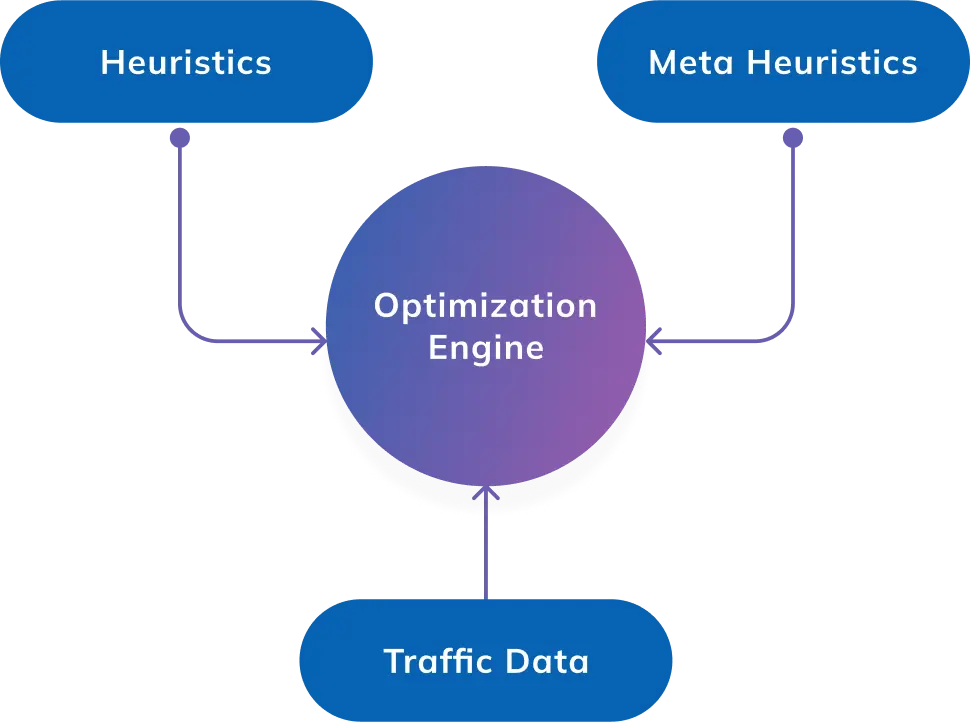
Nextbillion.ai Route Optimization API is a popular choice in this segment, which integrates conveniently with all the global standard platforms. It takes the responsibility to manage multiple vehicles, capture all the stoppages, and consider multiple constraints that impact the movement. The optimization engine works on vast datasets with different parameters before fetching an optimized route plan.
The AI-enabled optimization engine uses heuristics and metaheuristics to evaluate all the constraints. The tool learns through traffic history, route pauses, driver’s behavior, and other metrics. It adds them as a cost function before calculating the shortest, fastest, most feasible, or most compliant route according to the delivery objectives.
Carrier Matching:
Carrier matching is not as simple as allotting loads randomly to the available delivery vehicles at the hub stations. Carrier mismatch can have multiple repercussions on your logistics business, like empty spaces in containers and more trucks on the field, incomplete deliveries due to unavailability of compatible trucks that are allotted for general orders, and other such issues. Therefore, carrier matching requires analysis of multiple factors.
The clustering algorithms deliver credible results in carrier matching. It helps determine the best fit options and consolidation opportunities.
Real-Time Adjustments:
Live tracking facilitates AI-powered routing tools to adapt real-time adjustments in the pre-optimized route plan. The dynamic rerouting suggests a new route plan for the vehicle while in the field. This happens mostly during a sudden traffic congestion or other hindrances on the road.
Logistics platforms create a workflow of events, while routing and mapping APIs are the backbone that works behind the scene. They support the decision layer of the software by turning simple location points or orders into an efficient trip, with route maps, ETAs, and real-time tracking abilities. With every new task, the TMS systems call routing APIs like NextBillion for route optimization and return a plan with maps and alerts in the interface. Routing tools do not replace freight operations software; they empower it.
Locating places: Once you enter the task into the logistics software, the routing API receives the call and turns messy addresses into traceable coordinates using the Geocode and Places Lookup APIs. Reverse geocoding turns GPS codes into actual locations for tracking responses and PODs, and the whole process reduces failed deliveries.
Maps, Distances, and ETAs: The Directions API fetches the route, and the Distance Matrix API calculates distance and travel times, or ETAs, across multiple stoppages falling between the origin and destination with real-time conditions. Maps API is integrated with the Drivers app for navigation and customer tracking portals.
Also read: 5 best route planner apps for Android
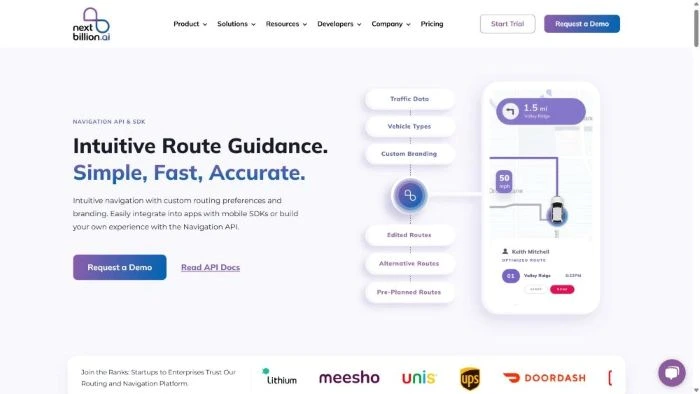
Route Optimization and Schedules: The Route Optimization API generates efficient directions for multi-stop or multi-vehicle tasks. It works on cost reduction, fuel efficiency, safety, and on-time delivery while considering time windows, compliance, and vehicle constraints. NextBillion.ai can manage large and complex problems, including computing a 5000 X 5000 matrix and handling a high volume of use cases, which basic TMS logic cannot deliver.
Live Tracking: The SDKs and APIs analyze live GPS data to gather the real-time position of the assets. The Snap to Roads API compares the live routes with the planned movements to re-evaluate ETAs.
The Routing API plays an integral part of the logistics platform and furnishes the job in the typical integration loop of the transit cycle.
Being the core element of freight operations, the route optimization integrations serve multiple benefits to the platform.
NextBillion uses advanced technology with artificial intelligence to manage end-to-end logistics and transportation activity.
NextBillion API Solutions | |
NextBillion API | Features |
Route Optimization API | Generates optimum route directions |
Driver Assignment API | Allots suitable drivers to the task |
Clustering API | Consolidates orders in groups |
Directions API | Finds the best route between two points |
Distance Matrix API | Calculates ETA across multiple locations |
Snap to Roads API | Analyzes different route to the locations |
Isochrone API | Finds locations with similar travelling distance or time |
Navigation API | Turn-by-turn route assistance to the drivers |
Route Report API | Complete details about the assignments |
Batch Routing API | Executes multiple routing requests together |
Live tracking API | Real-time location of shipment and vehicles |
Geofence API | Controls the movement in a region |
Route Reconstruction API | Fetches actual route taken by the driver |
Route Dispatch API | Dispatch route details on driver’s mobile device |
Documents API | Attach key documents with the route plan |
Maps API | Interactive route map for drivers |
Road Segment API | Extracts details about a road network |
Road Editor API | Add instructions on specific roads in the route |
Traffic Incidents API | Real-time updates on recent or past incidents |
Places API | Fetches exact location from insufficient information |
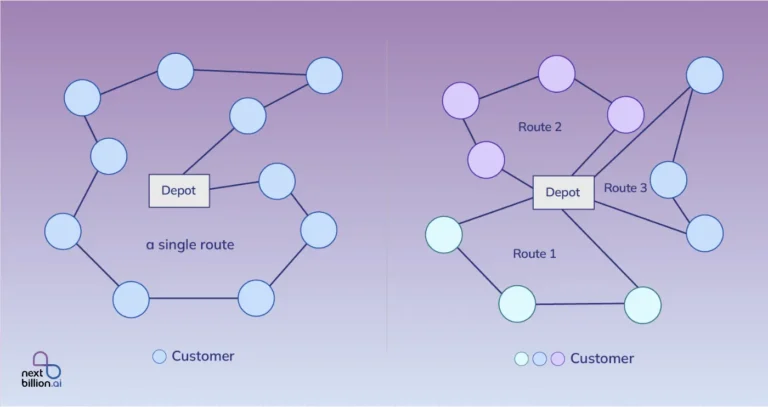
The precise structure of freight forwarding and brokerage software inherits the chain of events involved in goods delivery procedures. It is a one-stop solution for the brokers to manage booking, documentation, pricing, pickup, delivery, and other operational tasks.
I have curated a list of the most preferred freight operations software used by brokers worldwide. These tools are a complete TMS solution and are suitable for both forwarding and brokerage management.
CargoWise aims to assist the brokers with “one intelligent system” that unifies the global, multi-modal logistics operations end-to-end. This enterprise-grade software is best suited for large-sized global logistics companies and 3PL providers. The cloud-based real-time data synchronization facilitates the tool’s global accessibility for agents working around the globe. They can review freight forwarding, customs, transport management, warehousing, accounting, and compliance within a single platform.
What makes it suitable for freight forwarders and brokers?
Magaya Corporation is the root company that develops logistics products and is often a preferred choice by small to medium business groups of forwarders, brokers, 3PLs, warehouses, and logistics service providers. Magaya Supply Chain is the key solution for freight forwarding, warehouse management, shipping, transportation management, tracking, connectivity, accounting, and compliance. Other products include Magaya Customs Compliance Software, WMS, Rate Management, and Digital Freight Portal
What makes it suitable for freight forwarders and brokers?
Descartes is improving logistics management with more responsive, efficient, secure, and sustainable international and domestic supply chains. Its Descartes Aljex solution is a cloud-based, dedicated platform for brokers to manage trucking. The forwarder-centric platform is a separate line for international logistics.
What makes it suitable for freight forwarders and brokers?
GoFreight is a cloud platform specifically designed for freight forwarders handling air and ocean shipments. It focuses on automation and fast implementation, from quotation to billing operations with real-time shipment visibility. They facilitate small- to mid-size forwarders in quoting, rate comparison, documentation, customer portals, and tracking.
Logi-Sys is best suited for 3PLs and logistics service providers and supports forwarding, brokerage, warehouse, and finance modules. Companies having active operations in the international market connect with this tool for multi-modal transport management and compliance automation.
AscendTMS primarily focuses on the business format of small logistics firms and freight brokers in trucking management, offering a low-priced solution with quick, actionable load boards, carrier management, and billing tools.
Company | Best for | Focus | Key Strength |
CargoWise | International forwarders, 3PLs | Global forwarding, ERP/TMS | Customs, accounting, WMS, global database, brokerage TMS integration |
Magaya | Small-mid forwarders, NVOCCs, 3PLs | SMB Logistics ERP forwarders, 3PLs | Forwarding, customs, WMS, accounting, rate management |
Descartes | Forwarders, brokers, truck brokers | Network visibility + broker TMS | Compliance automation, cloud TMS for brokers, 40+ integration support |
GoFreight | NVOCCs, Small international forwarders | Cloud freight forwarding system | End-to-end workflow, built-in QuickBooks-linked accounting, fast deploy |
Logi-Sys | Forwarders, 3PLs, Brokers | Cloud ERP for forwarding and logistics | Multi-modal forwarding, TMS, WMS, customs, finance |
AscendTMS | SMB-mid brokers, asset-light 3PLs | Cloud TMS for brokers, shippers, carriers | Easy, load/dispatch management, ELD telematics integrations |
It can be tricky to find the freight software that best fits your business requirements. Logistics operations have many steps and need special management tools that can grow with your business, work well with other systems, be worth the cost, and perform effectively in various situations. Here is a brief guide to help you choose the right freight operations software that is compatible with your service needs and allows you to expand your clientele base.
Evaluate business needs
There is no universal solution for business processes. For example, you may not require features like multi-modal transport management if your business only covers a short region. First check for a few questions like
You can review the current workflow and pain points first before moving on to making decisions.
Logistics features and integrations
The best tools are designed to serve the entire logistics cycle and facilitate connections with other systems to enhance the capability.
You will definitely require features like
Note: efficient routing and real-time tracking are necessary to manage scheduled deliveries at minimal expenditures.
The tech companies thoroughly research the logistics workflow to algorithmically design the functions in the freight forwarding and brokerage software. Often it includes built-in APIs for finance systems, route optimization, warehouse management, shipment tracking, and other operations.
Most freight software supports integration with ERP, CRP tools, WMS systems, and customs platforms, but you must also check for API-based integrations to ensure flexibility.
Consider scalability.
You might have small- to medium-level operational capability. But in the future your company can require highly scalable systems to handle bulk logistics data, such as shipment volumes, global destinations, multi-modal transport, and customers.
Overall cost
There are multiple cost factors in freight operations software. Companies create customized pricing options to offer buyers value for money. Apart from installation charges, you can choose from a monthly or enterprise license, pay for integration or customization costs, and additionally opt for a user-based subscription.
Usability
Software with complex interfaces is hard to learn and consumes more operational time. Always look for a clean and intuitive interface with simple workflows. It will reduce staff training and onboarding time and increase productivity.
Freight forwarding and brokerage have come a long way from managing trucks or calculating freight rates. Rapid digitization and dedicated software solutions have delivered higher growth with global exposure and a fair chance to compete in the market.
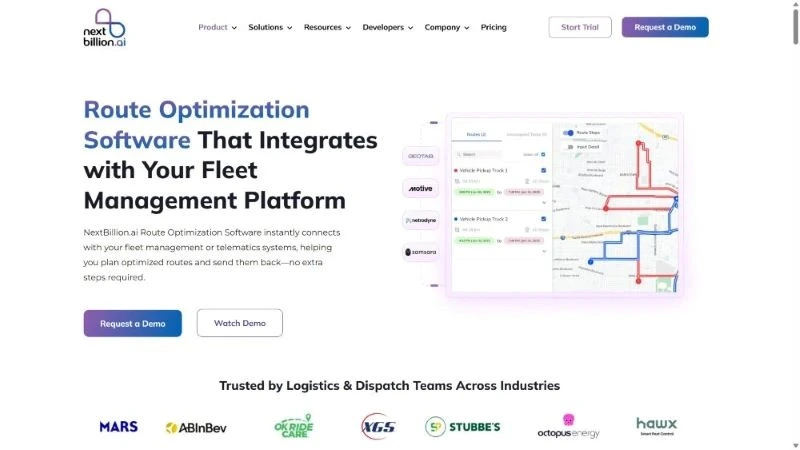
There are ample freight operation platforms depending on the business needs of freight management firms, but it is essential to evaluate the performance, scalability, and integrations of the tool. The NextBillion routing API has emerged as a smart and trusted solution for logistics and transportation firms. With standard compatibility to the software, it readily delivers responsible output that proves to be cost-effective and secure while also ensuring customer satisfaction as a priority.
TMS, or transportation management system, is an umbrella term for complete logistics operations software. It helps in planning, executing, and optimizing the movements of goods across the transport network. On the other hand, the freight forwarding software is a special-purpose tool for freight forwarders that mostly manage international shipments.
Manufacturers, 3PLs, or freight brokers use TMS to manage route plans, carriers, tracking, and costs. Freight forwarding software is for customs brokers, NVOCCs, or logistics companies to manage multi-modal freight, billing, documentation, compliance, and consolidation.
Route optimization for logistics companies is managed by routing APIs. It considers multiple factors like traffic conditions, delivery schedules, time windows, type of delivery vehicle, load type, route restrictions, and other such constraints to resolve the best sequence of stoppages that minimizes time, distance, and traveling costs.
NextBillion.ai is a preferred integration by many freight management companies, as it uses real-time data with AI-powered technology to generate accurate and highly efficient route plans.
With years of transportation serviceability and seamless technological advancements, the freight operation is already transitioning into the latest AI tech systems. Developments in digitization, automation, and sustainability is shaping the logistics workflow. Companies are now moving towards AI-enabled smart routing algorithms for better connectivity, cost reduction, and greener transportation.
Freight operations software is built to provide a platform for forwarders and brokers to digitally manage the field tasks. Companies use different tools for finance, ERP, CRM, and other purposes. Without integration or compatibility, you end up manually copying data between the tools, which will defy the whole purpose of automation. There are some API and EDI solutions with expertise segments like routing, tracking, WMS, etc.
Freight software improves operations by automating manual tasks such as documentation, rate calculations, and shipment updates. This reduces errors, speeds up processing, and provides real-time visibility for both logistics teams and customers.
Nitesh Malviya is a research-oriented professional with a background in Computer Science & Engineering. He served for 7 years as a software consultant and wrote passively in the tech niche before becoming a full-time technical writer.