


Table of Contents
For fleet operators, ELD compliance involves more than installing an approved device in every truck. A driver can have accurate electronic logs and still receive a route that cannot be completed within their remaining legal hours. If dispatch plans overlook mandatory breaks, rest periods, loading delays, delivery windows, and truck restrictions, the ELD may only reveal the problem after the journey has begun.
Since December 16, 2019, most commercial drivers who are required to maintain records of duty status have been required to use an FMCSA-registered electronic logging device. An ELD synchronizes with the vehicle’s engine to record driving time automatically, making Hours of Service records more accurate and easier to verify. However, the device does not plan routes, assign feasible work, or prevent every compliance violation.
This guide explains the ELD mandate, including who must comply, common exceptions, driver and carrier responsibilities, malfunction procedures, and potential penalties in 2026. It also examines how fleets can connect ELD and telematics data with HOS-aware route planning to account for available driver hours, required breaks, rest periods, delivery commitments, and changing road conditions before dispatch.
What Is the ELD Mandate, and Why Was It Introduced?
The ELD Mandate is a U.S. federal regulation requiring most commercial drivers subject to Hours of Service (HOS) rules to record their driving time and duty status using an electronic logging device. Its primary purpose is to reduce errors and manipulation associated with paper logs, prevent drivers from exceeding permitted driving hours, and improve road safety.
Connected to the vehicle’s engine, an ELD automatically records key data such as driving time, vehicle movement, location, and engine status.
Who Is Exempt From the ELD Mandate?
Not every commercial driver who follows Hours of Service regulations must use an ELD. Drivers who qualify for an exception from maintaining records of duty status, such as eligible short-haul drivers generally do not need an ELD while operating under that exception.
The main federal ELD exemptions also cover drivers who:
- Use paper records of duty status on no more than eight days within any 30-day period.
- Work in a driveaway-towaway operation where the vehicle being driven is part of the shipment.
- Transport a motorhome or recreational vehicle trailer as part of a driveaway-towaway operation.
- Operate a vehicle manufactured before model year 2000, based on the vehicle identification number shown on its registration.
An exemption from using an ELD does not always mean exemption from the Hours of Service rules. Some drivers must continue tracking their duty status using paper logs or another permitted method. Fleets should therefore verify the conditions of each exemption before assigning a driver or vehicle.
Driver and Motor Carrier Responsibilities Under the ELD Rule
ELD compliance is a shared responsibility. Motor carriers must provide compliant technology and maintain accurate records, while drivers must use the device correctly and keep their duty-status information current.
Motor carrier responsibilities include:
- Using an ELD listed on the FMCSA’s registered-device list.
- Creating and managing a unique account for each driver.
- Maintaining and calibrating devices according to the provider’s instructions.
- Providing instructions for transferring records and reporting malfunctions.
- Keeping enough blank paper log sheets to cover at least eight days.
- Retaining ELD records and a separate backup copy for at least six months.
Driver responsibilities include:
- Logging in with the correct driver account.
- Selecting the appropriate duty status, including off duty, sleeper berth and on-duty not driving.
- Entering or verifying vehicle, trailer and shipping-document information.
- Reviewing, correcting and certifying each daily ELD record.
- Producing and transferring HOS records when requested by an authorized safety official.
Carriers may propose corrections to a driver’s record, but the driver must confirm or reject the changes. Neither party may falsify, erase or tamper with the original ELD data.
Connecting ELD Data With Smarter Route Planning
ELD data gives fleet operators a reliable view of each driver’s recent activity and remaining availability. Route optimization turns that information into practical decisions about which driver should handle a job, which stops should be visited and when required breaks or rest periods should occur.
Without this connection, dispatchers may build routes using distance, estimated travel time and delivery windows while overlooking the driver’s remaining Hours of Service. A route can look efficient on a map but still be impossible to complete legally. For example, assigning a six-hour journey to a driver with only four driving hours remaining may lead to an unexpected stop, a missed delivery window or an HOS violation.
Turning ELD Records Into Planning Constraints
When connected to a route planning software, ELD or telematics data can provide information such as:
- The driver’s current duty status.
- Driving and on-duty time already used.
- Remaining driving and shift hours.
- Completed and upcoming break requirements.
- Accumulated hours within the applicable duty cycle.
- The driver’s location and current route progress.
The route optimization system can evaluate this information alongside operational constraints, including:
- Delivery and pickup locations.
- Customer time windows.
- Loading, unloading and service durations.
- Vehicle capacity and shipment requirements.
- Truck dimensions, weight and road restrictions.
- Traffic conditions, closures and expected delays.
- Available rest stops and overnight layover locations.
By considering driver hours and operational requirements together, the system can generate routes that are both efficient and realistically executable.
How the Integration Works
A typical ELD and route optimization workflow includes four stages:
- Collect driver availability: The routing system receives recent HOS information from an ELD, telematics platform or fleet-management system.
- Evaluate route feasibility: The optimizer compares each driver’s remaining hours with the expected driving, service and waiting time for the assigned work.
- Build an HOS-aware route: Stops are assigned and sequenced while required breaks, rest periods and layovers are included in the plan.
- Recalculate when conditions change: If traffic, loading delays or new orders affect the schedule, the remaining route can be optimized again using updated driver availability.
Suppose a driver has four legal driving hours remaining, but the planned deliveries require six hours on the road. A connected optimization system could shorten the assignment, move selected stops to another driver, schedule a compliant rest period or reorganize the delivery sequence. The dispatcher can address the problem before it becomes a roadside compliance issue.
Operational Benefits
Connecting ELD data with route optimization can help fleets:
- Reduce avoidable HOS violations.
- Create more realistic ETAs.
- Prevent infeasible driver assignments.
- Schedule breaks and rest periods more effectively.
- Reduce last-minute dispatch changes.
- Improve driver utilization without exceeding legal limits.
- Respond more effectively to traffic and operational delays.
ELDs remain the system of record for driver activity, while route optimization acts as the planning layer. Together, they help fleets move from documenting compliance after the fact to considering it during every dispatch decision.
Best Practices for ELD-Compliant Route Planning
ELD compliance should be built into daily planning rather than treated only as a recordkeeping requirement. The following practices can help fleets create safer, more realistic and HOS-aware routes.
Verify Driver Availability Before Dispatch
Check each driver’s current duty status, remaining driving hours and available on-duty time before assigning work. Avoid relying only on scheduled shift hours, as a driver’s actual availability may have changed because of earlier trips, delays or other work.
Include Non-Driving Activities
Loading, unloading, vehicle inspections, fueling and waiting at customer locations may consume on-duty time even when the vehicle is not moving. Include realistic service and waiting-time estimates when evaluating whether a route can be completed legally.
Plan Breaks and Rest Periods in Advance
Required breaks, daily rest periods and multi-day layovers should be included in the original route plan. Where possible, select practical stopping locations that can accommodate the vehicle and support the driver’s schedule.
Use Truck-Appropriate Routes
An HOS-feasible route may still be unsuitable if it includes restricted roads, low bridges or limits related to vehicle height, weight, width or hazardous materials. Route planning should consider both driver-hour requirements and vehicle-specific restrictions.
Reoptimize When Delays Occur
Traffic, detention time, weather and changes to delivery schedules can quickly make the original route infeasible. Use updated ELD and operational data to recalculate routes, revise ETAs or reassign stops before the driver exceeds an HOS limit.
Train Drivers and Dispatchers
Drivers should understand how to record and certify their duty status, report malfunctions and respond during inspections. Dispatchers should know how HOS limits affect driver assignment, route duration and delivery commitments.
Monitor Records and Exceptions
Regularly review unidentified driving events, missing information, unassigned time and recurring diagnostic issues. Early reviews help fleets correct genuine errors and identify operational patterns that may increase compliance risk.
By combining accurate ELD records with HOS-aware route planning, fleets can reduce manual checks, improve dispatch decisions and prevent avoidable compliance problems before vehicles leave the depot.
Conclusion: Turn ELD Compliance Into Better Route Decisions
The ELD Mandate has made driver-hour records more accurate and easier to verify, but installing an electronic logging device is only one part of compliance. Fleets must also ensure that the work assigned to drivers can be completed within their legal Hours of Service.
Connecting ELD and telematics data with route optimization helps bridge the gap between recordkeeping and dispatch planning. It allows fleets to consider remaining driver hours, mandatory breaks, rest periods, delivery windows and vehicle restrictions before a route begins and make informed adjustments when conditions change.
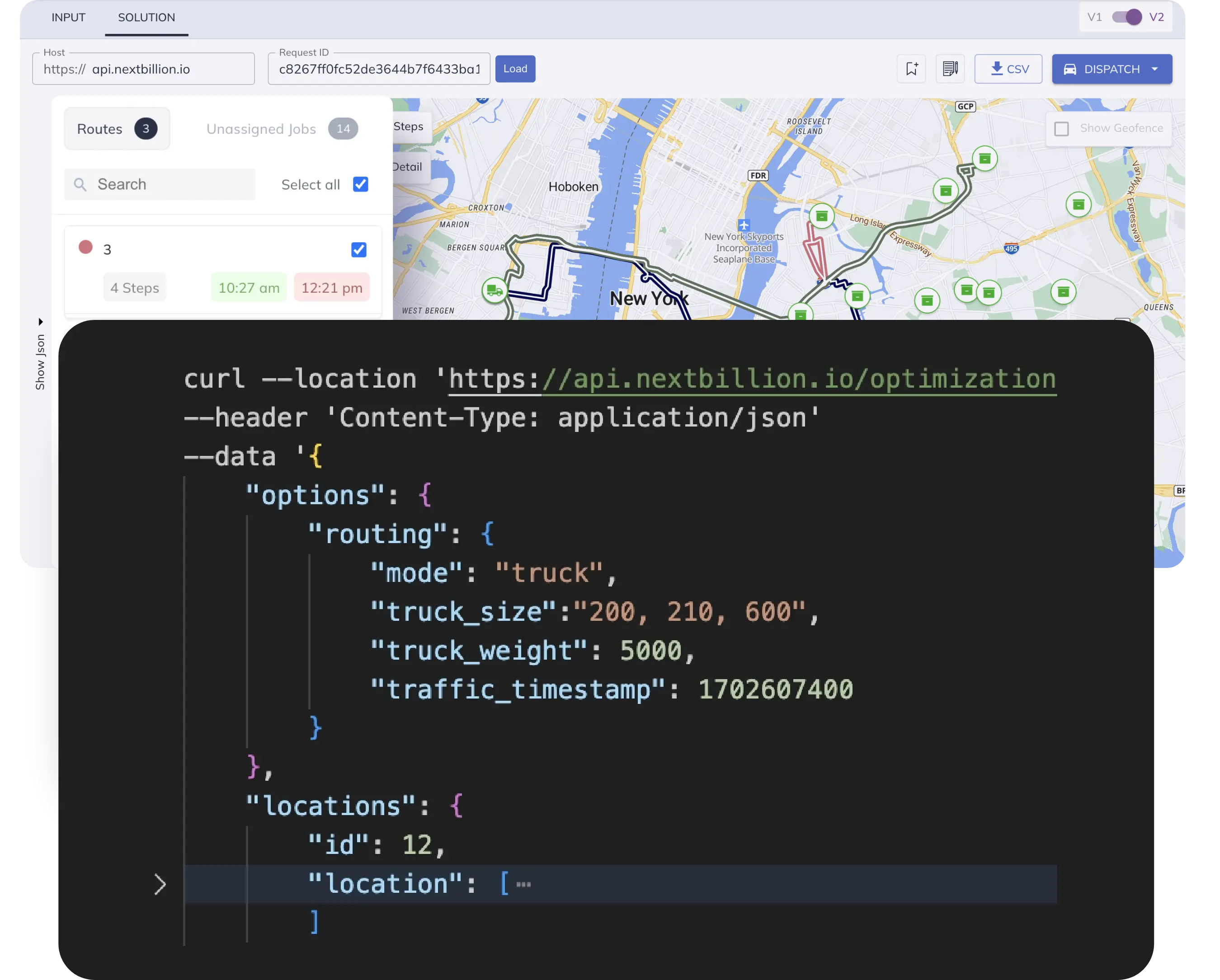
NextBillion.ai enables fleets to incorporate these HOS constraints directly into route planning and optimization. By creating routes around actual driver availability, operators can reduce avoidable compliance risks, generate more realistic ETAs and improve both driver safety and delivery reliability.
ELD compliance should not begin and end with recording what happened on the road. With HOS-aware route planning from NextBillion.ai, fleets can use that data to plan what should happen next.
Ready to get started?
Request a DemoTable of Contents
Subscribe to our Newsletters
Get the best practices for route planning & optimization, delivered to your inbox.
Subscribe