


Route Optimization API
Optimize routing, task allocation and dispatch
Distance Matrix API
Calculate accurate ETAs, distances and directions
Directions API
Compute routes between two locations
Navigation API & SDK
Turn by Turn Instructions for Drivers & Technicians
Route Optimization Software
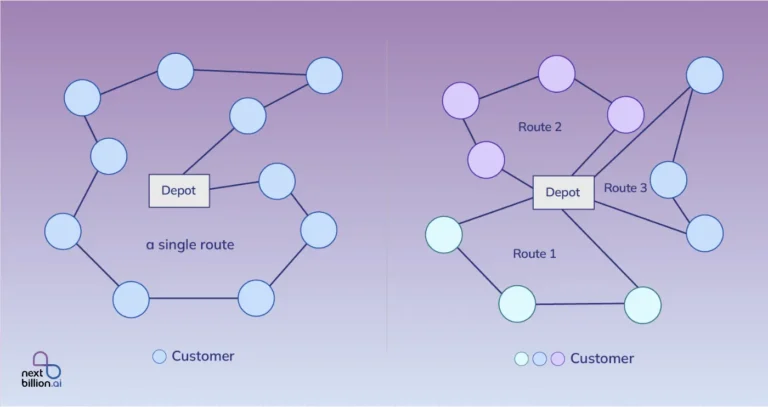
Plan optimized routes with 50+ Constraints
Product Demos
See NextBillion.ai APIs & SDKs In action
AI Route Optimization
Learns from Your Fleet’s Past Performance
Platform Overview
Learn about how Nextbillion.ai's platform is designed
Road Editor App
Private Routing Preferences For Custom Routing
On-Premise Deployments
Take Full Control of Your Maps and Routing
About Us
Our story, vision
and mission
Contact Us
Reach out to us for any product- or media-related queries
Write to us at

Table of Contents
A dispatcher’s job hasn’t changed much in decades. Get the right driver or technician to the right place, on time, without wasting fuel or patience. What has changed is everything sitting underneath that goal. Fleets now deal with same-day delivery windows, technician skill matching, vehicle restrictions, customer SLAs, and last-minute reassignments, sometimes across hundreds of jobs in a single day. A whiteboard and a phone line stopped being enough a long time ago.
Dispatch management software is built to close that gap. In simple terms, it’s a system that assigns jobs to drivers or field staff, plans efficient routes, tracks progress as it happens, and lets dispatchers react fast when something changes. An order gets cancelled. A truck breaks down. A technician calls in sick. The good platforms handle all of that without turning the dispatcher’s screen into another thing to manage.
We looked at the platforms operations teams evaluate most in 2026, across last-mile delivery, field service, trucking, and mixed commercial fleets, and compared them on the things that matter day to day: how well job assignment gets automated, how strong the route optimization actually is, how good real-time visibility looks, how usable the driver and technician workflows are, and whether pricing stays predictable once you’re past the pilot stage. Here are the ten that came out ahead.
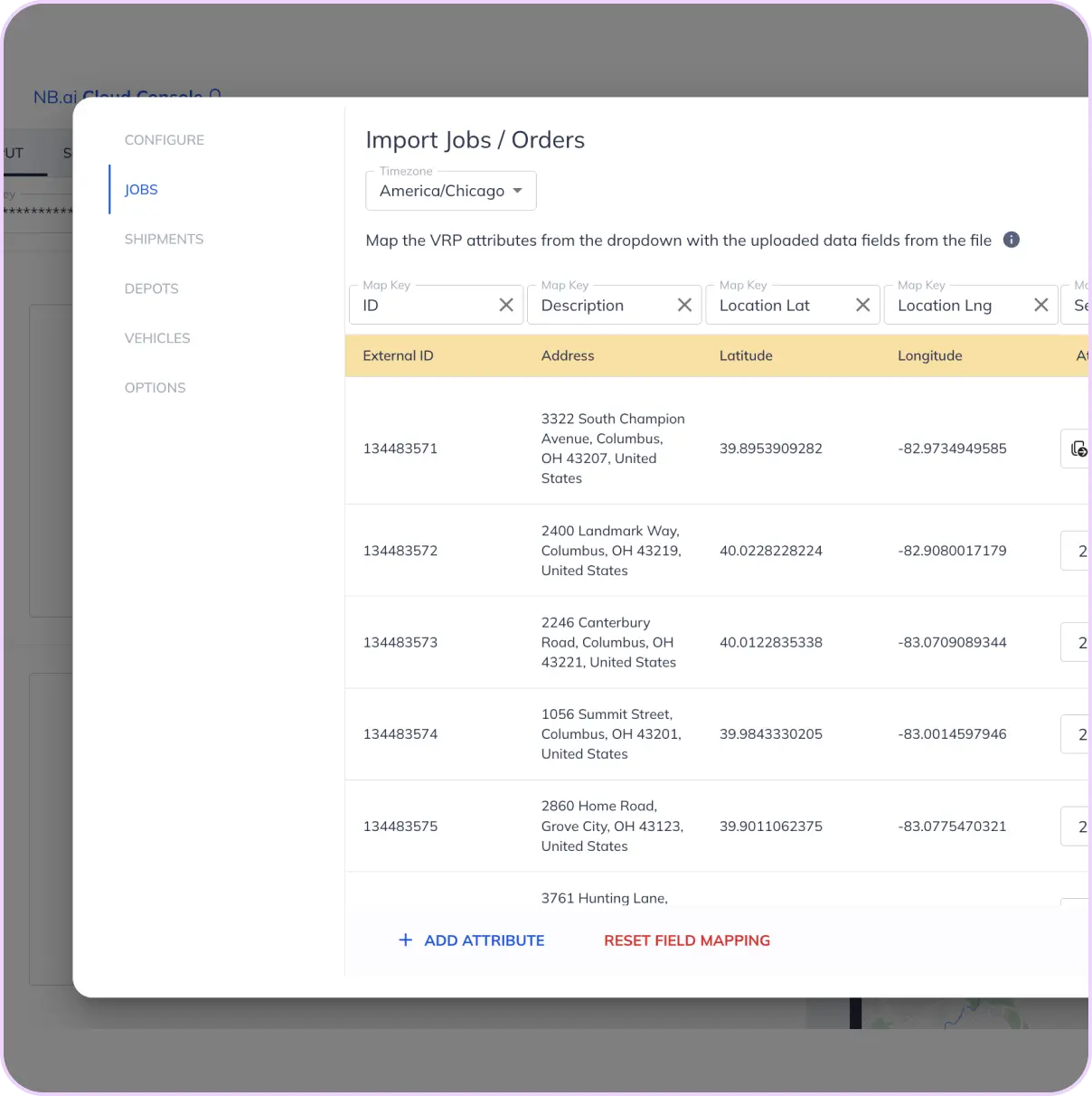
Dispatch management software helps a business plan, assign, monitor, and adjust field work (deliveries, service calls, pickups, trips) from one dashboard instead of coordinating everything by phone or spreadsheet. Most platforms are built around four core pieces:
Where platforms differ is depth and specialization. Some are built for high-volume parcel and food delivery. Others are built for regulated trucking. Others exist purely to dispatch technicians rather than delivery drivers. And a few, including a couple of tools on this list, are designed to sit underneath other software as the routing engine rather than being the dispatcher’s only screen.
Read more: What is Route Optimization and How to Do It?
Every platform below was judged against the same criteria.
With that in mind, here’s the list.
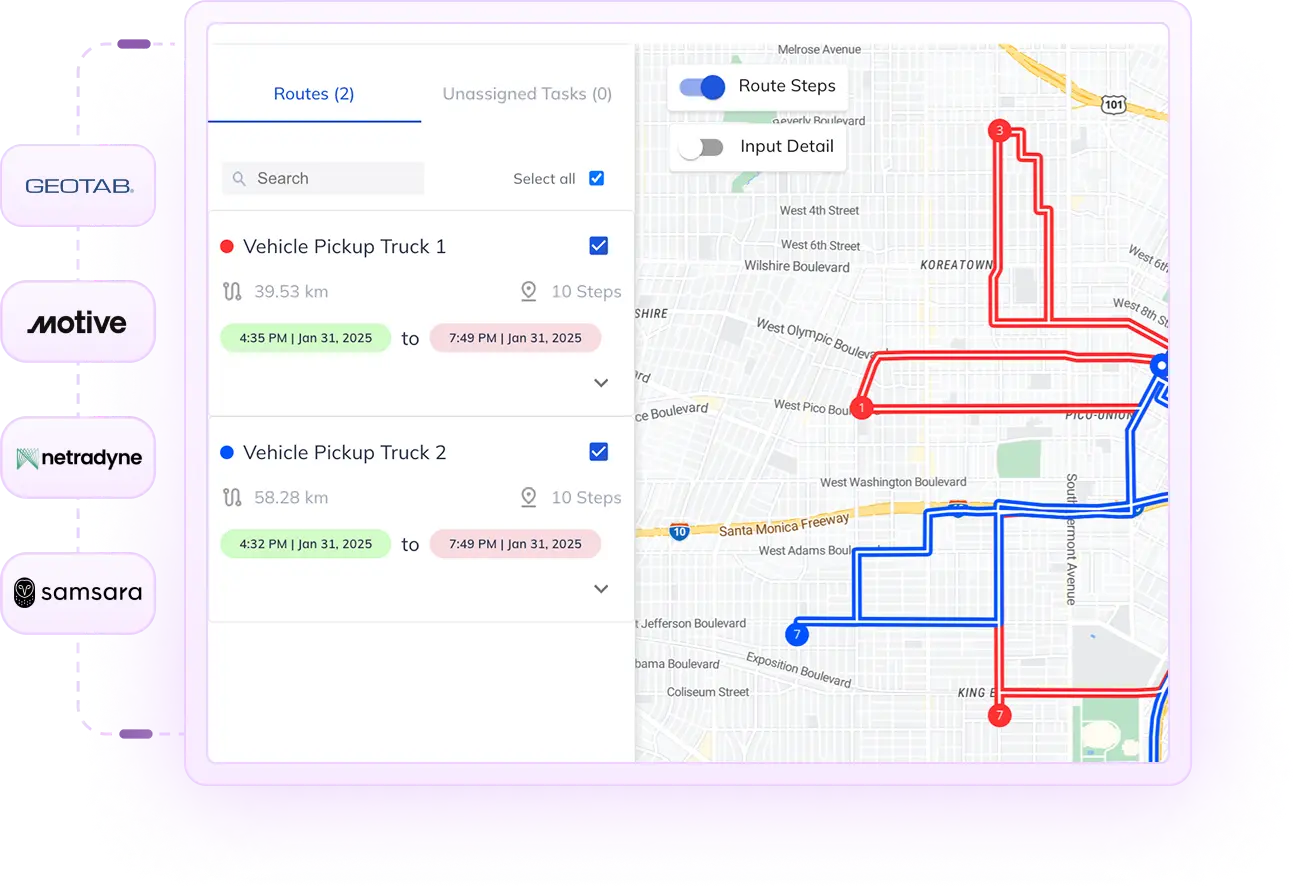
NextBillion.ai is a location intelligence and dispatch platform built for logistics, last-mile delivery, field service, trucking, and NEMT operators who’ve outgrown consumer-grade mapping tools. Instead of offering one rigid dispatch board, it gives operations and engineering teams a full stack: route optimization, AI-driven routing, live tracking, and driver assignment, usable as a standalone dispatch app or embedded directly into an existing fleet management, telematics, or TMS platform.
The routing engine is where it separates itself. NextBillion.ai supports more than 50 hard and soft constraints in a single optimization run: vehicle capacity, driver shifts, time windows, truck dimensions, hazmat rules, mandatory breaks, and multi-depot dispatch, all at once. Its AI routing layer also learns from a fleet’s own history (actual service times, driver behavior, observed traffic patterns) so routes reflect how a fleet really operates instead of a theoretical shortest path that falls apart on a real street.
Dispatch changes are handled dynamically. When an order gets added, cancelled, or a driver drops offline mid-shift, the platform re-optimizes and pushes the updated plan straight to driver apps or connected fleet systems, including native integrations with Geotab, Samsara, Salesforce, SAP, and Microsoft Dynamics 365.
Deployment tends to be where NextBillion.ai wins enterprise evaluations outright. Teams can go live with a free trial API key within days, and production rollout is usually possible inside a week once integrations are ready. For companies with data residency or compliance needs, it’s available cloud-hosted across multiple regions or fully on-premise, and it holds SOC 2 Type II, ISO/IEC 27001, GDPR, and CCPA certifications. Pricing runs per-vehicle, per-order, or per-API-call, with fixed monthly options built specifically to avoid the runaway costs that come with generic pay-per-call mapping APIs during a demand spike.
Best for: Logistics, delivery, field service, and trucking companies (and the software platforms that serve them) that need enterprise-grade route optimization and dispatch with pricing and deployment that won’t box them in later.
Pricing: Per-vehicle, per-order, or per-API-call, with custom enterprise plans. Free trial API keys available.
Read more: AI-Powered Route Optimization for Fleets
Onfleet is a delivery-focused dispatch platform for courier services, meal delivery, and retail last-mile operations that need to coordinate both employed drivers and third-party delivery partners from one screen. Its dispatch dashboard gives real-time visibility into every active route, auto-assigns tasks based on proximity and workload, and pushes optimized stop sequences to its driver app.
Its real strengths are polish and fast onboarding. Dispatchers pick it up quickly, and the customer-facing tracking links and automated SMS/email notifications are a genuine differentiator for delivery businesses that live or die by customer experience. It also handles re-optimization when new orders land mid-day, which matters for on-demand and same-day models.
The catch is cost at scale and constraint depth. Plans start around several hundred dollars a month and climb with task volume, and while the optimization engine handles standard delivery routing well, it doesn’t expose the same breadth of hard constraints (hazmat rules, complex multi-depot logic, technician skills) that trucking or field-service-heavy operations tend to need.
Best for: Courier companies, restaurant and grocery delivery, and retail last-mile teams that want a polished, fast-to-deploy dispatch experience.
Pricing: Plans typically start around $599/month, scaling with delivery task volume.

Samsara made its name in vehicle telematics (GPS tracking, dash cams, maintenance monitoring) and has since extended that platform into route planning and dispatch. For fleets already using Samsara for compliance reporting, driver safety scoring, and vehicle diagnostics, adding dispatch on the same platform means one less system to reconcile data across.
Its dispatch tools let managers assign routes, watch live vehicle locations against planned stops, and flag deviations, all inside the same dashboard used for fuel and maintenance tracking. That unified view genuinely helps large, asset-heavy fleets where safety and compliance carry as much weight as delivery efficiency.
Where it’s weaker is pure routing sophistication. The optimization engine is capable but isn’t built to the same constraint depth as dedicated routing specialists, and pricing isn’t published, so comparing it directly to per-vehicle competitors usually means booking a sales call first.
Best for: Large commercial fleets that want dispatch, telematics, and compliance reporting in a single platform.
Pricing: Custom, quote-based.
Route4Me has been around long enough in the route-planning space to accumulate an unusually deep feature set, and it leans into that with heavy customization: territory-based routing, optimization by multiple constraints, driver tracking, and a fairly open API for teams that want to build custom workflows on top of it.
Its dispatch capabilities are functional rather than flashy. Routes can be assigned to drivers, reordered, and monitored, with live GPS breadcrumbs for tracking. The real advantage shows up for operations with unusual routing rules: recurring multi-day routes, franchise territories, or businesses migrating off a legacy system with years of custom logic baked in.
The interface feels dated next to newer entrants on this list, and the learning curve is steeper. For teams that need flexibility over simplicity, it’s a fair tradeoff.
Best for: Delivery and service businesses with non-standard routing rules or complex territory structures.
Pricing: Tiered per-user plans, typically starting in the low tens of dollars per route/month.
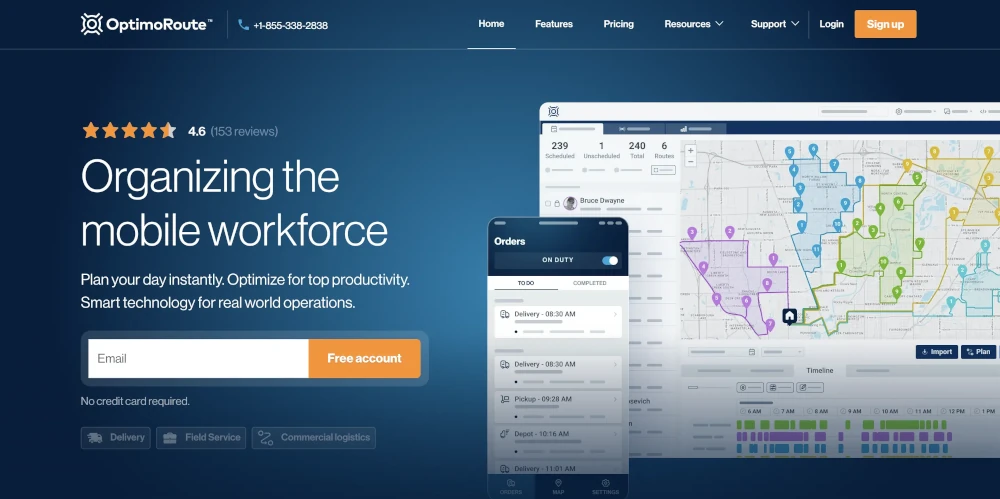
OptimoRoute sits between pure delivery routing tools and field service scheduling platforms, which makes it a good fit for businesses doing both. Think a distributor that delivers products and also sends technicians out for installation or repair. It handles multi-stop route optimization with support for time windows, vehicle capacity, and driver skills, and re-optimizes quickly when orders change.
Dispatchers get a clean, visual planning board, and drivers get a straightforward mobile app with proof-of-delivery capture and real-time status updates. OptimoRoute is also one of the more transparently priced tools here, with published per-driver pricing instead of a mandatory sales call to find out.
It’s a strong mid-market pick, though very large or heavily regulated fleets (multi-depot trucking, hazmat, long-haul) will likely need the deeper constraint support that a platform like NextBillion.ai or an enterprise TMS offers.
Best for: Mid-sized delivery and field service businesses that want strong routing without enterprise complexity.
Pricing: Starts around $35 per driver per month.

WorkWave built its dispatch and routing tools with recurring, route-based service businesses in mind: waste collection, pest control, lawn care, pool service, that kind of work, where the same stops repeat on a schedule and efficiency gains compound over months rather than a single day.
Route optimization accounts for recurring visit patterns, service windows, and crew assignments, and it integrates with WorkWave’s broader field service suite for scheduling, invoicing, and CRM if a business wants a single vendor for the whole operation. Dispatchers can drag and drop jobs between routes and see the mileage and time impact immediately.
The tradeoff is specialization. WorkWave Route Manager is excellent for repeat-route businesses but less suited to on-demand, high-variability delivery operations where the stop list looks nothing alike from one day to the next.
Best for: Waste management, pest control, lawn care, and other recurring-route service businesses.
Pricing: Custom, usually quote-based depending on fleet size and modules.

Upper Route Planner focuses on ease of use for smaller delivery operations that need reliable route optimization, driver dispatch, and proof of delivery without a steep setup process. Routes can be built from a spreadsheet upload or CRM integration, optimized in seconds, and pushed straight to drivers through a simple mobile app.
Dispatchers get real-time tracking and delivery status updates, along with automated customer notifications, features that used to be reserved for bigger platforms but are now expected even from smaller delivery businesses. Upper also gets mentioned often for responsive customer support, which matters for smaller teams without dedicated IT staff on hand.
It’s a lighter-weight tool by design, so businesses running complex multi-depot or heavily regulated fleets will probably outgrow it.
Best for: Small to mid-sized delivery businesses that want fast setup and dependable route optimization without enterprise overhead.
Pricing: Tiered per-driver plans, with entry-level pricing aimed at small fleets.

Track-POD is built around one specific strength: proof of delivery. For businesses where signed confirmations, photo evidence, barcode scanning, and delivery documentation carry real legal or financial weight (pharmaceuticals, high-value goods, B2B distribution), Track-POD’s ePOD workflows go further than most general-purpose dispatch tools bother to.
Around that core, it covers standard dispatch functionality too: route optimization, driver assignment, live tracking, plus reporting built specifically around delivery compliance and dispute resolution. Per-driver pricing is transparent and sits on the more affordable end of the market.
Route optimization is solid here but not the headline feature, so operations whose main pain point is complex constraint-based routing rather than delivery documentation may find better fits elsewhere on this list.
Best for: Distribution and delivery businesses where proof of delivery and compliance documentation come first.
Pricing: Starts around $49 per driver per month.

ServiceTitan is less a dispatch tool and more a full operating system for home service businesses (HVAC, plumbing, electrical, and similar trades), with dispatch as one module inside a much larger suite covering scheduling, invoicing, marketing, and payroll.
The dispatch board is built specifically around technician skill matching, appointment windows, and job-to-technician assignment based on location and availability, backed by a strong mobile app for technicians to manage jobs, capture signatures, and take payments in the field. For businesses that want dispatch tightly coupled to sales, invoicing, and customer history, that integration is the main draw.
The flip side is cost and complexity. ServiceTitan is priced and built for established trades businesses, not lean delivery or logistics operations, and implementation usually takes longer than lighter, dispatch-only tools.
Best for: HVAC, plumbing, electrical, and other home service trades that want dispatch built into a full business management platform.
Pricing: Custom, quote-based, generally positioned for established service businesses.

Verizon Connect’s Reveal platform provides fleet tracking and compliance solutions, including hours of service, fuel reporting and maintenance notifications, and dispatch and routing capabilities for larger commercial fleets. Dispatchers can view live maps and schedule routes and reassign jobs as needed based on vehicle location and driver hours.
Its biggest advantage is scalability and support. It’s a large telecom, so it’s spent a lot of money on compliance reporting and infrastructure to support enterprise customers, which is attractive to fleets in tightly regulated industries who want audit-ready records as well as day-to-day dispatch.
Users often point to a steeper learning curve and less flexible routing customization than newer, routing-first platforms offer, and pricing requires a sales conversation rather than being posted up front.
Best for: Large regulated fleets that prioritize compliance and telematics alongside dispatch.
Pricing: Custom, quote-based.
Platform | Best For | Starting Price |
NextBillion.ai | Enterprise AI-powered dispatch, 50+ constraints, flexible deployment | Per-vehicle/order/API-call; custom enterprise |
Onfleet | Courier and on-demand delivery | ~$599/month |
Samsara | Telematics + dispatch in one platform | Custom |
Route4Me | Highly customizable routing workflows | Tiered, per-user |
OptimoRoute | Mixed delivery and field service | ~$35/driver/month |
WorkWave Route Manager | Recurring, route-based service businesses | Custom |
Upper Route Planner | Small to mid-sized delivery teams | Tiered, per-driver |
Track-POD | Proof of delivery and compliance | ~$49/driver/month |
ServiceTitan | Home and field service trades | Custom |
Verizon Connect (Reveal) | Enterprise fleet compliance | Custom |
Pricing changes often and varies by contract terms, fleet size, and region. Confirm current numbers directly with each vendor before making a purchasing decision.
Read more: Delivery Route Optimization: Key Factors for Last-Mile Efficiency
With ten credible options on the table, the right pick comes down to matching the platform to how your operation actually runs, not which tool has the longest feature list.
Start with your routing complexity. A business with simple, single-depot delivery routes has very different needs from a multi-depot trucking operation juggling hazmat rules, driver shift limits, and vehicle-specific constraints. If your routing problem is genuinely complex, prioritize platforms that expose real constraint-level control rather than a one-size-fits-all optimizer. NextBillion.ai, Route4Me, and OptimoRoute all qualify here, at different levels of depth.
Think about how the tool needs to fit into what you already run. Some businesses want dispatch as a standalone dashboard. Others need it to plug into an existing telematics, TMS, or CRM system without forcing a rebuild. API-first platforms and those with strong native integrations save real engineering time when dispatch needs to sit inside a broader tech stack instead of replacing it.
Model the pricing at your real volume, not your pilot volume. Per-driver and per-task pricing can look cheap during a small trial and turn unpredictable once order volume spikes seasonally. Ask every vendor how their pricing behaves during peak demand before you sign anything.
Weigh deployment and compliance requirements early too. Enterprises in regulated industries, or those with strict data residency rules, should confirm on-premise availability and security certifications (SOC 2, ISO 27001, GDPR/CCPA) before getting attached to a feature set procurement won’t actually approve.
And test real-time re-optimization, not just the initial plan. Almost every platform here can build a decent route from a clean list of stops. Fewer handle the messier, more realistic scenario well: an order gets added at 11 a.m., a driver calls in sick, or traffic collapses a route halfway through the day. Ask for a live demo of dynamic reassignment, not just a static route on a map.
Read more: Logistics Route Optimization: Guide in 2026
There isn’t a single best dispatch management software for every operation. A courier startup, a regional trucking fleet, and an HVAC company are solving genuinely different problems, even if all three would describe what they need as “dispatch software.” What matters is matching a platform’s real strengths, whether that’s constraint depth, deployment flexibility, industry specialization, or bundled telematics, to how your operation runs day to day.
For teams whose dispatch problem is fundamentally a routing problem (real-world constraints, unpredictable demand, and the need to plug intelligent routing into systems they already run), NextBillion.ai stands out in 2026 for combining enterprise-grade optimization with the deployment flexibility and pricing predictability that a lot of legacy platforms still struggle to offer.
Dispatch management software is a platform that enables organizations to assign jobs to drivers or field personnel, optimize routes, track progress in real time, and change plans when conditions change, replacing manual coordination by phone or spreadsheet.
Prices vary a lot depending on the platform and the device. Some systems charge per driver per month (often $35 to $60), some charge per job or delivery volume, while corporate platforms typically have custom, quote-based pricing based on fleet size and API usage.
Dispatch software is concerned with real-time job allocation and routing. Fleet management software is more comprehensive, often including vehicle maintenance, fuel, compliance, and telematics in addition to, or in lieu of, dispatch and routing features. Platforms that offer both include Samsara and Verizon Connect.
Most current platforms have APIs and pre-built connections with standard fleet management, telematics and CRM systems. API-first platforms like NextBillion.ai are typically easier to embed into an existing software stack, rather than requiring a full replacement.
Implementation timeframes range from a few days for lightweight, cloud-based products to two or three months for corporate platforms with complicated integrations. Most providers offer a free trial or pilot period so you may test routing quality before a major roll-out.
Bhavisha Bhatia is a Computer Science graduate with a passion for writing technical blogs that make complex technical concepts engaging and easy to understand. She is intrigued by the technological developments shaping the course of the world and the beautiful nature around us.