


Route Optimization API
Optimize routing, task allocation and dispatch
Distance Matrix API
Calculate accurate ETAs, distances and directions
Directions API
Compute routes between two locations
Navigation API & SDK
Turn by Turn Instructions for Drivers & Technicians
Route Optimization Software
Plan optimized routes with 50+ Constraints
Product Demos
See NextBillion.ai APIs & SDKs In action
Location Reasoning AI
Help your AI agents answer location-based questions
AI Route Optimization
Learns from Your Fleet’s Past Performance
Platform Overview
Learn about how Nextbillion.ai's platform is designed
On-Premise Deployments
Take Full Control of Your Maps and Routing
About Us
Our story, vision
and mission
Contact Us
Reach out to us for any product- or media-related queries
Write to us at

Table of Contents
Dispatch mapping software and route planning software both help fleets manage deliveries, field service jobs, and vehicle routes. However, they solve different parts of the logistics workflow.
Route planning software focuses primarily on creating optimized routes, while dispatch mapping software combines route planning with job assignment, fleet visibility, dispatching, and ongoing operational decisions.
For businesses managing multiple drivers, vehicles, stops, and changing conditions, understanding this difference can help determine which type of software fits their operation.
Feature | Route Planning Software | Dispatch Mapping Software |
Route creation | ✓ | ✓ |
Multi-stop optimization | ✓ | ✓ |
Vehicle and driver assignment | Often available | ✓ |
Live fleet visibility | Limited or varies by platform | ✓ |
Job dispatching | Limited or varies by platform | ✓ |
Real-time route changes | Varies | ✓ |
Time windows and vehicle constraints | ✓ | ✓ |
Driver communication | Usually separate | Often integrated |
Route monitoring after dispatch | Limited or varies | ✓ |
Best suited for | Planning efficient routes | Planning, assigning, dispatching, and managing operations |
The key difference is what happens after a route is planned. Route planning software is centered on creating an efficient route plan. Dispatch mapping software extends that workflow into day-to-day fleet operations.

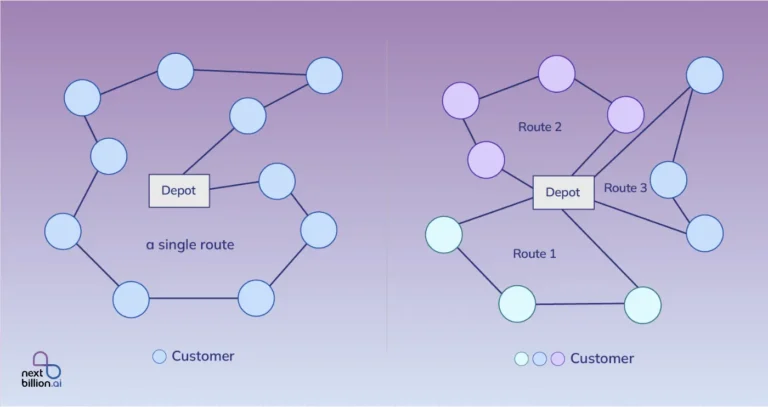
Route planning software helps businesses determine the most efficient sequence for visiting multiple locations.
Instead of manually deciding which driver should visit each stop and in what order, the software can use information such as:
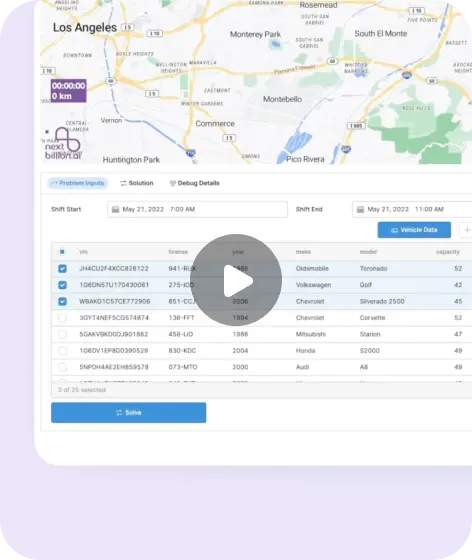
Modern route planning software can go beyond simply finding the shortest distance. For example, NextBillion.ai’s Route Planner is designed to generate optimized route plans using tasks, vehicles, and configurable preferences. The resulting solution can be reviewed through map, timeline, and route analytics views before being dispatched. (NextBillion.ai)
This makes route planning software particularly useful for operations teams that need to create efficient daily routes before drivers begin their work.
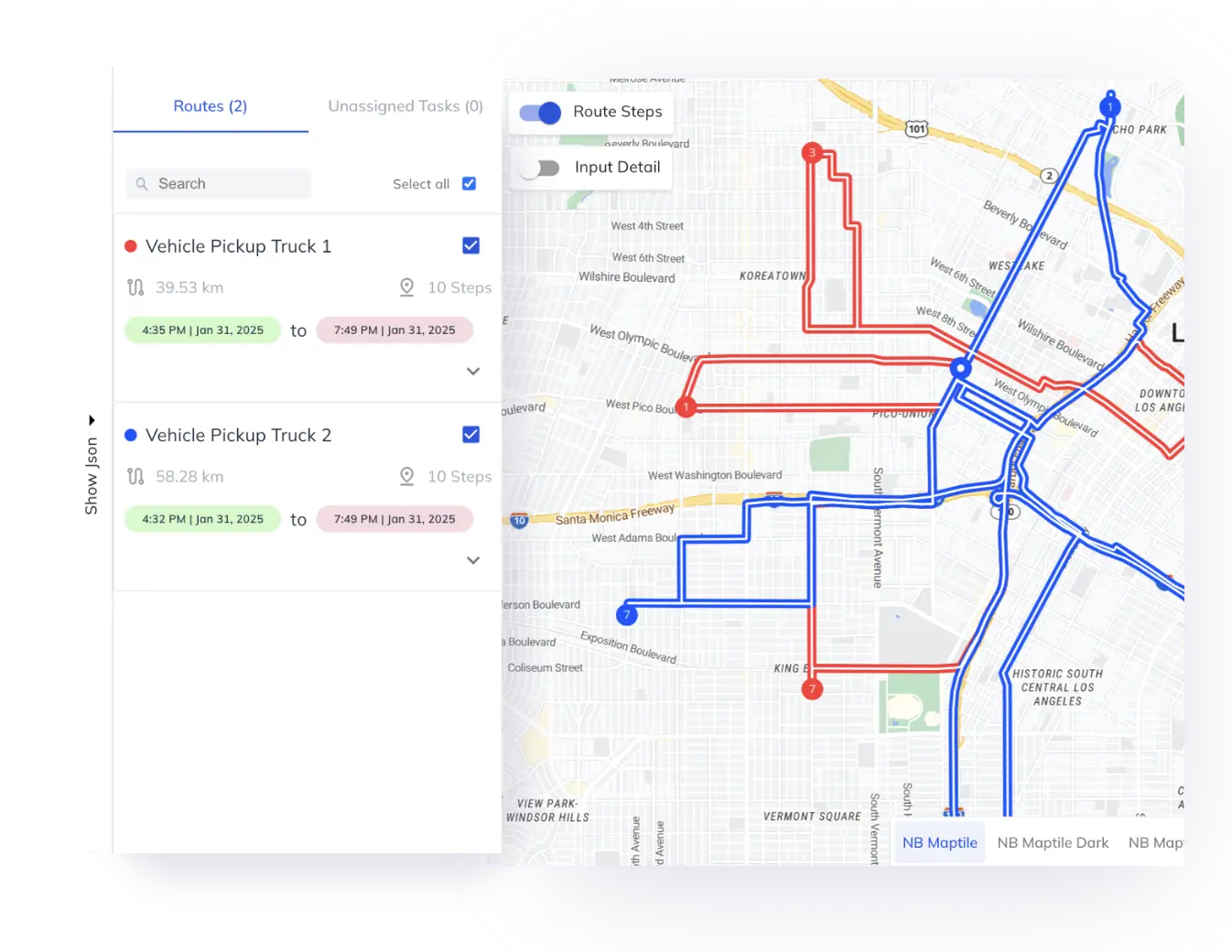
Dispatch mapping software brings route planning together with dispatch operations and fleet visibility.
Rather than treating route planning as a one-time activity, dispatch mapping software provides a workspace where teams can see vehicles, jobs, and routes and make operational decisions as the day progresses.
NextBillion.ai describes dispatch mapping software as a combination of an interactive map, job dispatching, and route optimization. Its dispatch workflows are designed to help teams import data from fleet management or telematics platforms, create optimized routes, assign work, and dispatch routes.
A dispatch mapping platform can therefore help a dispatcher answer questions such as:
This makes dispatch mapping more operational than basic route planning.
The biggest difference is the scope of the workflow.
Route planning software primarily answers:
What is the most efficient way to complete these stops?
Dispatch mapping software goes further:
Which driver should complete each job, what route should they follow, where are they now, and how should the plan change when conditions change?
For example, a delivery company may use route planning software to create the day’s routes in the morning. A dispatch team may then need to deal with cancellations, new orders, traffic delays, driver availability, or vehicle issues.
Dispatch mapping software is designed around that second problem.
Traditional route planning can be completed before drivers leave the depot. Once routes are generated, the plan may remain unchanged unless an operator manually creates a new plan.
Dispatch mapping software is more focused on continuous operations.
NextBillion.ai’s dispatch software, for example, supports integrations with fleet management and telematics platforms such as Samsara, Geotab, Motive, and Netradyne. Teams can bring vehicle and job data into the workflow and use optimized routes for dispatch.
This distinction matters when routes are affected by real-world events.
Route planning software can optimize the sequence of stops. Dispatch mapping software also puts greater emphasis on who performs the work.
A dispatch system may need to consider:
NextBillion.ai’s routing and dispatch software supports constraints such as time windows, vehicle capacity, driver schedules, skills, and compliance rules when generating routes.
This allows route and assignment decisions to be considered together instead of treating them as separate tasks.
Both types of software can provide maps, but their operational purpose can differ.
A route planning tool may use a map primarily to show the optimized route and stops.
Dispatch mapping software uses the map as an operational workspace. Dispatchers can use it to understand where vehicles and jobs are located and make decisions based on the current situation.
This is particularly important for delivery, field service, courier, waste collection, and other operations where jobs can change during the day.
Creating an optimized route does not necessarily mean the route has been communicated to the driver.
A complete dispatch workflow needs a way to move the plan from the planning stage into execution.
With NextBillion.ai’s Route Planner, an optimized solution can be dispatched to a driver app, sent to an integrated third-party fleet management or TMS platform, downloaded as a CSV, or shared through a URL.
This creates a connection between route optimization and route execution.
Yes. The distinction is not always absolute.
Many modern route planning platforms have added dispatch capabilities, while dispatch platforms commonly include route optimization.
For example, NextBillion.ai offers a UI-based Route Planner that allows operations teams to build, review, adjust, and dispatch optimized routes without relying on engineering teams. Its broader routing and dispatch platform also connects with fleet management, telematics, and other operational systems.
So instead of looking only at the product category, businesses should evaluate which operational capabilities are actually included.
Whether you call it route planning software, dispatch mapping software, or routing and dispatch software, the platform should support the requirements of your operation.
The software should be able to optimize routes across multiple stops and vehicles rather than simply providing directions between two locations.
Look for support for constraints such as:
NextBillion.ai’s platform supports more than 50 hard and soft routing constraints, allowing businesses to model operational requirements rather than optimizing routes based only on distance.
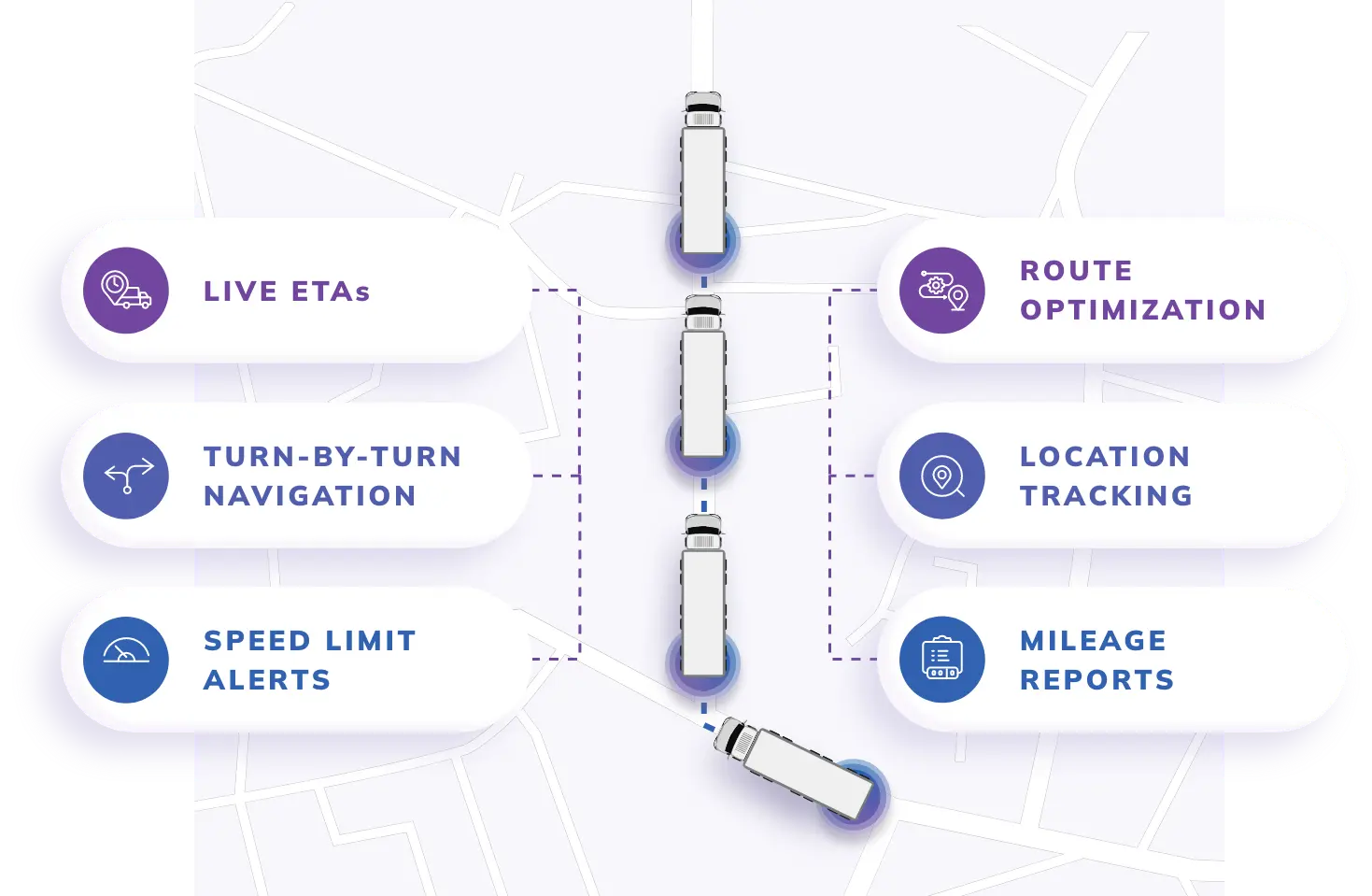
If your business already uses telematics or fleet management software, integrations can eliminate manual data transfers.
NextBillion.ai supports connections with platforms including Samsara, Geotab, Motive, and Netradyne for importing and working with fleet and vehicle data.
The platform should make it easy to move an optimized route from the planning screen to the person executing it.
This can include a driver app, third-party fleet management system, or another existing operational workflow.
A route that looks optimal at 8 a.m. may not remain optimal at noon.
Look for the ability to adjust routes when new jobs, cancellations, delays, or other operational changes occur.
Choose route planning software when your primary requirement is to create efficient routes for a known set of stops and vehicles.
Choose dispatch mapping software when your team also needs to:
For many growing fleets, the two capabilities are increasingly combined. Instead of using one tool to plan routes and another to manage dispatch, businesses can use a connected routing and dispatch workflow.
NextBillion.ai combines route optimization with dispatch capabilities for logistics, delivery, field service, trucking, and other fleet operations.
Its Route Planner provides a no-code interface for operations teams to create and review optimized routes, while its broader platform supports integrations, driver assignment, dispatch workflows, and complex routing constraints.
The platform can account for operational constraints such as vehicle capacity, time windows, driver schedules, vehicle specifications, and other rules while optimizing routes. NextBillion.ai also provides routing APIs for businesses that want to embed routing and optimization capabilities into their own applications.
For teams that have outgrown spreadsheets or basic mapping tools, combining route optimization and dispatch can reduce the gap between planning the route and managing the route in the real world.
Route planning software and dispatch mapping software are closely related, but they are not exactly the same.
Route planning focuses on answering “What is the best route?” Dispatch mapping focuses on the broader operational question: “How do we plan, assign, dispatch, monitor, and adjust the work?”
For simple route creation, route planning software may be enough. For complex fleet operations where routes need to connect with driver assignment, fleet data, dispatch, and real-world constraints, dispatch mapping software provides a broader operational layer.
The best solution is one that matches the complexity of your fleet and connects route optimization with execution, rather than treating planning and dispatch as completely separate processes.
No. Route planning software primarily focuses on creating optimized routes, while dispatch mapping software typically combines route optimization with job assignment, fleet visibility, dispatching, and operational management.
The main difference is scope. Route planning focuses on creating an efficient route plan. Dispatch mapping extends that workflow to assigning jobs, monitoring operations, dispatching routes, and responding to changes.
Some route planning platforms include dispatch capabilities. For example, NextBillion.ai Route Planner allows optimized solutions to be dispatched to a driver app or integrated third-party fleet management or TMS platforms.
Yes. Modern dispatch mapping platforms can combine job assignment and dispatch with route optimization. NextBillion.ai’s dispatch workflows use routing and optimization to create plans based on operational constraints.
For a fleet that only needs to create routes, route planning software may be sufficient. For fleets managing frequent job changes, multiple drivers, live vehicle information, and dispatch operations, a solution that combines route planning and dispatch can provide a more complete workflow.
Rishabh Singh is a Freelance Technical Writer at NextBillion.ai. He specializes in Programming, Data analytics and technical consulting, turning complex tech into clear and engaging content.