



Route Optimization API
Optimize routing, task allocation and dispatch
Distance Matrix API
Calculate accurate ETAs, distances and directions
Directions API
Compute routes between two locations
Navigation API & SDK
Turn by Turn Instructions for Drivers & Technicians
Route Optimization Software
Plan optimized routes with 50+ Constraints
Product Demos
See NextBillion.ai APIs & SDKs In action
AI Route Optimization
Learns from Your Fleet’s Past Performance
Platform Overview
Learn about how Nextbillion.ai's platform is designed
Road Editor App
Private Routing Preferences For Custom Routing
On-Premise Deployments
Take Full Control of Your Maps and Routing
About Us
Our story, vision
and mission
Contact Us
Reach out to us for any product- or media-related queries
Write to us at

Table of Contents
Many fleet operating companies are expanding into international markets. While this expansion brings new opportunities, it also introduces a new set of compliance challenges and responsibilities. For example, transporting goods across North America and Europe to Canada or Australia requires compliance with different labor laws, safety requirements, and transport regulations, as well as record-keeping and mandatory rest breaks along the way.
Among these regulations, understanding and complying with the hours-of-service (HOS) regulations is one of the most complex operational challenges, as it can directly affect driving limits, rest periods, delivery timelines, and overall operational efficiency.
This guide explores how international hours-of-service regulations vary across jurisdictions and countries, and highlights operational considerations for international fleets.

Every country has unique hours-of-service regulations. These are designed to improve commercial vehicle safety and minimize fatigue-related road accidents. Although the overall objective of HOS rules across different countries remains largely the same, the regulations regarding driving limits, rest periods, and penalties for violations may differ considerably.
For example:
While many countries like the United States and Canada focus on regulating driving times, others like the European Union prioritize strict driving limits along with total working hours.
Many countries’ jurisdictions involve the integration of technologies such as Electronic Logging Devices (ELDs) and GPS trackers. At the same time, others still prefer to adopt a paper-based approach for record-keeping of driving data, working hours, rest periods, and delivery schedules.
Also, rest or break periods, sleeper berth provisions, and weekly driving limits may vary significantly between countries.
When fleets operate internationally, these differences in the regulations and compliance requirements can have a major impact on:
Having a clear understanding of the international hours-of-service regulations helps create a well-planned fleet operations workflow that can effectively handle penalties, delays, and unexpected disruptions.

Let’s now understand how HOS regulations vary across different regions or major countries:
With the most well-defined and structured HOS framework, the United States sets regulations for international fleet operators under the Federal Motor Carrier Safety Administration (FMCSA). It sets regulations on working and driving hours for commercial vehicle drivers (CMVs). Here are the key regulations defined for HOS under FMCSA:
Regulation | Requirement |
Maximum Permitted Driving Limit | 11 hours driving after 10 consecutive hours off duty |
On-Duty Limit | Drivers are prohibited from driving after the 14th consecutive hour on duty. |
Break Period | A mandatory 30-minute break after 8 cumulative hours of driving |
Weekly Driving Limits | Driving is prohibited after 60/70 hours on duty in 7 or 8 consecutive days |
Restart Period | Drivers are allowed to reset their 7-day or 8-day cumulative on-duty limit by taking a 34-hour consecutive off-duty period. |
Sleeper-Berth Provision | Drivers can split the 10-hour off-duty period into 2 hours of one break and at least 7 consecutive hours in the sleeper berth. |
Adverse Driving Conditions | Drivers can extend the 11-hour driving limit and 14-hour driving window by up to 2 hours |
Canada’s HOS regulations may be similar to those in the United States; however, several differences remain. The hours of service regulations in Canada are governed under the Commercial Vehicle Drivers Hours of Service Regulations, which enforce the following requirements for fleet operators:
Regulation | Requirement |
Daily Driving Limits | Not more than 13 hours in a single day |
Off-Duty Time | Before resuming, drivers must take 8 consecutive hours of off-duty |
On-Duty Limitations | 14 hours per day including driving and non-driving tasks |
Mandatory Log Off | Driver must log off after 14 hours of duty |
Off-Duty Requirements | In every 24 hours, a minimum of 10 hours of off-duty time |
Daily Rest | At least 8 consecutive hours |
Sleeper Berth Rules | Drivers can split the rest breaks into two sleeper berth periods, provided that neither period is less than 2 hours and the combined total is 10 hours. |
The hours-of-service regulations take a different approach in the European Union. The jurisdictions in this region place great emphasis on continuous driving limits while following structured weekly rest requirements. This signifies that, rather than focusing primarily on on-duty hours, the EU regulations govern how long fleet drivers can drive continuously before taking a compulsory break.
The key characteristics og hours of service regulations in the EU include:
Regulation | Requirement |
Daily Driving Limit | 9 hours (which can be extended up to 10 hours twice a week) |
Maximum Weekly Driving Limit | 56 hours |
Fortnightly Driving Limit | 90 hours |
Total Working Time | Working time including the driving time must not exceed 48 hours a week |
Maximum Working Time | 60 hours in one week |
Maximum Working Time (if night work performed) | 10 hours |
Mandatory Driving Break | A 45-minute break after 4.5 hours of driving |
Mandatory Working Break | A break of at least 15 minutes after 6 hours` |
Driver’s Rest Period | Regular daily rest of 11 hours (Can be reduced to 9 hours no more than thrice a week) |
The HOS regulations are known as the Driver’s Rule in the United Kingdom. The requirements are defined in accordance with assimilated EU rules (for vehicles over 3.5 tonnes on international or long-distance domestic routes) and GB domestic rules (for small commercial vehicles).
The key requirements for driver’s hours rules include:
Regulation | Assimilated EU Rules Requirements | GB Domestic Rules Requirements |
Daily Driving Limit | 9 hours, can be extended to 10 hours twice a week | Maximum 10 hours of driving per day |
Weekly Driving Limit | Maximum 56 hours | Daily limits are applicable |
Fortnightly Driving Limit | 90 hours over any two consecutive weeks | Not applicable |
Maximum Continuous Driving | 4.5 hours | No specific limit, but driver must not drive if fatigued |
Mandatory Driving Break | 45 minutes after 4.5 hours of driving | No prescribed driving break |
Daily Rest Requirement | 11 consecutive hours | No fixed daily rest period specified |
Maximum Duty Time (Working Day) | Limited to driving and rest requirements | 11 hours on duty on any working day |
Hours of service (HOS) regulations and fatigue management in Australia are governed by the Heavy Vehicle National Law (HVNL) and the National Heavy Vehicle Regulator (NHVR). The key requirements for these regulations include:
Regulation | Requirment |
Maximum Work Time | 12 hours in any 24 hours |
Minimum Daily Rest | At least 7 consecutive hours of stationary rest in every 24 hours |
Maximum Weekly Work Limit | Up to 72 hours in any 7 days |
Maximum Fortnightly Work Limit | Should not exceed 144 hours in any 14 days |
Standard Hours Scheme | Default fatigue management framework applies to heavy vehicle drivers without any additional accreditation required |
Basic Fatigue Management (BFM) | Offers flexibility in work and rest hours for accredited operators |
The hours of service in New Zealand are officially known as work time and rest rules. These rules are set out in the Land Transport Rule and emphasize managing driving fatigue by offering flexibility in fleet operations.
Some of the key regulations and their requirements include:
Regulation | Requirement |
Maximum Daily Work Time | Should not exceed 13 hours |
Rest Break | A 30-minute break after every 5.5 hours of continuous work |
Daily Rest Period | A continuous rest break of a minimum of 10 hours after the maximum daily work limit |
Cumulative Limit | Maximum 70 hours of work time before a compulsory rest break of at least 24 hours |
Recordkeeping | Drivers must maintain accurate records at all times in the log books |
Instead of defining a unified HOS framework, commercial fleet management companies follow work-and-rest regulations governed primarily by individual national labor laws and transport authorities.
The work and rest requirements across Middle East and GCC countries include:
Regulation | Requirement |
Working Hours | GCC limits working hours to 8 hours per day and 48 hours per week |
Driving and Rest Period Tracking | Freight and long-haul transport operators use digital tachographs to track speed, driving time electronically, and rest breaks. |
Peak Traffic Restrictions | Traffic departments such as those in Kuwait and the UAE impose driving bans on heavy trailer trucks during peak traffic periods |
Midday Work Ban | Several GCC countries, such as Saudi Arabia, the UAE, Qatar, Kuwait, and Oman, enforce outdoor work restrictions in the transport, construction, and other outdoor industries during peak summer or hot days (typically from 12 PM to 3 or 3:30 PM). |
Unlike the United States or the EU, which have centralized rules for hours of service, Asian countries regulate commercial driving and working hours through national labor codes, road safety laws, and rules set by transport ministries.
Let’s explore some of the important HOS requirements across major Asian countries:
Country/ Region | Regulation | Requirement |
China | The driving and work limits are governed under the Rules of Determination of Fatigued Driving of Motor Vehicle Drivers. |
|
Japan | Commercial driving limits and overtime caps are managed under labor reform laws. |
|
India | The Factories Act and the Motor Transport Workers Act govern the working hours. |
|
ASEAN Countries (Such as Malaysia, Thailand, and Indonesia) | Driver’s working hours are governed under national labor laws such as Malaysia’s Employment Act and Indonesia’s Manpower Act |
|
Singapore | The Workplace Safety and Health Guidelines and Road Safety Act 1961 regulate the working hours and rest periods. |
|
While domestic fleet operators operate under a single regulatory jurisdiction, international fleet operators must manage multiple HOS jurisdictions. To simplify, if a logistics or fleet operator moves freight across different countries, then it must ensure that every trip complies with the jurisdiction as it enters. This means adopting the driving limits, route schedules, and adhering to the different compliance requirements of the specific regions under that jurisdiction.
In such scenarios, most international fleet operators commonly face challenges such as:
Such challenges make achieving manual compliance increasingly difficult for international fleet operators, especially those that handle thousands of vehicles across international markets.
Major jurisdictions such as the United States, Canada, and the European Region share a common overall HOS mission that includes:
It can be said that HOS principles across different countries might share the common goal of imposing driving limitations and regular rest periods for drivers to avoid fatigue-related risks and maintain safety on the roads. Each country, however, adopts a different regulatory requirement for HOS compliance and transportation workflows.
A single glance at the HOS frameworks of different countries may suggest they are similar, but minor distinctions in regulatory requirements can significantly impact operational planning.
For example:
These differences highlight that managing cross-border fleet operations requires compliance with international hours-of-service regulations by country.
For international fleet operators, complying with international hours-of-service regulations entails more than just managing changes to driving and rest period schedules.
Most fleet operators commonly face challenges such as:
When planning cross-border routes, dispatchers need to consider the different jurisdiction-specific driving limitations. Ignoring these regulatory requirements can lead to delayed deliveries and even penalties.
To meet cross-border requirements, the vehicle may spend more time idle because mandatory rest periods follow different schedules across countries.
Multiple regulatory requirements often necessitate managing different compliance records, tracking evolving requirements, and keeping audit reports ready for inspections across enforcement agencies.
Failure to comply with international hours-of-service regulations, such as violating daily driving limits or failing to meet mandatory rest periods, can expose fleets to operational delays, heavy fines, or audit findings for incorrect routes.
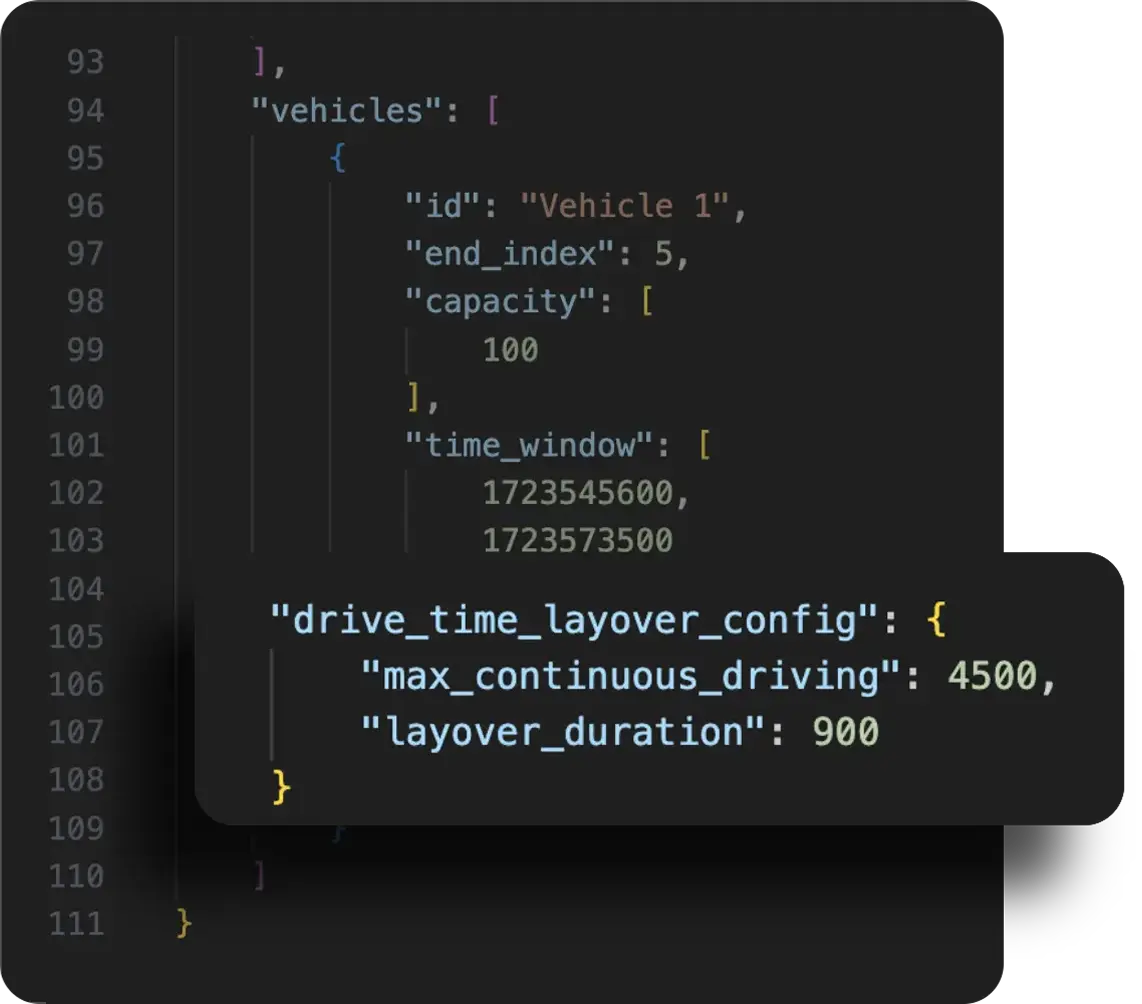
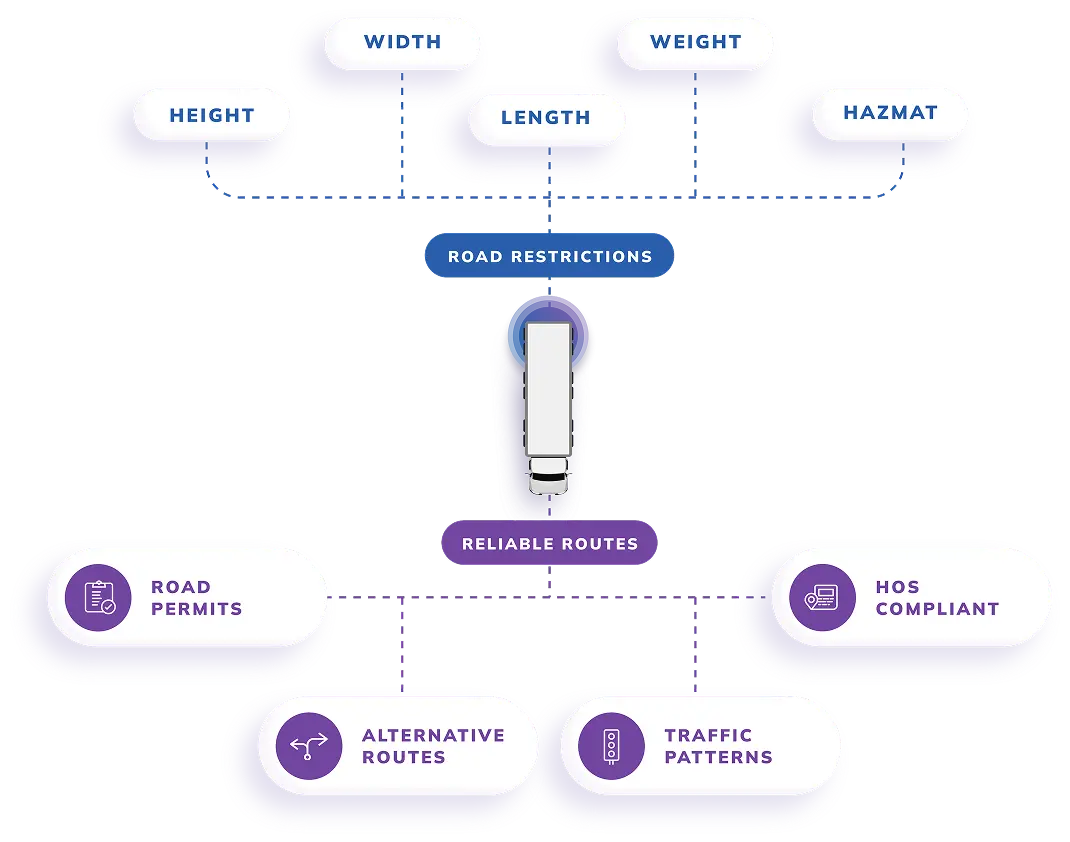
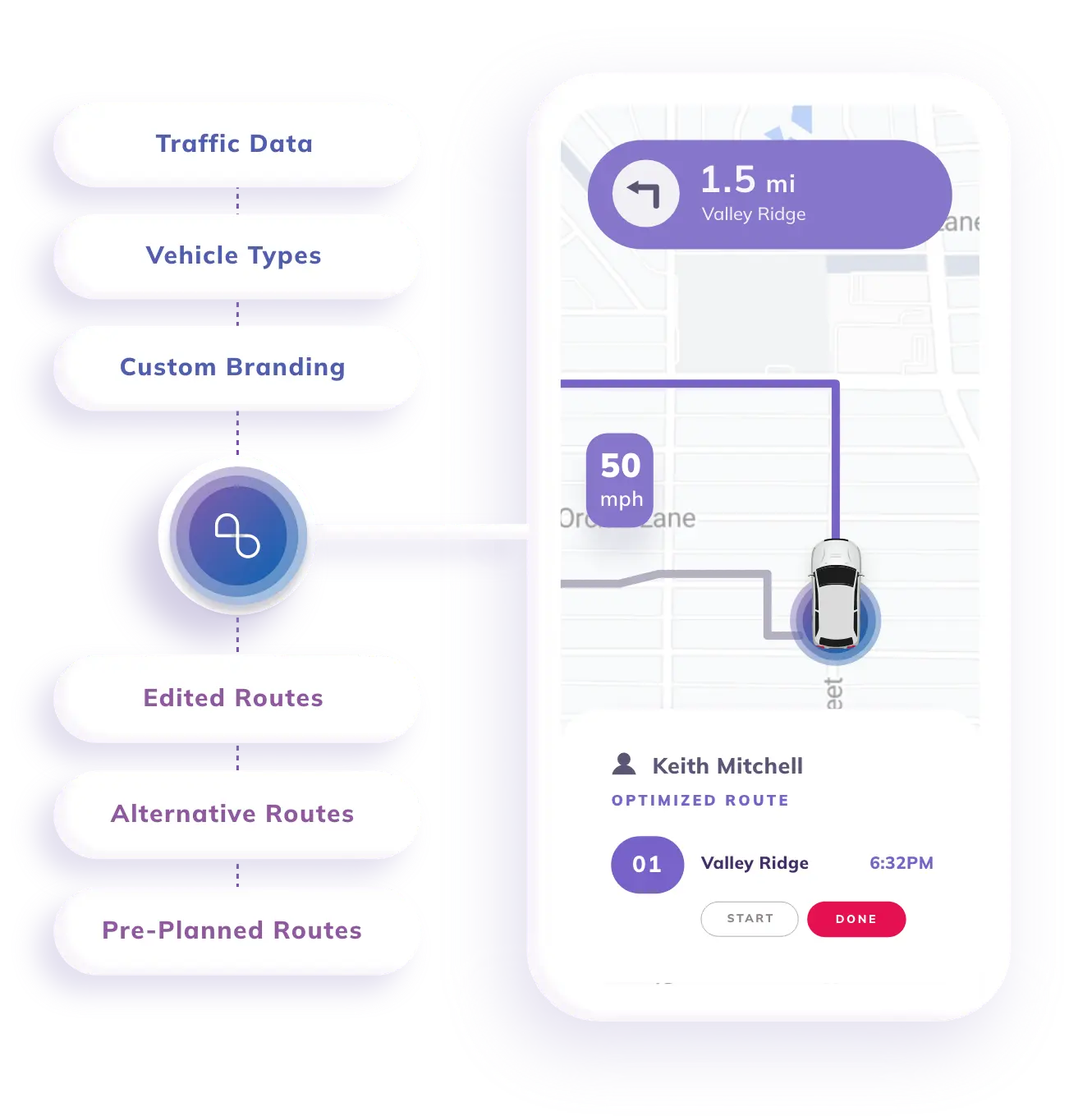
For fleet operators, understanding how technology simplifies HOS compliance for international regulations can help them streamline driving limits, on-duty time, mandatory rest periods, and route constraints, while handling all fleet operations data with a single workflow.
Some of the core technologies that can help achieve compliance with international hours of service regulations include:
The key is not any single technology, but how these systems work together. An ELD can provide driver-hour data, GPS can provide the vehicle’s current location, and a routing platform can use those inputs to determine whether the planned route is still workable. For fleets operating across borders, this connected approach can make HOS requirements part of route planning and dispatch decisions rather than a separate compliance task.
NextBillion.ai‘s HOS-aware routing capabilities are particularly relevant here because the platform supports regional HOS configurations and can incorporate driving limits, breaks, and rest requirements directly into route optimisation. That allows fleets to plan routes around the constraints that actually apply to the driver and region, rather than treating compliance as something to verify after the route has already been created.
As an international fleet operator, if you are looking for a single global standard for HOS regulations in 2026, you might be wrong. While different countries or jurisdictions might share a common goal of enforcing driving limitations and ensuring sufficient rest periods for drivers, each follows a different set of regulatory requirements regarding total driving hours, off-duty or break periods, record-keeping, and the management of fatigue-related risks.
Here are some of the key trends that international fleet operators must know in 2026:
These international fleet trends in 2026 highlight that fleet operators are moving beyond reactive compliance to proactive planning to optimize routes, achieve cross-border compliance, ensure regular rest periods, and manage driving limits.
Managing fleets across multiple countries already involves multiple complicated processes. To top it off, ensuring HOS compliance in each jurisdiction as the vehicle enters makes it an even more challenging task. Each country has different driving limitations, compulsory rest periods, and total on-duty, off-duty, and safety regulations for commercial fleet vehicles operating within its borders.
Thus, understanding the regulatory and HOS compliance requirements across jurisdictions is essential for international fleet operators. Manually tracking each regulatory requirement across borders is a difficult task for fleet managers. To simplify this, international fleet companies can integrate modern technologies such as ELDs, GPS, and real-time trackers, and cloud-based fleet management software that can help in automatically tracking the HOS compliance rules for different jurisdictions, monitor routes in real-time, allow easy recordkeeping, and assist in minimizing the compliance risks across countries without compromising operational efficiency.
Nextbillion.ai offers an advanced fleet management platform that simplifies route optimization, navigation, tracking, and cross-border compliance. Request a demo today.
The international hours-of-service regulations differ across countries in terms of working hours, driving time, break and rest periods, and recordkeeping requirements.
The HOS regulations can directly impact the delivery windows, fleet utilization, driver schedules, rest periods, and overall route planning and scheduling.
Routing or fleet management software can incorporate delivery windows, driving hours, rest periods, preferred routes, and regional operating and compliance requirements as the fleet moves through different jurisdictions. These can also offer real-time visibility into driving schedules and vehicle information, thus helping identify any potential compliance risks or vehicle issues.
Bhavisha Bhatia is a Computer Science graduate with a passion for writing technical blogs that make complex technical concepts engaging and easy to understand. She is intrigued by the technological developments shaping the course of the world and the beautiful nature around us.