
- BLOG
Direct Store Delivery (DSD) for Beverage Companies: How Route Software Keeps Shelves Stocked
Published: July 27, 2026
Route Optimization API
Optimize routing, task allocation and dispatch
Distance Matrix API
Calculate accurate ETAs, distances and directions
Directions API
Compute routes between two locations
Navigation API & SDK
Turn by Turn Instructions for Drivers & Technicians
Route Optimization Software
Plan optimized routes with 50+ Constraints
Product Demos
See NextBillion.ai APIs & SDKs In action
AI Route Optimization
Learns from Your Fleet’s Past Performance
Platform Overview
Learn about how Nextbillion.ai's platform is designed
Road Editor App
Private Routing Preferences For Custom Routing
On-Premise Deployments
Take Full Control of Your Maps and Routing
Table of Contents
Empty beverage shelves do more than disappoint customers. They reduce sales, weaken retailer trust, and give competing brands valuable shelf space. Direct Store Delivery helps beverage companies replenish stores faster, but managing routes, inventory, drivers, and changing demand requires more than manual planning.
Read this blog to learn how DSD route software keeps shelves stocked, improves delivery efficiency, and gives beverage companies better control over daily operations.
Direct Store Delivery (DSD) is a distribution model in which a beverage manufacturer or distributor delivers products directly to retail stores instead of routing them through the retailer’s central warehouse. The process combines order capture, route planning, vehicle loading, delivery execution, shelf replenishment, returns management, invoice generation, and proof of delivery within one operational workflow.
Drivers can also manage store-level inventory, rotate stock using a first-in, first-out system, collect empty containers, document damaged products, and adjust orders based on actual shelf demand. DSD is widely used in beverage distribution because products often require frequent replenishment, strict delivery windows, high-volume handling, and close monitoring of on-shelf availability.
Here are ten ways DSD route software helps beverage companies maintain consistent product availability across retail stores.
The software can review past orders, SKU sales velocity, delivery frequency, seasonal demand, and current inventory. It uses this data to estimate the number of cases each store needs before the next delivery. Improved reordering calculations minimize under-ordering and prevent fast-moving beverages from running out between visits.
Local events, weather, promotions, store format, and day-of-week variations can also be considered when building demand forecasts. A convenience store near a stadium might need more energy drinks before a big game, while a supermarket might need more bottled water during a heatwave.
The more order and delivery data the platform receives, the more accurate the forecast becomes. Beverage companies can compare predicted demand against actual sales and determine whether any patterns need to be addressed in replenishment rules by store or product category.
Retail outlets approaching minimum stock thresholds receive higher delivery priority. Dispatchers can recognize stores that have low inventory, high sales volume, or are about to have a promotional demand. The system then schedules these locations at the beginning of the route or schedules an extra delivery before the shelves run out.
Days of supply, SKU importance, retailer service agreements, and expected lost sales are all possible priority scoring considerations. Certain stores with high-margin or heavily promoted items may be replenished more quickly than other stores that have adequate inventory.
Automated alerts can also be set up for stores that are likely to have no inventory left until the next scheduled visit. This allows dispatchers sufficient time to move the stop, assign a recovery delivery or transfer stock from another route.
Not every retail outlet requires the same delivery schedule. A high-volume supermarket may need daily replenishment, whereas a small convenience store might require two or three visits per week. DSD software determines the frequency of delivery based on the size of the store, the sales trend, the amount of space available, and the rate at which products are sold.
The platform can compare real consumption with planned visits. If stores continue to fall short of stock, they may be serviced more often, and if they are stocked less often, they may be shifted to a less frequent schedule.
This will help avoid shortages and overstocking. Outlets with high demand have the delivery schedule they need to keep products on the shelves, while those with low demand aren’t driving unnecessary trucks to them.
The platform can determine total case volume, product weight, pallet requirements, vehicle load capacity, and stop-level orders prior to loading. Warehouse teams are provided with accurate load plans for each route. This helps prevent drivers from reaching stores without enough inventory to complete their scheduled deliveries.
Load-building algorithms can also consider package dimensions, product handling needs, axle limits, and unloading sequence. Frequently delivered products can be placed for faster access, thus minimizing service time at every retail stop.
Accurate load planning minimizes partial deliveries and emergency warehouse returns. Drivers depart from the depot with the right product mix, which helps reduce the risk of carrying too much slow-moving stock and not enough fast-moving SKUs.
A mobile DSD application is used by drivers to record all products delivered, rejected, damaged, exchanged, and returned. After every stop, vehicle inventory is updated, providing dispatchers with a true picture of what vehicles are left. Products that are available can then be rerouted to nearby stores that are short on product.
Real-time vehicle inventory is also suitable for driver-sales. When a driver receives an unscheduled store request or an order increase, he or she can check if more cases are available before accepting the request.
The system will reconcile the beginning inventory, delivered quantities, returns, samples, and end inventory at the end of the route. This minimizes shrinkage, makes it easier to account for, and gives better data for the next day’s load plan.
Urgent retailer orders, traffic congestion, vehicle breakdowns, and sudden demand changes can disrupt the original delivery plan. Dynamic route optimization recalculates the sequence of stops and assigns urgent deliveries to the most appropriate vehicle. Real-time adjustments allow stores to receive the required beverage inventory without waiting for the next scheduled route.
Before making a reassignment, the software assesses vehicle location, available capacity, driver hours, delivery windows, and available inventory. This prevents an urgent delivery from being assigned to a vehicle that cannot carry the required products or reach the store on time.
Dispatchers can also establish recovery routes for missed or incomplete deliveries. These routes cluster affected stores together to minimize the cost of correcting service failures and prevent long periods of empty shelves.
Digital order capture eliminates the need to manually fill out paperwork, place phone orders, and enter data on a spreadsheet. Sales representatives and Drivers choose precise product codes, package sizes, flavors, and case quantities. Validation rules can be used to identify duplicate orders, out-of-stock SKUs, or quantities that are out of stock.
The system can also implement product assortments and pricing agreements unique to the retailer. Only authorized SKUs, pack sizes, promotions, and discounts are presented to the sales representative for each store, hence minimizing order entry mistakes.
Electronic order records are seamlessly transferred to the warehouse and route-planning processes. Manual re-entry reduces the likelihood of mistakes in quantity, product, and delivery due to a lack of documentation.
Mobile retail execution tools enable drivers to be able to capture the shelf stock, backroom stock, availability of the shelves, and competitor placement at each visit. They can determine which SKUs are low in stock even if the store’s system indicates that there are available SKUs. Shelf-level data is used immediately to ensure replenishment accuracy and to avoid having products out of stock in the cabinets.
Drivers can scan barcodes, add facings, upload photos of the shelves and add out-of-stock reasons. These records help differentiate between actual inventory shortages and execution problems like products being in the backroom.
Shelf information can also be correlated with future orders. A product that is getting a moderate number of shelf facings and good sales might be asked for more facings or a higher replenishment order.
The DSD software keeps a record of the Batch number, Expiry date, Damaged cases, Rejected product and Reusable container. First-expiry-first-out stock rotation can take place on the driving floor, where drivers can replenish shelves. Expired inventory is minimized and beverage products are in the proper shelf locations with better rotation.
Drivers can locate short-dated products on their store visits and log their replacement, discount or transfer. This helps to minimize the need for expired drinks to take up valuable shelf or backroom space.
Accurate credits and inventory reconciliation are other benefits offered by digital return records. Reversed cases are associated with the right store, invoice, route, reason code and product batch, providing beverage companies with better control over their reverse logistics.
Operations teams can track vehicles, stops completed, estimated arrival time, delivery exceptions, and proof of delivery data. Early warning of missed stops or orders not completed to managers. They can then reroute deliveries, call retailers, or arrange recovery routes before the stock is impacted.
These are confirmed by geofencing and status updates with a timestamp, which indicate the time a vehicle arrives, begins the service, and leaves. Managers can detect long dwell times, route deviations, and repeated delivery delays, which can have an impact on shelf replenishment.
The retailers also get more precise updates on the arrival. Improved communication enables store teams to be better prepared when receiving, minimizes driver waiting time, and facilitates quicker unloading to ensure products are on shelves sooner.
DSD route software depends on several connected technologies to coordinate orders, inventory, vehicles, drivers, and store-level execution. These systems exchange operational data throughout the delivery cycle, helping beverage companies respond quickly to demand changes and maintain accurate product availability.
Cloud-based platforms centralize route plans, store orders, inventory records, delivery updates, and driver activity. Dispatchers, warehouse teams, sales representatives, and managers can access the same operational information without relying on separate spreadsheets or paper records.
Cloud infrastructure also supports multi-depot beverage operations. Data from different warehouses, territories, and retail accounts can be managed through one platform. System updates, user access, and operational rules can be applied across the distribution network.

Artificial Intelligence and machine learning are used for demand forecasting, order recommendations, route optimization, and detection of delivery risks. These technologies take a look at orders, sales trends, seasonal trends, promotions, delivery frequency, and store-level consumption.
Predictive models can predict when a given SKU of a beverage will run out of stock in a store. Route planning engines can then prioritize the store, adjust the store’s delivery frequency or suggest extra cases. The more sales, inventory and delivery information that the platform receives, the more accurate the forecast can be.
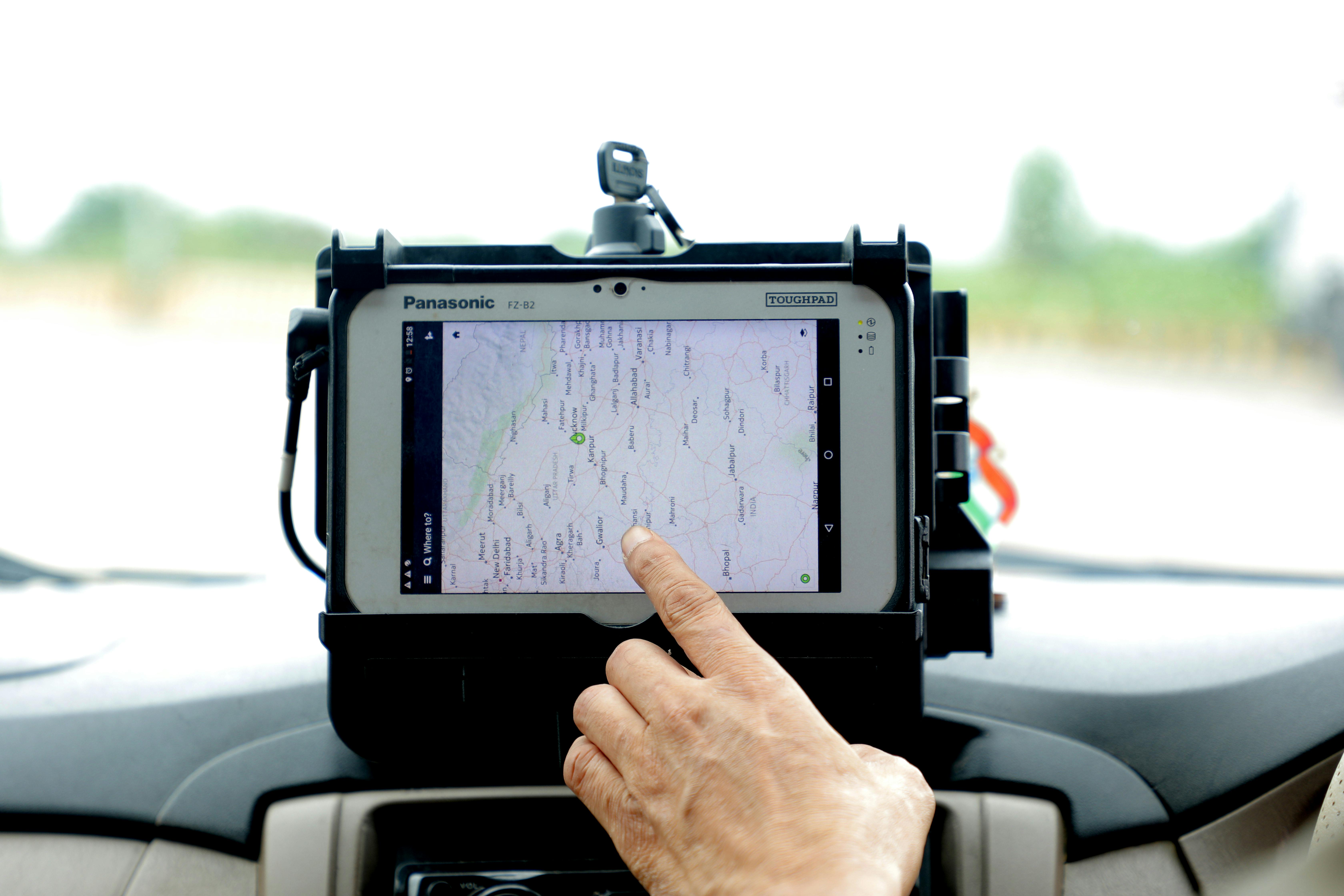
GPS and telematics systems deliver data about the location, speed, progress, mileage, and activity of drivers in the vehicle in real-time. Dispatch teams can see the comparison of planned movement and actual vehicle movement, and be alerted to delays, vehicle route deviations and longer dwell times.
Vehicle telematics can also be used to give information about fuel consumption, engine condition, refrigeration temperature, and driving behavior. This information can be utilized by beverage distributors to control delivery performance, vehicle maintenance, product safety, and operating costs.
Mobile DSD applications link drivers to route planning, customer information, delivery instructions, inventory management and navigation. Drivers can check their stops, check quantities delivered, get signatures, return quantities and record payment details.
Offline capability is crucial when there’s poor cell phone reception during deliveries. The application can save the delivery records to the local area and sync them up when there is a connection. This helps to avoid data loss and enables drivers to finish stops.
Scanning barcodes and QR codes enhances the accuracy of SKU level during warehouse loading, delivery, returns, and inventory reconciliation. Warehouse staff can verify that the proper product, package size, and quantity are placed in the designated vehicle.
Drivers can check products at every store to verify deliveries, rejected products, damaged products, and returned containers. RFID technology can also be applied to follow pallets, kegs, crates, and reusable transportation equipment throughout the warehouse, vehicles and retail stores.
The completion of each visit to the store is recorded on electronic proof of delivery. Can contain signatures, photos, timestamps, GPS, scanned products, delivered quantities, payment information, and exception notes.
These records can assist in solving delivery disputes and speed up invoice processing. Drink manufacturers can also ensure that the products are delivered to the right destination and have arrived on time.
Geofencing creates digital boundaries around stores, depots, delivery zones, and service territories. The platform can automatically record when a vehicle enters or exits a location.
Arrival alerts can notify store teams that a delivery vehicle is approaching. Geofence events can also measure waiting time, unloading duration, missed stops, and unauthorized route activity. Location intelligence further supports store clustering, territory planning, nearest-vehicle selection, and route design.
Application programming interfaces connect DSD route software with ERP, warehouse management, order management, customer relationship management, accounting, and transportation systems. These integrations allow orders, inventory, pricing, invoices, and delivery updates to move between platforms automatically.
Electronic Data Interchange can also exchange purchase orders, invoices, delivery confirmations, and credit records with major retailers. Connected systems minimize duplicate data entry and create a consistent flow of information from order placement to financial reconciliation.

Route optimization engines process delivery locations, store windows, vehicle capacities, driver schedules, service times, traffic conditions, and road restrictions. The engine assigns orders to suitable vehicles and calculates an efficient stop sequence.
Advanced platforms support dynamic re-optimization during the delivery day. Routes can be recalculated after urgent orders, cancellations, breakdowns, traffic delays, or inventory changes. The revised plan considers the remaining route commitments before assigning additional work.
Internet of Things sensors can monitor temperature, humidity, vehicle conditions, door openings, and cargo movement. These devices are particularly useful for beverages that require controlled storage or protection from extreme temperatures.
Sensor alerts can notify operations teams about temperature changes, refrigeration failures, or unauthorized vehicle access. The recorded data also provides evidence that products remained within required handling conditions during transportation.
Here are some practical use cases showing how beverage companies apply DSD route software across daily distribution operations.
Store-level data on sales, delivery frequency, and stock levels can be used to identify supermarkets with high turnover of their SKUs. The software determines the appropriate order quantities for the bottled water, soft drinks, juices and energy drinks before assigning the stop to the route. These stores can be scheduled earlier in the day, can be matched with the volume of trucks being dispatched and can help avoid stock-out during peak shopping hours.
Convenience stores typically take smaller orders and need to be replenished often. DSD software clusters the outlets in the vicinity into small routes, taking into account parking restrictions, service times and delivery windows. Drivers are provided with SKU-level manifests and are able to document delivered cases, rejects, and shelf shortages on a mobile application. This enables beverage companies to make more stops with no change in route mileage.
There are times when demand for cold drinks can increase significantly, such as during heatwaves, festivals, sporting events and during the holiday season. The DSD route software can detect stores with higher historical sales under similar conditions and boost their replenishment priority. Urgent stops can be added to the dispatch team, nearby vehicles can be redirected, and stock can be transferred between routes. This allows distributors to respond quickly without rebuilding the entire delivery plan manually.
The collection of damaged cases, expired goods, reusable crates, kegs and empty bottles are common element of beverage delivery routes. Each returned item is logged to the appropriate store, route, driver and invoice in DSD software. The system keeps vehicle stock and returns quantities in real time, making it easy to see the audit trail. This helps with deposit reconciliation, minimizes inventory loss, and helps with accurate credit processing.
Beverage brands can use DSD route software to manage limited-time promotions and new SKU launches across selected retail locations. The platform is capable of allocating promotional stock according to store category, anticipated demand, shelf space, and campaign priority. Drivers can upload display photographs, document placement compliance, and quantity delivered. Managers are then able to see which stores received the product and if the launch was carried out correctly.
We provide routing, navigation, tracking, and location intelligence APIs that beverage companies can integrate with their existing DSD, ERP, order management, and transportation systems. Our route optimization engine processes store orders, fleet data, operational constraints, and delivery priorities to generate executable route plans.
Our Route Optimization API can be used to optimize routes for single vehicles and multiple vehicles with over 50 constraints. We can assist beverage distributors in modeling store delivery windows, truck capacity, driver shifts, depot locations, service durations, route priorities, required vehicle attributes, and task dependency.
These constraints are not checked individually, but together with our solver. Each store order is allotted to a possible vehicle, and placed in an optimal stop sequence. Our API can handle up to 10,000 orders in a single optimization problem, which is ideal for large beverage networks with multiple depots, territories, and retail formats.
Our multi-dimensional capacity constraints allow planners to represent vehicle limits using cases, pallets, weight, volume, or other business-defined units. We allow beverage companies to specify the quantities required at every store and the carrying capacity of each truck before generating routes.
Our optimization engine avoids assigning more demand than a vehicle can support and distributes orders across suitable fleet resources. We can represent rigid trucks, delivery vans, refrigerated vehicles, or vehicles carrying reusable kegs and crates through separate vehicle profiles. Our capacity-aware routing reduces partial deliveries, depot returns, and situations where drivers reach stores without enough inventory to fulfill scheduled beverage orders.
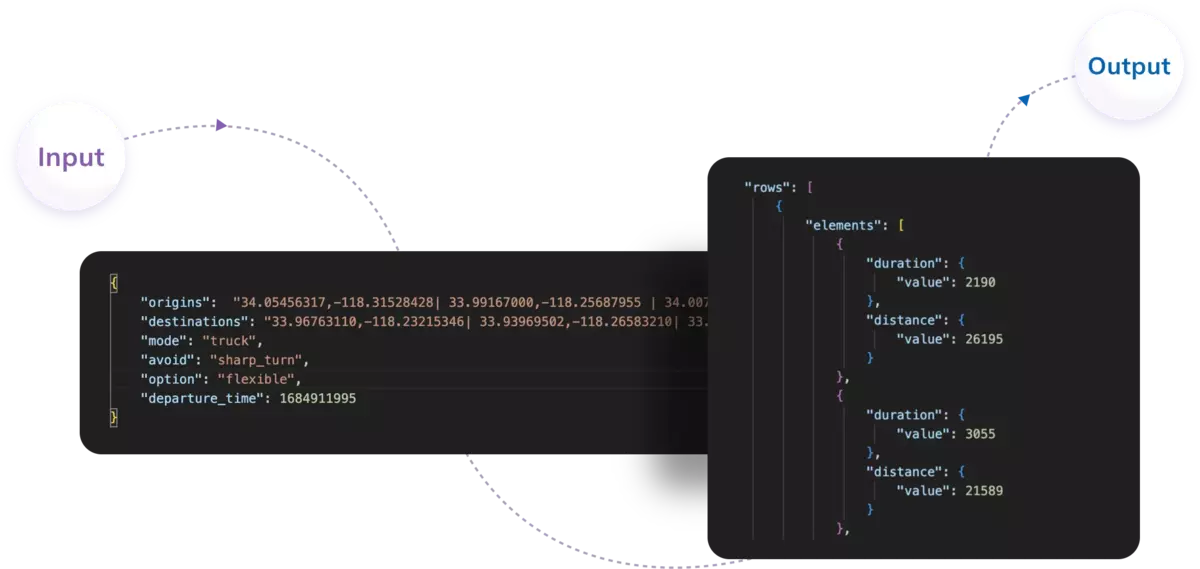
Our Distance Matrix API calculates travel distances and estimated arrival times between multiple origins and destinations. We help beverage distributors use this matrix data for route optimization, store assignment, territory planning, and nearest-vehicle selection.
Our many-to-many calculations allow planners to compare several depots, vehicles, and retail stores within one routing workflow. We use traffic-aware travel times to provide a more operationally realistic foundation than straight-line distance or static mileage estimates. Our distance data helps teams calculate route durations, identify reachable stores, balance driver workloads, and estimate arrival times before assigning orders.
Our Route Optimization API supports re-optimization when new tasks appear or existing delivery plans change during execution. We allow beverage distributors to add urgent replenishment orders, remove canceled stops, and adjust operational variables after trucks have left the depot.
Our solver evaluates current assignments and recommends revised routes rather than requiring dispatchers to rebuild every route manually. We consider remaining vehicle capacity, existing stops, delivery windows, driver availability, and active resources before inserting a new task. Our dynamic routing capabilities help teams respond to sudden stockouts, promotional demand, missed deliveries, vehicle disruptions, and high-priority retailer requests.
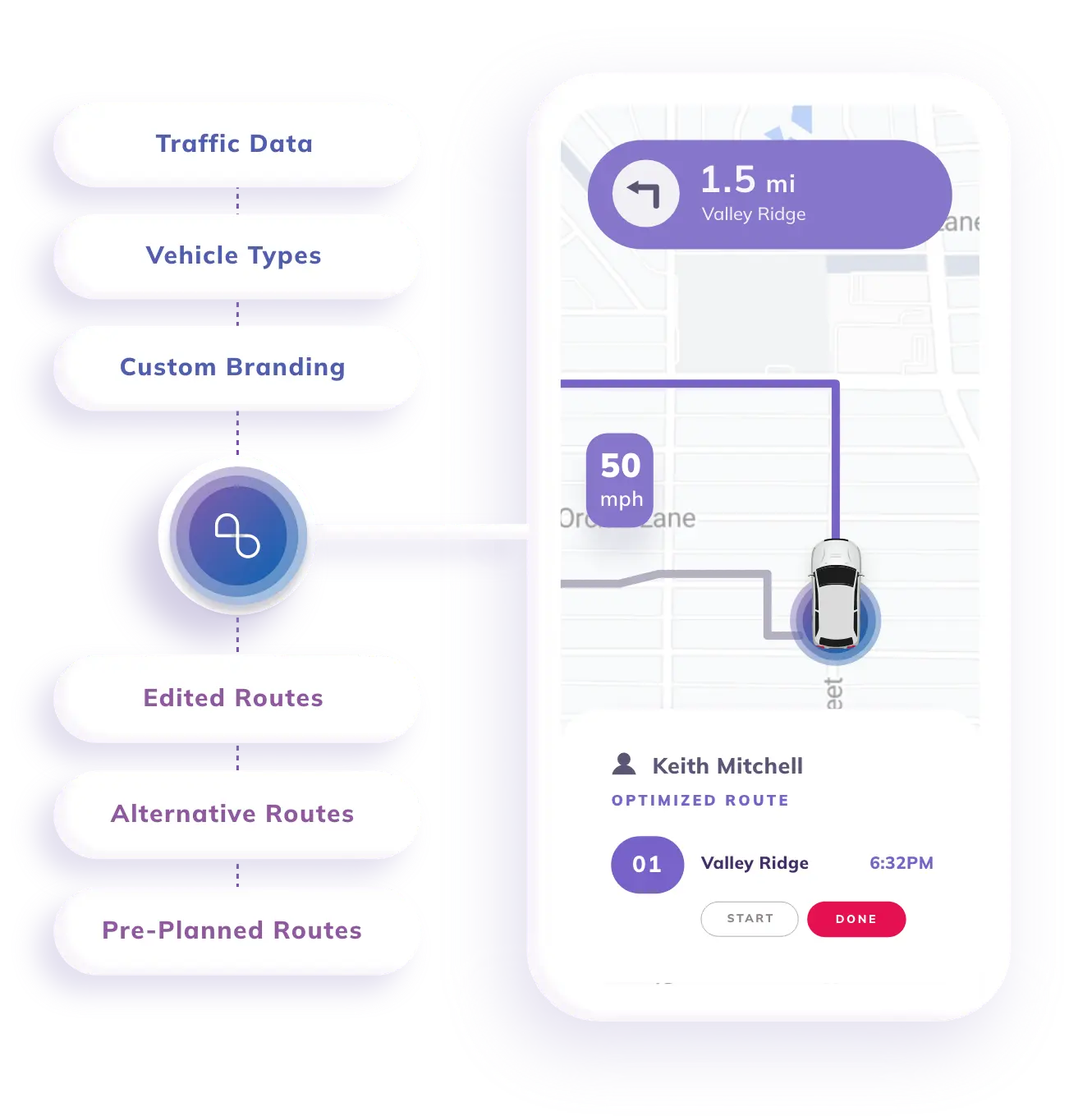
Our Navigation SDK allows beverage companies to embed turn-by-turn navigation within Android, iOS, or Flutter driver applications. We import dispatch-approved routes into the navigation workflow so drivers follow the planned store sequence rather than selecting independent routes.
Our SDK supports voice guidance, trip progress updates, rerouting, custom navigation interfaces, and regulation-aware routing. We can also account for truck-specific requirements and custom map restrictions, including roads unsuitable for large delivery vehicles. Our guided navigation helps reduce route deviations and directs drivers through roads compatible with their assigned vehicle profiles.
Our tracking and geofencing capabilities give dispatch teams real-time visibility into active beverage delivery vehicles. We provide location data covering route progress, vehicle movement, deviations, and current fleet positions.
Our geofences can be placed around depots, stores, delivery zones, or service territories. We trigger events when a vehicle enters or exits a defined boundary, supporting automated arrival detection, dwell-time measurement, delivery status updates, and retailer notifications. Our tracking data also helps operations teams compare planned routes with actual movement, investigate delays, and measure delivery performance.
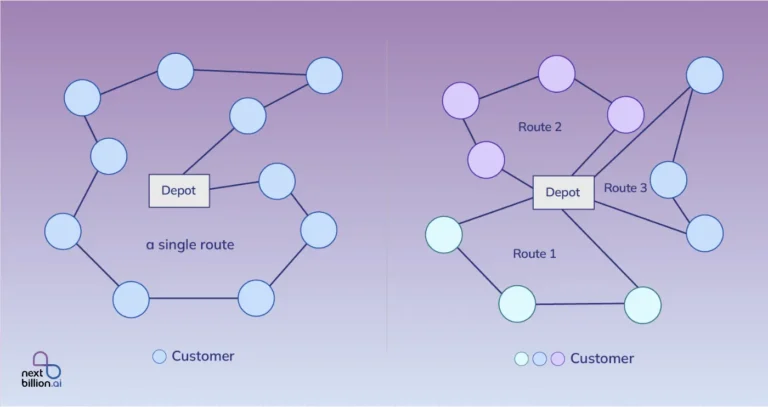
Direct Store Delivery software gives beverage companies tighter control over replenishment, routing, vehicle inventory, store execution, and delivery performance. It connects order capture, demand forecasting, load planning, dynamic routing, proof of delivery, and route reconciliation within one operational system.
Better data visibility helps distributors prevent stockouts, reduce partial deliveries, improve driver productivity, and respond faster to changing store demand. Beverage companies can also track SKU-level movement, returns, expiry risks, and on-shelf availability across every route.
A well-configured DSD route platform does more than optimize travel. It creates a continuous flow of accurate inventory and delivery data that helps keep retail shelves stocked, protect sales, and strengthen retailer service levels.
Keep beverage shelves stocked with NextBillion.ai’s capacity-aware routing, live tracking, and dynamic route optimization APIs. Connect with us to know more.
DSD software is a distribution management platform designed for companies that deliver beverages directly to retail stores. It manages order capture, inventory allocation, route planning, vehicle loading, mobile delivery execution, proof of delivery, returns, invoicing, and route reconciliation.
DSD route software analyzes store inventory, sales velocity, open orders, delivery frequency, and forecast demand. It calculates replenishment quantities and prioritizes stores expected to reach critical stock levels.
Real-time vehicle inventory also allows dispatchers to redirect available cases to stores facing unexpected shortages. Dynamic routing supports urgent deliveries without rebuilding the entire route plan manually.
Yes. DSD software records expired products, damaged cases, rejected items, reusable crates, kegs, and empty bottles against the correct store and route.
Each return can include a reason code, SKU, quantity, batch number, invoice reference, and container deposit value. These records support inventory reconciliation, retailer credits, reverse logistics, and container recovery.
Route optimization evaluates store locations, delivery windows, service times, vehicle capacity, driver shifts, traffic conditions, and road restrictions. It creates delivery sequences that reduce mileage, waiting time, and route overtime.
Dispatch teams can also reoptimize routes during execution. This helps manage cancellations, urgent orders, vehicle breakdowns, and unexpected delays while protecting scheduled deliveries.
Beverage companies should look for store-level demand forecasting, SKU inventory tracking, capacity-aware load planning, dynamic route optimization, driver mobile applications, electronic proof of delivery, returns management, and route reconciliation.
The platform should also support barcode scanning, offline data capture, ERP integration, geofencing, delivery alerts, performance dashboards, and retailer-specific pricing or assortment rules.
Bhavisha Bhatia is a Computer Science graduate with a passion for writing technical blogs that make complex technical concepts engaging and easy to understand. She is intrigued by the technological developments shaping the course of the world and the beautiful nature around us.