


Table of Contents
Dubai’s logistics ecosystem depends on the seamless movement of thousands of trucks transporting goods between ports, distribution centers, industrial zones, retail outlets, and neighboring emirates. Yet, efficient route planning in Dubai requires more than avoiding traffic congestion.
Freight operators need to navigate a complex set of truck movement restrictions enforced by the Roads and Transport Authority (RTA), which can significantly impact route choices, delivery schedules, and fleet productivity.
These restrictions can significantly impact the complete delivery schedule, fleet utilization as well as overall routing efficiency. To overcome this challenge, we have created a must-to-have guide to navigate Dubai’s truck movement restrictions, review the latest ban schedules, and identify the affected roads. This write-up also focuses on exploring what these regulations mean for route optimization, ETA accuracy, and overall fleet operations.
Current RTA Truck Ban Hours in Dubai
To improve traffic flow and enhance road safety, Dubai’s Roads and Transport Authority (RTA) has implemented truck movement restrictions on several major freight corridors across the emirate. These restrictions primarily target peak commuting hours when road congestion is at its highest.
For logistics operators, understanding these time-based restrictions is important to orchestrate dispatch to delivery cycle. Below listed is the important information you should know if you are running or planning to execute field operations in Dubai.
Standard Truck Restriction Schedule
The current truck movement restrictions in Dubai are applicable during the following peak-hour periods:
Standard Peak-Hour Restriction Schedule
| Restriction Window | Timing | Roads Affected |
| Morning Peak | 6:30 AM – 8:30 AM | Sheikh Mohammed Bin Zayed Road (E311) — Ras Al Khor Road to Sharjah border, both directions |
| Midday Peak | 1:00 PM – 3:00 PM | Sheikh Mohammed Bin Zayed Road (E311) — Ras Al Khor Road to Sharjah border, both directions |
| Evening Peak | 5:30 PM – 8:00 PM | Sheikh Mohammed Bin Zayed Road (E311) + Emirates Road (E611) Al Awir to Sharjah |
These timings were introduced on key freight corridors such as Sheikh Mohammed Bin Zayed Road (E311) between Ras Al Khor Road and the Sharjah border in both directions. During these periods, trucks are prohibited from using the affected road segments and must either use approved alternative routes or wait at designated truck rest areas until restrictions are lifted.
Emirates Road (E611) Restrictions
Beginning in 2025, Dubai expanded truck movement restrictions to a section of Emirates Road (E611) between Al Awir and Sharjah. The restriction specifically targets evening peak-hour traffic and is designed to reduce congestion on one of the UAE’s busiest commuter corridors. Here is the list of restrictions being imposed on Emirates Road.
| Road | Restriction Timing |
| Emirates Road (E611) – Al Awir to Sharjah | 5:30 PM – 8:00 PM |
Permanent Tunnel Bans (24/7, All Year Round)
Regardless of any temporary policy changes or special exemptions, the following tunnels remain permanently off-limits to trucks at all times:
| Location | Restriction |
| Airport Tunnel | No trucks permitted — 24 hours, 7 days a week |
| Al Shindagha Tunnel | No trucks permitted — 24 hours, 7 days a week |
Fines and Violations
Violating designated RTA truck bans or driving during restricted hours on monitored highways is a serious offence with significant penalties. Logistics operators and fleet managers should ensure all drivers are fully aware of the consequences of non-compliance:
| Penalty | Details |
| Fine Amount | AED 1,000 per violation |
| Black Points | 12 black points added to the driver’s license |
| Vehicle Impoundment | Up to 30 days |
These penalties apply regardless of whether the violation was intentional. A single incident can ground a vehicle for up to a month, directly impacting fleet availability and delivery commitments. For operators running tight schedules across multiple vehicles, the cumulative cost of non-compliance, fines, impoundment, and missed SLAs far exceeds the cost of investing in compliant, restriction-aware routing.
Note on Policy Dynamics
| Dubai’s truck movement regulations are not static. In early 2026, the RTA and Dubai Police temporarily suspended peak-hour restrictions across most roads to support supply chain continuity during a high-demand period, before reinstating the standard schedule shortly after. This means logistics operators cannot rely on a fixed ruleset. Restrictions can change with short notice, and route plans valid yesterday may not be viable tomorrow. Real-time, restriction-aware routing is no longer optional , it is operationally essential. |
Why Truck Ban Hours Create Route Planning Challenges
For logistics operators, truck movement restrictions are more than a compliance requirement, they are a critical routing constraint that directly affects delivery performance, fleet productivity, and operational costs.
Most route planning systems are designed to identify the shortest or fastest path based on distance and traffic conditions. However, in Dubai, the viability of a route can also depend on whether a truck is permitted to use a particular road at a specific time of day. A route that appears optimal during dispatch planning may become inaccessible by the time a vehicle reaches a restricted corridor.
Route Availability Changes Throughout the Day
Unlike permanent road restrictions, Dubai’s truck bans are time-dependent. Roads such as Sheikh Mohammed Bin Zayed Road (E311) may be accessible during one part of the day and restricted during another. This means route planning decisions cannot be based solely on current road conditions, they must also account for when a truck is expected to arrive at each road segment.
For example, a truck leaving a warehouse at 5:00 PM may have sufficient time to cross a restricted corridor before the evening ban begins. Another vehicle departing just 20 minutes later may be forced to wait for hours or take a significantly longer route.
Increased ETA Uncertainty
Truck restrictions make arrival time prediction more complex. Even if traffic conditions remain stable, a vehicle that encounters a restricted corridor during a ban window can experience substantial delays. As a result, estimated arrival times that fail to account for truck restrictions can quickly become inaccurate, affecting customer commitments and delivery schedules.
Higher Operational Costs
When drivers are forced to wait for restrictions to be lifted or travel through alternative routes, operating costs increase. Additional driving distance leads to higher fuel consumption, while longer journey times reduce the number of trips a vehicle can complete in a day. Over time, these inefficiencies can significantly impact fleet profitability.
Delivery Window and SLA Risks
Many industries in Dubai operate with strict delivery schedules. Missing a delivery window because of an unexpected truck restriction can result in failed deliveries, customer dissatisfaction, and service-level agreement (SLA) violations.
As customer expectations continue to rise, logistics operators need greater visibility into how restrictions affect route feasibility and delivery timing.
Traditional Navigation Tools Are Often Not Enough
Consumer navigation platforms are primarily designed for passenger vehicles and typically prioritize travel time and traffic conditions. They may not fully account for commercial vehicle restrictions, vehicle dimensions, or time-based access rules.
As a result, logistics operators increasingly require truck-specific routing solutions that can incorporate road restrictions, vehicle profiles, and time-dependent regulations directly into route calculations.
In a city where road accessibility can change throughout the day, successful route planning requires more than finding the shortest path, it requires identifying the most feasible route for a truck at a specific time.
Also Read: UAE Fleet Compliance Guide: Rules Every Logistics Business Must Know
Key Questions Effective Route Planning Must Answer
- Will the truck reach a restricted road before the ban begins?
- Is there a legal alternative route available
- Would adjusting the departure time result in a faster overall journey?
- How will a restriction impact delivery commitments and customer ETAs?
Improving ETA Accuracy and Delivery Reliability
Restriction-aware routing continuously evaluates route feasibility and expected travel times, helping operators provide more accurate delivery estimates and maintain service-level commitments. This is particularly important for businesses operating scheduled deliveries, retail replenishment, last-mile distribution, and inter-emirate freight movement.
How Restriction-Aware Routing Helps Fleets Navigate Dubai’s Truck Ban Hours
As truck movement restrictions become an increasingly important part of freight operations in Dubai, logistics companies can no longer rely on conventional routing systems that only consider distance and traffic conditions. To maintain delivery performance and fleet efficiency, route planning must account for when and where trucks are permitted to travel.
This is where permit-aware routing becomes essential.
For example, if a truck is scheduled to travel through Sheikh Mohammed Bin Zayed Road (E311) during a restricted period, a restriction-aware routing engine can proactively recommend an alternative route or adjust departure schedules to avoid delays.
The restriction-aware routing helps fleets reduce idle time, improve ETA accuracy, and minimize disruptions caused by truck bans.
Planning Routes Around Truck Restrictions
Effective route planning requires answering questions that traditional navigation systems often overlook following aspects:
- Will the truck reach a restricted road before the ban begins?
- Is there a legal alternative route available?
- Would adjusting the departure time result in a faster overall journey?
- How will a restriction impact delivery commitments and customer ETAs?
By incorporating these hard and soft constraints into route calculations, fleets can make better dispatch decisions and avoid costly surprises on the road.
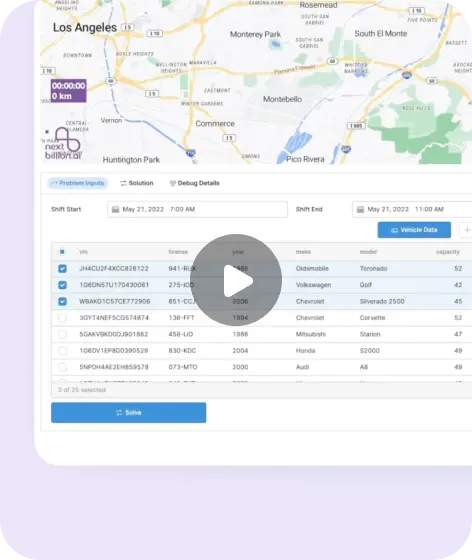
See how modern logistics teams use truck-specific routing and restriction-aware navigation to improve fleet efficiency and maintain compliance. Watch the video below.
Improving ETA Accuracy and Delivery Reliability
Truck restrictions introduce an additional layer of complexity to ETA calculations. A route that appears efficient on paper may become significantly slower if a vehicle encounters a road closure or restriction window.
Permit-aware routing continuously evaluates route feasibility and expected travel times, helping operators provide more accurate delivery estimates and maintain service-level commitments.
This is particularly important for businesses operating scheduled deliveries, retail replenishment, last-mile distribution, and inter-emirate freight movement.
Good Read: How to Schedule a 50-Truck Fleet Around Dubai’s Peak Hour Restrictions
How Logistics Technology Providers Such as NextBillion.ai Help
As truck movement restrictions become increasingly important in Dubai’s logistics landscape, fleet operators need routing solutions that understand more than just distance and traffic. Modern logistics platforms such as NextBillion.ai enable businesses to incorporate truck-specific regulations, operational constraints, and local road restrictions directly into their routing workflows.
Truck-Specific Routing
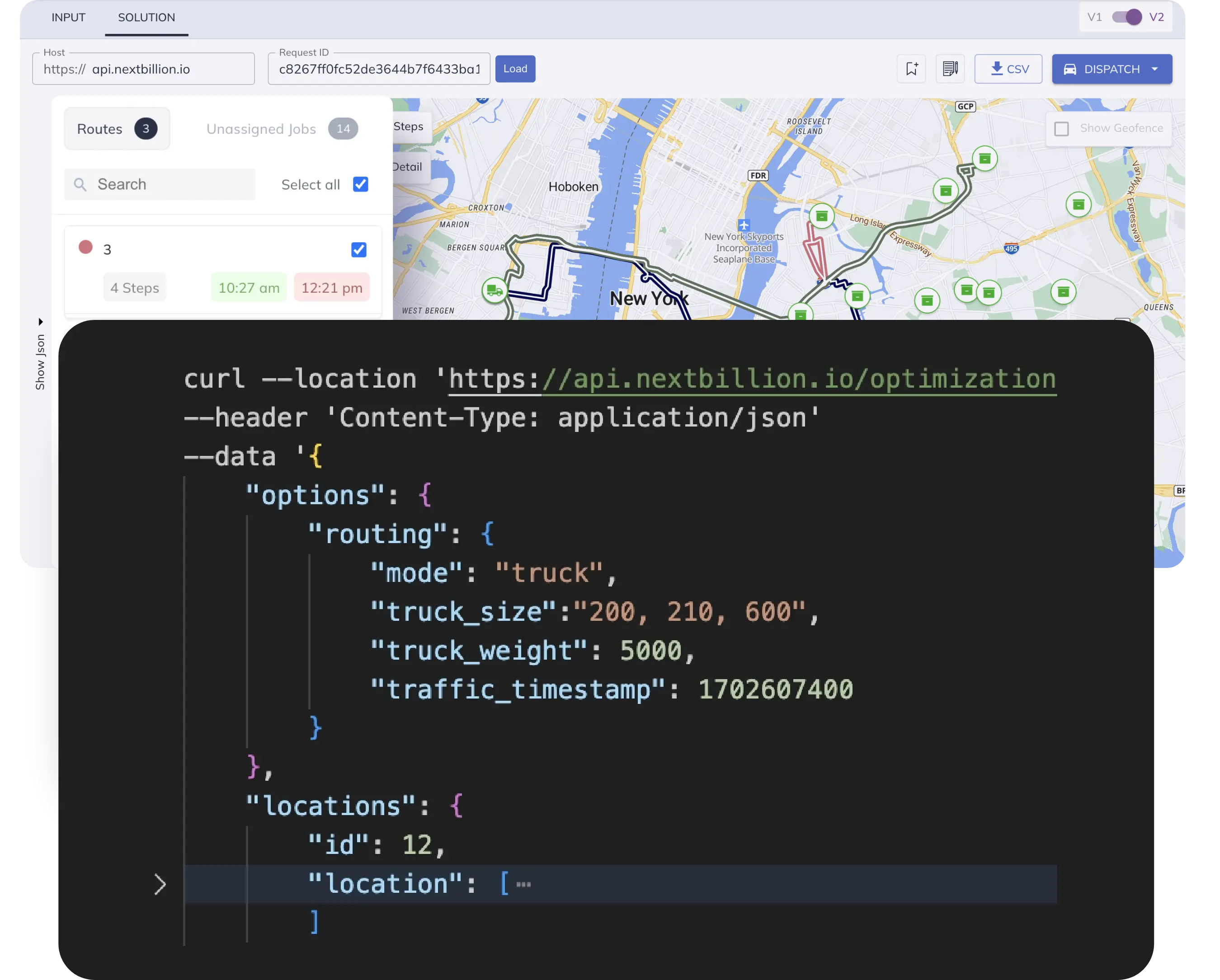
Unlike consumer navigation platforms designed for passenger vehicles, NextBillion.ai’s truck specific routing engine can be configured to account for truck-specific restrictions, vehicle dimensions, weight limits, and road accessibility rules. This ensures routes are not only efficient but also compliant with local regulations.
Restriction-Aware Route Optimization
Truck ban hours can significantly impact delivery schedules if they are not considered during route planning. NextBillion.ai helps operators optimize routes around time-based restrictions, enabling fleets to avoid restricted corridors during ban windows and identify viable alternatives before dispatch.
More Accurate ETAs
Traditional ETA calculations often fail to account for commercial vehicle restrictions. By incorporating truck movement regulations and operational constraints into route calculations, NextBillion.ai helps logistics providers generate more realistic arrival estimates and improve delivery predictability.
Smarter Dispatch Planning
Dispatch timing can be just as important as route selection. NextBillion.ai enables operators to plan departures around restriction windows, helping drivers clear key corridors before truck bans take effect and reducing the likelihood of delays, idle time, and missed delivery commitments.
Custom Restrictions and Operational Rules
Every logistics operation is different. NextBillion.ai allows businesses to configure custom routing rules based on their operational requirements, customer commitments, service zones, and local regulations. This flexibility is particularly valuable for fleets operating across multiple emirates or serving specialized industries.
Private Maps and Custom Road Networks
Many logistics operations in the Gulf region require access to roads that are not available on standard mapping platforms. Whether operating within ports, logistics parks, industrial zones, oil fields, refineries, or secure facilities, NextBillion.ai enables businesses to build private maps and add custom roads, fueling stations, parking locations, checkpoints, and other infrastructure required for efficient fleet operations.
Improved Fleet Efficiency and Reliability
By incorporating truck restrictions into routing decisions, logistics operators can reduce unnecessary detours, minimize waiting times, improve vehicle utilization, and enhance delivery reliability. This results in lower operational costs and a better customer experience.
As Dubai continues to evolve its transportation infrastructure and traffic management policies, restriction-aware routing will become a critical capability for logistics operators. Platforms such as NextBillion.ai help fleets navigate these complexities while maintaining compliance, operational efficiency, and service performance.
Conclusion
Dubai’s truck movement restrictions are designed to improve traffic flow and road safety, but they also add an important layer of complexity to logistic operations. For logistics operators, understanding when and where truck bans apply is no longer just a compliance requirement,it is essential for maintaining delivery reliability, fleet productivity, and operational efficiency.
As freight volumes continue to grow across the UAE, route planning must account for more than traffic conditions alone. Truck ban hours, vehicle-specific restrictions, road accessibility rules, and local regulations all influence whether a route is truly viable for commercial vehicles.
This is where restriction-aware routing becomes critical. By incorporating truck restrictions directly into route calculations, logistics providers can avoid costly delays, improve ETA accuracy, optimize dispatch schedules, and make better use of fleet resources.
For businesses operating in Dubai and across the Gulf region, investing in truck-specific routing solutions such as NextBillion.ai can help transform regulatory constraints into operational advantages. As transportation networks become more complex, the most successful fleets will be those that combine real-time traffic intelligence with commercial vehicle routing capabilities to ensure every route is both efficient and compliant.
To know more about how logistics tech can help your business scale, talk to our logistics expert today.
Ready to get started?
Request a DemoTable of Contents
Subscribe to our Newsletters
Get the best practices for route planning & optimization, delivered to your inbox.
Subscribe