

Route Optimization API
Optimize routing, task allocation and dispatch
Distance Matrix API
Calculate accurate ETAs, distances and directions
Directions API
Compute routes between two locations
Navigation API & SDK
Turn by Turn Instructions for Drivers & Technicians
Route Optimization Software
Plan optimized routes with 50+ Constraints
Product Demos
See NextBillion.ai APIs & SDKs In action
AI Route Optimization
Learns from Your Fleet’s Past Performance
Platform Overview
Learn about how Nextbillion.ai's platform is designed
Road Editor App
Private Routing Preferences For Custom Routing
On-Premise Deployments
Take Full Control of Your Maps and Routing
About Us
Our story, vision
and mission
Contact Us
Reach out to us for any product- or media-related queries
Write to us at

Table of Contents
Beverage distributors manage a wide range of delivery requirements across supermarkets, convenience stores, restaurants, and smaller retail outlets. Some customers order full pallets of fast-moving products, while others need smaller quantities across several SKUs. Choosing the wrong fulfillment model can increase warehouse labor, reduce vehicle utilization, and delay DSD routes.
Case picking provides greater flexibility for mixed and low-volume orders. Full-pallet delivery offers faster handling and lower costs for high-volume demand. The right choice depends on order size, SKU mix, store capacity, route density, and total delivery cost.
This blog compares case picking and full-pallet beverage deliveries to help distributors choose the most efficient fulfillment model for their DSD operations.
Case picking works best for DSD routes serving smaller stores that order multiple beverage SKUs in limited quantities. Full-pallet delivery is more suitable for high-volume customers with predictable demand, sufficient storage space, and pallet-handling equipment. Many beverage distributors benefit from a hybrid model that combines full pallets for fast-moving products with case picking for smaller, mixed-SKU orders.

Case picking is a warehouse fulfillment method where individual beverage cases are selected from reserve or forward-pick locations to build store-specific orders. A warehouse management system directs pickers through optimized paths, validates SKUs using barcode scans, and assigns each case to the correct route, pallet, cage, or vehicle compartment. The process supports mixed-SKU orders but requires precise inventory tracking, replenishment planning, load sequencing, and pallet-building rules to control labor, errors, damage, and departure delays.
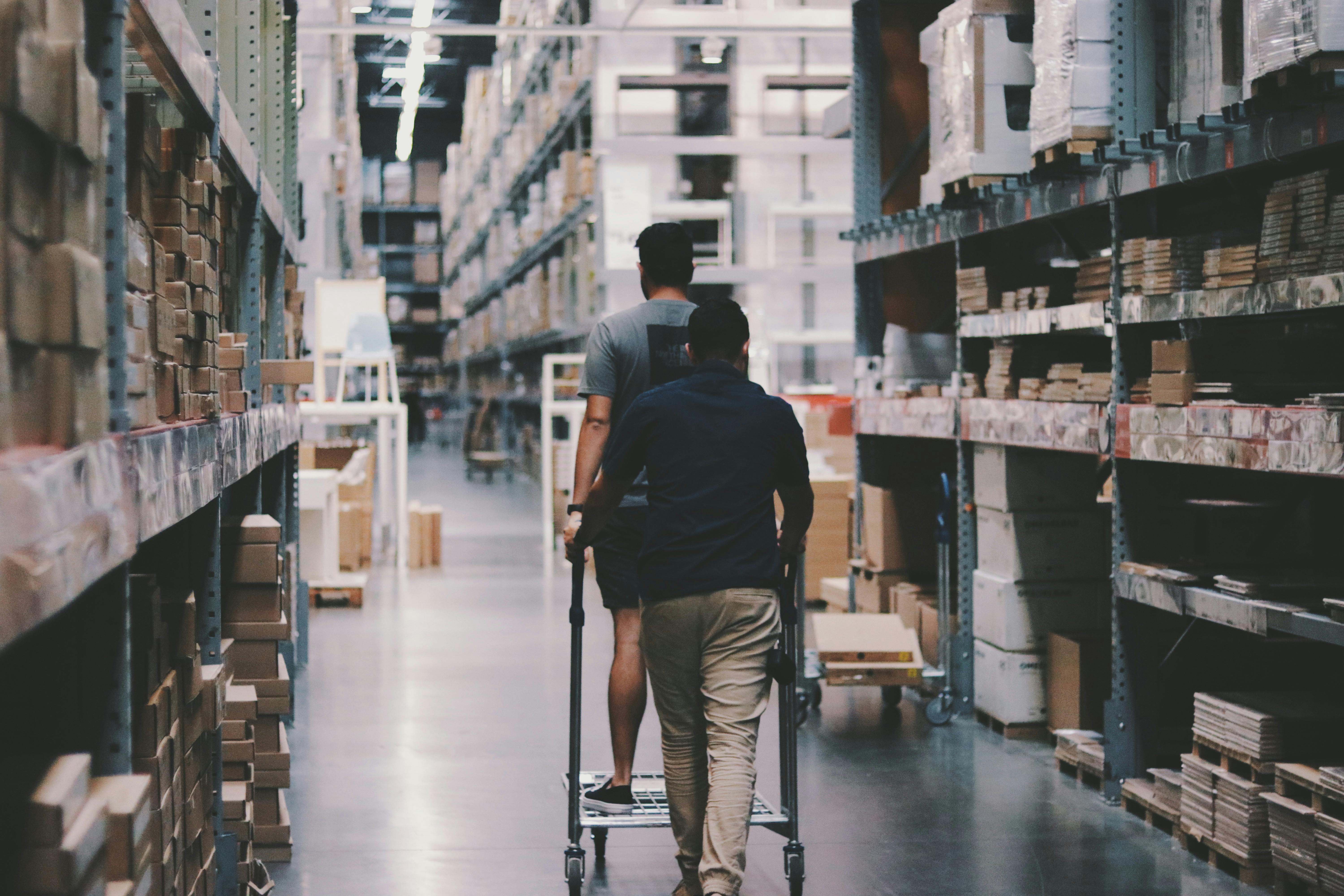
Case picking is suitable for beverage distribution routes that require flexible order quantities, broad SKU assortments, and frequent store-level replenishment. The model allows warehouse teams to select individual cases from reserve or forward-pick locations and consolidate them into customer-specific loads. It works particularly well across DSD networks serving convenience stores, restaurants, cafés, fuel stations, independent retailers, and other accounts that cannot receive complete pallets.
Case picking works well when customers order limited quantities of several beverage products, flavors, package sizes, or brands. Warehouse teams can combine individual cases into mixed-SKU pallets, roll cages, carts, or vehicle compartments assigned to each stop. This method supports store-specific assortments and prevents retailers from purchasing pallet-level quantities that may exceed actual demand.
Small-format stores often lack loading docks, forklifts, pallet storage areas, and large backrooms. Case-picked deliveries allow these locations to receive quantities that match available shelf space and expected sales. Smaller replenishment volumes can also reduce inventory holding costs, product expiry, damaged packaging, and congestion during receiving activities.
Urban and high-density DSD routes commonly include several customers placing small or medium-sized orders. Case picking allows individual store orders to be consolidated into one vehicle while preserving clear separation between stops. Route sequencing, load labels, barcode validation, and compartment assignments help drivers locate each order quickly without rearranging products during every delivery.
Case picking provides greater flexibility when demand varies across seasons, promotions, store locations, weather conditions, or consumer preferences. Distributors can adjust quantities at the case level rather than committing customers to complete pallets. This supports more responsive replenishment and reduces the risk of unsold stock, excessive returns, and slow-moving inventory.
Beverage distributors often manage water, carbonated drinks, juices, energy drinks, sports drinks, dairy beverages, and seasonal products across several pack sizes. Case picking allows multiple categories and packaging formats to be combined within one store order. Warehouse management systems, barcode scanning, pick-path optimization, and replenishment rules help maintain accuracy across these complex order profiles.
Retailers with high inventory turnover may prefer smaller, more frequent deliveries rather than receiving large pallet quantities. Case picking supports daily or scheduled replenishment based on store sales, shelf capacity, and available backroom stock. This approach helps maintain product availability without increasing store-level inventory beyond practical limits.
Promotional campaigns often combine several beverage products within one order. A retailer may need different flavors, bottle sizes, or promotional packs in limited quantities. Case picking allows distributors to assemble these combinations accurately and adjust them according to campaign performance, local demand, or store participation.
Some products may sell steadily but never reach pallet-level demand at a single store. Delivering a full pallet in such situations can increase inventory days, consume valuable storage space, and raise the risk of expiry or discounting. Case picking allows distributors to send smaller quantities that better match the retailer’s sales velocity.
Different stores may require different product mixes based on shopper demographics, shelf plans, local demand, or regional preferences. Case picking allows warehouse teams to build unique orders for each location rather than applying one standard pallet configuration across the network. This supports more accurate assortment planning and better store-level availability.
A single DSD truck may serve convenience stores, restaurants, supermarkets, and fuel stations on the same route. Case picking helps separate orders according to customer, stop sequence, product type, or vehicle compartment. Accurate load planning remains essential to maintain weight distribution, product accessibility, and efficient unloading throughout the route.
Certain beverage products may require separate handling because of packaging type, temperature needs, fragility, expiry dates, or promotional labeling. Case picking allows warehouse teams to apply product-specific rules during order assembly. Lot tracking, first-expired-first-out allocation, scan validation, and handling restrictions can reduce picking errors and product damage.
Case picking remains practical when average order quantities stay below pallet or layer thresholds. Distributors should review cases per order line, SKU velocity, order frequency, and pallet-equivalent volume before assigning a picking method. Products with low or irregular demand often generate better inventory and route outcomes through case-level fulfillment.
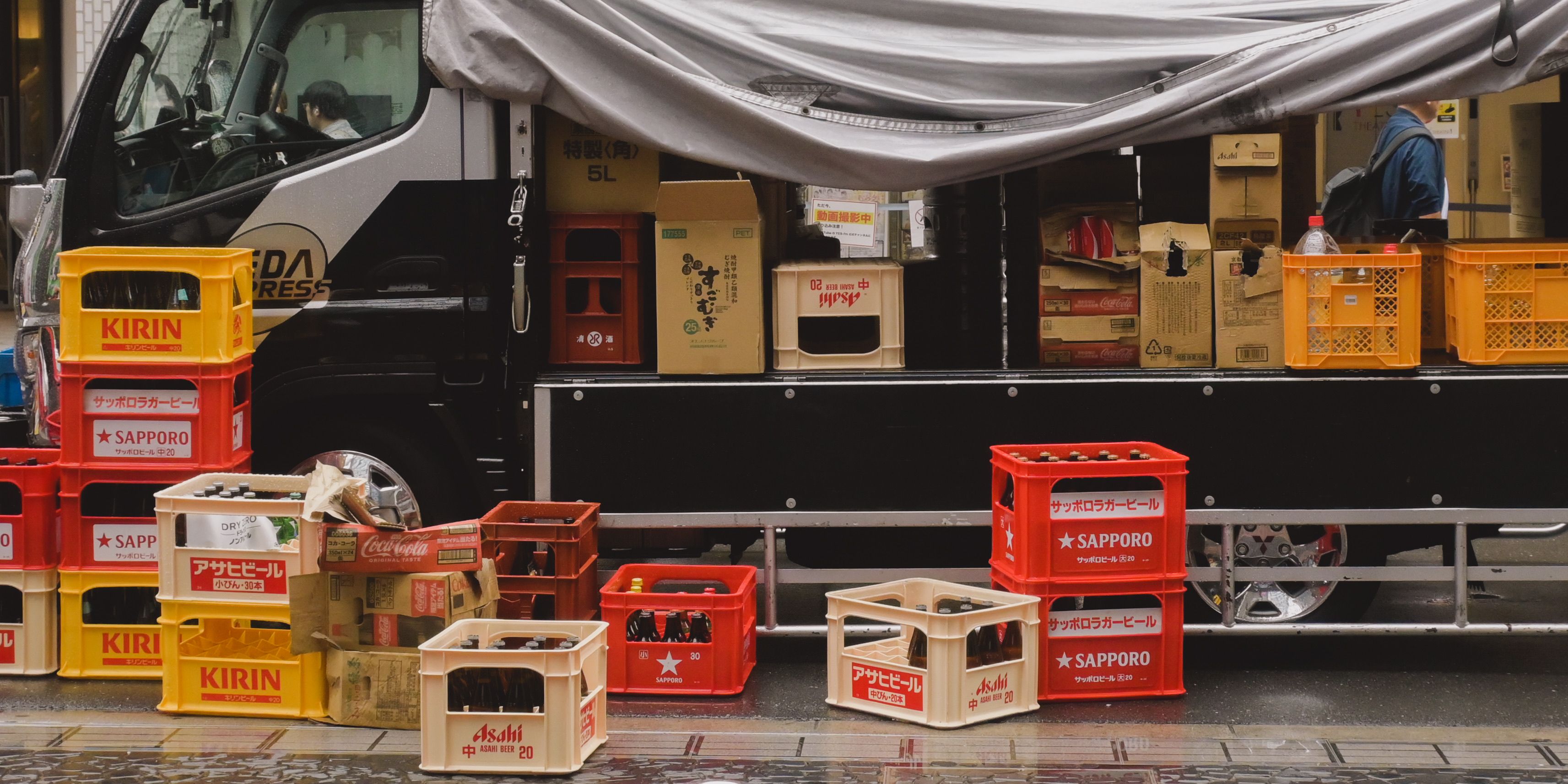
Full-pallet beverage delivery involves moving a complete, usually single-SKU pallet from warehouse storage directly to the outbound staging area and customer location. Forklifts or automated handling systems retrieve the pallet using its license plate number, verify the lot, quantity, and order assignment, and load it according to vehicle capacity and stop sequence. This model reduces case-level handling, picking time, and cost per unit but requires sufficient store demand, receiving space, unloading equipment, and inventory turnover.
Full-pallet beverage deliveries suit routes carrying high product volumes to large retail or commercial accounts. The model moves complete pallets from warehouse storage to outbound staging without individual case handling. It works best when demand remains predictable, stores have adequate receiving infrastructure, and full pallets can be unloaded without disrupting route operations.
Full-pallet delivery works well when customers regularly order pallet-level quantities of one beverage product. High-volume orders reduce the need for case separation, mixed-load assembly, and repeated barcode scans. Warehouse teams can move complete pallets directly from reserve storage to staging, reducing handling time and labor per case.
Large supermarkets, hypermarkets, wholesale clubs, distribution centers, and institutional buyers often purchase beverages in full-pallet quantities. These customers generally have loading docks, pallet storage areas, forklifts, and trained receiving teams. Their infrastructure supports faster unloading and reduces the need for drivers to handle individual cases.
Full-pallet deliveries are practical when sales volumes remain consistent across ordering cycles. Stable demand allows distributors to allocate complete pallets without creating excess inventory at customer locations. Historical sales, seasonal trends, promotion schedules, and replenishment frequency can help confirm whether pallet-level demand is sustainable.
Bottled water, carbonated drinks, and other high-velocity beverages often reach pallet quantities at major retail locations. Moving these products as complete pallets reduces warehouse touches and improves outbound throughput. Slower-moving flavors, sizes, or seasonal products can still follow case or layer-picking workflows.
Full-pallet movement reduces picker travel, case handling, consolidation, and mixed-pallet construction. Forklift operators can retrieve identified pallets and transfer them directly to route staging. This process helps warehouses process large orders quickly during peak periods, promotional campaigns, and seasonal demand increases.
Complete pallets require fewer labor activities than individually picked beverage cases. Reduced handling can lower picking costs, scanning requirements, staging time, and product exposure to damage. The financial benefit becomes stronger when pallet quantities remain consistent across several customers or delivery cycles.
Retail locations must have enough backroom or warehouse space to hold complete beverage pallets. Available storage should support safe pallet placement, stock rotation, and aisle access. Full-pallet delivery may create operational problems when customer storage is limited or inventory moves slowly.
Palletized deliveries require suitable unloading and receiving equipment at customer locations. Forklifts, pallet jacks, loading docks, ramps, and accessible receiving areas help complete deliveries quickly. Routes may experience delays when drivers must break pallets or move cases manually at the delivery point.
Full-pallet fulfillment suits routes serving a limited number of customers with large orders. Fewer stops allow vehicles to carry larger palletized loads without excessive product separation. This model can also reduce driver service time because complete pallets are unloaded as single handling units.
Trailers, box trucks, and other large delivery vehicles often have fixed pallet-position capacities. Full-pallet planning allows dispatchers to assign orders according to floor space, weight limits, axle restrictions, and unloading sequence. Proper positioning also prevents blocked pallets and unnecessary load rearrangement during delivery.
Standardized beverage cases can be arranged into manufacturer-approved pallet patterns. Stable pallet configurations improve weight distribution and reduce movement during transportation. Stretch wrapping, corner protection, pallet quality, and stacking limits still require inspection before the vehicle leaves the warehouse.
Full-pallet delivery works well when customers value rapid replenishment over broad product variety. Large orders containing a few high-volume SKUs can move through warehouses and receiving docks quickly. Mixed-SKU requirements may require a hybrid model combining full pallets, layers, and individual cases.
Retail promotions, festivals, sporting events, and seasonal campaigns can create temporary demand for selected beverage SKUs. Full-pallet delivery helps distributors move promotional stock quickly across the network. Demand forecasts and store participation data should guide pallet allocation to reduce unsold inventory after the campaign.
Full pallets can move through cross-docking facilities without entering long-term warehouse storage. Incoming pallets are scanned, assigned to outbound routes, and transferred directly to the correct staging lane. This process reduces storage activity, handling costs, and order cycle time for pre-allocated inventory.
Distributors should define minimum pallet thresholds using cases per SKU, pallet configuration, order frequency, and handling cost. Orders consistently meeting these thresholds can move through full-pallet workflows. Orders below the threshold may perform better through layer picking, case picking, or hybrid fulfillment.
Full-pallet delivery should support customer sales rather than create excessive stock. Retailers must sell the delivered quantity before product quality, expiry, or storage constraints become concerns. Inventory days, sales velocity, return rates, and stock rotation should remain within acceptable operating limits.
A DSD route does not need to use only one fulfillment model. Large stores may receive complete pallets, while smaller accounts receive case-picked orders on the same route. Load planning software can account for pallet positions, mixed cases, vehicle capacity, stop sequence, and customer receiving requirements.
Selecting between case picking and full-pallet beverage delivery requires more than comparing warehouse speed. The right model must align with order size, SKU mix, customer type, route density, vehicle capacity, delivery frequency, and store receiving conditions. A model that reduces picking time may still increase transportation costs, unloading delays, or retailer inventory. Beverage distributors should therefore evaluate the complete fulfillment cycle before assigning case-picked, palletized, or hybrid loads to their DSD routes.
Order profile should be the first factor in selecting a fulfillment model. Case picking is usually more suitable when stores order small quantities across several beverage SKUs, pack sizes, or flavors. Full-pallet delivery performs better when demand is concentrated around a few high-volume products. Teams should assess average cases per order line, pallet-equivalent volume, order frequency, SKU velocity, and the percentage of orders reaching full-pallet quantities. This analysis helps identify which customers, products, and routes require case, layer, pallet, or hybrid picking.
Each retail location has different receiving and storage limitations. Convenience stores, restaurants, cafés, and independent retailers often lack loading docks, forklifts, and large backrooms, making case-picked deliveries more practical. Supermarkets, wholesalers, and regional distribution centers can generally receive complete pallets. Planners should also consider doorway dimensions, unloading zones, pallet-jack access, delivery windows, shelf capacity, inventory turnover, and the time drivers need to complete each stop.
The most efficient warehouse process may not always produce the lowest route cost. Case picking requires more picker travel, barcode scans, replenishment tasks, pallet building, and order verification. Full-pallet delivery reduces warehouse handling but may increase vehicle-space consumption, store inventory, product returns, or slow-moving stock. Teams should calculate the complete cost per delivered case, including warehouse labor, loading time, mileage, driver hours, unloading time, damaged products, failed deliveries, returns, and retailer inventory impact.
Route characteristics directly influence the fulfillment decision. Dense urban routes with many small stops generally support case-picked or mixed loads because each customer orders limited quantities. Routes serving fewer supermarkets, wholesalers, or high-volume accounts may benefit from full-pallet deliveries. Planners must account for vehicle weight, cubic volume, pallet positions, axle limits, compartment capacity, loading sequence, and product accessibility. A route may appear feasible by weight but still fail because pallet dimensions or stop order prevent efficient unloading.
A hybrid model allows beverage distributors to use full pallets for high-volume products, layer picking for medium-volume demand, and case picking for smaller or varied orders. A single supermarket delivery may include a full pallet of bottled water, several layers of soft drinks, and individual cases of juice or energy drinks. This approach reduces unnecessary case handling without limiting assortment flexibility. Successful hybrid fulfillment requires accurate demand forecasting, SKU-level order profiling, warehouse slotting, load-building rules, route optimization, and real-time inventory visibility.
Here is a quick comparison of case picking and full-pallet beverage deliveries across key operational factors:
Factor | Case Picking | Full-Pallet Delivery |
Order Size | Small to medium orders | Large-volume orders |
SKU Mix | Multiple SKUs per order | Usually one SKU per pallet |
Best Suited For | Convenience stores, cafés, restaurants, small retailers | Supermarkets, wholesalers, distribution centers |
Warehouse Handling | Higher case-level handling | Lower handling with direct pallet movement |
Picking Speed | Slower | Faster |
Labor Requirement | Higher | Lower |
Order Flexibility | High | Limited |
Cost Per Case | Generally higher | Generally lower |
Store Storage Needs | Low | High |
Vehicle Space Use | Flexible but harder to organize | Easier to plan using pallet positions |
Loading Process | Mixed-case pallets, cages, or compartments | Forklift-based pallet loading |
Unloading Time | Longer due to case handling | Faster with pallet-handling equipment |
Picking Error Risk | Higher | Lower |
Product Damage Risk | Higher due to repeated handling | Lower with stable pallet loads |
Demand Pattern | Variable or low-volume demand | Stable and predictable demand |
Route Type | Many small stops | Fewer high-volume stops |
Receiving Equipment | Usually not required | Forklift, dock, or pallet jack often required |
Best Fulfillment Choice | Mixed and store-specific orders | Fast-moving, pallet-level orders |
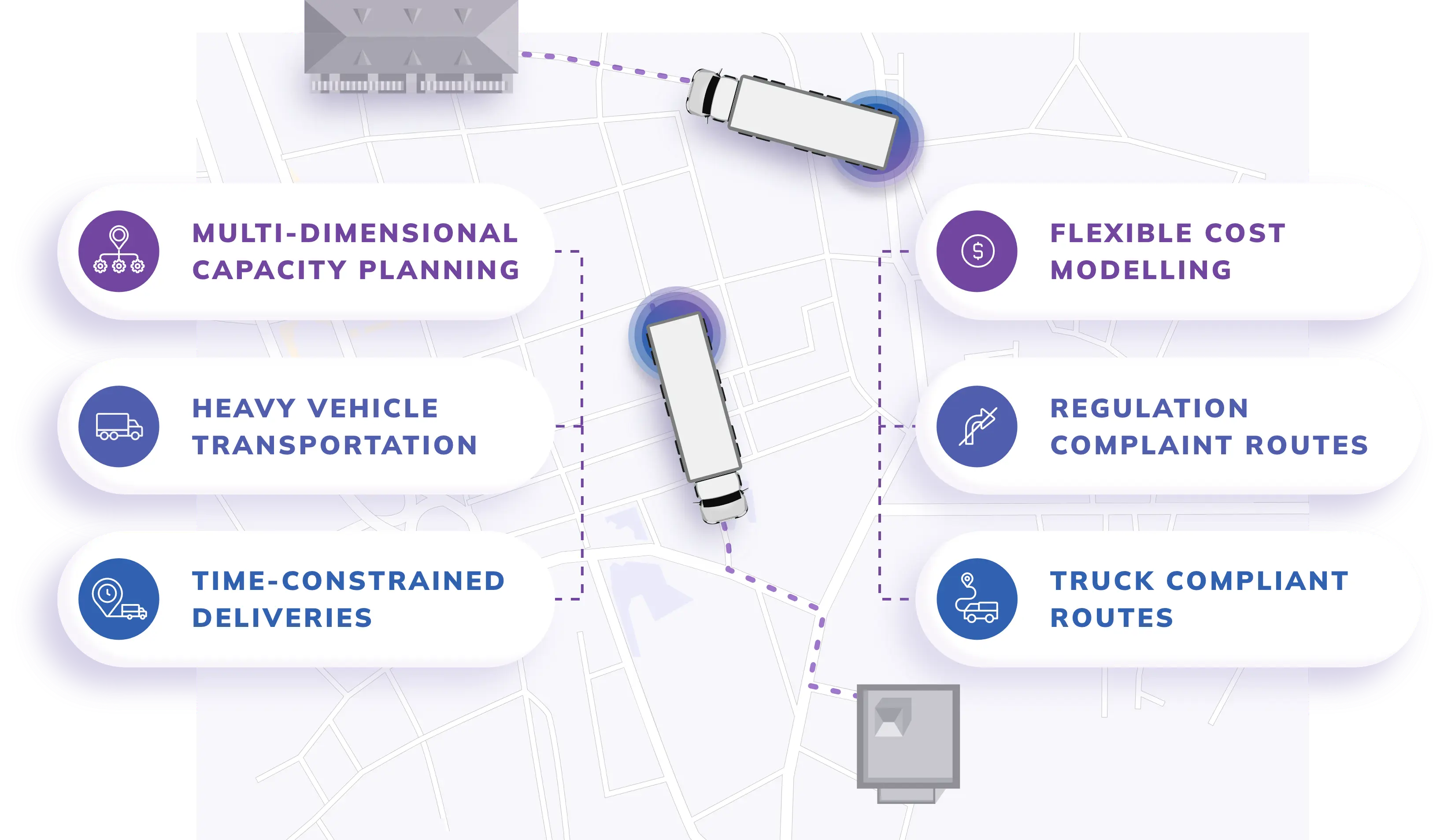
We help beverage distributors plan DSD routes for case-picked orders, full-pallet deliveries, and mixed loads. Our route optimization platform considers case quantities, pallet positions, SKU requirements, delivery priorities, service times, and store receiving windows. This allows planners to build routes that reflect how each order will be loaded, transported, and unloaded.
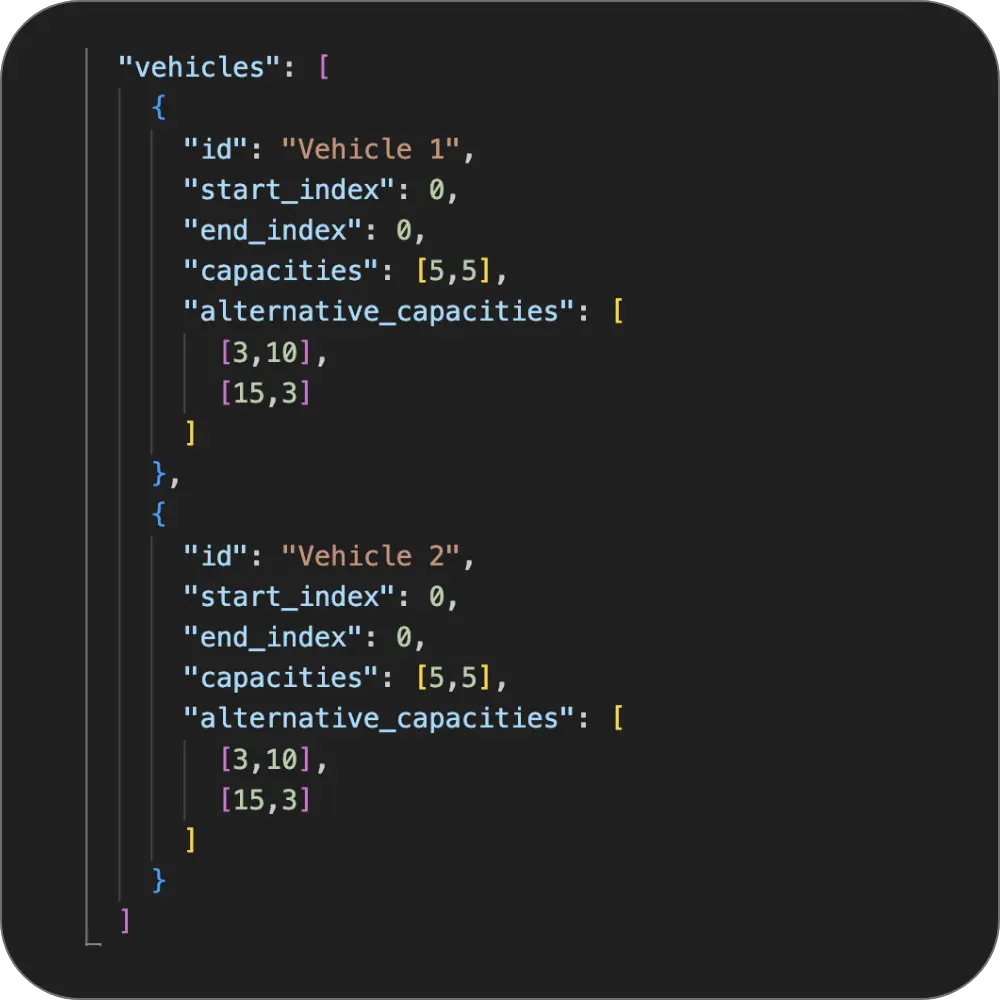
We use weight, volume, pallet count, vehicle type, and compartment capacity to assign orders to suitable trucks. Our platform helps teams combine smaller case-picked orders with larger pallet deliveries without exceeding operational limits. This reduces unused vehicle space, overloaded routes, unnecessary trips, and last-minute load adjustments.
We create stop sequences based on delivery windows, route distance, unloading time, driver hours, traffic conditions, and store-level constraints. Our routing capabilities can place time-sensitive or high-volume deliveries at suitable points within the route. This helps drivers access the right cases or pallets quickly and reduces time spent rearranging products at each stop.
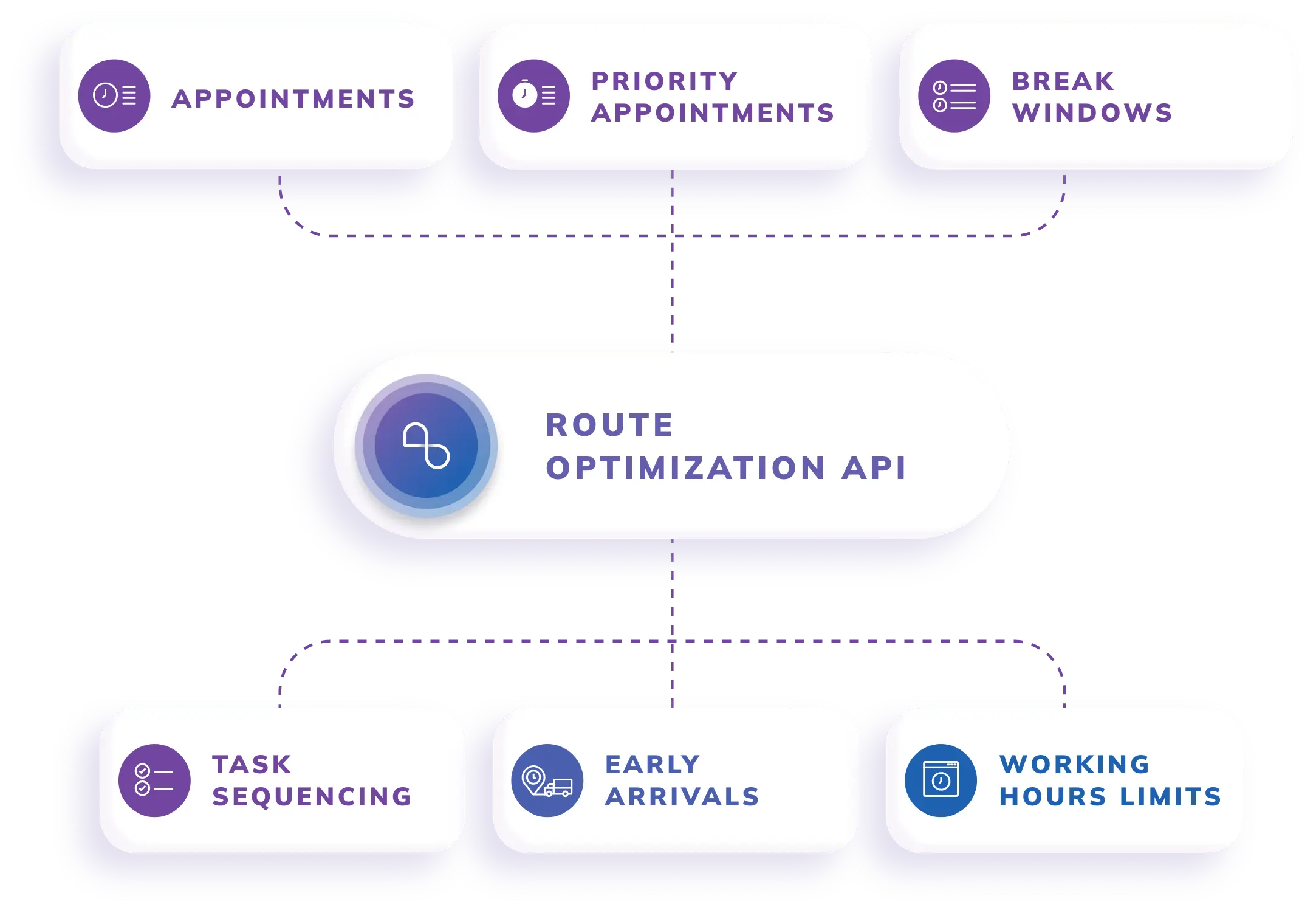
We help teams account for road restrictions, vehicle access rules, loading dock availability, store operating hours, and location-specific service requirements. Our platform can also support different unloading times for full pallets, mixed pallets, and individual cases. This creates more realistic route plans and reduces delays caused by overlooked delivery conditions.
We allow planners to update routes when order quantities, delivery priorities, vehicle availability, or road conditions change. Our platform can recalculate routes while considering the remaining stops, available capacity, and delivery commitments. This helps beverage distributors respond to daily disruptions without rebuilding the entire route manually.
We provide route data that helps teams review planned mileage, vehicle utilization, delivery times, stop performance, and route completion. Our platform supports better coordination between warehouse, dispatch, and delivery teams. This visibility helps distributors identify inefficient routes, improve planning decisions, and reduce the total cost of case and pallet deliveries.
Case picking and full-pallet delivery support different beverage distribution needs. Case picking works well for mixed-SKU orders, smaller stores, and frequent replenishment. Full-pallet delivery suits high-volume customers with predictable demand and sufficient storage capacity.
Many beverage distributors benefit from a hybrid fulfillment model. Full pallets can support fast-moving products, while case picking handles smaller and more varied orders. This approach improves warehouse productivity without limiting store-level flexibility.
The final decision should consider warehouse labor, vehicle capacity, route structure, delivery frequency, and store receiving requirements. A well-planned fulfillment strategy helps beverage distributors reduce handling costs, improve truck utilization, and maintain reliable DSD deliveries.
Case picking involves selecting individual beverage cases to create store-specific orders. Full-pallet delivery moves an entire pallet of one product directly from the warehouse to the customer. Case picking offers more flexibility, while full-pallet delivery reduces handling time.
Case picking works better for DSD routes serving small retailers, restaurants, and convenience stores. These customers often order several SKUs in limited quantities. However, high-volume customers may benefit more from full-pallet deliveries.
Full-pallet deliveries usually have a lower handling cost per case. They require fewer picking activities, faster loading, and less warehouse labor. Their cost advantage depends on the customer ordering enough volume to use the entire pallet.
Yes, beverage distributors can use a hybrid fulfillment model. A single route may carry full pallets for supermarkets and mixed cases for smaller stores. Route planning and load-building software help manage these combined delivery requirements.
DSD software helps plan routes, calculate vehicle capacity, sequence stops, and organize mixed loads. It also connects order data with warehouse picking and delivery execution. This improves order accuracy, truck utilization, and delivery performance.
Bhavisha Bhatia is a Computer Science graduate with a passion for writing technical blogs that make complex technical concepts engaging and easy to understand. She is intrigued by the technological developments shaping the course of the world and the beautiful nature around us.