

- BLOG
Delivery Route App Features that Drivers and Dispatchers Prefer
Published: June 16, 2026
Route Optimization API
Optimize routing, task allocation and dispatch
Distance Matrix API
Calculate accurate ETAs, distances and directions
Directions API
Compute routes between two locations
Navigation API & SDK
Turn by Turn Instructions for Drivers & Technicians
Route Optimization Software
Plan optimized routes with 50+ Constraints
Product Demos
See NextBillion.ai APIs & SDKs In action
AI Route Optimization
Learns from Your Fleet’s Past Performance
Platform Overview
Learn about how Nextbillion.ai's platform is designed
Road Editor App
Private Routing Preferences For Custom Routing
On-Premise Deployments
Take Full Control of Your Maps and Routing
Table of Contents
What actually makes a delivery route app valuable in real-world operations? It is not just about showing directions, but about enabling drivers and dispatchers to execute deliveries smoothly under constant change. From traffic delays to last-minute order updates, field conditions are rarely predictable.
This is where a well-designed delivery route app makes the difference. By combining real-time rerouting, accurate ETAs, proof of delivery, and live tracking, it bridges the gap between planning and execution. In this guide, we explore the key features that drivers rely on in the field and dispatch teams depend on for visibility, control, and performance at scale.
Quick Answer: A delivery route app is a real-time execution system that connects route planning with on-ground delivery operations, enabling drivers and dispatchers to work efficiently under dynamic conditions.
Did you know?
A delivery route app is a mobile and backend-integrated system designed to manage, execute, and optimize last-mile delivery operations in real time. It connects route planning engines with driver interfaces, enabling seamless coordination between dispatch and field execution. The app ingests optimized routes, delivery tasks, and constraints from a central system and provides drivers with navigation, stop sequencing, and task workflows. It also captures execution data such as GPS location, timestamps, proof of delivery, and status updates.
Advanced delivery route apps integrate real-time traffic data, dynamic rerouting, and ETA prediction models, ensuring adaptability under changing conditions. By combining geospatial intelligence, optimization logic, and mobile usability, it transforms delivery operations into a scalable, data-driven system.
Here are the top delivery route app features drivers actually love, designed to simplify on-road execution, reduce manual effort, and help them complete deliveries faster and more accurately under real-world conditions:
Drivers depend on precise, easy-to-follow navigation to complete deliveries efficiently and on time. A high-quality delivery route app provides turn-by-turn directions that are not only accurate but also optimized for multi-stop delivery scenarios rather than just the shortest path. It accounts for real-world conditions such as traffic congestion, road restrictions, one-way streets, and vehicle-specific limitations.
Advanced systems may also include lane guidance, voice navigation, and hazard alerts. This reduces confusion, avoids wrong turns, and minimizes unnecessary detours. Clear, reliable navigation allows drivers to focus on execution instead of constantly checking maps, improving both delivery speed and on-road safety.
Delivery environments are dynamic, with constant changes such as traffic delays, cancellations, or new order additions. Live rerouting ensures that drivers always follow the most efficient path by automatically updating routes in real time. Instead of manually adjusting plans, the system recalculates routes based on current conditions, minimizing disruptions. It can prioritize urgent deliveries, avoid congestion, and redistribute stops if needed. This feature significantly reduces idle time and missed deadlines. For drivers, it removes decision fatigue and ensures they are always guided by the most up-to-date routing logic, improving both productivity and reliability.
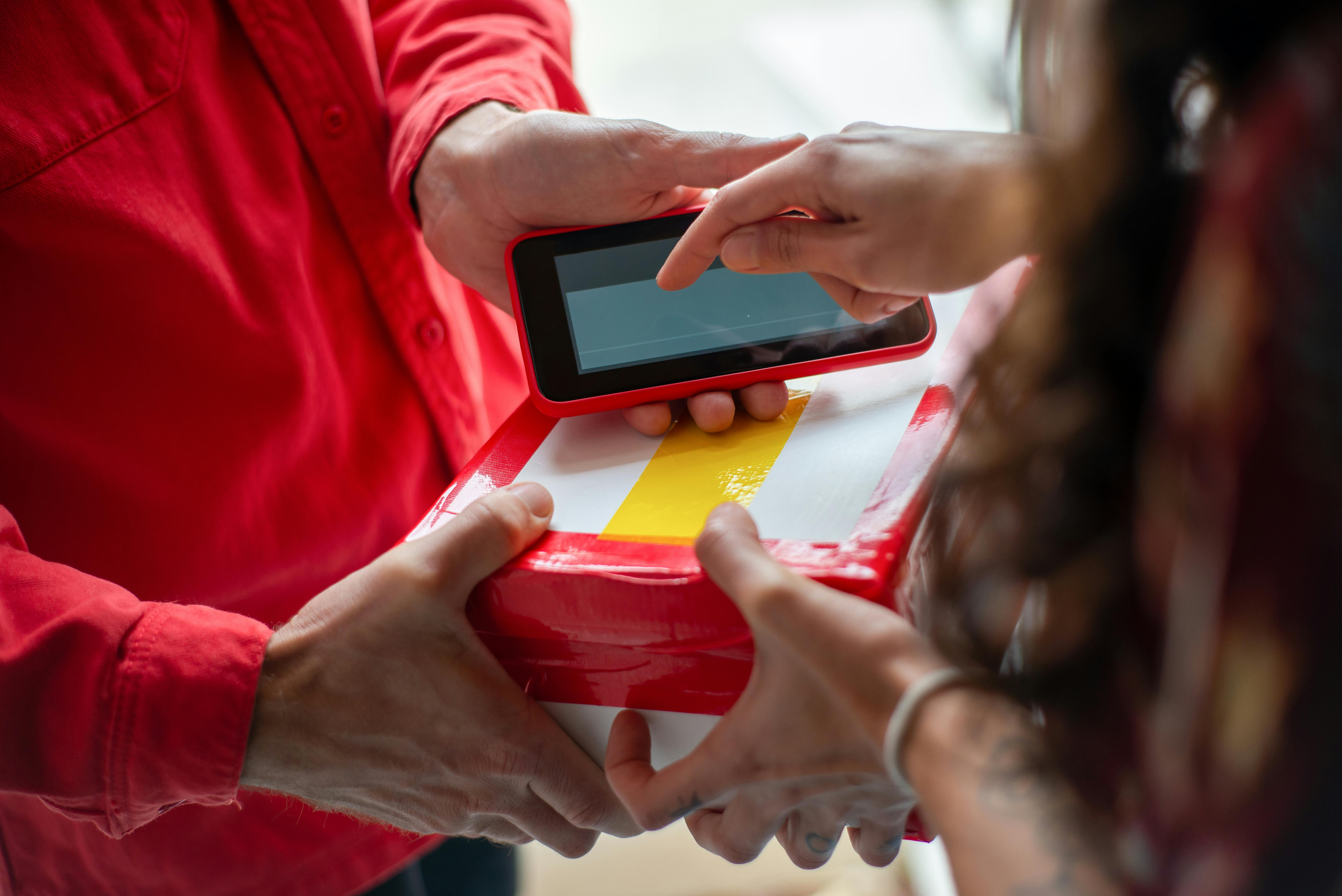
Proof of Delivery features are essential for ensuring accountability and reducing disputes. Modern delivery apps enable drivers to capture digital signatures, take photos, scan barcodes, and record timestamps or GPS coordinates as confirmation of successful delivery. This eliminates the need for manual paperwork and provides instant verification to dispatch teams and customers. It also protects drivers from false claims and enhances transparency across the delivery process. In high-volume operations, POD features streamline workflows, reduce administrative burden, and ensure that every delivery is properly documented and traceable.
Drivers frequently operate in areas with limited or unstable network connectivity, especially in rural zones, basements, or dense urban environments. A reliable delivery route app ensures offline functionality, allowing drivers to access routes, navigation, and delivery details without an active internet connection. All actions, such as delivery confirmations or updates, are stored locally and automatically synced once connectivity is restored. This ensures uninterrupted operations and prevents delays caused by network issues. Offline capability is critical for maintaining consistency and reliability in real-world delivery conditions.
Drivers need a clear and intuitive interface that presents their route in a structured and easy-to-understand format. This includes stop sequences, delivery priorities, special instructions, and real-time progress tracking. A well-designed app minimizes cognitive load by highlighting the next best action and reducing the need for manual interpretation. Features like visual route maps, color-coded priorities, and quick access to delivery details enhance usability. Clear visibility helps drivers stay organized, avoid missed stops, and complete deliveries faster with fewer errors, ultimately improving overall operational efficiency.
Effective communication is essential during delivery execution. In-app chat or calling features allow drivers to connect with dispatch teams or customers directly without switching tools. This helps resolve issues such as address confusion, delays, or special instructions quickly. Centralized communication improves coordination, reduces errors, and ensures smoother operations throughout the delivery process.
Drivers benefit from timely notifications that guide them through their routes. Alerts for upcoming stops, delays, route changes, or priority deliveries help drivers stay proactive. These notifications reduce missed stops and improve adherence to schedules. Smart alerts also minimize the need for constant manual checking, allowing drivers to focus on execution.
Delivery apps often include built-in checklists for tasks such as loading verification, delivery steps, and completion confirmations. These structured workflows help drivers follow standard procedures and reduce mistakes. Task management features ensure that every step is completed correctly, improving consistency and operational quality.
Some advanced apps provide drivers with insights into their performance, such as completed deliveries, on-time rates, and route efficiency. This helps drivers understand their productivity and identify areas for improvement. Transparent feedback can also motivate better performance and create a more engaged workforce.
Drivers rely heavily on mobile devices throughout the day, making battery and data efficiency crucial. A well-optimized app minimizes battery drain and data usage while maintaining performance. Efficient resource usage ensures that drivers can complete their routes without interruptions caused by device limitations, improving reliability and user experience.
Integrated scanning capabilities allow drivers to quickly verify packages during pickup and delivery. By scanning barcodes or QR codes, drivers can ensure the correct item is delivered to the right customer, reducing errors and mismatches. This speeds up operations, improves accuracy, and adds an extra layer of validation, especially in high-volume delivery environments where manual checks are prone to mistakes.
Drivers often rely on specific instructions such as gate codes, landmark directions, or preferred delivery locations. A good delivery route app clearly displays these notes at each stop, ensuring drivers have all necessary context before arrival. This reduces failed deliveries, avoids confusion, and improves first-attempt success rates, making the delivery process smoother and more efficient.
Drivers benefit from real-time visibility into their progress throughout the route. Features like completed stops, remaining deliveries, and estimated completion time help drivers manage their workload effectively. This visibility enables better pacing, reduces stress, and ensures that drivers stay aligned with schedules and expectations.
In scenarios where multiple deliveries are made at a single location or nearby cluster, batch handling features allow drivers to manage them efficiently. The app groups deliveries logically, reducing repetitive actions and saving time. This is especially useful in apartment complexes, offices, or dense delivery zones, where multiple stops can be handled in a streamlined manner.
Advanced delivery apps allow drivers to access invoices, delivery documents, and receipts directly within the app. This eliminates the need for physical paperwork and ensures that all necessary documents are available on demand. Digital documentation simplifies compliance, improves record-keeping, and enables faster processing of deliveries and payments.

A delivery route app plays a critical role in improving execution efficiency by guiding drivers with optimized routes and real-time updates. It eliminates manual decision-making on the road and ensures that deliveries are completed in the most efficient sequence. With features like navigation, rerouting, and task management, drivers can complete more deliveries in less time. This leads to higher productivity, reduced delays, and smoother day-to-day operations, especially in high-volume delivery environments.
Delivery route apps provide dispatch teams with real-time visibility into fleet operations, including driver location, route progress, and delivery status. This enables better monitoring, faster decision-making, and proactive issue resolution. Dispatchers can quickly respond to delays, reassign tasks, or adjust routes as needed. This level of control ensures that operations remain aligned with schedules and service expectations, improving overall coordination and efficiency.
By optimizing routes and minimizing unnecessary travel, delivery route apps help reduce fuel consumption and vehicle wear and tear. They also improve fleet utilization, ensuring that resources are used efficiently. Reduced idle time, fewer failed deliveries, and better planning contribute to lower operational costs. Over time, these efficiencies lead to significant cost savings and improved profitability for businesses.
A delivery route app enhances customer experience by ensuring timely and predictable deliveries. Accurate ETAs, real-time updates, and proof of delivery features improve transparency and communication. Customers are better informed about their deliveries, reducing uncertainty and complaints. Reliable service builds trust and strengthens customer relationships, which is essential for long-term business success in competitive delivery markets.
Below are the most notable technologies powering modern delivery route apps:
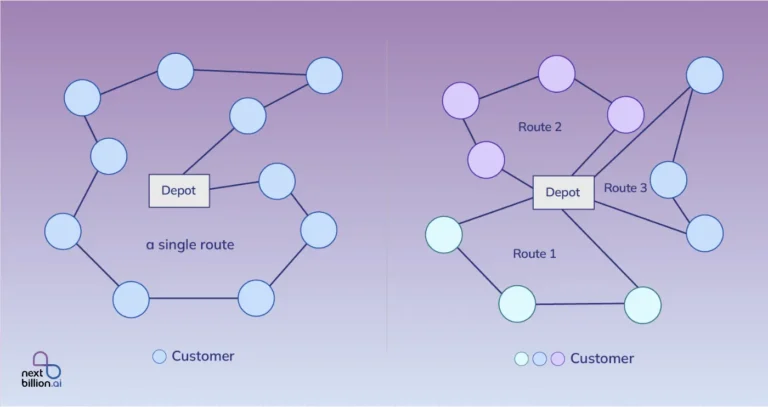
At the core of every delivery route app are advanced optimization algorithms based on the Vehicle Routing Problem (VRP). These algorithms determine the most efficient sequence of stops while considering constraints such as time windows, vehicle capacity, and delivery priorities. Modern systems use a combination of heuristics and metaheuristics to generate near-optimal solutions quickly. This ensures that routes are both efficient and feasible, even for large-scale, multi-stop operations with complex requirements.
Geospatial technologies enable accurate mapping, distance calculation, and route visualization. Delivery apps integrate with mapping platforms to access real-time traffic data, road networks, and navigation services. These engines ensure that routes reflect real-world conditions rather than theoretical distances. Features like turn-by-turn navigation, geofencing, and location clustering rely heavily on geospatial intelligence, making it a critical component of any delivery route app.
Delivery environments are dynamic, requiring systems that can process live data continuously. Real-time data processing allows route apps to update routes based on traffic changes, order updates, and driver status. Streaming data pipelines and event-driven architectures ensure that decisions are made instantly. This enables dynamic rerouting, real-time tracking, and faster response to disruptions, improving overall operational efficiency and reliability.
Machine learning enhances delivery route apps by enabling predictive capabilities such as ETA estimation, demand forecasting, and delay prediction. These models analyze historical and real-time data to improve decision-making. Predictive analytics helps optimize scheduling, anticipate traffic patterns, and enhance route accuracy. Over time, the system learns from past performance, continuously improving efficiency and reliability in delivery operations.
Delivery route apps rely heavily on mobile devices used by drivers in the field. Mobile and edge computing technologies ensure that critical computations, such as navigation and task management, can occur directly on the device. This reduces dependency on constant connectivity and improves responsiveness. Offline capabilities, local data storage, and efficient synchronization mechanisms are key aspects of this technology layer.
Modern delivery route apps are built on API-driven architectures that enable seamless integration with external systems such as ERP, TMS, order management, and customer platforms. APIs allow real-time data exchange, automation, and scalability. This ensures that routing, dispatch, and execution workflows are interconnected, reducing manual intervention and improving operational efficiency across the entire logistics ecosystem.
Below are the topmost use cases where delivery route apps drive efficiency, accuracy, and operational scalability:

Delivery route apps are widely used in e-commerce for managing last-mile delivery operations, where efficiency and speed are critical. They help plan multi-stop routes, assign deliveries to drivers, and optimize execution based on real-time conditions. Features like live tracking, ETA updates, and proof of delivery ensure smooth coordination between warehouses, drivers, and customers. This improves delivery success rates, reduces delays, and enhances customer satisfaction in high-volume, time-sensitive environments.

In food and grocery delivery, where time windows are tight and delays directly impact customer experience, route apps enable precise and dynamic routing. They help drivers navigate efficiently through traffic, handle multiple orders, and meet strict delivery timelines. Real-time rerouting and ETA accuracy are especially important in this use case. The app ensures faster deliveries, minimizes spoilage risks, and maintains service quality in highly dynamic urban delivery scenarios.
Delivery route apps are also used in field service operations such as maintenance, repairs, and on-demand services. They help schedule and route technicians efficiently based on location, availability, and job priority. With features like task management, route optimization, and real-time updates, service teams can reduce travel time and improve response rates. This leads to better resource utilization, faster service delivery, and improved customer satisfaction in service-based industries.

To fully understand how modern delivery route apps achieve efficiency and scalability, it is important to look at the underlying platform that powers them. The following capabilities highlight how a robust solution like NextBillion.ai enables advanced routing, real-time adaptability, and seamless integration to support high-performing delivery operations at scale.
We provide a scalable routing infrastructure designed to support high-volume, multi-stop delivery operations with consistent performance. Our platform processes thousands of orders simultaneously while maintaining low latency and high accuracy in route generation. It is built to handle peak demand, regional expansion, and complex fleet configurations without degradation. This ensures that businesses can grow their delivery operations seamlessly while maintaining efficiency, making it ideal for enterprises operating in dynamic, large-scale logistics environments.
We enable advanced route optimization by incorporating real-world constraints such as time windows, vehicle capacities, driver shifts, and service-level agreements. Our system leverages VRP-based algorithms combined with heuristics and AI enhancements to generate efficient and feasible routes. This ensures that routes are not only optimized mathematically but also executable in real-world conditions. By balancing multiple objectives like cost, time, and utilization, we help businesses achieve higher operational efficiency and reliability.
We support real-time routing by continuously integrating live data such as traffic conditions, order changes, and driver status. Our platform dynamically adjusts routes during execution, ensuring that drivers always follow the most efficient path. This reduces delays, improves delivery timelines, and maintains service levels even in unpredictable conditions. Real-time adaptability transforms routing from a static plan into a continuous optimization process, enhancing both performance and responsiveness.
We offer highly flexible APIs that allow businesses to customize routing logic according to their specific operational requirements. Our platform integrates seamlessly with existing systems such as ERP, TMS, order management, and driver applications. This ensures smooth data flow and reduces manual intervention across workflows. By enabling easy integration, we help businesses build a connected logistics ecosystem where planning, execution, and monitoring work together efficiently.
We provide comprehensive visibility into delivery operations through real-time tracking, dashboards, and analytics. Dispatch teams can monitor fleet movement, track delivery progress, and identify issues proactively. Our platform also offers insights into performance metrics, helping businesses optimize operations continuously. This end-to-end visibility ensures better decision-making, improved coordination, and greater control over complex delivery workflows, leading to more reliable and efficient fleet operations.
A delivery route app becomes truly valuable when it supports both drivers on the ground and dispatch teams behind the scenes. By combining real-time routing, intuitive navigation, proof of delivery, and operational visibility, it ensures smoother execution under constantly changing conditions. The right features not only improve efficiency and accuracy but also reduce stress for drivers and enhance control for dispatchers. Ultimately, a well-designed route app transforms delivery operations into a scalable, reliable, and data-driven system.
Ready to optimize your delivery operations with precision and scale? With NextBillion.ai, you can build powerful, real-time routing systems that adapt to your unique business needs and handle complex, high-volume fleets effortlessly. From advanced optimization to seamless integrations and live tracking, we help you deliver faster and smarter. Connect with us to explore how we can transform your delivery workflows into a scalable, data-driven system.
A delivery route app should include turn-by-turn navigation, live rerouting, proof of delivery, offline access, and clear route visibility to help drivers execute deliveries efficiently.
Real-time rerouting helps drivers adapt to traffic, delays, and order changes instantly, ensuring faster deliveries and better schedule adherence.
Proof of delivery features like photos, signatures, and timestamps reduce disputes, improve transparency, and ensure accurate delivery confirmation.
Dispatchers rely on real-time tracking, ETA monitoring, communication tools, and performance insights to manage and optimize delivery operations effectively.
Yes, advanced delivery apps offer offline access, allowing drivers to continue navigation and sync data once connectivity is restored.
Bhavisha Bhatia is a Computer Science graduate with a passion for writing technical blogs that make complex technical concepts engaging and easy to understand. She is intrigued by the technological developments shaping the course of the world and the beautiful nature around us.