


- BLOG
Sales Route Optimization Software: Custom vs. Off-the-Shelf Solutions
Published: May 14, 2026
Route Optimization API
Optimize routing, task allocation and dispatch
Distance Matrix API
Calculate accurate ETAs, distances and directions
Directions API
Compute routes between two locations
Navigation API & SDK
Turn by Turn Instructions for Drivers & Technicians
Route Optimization Software
Plan optimized routes with 50+ Constraints
Product Demos
See NextBillion.ai APIs & SDKs In action
AI Route Optimization
Learns from Your Fleet’s Past Performance
Platform Overview
Learn about how Nextbillion.ai's platform is designed
Road Editor App
Private Routing Preferences For Custom Routing
On-Premise Deployments
Take Full Control of Your Maps and Routing
Table of Contents
There is one thing every field team relies on, even if they do not always talk about it, and that is the route. If the route is wrong, everything else begins to fall apart. Missed meetings, wasted fuel, disorganized schedules, and declining sales all stem from poor routing. Every problem that starts in the field usually starts with poor planning behind the scenes.
This is where sales route optimization software makes a real difference. According to Salesforce’s field productivity benchmark report, teams using route optimization tools experienced a 20 percent increase in daily output. Sales route optimization removes the guesswork from your team’s day. It ensures that sales representatives and delivery crews move with logic, not luck. But when the need for smarter routing grows, so does the decision in front of you. Should you build your own platform, or should you purchase something ready-made?
That is what this article addresses. It will not walk through textbook definitions or generic comparisons. Instead, it will show how real businesses can choose between custom route optimization software and off-the-shelf route optimization tools. This guide will highlight who needs what, why it matters, and how to make the decision without getting buried in spreadsheets or buzzwords.
Sales route optimization software is built to solve one core problem. It helps field teams plan routes that make sense. These platforms go far beyond choosing the shortest or fastest path. They consider time windows, client priorities, weather, traffic, vehicle type, road restrictions, and even shift schedules.
The purpose is to remove inefficiencies. A well-planned route allows field teams to spend more time selling and less time driving. It ensures more meetings take place, reduces mistakes, and keeps your business moving forward.
The day of a field sales representative is rarely straightforward. One cancellation can throw off four other meetings. A blocked road or late confirmation can create delays that ripple across the schedule. Good software prevents those issues by automatically adjusting the route when things change.
It lets teams plan with confidence, and gives managers a real-time view. It helps prevent wasted time in traffic, and it increases the number of clients your reps can see in one day.
Fuel is one of the largest controllable costs for companies with field operations. Unnecessary miles mean wasted money. The right software avoids zig-zagging routes, pointless detours, and overlapping territories.
Instead of your team trying to make sense of Google Maps with a spreadsheet and a cup of coffee, this software maps a clean path for them automatically. That leads to serious savings.
Sales route optimization software is not just for the logistics team, and it is definitely not just a sales thing either. If your people are out in the field, managing routes, juggling schedules, handling drop-offs, or meeting clients face to face, then routing software becomes a core part of their day, whether they realize it or not. The right platform helps them get more done with less stress, fewer wrong turns, and way more predictability.
Here are the teams that rely on it to keep the day running:
Sales teams rely heavily on in-person visits. That includes everything from first-time demos to long-term account check-ins. Routing software gives them a day that works instead of one that falls apart. The map becomes a strategic tool instead of a headache. Whether your sales team handles 8 accounts or 80, route optimization makes it possible to cover more ground without burning out your staff.
This software is not limited to sales. Logistics operations depend on route management software to plan drops, manage returns, reroute deliveries, and handle cancellations.
If your team is delivering physical products, managing regional supply chains, or working under tight delivery windows, then efficient routing becomes central to performance. It reduces errors, ensures consistency, and supports better delivery experiences.
Here are the real-world benefits businesses see when they use route optimization software the right way:
When a route is tight, the day feels better. Fewer stops mean fewer delays. Fewer delays mean more time spent selling or delivering. This is what sales route optimization software provides. A structure that lets people do their job without running behind. More clients are seen and more tasks are completed. In the end, more hours in the day are spent on what actually matters.
Efficient routing is not just about saving time. It is about using time correctly. When your software removes dead zones in the schedule, reps are able to stack more appointments without feeling rushed. They spend less time driving and more time building relationships. With better sequencing, fewer overlaps, and fewer unnecessary turns, your reps accomplish more in less time.
The wrong route leads to exhaustion. Teams driving inefficient paths end up working harder and getting less done. When software does the heavy lifting, reps feel more in control. Their meetings are spread out in a way that respects their time and energy. Smarter routing makes a workday feel like a workday, not a road trip.
The numbers speak clearly here. Every extra mile adds cost. Fuel, oil, brakes, tyres, and time, none of it is free. By trimming the fat from your routing plan, your team will drive less and save more. The cost savings also scale well. A 10 percent reduction in mileage across 30 vehicles over 12 months is not a small improvement. It is a serious operating gain.
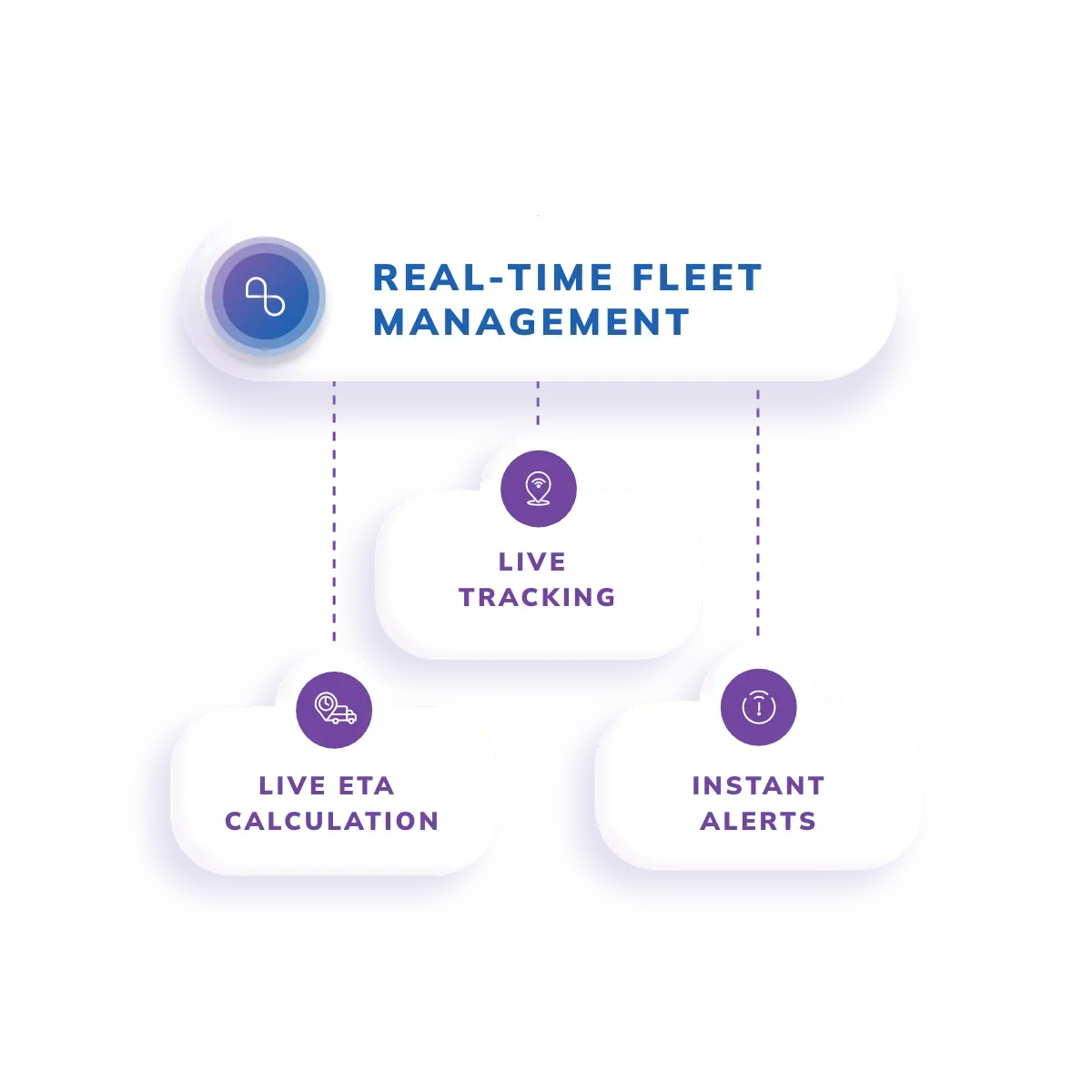
Business does not run on a fixed path, because clients cancel, weather shifts, and traffic throws unexpected blocks. These things do not stop happening. Your software needs to account for that.
With live GPS and adaptive logic, route management tools automatically restructure the day without panic or backtracking. This flexibility is what keeps field teams effective even when the situation shifts.
Nextbillion.ai’s Navigation SDK, for example, offers real-time rerouting based on location, ETA changes, and known traffic slowdowns. That is the difference between reacting and staying ahead.
Being on time should not be rare, as good software makes it consistent. Clients notice when a rep shows up as expected. They remember when the delivery is accurate and on schedule, plus this builds trust. Sales route planning software supports that trust. It keeps promises by making the route make sense.
There are times when buying a tool off the shelf is not enough. Some businesses have workflows that are too complex, too specific, or too tightly integrated with internal systems. That is where custom route optimization software becomes the better option.
A custom solution gives you full control. That means:
Nextbillion’s platform supports enterprise-grade customization for businesses with dynamic routing requirements, territory hierarchies, or delivery rules that off-the-shelf tools cannot handle.
Many companies begin their route planning journey with ready-made platforms. These tools are designed to work out of the box, offering essential features for field teams without requiring any development effort. They suit businesses that need to move fast, have limited internal technical support, or require only basic routing functionality.
Most off-the-shelf route optimization tools include:
These tools are designed to help teams operate more efficiently with minimal training and configuration.
Off-the-shelf route optimization software works well in stable, predictable environments. If your field strategy does not change frequently, or if you are running a lean operation, these tools can cover the basics reliably. However, once your business begins to layer in region-specific rules, multi-step scheduling, or integration-heavy workflows, their limitations begin to surface.
Choosing between custom-built and off-the-shelf route optimization platforms is not just a matter of features. It is a strategic operations decision that affects how your team plans, scales, and delivers on-the-ground value. Your answer should reflect how your business functions today and where it plans to go tomorrow.
Custom route optimization software is a long-term investment. It requires time, effort, technical planning, and hands-on collaboration with internal or external development teams. You are designing logic from scratch, validating edge cases, and ensuring the entire system aligns with the way your field operations truly run.
By contrast, off-the-shelf tools are quicker to set up. Most teams can go live in a matter of weeks. The initial spend is lower, and the vendor handles most technical details. It is a faster time-to-value model, ideal for companies that need immediate improvements and minimal complexity.
If speed and simplicity are your top priorities, start with off-the-shelf. If precision and flexibility are more important, invest in custom development.
Custom platforms are built to evolve. As your operations become more layered, you can introduce new data sources, custom workflows, advanced triggers, or region-specific routing rules. The platform changes when your business changes.
Off-the-shelf software is designed for consistency. It handles general needs well but resists deep changes. You may find yourself adjusting your operations to fit the platform, instead of the platform adjusting to support your growth.
If you operate across multiple business units, run international sales teams, or manage seasonal route complexity, a custom platform gives you the runway you need.
Off-the-shelf tools offer vendor-led maintenance. You benefit from automated upgrades, bug fixes, and new features, without needing to assign internal resources. However, you also inherit the vendor’s release cycle, update timing, and change control process.
Custom software puts that control in your hands. You own the infrastructure, manage your own updates, and decide when and how improvements are rolled out. This provides greater flexibility, but it does require technical oversight. Your decision here depends on what you value more: convenience or control.
Integration often decides everything. Routing software performs best when connected directly to CRM, ERP, inventory management, and planning tools. The more seamless the integration, the more accurate your field planning becomes.
Custom platforms allow full integration across every internal system. They support business-specific workflows, non-standard logic, and legacy systems that commercial tools may not accommodate.
Off-the-shelf systems typically offer plug-and-play integrations with popular tools, but deeper system logic often hits limitations. They may require workarounds, add-ons, or manual syncing to bridge those gaps.
Choosing the right option is the part where most teams get stuck. The features all sound useful, the demos look sharp, and every vendor claims to be “scalable.” But choosing between a custom-built system and an off-the-shelf platform is not about chasing trends. Here is how to think through it the right way:

Smaller organizations need solutions that deliver value quickly without heavy financial or technical lift. Off-the-shelf route planning software works well here. It helps improve delivery timing, manage field rep schedules, and optimize costs with little friction. Look for software that offers mobile support, simple UI, and a clear upgrade path. This allows your business to act bigger without being weighed down by complexity.
If you are working across regions, managing dozens of teams, or coordinating sales and delivery under one ecosystem, your routing platform cannot afford to be generic. Custom route optimization software allows you to embed business-specific routing logic into your daily operations.
You can automate handoffs between departments, tailor routing based on product type or client segment, and create advanced escalation paths when delays occur. The development effort pays off through operational clarity, reduced inefficiencies, and better performance tracking.
Routing used to be about maps, simple directions, and avoiding tolls, but that era is over. Now, routing is tied into everything, your performance data, your sustainability goals, your entire sales infrastructure. It is no longer a side feature. It is the operating system behind your field strategy.
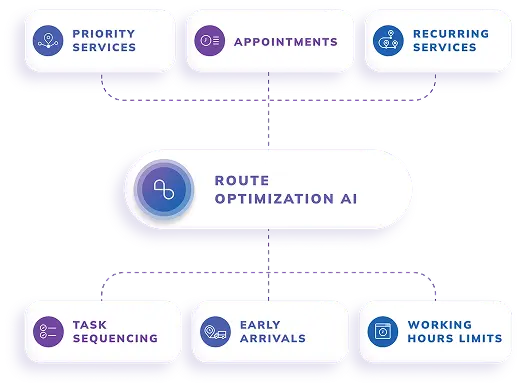
Artificial intelligence is no longer a buzzword. It is becoming the decision layer inside modern route engines. Instead of following fixed paths, AI-powered systems are pulling in real-world traffic, sales performance, field visit history, and even client responsiveness to shape better routes.
Nextbillion is building predictive routing systems that learn over time. They do not just get your reps from point A to point B. They understand why point A matters more today, and when point B should wait.
Routing and sales forecasting are merging. Tomorrow’s platforms will not just ask, “Where should your reps go?” They will ask, “Who should they see first, and why?”
That means your routing logic will be tied to lead score, opportunity health, client tier, and deal urgency. A good platform will help you prioritise the accounts that move the numbers, not just the ones closest on the map.
Smart field sales team software will go beyond logistics. It will start behaving like an advisor, pushing insights in real time to help reps work smarter, not just harder.
Pressure to reduce emissions is not going away. More companies now treat route planning as part of their ESG strategy, not just their delivery model. Good routing can lower your carbon footprint, especially when vehicle idling, backtracking, and wasted mileage are removed.
Modern systems are adapting. Expect to see built-in carbon tracking, electric vehicle pathing, and sustainable routing logic baked into the core, not treated as a plugin.
Nextbillion’s roadmap includes route planning that supports energy metrics, compliance benchmarks, and environment-friendly delivery modes without compromising efficiency.
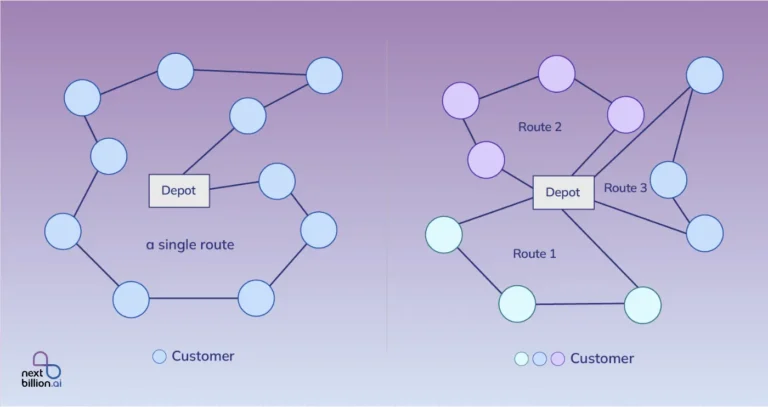
There is no one-size-fits-all solution when it comes to route optimization. What works for a 10-person sales team might collapse under a nationwide distribution network. Some teams need to move fast. Others need the whole system to bend around how they already operate.
Off-the-shelf sales route optimization software is fast, clean, and gets the job done when time and budget are tight. You get routing logic, performance insights, and automation without writing a single line of code. It is a smart choice for teams that just need to go, not build.
But when your workflows start getting layered, your logic becomes specific, and your tech stack stops fitting inside someone else’s platform, then it is time to stop adjusting and start owning. Custom route optimization software lets you hard-wire your priorities, automate your real logic, and scale without forcing new workarounds every quarter.
The question is not which solution looks better on paper. It is which one actually works for how your teams move on the ground.
Nextbillion.ai exists to support both paths. If you need to launch something reliable tomorrow, we can give you that. If you want a fully custom route engine embedded deep inside your CRM, ERP, or planning platform, we can build that too. We are not here to offer templates, we are here to solve the thing that slows your field team down.
Choose routing that matches your ambition, not just your address list. Let your platform keep up with your pace, not the other way around.
Custom software is built from scratch to follow your exact workflow, logic, and system design. Off-the-shelf tools are general-purpose solutions that work across many use cases, but do not adapt as deeply to unique field operations.
Off-the-shelf platforms usually cost less upfront and are quicker to deploy. For smaller businesses with limited tech support or urgency to improve, these tools offer strong value without complexity.
Yes. Many off-the-shelf tools integrate with common CRMs. However, custom platforms allow tighter logic alignment, cleaner data flow, and the ability to trigger route changes based on CRM updates in real time.
AI helps platforms learn from past performance. It uses data on traffic, cancellations, deal stages, and rep activity to recommend smarter routing sequences. It does not just optimize the route, it predicts what route will work best for the outcome you want.
Bhavisha Bhatia is a Computer Science graduate with a passion for writing technical blogs that make complex technical concepts engaging and easy to understand. She is intrigued by the technological developments shaping the course of the world and the beautiful nature around us.