


Table of Contents

- BLOG
Can Route Optimization Reduce Late Deliveries?
If routes are already planned by software, why do deliveries still arrive late, drivers overrun their hours, and fleets burn fuel fixing plans mid-day? As delivery volumes surge and customer expectations tighten, routing failures are no longer isolated mistakes but symptoms of planning systems that cannot adapt to real-world complexity. Late deliveries today are less about distance and more about decisions made before vehicles ever leave the depot, where constraints, uncertainty, and scale collide.
Explore how route optimization helps reduce late deliveries and bring predictability back to last-mile operations.
Did you know?
- The global route optimization software market is expected to grow to approximately USD 15.9 to 21.46 billion by 2030.
- A single WISMO inquiry costs an e-commerce brand an average of $5 to $12 in customer service labor. For a mid-sized retailer, these calls can account for up to 50% of all support tickets.
- The average cost of a failed first-delivery attempt has risen to nearly $17 when you factor in fuel, driver time, and re-sorting at the hub.
- 21% of shoppers report a total loss of trust in a brand if a delivery is late without proactive notification.
- 68% of shoppers look for shorter delivery windows at checkout.
What is Route Optimization?
The process of determining the delivery routes that are viable, efficient, and implementable within the real-world conditions, and not just the shortest among the locations, is referred to as route optimization. It entails the allocation of stops to vehicles, sequencing the stops, and planning of the time of the stops, considering the capacity constraints, delivery windows, service time, driver working hours, depot constraints, and business rules. Modern route optimization treats this as a combinatorial planning problem. They do this by continuously balancing cost, service reliability, and compliance, and producing routes that can withstand traffic variability, demand changes, and operational disruptions.
What Causes Late Deliveries?

In contemporary logistics, there are hardly any cases when a failure of the whole process can be traced to a failure in one of the steps. They are formed out of the interplay between outside disturbances and internal planning constraints. With the increase in the density of the delivery network and the tightening of service expectations, even minor variations multiply rapidly along the route. Late deliveries are thus understood by looking at the structural factors that compromise execution, rather than the symptoms that are manifested on the road.
Let’s now decode the main reasons behind late deliveries:
Traffic Congestion and Road Network Volatility
The most unpredictable variable in the delivery operations is urban traffic. The congestion during peak hours in major urban centers can add 25 to 40 percent to the normal travel time, and any unplanned road blockage, construction work, or temporary blockages can nullify the planned routes in real time. Under such conditions, static map assumptions are violated.
Volatility is also increased by weather conditions, and heavy rain or snowfall can slow down average travel speeds by half. In the absence of recalculation of travel time and adaptive routing, even slight disruptions have trickle-down effects throughout the route, resulting in widespread lateness.
ETAs and Manual Planning Limitations
Many delivery operations still operate beyond the limits of human planning capacity. Once a route exceeds a few dozen stops, the number of possible sequencing and timing combinations grows exponentially, creating what is commonly referred to as the complexity ceiling. Manually planned or fixed routes cannot incorporate live traffic, service time variation, or stop-level delays.
When the calculation of ETAs is performed without the input of the real time, dispatchers will lose sight, and drivers will act without receiving corrective instructions. Delays in delivery lead to a loss of customer confidence, which can be more sensitive than price.
Vehicle Reliability and Driver Fatigue
Delivery performance is directly constrained by the physical condition of vehicles and drivers. Delayed maintenance leads to high chances of mid-way failures, which may cripple whole delivery routes and not single orders. Other than mechanical breakdowns, driver fatigue is a significant operational hazard.
Prolonged routes, lack of efficiency in sequencing, and repetitive stop-and-go traffic augment cognitive burden and reaction time. Fatigued drivers are more prone to navigation errors, slower service at each stop, and higher safety risk, all of which accumulate into systemic delivery delays throughout the day.
The Last-Mile Execution Bottleneck
The last part of the delivery is the most complicated and the most costly one. The last mile, though geographically short, represents over half of the total shipping expenses because of high levels of stop concentration, little parking space, and regulatory restrictions on curbside access.
Most failed delivery attempts are due to address inaccuracies, limited delivery zones, and unavailability of customers. In the absence of validation mechanisms and time window management, drivers waste disproportional time trying to make deliveries to inaccessible or unattended points and transform the most expensive miles into non-productive ones.
How Route Optimization Actually Works?
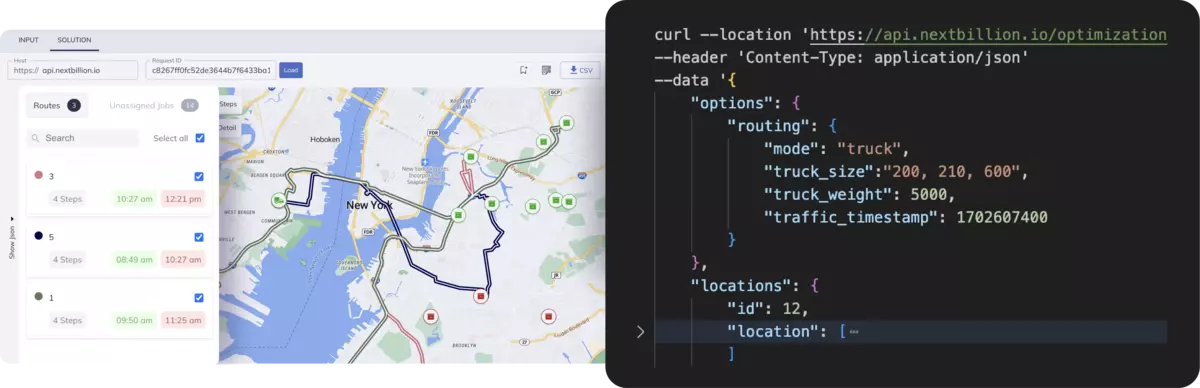
In its simplest form, route optimization is neither a shortest-path problem nor a multi-objective decision system under uncertainty, but a continuous decision system. Every path is the result of considering thousands to millions of possible allocations, sequences, and schedules between vehicles, time, capacity, and service constraints.
Due to the variation in traffic, demand, and execution conditions in the course of the day, the optimality is temporary. It is thus the case that modern optimization engines consider routing a rolling planning problem and re-evaluate the feasibility and cost whenever new information is received. Avoiding late deliveries depends on this ability to re-plan intelligently, not merely to navigate faster.
Let’s understand the key areas that shape effective route optimization.
Dynamic vs. Static Routing
To understand how optimization prevents delays, it is necessary to first examine the limitations of static routing models.
Static Routing (Legacy Model)
In static routing, routes are determined once, usually at the beginning of the day or week, based on historical averages of the travel time and service duration. Once sent, the plan is set in stone. Any disruption of the form of road closure, customer cancellation, or service delay compels the drivers or dispatchers to make improvisations without guidance at the system level. Due to the failure to recalculate downstream effects, the static plans add up to inefficiencies, which lead to backtracking, missed delivery windows, and wasted fuel.
Dynamical (Modern Standard) Routing
Dynamic routing considers routes as stateful and constantly reconfigurable plans. Live feeds like traffic conditions, vehicle position, service time variation, and order amendments are fed into the optimization engine. The system recalculates viable sequences and timing on the fly, maintaining constraints and adapting to disruptions. This enables routes to be executable even as the conditions change during the day.
Static vs. Dynamic Routing Comparison
Feature | Static Routing | Dynamic Routing |
ETA Accuracy | Degrades over time | Maintained via real-time telemetry |
Scalability | Limited to small fleets | Designed for large, dynamic networks |
Configuration | Manual and rule-based | Automated and policy-driven |
Fault Tolerance | None | Automatic re-routing |
Path Selection | Fixed | Cost- and constraint-aware |
Resource Utilization | Inefficient, empty miles | Capacity-maximized |
Adaptability | Manual intervention required | Continuous recalculation |
Best Use Case | Fixed, repetitive routes | E-commerce, food delivery, field service |
Real-Time Telematics and Predictive Analytics
The modern optimization systems do not respond to disruptions, but they predict them.
Telematics offers a continuous stream of vehicle data, including location, speed, idling, fuel status, and dwell time. In case the real service time is longer than the planned one, the system instantly spreads the delay throughout the rest of the route and changes ETAs of subsequent stops.
Predictive analytics leverages historical execution data to forecast future conditions. For example, if historical data shows a consistent slowdown on a specific corridor under certain weather or time-of-day conditions, the optimizer proactively adjusts routing decisions before congestion materializes. This forward-looking behavior reduces late deliveries by avoiding known failure patterns rather than responding after they occur.
Accounting for Operational Uncertainty
Delays in delivery are usually caused by physical and environmental limitations that are not taken into consideration. These variables are explicitly modeled in advanced optimization systems in both planning and execution.
Weather Conditions
Poor weather may slow down the speed of travel by half and may raise the braking distance and service time. The engines of optimization incorporate live and forecast weather to modify buffers, rerouting to avoid floods, and minimizing the exposure to risks.
Road Geometry and Vehicle Constraints
Heavy vehicles are constrained by turning radii, bridge clearance, weight limits, and restricted zones. Optimization systems consider the curb weight, axle limit, low-clearance structure, and turn restriction in order to avoid illegal or impractical routing decisions that would otherwise result in delays.
Vehicle Capacity and Load Accessibility
Vehicles that are overloaded or not well organised raise the dwell time at each stop. High-tech systems apply the three-dimensional load model to make sure that high-priority packages and time-sensitive packages are available on the route, minimizing search time and eliminating mid-route reconfiguration time.
Constraint-Aware Scheduling and Feasibility Validation
Distance minimization is not the basic constraint of scheduling in the optimization of routes, but rather constrained scheduling. Every route must remain feasible across time windows, driver hours, depot cutoffs, and service commitments simultaneously.
Modern optimization engines push the constraints along the route schedule and check feasibility after each stop insertion or resequencing. In case of one-stop triggering a downstream violation, for example, a missed delivery window or a driver hours violation, the candidate plan is rejected right away. This prevents infeasible routes from ever reaching execution, eliminating late deliveries caused by plans that were mathematically efficient but operationally impossible.
Fleet-Wide Optimization and Inter-Route Dependency Management
Routes do not exist in isolation. Decisions made for one vehicle directly affect feasibility and efficiency across the entire fleet. Advanced route optimization systems address a joint fleet-level problem, in which the ownership of stops, workload balance, and coverage of the territory are optimized. This eliminates the situations where a route is overloaded, and another is not used to full capacity.
Through vehicle assignment, depot utilization, and spatial clustering at the fleet scale, optimization engines minimize cascading delays. They further minimize cross-territory travel and ensure that where local improvements are desired to be made, system-wide lateness is not caused by local improvements.
Labor, Regulatory, and Compliance-Aware Planning
Late deliveries frequently originate from plans that violate labor regulations or driver availability constraints, forcing mid-route adjustments. The current route optimization systems encode the labor rules as hard constraints into the planning engine instead of them being post-dispatch checks. Hours of service for drivers, cumulative driving limits, required breaks, shift boundaries, and labor laws in each region are replicated throughout the route schedule.
Optimization engines ensure that all of the planned stops are executable within the law, even in the case of delays or order insertions on the same day. By enforcing compliance during planning rather than correcting violations during execution, AI optimization prevents forced route truncations. It also helps prevent emergency handoffs and compliance-related delays that directly lead to missed delivery commitments.
From Logic to Logistics: Direct Impacts of Route Optimization on Late Deliveries
In modern logistics, “on time” is no longer a competitive advantage. It is the minimum acceptable outcome. Route optimization is a fundamental change in the way this is accomplished by transforming delivery operations into data-driven and deterministic firefighting. Optimization engines keep converting mathematical planning logic into field operations that can be executed, instead of using fixed plans and human judgment under pressure. The outcome is less uncertainty, fewer cascading delays, and consistent delivery performance even under disruption.
Here are the measurable impacts of route optimization on reducing late deliveries across modern logistics operations:
Shrinking Delivery Windows Through High-Resolution ETA Modeling
Traditional routing systems rely on coarse-grained delivery promises such as “morning” or “afternoon,” which amplify failure when customers are unavailable. Modern route optimization systems compute ETAs at stop-level resolution by using historical travel patterns, real-time traffic telemetry, service time distributions, and route interdependencies. This enables the reduction of delivery windows to 30-minute periods without exposing the business to higher operational risk.
Accurate ETAs enhance first-attempt success by aligning customer availability with actual arrival times. Internally, they improve sequencing accuracy by ensuring that downstream stops remain practical as upstream variability increases. Optimization engines propagate service time deviations along the route in real time and prevent subsequent stops from silently drifting out of the window. Geofencing-based predictive alerting and live progress tracking further minimize no-show risk by notifying customers before arrival rather than after a missed attempt.
Dynamic Re-Optimization for On-Road Disruptions
Static route plans lose validity the moment execution diverges from assumptions. Dynamic re-optimization acts as the control system of the fleet by continuously recalculating routes when disruptions occur. The optimization engine recalculates stop sequences and schedules under the same capacity, time, and compliance constraints instead of requiring drivers to improvise when traffic incidents, road closures, or unforeseen delays are detected.
This allows real-time intervention without destabilizing the rest of the fleet. High-priority or on-demand orders may be placed on active routes by solving a constrainedinsertion problem that minimizes impact on existing commitments. When delays cannot be avoided, prioritization logic rearranges remaining stops to ensure that SLA-critical deliveries are protected first. Live dashboards give dispatch teams complete situational awareness without the need for manual driver calls or ad hoc decisions.
Reducing Driver Fatigue and Improving On-Site Execution
Driver performance directly influences delivery reliability, yet fatigue is a latent contributor to lateness. Route optimization reduces cognitive load by removing guesswork from routing and sequencing. Workloads are distributed across the fleet to avoid overly long or complex routes that cause burnout and error accumulation.
Advanced optimizers also consider execution ergonomics. Turn optimization reduces time lost at congested intersections. Spatially coherent stop sequencing minimizes backtracking, U-turns, and complex maneuvers. As a result, drivers spend less energy correcting routes and more time executing deliveries efficiently, improving safety and service quality at the doorstep.
Closed-Loop Feedback and Post-Trip Learning
Route optimization improves over time through execution outcomes. Post-trip analysis compares planned routes with actual vehicle telemetry to detect systematic deviations. When a location consistently requires more service time, larger buffers are automatically incorporated into future plans. Patterns of excessive idling or off-route deviations inform driver coaching and operational adjustments.
Geocode refinement further improves accuracy by capturing precise delivery entrances and loading zones based on driver feedback. Each completed route feeds higher-quality data back into the optimization engine, tightening future ETA predictions and eliminating recurring failure modes. This feedback loop transforms daily execution into a continuous improvement process rather than a fixed outcome.
Fuel and Maintenance Savings Through Cost-Aware Routing
The economic benefit of route optimization extends beyond mileage reduction. Optimized routing disproportionately eliminates the most expensive types of driving, including stop-and-go traffic and prolonged idling. This explains the commonly observed relationship where a 10 percent reduction in mileage produces closer to a 15 percent reduction in fuel cost.
Optimization lowers fuel burn per mile through steady-state driving, reduced idle time, and fewer unnecessary detours. Lower mileage also extends vehicle service intervals, reducing maintenance costs for brakes, tires, and powertrains. These compounded savings improve fleet economics while simultaneously lowering operational risk.
Using Historical Data to Eliminate Repeated Failures
Optimization systems do not treat each day as a blank slate. Historical execution data is used to identify consistently problematic addresses, access constraints, and customer preferences. Routes are planned with realistic assumptions for locations that frequently cause delays, ensuring time is allocated where it is actually required.
Over time, the system learns preferred delivery patterns, access restrictions, and service behaviors, reducing friction on repeat visits. This eliminates recurring bottlenecks and enables planners to shift from reactive correction to proactive route design.
Sustainability as a Direct Outcome of Optimization
Sustainability benefits emerge naturally from efficient routing. Reduced distance traveled and lower idle time directly translate into lower carbon emissions. Route optimization provides one of the fastest ways to reduce a fleet’s environmental footprint without replacing vehicles or altering service coverage.
Digital proof-of-delivery systems integrated with optimization platforms further reduce paper usage across the supply chain. Together, these improvements allow organizations to demonstrate measurable environmental impact while improving operational performance and meeting regulatory and customer expectations for sustainable delivery practices.
NextBillion.ai Route Optimization: Step-by-Step Implementation Guide
A route optimization system is dependent on fleet size, network density, complexity of constraints, service level commitments, and the frequency with which plans change during execution. NextBillion.ai is designed to be used in the real-world delivery environment, where feasibility, variability, and scale are all to be addressed in one solution. It has an AI-based optimization layer, which is built on feasibility-first planning, high-performance computation, and integration with existing logistics and dispatch stacks.
Instead of creating theoretical paths that need to be manually fixed, NextBillion.ai creates dispatch-ready, constraint-safe plans that are runnable in actual operating conditions.
How NextBillion.ai Improves Routing Outcomes?
Below is a practical view of how NextBillion.ai’s optimization engine improves delivery performance and how teams can operationalize it at scale.
Constraint-Aware Grouping of Deliveries

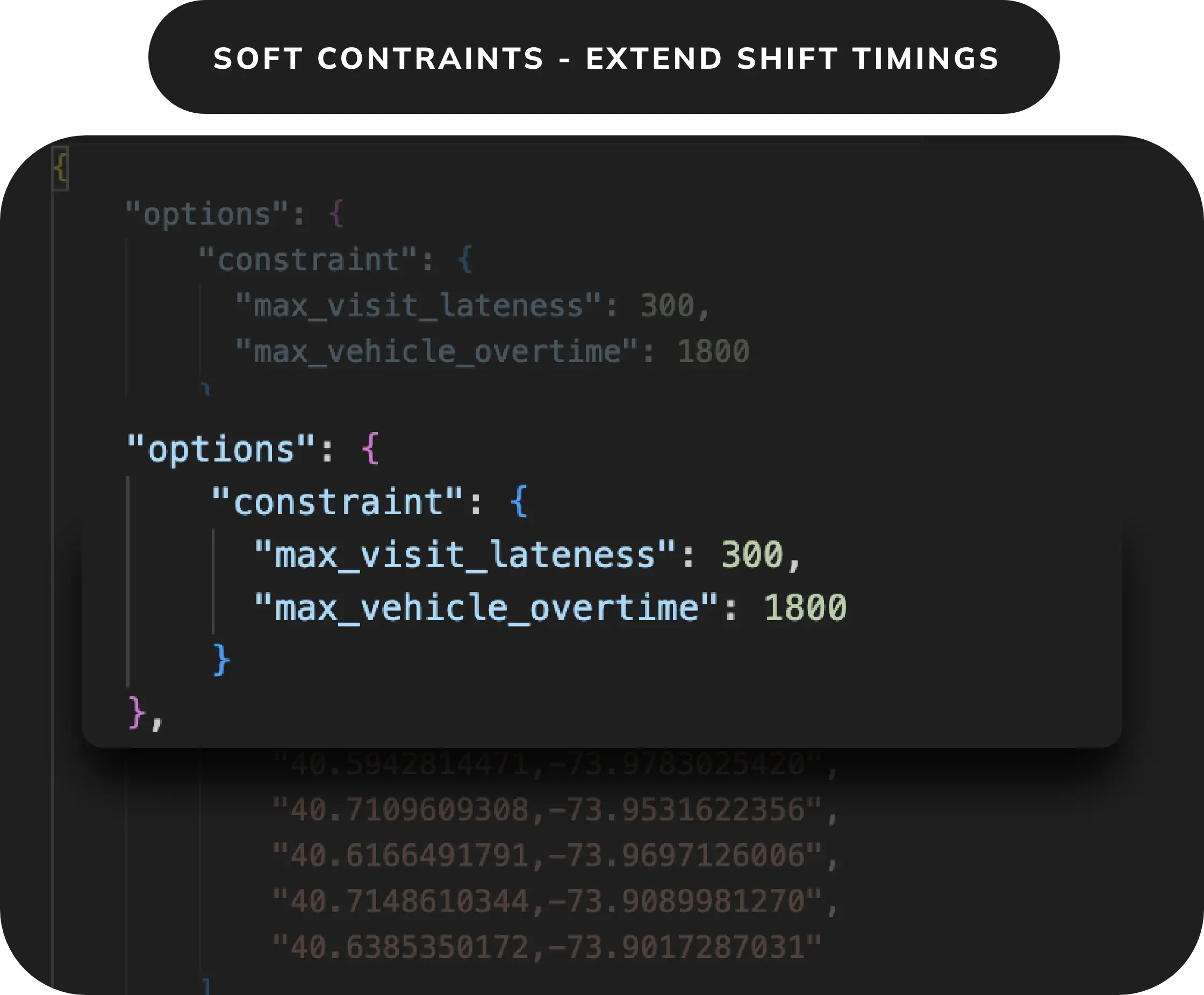
NextBillion.ai uses a constraint-aware optimization model to maximize the utilization of fleets by grouping stops into routes. The concept of stop grouping is not founded on distance but collectively addresses geography, delivery windows, service times, size of vehicle capacity, and policy restrictions. This guarantees the achievement of high stop density per route without overloading of vehicles and the risk of downstream SLA.
Multi-Dimensional Capacity Planning
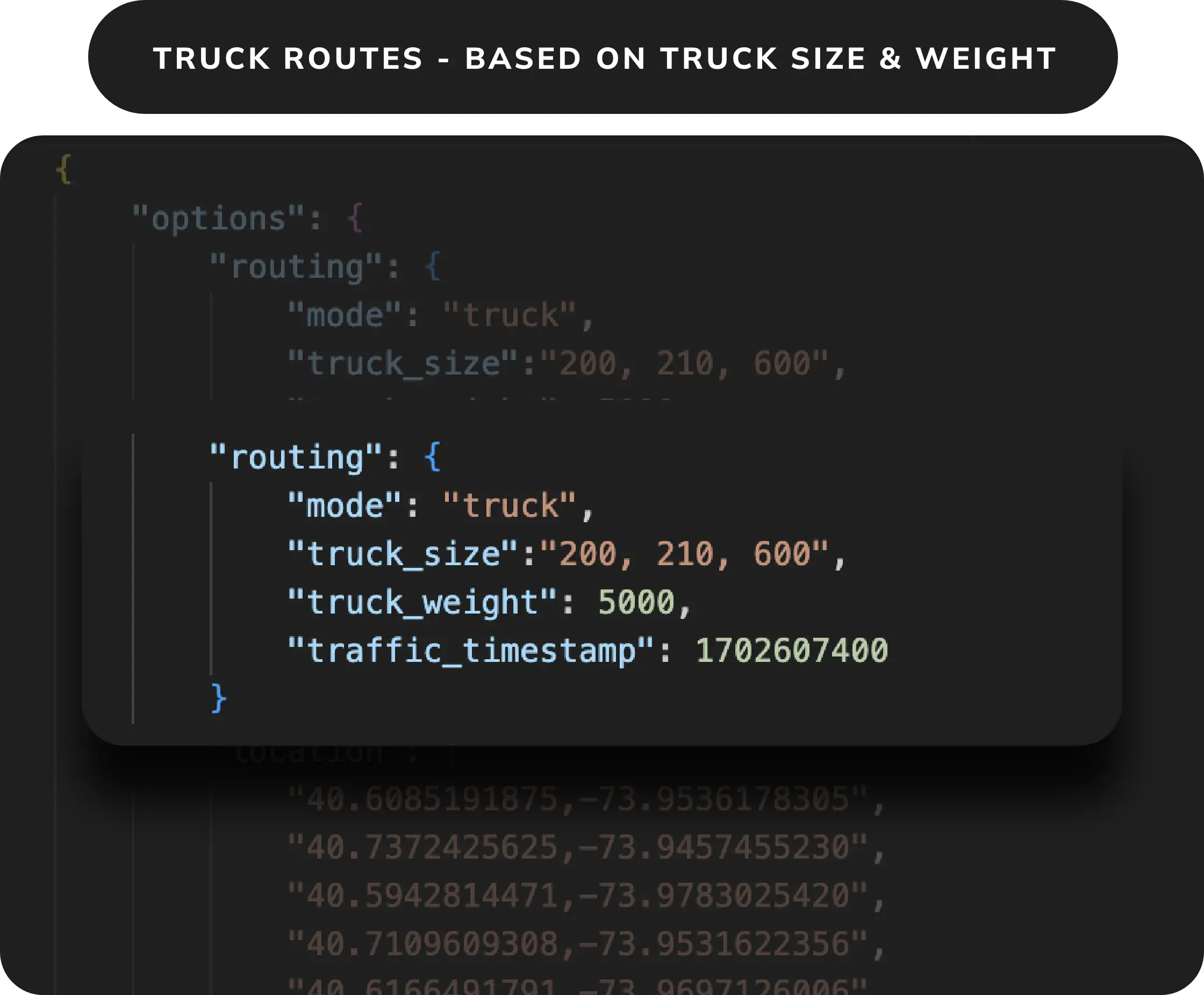
In contrast to legacy systems, which view capacity as a single number, which is a numeric capacity limit, NextBillion.ai models capacity in many dimensions, such as weight, volume, parcel count, handling needs, temperature zones, and vehicle-specific constraints. This enables accurate vehicle recommendations and task allocation, ensuring routes remain feasible throughout execution rather than failing mid-route due to load incompatibilities.
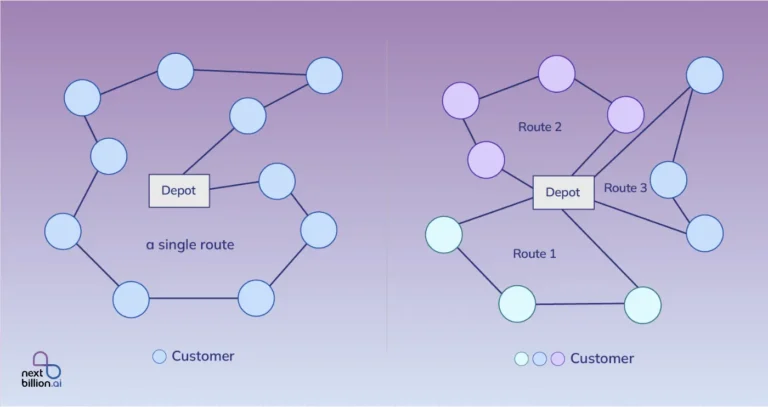
Fleet-Level Spatial Optimization and Non-Overlapping Routes
NextBillion.ai implements spatial compactness on the fleet level by maximizing the coverage of the territory by all vehicles at once. Routes are created in such a way that there is minimal overlap, cross-coverage, and deadhead miles, which produce predictable execution zones for the drivers and less operational complexity on the ground.
Dynamic Planning for Fluctuating Demand
Delivery demand rarely remains static after dispatch. NextBillion.ai helps in dynamic re-optimization, which inserts and removes stops, trying to keep as much of the original route structure as possible. This reduces the level of disruption, incremental cost control, and service levels during spikes in demand, cancellations, or the addition of same-day orders.
Elimination of Manual Route Edits
Manual route edits introduce inconsistency, risk, and delay. NextBillion.ai uses operational constraints in the real-world directly into its optimization engine to generate the final, dispatch-ready routes. Planners are given executable plans instead of drafts, and therefore, post-processing, manual cleanup, or dispatcher guesswork is eliminated.
How to Implement NextBillion.ai Route Optimization?
Here is how to implement NextBillion.ai route optimization in real-world delivery operations.
Step 1: Delivery and Resource Data Entry
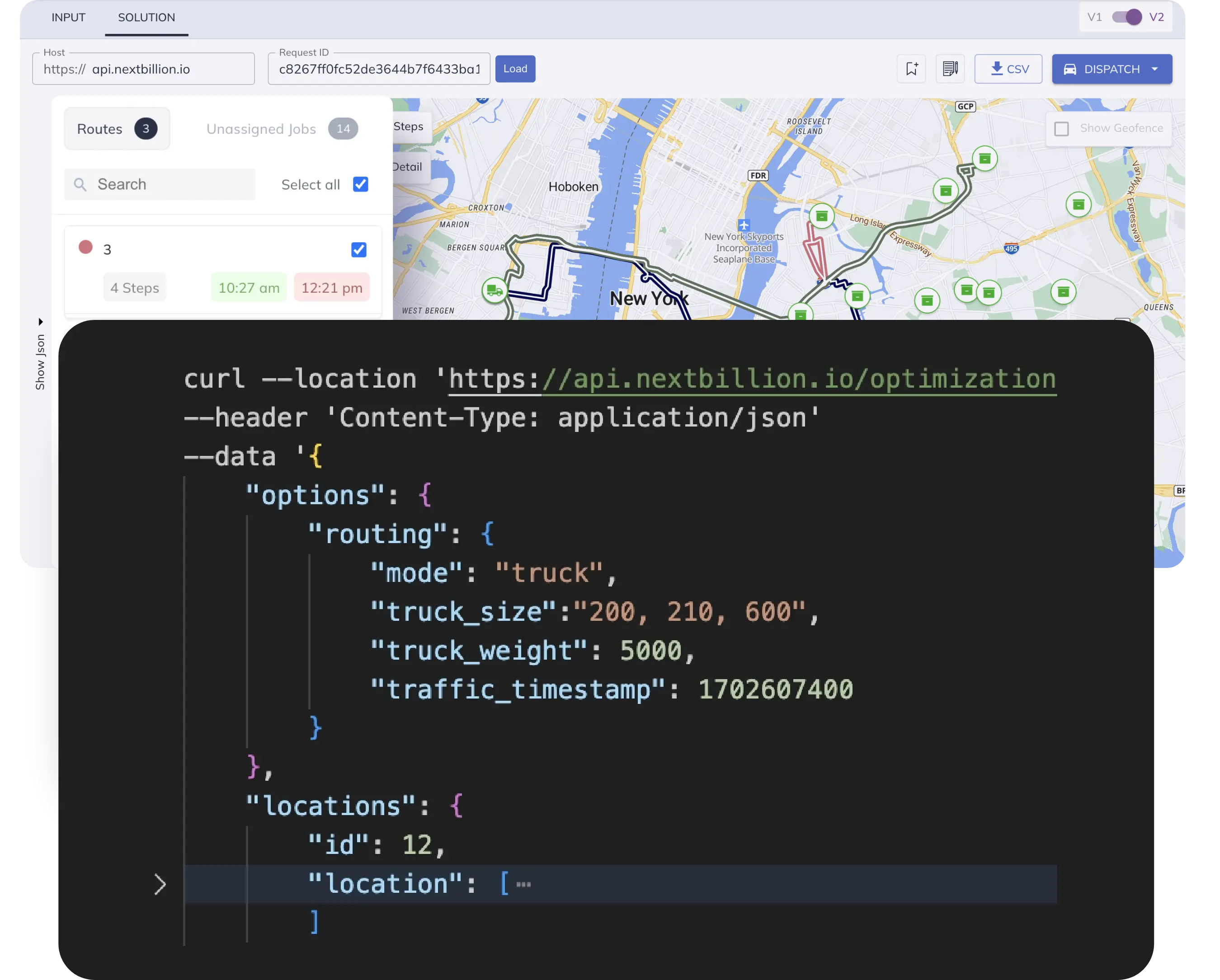
Structured operational data is a starting point for optimization. The NextBillion.ai Route Optimization API takes the following basic inputs.
- Jobs: Every delivery or pickup is represented as a job with a distinct ID, geographic location, time constraints on delivery, time of service, and any special needs, such as refrigeration or delicate delivery.
- Shipments: Pickup-drop relationships are characterized by shipments, which contain load attributes and handling times, and enable the optimizer to impose sequencing and time constraints between related stops.
- Depots: Depots specify start and end points of routes and contain IDs, coordinates, operating hours, and optional departure or return cutoffs.
- Vehicles: Vehicles have special identifiers, working hours, size of capacity, regulatory eligibility, and special equipment. This facilitates proper vehicle-to-job matching.
- Locations: All jobs and depots have precise coordinates that are used to calculate the distance, estimate the travel time, and validate the constraints.
This data foundation allows the optimization engine to reason across all constraints simultaneously rather than treating them as post-planning checks.
Step 2: Submit Data to the Optimization Engine
When the input data is ready, it is sent to the NextBillion.ai Route Optimization API using a POST request. At this point, teams are able to establish operational constraints that include:
- Delivery time windows
- Vehicle capacity limits
- Working hours and breaks of drivers
- Job-to-vehicle eligibility regulations
- Priorities and service promises
Planning is a process that is accomplished to confirm feasibility, and not after the execution. On submission, the system will provide a distinct job ID, which can be utilized to monitor the progress of optimization and access the results.
Step 3: Retrieve and Execute Optimized Routes
Once optimization is done, routes are accessed via a GET request by the job ID. The response includes:
- Assignments of vehicles per route
- Ordered stop sequences
- Staged arrival and departure time
- Estimated travel durations
The optimization engine takes into account the current traffic conditions when it is being computed so that the routes are updated to the real-world conditions at the time of dispatch. The result is a complete implementation plan that saves on travel time, consumes less fuel, and enhances SLA adherence.
When there is a change in the conditions of the execution, like a traffic jam or even a road blockage, the same API may be made to re-optimize the routes and maintain the existing commitments wherever feasible.
Designed for Scale and Real-World Operations
NextBillion.ai Route Optimization API is developed to accommodate small fleets and extensive logistics networks. Its constraint-first design, rapid cycle of optimization, and its proficiency to integrate with the navigation and telematics systems make teams switch to fully automated and intelligent routing instead of manual planning. The result is fewer late deliveries, lower operational costs, and consistent service performance as delivery operations scale.
Industry Case Studies

Here are prominent case studies that demonstrate how route optimization is applied at scale across real-world delivery operations:
UPS: ORION and Fleet-Scale Last-Mile Optimization
The ORION (On-Road Integrated Optimization and Navigation) system of UPS solves one of the biggest combinatorial optimization problems in the field of commercial logistics, optimizing millions of daily stops in heterogeneous fleets. ORION collectively assesses the allocation of stops, sequencing, variability of service-time, and compliance constraints on drivers during dispatching.
The system has asymmetric cost functions, including left-turn minimization, fuel burn profiles, intersection delay penalties, hours-of-service, and depot cutoffs. Continuous execution feedback feeds back into the planning layer, allowing iterative refinement of route heuristics and improving ETA accuracy, fuel efficiency, and on-time performance at the national scale.
DHL: Dynamic Urban and Cross-Border Routing
DHL uses AI-based route optimization in both dense urban areas and international delivery routes that have different regulatory, geographic, and time restrictions depending on the region. Optimization engines re-calculate routes based on live traffic information, delivery density indicators, depot operating schedules, and jurisdiction-specific limitations like low-emission zones or delivery curfews.
The fleet-wide coordination ensures that there is no overlapping of territories, balances the workload of drivers, and that ETA is stable even during congestion and regulatory fragmentation. This strategy is especially important in the European urban centers, with their tight delivery schedules and limited access areas that demand feasibility-first planning, as opposed to reactive navigation.
FedEx: SLA-Driven Network and Route Planning
FedEx integrates route optimization into both its ground and express networks to synchronize last-mile execution with upstream sortation and linehaul schedules. The optimization systems are very strict in terms of time-window feasibility, depot cutoffs, aircraft arrival dependencies, and driver hours-of-service during planning.
Routes are checked to be downstream SLA compliant prior to dispatching, which allows FedEx to absorb demand bursts and peak season volume without causing a ripple of delays. FedEx can directly incorporate SLA logic into route construction, eliminating the need to use manual dispatcher assistance, as well as avoiding late deliveries due to infeasible plans.
Amazon: High-Density, Same-Day Delivery Optimization
Amazon has one of the most complicated last-mile optimization settings worldwide, which is high stop density, same-day delivery guarantees, and constant order inflow. Its routing systems address fleet-wide assignment and sequencing issues by taking into account vehicle capacity, proximity, delivery windows, real-time execution state, and partner availability.
Routes are re-optimized in real time during the day to accommodate unsuccessful delivery operations, traffic congestion, and orders that arrive late. The rolling planning model enables Amazon to increase the volume of deliveries without corresponding growth in the fleet size and maintain on-time performance when faced with extreme operational variability.
Ocado: Time-Critical Grocery and Cold-Chain Routing
Ocado has been using sophisticated route optimization to deliver to small grocery delivery windows and keep a tight cold chain. Routes are optimized by engines that use fine-grained service-time distributions, multi-dimensional vehicle capacity constraints, and depot loading cutoffs based on refrigeration limits.
The routes are verified to be viable before dispatch in order to deliver temperature sensitive products within permissible exposure limits. By enforcing cold-chain constraints during planning rather than execution, Ocado prevents late deliveries that would otherwise compromise product quality and customer trust.
Conclusion
Route optimization can reduce late deliveries, but only when it is treated as a planning intelligence problem rather than a navigation upgrade. Modern delivery failures originate upstream, where constraints, uncertainty, and scale must be resolved before execution begins. The optimization systems can regain predictability in the last-mile operations by continually validating feasibility, trade-offs across the fleet, and dynamically adjusting the plans. In a situation where the trust of the customers is weak, route optimization transforms the performance of delivery into a response mode rather than a controlled mode.
Turn delivery planning into a predictable, scalable system with NextBillion.ai. Replace manual firefighting with AI-driven, constraint-aware route optimization that adapts in real time and keeps deliveries on schedule. Start planning routes that actually execute, even under disruption, and restore customer trust at scale.
FAQs
On-time performance declines primarily due to poor upstream planning visibility, unmodeled operational constraints, and delayed feedback loops. When production schedules, vehicle readiness, and execution data are fragmented or updated manually, planners operate on outdated assumptions. These gaps compound across routing, dispatch, and execution, resulting in missed delivery windows and cascading delays rather than isolated failures.
The most critical factor is accurate service time modeling at each stop, not driving distance alone. Unloading time, parking time, location access time, and paperwork often introduce greater variability than travel time. Routes that are optimal in distance but ignore service time and downstream constraints are likely to fail, even when the driving path itself is efficient.
Delivery route optimization is the process of generating feasible, cost-efficient, and executable delivery plans by allocating stops to vehicles, sequencing them, and scheduling execution under real-world constraints. It optimizes time windows, vehicle capacity, service time, labor regulations, and operational policies to minimize cost and delay while ensuring service reliability at scale.
Route optimization enables the planning and execution of bulk deliveries at scale by optimizing high volumes of stop assignments, vehicle capacities, and time constraints. It allows planners to dynamically add, group, and sequence large numbers of delivery points without overloading routes. It ensures that bulk orders are fulfilled efficiently without compromising on-time performance or operational control.
About Author
Bhavisha Bhatia
Bhavisha Bhatia is a Computer Science graduate with a passion for writing technical blogs that make complex technical concepts engaging and easy to understand. She is intrigued by the technological developments shaping the course of the world and the beautiful nature around us.
Ready to get started?
Table of Contents
Related Posts

Ready to get started?
Request a DemoTable of Contents
Subscribe to our Newsletters
Get the best practices for route planning & optimization, delivered to your inbox.
Subscribe