


Route Optimization API
Optimize routing, task allocation and dispatch
Distance Matrix API
Calculate accurate ETAs, distances and directions
Directions API
Compute routes between two locations
Navigation API & SDK
Turn by Turn Instructions for Drivers & Technicians
Route Optimization Software
Plan optimized routes with 50+ Constraints
Product Demos
See NextBillion.ai APIs & SDKs In action
AI Route Optimization
Learns from Your Fleet’s Past Performance
Platform Overview
Learn about how Nextbillion.ai's platform is designed
Road Editor App
Private Routing Preferences For Custom Routing
On-Premise Deployments
Take Full Control of Your Maps and Routing
About Us
Our story, vision
and mission
Contact Us
Reach out to us for any product- or media-related queries
Write to us at

Table of Contents
What if your fleet had to complete hundreds of deliveries across different zones, strict time windows, and varying vehicle capacities, all in a single day? This is not a hypothetical situation but a day-to-day challenge for most operations. Manual planning and fixed routes soon prove inefficient, error-prone, and scale-limited as the volume of deliveries increases and customer demands become more strict. This is where a route generator is needed.
A route generator does not use fixed plans or human intuition to create optimal and executable routes, but rather transforms orders, operational constraints, and map data into optimal routes. This guide is a dissection of how a route generator functions and the algorithms it operates on.
We will also find out why a route generator is an essential aspect of modern logistics that needs to control complex and multi-stop fleets. Let’s start:
A route generator is a smart system that converts orders, operational constraints, and geospatial information into optimal multi-stop delivery routes. It uses sophisticated algorithms and real-time inputs to guarantee efficient planning, execution, and flexibility of complex fleet operations.

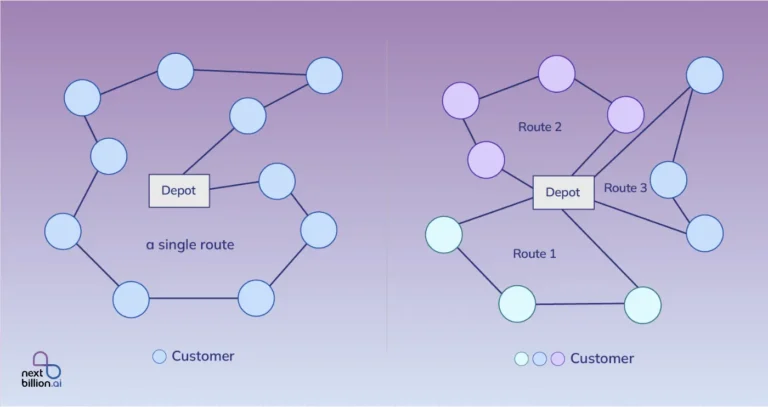
A route generator is a geospatial optimization tool that generates efficient multi-stop routes by solving Vehicle Routing Problem (VRP) variants with real-world constraints. It processes input order locations, time windows, vehicle capacities, and road data. It also assigns stops and sequence routes based on heuristics and optimization algorithms. State-of-the-art systems support real-time data and ETA estimations to support scalable and adaptive fleet planning.
Below are the most notable characteristics that allow a route generator to plan, optimize, and execute multi-stop fleet operations of scale efficiently:
To have more insight into the worth of a route generator, it is necessary to compare it to manual planning methods. Although manual routing might be effective in simple operations, it is inefficient and prone to errors when complexity is involved. A route generator, however, is a more appropriate choice in the contemporary multi-stop fleet operation because it is based on data, algorithms, and real-time inputs and is therefore able to provide quicker, more precise, and scalable routing decisions.
Factor | Manual Planning | Route Generator |
Speed | Slow | Instant |
Scalability | Limited | High |
Accuracy | Low | High |
Real-time updates | No | Yes |
Cost efficiency | Poor | Optimized |
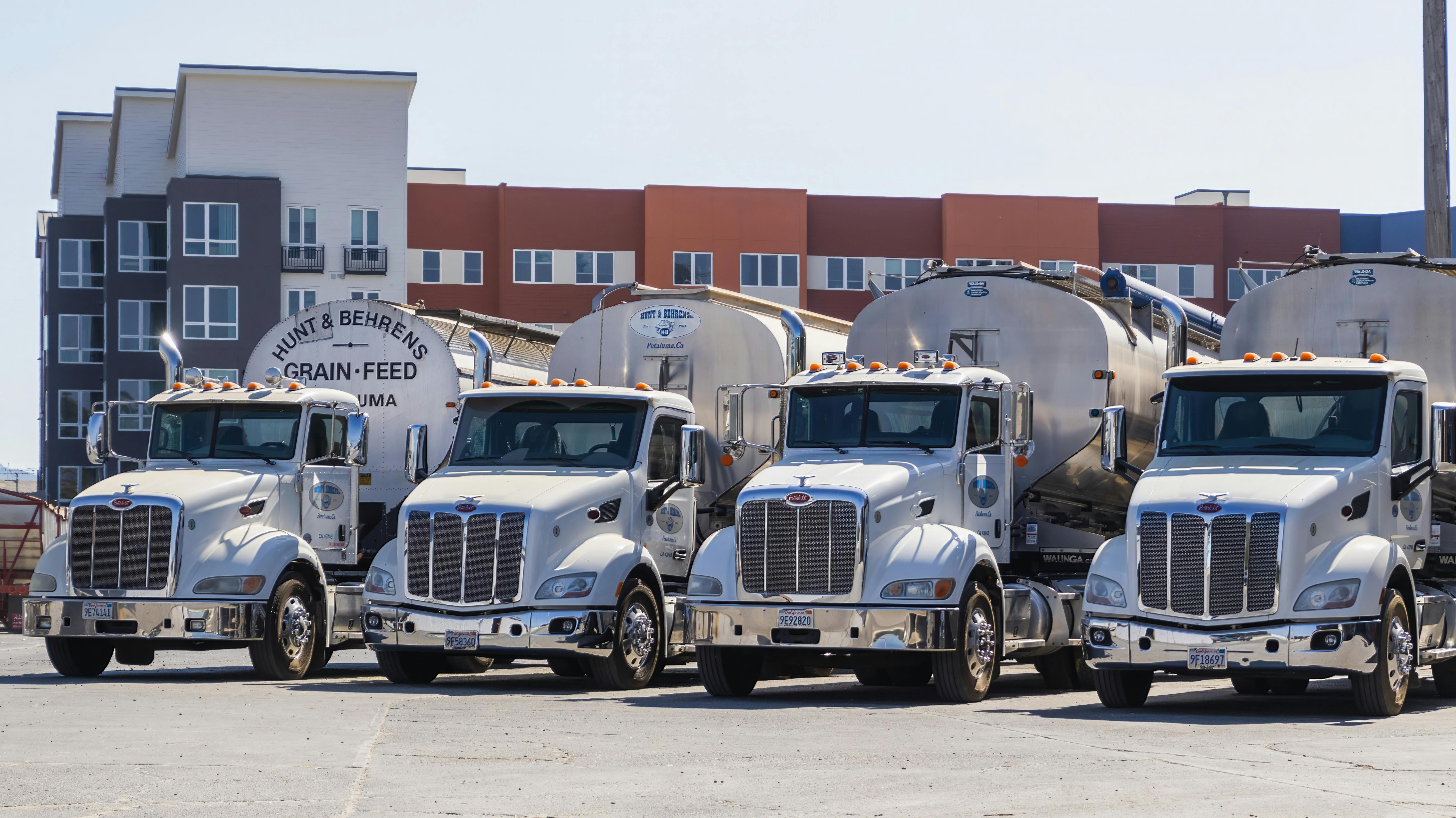
Here is why multi-stop fleets of complex size need route generators that can effectively cope with scale, constraints, and real-time operational issues:
Shortcomings of Manual or Static Planning
The route planning in a manual or static way cannot be scaled with the growth of the fleet size and the volume of delivery, which is why it is not applicable to the complex multi-stop operations. It does not have real-time flexibility, i.e., routes are unable to respond to the happenings in the traffic, delays, or new orders after the execution process has started. This translates into poor routing, wastage of time, and poor decision-making that eventually translates to increased operational costs and poor performance.
Complexity Drivers
The current fleet operations have become complex as a result of having more than one delivery point along the route, time-bound commitments, and a fleet made up of two-wheelers, three-wheelers, and trucks. The complexity is also increased by the unpredictable traffic conditions, regular change of orders, and failed deliveries that need reattempt. It is not practical to manage these variables manually, because the number of possible combinations of routes is exponential.
Business Impact
In the absence of an optimized routing system, businesses experience sluggish delivery times, increased fuel usage, and unutilized fleet resources. A route generator is a direct solution to these issues because it helps to make deliveries faster, minimizes the cost of operations, and optimizes the efficiency of the fleet. It also increases customer satisfaction due to the dependable service and precise ETAs, which make it an essential element of scalable and competitive logistics.
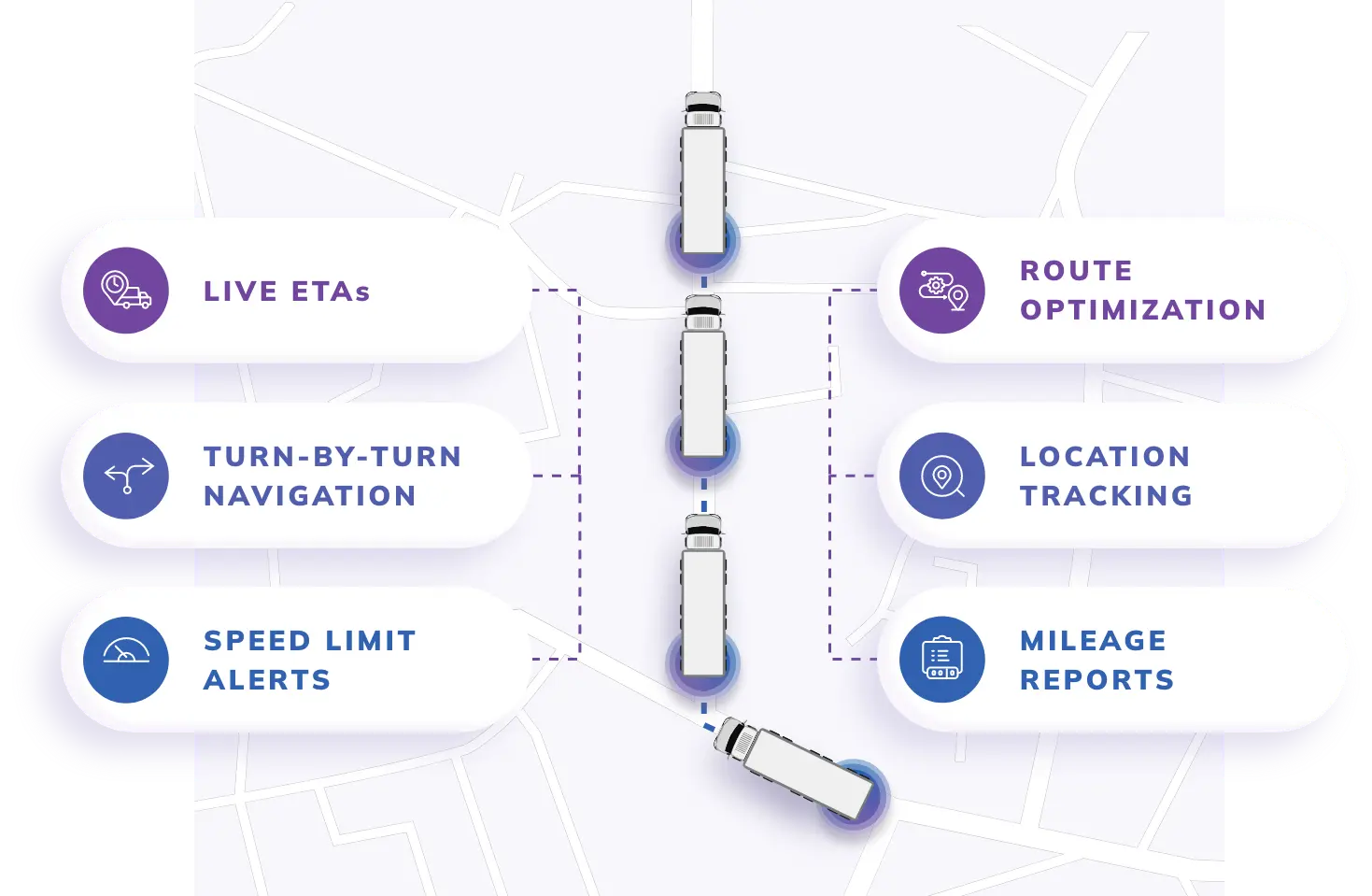
Below are the most promising benefits that make route generators essential for efficient and scalable multi-stop fleet planning:
A route generator makes the process of planning easier by automatically generating optimal routes in a few seconds without any human intervention. It allows more work to be done in less time and achieves greater throughput on a daily basis without adding to the fleet size by cutting down on unnecessary travel, idle time, and redistribution of workloads among vehicles. It also standardizes the quality of planning in operations, eliminating human variations. This guarantees uniform performance despite the increase in complexity of deliveries.
Route generators help reduce fuel consumption and operational costs by optimizing distance, time, and vehicle use. They guarantee optimal utilization of fleet capacity, minimize unnecessary journeys, and assist businesses in performing more efficiently without compromising service quality. In the long run, this translates to fuel, labor, and maintenance savings. It is also effective in enhancing the return on fleet investment through maximum utilization of assets.
Route generators enhance dependability and uniformity with proper ETA forecasts and delivery time window observance. Dynamic rerouting and real-time updates will make sure that the delays are minimized, which results in improved communication with customers, their increased satisfaction, and trust. It also allows proactive notifications which keep the customers updated during the delivery process. This minimizes the failed deliveries and improves the general service experience.
A route generator can scale smoothly as the operations increase in size and complexity to support larger fleets and additional orders. It also follows the changing conditions like traffic, demand changes, and operational limitations, which allows businesses to perform even in very dynamic environments. It is flexible and can expand to new areas without significant system modifications. It also provides long-term operational stability as business requirements change.
Now we are going to unveil the main ingredients of a route generator system that allows to plan a multi-stop fleet effectively:
The fundamental unit of computation in the route generator system and the heart of the optimization engine is the optimization engine, which converts inputs into optimized routing decisions. It formulates the routing problem as a constraint-based optimization problem and finds a solution to the problem by minimizing cost functions, which may be distance, travel time, fuel consumption, or fleet usage.
This engine operates with a number of constraints at the same time, such as the capacities of vehicles, time windows of delivery, and operational limits, and ensures that generated routes are efficient and feasible. It uses heuristics and metaheuristics to generate near-optimal solutions at scale. It can be applied to complex multi-stop fleet problems where exact solutions are computationally infeasible.
The geospatial engine handles all the computations and visualization of all locations needed in route planning and execution. It does the map drawing, the distance and travel time calculations, and the path of the route based on the actual roads on the earth.
It incorporates mapping APIs, e.g., Google Maps or OpenStreetMap, to give precise and current geographic data, e.g., road restrictions and traffic conditions. This element provides that routes are based on the geography of the real-world and not on the theoretical distance. This way, realistic planning, navigation support, and visual monitoring can be provided to dispatch teams and drivers.
The constraint manager codifies and implements all the business-specific regulations that regulate route feasibility and operation adherence. It establishes parameters on the time window of delivery, vehicle capacity limit, driver shifts, and priority on urgent orders.
These constraints are arranged in the system to make sure that the optimization engine produces routes that are strictly operational. This layer is essential to ensure quality of service and regulatory compliance, since it helps avoid routes that break business rules or create infeasible execution conditions in fleet operations. This layer helps prevent infeasible routes and rule violations, ensuring compliance and maintaining service quality in practical fleet operations.
The route generator system is based on the data layer, which stores and processes all the operation data of interest. It contains order databases containing delivery information, fleet information containing vehicle specs and availability, and historical performance information to be used in analytics and predictive modeling.
The layer provides data consistency, accessibility, and scalability, which is necessary to allow the system to manage large amounts of information. It is also compatible with other external systems like order management or ERP systems. Therefore, it is necessary to have a coherent and trustworthy data ecosystem for route planning and optimization.
The layer of execution connects the gap between the route planning and the real-world operations by providing actionable outputs to the users and systems. It has driver applications which offer navigation, route guidance, and task updates, dispatch dashboards to track fleet performance, and run operations.
Tracking possibilities give an opportunity to track the movement of vehicles, the state of deliveries, and the off-course. The layer is used to make sure that the optimized routes are successfully implemented on the ground. It further allows constant feedback, control of operations, and speedy reaction to changes when implementing the delivery.
The following are notable technologies that play a crucial role in building and scaling an efficient route generator system:
The massive amounts of structured and real-time data needed to run the route generation process need a reliable data layer. PostGIS, together with PostgreSQL, makes it possible to store and query geospatial data, such as coordinates, routes, and distance calculations. To support high-velocity data like live tracking updates, order changes, and driver status, NoSQL databases are frequently utilized to support real-time operations. This combination guarantees scalability, quick accessibility, and easy integration with optimization and execution layers.
Map and routing APIs are used to offer geospatial intelligence that can be used to plan and execute routes accurately. Google Maps API, Mapbox, and OpenStreetMap are some of the services that provide features such as calculating routes, estimating distances and times, integrating traffic data, and visualizing maps. These APIs are used to make sure that route generators are not based on hypothetical assumptions about road networks but on real-world road networks, so that realistic routing decisions and driver and dispatch support can be provided.
Predictive and adaptive intelligence is introduced into the route generation systems through AI-driven improvements. Demand prediction models are used to predict order volumes and distribution patterns so that pre-planning and resource allocation can be done better. ETA prediction models with historical and real time data help in making accurate arrival estimates, which enhances reliability and communication with customers. These AI elements increase the quality of decisions made because they minimize uncertainty and allow the system to foresee and evolve in response to altered operational environments.
Below are the key steps that will help you understand how a route generator works:
The process of route generation is initiated by organized data ingestion of various sources of operations. Attributes that capture orders include geolocation, delivery priority, service time, and special handling requirements. Fleet data encompasses the capacity of the vehicles, type, availability, and constraints of operations of particular types of vehicles, like two-wheelers or heavy trucks.
The constraint layers are subsequently implemented, such as delivery time windows, driver shifts, break schedules, and service-level agreements that establish acceptable delivery timelines. Simultaneously, mapping systems, such as road networks, distance matrices, and historical or real-time traffic patterns, are also incorporated to form geospatial data.
This is a very important step since the quality and completeness of input data will be the direct determinant of the feasibility and accuracy of the generated routes. An effective input layer ensures that the optimization engine works with realistic constraints rather than abstract assumptions. This allows the system to generate executable and efficient routing plans for complex multi-stop fleet environments.
After the data is collected, it is preprocessed to make sure that it is consistent, accurate, and can be used in the optimization pipeline. Geocoding services convert addresses into accurate latitude and longitude locations to perform spatial calculations. Input validation systems verify the presence or absence, duplication or inaccuracy of data points, and invalid records are not allowed to interfere with route computations. The system can also standardize formats, normalize units, and add more attributes to the data like zone classifications or delivery clusters.
One of the major steps in the phase is clustering, in which the orders that are geographically close are clustered to simplify the computation process and enhance the efficiency of routing. The techniques include k-means or density-based clustering, which can be applied according to the scale and needs. This preprocessing layer converts raw operational data into formatted, optimization-ready inputs, which are much more efficient and reliable in terms of the performance and reliability of the further routing algorithms, and minimize noise and inconsistencies in large-scale fleet planning cases.
The main computational layer is the optimization engine, which formulates and solves routing problems subject to various constraints. It represents the problem using variants of the Vehicle Routing Problem, including Capacitated VRP when there are load constraints, VRP with Time Windows when deliveries follow schedules, and Multi-Depot VRP when operating within a distributed logistics network. Given the NP-hard nature of these problems, exact solutions are often infeasible at scale, so the system relies on heuristics like Nearest Neighbor and Clarke-Wright Savings to generate initial feasible solutions.
These are further optimized using metaheuristics such as Genetic Algorithms and Simulated Annealing, which iteratively search solution spaces to approach optimal results. Advanced systems also use machine learning models to forecast travel time, demand patterns, and route feasibility to improve decision quality. The engine balances multiple objectives at once, including reducing cost, minimizing travel time, and maximizing fleet utilization, while strictly adhering to operational constraints, making it the core component of route generation.
The system then converts calculated solutions into actionable paths once it has been optimized to be executed. Capacity, compatibility, and operational constraints are used to assign orders to particular vehicles to ensure that there is efficient distribution of loads. Stops within a route are ordered to reduce the travel time and distance without violating the delivery windows and service times. The system creates comprehensive route maps, turn-by-turn directions, stop-level directions, and approximate delivery times to each delivery location.
Visualization layers can also display routes to dispatch teams on maps, so that they can be more monitored and coordinated. This is an important step in closing the divide between theoretical optimization and practical implementation by generating actionable and understandable plans that could be adhered to by the drivers and operations teams. Good quality route generation in combination with ensuring optimization solutions are not only mathematically efficient but operationally feasible lowers errors in execution and overall performance in complex multi-stop fleet settings.
The execution of routes is not in a static environment, and hence, real-time adaptability is necessary. Live data to be fed into the system includes traffic updates, road closures, weather conditions, and on-ground driver status. In case of disruptions, e.g., delays, cancellations of orders, or last-minute additions, the route generator will recalculate impacted routes without having to re-optimize the routes completely. This guarantees that there is minimum variation of scheduled schedules and service levels are maintained.
The advanced systems focus on priority deliveries and can reallocate tasks among the vehicles in case of need, allowing for a flexible reaction to the uncertainties of the operations. The ability to make real-time adjustments to the route generator makes the route generator a dynamic decision-making tool that is used during the delivery lifecycle. This constant optimization guarantees resilience, minimizes the effects of disruption, and supports efficiency in highly unpredictable and variable logistics conditions.
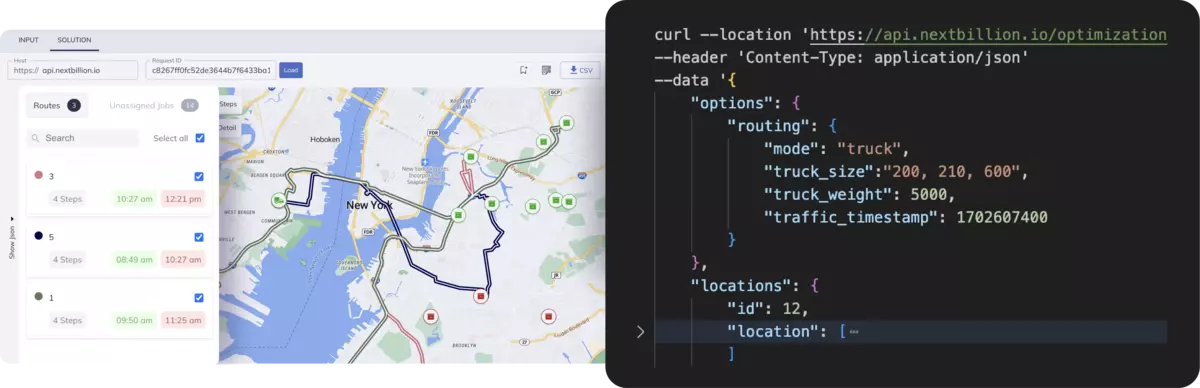
We offer a powerful routing service that can support large-scale, multi-stop fleet routes with a high degree of accuracy. Our solution allows taking advantage of state-of-the-art route optimization by combining real-time traffic information, personalized constraints, and high-performance APIs that can handle thousands of orders at the same time. This is why it is suitable to the business with a complex logistics network operated in many regions and in cases where scalability, speed, and accuracy play a pivotal role in ensuring consistent results.
Our APIs are highly customizable, enabling a business to adjust routing logic to meet certain business-specific operational requirements like the type of vehicles, delivery priorities, and service constraints. We have the geospatial feature of accurate distance calculation, route mapping, and navigation that is traffic-aware to make the route planning realistic and efficient. This allows organizations to match the system with their processes instead of adopting strict and generalized solutions.
We make dynamic route optimization possible by constantly integrating live data like traffic conditions, order updates, and driver status. Our platform allows dispatch teams to monitor performance and react to disruptions in real-time through dashboards and operational visibility, which is based on real-time tracking. This guarantees that the routes are optimized during execution to enhance efficiency, reliability, and general control of operations.
A route generator converts complex logistics into organized, optimized execution by integrating data, constraints, and smart algorithms. In the case of multi-stop fleets, it is not only a planning tool but also a decision engine that promotes efficiency, scalability, and reliability. With increasing demands on delivery speeds and operational complexity, it is necessary to adopt a powerful route generator to ensure performance, cost management, and a consistent customer experience.
Optimize your fleet operations at scale with NextBillion.ai’s powerful, customizable route optimization APIs. Connect with us to know more.
A route generator is a software that generates optimal multi-stop delivery routes based on order data, constraints, and geospatial inputs.
It saves time on travelling, minimizes the amount of fuel that is used, and maximizes the use of vehicles by creating the most efficient paths based on the real world conditions.
VRP-based algorithms, such as heuristics, metaheuristic algorithms such as genetic algorithms, and AI-based optimization algorithms are used by route generators.
Yes, current route generators can be rerouted dynamically with traffic updates, delays, cancellations, and additions of new orders.
They facilitate scalable, precise, and economical planning of complicated operations with numerous stops, time limits, and fleet variations.
Bhavisha Bhatia is a Computer Science graduate with a passion for writing technical blogs that make complex technical concepts engaging and easy to understand. She is intrigued by the technological developments shaping the course of the world and the beautiful nature around us.