


Route Optimization API
Optimize routing, task allocation and dispatch
Distance Matrix API
Calculate accurate ETAs, distances and directions
Directions API
Compute routes between two locations
Navigation API & SDK
Turn by Turn Instructions for Drivers & Technicians
Route Optimization Software
Plan optimized routes with 50+ Constraints
Product Demos
See NextBillion.ai APIs & SDKs In action
Location Reasoning AI
Help your AI agents answer location-based questions
AI Route Optimization
Learns from Your Fleet’s Past Performance
Platform Overview
Learn about how Nextbillion.ai's platform is designed
On-Premise Deployments
Take Full Control of Your Maps and Routing
About Us
Our story, vision
and mission
Contact Us
Reach out to us for any product- or media-related queries
Write to us at

Table of Contents
Consider a commercial driver sitting behind the wheel for nearly an entire day, navigating traffic, highways, and multiple stop points. Even if the driver is experienced, hours of driving can gradually cause fatigue, affecting concentration, reaction time, and decision-making. In such scenarios, even a single wrong turn can disrupt delivery schedules, and a few seconds of sleep can lead to major accidents.
According to a study, around 14.5% of US drivers have fallen asleep at the wheel, and 2% have experienced fatigue- or drowsiness-related crashes. Thus, for fleet operators, while it is important to optimize routes and improve vehicle utilization, it is equally important to adhere to regulations like hours of service (HOS) to keep commercial transportation safe, compliant, and efficient.
HOS regulations establish limits on driving time and require mandatory breaks or rest periods, which can help reduce driver fatigue and improve road safety. This guide breaks down what hours of service (HOS) is and how it helps shape safe, optimized modern transportation operations.
Hours of service, or HOS, refers to the official rules and regulations set by the government. These rules govern and decide the maximum time commercial drivers are allowed to drive a vehicle. Thus, ensuring that drivers get sufficient rest periods to prevent fatigue and maintain road safety.
To prevent drivers from remaining on the road 24/7, the hours of service rules define:
The HOS rules ensure that drivers get enough rest and break periods. Hence, they remain alert while driving heavy vehicles for long hours, thereby minimizing the likelihood of fatigue-related accidents.

Long-haul trucking often involves tight delivery schedules, long periods on the road, and work that may extend well beyond a typical working day. With no clear limits on driving and on-duty time, drivers can end up working through fatigue simply to keep a trip on schedule.
The problem is that fatigue does more than make a driver feel tired. As sleep is missed and working hours extend, drivers’ attention, alertness, reaction time, and decision-making all take a dip. This can create serious consequences on the road:
As per a 2016 research conducted by the Federal Motor Carrier Safety Administration (FMCSA), increase in the number of driving hours increases the number of safety critical events. However, driving breaks decrease the risk in the hour after a break.
Thus, instead of viewing hours of service as a compliance burden, transportation companies consider HOS as an important component of fleet management.
Many transportation companies hold the misconception that hours-of-service requirements apply only to long-haul truck drivers. However, in reality, the HOS regulations apply to multiple commercial vehicle operators, including:
Additionally, the specific application of the hours-of-service regulations varies by jurisdiction. For example, according to the FMCSA, the HOS rules apply to commercial motor vehicles weighing 10,001 pounds or more.
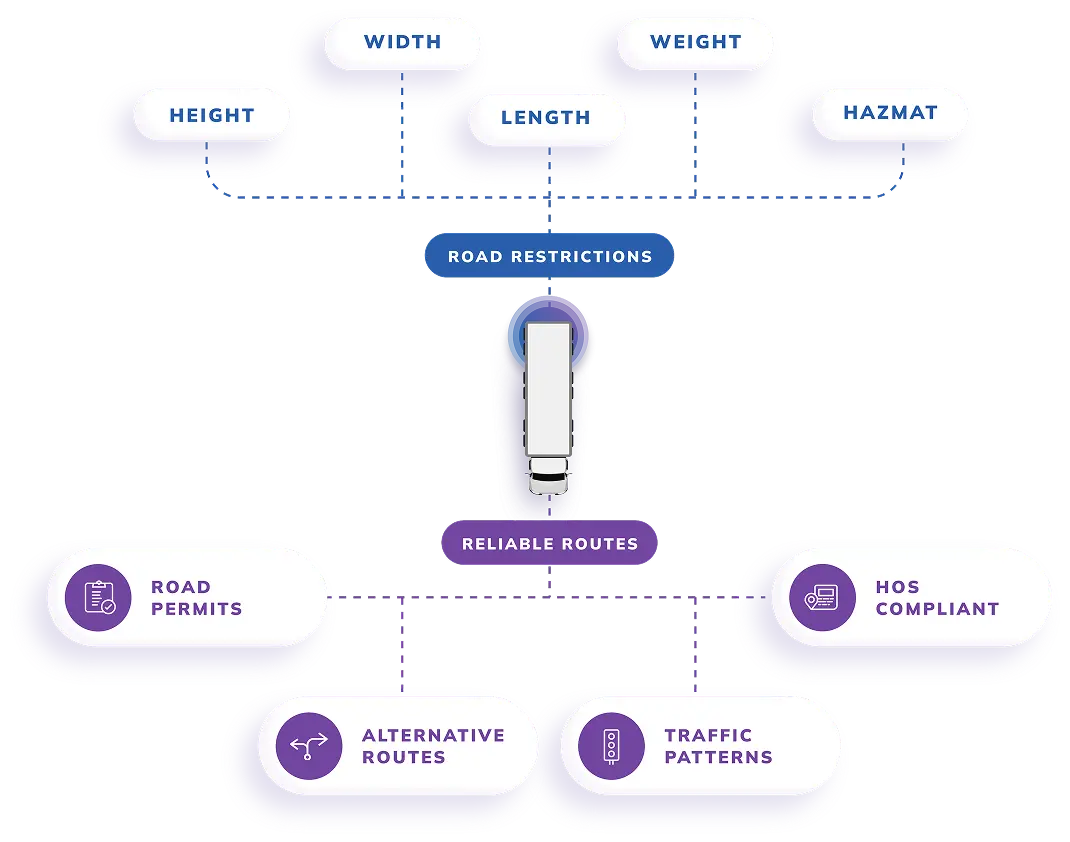
The core components of the hours of service are designed around the same core concepts for almost every jurisdiction:
The driving time is defined as the actual time the driver is operating the commercial vehicle. Typically, every jurisdiction specifies the driving time and the compulsory rest periods for commercial motor vehicle drivers.
These driving and resting hours allow drivers to operate without fatigue for extended periods while maintaining performance.
The on-duty time for commercial drivers is more than just about driving the vehicle. It also involves several activities such as:
Even when the driver is not driving, these activities are included in the total working hours under hours-of-service regulations.
Taking regular breaks is an important part of the hours-of-service regulations. The rest periods ensure the driver is physically and mentally fit to continue the long-distance journey. Depending on the jurisdiction, the regulations may specify:
According to studies, a rest period after 11 hours of driving can reduce the likelihood of a crash by 68%.
HOS regulations include certain exemptions and special provisions that give drivers flexibility in specific operating conditions. For example:
Hours of service do not typically follow a global standard. Every jurisdiction in each country develops its own regulations based on local road conditions, transportation infrastructure, labor laws, and safety priorities.
The following table shows the difference in the on-duty hours, driving time, and break periods across the United States, the European Union, Canada, and Australia:
While these countries share the common objective of reducing driver fatigue and ensuring safety, each follows a distinct HOS framework.
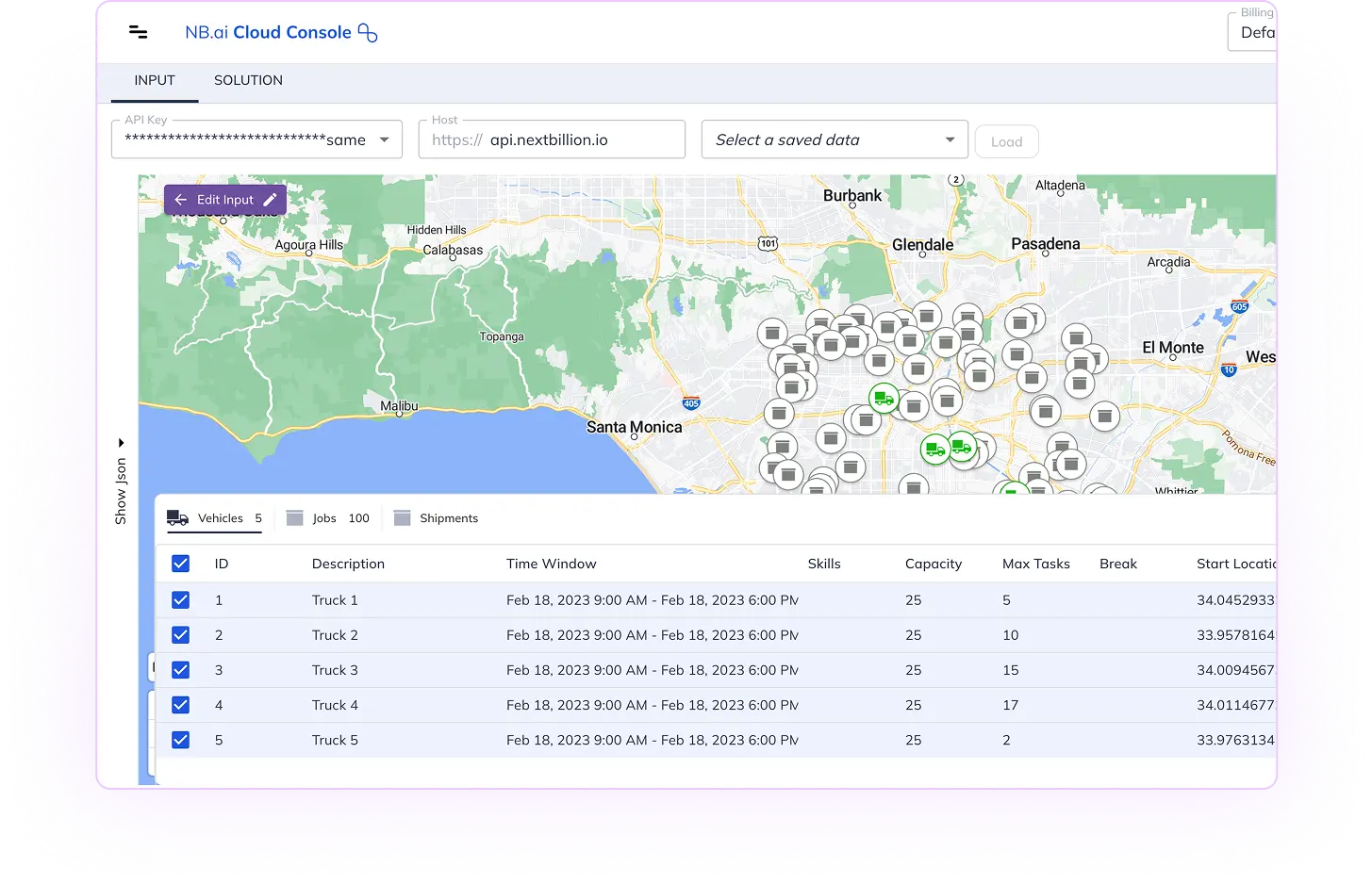
HOS rules don’t only affect how long a driver can stay behind the wheel. They also influence how fleet managers plan routes, schedule deliveries, assign drivers, and handle unexpected delays.
When a fleet plans around a driver’s available hours from the beginning, it becomes easier to build schedules that are realistic and avoid last-minute changes. Here’s how Hours of Service impacts fleet operations:
More Realistic Route Planning
A route that looks achievable based on mileage may not be achievable within the driver’s remaining HOS. Dispatchers therefore need to consider available driving hours, mandatory breaks, expected traffic, loading and unloading time, and the driver’s destination when planning the trip.
For longer routes, this may mean building a planned rest stop or overnight break into the schedule rather than treating it as something the driver will figure out during the trip.
Delivery Windows Match HOS Availability
HOS can directly affect the delivery time a dispatcher can promise. For example, if a driver has limited hours remaining, assigning another long-haul load simply because the truck is nearby may push the trip beyond the driver’s available driving window. Checking HOS availability before assigning the load helps dispatchers set delivery windows that reflect the driver’s actual capacity.
Driver Assignment Becomes a Time-Based Decision
For urgent or emergency delivered, the closest driver may not necessarily be the best driver. With Hours of Service in practice, dispatchers will look at how many driving hours the driver has remaining and when those hours reset. A driver with enough remaining hours may be able to complete the trip without interruption, while another driver at the same location may need to stop for a required rest period before completing it.
Delays Can Change the Feasibility of a Trip
HOS also makes unexpected delays more important to fleet operations. Time lost to congestion, bad weather, loading delays, or vehicle problems can reduce the hours available for the rest of the trip. If a delay puts the driver at risk of reaching their HOS limit before the destination, the dispatcher may need to adjust the ETA, arrange a different driver, reschedule the delivery, or modify the load plan. HOS-aware dispatching therefore allows the fleet to react to delays before they become compliance issues.
HOS Data Helps Dispatchers Make Better Decisions
When driver duty status and remaining hours are available through an ELD or fleet-management system, dispatchers can use that information when assigning loads and planning routes. ELDs record drivers’ duty status and make HOS records available for review, giving carriers a more reliable view of driver availability than manual estimates alone.
Breaks Become a Part of the Route
Rest is not simply time lost from a delivery schedule; it is something that has to be incorporated into the trip. For example, under the U.S. property-carrier rules, a driver must take a 30-minute break after accumulating 8 hours of driving without a qualifying interruption. The break requirement therefore needs to be considered when estimating how much time a driver can spend actually moving the vehicle.
HOS Limits Can Affect the Fleet Capacity
A truck may be available, but that does not necessarily mean it can immediately take another load. If its assigned driver has reached the applicable driving or on-duty limit, the fleet needs to wait, use another qualified driver, or adjust the schedule.
In other words, HOS can turn driver availability into a capacity constraint. Fleet managers have to consider both vehicle availability and driver-hour availability when deciding how much work the fleet can take on.
Positive Effects | Negative Effects |
More realistic route planning and delivery schedules | Longer trip times due to required rest and delays can disrupt planned trips |
Better driver and load assignment | Greater difficulty meeting tight delivery windows |
Better visibility into driver hours | Nearest driver may not always be available |
Reduced fatigue-related risks | Continuous HOS monitoring is required |
Earlier identification of compliance issues | Loads may need to be reassigned or rescheduled |
Better driver and vehicle utilization | Limits the amount of work a driver or vehicle can handle |
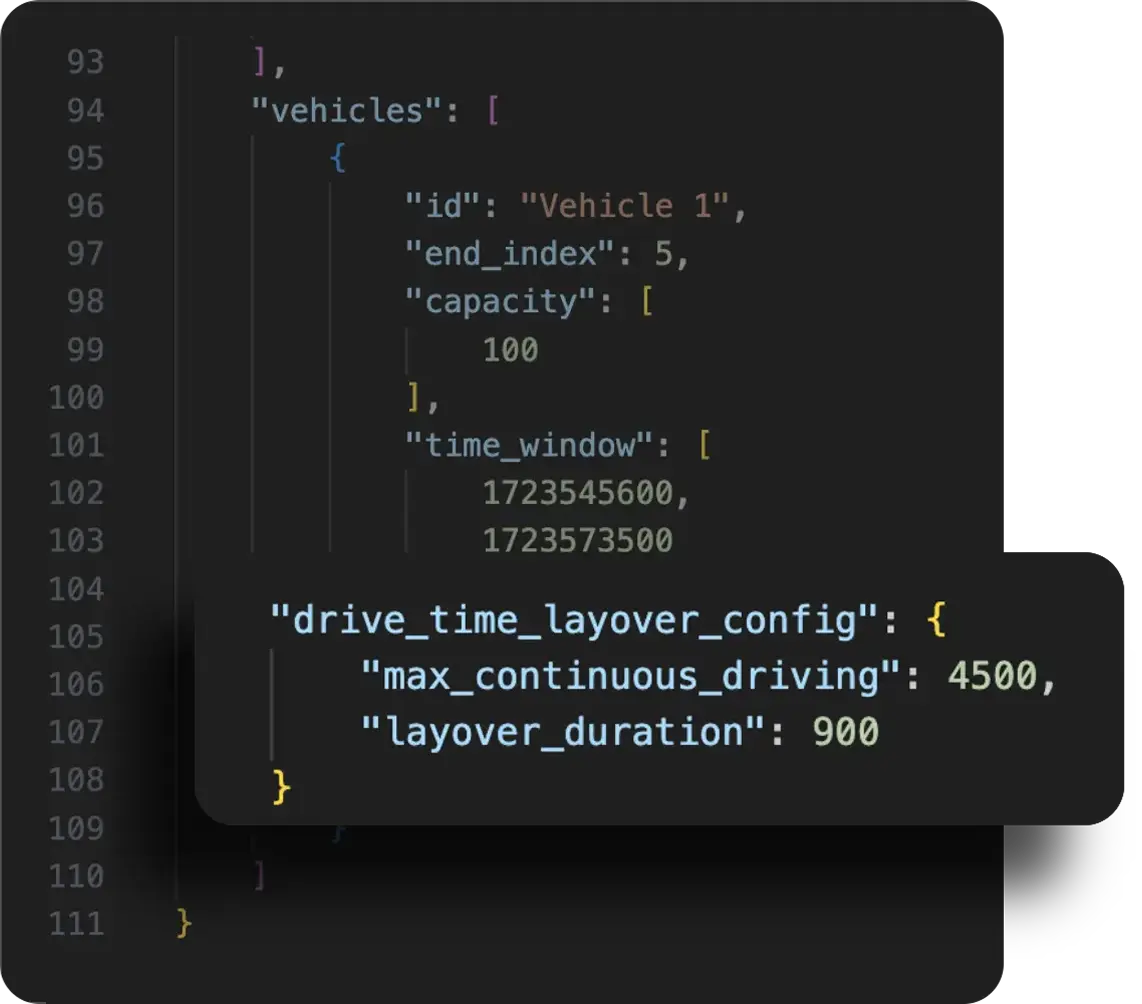
Managing HOS becomes considerably harder when driver hours sit separately from the information used to plan routes. A dispatcher may know how much time a driver has left, for example, but still need to work out whether the assigned route, stops, and delivery commitments fit within that window.
Technology can connect these two sides of fleet operations. ELDs provide a digital record of driver activity and duty status, while fleet management and routing platforms can use relevant driver-hour information alongside route and vehicle data. This allows HOS requirements to become part of the planning process rather than something dispatchers have to check after a route has already been created.
For example, when planning a multi-stop delivery, a routing system can consider factors such as:
This becomes particularly important when a route changes during the day. A traffic delay or longer-than-expected stop can reduce the time available for the remaining deliveries. With HOS information available alongside route data, dispatchers can determine whether the existing plan is still workable or whether the remaining stops need to be rearranged, rescheduled, or assigned to another driver.
NextBillion.ai can support this kind of HOS-aware route planning by allowing fleet operators to incorporate driver and operational constraints into route optimisation. Instead of treating driver hours as a separate compliance calculation, the routing process can account for those constraints while determining how a trip should be structured.
The result isn’t simply a route that is geographically efficient. It is a route that takes the driver’s available time and the fleet’s operational requirements into account at the same time.
With commercial transportation becoming increasingly data-driven, hours of service continues to remain an important consideration that helps shape fleet operations. Since HOS plays an important role in optimizing routes, scheduling, enforcing mandatory rest or break periods, limiting driving time, and ensuring overall road and driver safety for commercial fleet management and transportation companies, HOS should be considered more than just a compliance requirement.
Thus, understanding how HOS can help create well-planned routes and reduce fatigue-related risks is the first step toward improved fleet planning and optimization.
Further, as your transportation and fleet management requirements grow, using the right technologies, such as ELDs, GPS trackers, AI assistance, and real-time visibility, can help create more predictable, safer, and smarter transportation workflows.
If your fleet and management company are meeting delivery schedules at the expense of regulatory compliance and driver safety, you need a platform that helps you optimize routes without compromising operations or safety.
Next Billion.ai offers an intelligent route optimization platform that can help plan drivers’ schedules, routing preferences, mandatory stops or rest periods, and delivery windows across every workflow.
Request a demo to understand how you can build safer and more compliant fleet operations with the Next Billion.ai platform.
Hours of service is defined as the maximum time for which a commercial driver is allowed to drive or work during the on-duty hours.
While the overall objective of the HOS rules in every jurisdiction or country might be the same, which is to limit the driving time and ensure sufficient rest periods for the drivers, the timelines for driving hours, break periods, and total on-duty and off-duty hours may differ by country.
No, not always. HOS also applies to long-haul drivers of trucks, buses, and other passenger or fleet-movement vehicles.
Some jurisdictions may allow extended driving hours under specific circumstances such as unexpected weather conditions, traffic congestion, or when the fleet carries passengers or hazardous goods.
To monitor or track hours of service, fleet management companies can use:
If a company violates HOS rules, it might:
Hours of service limit the time a driver is permitted to operate the vehicle. It also impacts mandatory break periods, delivery window scheduling, total driving hours, and the creation of routes that ensure scheduled routes are efficient and compliant.
Bhavisha Bhatia is a Computer Science graduate with a passion for writing technical blogs that make complex technical concepts engaging and easy to understand. She is intrigued by the technological developments shaping the course of the world and the beautiful nature around us.