


Route Optimization API
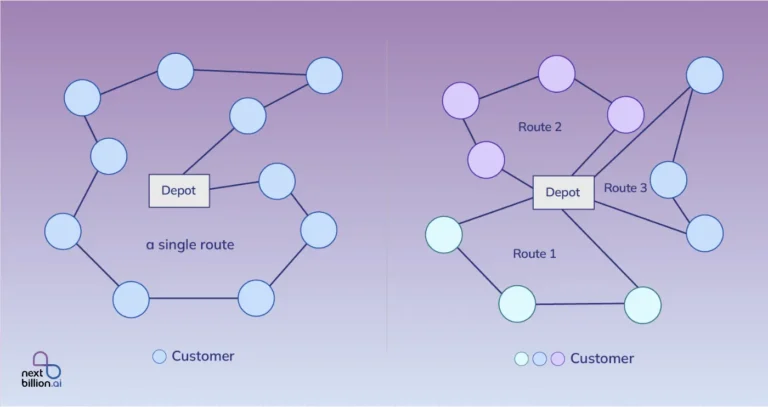
Optimize routing, task allocation and dispatch
Distance Matrix API
Calculate accurate ETAs, distances and directions
Directions API
Compute routes between two locations
Navigation API & SDK
Turn by Turn Instructions for Drivers & Technicians
Route Optimization Software
Plan optimized routes with 50+ Constraints
Product Demos
See NextBillion.ai APIs & SDKs In action
AI Route Optimization
Learns from Your Fleet’s Past Performance
Platform Overview
Learn about how Nextbillion.ai's platform is designed
Road Editor App
Private Routing Preferences For Custom Routing
On-Premise Deployments
Take Full Control of Your Maps and Routing
About Us
Our story, vision
and mission
Contact Us
Reach out to us for any product- or media-related queries
Write to us at

Table of Contents
What if the route that looks cheaper on the map is actually costing you more with every delivery? Plenty of logistics groups will automatically go with routes that don’t have tolls, thinking this lowers spending, but things are much more involved than that. Not using toll roads can lead to higher fuel consumption, longer delivery times, reduced driver productivity, and hidden operational costs that gradually reduce profits. In last-mile delivery, route decisions are not just about avoiding toll fees; they are about balancing speed, efficiency, and total delivery cost.
Read the full blog to understand how toll-free routing truly impacts delivery cost, ETA accuracy, and fuel efficiency, and when avoiding tolls helps or hurts your logistics performance.
Did you know?

Here is how toll-free routing reshapes delivery economics beyond the obvious savings.
Removal of tolls does not take the cost out of the delivery equation. It allocates that expense through fuel consumption, driver time, and vehicle depreciation. The toll highways are normally designed to carry continuous traffic, increased speed of cruising, and reduced stops. Vehicles are redirected to secondary roads with lower speed limits, intersections, and higher congestion. This adds more idle time, acceleration cycles, and fuel consumption. These micro-inefficiencies add up to quantifiable operating costs in a fleet, which in many cases is greater than the saved fixed tolls.
Toll-free routing presents more variability in the travel conditions, which is commonly called route entropy. Unlike controlled-access highways, arterial roads are exposed to signal delays, pedestrian movement, local traffic, and unpredictable bottlenecks. This uncertainty decreases reliability in the schedules, and it compels the planners to introduce buffer time in the delivery windows. The outcome is a reduced number of completed stops per vehicle per shift, reduced asset utilization, and high cost per successful delivery.
Logistics fleet fuel models show peak efficiency when vehicles operate at steady, consistent speeds. Toll avoidance shifts driving patterns to stop-and-go conditions with repeated braking and acceleration. Engines do not work within their optimum torque range, and they use more liters per kilometer. This not only raises the cost of fuel, but also shortens the maintenance cycle of the brakes, transmissions, and tires, indirectly increasing the total cost of ownership.
The wages of drivers are time-constrained and not distance-constrained. Toll-free routes increase the cost of labor per parcel even when there is a minor increase in the mileage. Increased transit times also limit the Hours-of-Service regulations, which limit the number of hours available to make more deliveries. This results in overtime payouts or the necessity of rolling out more vehicles to service levels, which increases operational spending.
Optimization Routing engines based on the least-cost path often do not look at system-wide efficiency metrics, like delivery density, turnaround time, and fleet throughput. The current logistics optimization models consider tolls as a variable that can be controlled in a multi-objective function that balances fuel, labor, service-level agreements, and vehicle utilization. In the event that tolls are eliminated as a routing choice, the solution space is constrained, and the optimizer is less efficient in producing globally efficient routes and more likely to produce suboptimal network performance.
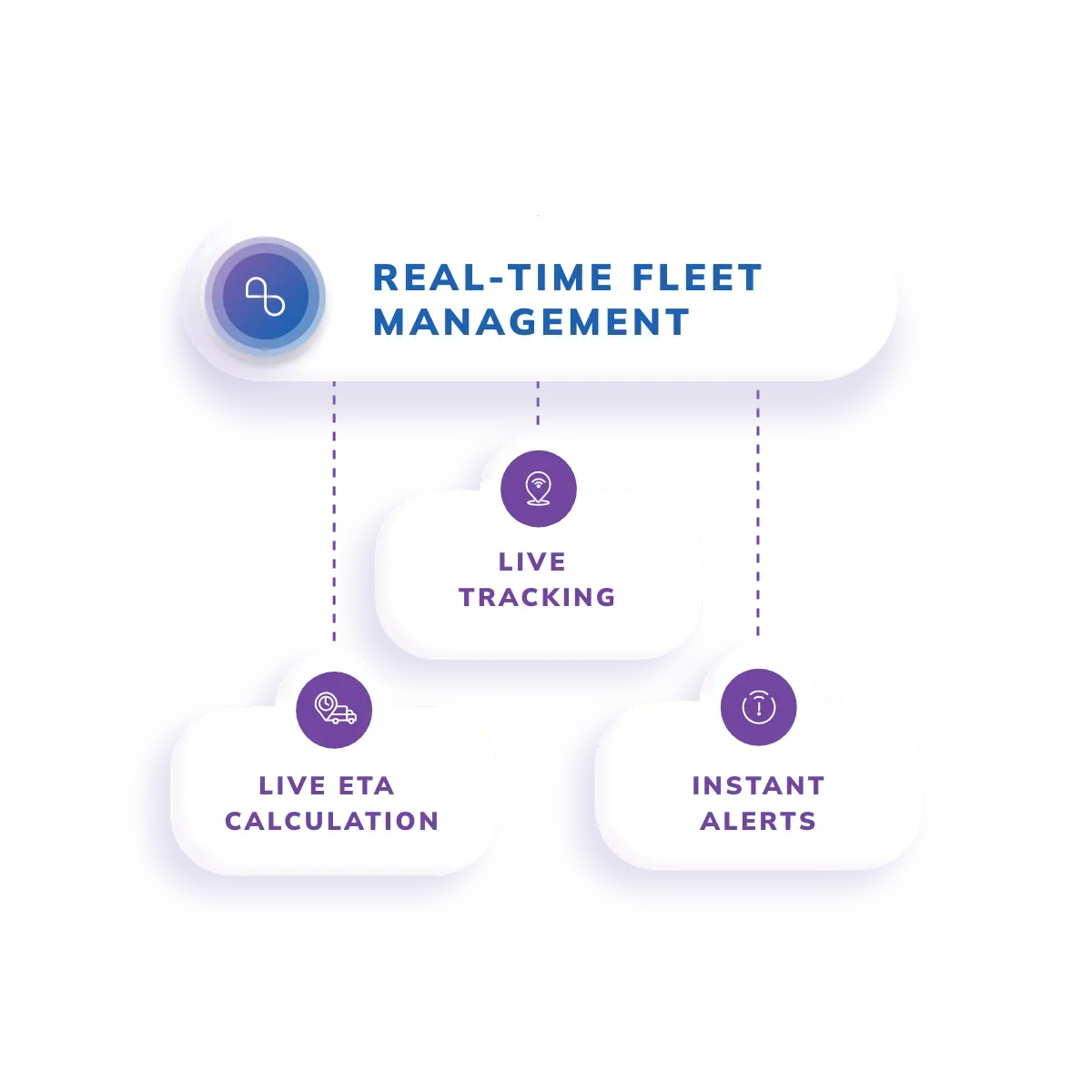
Here is how avoiding toll roads introduces variability that directly affects delivery time accuracy and schedule reliability:
Toll-free routes are normally based on arterial and collector roads that are controlled by traffic lights, pedestrian crossings, and access points. At any control point, unpredictable delays are introduced, meaning travel time is no longer fixed but varies based on real-world conditions. These interruptions, unlike controlled-access toll corridors that are designed for continuous flow, create cumulative delays that reduce the accuracy of the Estimated Time of Arrival (ETA), especially during peak urban periods.
The logistics systems should also address the unreliable travelling conditions by providing buffer time to the route schedules. This is referred to as schedule padding, which is required to ensure that the commitments of delivering on time are met, but this lowers the efficiency of operations. In the absence of toll roads, ETA models need higher bands of variance and tend to widen predicted delivery windows by 15-40 percent to accommodate uncertainty due to congestion and slowdowns in local areas.
Modern dispatch systems rely on consistent traffic-speed data to dynamically calculate ETAs. Toll highways are more stable in terms of telemetry with fewer anomalies, which allows algorithms to recalibrate correctly. Random stop times, unregulated parking practices and micro-congestion phenomena impose noise on GPS-obtained data in toll-free settings. This undermines predictive models and leads to the recalculation of ETA more often, which causes operational instability and difficulties in communication with customers.
ETA in the context of last-mile logistics is not confined to a single destination, but spreads across a sequential series of destinations. Delay amplification occurs when small early delays propagate through the entire route. A five-minute difference at the first stop can result in 25 to 40 minutes of cumulative drift at the last stop, especially when service times and search times of parking are strongly coupled with the accuracy of arrival.
Many logistics operations operate within tight delivery time constraints in connection with Service Level Agreements (SLAs). Toll-free routing also limits the capability of the planner to ensure arrival within these contractual windows since the predictability of travel time is lost. To prevent the SLA violations, operators will have to either add more vehicles, redesign delivery clusters, or accept broader customer time windows, all of which will either add cost or decrease service quality.
Here is the detailed impact of toll-free routing on fuel consumption across delivery operations:
Avoiding toll roads significantly changes fuel consumption because vehicles move from steady highway driving to stop-and-go urban traffic conditions. Internal combustion engines are most fuel-efficient at steady speeds with minimal braking or acceleration. Toll-free routes cause frequent deceleration, inactivity at crossroads, and re-acceleration cycles, all of which accelerate the frequency of fuel injection but decrease the efficiency of combustion per kilometer covered.
Another major factor behind higher fuel consumption is increased route distance caused by indirect road networks. Toll highways are usually structured as direct linkages among business districts, whereas toll-free options are based on the older municipal designs using indirect geometry, service lanes, and access diversion. An increase in travel distance can lead to a disproportionate rise in fuel consumption because inefficient driving patterns compound over a longer route.
Stop-and-go mobility also induces vehicles to operate in low gear operations for a long time. When working in low gears, engine revolutions per minute (RPM) are high, leading to high fuel consumption with respect to the distance covered. This leads to the increased liters-per-100-kilometer rates in logistics fleets in comparison with highway corridors, where transmissions become stabilized in higher gears and engines work in their most efficient torque range.
Idle time also increases the amount of fuel waste, which is a hidden yet important factor in toll-free environments. Vehicles stuck at lights, in traffic, or near delivery zones consume fuel without moving. Research in fleet telematics has repeatedly demonstrated that urban idling may contribute between 8 per cent and 15 per cent of total fuel use in the last-mile operations, which is a cost element that is predominantly not available in the controlled-access toll road context.
Increased fuel consumption not only increases direct energy costs but also increases refueling frequency, interrupts route continuity, and expands the level of emissions. For logistics operators with large fleets, even a marginal increase of 0.05 to 0.08 liter per kilometer can translate into thousands of additional fuel dollars annually, making toll avoidance an energy trade-off rather than a true cost-saving strategy.
Here are other notable impacts of toll-free routing that extend beyond cost, ETA, and fuel efficiency:
Toll-free routes subject vehicles to more severe operating conditions as characterized by rough roads, frequent braking, smaller turning radius, and use of the clutch due to congestion. Such conditions cause greater mechanical strain on braking systems, suspension, and drives. Urban routing may reduce preventive maintenance frequency and unexpected downtime in the fleet by 10-20 percent as compared to highway driving, reducing maintenance intervals.
The toll-free routing does not allow efficient scaling of operations as the volume of delivery increases. High-capacity corridors are built to accommodate the predictable speed of logistics traffic so that a planner can cluster deliveries and achieve maximum route density. Surface-road routing is causing delivery zones to be broken up, and dispatchers are having to put more vehicles on the road to cover the same areas, which is raising fleet size requirements without corresponding revenue increases.
Stops and go driving, prolonged idling, and increased route distance directly increase the amount of greenhouse gas emissions per shipment. When route design is dominated by toll-free routing, operators of logistics firms that monitor sustainability KPIs tend to see an increase in the number of grams of CO2 per kilometer. This may make ESG reporting, urban emissions compliance, and green logistics initiatives complex, particularly in areas with increasing environmental regulations.
Removing the toll roads decreases the number of high-performance paths that the optimization engines have. To achieve service reliability, planners have to balance by adding more constraints, scenario models, and manual overrides. This adds to the computational complexity of Vehicle Routing Problem (VRP) models, and might necessitate more frequent re-optimization to deal with fluctuations in local traffic conditions.
Unpredictable commuting time on the freeways causes logistics companies to expand delivery times in order to sustain timely performance indicators. Expansive windows lead to less accurate delivery, which influences customer satisfaction in the e-commerce, healthcare logistics, and food distribution industries, where predictability is paramount. In the long term, this variability undermines service differentiation and raises the number of unsuccessful delivery attempts.
Surface-road routing is more susceptible to construction work, slowdowns in school zones, municipal controls, and unofficial parking traffic jams. These localized disruptions may cause last-minute rerouting, unlike controlled-access highways, which provide redundancy and controlled incident response. It further adds additional operational risk and frequency of dispatch intervention.
To conclude, toll-free routing is not merely a trade-off in terms of finances. It transforms the maintenance demand, scalability, sustainability metrics, optimization complexity, and customer experience. In the case of large-scale logistics systems, the decisions to pay a toll have to be considered as a network-wide performance strategy and not a mere cost-avoidance strategy.
Below are the operational cost differences observed when deliveries shift from tolled highways to toll-free surface routes:
Metric | Toll Route | Toll-Free Route | Operational Impact |
Distance | 42 km | 55 km | Longer routing increases fuel and time exposure |
Avg. Speed | 65 km/h | 38 km/h | Slower movement reduces delivery throughput |
Travel Time | 39 min | 87 min | Higher driver time per trip raises labor costs |
Fuel Use | 10.1 L | 17.0 L | Stop-and-go driving increases fuel burn |
Fuel Cost | $12.63 | $21.25 | ~68% higher energy spend |
Driver Cost | $14.30 | $31.90 | Time-based wages nearly double |
Vehicle Wear | $4.20 | $7.85 | More braking and rough roads increase maintenance |
Fleet Utilization | 2.6 routes/shift | 1.4 routes/shift | Fewer trips per vehicle lower productivity |
Missed Stops | 0-2 | 6-10 | Reduced delivery density impacts revenue |
Toll Fee | $8.50 | $0.00 | Direct saving but offset by variable costs |
Total Cost/Route | $39.63 | $61.00 | ~54% higher without toll usage |
Cost per Stop | $1.80 | $3.81 |
Below is a decision framework to help logistics teams determine when toll routes deliver better operational value than toll-free alternatives:
Operational Scenario | Use Toll Route | Use Toll-Free Route | Reasoning |
High delivery density (20+ stops per route) | Recommended | Avoid | Faster corridors increase stop completion rate and fleet productivity. |
Time-window or SLA-driven deliveries | Recommended | Avoid | Predictable travel time reduces the risk of SLA violations. |
Peak urban congestion hours | Recommended | Avoid | Controlled-access roads maintain flow and stabilize ETA accuracy. |
Low-priority or flexible deliveries | Optional | Suitable | Time sensitivity is low, so cost trade-offs can be tolerated. |
Rural or low-traffic regions | Case-by-case | Often viable | Minimal congestion reduces the performance advantage of toll roads. |
Fuel-cost-sensitive operations | Often better | Risky | Steady-speed driving lowers per-kilometer fuel consumption despite toll fees. |
Small fleets with limited vehicles | Recommended | Avoid | Faster turnaround prevents underutilization of limited assets. |
Sustainability-focused logistics | Preferred | Avoid | Reduced idling and shorter transit distances lower emissions per delivery. |
Exploratory or non-urgent backhaul trips | Not required | Acceptable | Cost optimization may outweigh speed benefits. |

Here is a detailed approach to balancing toll usage with operational efficiency in delivery routing:
Instead of using a default rule to avoid tolls, logistics teams must use cost-sensitive routing models that consider tolls as a single variable of total operating cost. Planners can determine weighted cost functions that comprise toll charges, fuel usage, driver salaries, and delivery precedence. This helps routing systems determine when paying a toll can actually lower the total trip cost by saving time, using less fuel, and allowing more deliveries per route.
The current delivery networks have to be optimized not only by the shortest-path logic. Multi-objective routing models are expected to be able to achieve a balance between ETA compliance, cost of operation, and fleet utilization. Using toll roads as a performance enabler and not as an expense per se will assist in keeping delivery windows tighter and ensuring that the number of completed stops per vehicle is maximized.
Not all routes benefit equally from toll usage. A toll corridor in a busy metro-region can save a lot of time, whereas in a low-traffic area, it can contribute very little value. Companies should implement region-based routing policies that consider congestion trends, time of day, vehicle type, and service-level commitments. Such selectivity is to make sure that the tools are applied in areas where they will provide quantifiable operational value.
The choices of static routing are seldom valid in the conditions of real-life traffic variability. By combining real-time traffic telemetry and execution feedback, the dispatch systems can dynamically assess the results of using tolled or toll-free paths based on their performance in the field. Recalibration should be done continuously to enhance the accuracy of ETA, minimize idle time, and eliminate delay propagation between multi-stop delivery chains.
The best approach is to match routing rationality with real business economics as opposed to map-based assumptions. Cost models to be designed by the organizations should include depreciation of the vehicles, penalties for the services, the risk of missed delivery, and sustainability objectives. Integrating such operational facts in routing choices puts the emphasis on toll avoidance on the overall network efficiency and profitability.
Logistics teams should validate routing policies through simulation-based planning to understand real-world trade-offs. NextBillion.ai allows scenario modeling in which planners are able to compare tolled and toll-free settings based on historical traffic, delivery density, and service-time data. This enables businesses to measure the effect on cost per stop, ETA variance, and fuel consumption prior to rolling out operations to minimize the risk of misaligning the strategy.
Routing cannot be conducted without customer commitments. With credible platforms like NextBillion.ai, the usage of the toll can be directly correlated with the SLA levels, and high-priority deliveries are sent via the accelerated corridors, whereas less important shipments take the cost-efficient routes. This SLA-conscious routing ensures that infrastructure choices support service reliability, not just transportation cost savings. It ultimately improves delivery predictability and enhances customer satisfaction.
Practically, the best strategy is not deciding on toll and toll-free roads. It is applying data-driven routing intelligence to decide when each of these options provides the most benefit in terms of operations.
The following is a closer look at how NextBillion.ai enables smarter toll and toll-free routing decisions through configurable optimization tools:
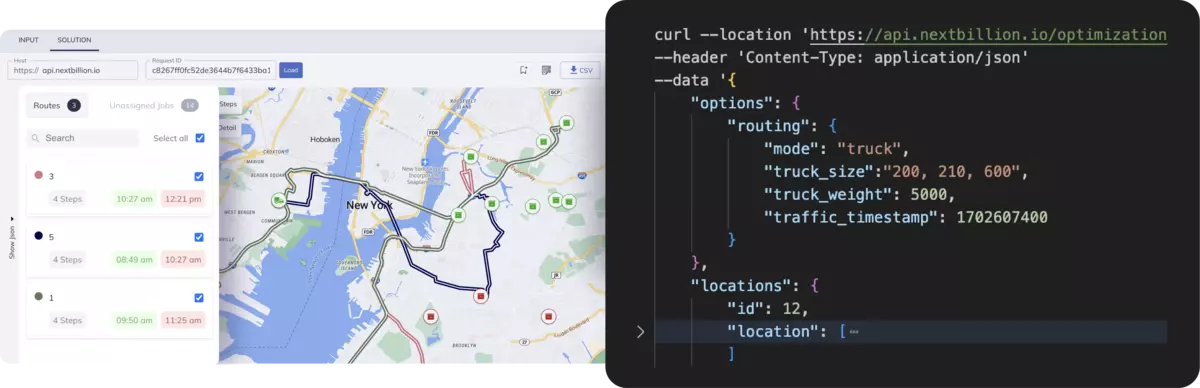
NextBillion offers APIs and routing infrastructure so that logistics teams can directly set up the treatment of toll roads in optimization processes. Tolls may be represented as variable costs rather than as a binary include or exclude variable. This enables the planners to trade off between time savings and operational cost, and make routing decisions that are consistent with the reality of operational economics of delivery, as opposed to the default of fixed navigation.
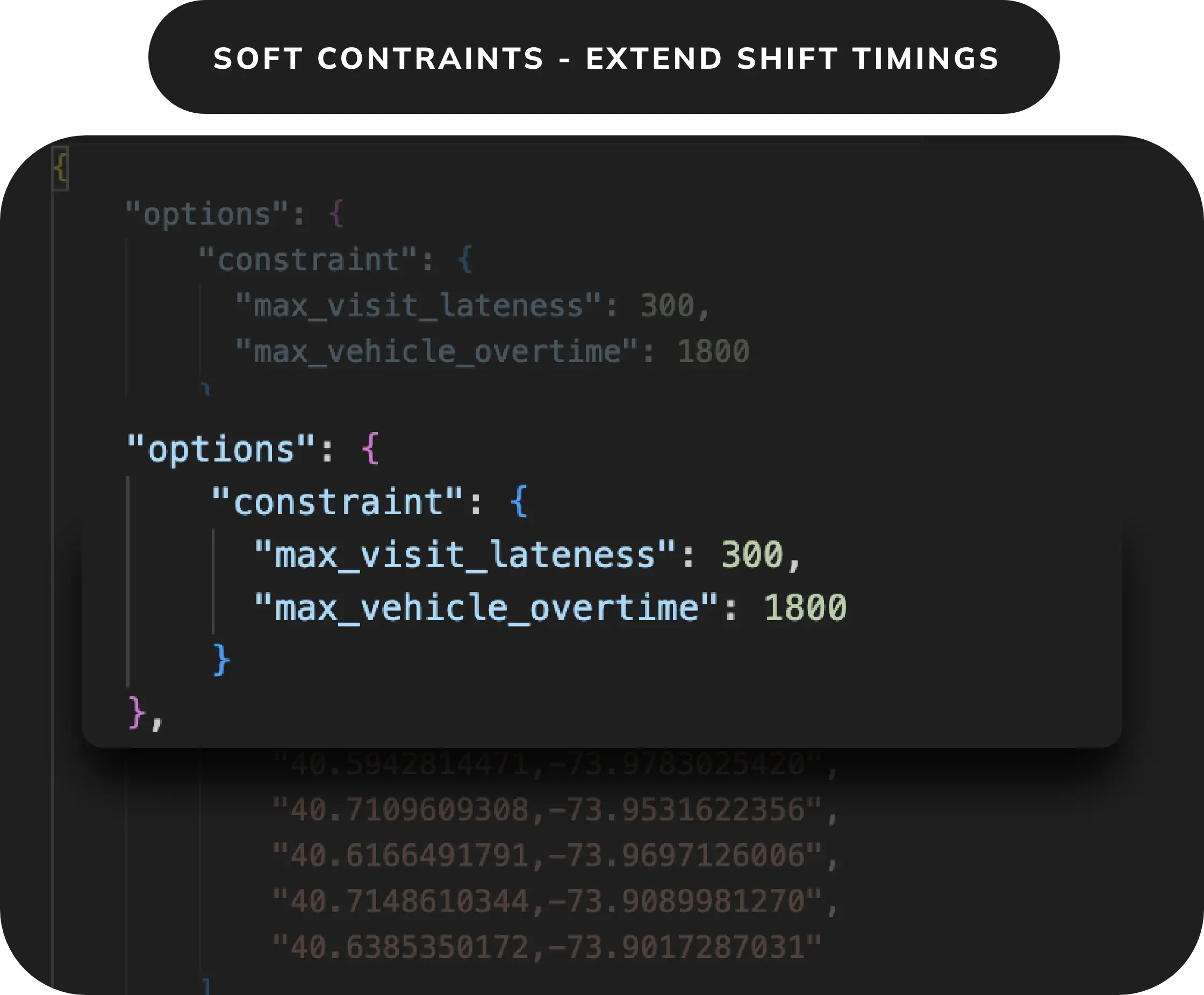
The platform is built to address the complex Vehicle Routing Problems (VRP) in which the toll usage should be considered in addition to the delivery time frames, vehicle capacities, driver shifts, and service-level targets. With the introduction of toll considerations into a more holistic constraint-based optimization model, organizations can produce routes that optimize fleet throughput and still guarantee predictable ETAs and managed cost structures.
NextBillion.ai allows teams to customize their cost formulations based on parameters of fuel rates, labor costs, distance penalties, and toll charges. These adjustable models enable businesses to experiment with various routing conditions, quantify their financial and operational effects, and keep improving strategies as network conditions change. This method will turn toll decisions that were previously made manually into data-driven optimization.
Toll-free routing might seem cost-effective at first, but its consequences on fuel consumption, delivery schedule, fleet efficiency, and service quality tend to raise the overall logistics cost. A more intelligent solution is not to avoid tolls, but to consider them as a part of a data-based routing strategy that considers speed, predictability, and operational efficiency of the whole delivery network.
Want to see how smarter routing can improve your logistics performance? Discover how NextBillion.ai can help you plan routes with greater accuracy, control, and efficiency.
No. Avoiding tolls can increase indirect costs such as fuel usage, driver time, and vehicle wear, which may outweigh the toll savings.
Toll roads are beneficial when they reduce travel time, improve delivery density, or help meet strict service-level commitments.
Faster, predictable corridors allow vehicles to complete more stops per shift, improving utilization and lowering cost per delivery.
Yes. Controlled-access roads reduce variability caused by signals and congestion, helping maintain more consistent arrival times.
The most effective approach is to analyze total trip economics including time, fuel, labor, and service impact rather than focusing only on the toll fee.
Bhavisha Bhatia is a Computer Science graduate with a passion for writing technical blogs that make complex technical concepts engaging and easy to understand. She is intrigued by the technological developments shaping the course of the world and the beautiful nature around us.