


Route Optimization API
Optimize routing, task allocation and dispatch
Distance Matrix API
Calculate accurate ETAs, distances and directions
Directions API
Compute routes between two locations
Navigation API & SDK
Turn by Turn Instructions for Drivers & Technicians
Route Optimization Software
Plan optimized routes with 50+ Constraints
Product Demos
See NextBillion.ai APIs & SDKs In action
AI Route Optimization
Learns from Your Fleet’s Past Performance
Platform Overview
Learn about how Nextbillion.ai's platform is designed
Road Editor App
Private Routing Preferences For Custom Routing
On-Premise Deployments
Take Full Control of Your Maps and Routing
About Us
Our story, vision
and mission
Contact Us
Reach out to us for any product- or media-related queries
Write to us at

Table of Contents
Compliance used to mean a filing cabinet. But now it means a data pipeline. Manual HOS logs still eat up roughly 4 to 8 hours of administrative work per driver, every single week, even at fleets that consider themselves organised. That time doesn’t disappear once a fleet buys an ELD, either. Hours of Service (HOS) compliance covers logging, dispatch, driver coaching, and route planning all at once, which means a single device rarely covers the whole job on its own.
FMCSA conducted 8,340 carrier investigations in 2025 alone, and has found more than 50,000 violations. Most of them are tied to documentation gaps that a properly connected system would have caught and closed months earlier. It happens when compliance still runs through spreadsheets, sticky notes, and someone’s memory of what happened last Tuesday.
So what does a fleet’s technology stack actually need to look like to make that scramble unnecessary? Let’s find out!
Paper logs and spreadsheets were never designed to handle the volume of data that modern fleets generate. A single driver produces dozens of duty-status changes, location pings, and time entries in an average shift. If you multiply that across a fleet of even modest size, it will turn manual tracking into a full-time job nobody actually has time for.
It is clear from missing log certifications, irregular time records and audit preparation that takes weeks of days. Digital compliance tools that automatically create audit documents can reduce that preparation time from three or four weeks to just two days. It shows less about the software being smart and more about how much room for error was in the system, from the start.

There’s a tendency to talk about HOS technology as if it’s one purchase decision. It isn’t. A working compliance setup is really a stack of five or six tools. Each handles a different problem, and the real question for a fleet is how well those layers talk to each other. Let’s take a look:
Fleets that buy these pieces one at a time, from different vendors, with no shared data layer, often end up with five logins and zero real integration. The value only shows up once the pieces are actually connected.
The biggest shift in compliance technology over the past couple of years isn’t a new gadget. It’s a change in timing. Old systems would inform the fleet manager of the trouble that had occurred. Modern systems can predict that trouble is soon going to happen, while there’s still time to resolve it.
ELDs remain the foundation, since they’re what most interstate carriers are legally required to run. They solve the recordkeeping half of the problem well, but on their own they’re a rearview mirror: accurate, but backwards-looking.
Predictive analytics sits on top of ELD and telematics data, scoring drivers and routes for fatigue risk, pattern violations, and likely trouble spots before they turn into a roadside citation. Real-time analytics dashboards have reached roughly 68% penetration across fleets in 2026, which suggests this layer has moved from nice-to-have to close to standard.
The newest addition to the stack is routing and dispatch software that treats HOS data as a constraint on the plan itself, not just a record to check afterwards. This is the layer most fleets are still missing, and it’s also where the biggest remaining gains tend to sit.

It’s easy to talk about compliance technology in the abstract. In practice, the value shows up as specific tasks that used to require a person and now mostly don’t. The list below covers the ones fleet managers mention most often once they’ve made the switch.
Most vendors in this space will claim to do all of the above. The differences show up in the details, and those details matter more once a fleet is locked into a contract. Here’s what to look for when you are evaluating the compliance technology:
Criteria | Why It Matters for a Fleet |
Integration depth | If compliance data is made available to dispatch and routing |
Real-time alerting | If risks are detected either before or after a violation |
Predictive capability | If the technology helps avoid problems, rather than just recording them |
API access | If the solution can integrate with routing, TMS, or other technologies |
Scalability across vehicle types | if the technology is compatible with diverse fleets of trucks, vans, and field forces |

On paper, a compliance stack sounds complicated. In an actual shift, it plays out as a fairly simple chain of handoffs. Each system passes information to the next one automatically. Here’s what that sequence looks like once the pieces are properly connected.
↓ Driver clocks on for the shift
↓ ELD begins logging duty status automatically
↓ Telematics feeds live location and vehicle condition data
↓ Real-time fatigue scoring and violation risks are scored using predictive analytics.
↓ Legal hours remaining are checked before dispatching the next load.
↓ Stop and break times are routed around the legal hours remaining.
↓ Conditions that have changed during the shift trigger alerts.
↓ Route is adjusted; new plan is sent to driver.
Compliance log is recorded in audit-ready format.
Here are some scenarios showing what the same set of tools looks like across a few different kinds of operations, each with its own version of the compliance problem.
Collection routes run early, repetitive, and tightly timed, which makes it easy to overlook how much on-duty time accumulates before a truck ever leaves the yard for its first stop. Automated HOS tracking paired with route sequencing catches that accumulated time before it turns into a mid-route violation, rather than after a supervisor reviews the week’s logs.
A brokerage doesn’t own the trucks. But it still needs visibility into carrier compliance to avoid liability exposure. Having an API to ELD/HOS information means that the broker will be able to identify a carrier on the verge of violating compliance before assigning him a load, instead of finding out after the shipment is already late.
High stop counts and tight delivery windows make it easy to under-plan for mandatory breaks. Predictive analytics paired with route planning flags routes that are likely to run a driver past a break threshold before the route is even dispatched, not after a driver has already skipped it.
Emergency callouts don’t respect a driver’s remaining hours, which makes real-time visibility critical. A connected stack shows dispatch exactly which crews have legal hours available before an emergency assignment goes out, instead of relying on a supervisor’s memory of who worked late the night before.
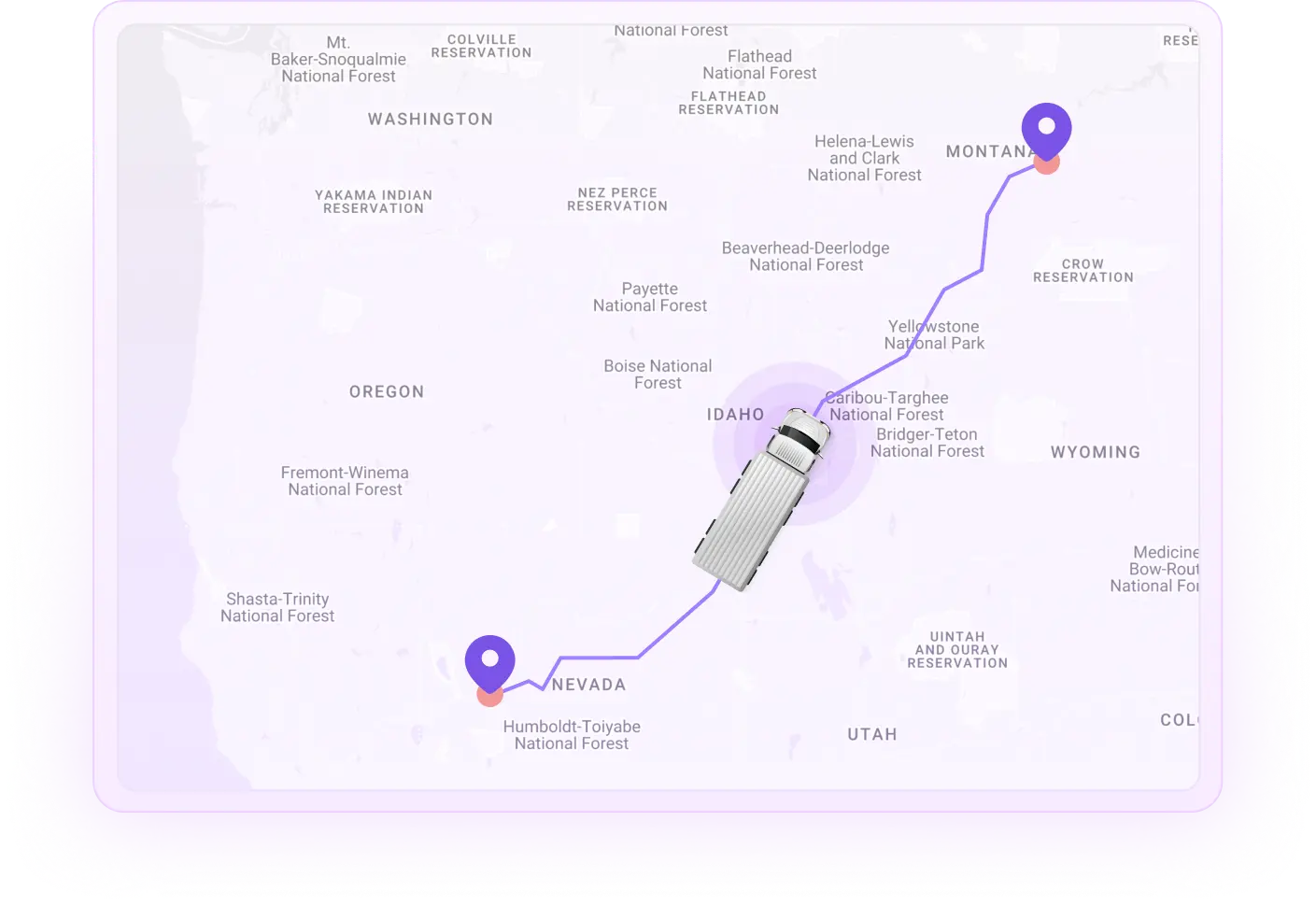
Most of the tools described above solve recordkeeping, monitoring, or coaching. Very few of them touch the actual plan a driver is asked to execute. That’s the gap NextBillion.ai is built to close, not as a replacement for an ELD or a telematics platform, but as the routing layer that turns their data into a plan a driver can legally finish.
Rather than asking a fleet to rip out its ELD or telematics provider, NextBillion.ai’s routing APIs are built to sit alongside them, pulling in HOS and vehicle data that already exists instead of asking for a second, parallel data source.
Remaining driver hours, mandatory breaks, and weekly caps can be treated as hard limits on a route, the same way delivery windows or vehicle capacity already are. That’s the difference between a system that reports a violation and one that prevents the route from creating it in the first place.
When conditions change mid-shift, whether that’s traffic, a delayed pickup, or an unplanned stop, routes can be recalculated in real time so the remaining plan still fits inside a driver’s legal hours.
This routing technology works equally well regardless of whether the fleet has long-haul trucks, regional delivery vans, or field service crews, an important consideration if a company is operating mixed fleets.
Being API-first means that the solution is designed to be easily integrated with a fleet’s existing TMS, dispatch, and ELD systems without having to make a full migration.
Each fleet manager has to justify this expense to someone who holds the purse strings, and “it reduces risk” does not end the discussion. The costs and benefits are quite tangible, even if they fluctuate with respect to fleet size and extent of integration. Here is a quick look at some of the numbers:
Pricing for this category of software commonly lands in the range of a few dollars per vehicle per month for core compliance monitoring, with predictive analytics and routing integration usually priced as an add-on layer rather than bundled in by default. A fleet running 50 vehicles at a modest per-vehicle rate might land around $150 a month for a baseline platform, before adding the analytics and routing layers described earlier in this piece.
Some fleets report payback within weeks; others take considerably longer. The difference usually comes down to integration. Fleets running several connected capabilities together, so a driver-coaching insight also informs maintenance and compliance data, tend to see returns compound faster than fleets running the same tools as disconnected point solutions that never share data with each other.
Picking the right tools is only the first step. How a fleet implements the tools in their operations dictates whether the drivers accept the tool or try to circumvent it. The faster the implementation across the entire fleet, the more problems it will generate than solve. Here is the process for the successful implementation of operations:
Test a new platform with a small group of drivers and a limited set of routes. It surfaces integration issues and workflow gaps before they affect the whole fleet. It also gives early adopters a chance to become informal advocates once the rest of the fleet comes online. This matters more for adoption than any training manual does.
If you launch logging, analytics, and routing integration all in the same week, it might overwhelm drivers and dispatch alike. Most fleets get better results getting the logging layer solid first. Then you can layer in analytics once that data is reliable, and connect routing integration last.
Buying technology doesn’t automatically solve a compliance problem. A fair number of fleets end up with more tools and roughly the same violation rate. It happens because of the following missteps:
Technology hasn’t simplified the HOS compliance process through the addition of more dashboards. It has simplified it through bringing together elements which were previously disconnected and enabling the available hours of a driver to dictate the route taken before there is any violation, rather than provide an explanation after a violation has occurred. ELDs, telematics, predictive analytics, and routing API solutions all address parts of the problem individually, but the real benefit comes when they start to connect with each other. Fleets evaluating this space are better served asking how well a tool connects than how many features it lists.
Contact Nextbillion to upgrade your fleet operations today!
No. An ELD logs hours automatically, but compliance software often adds analytics, alerts, and reporting on top of that raw data.
It reduces the workload significantly, but periodic human review is still worth keeping as a check on automated systems.
Not always a full stack, but even small fleets benefit from an ELD paired with basic alerting once they run more than a couple of vehicles.
It scores drivers and routes against historical violation patterns and current data, flagging elevated risk before a limit is reached.
Yes, when it treats remaining hours as a hard constraint on the route rather than checking compliance after the plan is built.
Choosing tools based on features alone and only discovering during rollout that they can’t share data with dispatch or routing systems.
Bhavisha Bhatia is a Computer Science graduate with a passion for writing technical blogs that make complex technical concepts engaging and easy to understand. She is intrigued by the technological developments shaping the course of the world and the beautiful nature around us.