


Route Optimization API
Optimize routing, task allocation and dispatch
Distance Matrix API
Calculate accurate ETAs, distances and directions
Directions API
Compute routes between two locations
Navigation API & SDK
Turn by Turn Instructions for Drivers & Technicians
Route Optimization Software
Plan optimized routes with 50+ Constraints
Product Demos
See NextBillion.ai APIs & SDKs In action
AI Route Optimization
Learns from Your Fleet’s Past Performance
Platform Overview
Learn about how Nextbillion.ai's platform is designed
Road Editor App
Private Routing Preferences For Custom Routing
On-Premise Deployments
Take Full Control of Your Maps and Routing
About Us
Our story, vision
and mission
Contact Us
Reach out to us for any product- or media-related queries
Write to us at

Table of Contents
For many startups, logistics platforms, and mobility applications, Google Maps is the default choice when building location-based products. It is stable, well-documented, and easy to integrate. However, as applications grow, teams may face issues such as increasing API prices, limited routing personalization, and restrictions on the usage or storage of mapping data.
This is why, in 2026, many companies are actively exploring alternatives to Google Maps that offer greater flexibility, cost-effectiveness, and specialized routing capabilities. From last-mile delivery platforms to fleet management systems, organizations increasingly need routing engines capable of handling large numbers of requests, complex routes, and systems that integrate well with enterprise infrastructure.
This blog discusses the most suitable Google Maps alternatives for scalable routing in 2026, including platforms for developers, logistics companies, and enterprise mobility solutions. You will also learn what factors matter when choosing a routing platform and how different providers compare.
If you are looking for alternatives to Google Maps for routing and location services, several platforms offer strong capabilities depending on your use case.
Some of the most widely used options include:
Each platform provides different strengths, from enterprise routing engines to open-source mapping infrastructure, making it important to choose based on your product’s scalability and routing complexity.

Here are the key reasons why many businesses are looking beyond Google Maps in 2026 as their routing and location infrastructure needs become more complex and large-scale:
Google Maps has a usage-based pricing model where companies are charged for API requests, including geocoding, routing, and map rendering. Although this structure is effective for small projects and early-stage applications, costs may rise very quickly as usage increases.
On platforms handling thousands or millions of routing requests per day, costs can become difficult to predict and control. Logistics firms, ride-sharing platforms, and delivery services often generate very large volumes of route calculations, distance matrix queries, and geocoding requests. Even small variations in price per request can lead to significant operational expenses at that scale.
Consequently, many businesses look for alternative routing providers that offer more predictable pricing, higher request limits, or specialized routing engines suited for large-scale operations.
Enterprise applications often need more control over the appearance of maps and the calculation of routes. Although Google Maps offers some of the best mapping solutions, organizations that develop custom solutions may have limited customization.
For example, businesses may need to modify routing logic based on operational rules such as vehicle size, delivery time constraints, or restricted roads. Some platforms may also require highly specific map designs to reflect brand identity or highlight operational data such as warehouses, service areas, and delivery routes.
Other mapping platforms often provide more detailed control over map visualization, routing parameters, and algorithm settings. This flexibility allows businesses to customize their mapping infrastructure to match specific operational requirements instead of relying on generic routing behavior.
Location data is highly sensitive, especially for businesses operating in regulated industries or regions with strict data protection laws. Companies that manage fleets, customer deliveries, or mobility services tend to collect large amounts of geographic data that must be handled carefully.
Some organizations prefer platforms that provide greater control over how location data is processed, stored, or hosted. Open source mapping ecosystems and certain enterprise providers offer deployment models that enable stronger governance of geographic information.
This level of control helps organizations meet compliance requirements while also protecting sensitive operational data related to routes, customers, and logistics networks.
Routing systems in many industries go far beyond simple point-to-point navigation. Modern logistics and mobility platforms require advanced optimization engines that can manage complex operational constraints.
For example, delivery companies must calculate efficient routes for multiple vehicles while considering traffic conditions, delivery time windows, and vehicle capacity. Fleet operators may also require systems that continuously update routes based on real-time conditions.
Common advanced capabilities include:
Because these needs go beyond basic navigation, many organizations use specialized routing platforms built for large-scale logistics and mobility systems.
NextBillion.ai is a mapping and routing platform targeted at logistics, mobility, and delivery firms with a high demand for a highly customizable routing infrastructure. The platform is used to address complex operational problems like large-scale fleet routing, delivery optimization, and location intelligence to enterprises, unlike general-purpose mapping services.
The platform offers APIs to route, navigate, geocoding, and route optimization, which may be tailored to real-world logistics constraints. Such flexibility enables businesses to develop routing systems that meet their business needs as opposed to using generic navigation models.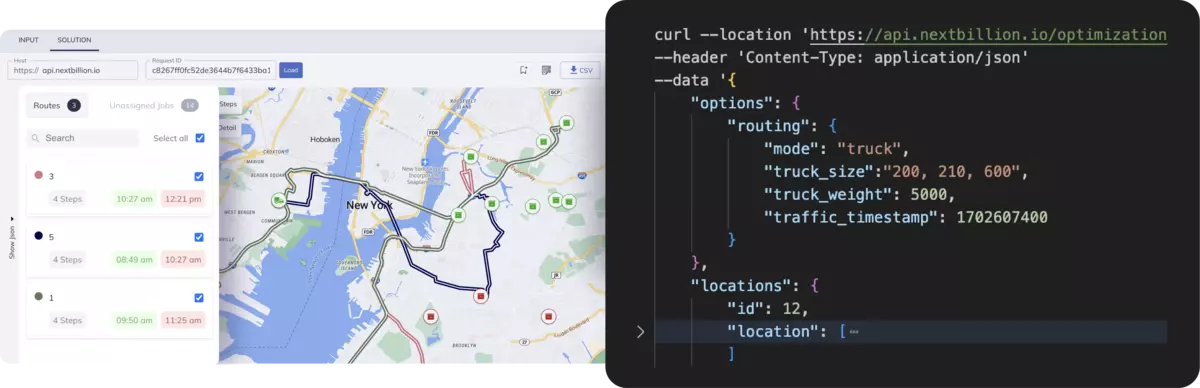
NextBillion.ai is particularly suited for industries that rely on efficient route planning. Delivery platforms, ride-hailing services, and fleet operators often require routing engines capable of handling thousands of locations and vehicles.
The platform enables businesses to compute optimal routes based on traffic conditions, vehicle capacity, delivery time windows, and restricted road networks. These capabilities help companies reduce fuel consumption, improve delivery speed, and manage large fleets more efficiently. Since the routing engine is designed for logistics requirements, it can handle complex multi-stop routes, which are common in last-mile delivery systems.
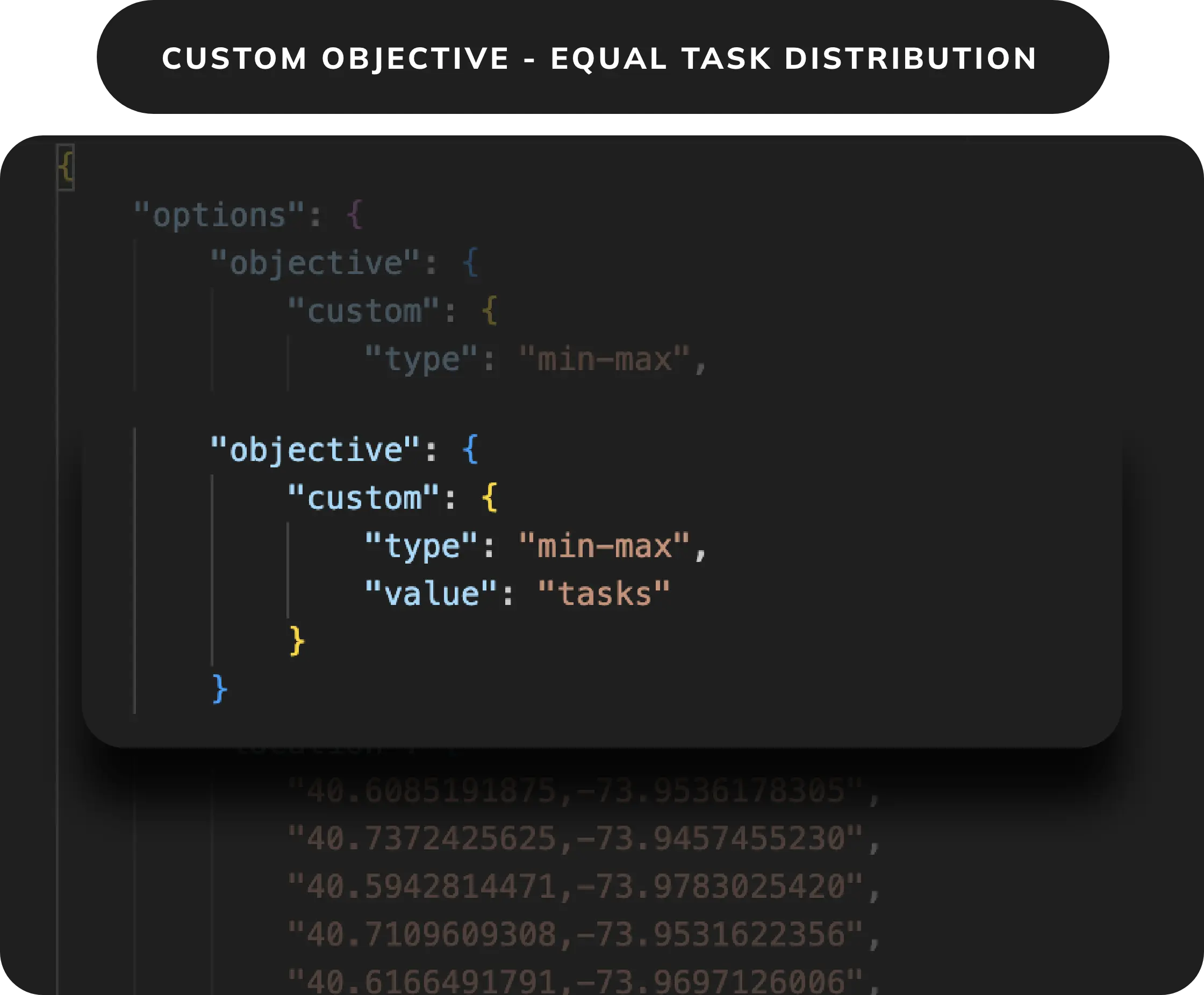
One of the key advantages of NextBillion.ai is the level of customization it offers. A large number of businesses are conducted within settings where routing policies have to capture the local conditions, operational policies, or industry-specific limitations.
NextBillion.ai enables developers to set routing behavior depending on parameters like vehicle types, road restrictions, driver preferences, and service areas. Such a level of control allows the organizations to design routing systems that are well aligned with the real-world operations requirements.
The customization is also applied to map data layers, which allows businesses to add their own data (warehouses, service zones, distribution centers, etc.) to their routing process.
Applications that rely heavily on location intelligence often generate extremely high volumes of routing and geocoding requests. NextBillion.ai is also built to handle such workloads using scalable APIs and enterprise-grade infrastructure.
The platform can handle big amounts of route computations, but still with a quick response time. This is essential to systems that rely on real-time routing choices, including dispatch platforms, driver navigation systems, and delivery management systems. NextBillion.ai provides organizations with scalable APIs and advanced routing to implement high-performance logistics platforms that can expand with their operations.
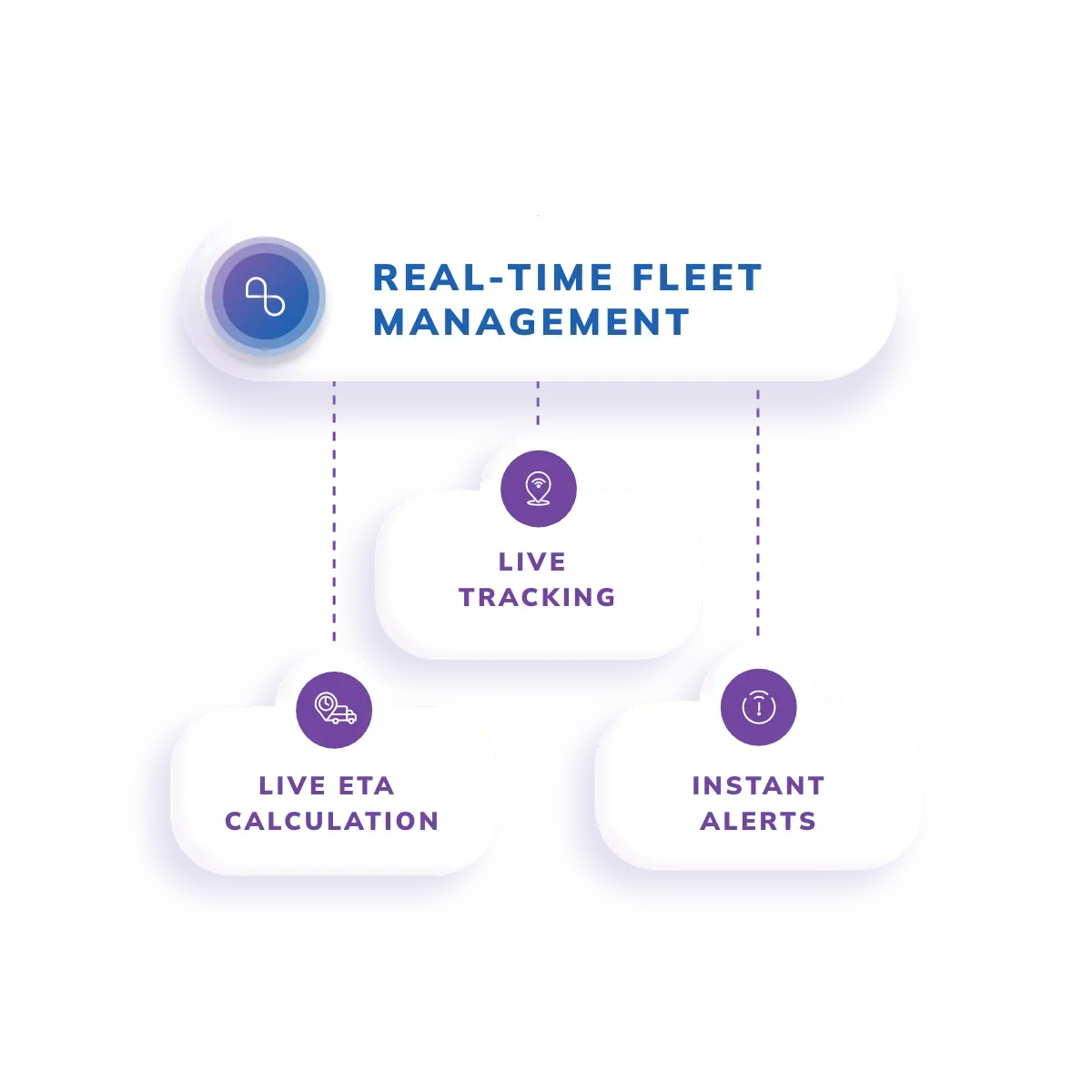
Accurate arrival time estimates are essential for logistics platforms and delivery services. NextBillion.ai incorporates real-time traffic information into its routing engine, enabling systems to change routes according to the evolving road conditions like congestion, road closures, or accidents.
The platform can use the current traffic patterns to come up with more accurate estimates of the arrival time for drivers and customers. This also assists the delivery companies in having improved scheduling, minimizing delays, and enhancing the overall service reliability. For operations teams, real-time traffic information can also help in making dynamic route changes throughout the day, so that the fleets can react promptly to any unforeseen disruptions.
NextBillion.ai provides powerful optimization tools that help businesses manage complex routing scenarios involving multiple vehicles and destinations. Distance matrix calculation is one of the most important abilities that enable systems to determine the travel time and distance among large numbers of locations.
This is especially handy on platforms that are going to deliver to numerous stops or organize fleets over extensive areas of service. The system can determine the most effective route combinations to assign to the drivers by examining several route combinations. High-level optimization is used to ease the total travel distance, fuel expenses, and delivery efficiency of large-scale operations.
With the increased complexity of location-based applications developed by companies, a number of mapping platforms have emerged as viable alternatives to Google Maps. These platforms offer routing engines, geolocation APIs, and developer tools, which are meant to support large-scale applications. The solutions have varying strengths based on the area of focus, which is either customization, logistics optimization, or enterprise mobility.
Below are some of the most widely used Google Maps alternatives for scalable routing in 2026:
Mapbox has become one of the most popular mapping platforms among developers building modern web and mobile applications. It has a reputation for very customizable maps and flexible APIs, which enable companies to create unique location-based experiences.
The platform offers routing services, geocoding APIs, and navigation solutions, which may be included in mobile applications, delivery solutions, and mobility services. The map styling option of Mapbox is one of the greatest strengths of the company because organizations can completely tailor map images to their product design or brand image.
Mapbox also has real-time navigation, integration of traffic data, and offline maps, and can therefore be used in applications that need good navigation in areas where the connection is not always available. Due to its robust developer platform and customization offerings, Mapbox is popular among startups and consumer-facing applications that require a scalable mapping platform.
HERE Technologies is an enterprise-focused mapping platform widely used in the automotive, transportation, and logistics industries. Initially created as a navigation system for vehicles, HERE has grown into a highly capable location intelligence platform that enables sophisticated routing and mobility applications.
The platform provides high-level routing APIs, real-time traffic intelligence, and rich geographical data. Large businesses use HERE because of its strong global coverage and enterprise-grade infrastructure.
HERE also offers fleet management, route optimization, and mobility analytics services. The features of the software are especially useful for companies that develop logistics platforms or transportation systems that need accurate routing across several areas. HERE is frequently deployed by car manufacturers, logistics firms, and smart cities because of its high level of reliability and enterprise capabilities.
TomTom is another well-established mapping provider with deep expertise in navigation and traffic analytics. Once recognized as a GPS navigation equipment producer, TomTom now provides an extensive suite of location APIs for developers and businesses.
The platform includes routing APIs, geocoding, search capabilities, and detailed traffic information. TomTom’s traffic intelligence is one of its most powerful tools, using data gathered from millions of connected devices to provide precise, real-time road information.
TomTom offers companies developing navigation systems or mobility applications with dependable route calculation and correct predictions of travel time. This is especially handy in fleet management systems, ride-sharing programs, and transportation services. The close attention to traffic analytics offered by TomTom can also assist organizations in the enhancement of the route planning process and in minimizing delays in traffic jams.
OpenStreetMap is an open-source mapping project that provides a global geographic dataset created and maintained by a community of contributors. Many platforms build routing services based on this dataset, such as OpenRouteService.
Flexibility is one of the primary benefits of the OpenStreetMap ecosystem. Applications can read and edit map data, create routing profiles, and build specialized mapping solutions without depending on a single commercial provider.
This approach is particularly appealing to startups, research projects, and organizations that need complete control over their mapping infrastructure. By using OpenStreetMap data with routing engines such as OpenRouteService, companies can create powerful navigation systems tailored to their needs. However, the quality of map data may vary depending on how actively regions are updated by the community.
GraphHopper is a routing engine designed specifically for logistics and route optimization. GraphHopper is also specialized in solving complicated routing problems encountered by delivery firms and fleet operators, unlike general-purpose mapping platforms.
The platform also offers sophisticated route optimization algorithms that factor in the capacity of the vehicle, delivery schedule, and efficiency of the route. Companies can plan optimal routes for several vehicles at once, which contributes to the minimization of travel time and fuel usage.
GraphHopper also offers a distance matrix option, which enables systems to analyze the travel time between a large number of locations. This feature is particularly useful when delivery platforms need to plan routes involving multiple destinations. GraphHopper is popular with companies developing last-mile delivery platforms and fleet management systems due to its logistics-oriented design.
Radar is a developer-focused location platform that provides geolocation infrastructure for mobile applications. It focuses on the geofencing, location tracking, and place detection features.
Even though Radar is not a routing platform per se, it complements mapping systems by delivering precise location intelligence and event-based location triggers. Radar is used by developers to create location-aware applications that respond to user movement or geographic boundaries.
To illustrate, companies can design geofences around certain locations to send notifications, monitor delivery status, or automate location-based services. The pricing model of Radar is also cost-effective for high-volume location tracking applications. This is especially appealing for mobile applications, on-demand services, and location-based digital products.
Geoapify is a flexible location services platform built on OpenStreetMap data. It offers APIs for geocoding, routing, map tiles, and location search. The platform is centered on ease and low cost, thus being a viable alternative to Google Maps among developers who require an alternative.
Geoapify provides customizable maps, route computing services, and address search services, which can be embedded in web or mobile applications. Its pricing model, which is friendly to developers, enables startups and small teams to develop location-based products without incurring very high costs on the API.
Geoapify uses open geographic data, which means that developers have more flexibility in controlling map behavior and routing logic as well. Geoapify is a viable option for organizations that need to have cost effective mapping infrastructure with powerful developer tools.
Choosing a routing platform is not just about showing maps or calculating directions. For logistics platforms, mobility services, and delivery applications, the routing system must handle high request volumes, complex routes, and real-time decisions. A scalable routing platform should also manage growing traffic without losing accuracy, speed, or reliability. Several technical and operational factors determine whether a routing platform can scale effectively.
A routing system is only as reliable as the geographic data behind it. High-quality map datasets ensure accurate routes, correct addresses, and reliable navigation across regions.
Scalable platforms maintain continuously updated global map data that includes road networks, traffic patterns, and geographic features. This is particularly important for businesses operating across multiple cities or countries. Platforms with strong map coverage reduce the chances of incorrect routes, missing addresses, or outdated road information. For logistics companies entering new markets, global data coverage ensures that the routing infrastructure remains reliable as operations expand.
Large-scale applications rely heavily on routing APIs to process navigation requests. A scalable platform must perform route calculations for thousands or even millions of routes without delays or performance issues.
High-performance routing APIs are designed to remain responsive even under heavy workloads. This includes efficient route calculations, optimized server infrastructure, and stable uptime. Fast response times are essential for applications such as ride-hailing services, delivery platforms, and fleet tracking systems that require real-time decision-making based on routing data. Platforms with strong API infrastructure also provide clear, well-documented, and developer-friendly documentation that makes integration easier.
Basic navigation systems typically calculate the shortest path between two points. However, large-scale logistics platforms often require more sophisticated routing algorithms.
Modern routing systems have optimization features that take into account various parameters like traffic congestion, time of delivery, vehicle size, and route priority. These algorithms assist businesses in saving fuel, travel time, and enhancing delivery efficiency. Optimization algorithms can drastically enhance the performance of companies operating a fleet or a large delivery network.
Traffic data on real time is important in proper route planning. A routing platform must be scalable to incorporate dynamic traffic information that captures road congestion, road accidents, and dynamic travel conditions.
Routing systems can modify navigation recommendations and provide more accurate arrival time estimates by using live traffic data. This feature is especially important for services that require precise delivery times or real-time driver dispatch. Accurate traffic insights can also help organizations respond quickly to disruptions and maintain consistent service quality.
Modern mapping applications are frequently integrated directly into computer applications, mobile applications, and logistics applications. Consequently, developer flexibility becomes a major requirement. Scalable routing platforms usually offer wide-ranging developer interfaces, including SDKs, APIs, and customization options that enable teams to adjust map styling, routing parameters, and application behavior. This flexibility helps organizations develop customized solutions instead of relying on generic mapping interfaces. Strong developer ecosystems also save development time and make it easier to integrate routing capabilities into existing software systems.
As routing demand increases, infrastructure costs become a major consideration. A platform that is affordable at a small scale may become expensive when handling millions of requests each month. Scalable routing solutions often offer pricing models that support high-volume usage so businesses can control costs as their operations grow. Predictable pricing structures are especially useful for companies building large location-based platforms. It is important to balance performance, functionality, and cost efficiency when choosing a routing platform that can support long term growth.
Here is a quick comparison of the leading Google Maps alternatives for scalable routing in 2026:
Platform | Key Strength | Best For |
Customizable logistics routing and optimization | Large-scale delivery and fleet operation | |
Mapbox | Highly customizable maps and APIs | Mobile apps and startups |
HERE Technologies | Enterprise routing and mobility data | Logistics and automotive platforms |
TomTom Maps | Strong traffic intelligence and navigation | Fleet and mobility services |
GraphHopper | Advanced route optimization engine | Delivery and logistics platforms |
OpenStreetMap + OpenRouteService | Open source mapping flexibility | Developers and custom systems |
Geoapify | Affordable geocoding and routing APIs | Startups and small teams |
Routing infrastructure has become a critical layer of digital operations for logistics platforms, mobility services, and location-driven applications. Although Google Maps remains a strong and highly-utilized solution, most of the growing platforms ultimately need to have increased control over cost, customization, and routing logic.
Other alternatives like Mapbox, HERE Technologies, TomTom, GraphHopper, OpenStreetMap-based platforms, Geoapify, and NextBillion.ai have specialized features that are more suited to large-scale routing and complicated operational demands. Carefully evaluating factors such as scalability, routing optimization, data control, and developer flexibility helps organizations choose the right mapping platform. The right platform can support current operations while enabling sustainable growth as routing needs expand.
Ready to build scalable routing without the constraints of the traditional maps? When you have to use high-volume routing, intricate delivery networks, or fleet optimization, then you require more than simple mapping APIs. NextBillion.ai provides customizable routing, advanced route optimization, and scalable location intelligence designed specifically for logistics, mobility, and delivery platforms.
Explore how we can assist you in creating quicker, smarter, and more effective routing systems for your applications. Start building with us today and scale your routing infrastructure with confidence.
Some of the most widely used Google Maps alternatives include Mapbox, HERE Technologies, TomTom Maps, GraphHopper, Geoapify, and OpenStreetMap based platforms. These platforms provide routing APIs, geocoding services, and location intelligence tools that support scalable applications such as logistics systems, mobility platforms, and delivery networks.
Many companies explore alternatives to Google Maps because of rising API costs at scale, limited customization for routing logic, and restrictions on how mapping data can be stored or used. Businesses building large-scale applications often require more control over routing algorithms, pricing models, and geographic data infrastructure.
Platforms such as GraphHopper, HERE Technologies, and NextBillion.ai are commonly used by logistics companies because they support advanced route optimization, fleet management, and distance matrix calculations. These features help delivery platforms manage multiple vehicles, optimize routes, and reduce operational costs.
Yes, developers can build fully functional mapping applications using alternatives such as Mapbox, Geoapify, and OpenStreetMap based services. These platforms provide APIs for maps, routing, geocoding, and navigation that can be integrated into web and mobile applications.
A scalable routing platform should provide high-performance routing APIs, global map data coverage, real-time traffic insights, route optimization algorithms, and flexible developer tools. Cost efficiency at high request volumes is also important for companies building large-scale location-based applications.
Bhavisha Bhatia is a Computer Science graduate with a passion for writing technical blogs that make complex technical concepts engaging and easy to understand. She is intrigued by the technological developments shaping the course of the world and the beautiful nature around us.