


Route Optimization API
Optimize routing, task allocation and dispatch
Distance Matrix API
Calculate accurate ETAs, distances and directions
Directions API
Compute routes between two locations
Navigation API & SDK
Turn by Turn Instructions for Drivers & Technicians
Route Optimization Software
Plan optimized routes with 50+ Constraints
Product Demos
See NextBillion.ai APIs & SDKs In action
Location Reasoning AI
Help your AI agents answer location-based questions
AI Route Optimization
Learns from Your Fleet’s Past Performance
Platform Overview
Learn about how Nextbillion.ai's platform is designed
On-Premise Deployments
Take Full Control of Your Maps and Routing
About Us
Our story, vision
and mission
Contact Us
Reach out to us for any product- or media-related queries
Write to us at

Table of Contents
Electronic Logging Devices have quietly become one of the most important pieces of technology on a commercial truck. They give fleets a live, accurate picture of driver availability that can shape smarter, safer routing decisions.
According to FMCSA data, driver fatigue is a factor in roughly 13% of large truck crashes, and HOS violations alone can carry civil penalties of up to $16,000 per offence. A route that looks fine on a dispatch board can quietly push a driver past a legal limit, and by the time anyone notices, the truck is already out of service on the shoulder of a highway.
Since the federal ELD mandate took effect, these devices have replaced paper logs across most of the interstate trucking industry, and they now track driving time automatically, down to the minute.
FMCSA’s own enforcement data shows HOS violations remain among the most frequently cited issues at roadside inspections, and a single major violation can add 7 points to a carrier’s CSA score. In fact, FMCSA’s own estimates put the number at around 1,844 crashes, 562 injuries, and 26 deaths prevented every single year,
ELDs have turned HOS compliance from complex paperwork into a live data stream dispatchers can actually act on.
So what does an ELD actually track, how does that data prevent violations before they happen, and why should route planners be paying attention to it too? Keep reading to find out.

An Electronic Logging Device (ELD) is hardware that connects to a commercial vehicle’s engine and automatically records driving time, engine hours, vehicle movement, and location data. It replaces the paper logbooks drivers once filled out by hand.
Instead of a driver writing down when they started and stopped driving, the ELD captures that information directly from the engine. This removes guesswork and, more importantly, removes the temptation to round numbers in a driver’s favour after a long day.
Most interstate commercial drivers who are required to keep records of duty status must use an ELD that appears on FMCSA’s list of registered, compliant devices. Devices that fall off that list, or that stop meeting technical requirements, can trigger an out-of-service order for the driver using them.
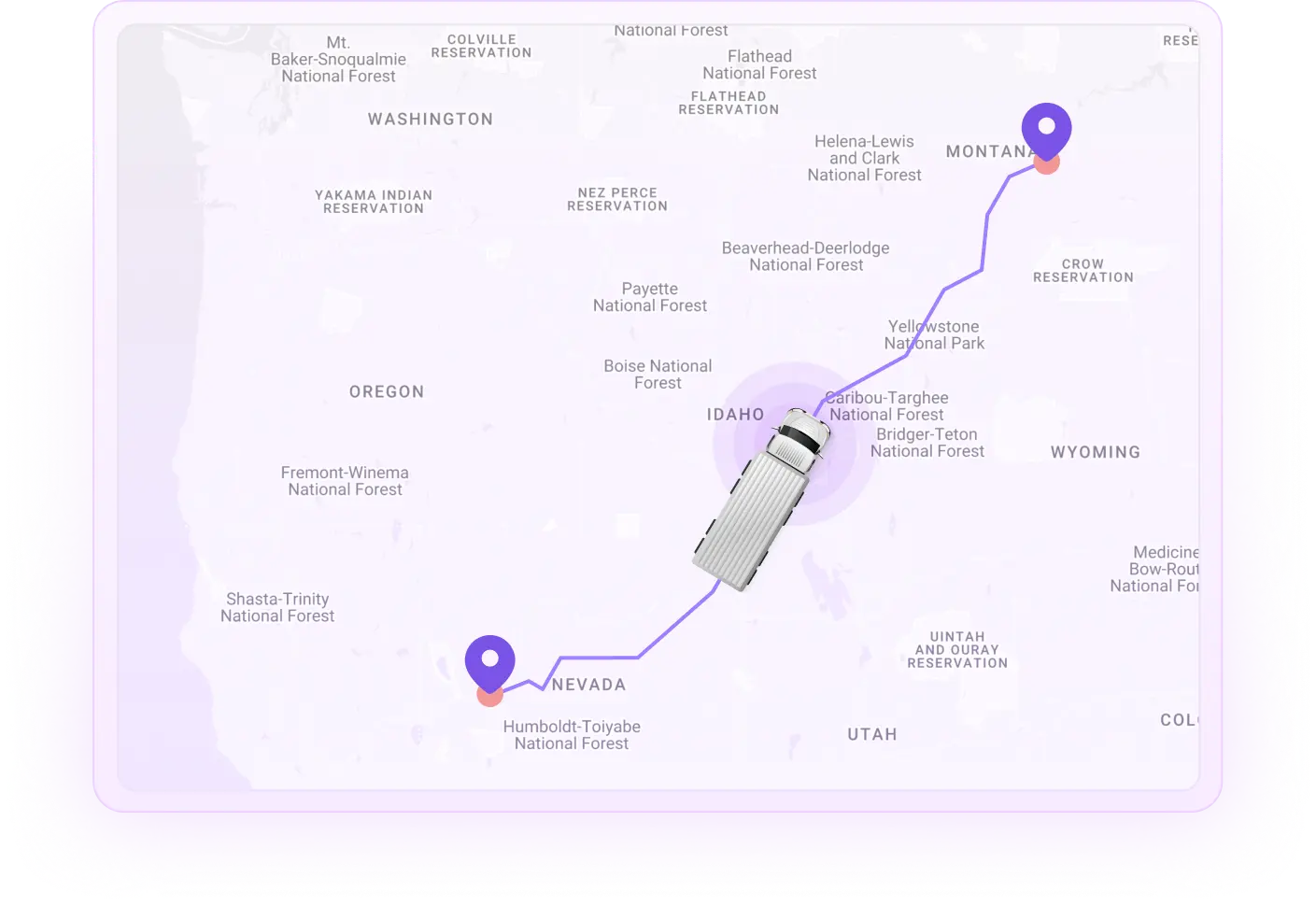
Hours of Service rules exist for one simple reason: tired drivers cause crashes. But compliance isn’t only a safety issue. It’s also a financial and operational one.
The companies that have a good handle on HOS don’t just save themselves money through avoiding fees. They also provide more predictable services. The dispatcher can rely on the fact that their plan for driving is actually realistic, while the customer knows they’re getting consistent delivery or service windows.
If you have property-carrying commercial vehicles, you need to stick to four rules to ensure HOS compliance. An ELD can track all of them automatically, without relying on a driver to do the calculation mid-shift. Here’s what each rule actually limits:
Rule | Limit | What It Means |
Driving limit | 11 hours | Maximum allowable driving time after 10 hours off duty continuously |
On-duty window | 14 hours | Driving is to be performed in the 14-hour period from the time the driver goes on duty |
Mandatory break | 30 minutes | After 8 continuous hours of driving |
Weekly cap | 60/70 hours | Maximum number of on-duty hours in a period of 7 or 8 days, with a 34-hour restart period |
These limits sound simple when written out in a table. In practice, a driver who is sitting at the loading dock for some reason, delayed by other traffic conditions, or even waiting for a customer signature may spend all 14 hours without driving anything near the 11-hour limit. This is precisely what an ELD is meant to detect.
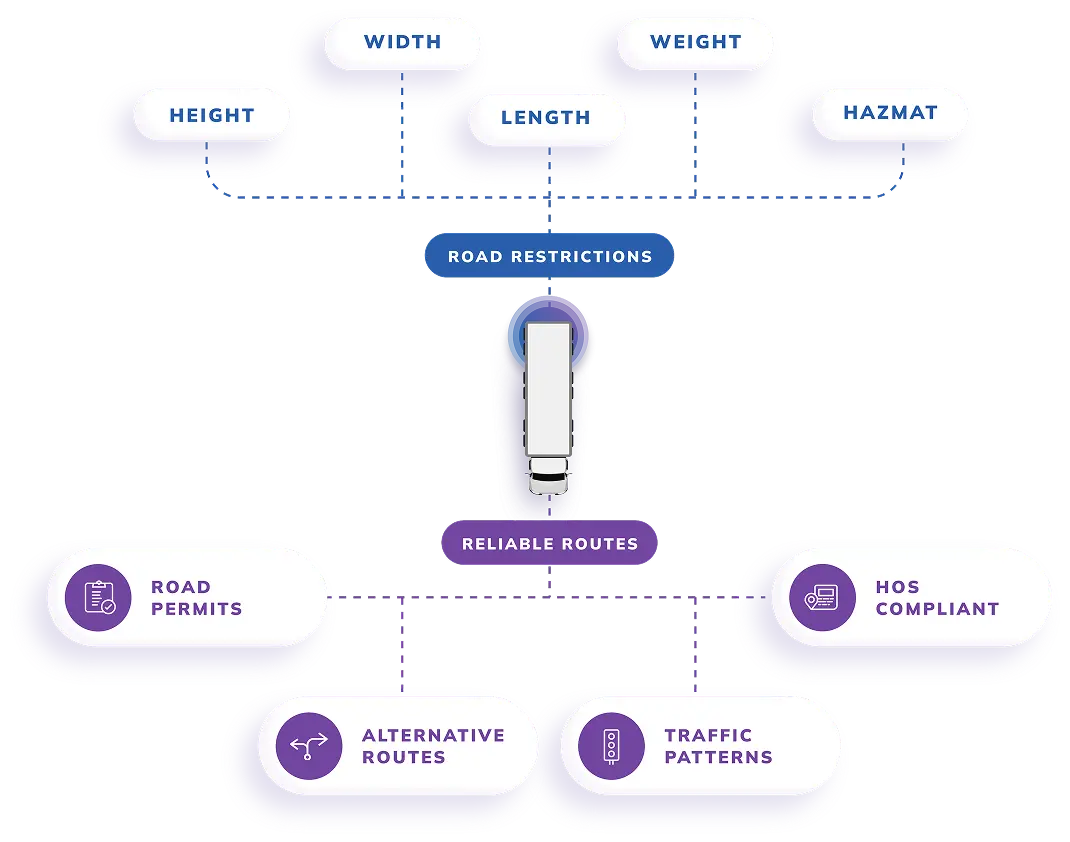
An ELD’s real value isn’t the record it creates at the end of the day. It’s what that record makes possible while the day is still happening. The list below breaks down the specific ways that value shows up, from the moment a driver starts their shift to the moment a compliance officer pulls their record months later.
Paper logs relied on a driver’s memory and honesty at the end of a long shift. The ELD removes that element completely. The device collects information right from the engine, which means the driver’s time behind the wheel, his idling time, and whether he is on duty or not will all be collected without him being able to tamper with it.
It is most important during roadside inspections, when having inconsistent logs was one of the most frequently mentioned violations. A clean, automatic digital record prevents the dispute.
Most ELD systems will warn a driver as they approach a limit, not after they’ve already crossed it. A driver nearing the end of an 11-hour driving window, or closing in on a mandatory break, gets a notification with enough time to plan the next stop.
That early warning is the difference between a driver quietly adjusting their plan and a driver getting flagged for a major violation at the next inspection.
Manual logs fail in small, human ways: a missed entry, a wrong time zone, an illegible note. None of that goes away with good intentions alone. ELDs remove most of these small errors simply by not depending on handwriting or memory.
Fewer errors also mean fewer disputes during audits, since the carrier isn’t left trying to reconstruct what actually happened weeks after the fact.
When an officer asks to see hours of service records, a driver with an ELD can typically display the current log within seconds. That speed matters. Long inspections cost time, and time is exactly what a driver on a tight HOS clock can’t spare.
Digital records are also easier to transfer electronically during an inspection, which reduces the back-and-forth that used to come with paper logbooks.
An ELD doesn’t just help the driver behind the wheel. It gives dispatchers a live view of every driver’s remaining hours across the fleet. That visibility turns HOS compliance from a driver-only responsibility into something dispatch can actively manage.
A dispatcher who can see that a driver has two hours left on their clock can make a better call about whether to add one more stop or hold it for the next shift.
Over time, ELD data builds a pattern. They can identify the routes that are taking away from the driver’s on-duty time, the terminals that are resulting in delayed loading times, and the drivers who are continuously operating at their limits.
It is quite useful for much more than just compliance reporting. It could help in designing shifts in such a way that the drivers don’t end up running out of time before they’ve finished their work.
For drivers using sleeper berth provisions or working toward a 34-hour restart, keeping track of qualifying rest periods by hand is genuinely difficult. ELDs track these periods automatically, flagging whether a rest break actually qualifies under current rules.
This is especially useful as FMCSA continues to test more flexible sleeper berth pilot programs, since the rules around what counts as a valid split are more detailed than they used to be.
When a carrier is audited, having months of clean digital records makes the process faster and far less stressful. Instead of tracking down paper logs from a filing cabinet, compliance teams can export exactly what’s needed in a fraction of the time.
Compliance will vary a bit based on the type of loads being transported. Some examples include:
For a regional parcel fleet operating on 12-hour shifts through a metropolitan area, dispatchers should be aware of the drivers who have enough hours remaining in order to complete their route without resetting in the middle of the afternoon. An ELD update every 30-60 seconds will help to ensure that a route considered good at 7 am becomes problematic due to traffic once it pushes a driver to the 14-hour mark.
Utility, HVAC, and telecom field crews often run mixed schedules, some days well within a 150 air-mile radius, other days pushing past it for an emergency call. Accurate ELD or time-record data keeps that distinction documented, so a crew isn’t accidentally non-compliant just because one job happened to run long.
This is the classic case. A driver running a 900-mile lane needs the 11-hour, 14-hour, and 60/70-hour limits calculated correctly from the start, or the load simply can’t arrive in the promised delivery window without a violation somewhere along the way. ELD data lets dispatch plan the trip around a legal stopping point before the driver ever leaves the yard.
Many construction trucks work at fixed worksites, thereby meeting the eligibility criteria for short-haul exceptions every day. However, there could be a case when such a vehicle performs just one long-haul transport operation in a month and thereby exceeds the 150-mile radius limit. The fleet operators who follow it carefully know on which days the logs need to be maintained and on which not, which helps them to avoid surprises during roadside inspection.
These exemptions exist because FMCSA recognises that not every commercial vehicle operates like an over-the-road truck. A concrete mixer that never leaves a 20-mile radius doesn’t create the same fatigue risk as a driver crossing three states. But “exempt” doesn’t mean “off the hook”; it just changes which record-keeping method applies. The most common exemptions:
Exemption | Who Qualifies | Key Condition |
Short-Haul (§395.1(e)) | Local drivers returning to base daily | Stay within 150 air miles, back within 14 hours |
8-Day Rule | Drivers using RODS 8 or fewer days in 30 | Paper logs allowed only on those specific days |
Pre-2000 Engines | Vehicles with a model year before 2000 | Tied to engine model year, not vehicle age |
Agricultural | Farm commodity or supply transport | Within 150 air miles, planting/harvest season only |
Driveaway-Towaway | Vehicles that are themselves the cargo | Applies to the transport operation itself |
None of these removes the underlying Hours of Service rules. A short-haul driver still has to respect the 14-hour window and return to base on time; they just don’t need the device to prove it, as long as the carrier keeps accurate time records instead. Miss the radius or the 14-hour cutoff even once, and that day needs full logs.
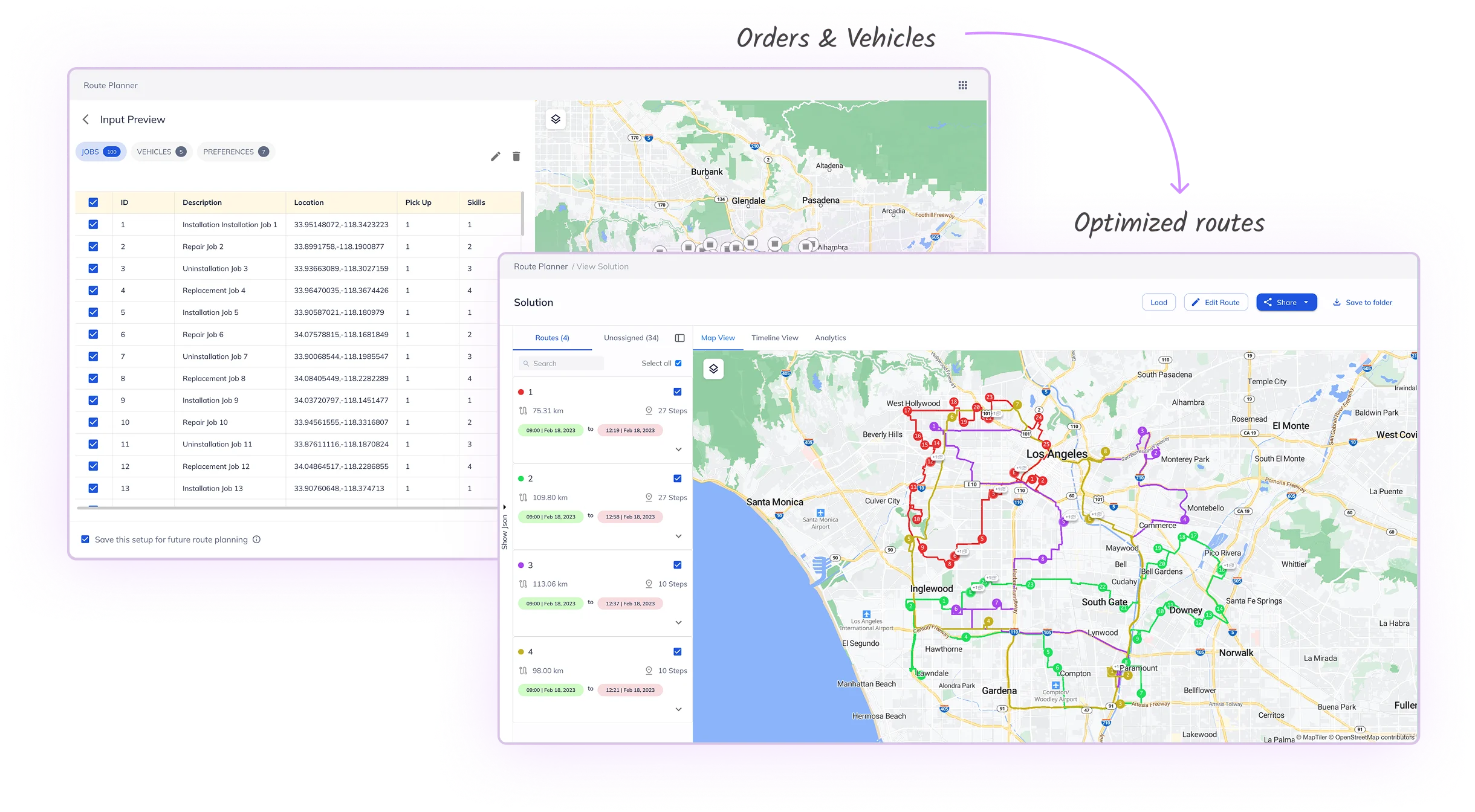
ELDs are excellent at one job: recording hours of service accurately. But that data becomes far more valuable once it’s connected to how routes get planned in the first place. The two systems solve different problems, and understanding where one stops and the other starts is the first step toward closing that gap.
Many fleets run their ELD system and their route planning tools separately. Dispatch builds a route based on stops, time windows, and distance, while HOS compliance is checked more or less on its own, often after the route is already underway. That gap is where violations tend to sneak in. A route can look completely reasonable on a map and still run a driver out of legal hours before the last stop.
Question | ELD | Route Planning Platform |
How many hours has a driver actually driven? | Yes; real-time, automatic | Uses this data as a planning input |
Is the driver approaching a legal limit? | Yes; alerts the driver | Yes; factored into route feasibility |
Which stops should this driver be assigned today? | No | Yes |
Should a route be rebuilt mid-shift? | No | Yes; based on live hours and conditions |
Can compliance data shape tomorrow’s shift plan? | Partially reports only | Yes; an active planning input |
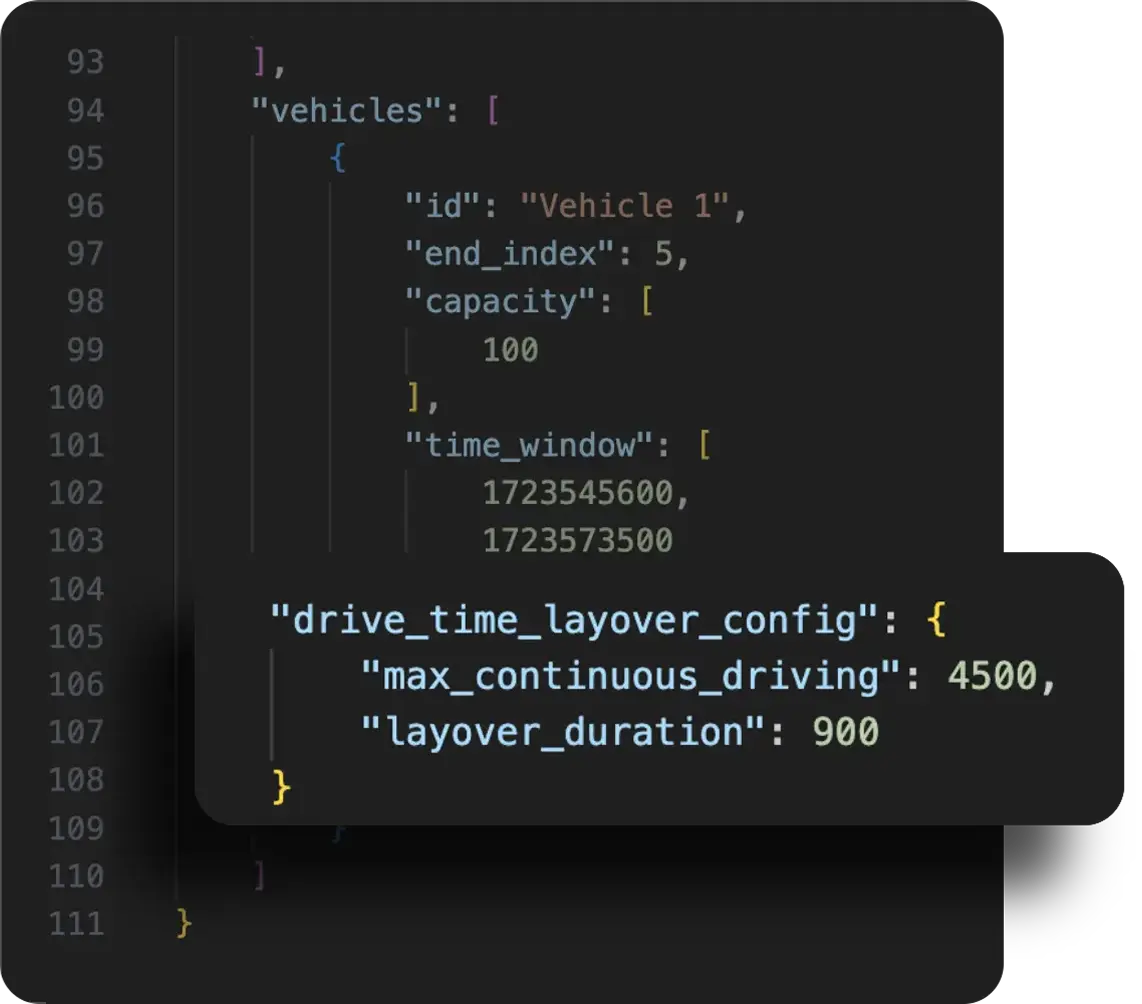
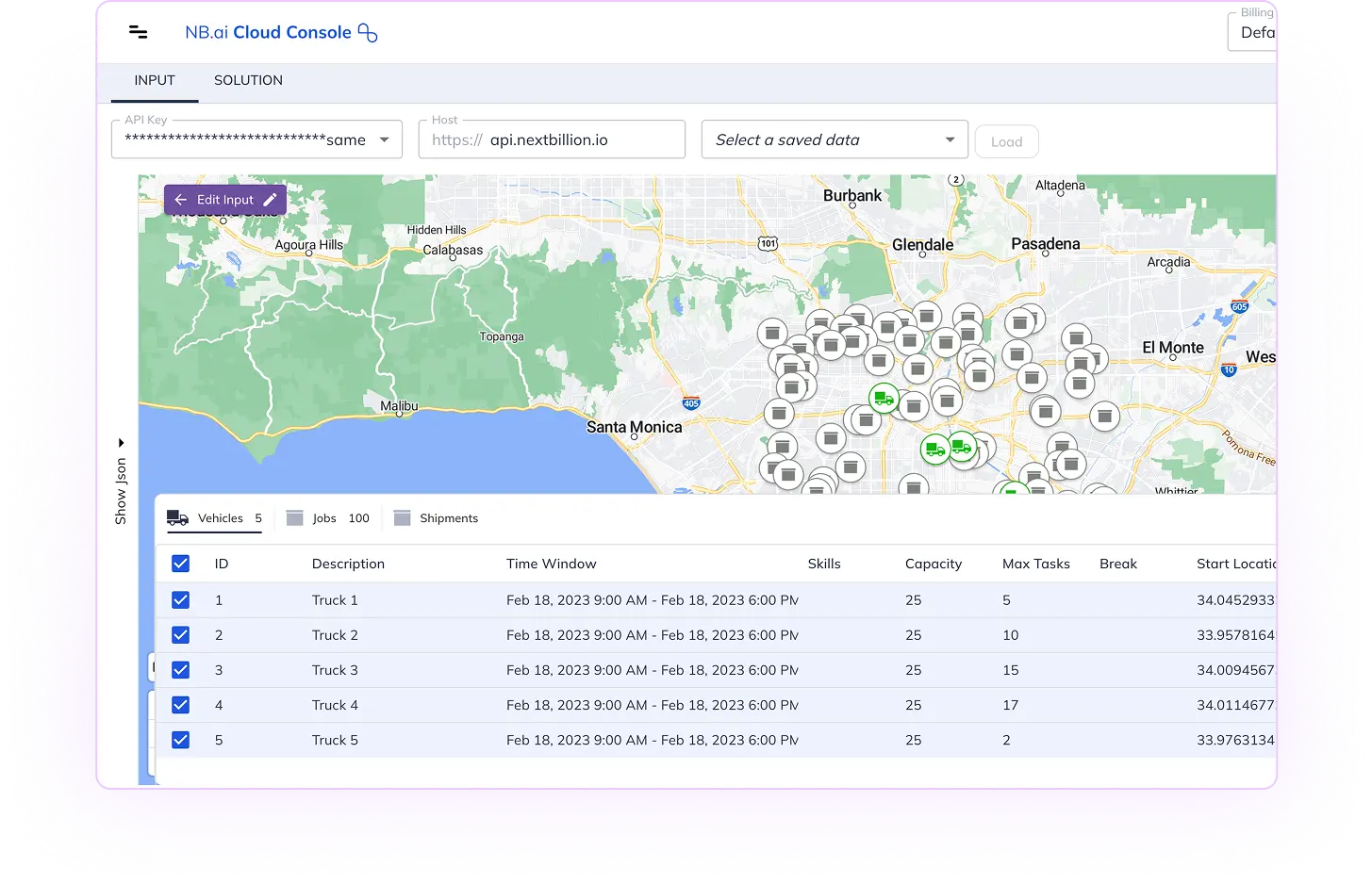
That’s when a routing platform such as NextBillion.ai comes into play, not as yet another electronic logging device provider but as the means by which HOS and driver hour information can actually become a planning constraint. Here’s how it works:
The route can be planned according to the time that the driver still has, rather than just distances and time windows. If a driver has three hours left until the end of his shift, he should not be given a route which will take him four hours to complete. Remaining hours become a routing constraint from the start, alongside stop priority and vehicle capacity.
If traffic conditions, loading delays, or a client rescheduling impacts the available on-duty time of the driver, then routes can be altered to ensure that it doesn’t become a violation. The remaining delivery points can be assigned to other trucks rather than forcing the driver to complete a route that he is no longer able to legally drive.
Instead of one driver who drives near their limit and a second who gets done with ample time to spare, the tasks could be allocated more evenly among the drivers in the pool. This will cut down on unnecessary overtime and prevent drivers from being quietly forced into violations.
The NextBillion.ai routing APIs are designed to integrate with the technologies that fleets are already using for dispatch, TMS solutions, driver apps, and ELDs. It allows HOS and driver hour data to be directly integrated into the route planning process without asking the fleet to rip out its compliance technology stack.
Every fleet runs on its own operating rules, fixed driver territories, specific break policies, depot receiving hours, or preferred-driver assignments. Routing logic can be shaped around these business rules, so the output reflects how the operation actually runs, not just a generic optimisation model.
Buying the right device is only step one. An ELD only pays off when drivers actually trust it, and dispatchers actually use the data it produces, day after day. Fleets that get real value out of their systems tend to follow a similar set of habits, and skipping even one of them usually shows up later as a preventable violation.
A driver who doesn’t understand how to log on-duty time, certify a log, or handle a malfunction will make mistakes, regardless of how good the hardware is. Training should cover the basics of the device itself, but also what counts as on-duty time versus personal conveyance, since that distinction causes more confusion than almost anything else.
Waiting for an audit to look at ELD data means missing months of warning signs. A weekly summary of hours, violations, and near misses will detect trends early, such as a certain route that consistently runs late, or a driver who frequently teeters on the edge of the 14-hour limit.
An alert that a dispatcher never sees isn’t much better than no alert at all. The most effective fleets treat ELD warnings as an input into dispatch decisions in real time, not just a compliance record to check later in the week.
Not every ELD on the market is built the same way, even though most of them satisfy the baseline federal requirement. Fleets that plan to use compliance data for more than recordkeeping, like feeding it into routing or dispatch, need to look past the sticker on the box and ask a few sharper questions. The right choice usually comes down to five practical criteria.
Devices break down from time to time, which is why FMCSA has an elaborate procedure in place in case of such breakdowns. In case the ELD goes down, the driver will have to switch back to paper logs and inform their carrier. After this, the carrier gets 8 days to get the device fixed/replaced. The best practice is for the company to ensure that the truck has a set of paper log forms at hand in case of any such problems.
Moreover, it would be good to periodically check the FMCSA registered device list. Devices do get pulled from that list without much warning; several were removed in late 2025 and early 2026 alone, and FMCSA does not notify individual carriers directly when it happens. A fleet running a revoked device without knowing it can find out the hard way at a weigh station.
Even with an ELD in place, compliance can slip through the cracks. A few patterns show up again and again, and most of them aren’t caused by bad intentions. They’re caused by treating the ELD as a background tool instead of an active part of daily planning.
ELDs have made HOS compliance far more accurate and far less dependent on a driver’s memory at the end of a long shift. They catch problems early, simplify inspections, and give fleets a clear, honest record of driver hours. But the real opportunity is what happens next: using that data to plan routes that respect the hours drivers actually have left. Fleets that connect the two tend to run fewer violations and far fewer avoidable delays.
An ELD tracks driving time, on-duty status, engine hours, and vehicle location, automatically pulling this data from the truck’s engine.
Lorem ipsum dolor sit amet, consectetur adipiscing elit. Ut elit tellus, luctus nec ullamcorper mattis, pulvinar dapibus leo.
Yes. Using a delisted or non-compliant ELD is treated the same as not having one, which can lead to an out-of-service order.
No. ELDs record hours accurately, but they don’t plan routes. Fleets still need routing that accounts for remaining driver hours.
Digital logs can be displayed and transferred quickly, which speeds up inspections compared to reviewing paper logbooks.
Yes. Real-time visibility into driver hours helps dispatchers assign routes that drivers can legally complete without running out the clock.
Bhavisha Bhatia is a Computer Science graduate with a passion for writing technical blogs that make complex technical concepts engaging and easy to understand. She is intrigued by the technological developments shaping the course of the world and the beautiful nature around us.