

Table of Contents
Beverage distribution route optimization is the process of creating efficient delivery routes by considering the locations, orders, vehicles, drivers, and operational constraints involved in a distribution network. Instead of planning routes based only on geographic distance, route optimization evaluates multiple factors to determine how deliveries can be completed efficiently while meeting customer and business requirements.
For beverage distributors, this can mean determining which vehicle should deliver a particular order, which delivery locations should be grouped into the same route, the most suitable sequence for each stop, and when deliveries should take place. The system can also consider road restrictions, traffic conditions, vehicle characteristics, and other routing requirements when selecting the most appropriate roads.
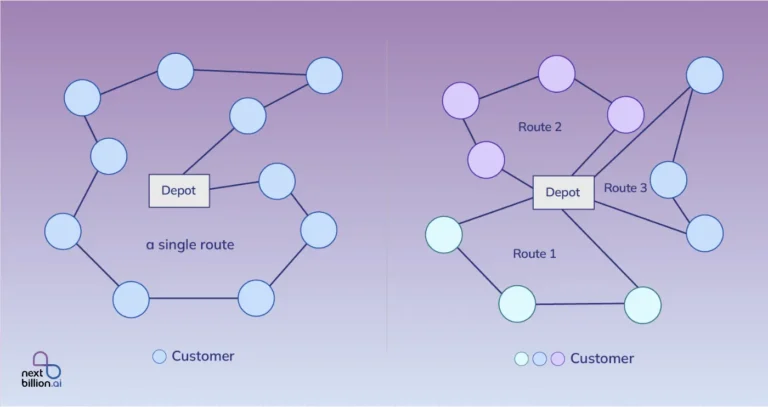
Route planning generally focuses on creating a route between a set of locations. It can help dispatchers determine the order of stops and the path a vehicle should follow.
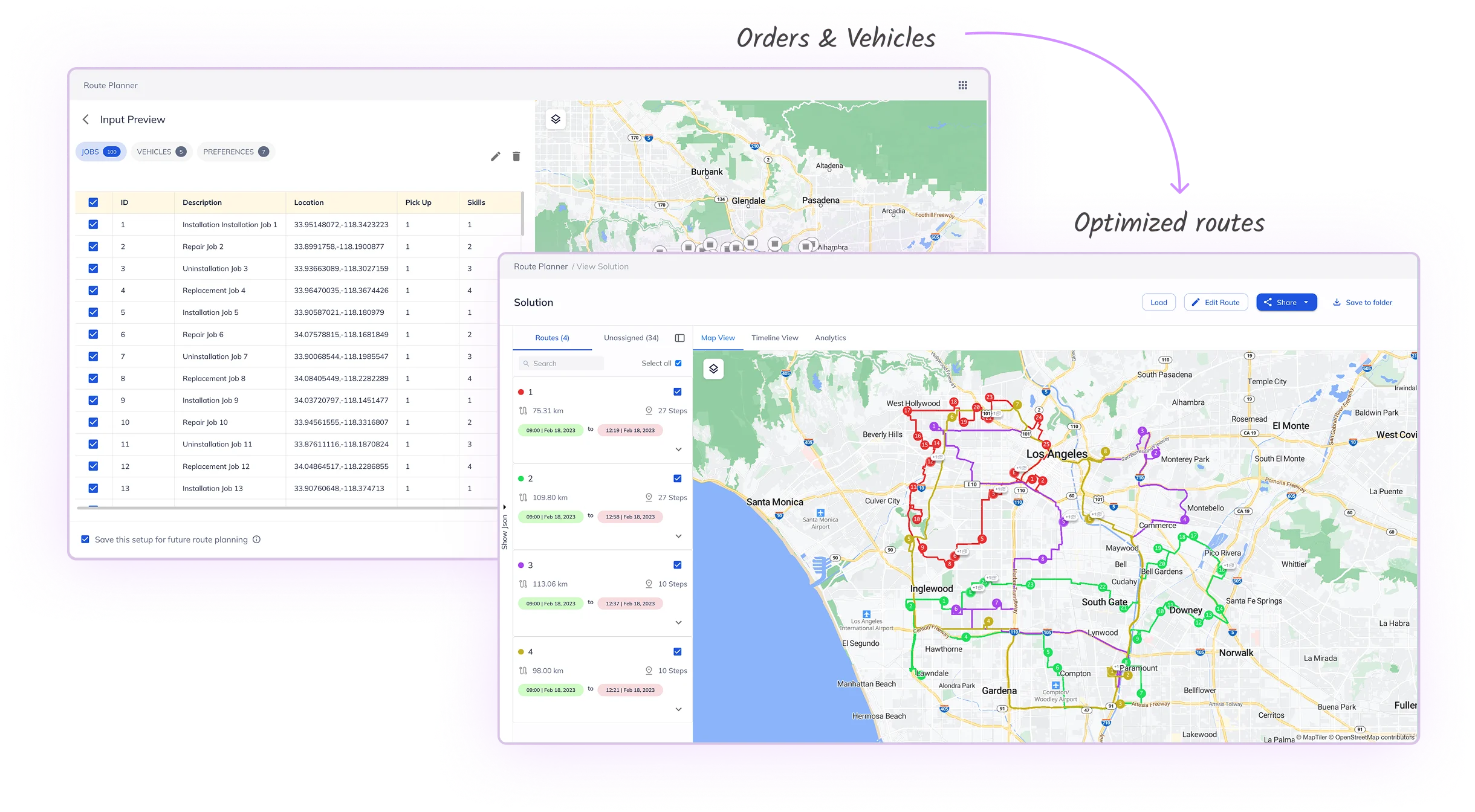
Route optimization goes further by evaluating different possible combinations and selecting routes based on multiple constraints and objectives. For example, an optimizer may assign orders across several vehicles based on capacity, group compatible deliveries, sequence stops according to delivery time windows, and select routes that balance travel time, distance, and operating costs.
This approach is known as constraint-based optimization. Each business rule or operational requirement becomes a constraint that the optimization engine considers when generating routes. For beverage distributors, these constraints can include vehicle capacity, delivery windows, driver working hours, product requirements, traffic conditions, and road restrictions.
Traditional planning | Optimized planning |
Static routes | Dynamic routes |
Manual stop sequencing | Algorithm-based sequencing |
Distance-focused | Cost, time, and capacity focused |
Limited constraints | Multiple business constraints |
Difficult to scale | Designed for large delivery volumes |
The result is a delivery plan that considers the entire distribution operation, rather than optimizing individual routes in isolation. This helps beverage distributors create routes that are not only shorter where possible, but also practical to execute within real-world delivery constraints.
Beverage distribution route optimization brings together order, fleet, driver, and road data to create delivery routes that meet operational requirements. Instead of relying on a fixed sequence of stops, an optimization engine evaluates multiple variables and constraints to determine how deliveries can be assigned and routed more efficiently.
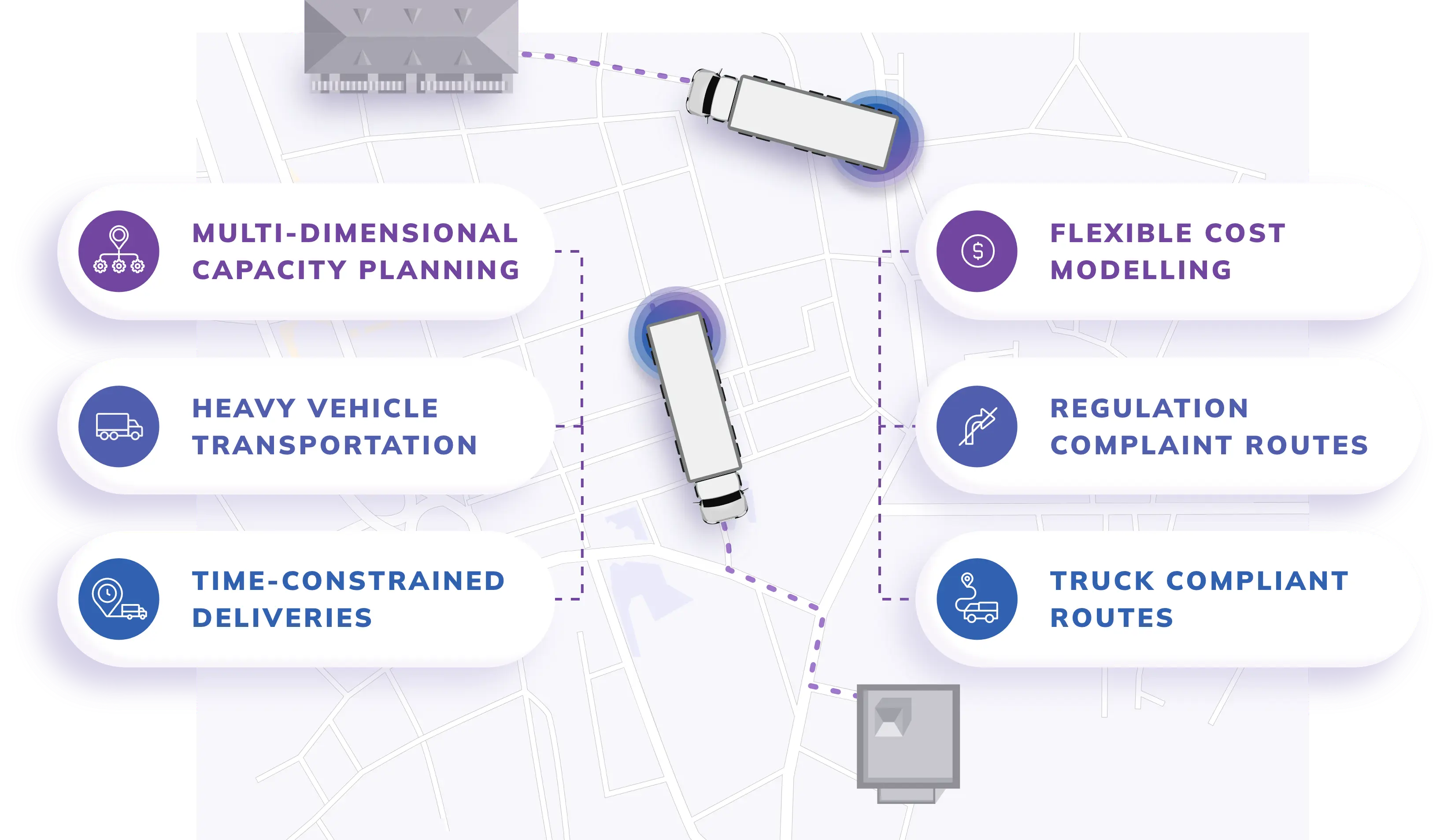
NextBillion.ai describes this approach through capabilities such as multi-dimensional capacity planning, mixed-fleet optimization, time-constraint management, and dynamic route optimization for food and beverage deliveries.
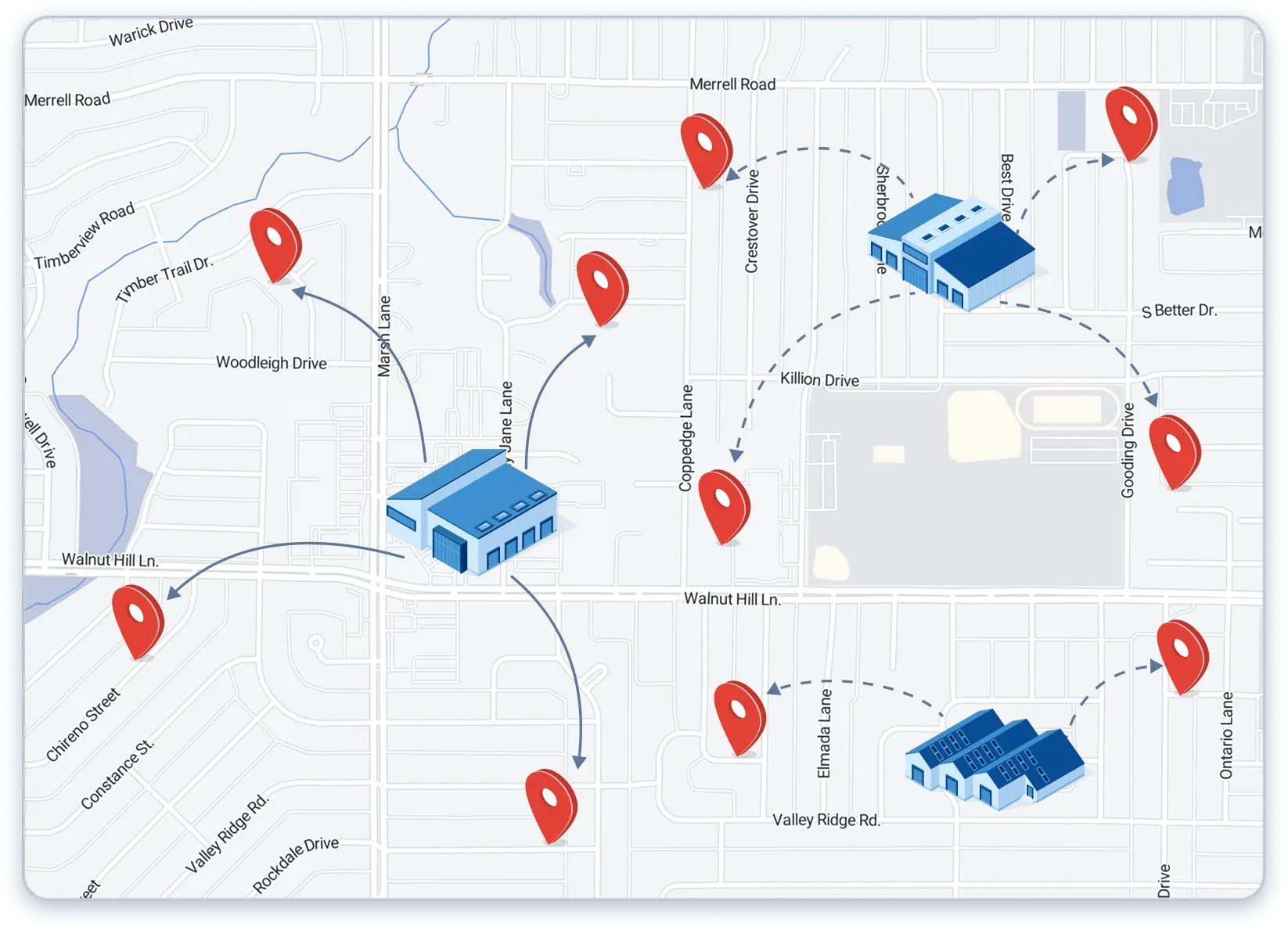
The first step is to gather the information required to build a feasible delivery plan. This can include:
Accurate input data gives the optimization engine the information it needs to match delivery demand with available fleet resources. NextBillion.ai’s routing approach can consider vehicle capacity, load weight, volume, delivery constraints, and fleet availability when allocating resources.
The next step is to translate business and operational requirements into routing constraints. These rules help determine which delivery plans are feasible.
Common constraints include:
NextBillion.ai highlights these types of constraints for food and beverage routing, including vehicle dimensions, cargo type, restricted areas, working-hour limits, break requirements, and delivery time constraints.
Once the data and constraints are defined, the optimization process determines which vehicle or carrier should serve each order. The assignment needs to consider more than vehicle proximity.
For example, a large order may require a vehicle with sufficient capacity, while a refrigerated shipment needs a vehicle that can support its transportation requirements. For distributors operating mixed fleets, the optimizer can also evaluate private and contracted vehicles and their associated costs.
NextBillion.ai describes mixed-fleet optimization and carrier selection as part of its food and beverage routing capabilities, helping businesses match delivery requirements with available fleet resources.
After orders are assigned, the system determines the sequence in which each vehicle should visit its delivery locations.
For a multi-stop beverage route, changing the order of just a few stops can affect total travel time, delivery windows, and route feasibility. Optimization evaluates different combinations to identify a sequence that balances factors such as distance, transit time, customer requirements, and operational constraints.
This is particularly useful for grocery, supermarket, and other high-volume distribution operations where distributors may need to manage multiple deliveries within tight time frames. NextBillion.ai highlights multi-drop route optimization and dynamic scheduling for these types of delivery scenarios.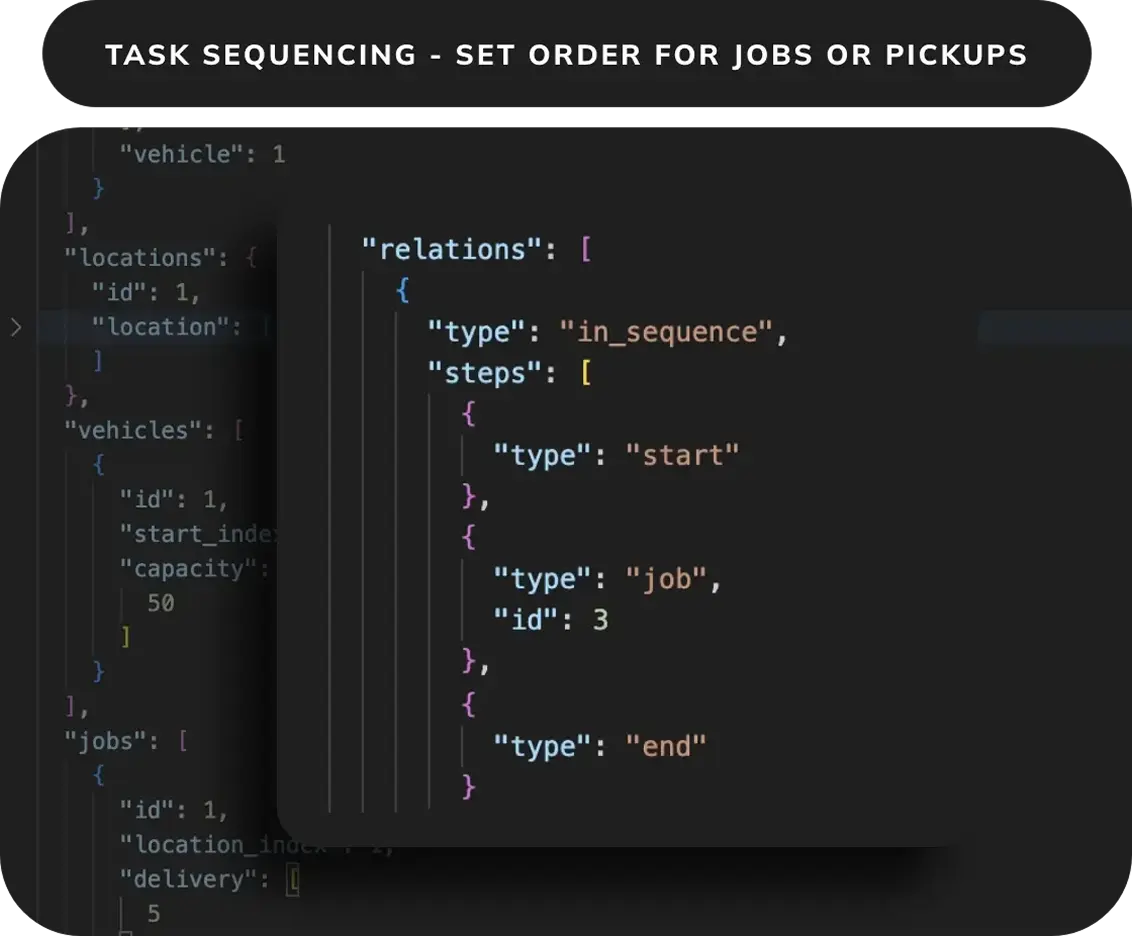
Once vehicle assignments and stop sequences are established, the optimization engine generates the routes drivers can follow.
The resulting routes can account for:
The objective is not always to produce the route with the fewest miles. Instead, the system can balance multiple objectives to create routes that are practical to execute while supporting delivery and cost requirements. NextBillion.ai’s food and beverage offering includes route optimization with 50+ constraints, along with distance and navigation capabilities that can support route execution.
Route optimization does not necessarily end when the initial plan is generated. Delivery conditions can change after vehicles leave the depot. Traffic congestion, road closures, delays, new orders, or changes in delivery priorities can affect the feasibility of the original plan.
Dynamic optimization can use updated information to adjust routes and delivery schedules when conditions change. NextBillion.ai states that its food and beverage routing approach incorporates real-time traffic insights and dynamic optimization to adapt to delays and changing delivery requirements.
In practice, the process forms a continuous loop:
Delivery data → Constraints → Vehicle assignment → Stop sequencing → Route generation → Route execution → Real-time updates → Route adjustments
This approach allows beverage distributors to move from static route planning toward a more responsive distribution process that can adapt to fleet conditions, customer requirements, and changes on the road.
Beverage distributors can use different route optimization strategies depending on the size of their delivery network, fleet structure, customer requirements, and distribution model. These approaches can also be combined to address multiple constraints within the same delivery operation. Understanding the common strategies can help distributors identify which routing methods best fit their needs before evaluating route optimization software.
Multi-stop route optimization determines the most efficient sequence for visiting multiple delivery locations on a single route. Instead of planning each stop independently, the optimization process evaluates the entire sequence to reduce unnecessary travel while meeting delivery requirements.
This is particularly useful for beverage distributors serving multiple retailers, restaurants, supermarkets, or other outlets during the same driver shift. The optimizer can consider factors such as stop locations, delivery windows, service times, vehicle capacity, and road conditions when creating the sequence.
Multi-depot route optimization is useful for distributors operating from several warehouses, distribution centers, or regional facilities. Instead of assigning every order to a single depot, the optimization process can determine which facility should serve each delivery.
For example, a distributor with warehouses in different regions may assign an order to the depot that provides the best combination of proximity, vehicle availability, inventory considerations, and route feasibility. This can help reduce unnecessary cross-region travel and balance workloads across distribution centers.
Capacity-based routing matches delivery orders with vehicles based on available capacity. Beverage shipments can vary significantly in weight and volume, so selecting vehicles solely based on distance or availability may result in inefficient or infeasible routes.
Capacity-based optimization can consider factors such as:
By incorporating these factors during route creation, distributors can avoid overloading vehicles while making better use of available fleet capacity.
Time-window optimization creates routes around specific delivery periods. A customer may accept deliveries only between certain hours, making a route that is efficient by distance unsuitable if the vehicle cannot arrive within the required window.
The optimization process can arrange stops and allocate vehicles to help meet these windows while also considering travel time, service duration, driver availability, and other route constraints.
For beverage distributors, this can be particularly important when serving businesses with fixed receiving schedules, such as supermarkets, restaurants, and retail outlets.
Territory-based route planning groups customers into defined geographic areas or delivery territories. Distributors can use these territories to organize routes around specific regions, simplify dispatch operations, and assign vehicles or drivers to consistent service areas.
For example, a distributor might divide a city into several delivery zones and create routes within each territory. When combined with route optimization, territory planning can help balance delivery workloads while reducing unnecessary movement between distant areas.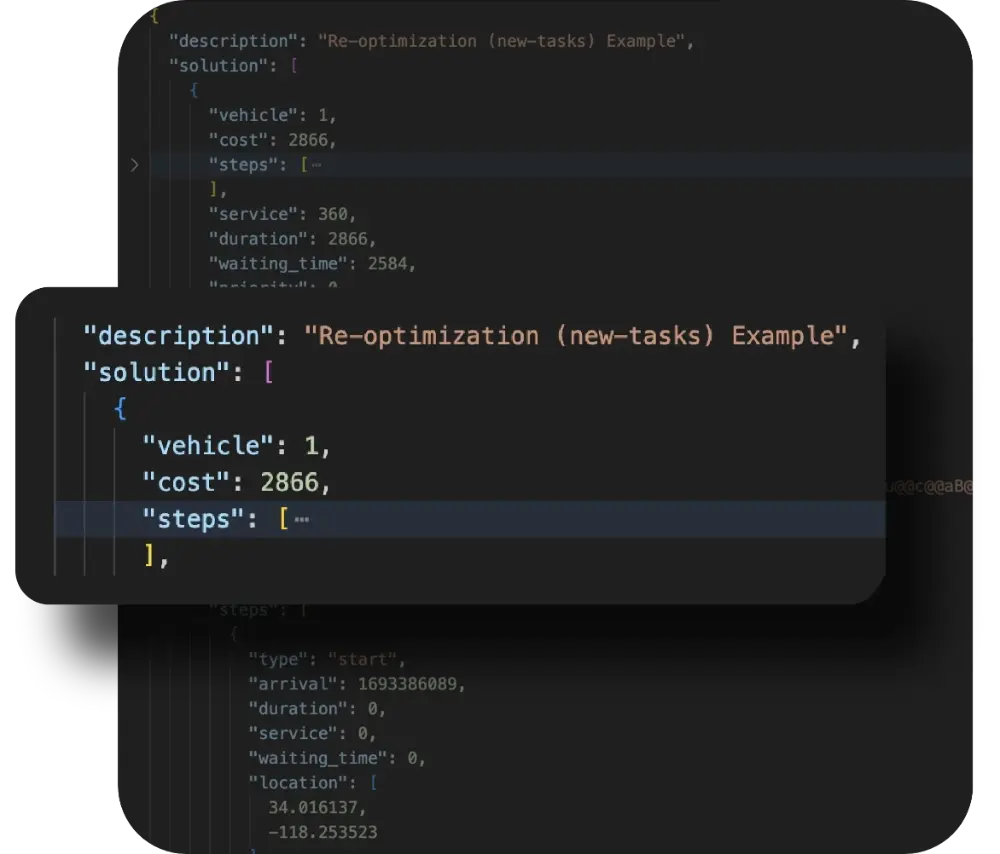
Dynamic route optimization recalculates routes when conditions change after the initial plan has been created. This is useful when real-world events affect planned deliveries.
Changes can include:
Instead of relying on a static route for the entire shift, distributors can adjust delivery plans based on updated conditions. This can help keep routes feasible when actual operating conditions differ from the original plan.
Mixed-fleet optimization determines which vehicle or carrier should handle each delivery when a distributor operates different vehicle types or combines owned and contracted capacity.
The optimization process can consider:
For example, a high-volume delivery may be assigned to a larger owned vehicle, while a smaller order may be allocated to a contracted vehicle based on availability and cost. This approach helps distributors make better use of different fleet resources rather than applying the same routing strategy to every vehicle.
These strategies are not mutually exclusive. A beverage distributor may combine multi-stop, capacity-based, time-window, dynamic, and mixed-fleet optimization to create routes that reflect the realities of its distribution network. The right combination depends on the number of deliveries, fleet structure, customer requirements, geographic coverage, and operational constraints.
Choosing beverage distribution route optimization software requires more than comparing the number of routing features on a product page. The right platform should fit the complexity of your distribution network, support the constraints that affect daily operations, integrate with your existing technology stack, and scale as delivery volumes grow.
Before evaluating individual vendors, consider the following capabilities.
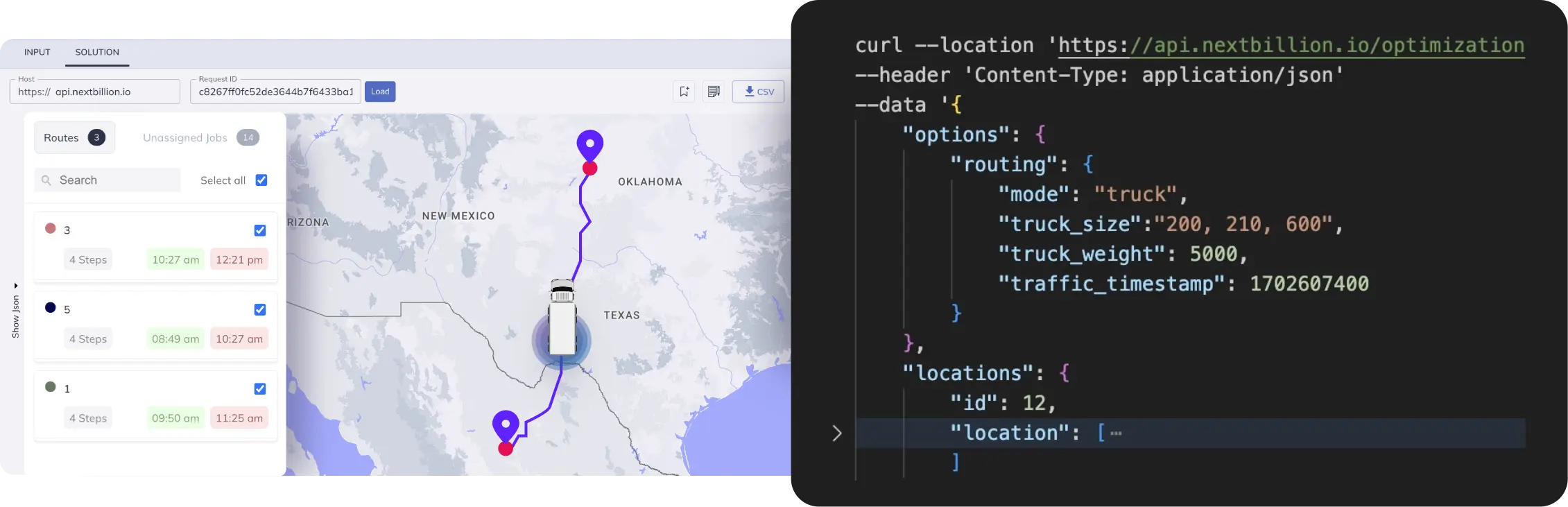
Start by assessing whether the platform can handle the routing scenarios your distribution operation requires.
Look for:
For beverage distributors, these capabilities are particularly relevant when managing high delivery volumes across different locations and vehicles. NextBillion.ai’s food and beverage solution includes route optimization capabilities designed to support complex delivery networks and multiple routing constraints.
The platform should allow you to model the constraints that determine whether a route is practical to execute.
Consider whether it supports:
A platform that cannot represent these constraints may generate routes that look efficient on paper but are difficult or impossible to execute.
Route optimization requirements can change significantly as a distributor adds customers, vehicles, warehouses, or delivery regions. Evaluate the platform based on the scale at which your operation runs today and where it is likely to operate in the future.
Consider:
Scalability is particularly important for distributors that need to optimize large numbers of delivery tasks without significantly increasing manual planning effort.
Route optimization works best when it can exchange data with the systems already used to manage orders, inventory, fleet operations, and customer information.
Evaluate integration capabilities across:
NextBillion.ai provides API and SDK-based mapping, routing, optimization, and navigation capabilities that can be integrated with enterprise systems, including ERP and telematics platforms.
Every beverage distribution network has its own operating rules. A platform should therefore provide enough flexibility to adapt routing logic to your business rather than forcing you to work around fixed assumptions.
Look for support for:
This can be useful when standard map or routing data does not fully represent how your distribution network operates. NextBillion.ai highlights custom maps, routing preferences, restricted areas, and business-specific routing requirements as part of its food and beverage solution.
Pricing and deployment models should also align with how your distribution operation uses routing technology. Compare the total cost based on your expected usage rather than evaluating price in isolation.
Consider whether the vendor offers:
NextBillion.ai positions flexible asset-based and task-based pricing, along with API and SDK access, as part of its food and beverage offering.
Ultimately, the right route optimization platform should support the operational reality of beverage distribution, not just produce shorter routes. A useful evaluation should consider routing capabilities, constraints, scalability, integrations, customization, and commercial fit together.