



Route Optimization API
Optimize routing, task allocation and dispatch
Distance Matrix API
Calculate accurate ETAs, distances and directions
Directions API
Compute routes between two locations
Navigation API & SDK
Turn by Turn Instructions for Drivers & Technicians
Route Optimization Software
Plan optimized routes with 50+ Constraints
Product Demos
See NextBillion.ai APIs & SDKs In action
Location Reasoning AI
Help your AI agents answer location-based questions
AI Route Optimization
Learns from Your Fleet’s Past Performance
Platform Overview
Learn about how Nextbillion.ai's platform is designed
On-Premise Deployments
Take Full Control of Your Maps and Routing
About Us
Our story, vision
and mission
Contact Us
Reach out to us for any product- or media-related queries
Write to us at

Table of Contents
Route planning and Hours of Service compliance are not separate problems. They are the same problem looked at from two different directions.
Fleet managers think about routes in terms of stops, miles, and delivery windows. Compliance officers think about driving hours, mandatory breaks, and 14-hour duty clocks. But on the road, a single driver has to satisfy both sets of requirements simultaneously. And when the route was not built with HOS limits in mind, one of those two requirements usually gives way; either the delivery window slips or the driver stretches their hours in ways that create legal exposure.
The FMCSA’s Hours of Service regulations for property-carrying commercial motor vehicle drivers set out strict limits: 11 hours of driving within a 14-hour duty window, a 30-minute break requirement after 8 cumulative hours of driving, and a 10-hour off-duty reset before the next shift. They are regulatory requirements with penalties attached.
For fleets managing multi-stop routes across long service territories, HOS rules effectively cap the usable working day in ways that map-based planning tools do not reflect. So how exactly do HOS rules shape route planning, and what does it take to build routes that are efficient and compliant from the start? Keep on scrolling to find out!

Hours of Service regulations are federal rules set by the Federal Motor Carrier Safety Administration (FMCSA) that govern how long commercial motor vehicle (CMV) drivers in the United States can drive, how long they can remain on duty, and how much rest they must take between shifts. They apply to drivers operating vehicles above 10,001 pounds GVWR, vehicles transporting hazardous materials, or vehicles designed to carry 16 or more passengers.
The rules exist because fatigued driving is a documented safety risk. A fatigued driver’s reaction time, decision-making, and hazard awareness deteriorate in ways that are comparable to alcohol impairment. By limiting how long a driver can be behind the wheel in a given period, HOS regulations are designed to reduce crash risk for both the driver and everyone else on the road.
From a fleet operations perspective, though, these regulations do more than protect driver safety. They define the operational envelope within which every route must be planned. Ignore them at the planning stage, and you will discover the constraint mid-delivery, usually at the worst possible moment.
The table below covers the standard HOS rules that apply to property-carrying CMV drivers under FMCSA regulations. These are the limits most relevant to trucking, freight, and multi-stop delivery fleets.
HOS Rule | Limit |
11-Hour Driving Limit | Max 11 hours of driving after 10 hours off-duty continuously |
14-Hour Duty Window | No driving after 14th hour of being on duty |
30-Minute Break Requirement | Break of 30 minutes must be taken after 8 hours of driving continuously |
10-Hour Off-Duty Reset | 10 hours off-duty continuously before starting a new duty period |
60/70-Hour Limit | Max 60 hours of work in 7 days or 70 hours in 8 days |
34-Hour Restart | 70-hour limit is refreshed by 34 hours off-duty continuously |
Short-Haul Exemption | Driver is within 150 air miles from home base, returning back in the same day |
Adverse Conditions Extension | Two additional hours can be driven if some unforeseen conditions arise |
Split Sleeper Berth | 8/2 or 7/3 split of 10 hours off-duty in berth |
Note: Passenger-carrying CMVs have different regulations (10-hour drive time, 15-hour duty time). These regulations apply to property-carrying CMV drivers. Certain goods that can be transported may also have further exemptions (such as agricultural products and oil fields).
Knowing the individual rules is one thing. Understanding how they interact with a live multi-stop route is another. Each HOS limit does not operate in isolation; they stack on top of each other throughout the driver’s shift, and a route that looks achievable when only one limit is considered may become unworkable when all of them are applied together.
Here is why that matters in practice.
The 14-hour duty clock starts the moment a driver goes on duty, not the moment they start driving. Pre-trip inspection, loading time at the depot, waiting for dispatch confirmation, and the first leg of travel all come out of the same 14-hour window as the driving itself.
A driver who goes on duty at 6 AM and spends 45 minutes on pre-trip and depot procedures before leaving has already consumed nearly an hour of their 14-hour window before reaching the first stop. By the time they have completed six stops with average service times of 20 minutes each, another two hours are gone. In a route planned to use the full 11 hours of driving time, this kind of real-world time erosion can push the last two or three stops outside the compliant window.
This is one of the most misunderstood aspects of HOS planning. The mandatory 30-minute break must occur before the driver has accumulated 8 hours of driving time. But the 14-hour duty clock keeps ticking during the break. Taking a 30-minute break does not extend the 14-hour window by 30 minutes.
This has direct route planning consequences. A break inserted mid-route consumes duty time without producing deliveries. The route must be sequenced so that the break falls at a logical point between stop clusters, near a rest area, or during a longer service time at a stop where the driver can legally rest without leaving stops stranded on the wrong side of the duty window.
Driving hours and on-duty hours are not the same thing. A driver who parks, unloads, obtains proof of delivery, and waits for a receiving signature is on duty but not driving. That time counts toward the 14-hour duty window even though it does not count against the 11-hour driving limit.
For routes with high stop counts and long service times warehouse drops, furniture deliveries, healthcare equipment installations the gap between available driving hours and available duty hours can be significant. A driver may have three hours of driving time remaining but only one hour left in their 14-hour window. The route needs to account for both.
Monday’s route affects what is available for Tuesday. A driver who runs close to their maximum hours on Monday and Tuesday may have reduced availability on Wednesday ven if they completed their required 10-hour off-duty reset each night. Fleet planners who look only at individual routes without tracking cumulative hours risk discovering mid-week that a driver cannot legally complete their assigned route.
This cumulative tracking is especially important during high-volume periods, when the temptation is to push drivers hard early in the week and deal with capacity gaps later. A better approach- the one that HOS-aware routing enables is to plan the week’s routes with remaining driver hours as a live constraint, not a post-fact check.
Let us move from the rules themselves to the practical planning decisions they constrain. These are the areas where HOS limits show up most directly in how routes are built and executed.
The most direct consequence of HOS limits is on how many stops a driver can realistically serve in a single shift. This is not simply a function of distance. A 200-mile route with 5 stops and minimal service time may be well within HOS limits. A 120-mile route with 18 stops, 25-minute average service time, and a depot wait at the start of the shift may push a driver close to or beyond their duty window.
Route planning that accounts for HOS must calculate available usable hours per driver after deducting pre-trip time, depot procedures, mandatory break, and realistic service time before assigning a stop count. Overloading a driver’s route because the distance looks manageable is one of the most common causes of HOS violations in multi-stop fleets.
The 30-minute break cannot simply be inserted wherever the driver has a gap. It must fall before 8 cumulative hours of driving, which means the route sequence must include a viable break point before that threshold is reached. Placing the break too early wastes driving time. Placing it too late creates a violation.
In a well-planned HOS-aware route, the break is positioned at a point in the sequence where it is logistically natural between two stop clusters, during a longer stop with a waiting period, or at a location near a rest facility. It should not be tacked on at whatever point the 8-hour mark happens to fall, especially if that point is in the middle of a dense delivery cluster where parking is difficult.
When a driver starts their shift affects when their 14-hour window close nd therefore which delivery windows are reachable on that day. A driver starting at 5 AM can legally be on duty until 7 PM. A driver starting at 8 AM is off the clock by 10 PM. That three-hour difference matters when stops have evening receiving windows or when a route runs longer than planned.
For multi-driver fleets, staggered start times are a practical tool for extending collective delivery coverage across a longer operational day as long as each driver’s individual HOS window is tracked independently. Route planning systems that do not account for individual start times cannot correctly model the duty window for each driver.
Not every driver starts the day with the same hours available. A driver at 52 hours of the 60-hour weekly limit has 8 hours remaining, which may not be enough for a full-day route. Assigning that driver to a route built for someone with 14 hours of available drive time is a planning error that does not show up until the driver has to stop mid-route.
HOS-aware route planning uses remaining hours as a driver assignment variable. The system checks available driving hours before assigning a route the same way it checks vehicle capacity or delivery window compatibility. A driver who cannot complete the assigned route within their remaining hours is flagged before dispatch, not discovered mid-delivery.
Long-haul and regional distribution routes sometimes extend beyond a single driver’s duty window. Managing this compliantly requires either a relay arrangement where a second driver takes over when the first reaches their limit, or a planned rest stop that allows the original driver to take their 10-hour reset and continue.
Both approaches require the route plan to account for the handover or rest point explicitly. A relay route that assumes the incoming driver is available without checking their own hours is just as likely to fail as a single-driver route that ignores HOS limits. HOS-aware routing treats driver hours as a connected constraint across the full delivery network, not just per individual route.

Treating HOS rules as a compliance matter rather than a planning constraint does not eliminate the consequences. It just shifts when they appear rom the planning screen to the road, where they are harder and more expensive to manage.
When a driver runs out of legal hours before completing their route, the remaining stops do not get delivered. In freight and distribution operations, this means a missed delivery window, which may trigger SLA penalties, customer complaints, or expedited rescheduling costs. In time-sensitive verticals like healthcare, pharmaceutical distribution, or just-in-time manufacturing supply, an incomplete route can halt an operation downstream.
Drivers who continue past their legal limit, whether knowingly or because they were not aware how close they were, create a violation record that can affect both the individual driver’s CDL standing and the fleet’s safety rating. FMCSA assigns Safety Measurement System scores to carriers, and HOS violations contribute to those scores. A deteriorating SMS score can trigger audits, affect insurance premiums, and in serious cases, lead to operational restrictions.
With Electronic Logging Devices now mandatory for most CMV drivers, there is no margin for informal adjustments to the log. HOS data is recorded automatically and is available to enforcement officers at roadside inspections. A route that required a driver to exceed their limit cannot be hidden.
A driver who takes their mandatory 30-minute break in the wrong location may, after completing only 4 hours of driving, because that was when the route passed a rest area, have not violated any rule. But they have reduced the productive use of their remaining duty window. If they hit the 8-hour driving mark again before a suitable break location appears later in the route, the planning error becomes a sequencing problem that cannot be fixed without pulling the driver off the road.
When a driver cannot complete their assigned route, someone has to cover the remaining stops. That usually means extending another driver’s shift, dispatching an additional vehicle, or arranging a next-day reattempt. None of these outcomes is planned or cost-efficient. They are the downstream consequences of a route that was never compliant to begin with.
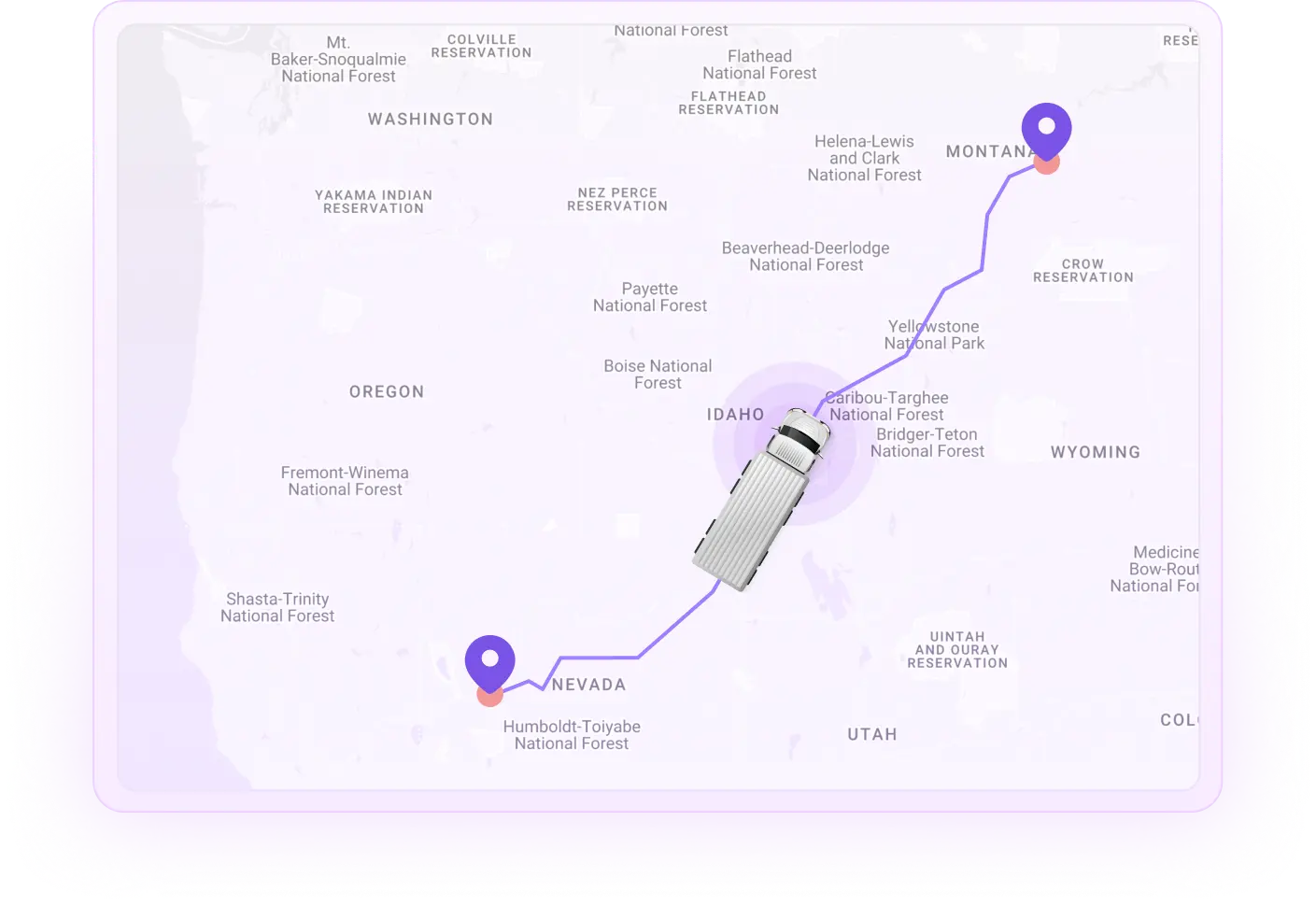
The difference between HOS-aware routing and standard route planning is not cosmetic. It is structural. HOS constraints are not applied as a filter after the route is built; they are part of the input data that the optimisation engine uses to build the route in the first place.
Here is what that means in practice.
Before the optimisation engine assigns stops to a driver, it checks how many driving hours and duty hours that driver has available. This is not a manual lookup. The system reads current driver status from ELD data or a connected dispatch platform and uses remaining hours as an explicit constraint in the vehicle-to-stop assignment process.
A driver with 6 hours of driving time remaining is not assigned a route that requires 9 hours of driving regardless of how good their geographic coverage looks on the map. The system finds a different driver, splits the route, or schedules the overflow for the following shift.
The 30-minute break is planned into the route as a sequencing constraint, not added as a note to the driver. The optimisation engine calculates when the 8-cumulative-hour driving threshold will be reached based on the planned stop sequence and travel times, then identifies the most logical break point before that threshold.
That break point is chosen with the rest of the route in mind, positioned between stop clusters, near a verified rest location, and at a time that minimises the impact on downstream delivery windows. The break is not simply inserted wherever it fits; it is positioned where it fits without disrupting the rest of the plan.
The system models the full 14-hour duty window for each driver based on their actual start time, not a generic assumption. Pre-trip time, depot loading, service time at each stop, drive time between stops, and the mandatory break are all factored into the duty window calculation. If the resulting route pushes any stop past the driver’s legal duty close time, the system flags it before dispatch.
This kind of modelling is only possible when the routing engine has access to accurate service time estimates, realistic drive time data, and confirmed driver start times. Generic or optimistic inputs produce plans that look compliant on screen but are not viable on the road.
Drivers who operate within 150 air miles of their home terminal and return to that terminal within their shift are eligible for the short-haul exemption, which removes the 30-minute break requirement and the ELD mandate for that day. HOS-aware routing systems identify which drivers and routes qualify for this exemption and apply the appropriate rules rather than applying the standard long-haul constraints to every driver regardless of their operational profile.
This distinction matters because incorrectly applying long-haul HOS constraints to short-haul drivers artificially reduces the stop count they are assigned, wasting available capacity.
The 60/70-hour weekly limit means that daily route planning cannot be done in isolation. A routing system that is aware of cumulative hours uses the remaining weekly balance as a constraint alongside daily limits. Drivers who are close to their weekly cap receive lighter routes or days off before the cap is hit rather than being assigned a full-day route and stopping mid-delivery when their weekly hours run out.
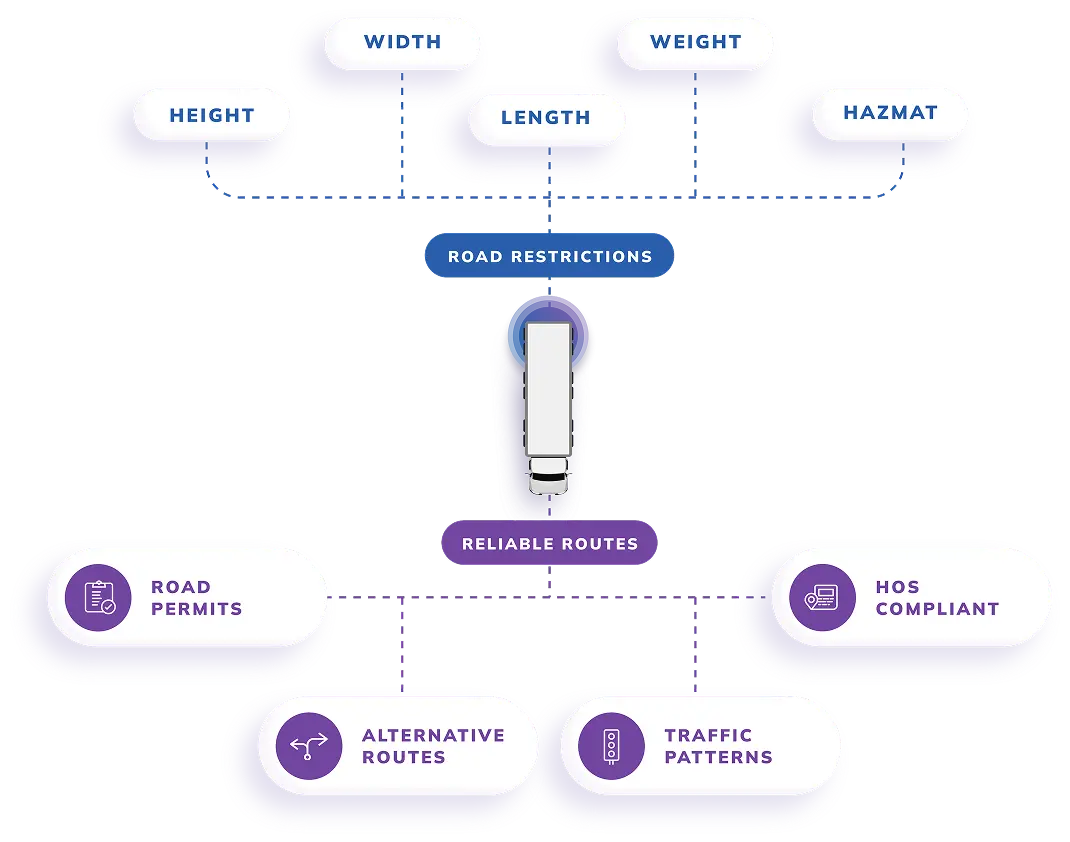
Electronic Logging Devices are now mandatory for most commercial motor vehicle drivers in the United States. ELDs automatically record driving time, on-duty status, and rest periods, replacing the paper logbooks that were previously used for HOS tracking.
For route planning, ELD data is valuable beyond compliance. When a routing system can read live ELD records, it has access to each driver’s actual available hours not a scheduled estimate, but the current remaining time based on what has already been driven that day and that week. This makes HOS-aware route planning significantly more accurate.
Without ELD integration, a planner building the next day’s routes is working from estimates and shift schedules. With it, the system knows exactly how many hours each driver has remaining and can assign routes accordingly. The practical result is fewer violations, better capacity utilisation, and less manual tracking by dispatch teams.
ELD data also creates an audit trail that protects carriers during inspections and reviews. When HOS compliance is documented automatically, and route plans are built around accurate remaining hours, the risk of inadvertent violations the kind that happen because a planner miscalculates available time is considerably reduced. lower
For fleet operations managers evaluating whether their current planning approach handles HOS correctly, here is what to look for.
Planning Element | HOS-Aware Standard | Common Gap in Manual Planning |
Driver hours input | Remaining driving and duty hours read from ELD or confirmed shift data | Assumed to be full shift; cumulative hours not checked before assignment |
Service time modelling | Stop-specific estimates used; on-duty time calculated separately from drive time | Uniform estimates applied; service time not deducted from duty window |
Break placement | Break positioned before 8-hour driving threshold at a logical stop-sequence point | Break noted as a reminder to driver; not built into sequence or ETA calculation |
14-hour window close | Every stop confirmed as reachable within individual driver’s duty window close time | Total drive time checked; duty window close often not modelled per driver |
Weekly hours tracking | Remaining weekly balance used as an assignment constraint | Daily availability assumed without cross-checking weekly cumulative hours |
Short-haul eligibility | Route and driver profile checked; exemption applied where qualified | Standard long-haul rules applied to all drivers regardless of route type |
Urgent insertions | Available hours checked before inserting a new stop into an active route | Stop inserted based on proximity; hours impact not modelled until driver flags it |
Split-sleeper eligibility | Sleeper berth split options considered for long-haul or overnight routes | Not assessed; standard 10-hour reset assumed for all drivers |
Route optimisation is only as useful as the constraints it understands. A routing engine that can balance delivery windows and vehicle capacity but cannot account for driver hours will produce plans that look right on screen and fail on the road. NextBillion.ai is built to handle the operational constraints that make last-mile and distribution routing genuinely complex, including driver availability and time-based limits.
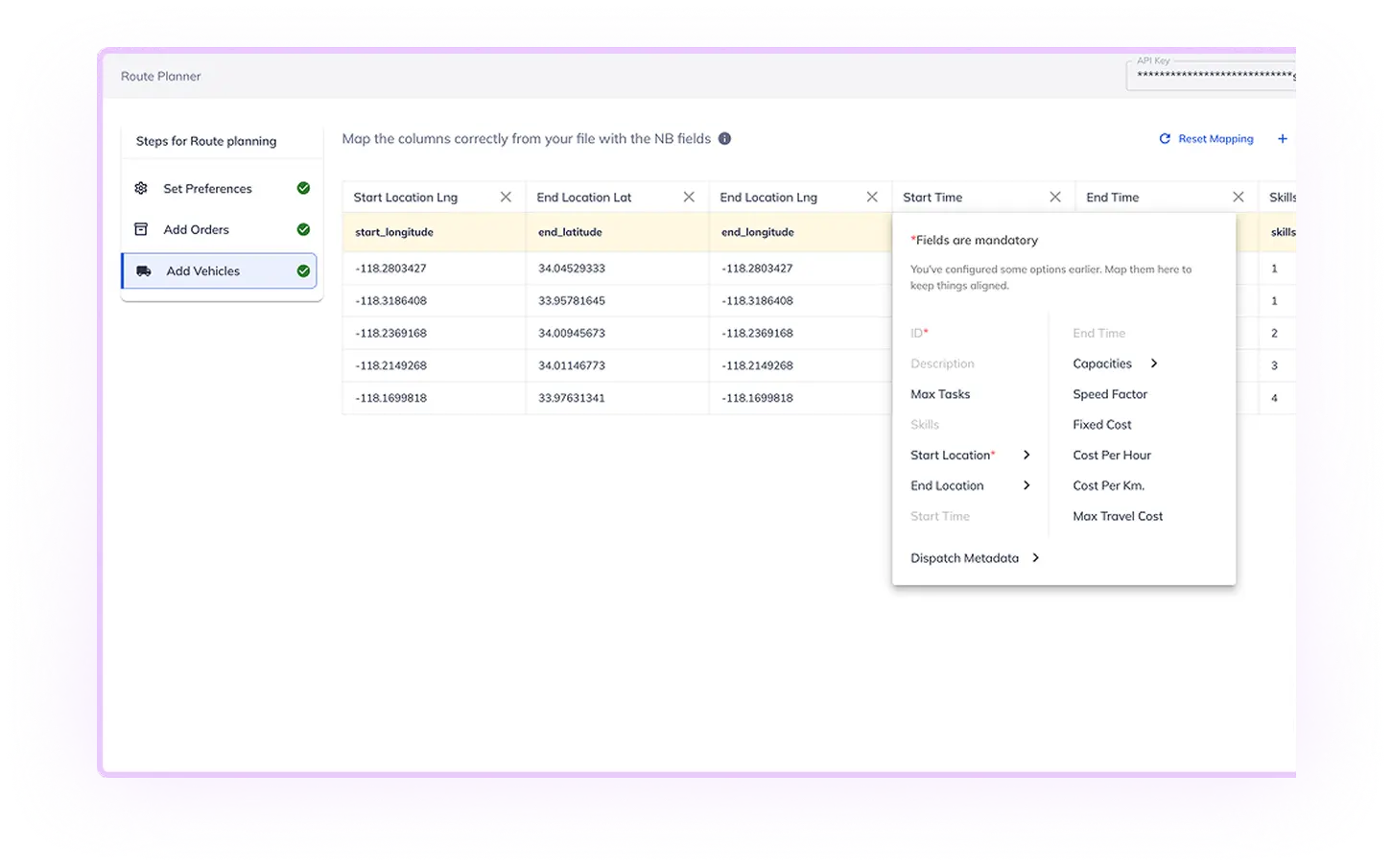
Our platform treats driver availability, including shift hours, start times, and break requirements, as a core constraint in the vehicle-to-stop assignment process, not a post-assignment check. Routes are built around what each driver can legally complete within their available window, which means plans arrive at the dispatch stage already calibrated to the fleet’s actual capacity for that day.
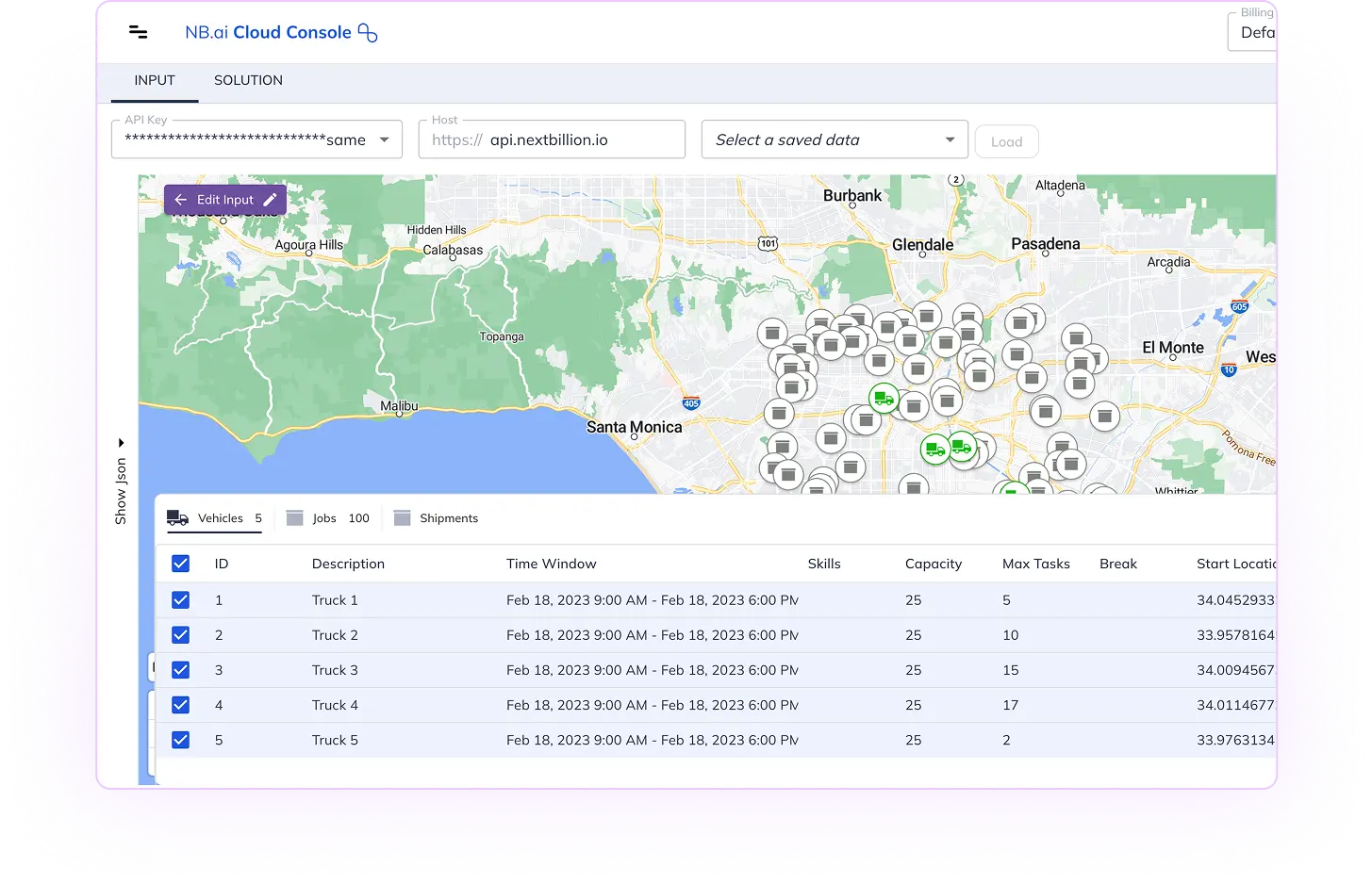
NextBillion.ai supports stop sequencing that models total on-duty time, not just drive time between stops. Service time, depot procedures, and break windows can be incorporated into the route calculation so that the plan reflects how the shift will actually unfold, rather than how it would unfold if every stop ran on the optimistic estimate.
Our routing APIs are designed to integrate with the systems fleet operations teams already use. When ELD data, driver status, or remaining hours from a fleet management platform are available through integration, that data can inform route optimisation directly. The result is route plans built on actual driver availability rather than scheduled assumptions, which closes the most common gap between planned compliance and real-world compliance.
HOS limits are not static throughout the delivery day. A driver who has an unexpectedly long stop has fewer hours remaining than the plan assumed. A traffic delay that adds an hour to the first half of a route changes what is reachable in the second half. NextBillion.ai‘s dynamic re-routing capability allows routes to be adjusted in real time when conditions change, flagging stops at risk and identifying whether they should be reassigned before a compliance issue develops rather than after.
The complexity of HOS-aware planning scales with the size of the fleet. A 10-vehicle operation managing individual driver hours is manageable with careful attention. A 60-vehicle operation with staggered start times, mixed short-haul and long-haul drivers, weekly hour variation across the team, and daily urgent order volume requires a systematic approach. Our routing APIs handle that complexity at scale, without requiring fleet planners to manually track and reconcile driver hours across every route.
Lorem ipsum dolor sit amet, consectetur adipiscing elit. Ut elit tellus, luctus nec ullamcorper mattis, pulvinar dapibus leo.
Hours of Service rules are not just a compliance box to tick after a route is built. It is a true limitation that impacts how much time is available for driving, when breaks should happen, what order stops need to occur, and which driver is able to legally make each individual route on a particular day. Companies that approach HOS as a factor in their planning process and not a back-end audit process can avoid issues before they become violations or missed opportunities. NextBillion.ai provides the routing infrastructure that makes HOS-aware planning systematic and executable at scale.
Yes. Remaining driving hours, on-duty windows, and mandatory breaks all limit what a route can realistically include, not just how it’s sequenced.
Planning the route on the basis of distance and time windows without the verification if the route fits into driver’s allowable hours.
Yes. Time spent waiting at a dock or shipper counts as on-duty time and reduces the hours available for driving.
Yes. It can factor in a driver’s weekly totals and next available restart window before assigning multi-day routes.
No. Although ELDs log hours properly, they cannot generate routes. In contrast, HOS-based route planning uses the information provided by ELDs to create the route plan.
Yes. Remaining stops can be reassigned or rescheduled in real time before a tight schedule turns into a violation.
Bhavisha Bhatia is a Computer Science graduate with a passion for writing technical blogs that make complex technical concepts engaging and easy to understand. She is intrigued by the technological developments shaping the course of the world and the beautiful nature around us.