

- BLOG
Route Optimization with AI Agents(Beyond Static APIs)
Published: June 2, 2026
Route Optimization API
Optimize routing, task allocation and dispatch
Distance Matrix API
Calculate accurate ETAs, distances and directions
Directions API
Compute routes between two locations
Navigation API & SDK
Turn by Turn Instructions for Drivers & Technicians
Route Optimization Software
Plan optimized routes with 50+ Constraints
Product Demos
See NextBillion.ai APIs & SDKs In action
AI Route Optimization
Learns from Your Fleet’s Past Performance
Platform Overview
Learn about how Nextbillion.ai's platform is designed
Road Editor App
Private Routing Preferences For Custom Routing
On-Premise Deployments
Take Full Control of Your Maps and Routing
Table of Contents
Imagine planning the perfect delivery route at 8:00 AM, only for a sudden traffic jam, a flash storm, and three last-minute customer cancellations to wreck it by 8:30 AM.
For years, logistics teams have relied on traditional route optimization software to map out paths for their fleets. While these tools are great for initial planning, they have a major flaw: they are static. They treat route planning as a one-time chore rather than a living, breathing process.
Instead of just calculating a fixed route and stepping aside, AI agents act as continuous, autonomous coordinators. They watch over your operations in real time, make smart decisions on the fly, and fix disruptions before they snowball into costly delays.
This guide breaks down how AI agents are transforming route optimization from rigid plans into adaptive, autonomous operations and why this shift is critical for modern logistics.
To understand where logistics is going, we have to look at where it is stuck. Traditional route optimization relies on static Application Programming Interfaces (APIs).
The workflow is simple but rigid: you feed the API your delivery locations, vehicle capacities, and time windows. The API runs the numbers and spits out the most efficient route at that exact moment.
But the real world doesn’t stay still. Once drivers hit the road, a fast-moving mix of variables creates operational chaos:
When a disruption happens, static APIs cannot fix it independently. They require human intervention. A dispatcher must manually review the affected routes, call or message drivers, calculate a new plan, and manually update the customer.
This creates a massive operational bottleneck. As your fleet scales, relying on manual coordination becomes impossible to sustain.
An AI agent is an intelligent software system that doesn’t just calculate data; it observes, decides, and acts autonomously.
Think of a traditional routing API as a high-tech map, while an AI agent is an experienced digital co-pilot sitting right next to your dispatcher. It connects your existing tools into a single, cohesive ecosystem to keep your fleet running smoothly.
To understand how AI agents redefine logistics, it helps to look at the three core capabilities that separate them from traditional software:
To see the true value of an AI routing agent, consider how it handles a routine, real-world headache compared to traditional legacy systems.
The Scenario: A delivery truck carrying high-priority orders gets stuck behind a sudden road closure caused by a major accident.
By taking over these repetitive, high-speed coordination tasks, AI agents allow logistics companies to transition away from reactive damage control. Instead, they give fleets the power to run autonomous, self-healing dispatch operations that adapt to the real world in real time.
Feature | Static Routing APIs | AI Agent-Based Routing |
Execution Model | One-time route calculation | Continuous route orchestration |
Decision-Making | Requires manual human updates | Autonomous, real-time adjustments |
Operational Stance | Reactive (waits for a new request) | Proactive (monitors and adapts live) |
Context Awareness | Considers fixed rules and inputs | Evaluates live, changing conditions |
Workflow Impact | High dispatcher workload | Collaborative, AI-assisted operations |
Instead of acting as a standalone tool, an AI agent lives as a smart decision-making layer on top of your existing software stack. It continuously pulls and pushes data across various platforms to maintain complete operational awareness.
[Warehouse & CRM Systems] <–> [ AI AGENT LAYER ] <–> [Telematics & Traffic Feeds
[Driver Apps & Routing APIs]
By acting as a centralized brain, AI agents unlock capabilities that traditional software simply cannot match.
When a disruption occurs—such as a sudden road closure—the AI agent detects it instantly through telematics and traffic feeds. It immediately simulates alternative paths, evaluates the impact on delivery SLAs, balances the workload among nearby drivers, and updates the active routes seamlessly.
Static Routing Workflow | AI-Driven Re-Routing Workflow |
Driver reports issue manually | System detects disruption automatically |
Dispatcher reviews routes | AI agent evaluates alternatives instantly |
Dispatcher recalculates routes | Routes update dynamically |
Driver waits for instructions | Drivers receive immediate updates |
Customers receive delayed notifications | Customers receive real-time ETA updates |
Intelligent dispatching uses AI agents to automate and optimize delivery assignment decisions in real time.
Instead of sticking to rigid morning schedules, AI agents support dynamic job assignment.
Example: Imagine an urgent, high-priority medical delivery enters your system at noon.
Self-healing routes are delivery paths that automatically fix themselves when things go wrong.
The AI agent runs through a continuous loop:
If conditions change again, the process repeats automatically.
Self-healing routes help logistics teams improve operational stability while reducing manual coordination work.
As delivery operations become more dynamic, adaptive route optimization systems are becoming increasingly important for autonomous logistics operations.
Operational Challenge | Static Routing | Self-Healing Routing |
Traffic disruptions | Manual updates | Automatic recovery |
Delivery delays | Reactive | Predictive |
Driver schedule conflicts | Dispatcher-managed | AI-managed |
SLA risk | High | Reduced |
Operational visibility | Partial | Continuous |
AI agents do not necessarily replace dispatchers. In many logistics operations, they function as AI copilots that assist human operators with faster and more informed decision-making.
The dispatcher remains responsible for operational oversight, while the AI system handles repetitive analysis, monitoring, and coordination tasks.
This creates a collaborative workflow between humans and AI systems.
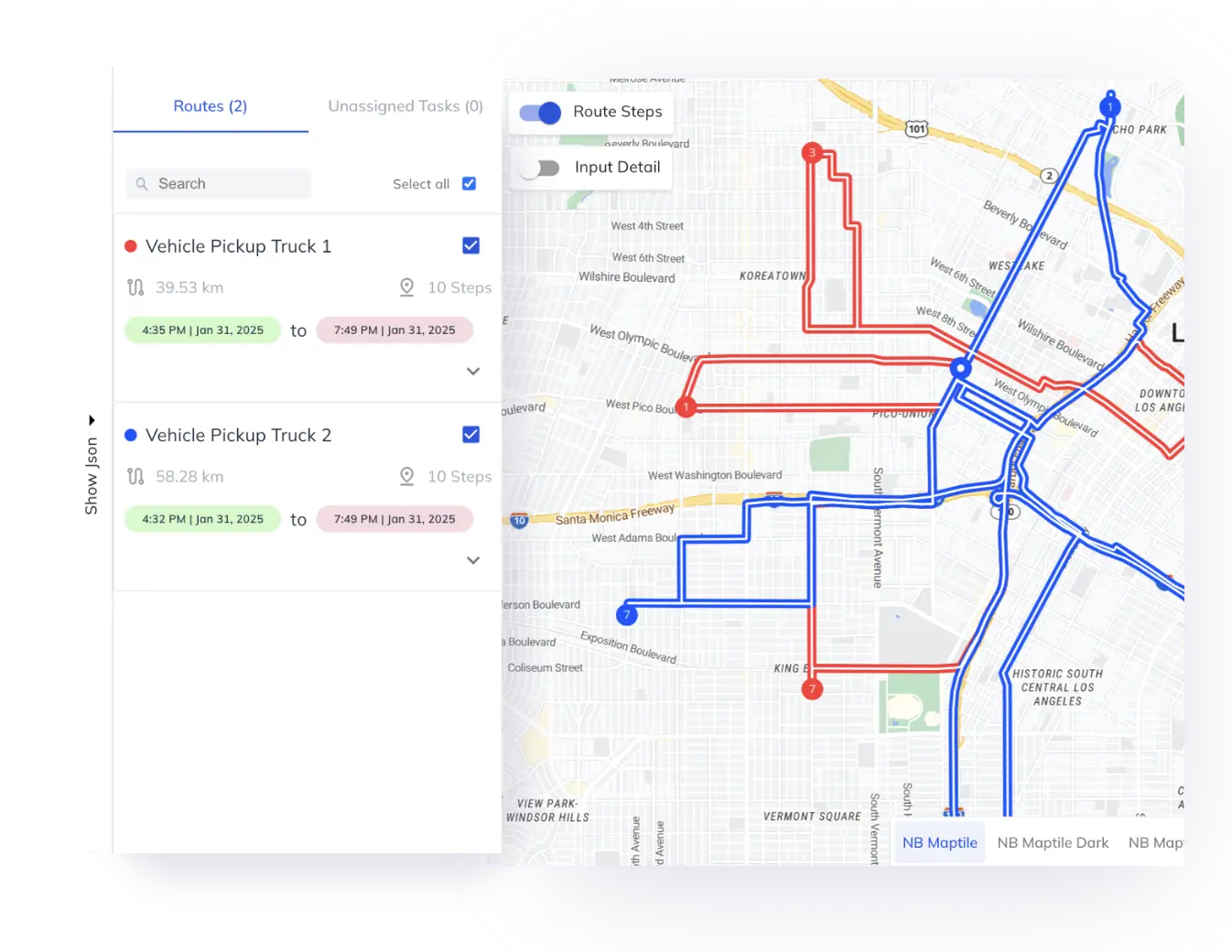
AI dispatch copilots can assist with:
These capabilities help dispatch teams manage larger fleets more efficiently.
Full autonomy is not always required in logistics operations.
Some routing decisions may involve:
In these situations, human approval may still be necessary before major operational changes are applied.
This model is called human-in-the-loop dispatching.
The AI system provides recommendations and operational analysis, while dispatchers approve or modify critical decisions.
This improves dispatcher productivity without removing human oversight.
For example, one dispatcher may be able to manage three times more vehicles with AI-assisted operations compared to fully manual dispatch coordination.
Traditional routing APIs focus primarily on route calculation. AI-agent-based systems manage the full operational workflow continuously.
The difference becomes more visible during live logistics operations.
Workflow Stage | Static API Model | AI Agent Model |
Route generation | One-time request | Continuous optimization |
Traffic handling | External recalculation | Autonomous adaptation |
Exception management | Manual | Automated |
Driver communication | Separate systems | Coordinated workflows |
Customer updates | Delayed/manual | Real-time automated |
Learning from past operations | Minimal | Continuous improvement |
AI-agent systems support:
Instead of operating as isolated tools, AI agents coordinate multiple operational systems together.
AI agents are widely used in last-mile delivery operations where conditions change rapidly throughout the day.
Common use cases include:
This helps improve delivery success rates and reduce delays.
Field service companies use AI agents to optimize technician scheduling and dispatch coordination.
Capabilities include:
For example, if an emergency repair request appears, the AI system can automatically identify the nearest qualified technician and adjust schedules dynamically.
AI agents help fleet operators improve vehicle and driver efficiency across daily operations.
Key applications include:
Continuous optimization helps reduce operational costs while improving delivery performance.
Electric vehicle fleets introduce additional routing complexity due to charging limitations and battery constraints.
AI-agent systems help manage:
This improves reliability for electric delivery operations.
AI-agent-based routing systems combine multiple technologies into a connected operational intelligence platform.
These systems continuously process live operational data and automate logistics decision-making.
AI agents do not replace routing APIs entirely. Routing APIs still remain the execution layer responsible for:
AI agents act as the operational intelligence layer on top of these APIs.
The AI system decides:
This creates a layered architecture where APIs execute routing logic while AI agents coordinate operational decisions continuously.
AI-agent-based logistics systems offer major operational advantages, but implementation also introduces new challenges.
AI systems depend heavily on accurate and timely operational data.
Problems such as:
can reduce routing accuracy and decision quality.
Poor data visibility can cause incorrect rerouting decisions and operational inefficiencies.
Dispatchers and logistics operators need to understand why AI systems make certain decisions.
This is especially important for:
Explainable AI becomes important because human operators must trust the system before allowing higher levels of automation.
AI-agent routing systems often require integration across multiple operational platforms, including:
Integration complexity can increase deployment time and operational costs.
Building a fully autonomous routing system from scratch is a massive undertaking. It requires incredibly accurate map data, live traffic feeds, heavy-duty algorithms, and real-time fleet tracking engines. This is where specialized location intelligence platforms like NextBillion.ai come into play.
Instead of forcing companies to build these complex components from the ground up, NextBillion.ai provides the foundational building blocks that allow software developers and logistics teams to easily construct intelligent, AI-agent-driven dispatch ecosystems.
In short: NextBillion.ai serves as the muscle and sensory network, while your AI agent acts as the centralized brain.
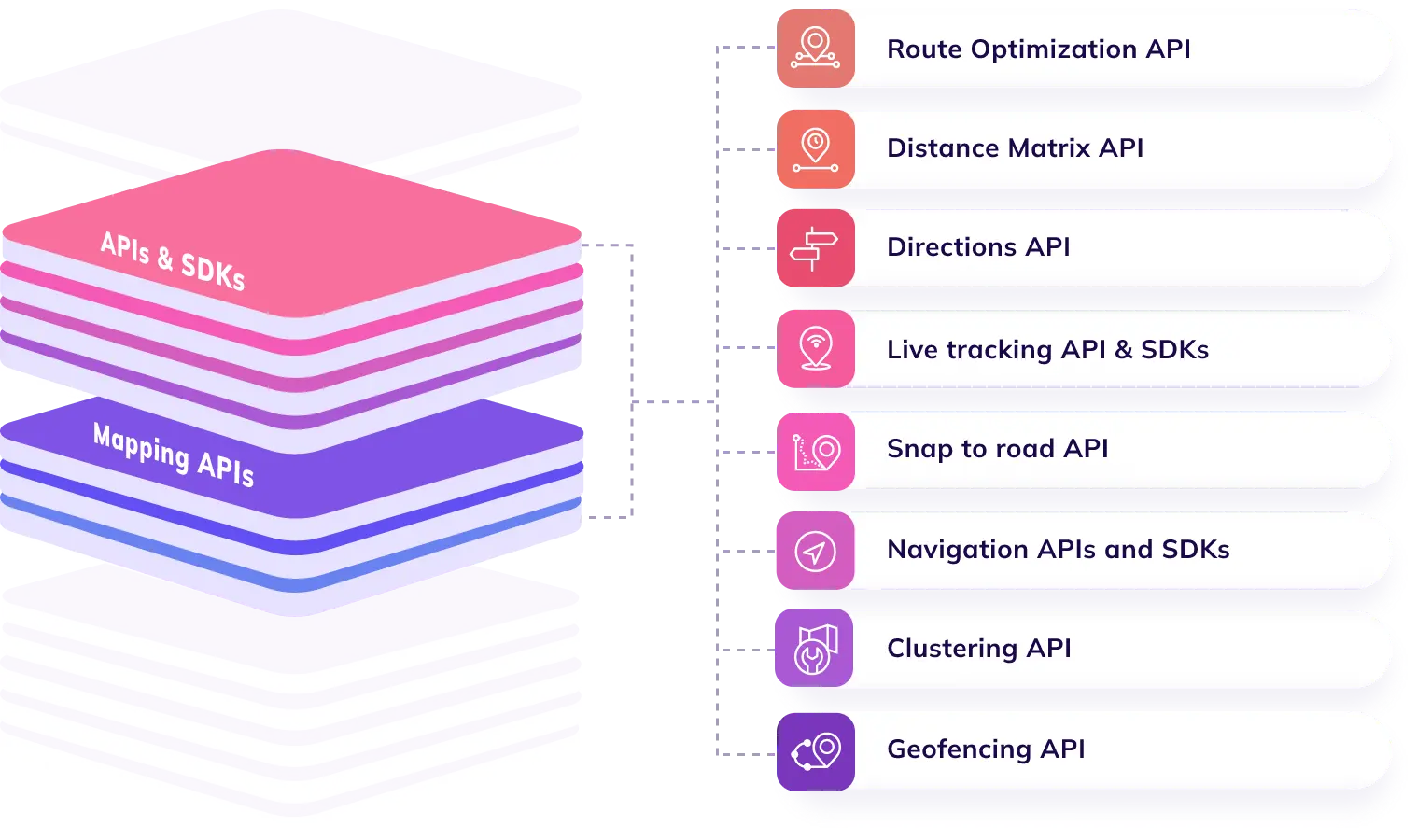
NextBillion.ai offers an API-first suite engineered specifically to handle the scale, unpredictability, and unique business rules of modern fleet operations. Here is how its core tools power an AI-agent ecosystem:
Most traditional mapping platforms are rigid, expensive, and limit your ability to adapt mid-route. NextBillion.ai stands out as an ideal foundation for autonomous AI routing for a few distinct reasons:
Map Customization: Traditional maps don’t let you change road layouts. NextBillion.ai allows you to overlay custom constraints directly onto the map—such as temporary road closures, local truck restrictions, or proprietary facility layout data—ensuring your AI agent isn’t making decisions based on outdated public map info.
By pairing an advanced AI orchestration layer with NextBillion.ai’s flexible location APIs, businesses can successfully move past rigid, one-time route planning and step into a world of resilient, completely self-healing fleet operations.
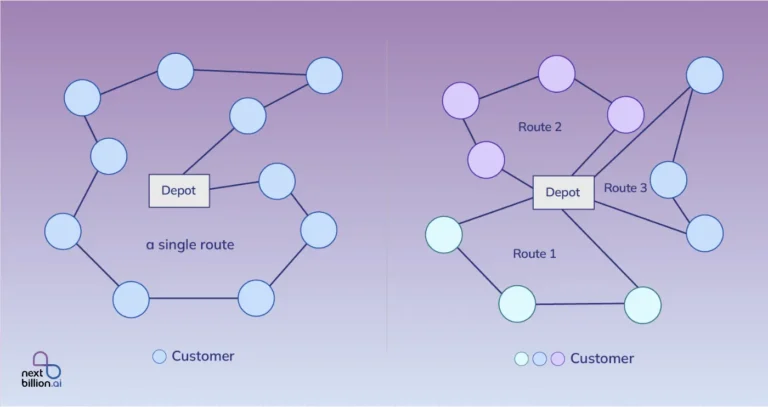
Route optimization is no longer just about calculating a static path from Point A to Point B at the start of the morning. In a fast-moving market where traffic changes by the minute, customer demands shift instantly, and operational costs continue to rise, relying on rigid, one-time plans is a recipe for delivery delays and driver burnout.
Static routing APIs will always be valuable execution engines. However, to stay truly competitive, modern fleets need a centralized brain that can adapt to live operational realities. AI agents bridge this gap by transforming route planning into a continuous, intelligent, and self-healing operational ecosystem.
Shivangi is a seasoned Technical Writer with a passion for simplifying technical concepts. With over 5 years of experience, she specializes in crafting clear and concise documentation for various technical products and platforms.