

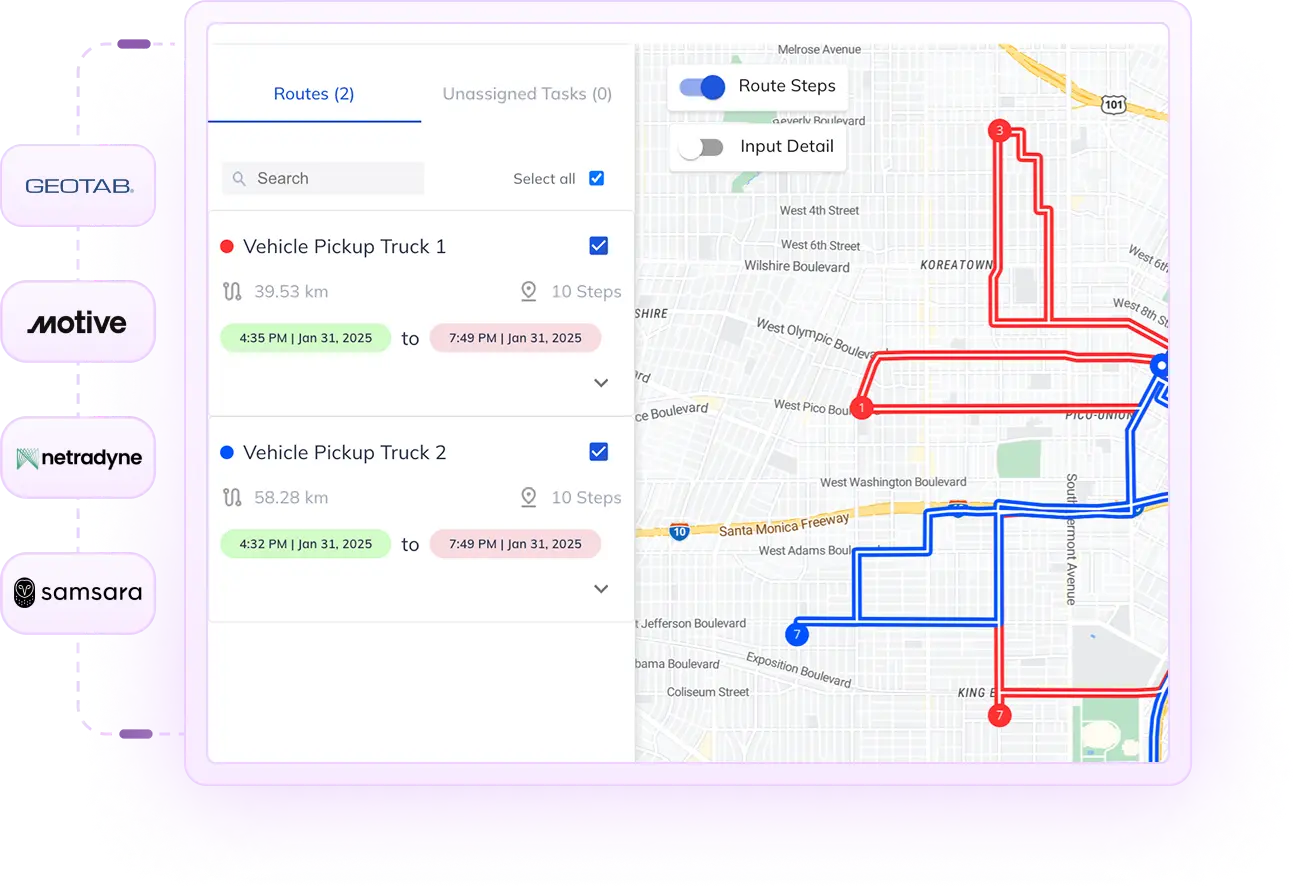

- BLOG
Route Mapping App Design for Operations and Dispatch Teams
Published: April 17, 2026
Route Optimization API
Optimize routing, task allocation and dispatch
Distance Matrix API
Calculate accurate ETAs, distances and directions
Directions API
Compute routes between two locations
Driver Assignment API
Assign the best driver for every order
Route Optimization Software
Plan optimized routes with 50+ Constraints
Product Demos
See NextBillion.ai APIs & SDKs In action
AI Route Optimization
Learns from Your Fleet’s Past Performance
Platform Overview
Learn about how Nextbillion.ai's platform is designed
Road Editor App
Private Routing Preferences For Custom Routing
On-Premise Deployments
Take Full Control of Your Maps and Routing
Table of Contents
What if your dispatch team could plan and execute hundreds of deliveries in minutes instead of hours? Speed, cost, and customer satisfaction are all directly linked to route planning today. Manual planning and fixed routes are prone to delays and inefficiencies, especially as delivery operations scale.
This can be solved with a well-designed route mapping application that integrates route optimization, real-time tracking, and automated dispatch into a single system. It enables operations and dispatch teams to plan efficiently, handle disruptions, and maintain consistent performance. In this article, we discuss the design of a route mapping application suited for modern logistics operations.
Quick Answer: Route mapping applications are intelligent systems that integrate optimization algorithms, real-time tracking, and automated dispatch to optimize logistics operations. They address complex routing challenges, improve efficiency, reduce costs, and enable scalable, data-driven execution. They are:
A route mapping application refers to a geospatial and optimization-based system that calculates, visualizes, and continuously recalculates optimal routes for multi-stop logistics operations. It combines mapping infrastructure, routing algorithms, real-time data processing, and dispatch logic to enable effective planning and execution of delivery or field operations at scale.
Fundamentally, the system models the Vehicle Routing Problem (VRP) and its variations by processing structured inputs such as geocoded locations, delivery time windows, vehicle capacities, service times, and operational constraints. It then uses heuristic, metaheuristic, or AI-assisted optimization methods to generate near-optimal route sequences that minimize cost functions such as distance, time, or fleet utilization while adhering to all constraints.
In Simple Terms: A route mapping application is not simply a navigation tool. It is a smart decision engine that links planning, dispatch, and real-time execution to streamline the logistics activities on an end-to-end basis.
Here is an overview of manual route planning versus route mapping applications:
Factor | Manual Route Planning | Route Mapping Application |
Planning Speed | Time-consuming, often hours | Completed in minutes |
Accuracy | Prone to human errors | Algorithm-driven precision |
Route Optimization | Limited, static routes | Dynamic, optimized routes |
Real-Time Adaptation | Not possible | Live rerouting with traffic data |
Resource Utilization | Uneven workload distribution | Balanced and efficient allocation |
Scalability | Difficult to scale | Easily scalable across regions |
Visibility | Limited tracking and control | Real-time tracking and dashboards |
Cost Efficiency | Higher fuel and operational costs | Reduced costs through optimization |
Customer Experience | Inconsistent ETAs and delays | Accurate ETAs and timely deliveries |
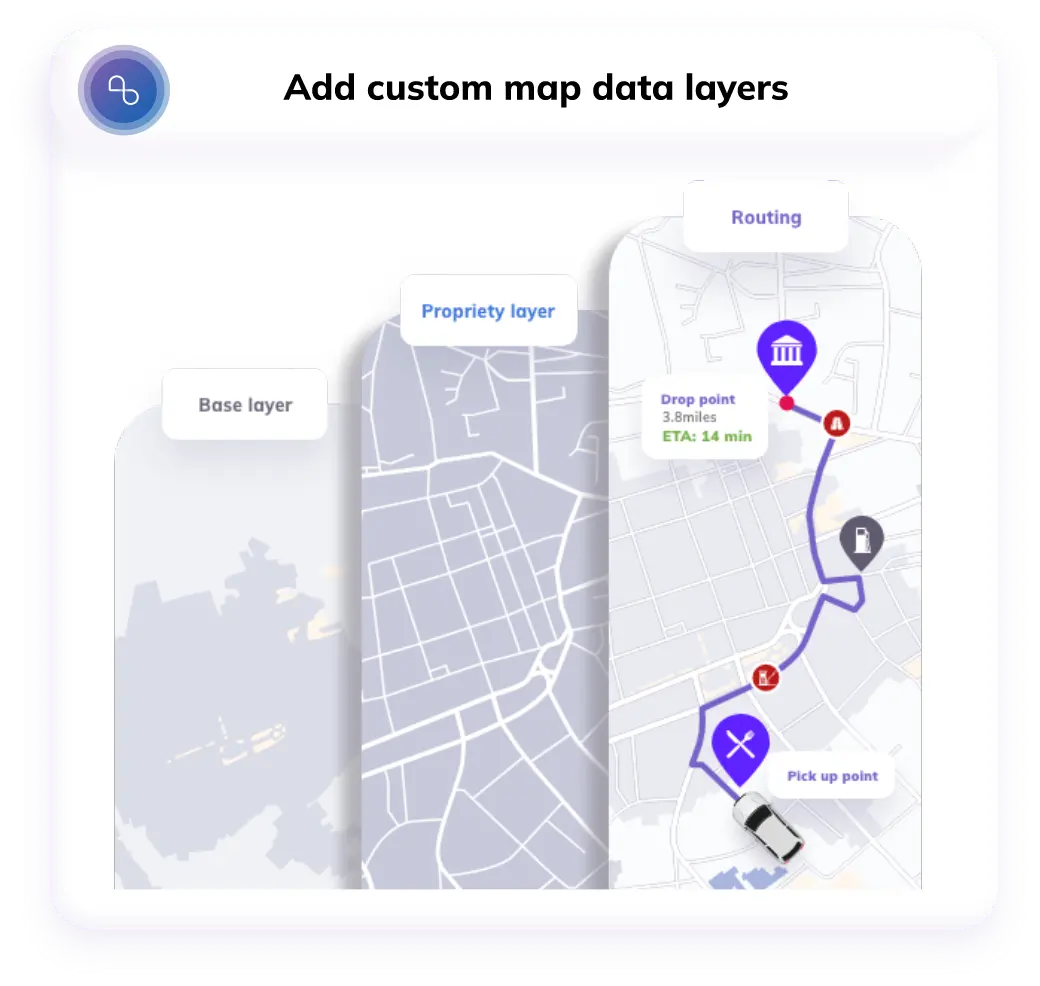
Custom layers are an essential intelligence layer in the design of route mapping apps that will optimize dispatch team decision-making. Combining information on the density of the delivery, trends in traffic, restricted zones, and prioritized areas, the app goes beyond simple navigation to operational planning. This helps in making routing choices that are context-sensitive, eliminating inefficiencies, and making route optimization more accurate.
Also, business-specific data like customer segmentation, service-level priorities, or risk zones can be integrated into custom layers to enable dispatchers to base routing decisions on operational objectives instead of distance or time. These layers can be developed over time with past information to allow more predictive and insight-based planning.
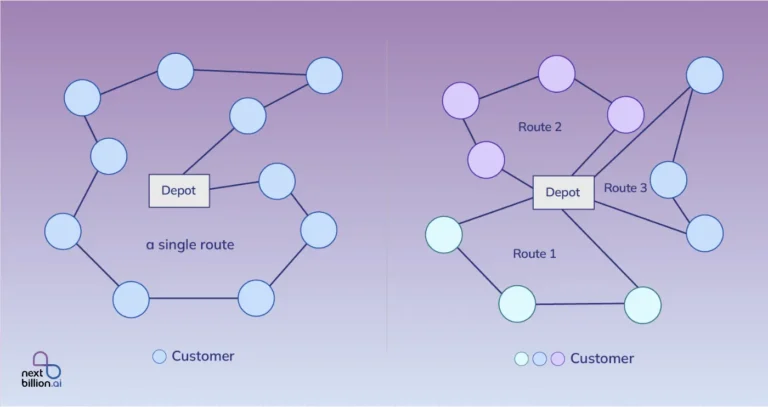
Zones are a foundational design element in route mapping apps for operations teams. They allow systems to divide large geographies into manageable territories depending on demand, pin codes, or boundaries of service. This organized system makes dispatching easy, avoids overlaps in routes, and ensures equal distribution of workload. It also increases the scalability of the system and its ease of management as operations increase. State-of-the-art implementations allow rebalancing of zones dynamically in response to demand variations, seasonal peaks, or delivery density to ensure that there is no overload or underutilization of any region. Zones also provide improved accountability, since performance can be monitored and optimized at a territory level.
Depot-based planning is further needed in logistics networks that have many hubs or warehouses. In route mapping application development, depots establish the source of routes and affect the way deliveries are distributed. The system is smart in allocating orders to the best depot with regard to proximity and capacity, and reduces first-mile inefficiencies and enhances overall route performance.
In addition to simple allocation, depot logic may also take into account inventory availability, type of vehicle, and service limitations, whereby every delivery is directed from the most operationally efficient point. This is particularly critical in large-scale or multi-city operations, where optimized depot assignment directly influences delivery speed, cost effectiveness, and overall network performance.
Here are the topmost and intimately relevant benefits of route mapping app design for operations and dispatch teams:
A well-developed and organized route mapping application employs superior optimization algorithms to minimize total travel distance, idle time, and fuel burnout. It reduces the unnecessary backtracking and enhances the density of routes by smartly sequencing stops and grouping deliveries together based on geographical location. This enables the businesses to cover more deliveries in a route and reduce fuel expenses, vehicle maintenance, and the overall operational expenses. Small efficiency improvements are compounded into large savings at scale in the long-run.
Route mapping applications offer real-time tracking of vehicles, routes, and delivery status by integrating GPS and telematics. Dispatch teams have a centralized dashboard display of all the ongoing operations, including ETAs, delays, and route deviations. This visibility allows making decisions in advance, including reallocating the deliveries or informing the customers about the delay. It minimizes uncertainty and makes sure that operations are controlled even when it comes to peak demand or disruptions.
Route mapping applications create a bottleneck in planning out routes, which is removed with automated dispatch and smart allocation logic. The system allocates deliveries based on various variables, including driver availability, distance to delivery areas, delivery capacity, and delivery priority. This ensures optimal utilization of resources and balanced workloads among drivers. Consequently, dispatch cycles that previously took hours are completed in minutes with greater accuracy and consistency.
The modern route mapping systems constantly receive real-time data in the form of traffic jams, road closures, weather, and on-ground delays. This can be used to dynamically reroute during execution without necessarily having to re-plan everything. The drivers can be provided with the latest routes in real-time, which will allow them to save time and keep the delivery schedule. This flexibility is essential in the urban setting, where conditions evolve very fast and unreliably.
The data recorded by route mapping applications is granular, such as delivery times, route compliance, delays, fuel consumption, and driver performance. This information is fed into analytics systems that produce actionable insights such as route efficiency scores, on-time delivery rates, and cost per delivery. Machine learning models can also do more refinements to route planning by learning the historical patterns, making ETA predictions more precise, and detecting recurrent inefficiencies.
Proper ETAs, on-time deliveries, and instant updates on the tracking also contribute to a better customer experience. The proactive communication that can be achieved with the help of route mapping apps allows for eliminating missed deliveries and customer dissatisfaction by sending automated notifications and status updates. Trust and brand reputation in competitive markets are achieved through constant and consistent performance in delivery.
By optimizing routes and balancing workloads, these systems ensure that vehicles and drivers are used efficiently. They minimize empty miles, prevent overloading of some routes, and improve overall fleet productivity. This results in increased asset utilization, reduced operational strain, and higher returns on investment in logistics infrastructure.
Enlisted below are the crucial steps that you have to keep in mind while building a route mapping app for operations and dispatch teams:
Begin by defining practical logistics needs, including volumes and areas of delivery, time windows, types of vehicles, shifts of drivers, and SLAs. Add edge cases such as failed deliveries, priority orders, and multi-day routes. Well-defined constraints are used to make sure that the system is realistic in its operational complexity and does not have oversimplified routing logic.
Establish a strong data layer with the combination of order data, geocoding services, and mapping APIs. Address normalization, computation of distance matrices, spatial clustering, and coordinate mapping are performed by this layer. Good quality geospatial data has a direct influence on the accuracy of routes, reliability of ETA, and the general performance of the system.
Use sophisticated optimization models to address issues in routing, like multi-stop deliveries, subject to constraints. Apply heuristic, metaheuristic, or AI-based methods to produce near-optimal routes at scale. The engine must ensure that it achieves several goals that include minimization of distance, reduction of delivery time, maximization of fleet utilization, and service levels.
Develop a dispatching system that allocates routes depending on the availability of drivers, their proximity, their capacity, and the priority of delivery. Provide support for manual overrides and rule-based logic to deal with exceptions. Smart allocation saves time on planning, eliminates overloading, and ensures equitable workload distribution among teams.
Develop a centralized dashboard, whereby dispatchers will be able to visualize routes, vehicles, zones, and delivery status in real time. The interface must also emphasize the alerts that are critical, including delays, route deviations, and SLA risks. A map-first user interface is simpler to use and allows quicker operational decision-making.
Build a mobile application that acts as the layer of execution for drivers. It must offer route sequencing, turn-by-turn directions, delivery information, and real-time updates. Predefined characteristics such as evidence of delivery, barcode scanning, offline connection, and in-app communication enhance stability and minimize mistakes in execution.
Inclusion of live traffic feeds, GPS tracking, and telematics information facilitates real-time tracking and rerouting. The system must also recalculate ETAs and re-plan routes whenever there is a disruption due to congestion, delays, or new orders. This will provide stability in the operational environment that is not predictable.
Design support for custom map layers, zone-based routing, and multi-depot planning. These characteristics organize operations, eliminate cross-region inefficiencies, and enhance allocation of resources. They also ensure the scalability of the system across cities and regions with similar routing logic.
Record granular operation information like delivery time, delays, route compliance, fuel consumption, and driver performance. Monitor KPIs such as the rate of on-time delivery, the efficiency of the routes, and the cost per delivery using analytics dashboards. Machine learning models have the strong potential to use past data to enhance the accuracy of route predictions and planning in the long run.
Test the system on actual working conditions such as peak demand, traffic disruptions, failed deliveries, and coordination of multiple depots. Constant testing assists in the detection of bottlenecks, enhances accuracy and reliability in the performance of the system under different conditions.
Below are the most impactful use cases of route mapping app design for operations and dispatch teams:
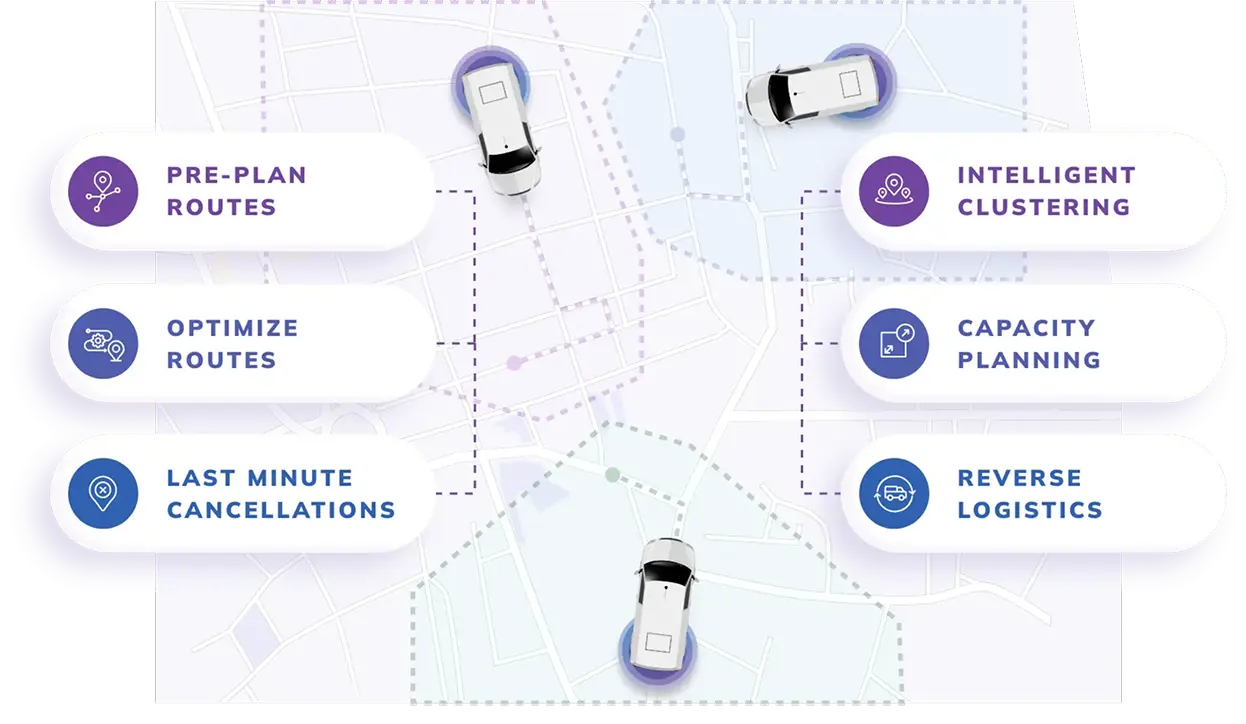
Last-mile delivery operations are mainly about route mapping apps where there are numerous stops, strict schedules, and high customer demands that converge. They maximize the stop sequencing, deliveries geographically, and deliveries within the delivery windows. This helps minimize delays, enhance drop density, and improve on-time delivery performance among high-volume operations.
In service organizations, route mapping applications are applied to manage the schedule of technicians in distributed locations. The system allocates jobs according to the proximity, skill base, availability, and urgency, which makes the system quicker to respond and cover the service. It also saves time on the travel of technicians to serve more customers in a day.
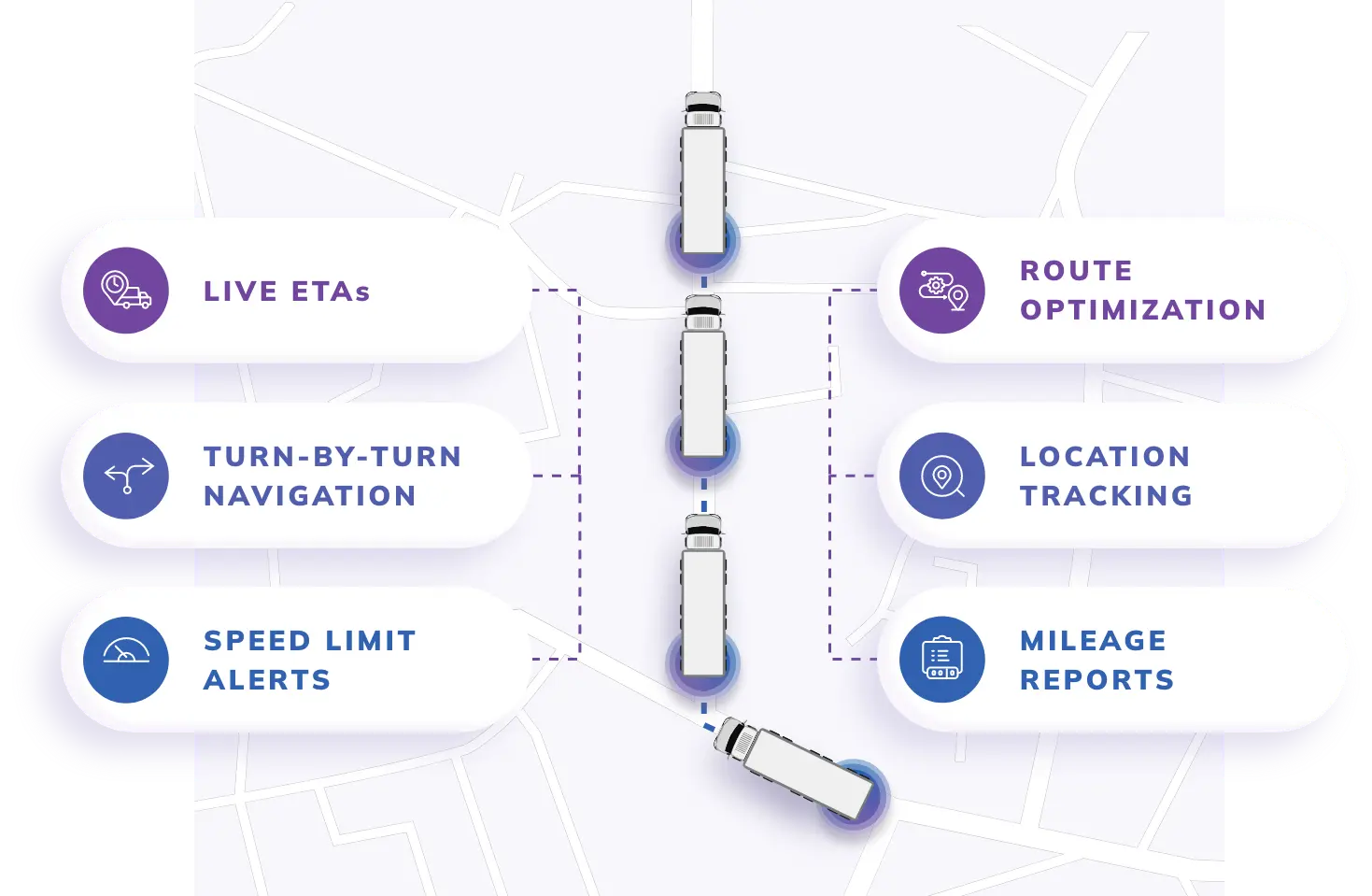
For logistics providers managing large fleets, route mapping apps act as a control layer for planning, monitoring, and optimizing operations. They allow a centralized view of fleet movement, route adherence, and delivery status, which guarantees efficient use of vehicles and uniformity of operations across geographic areas.
With many warehouses or hubs, route mapping applications can assign orders smartly in depots in complex logistics networks. They look at the distance, the availability of vehicles, and capacity factors in order to reduce inefficiency across regions and to reduce the general distance covered. This enhances better coordination and accelerates dispatch cycles.
The route mapping applications are used in high-speed delivery settings to facilitate dynamic routing through the constant inclusion of new orders and real-time variables. They dynamically optimize routes to support urgent deliveries and still remain efficient, which is why they are required in the same-day and hyperlocal delivery models.
Courier companies utilize route mapping applications to manage the high number of parcels both in the city and the countryside. These systems enhance the efficiency of the routes, lessen the number of failed delivery attempts, and give evidence of delivery. They are also useful in planning first-mile, middle-mile, and last-mile coordination.
The route mapping applications are useful to manufacturers and distributors in their planned and bulk shipments to retailers, warehouses, and other partners. These systems ensure efficient allocation of routes, dispatch at the right time, and synchronization of transportation with production and inventory cycles enhances supply chain efficiency.
The route mapping applications optimize the pickup routes with the deliveries, eliminating empty routes and enhancing the use of routes. They assist in controlling returns, replacements, as well as reverse supply chains at a low additional cost and improved flow of operations.
The volumes of delivery increase dramatically in the periods of high demand, such as sales events and festive seasons. The route mapping applications are used to scale operations through bulk order ingestion, fast route generation, and efficient dispatch. This guarantees that business operations do not descend to low levels during peak loads.
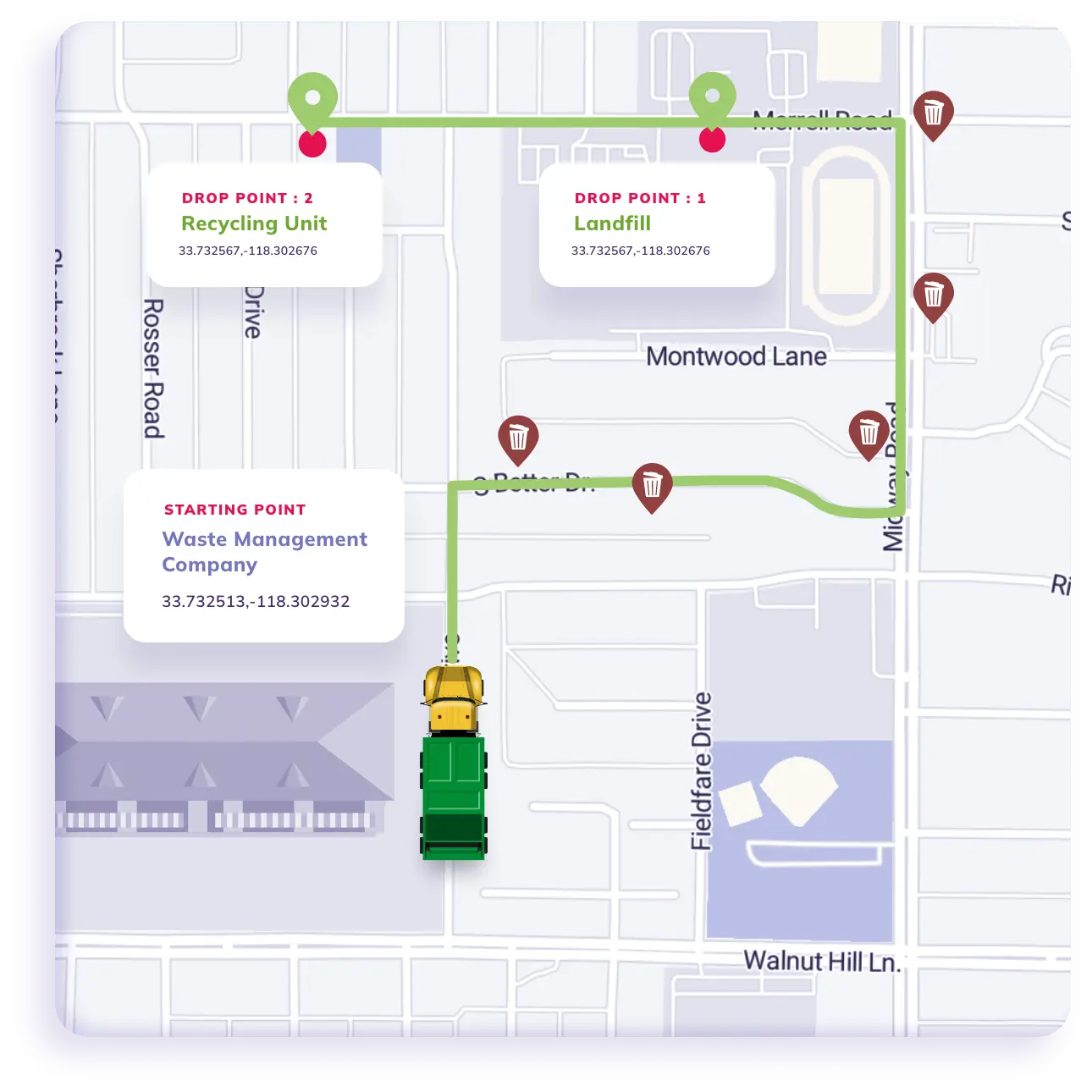
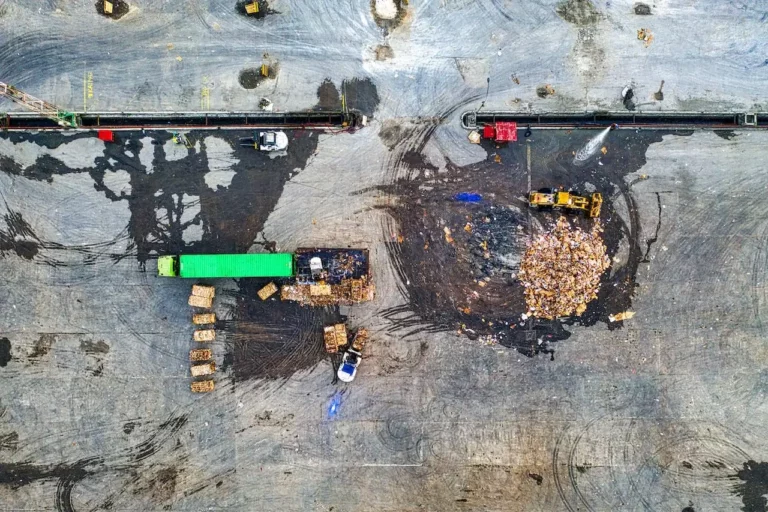
Municipal services use route mapping apps to optimize waste collection routes and service schedules. These systems allow reducing route overlap, enhancing coverage, decreasing fuel consumption, enhancing service efficiency, and maintaining consistency in urban operations.
In addition to logistics, route mapping applications are applied in planning sales visits and territory coverage. They assist sales teams in maximizing travel routes, serving more areas in the most efficient way and enhancing productivity and yet have well-organized field operations.
Here is how NextBillion.ai provides route mapping solutions for operations and dispatch teams:
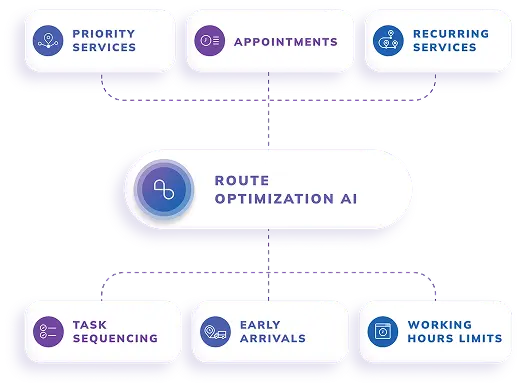
We provide robust route optimization features to help address real world and complicated logistics problems. We have multi-stop routing with constraints like time windows, capacity of vehicles, and service time which allows the operations teams to produce efficient and cost-effective route plans at scale. We also specialize in solving realistic problems where routing efficiency directly affects the performance of delivery and operation costs.
The APIs we develop are flexible and developer-friendly, enabling you to build route mapping solutions tailored to your unique operational requirements. They are fully compatible with your existing systems, including order management, warehouse, and fleet tracking platforms. This allows you to create custom workflows instead of relying on rigid, one-size-fits-all solutions.
Our routing engine supports real-time route optimization by integrating live traffic data and ground conditions into the routing engine. Our platform is dynamic in terms of rerouting in execution, so that your operations are dynamic and efficient. Our high-volume routing and dispatch capabilities across the regions are based on scalable infrastructure and do not impair performance.
We use powerful geospatial technologies to enhance the accuracy of addresses, route planning, and navigation. We have exact geocoding, route visualization, and location clustering so that operations teams can plan and make deliveries more accurately. This particularly comes in handy in those areas where the system of addressing is complicated, and location accuracy directly affects the success of delivery.
We offer full analytics and real-time visibility to your delivery operations. Some of the main metrics that our platform follows are route efficiency, delivery performance, and fleet utilization, which will allow you to find inefficiencies and optimize in a continuous manner. We make you better at planning, cost reduction, and operational scaling with data-driven insights and feedback loops.
Route mapping app design transforms logistics from reactive execution to intelligent, data-driven operations. Optimization, real time visibility, and systematic planning aspects such as layers, zones, and depots enable businesses to make deliveries quickly, reduce costs, and have regular performance. These systems are critical control layers as operations scale, allowing dispatch teams to plan and be smarter and quicker and provide reliable last mile outcomes.
Transform your dispatch operations with NextBillion.ai’s advanced route mapping solutions built for scale and precision. Connect with us to know more.
A route mapping application is a well-programmed software solution that helps to optimize the delivery routes based on algorithms, real-time data, and automated dispatch systems.
Optimization of routes helps in minimizing the travel distance, fuel, and delays and maximizing the delivery speed and resource utilization.
VRP is a mathematical model that is applied to find the most efficient routes for multiple deliveries under constraints like time, capacity, and distance.
Yes, the revamped route mapping applications utilize real-time traffic and GPS data to update routes and increase delivery accuracy.
Route mapping applications can be useful to logistics companies, delivery services, field service teams, and enterprises that operate fleets.
Bhavisha Bhatia is a Computer Science graduate with a passion for writing technical blogs that make complex technical concepts engaging and easy to understand. She is intrigued by the technological developments shaping the course of the world and the beautiful nature around us.