

- BLOG
How Route Optimization Differs Across Global Markets: APAC vs EMEA vs Americas
Published: January 21, 2026
Route Optimization API
Optimize routing, task allocation and dispatch
Distance Matrix API
Calculate accurate ETAs, distances and directions
Directions API
Compute routes between two locations
Driver Assignment API
Assign the best driver for every order
Routing & Dispatch App
Plan optimized routes with 50+ Constraints
Product Demos
See NextBillion.ai APIs & SDKs In action
AI Route Optimization
Learns from Your Fleet’s Past Performance
Platform Overview
Learn about how Nextbillion.ai's platform is designed
Road Editor App
Private Routing Preferences For Custom Routing
On-Premise Deployments
Take Full Control of Your Maps and Routing
Trucking
Get regulation-compliant truck routes
Fleet Management
Solve fleet tracking, routing and navigation
Middle Mile Delivery
Optimized supply chain routes
Construction
Routes for Construction Material Delivery
Oil & Gas
Safe & Compliant Routing
Food & Beverage
Plan deliveries of refrigerated goods with regular shipments
Table of Contents
Route optimization is commonly described as finding the shortest or fastest path between stops. In practice, global logistics teams know it is more complex. What works in one region often fails in another due to differences in infrastructure, regulations, addressing formats, traffic behavior, and technology readiness.
Broadly, three global regions illustrate this diversity:
This article explains how route optimization varies across APAC, EMEA, and the Americas, why compliance matters, and how platforms like NextBillion.ai support region-specific routing.
Route optimization in global logistics is the process of planning the most efficient movement of shipments across countries, regions, and transportation modes. It goes beyond selecting the shortest path, balancing operational objectives with real-world constraints such as regulations, traffic, vehicle limits, and service commitments.
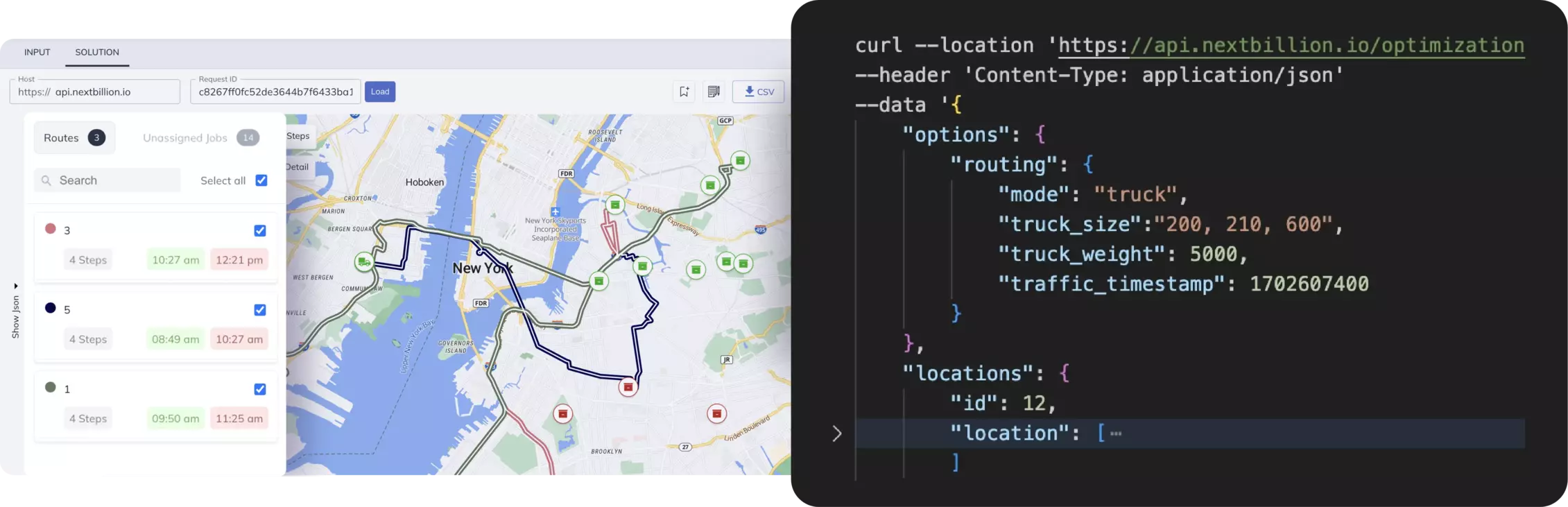
Key objectives of route optimization include:
These objectives often compete—for example, the fastest route may be costlier, or the most sustainable route may require detours or consolidation. Route optimization balances these trade-offs at scale.
Modern global route optimization relies on technology:
Together, these components transform routing from a static planning task into a continuously optimized system. In global operations—where distances are longer, regulations differ, and networks are complex—this intelligence is essential for reliable, scalable, and profitable logistics.
Several regional variables shape how routing strategies are designed and executed:
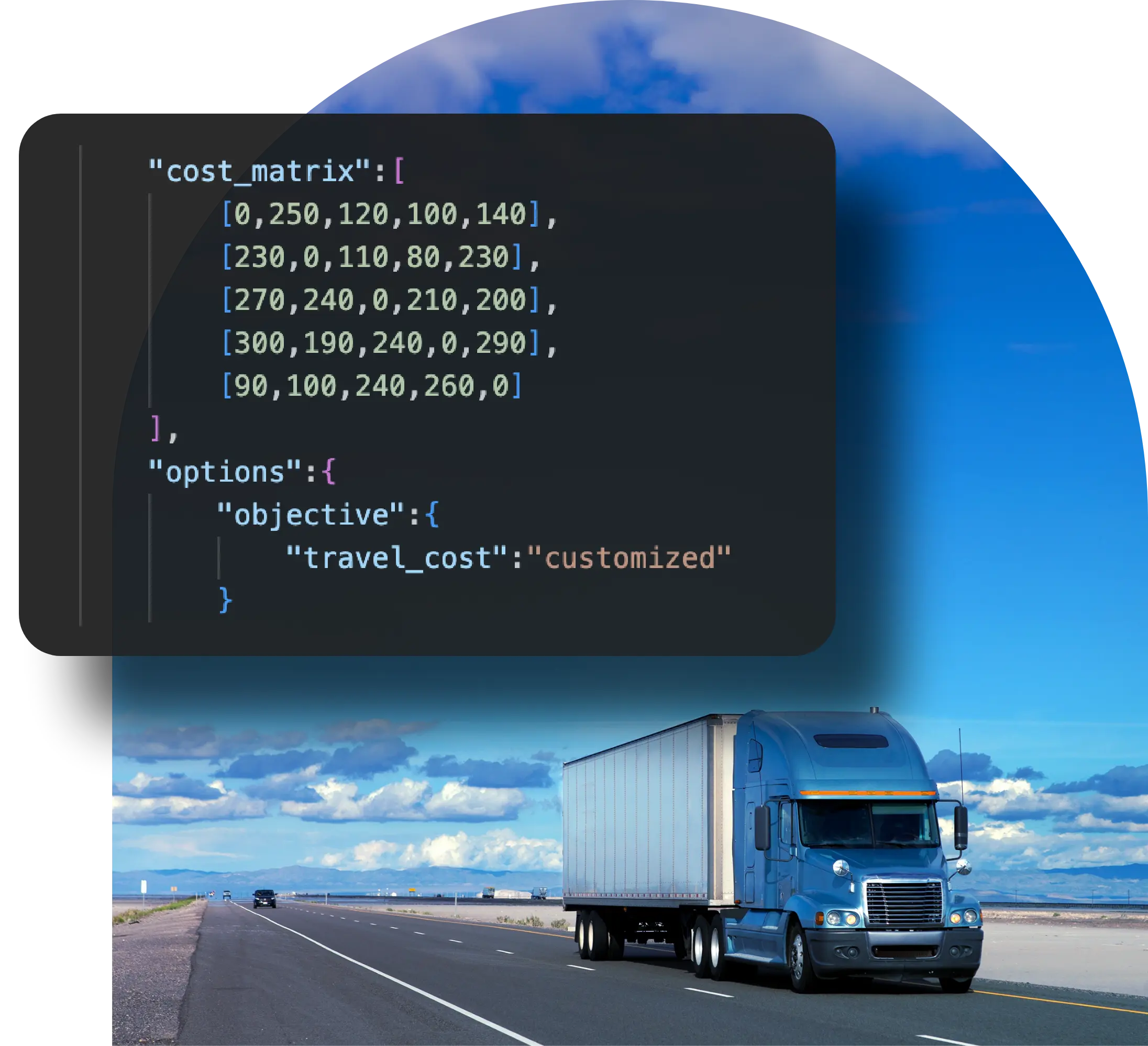
Understanding these factors helps tailor route optimization models to each region, improving cost, speed, reliability, and compliance.
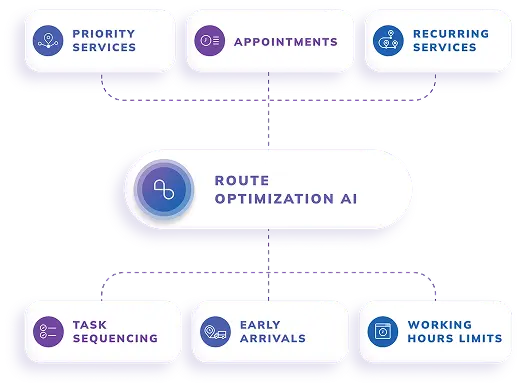
APAC contains mature logistics markets as well as emerging ones. Routing complexity is driven by megacities, traffic congestion, and addressing inconsistency.
APAC logistics operates in some of the world’s most densely populated urban centers alongside rural and semi-urban regions. Megacities such as Jakarta, Manila, Mumbai, Bangkok, and Ho Chi Minh City combine high traffic volume with mixed road quality. In many areas, informal or incomplete addressing complicates stop sequencing and ETA accuracy.
The region’s rapid e-commerce growth, same-day expectations, and cash-on-delivery (COD) prevalence drive frequent failed-attempt management and reverse logistics. Two-wheelers, three-wheelers, and micro-fleets dominate last-mile delivery in many cities, shaping routing constraints around vehicle capacity, lane access, and parking availability.
Mobile-first delivery operations are standard, with drivers relying on smartphones for navigation, task management, and proof of delivery. High-precision geocoding is critical in developing markets to locate customers in informal settlements, apartment clusters, or landmark-based addresses. APIs that blend map matching, route guidance, and traffic data help convert ambiguous locations into deliverable points.
Routing must respect city-level delivery windows, congestion charging zones, and periodic road closures linked to festivals or civic events. Several urban cores restrict vehicle types, favoring two-wheelers or EVs during specific hours. Local labor rules for gig and courier workers influence shift planning, maximum working hours, and incentive-based routing.
Planners must account for chronic traffic congestion, especially during peak hours and monsoon seasons. Narrow streets, informal lanes, and changing road accessibility limit large-vehicle movement and increase re-routing frequency. Tier-2 and tier-3 cities add last-mile complexity with lower address standardization, fewer digital map updates, and higher dependence on local driver knowledge.
EMEA markets have a structured infrastructure but strict regulation. Cross-border transport is common, which increases documentation and compliance complexity.
EMEA features mature road and logistics infrastructure, with highways, multimodal hubs, and well-connected ports and rail networks. Cross-border movement is routine within the Schengen area and between regional trade blocs, making customs processes, documentation, and cabotage rules central to planning. Sustainability initiatives are widely adopted, influencing vehicle choices, consolidation strategies, and network design.
High GPS coverage, standardized addressing systems, and comprehensive map databases support accurate navigation and ETA prediction. Fleet management platforms are deeply integrated with routing, telematics, and driver compliance tools, enabling centralized control, analytics, and exception handling.
Telematics and data use are shaped by EU data protection rules, affecting how driver and vehicle data are collected and shared. Low-emission and ultra-low-emission zones in major cities directly influence route selection and vehicle eligibility. Driver working hour limits and tachograph requirements add hard constraints that route optimization engines must respect when sequencing stops and assigning shifts.
Even with strong infrastructure, cross-border movements introduce customs, documentation, and waiting-time variability. Urban centers increasingly enforce zero-emission delivery policies, requiring EV route planning and charging considerations. Northern Europe brings seasonal challenges such as snow, ice, and limited daylight, all of which affect speeds, safety buffers, and route reliability.
The Americas include long-haul freight, dense metropolitan distribution, and developing road systems in certain regions.
The Americas span highly varied logistics environments. North America is characterized by extensive long-haul trucking across interstate networks, supported by large distribution centers and regional hubs. The region includes both dense megacities and wide suburban sprawl, which changes drop density and stops clustering strategies. Parts of Latin America still face developing road infrastructure, uneven pavement quality, and rural accessibility gaps that influence fleet selection and routing feasibility.
Telematics, IoT sensors, and electronic logging devices (ELDs) are widely used, especially in the US and Canada, enabling real-time visibility into assets and drivers. North America shows higher levels of automation and API-driven integrations across TMS, WMS, and last-mile platforms. In Latin America, adoption is growing, with mobile-first applications and GPS tracking improving network visibility and exception handling.
Route planning must comply with Hours of Service (HOS) limits in the US and Canada, which define driving and rest periods. ELD mandates reinforce safety compliance and accurate logging, turning driver availability into a hard routing constraint. Across Latin America, customs procedures, varied tolling systems, and cross-border regulations affect route sequencing, buffer times, and documentation workflows.
Operators face weather extremes ranging from snowstorms and hurricanes to desert heat, all of which impact speeds, risk levels, and vehicle performance. Long-distance routing requires careful fuel and charging planning, especially with growing EV adoption in urban delivery fleets. In certain regions, cargo theft and route security risks influence preferred corridors, stop locations, and night-driving policies, shaping routing choices as much as cost or distance.
APAC, EMEA, and the Americas present distinct routing environments shaped by infrastructure, regulation, technology maturity, and customer demand.
In practice, these differences mean route optimization must be region-aware, with configurable constraints, localized data, and flexible APIs rather than uniform models.
Global operations do not run on uniform conditions. Fleets move through countries, cities, and regions that differ in road design, map completeness, traffic behavior, and regulatory enforcement. A single routing logic cannot reflect these variations, which is why generic, rigid routing engines often break down at scale.
Global fleets rarely operate under the same road rules, addressing standards, or data quality levels. Speed limits, access restrictions, and toll structures change by jurisdiction. Map coverage and POI accuracy differ between dense cities and rural areas. As a result, routing systems must adapt to variable inputs rather than assume consistent data everywhere.
Static routing tools struggle in three major areas:
When routing engines cannot encode these details, planners rely on manual overrides, local knowledge, and workarounds—driving cost, delays, and compliance risk.
This is where configurable, API-first routing platforms become essential. They allow businesses to plug in region-specific rules, data sources, and vehicle profiles, instead of forcing operations to conform to a fixed model. APIs enable continuous updates from telematics, maps, traffic feeds, and compliance systems, turning routing into an adaptive layer rather than static software.
NextBillion.ai is built around this principle. Its routing and mapping APIs support region-specific customization – local road restrictions, custom avoid lists, geofencing, and multimodal vehicle profiles; helping enterprises run global fleets without forcing a one-size-fits-all approach.
Regional logistics conditions shift by city, country, and even time of day. Effective routing systems need localized context instead of relying only on generic global maps. High-quality local mapping data, live traffic feeds, and road-event updates enable routing engines to reflect real conditions on the ground, improving ETAs and route feasibility. Platforms such as NextBillion.ai emphasize region-specific map customization to account for these variations.
Constraint-based routing is central to handling this complexity. Modern engines encode time windows, vehicle rules, driver limits, and granular road restrictions that differ by jurisdiction. AI helps balance trade-offs between cost, on-time performance, and compliance while learning from historical trip patterns. Through configurable routing APIs, NextBillion.ai allows businesses to model these constraints market by market instead of forcing uniform logic.
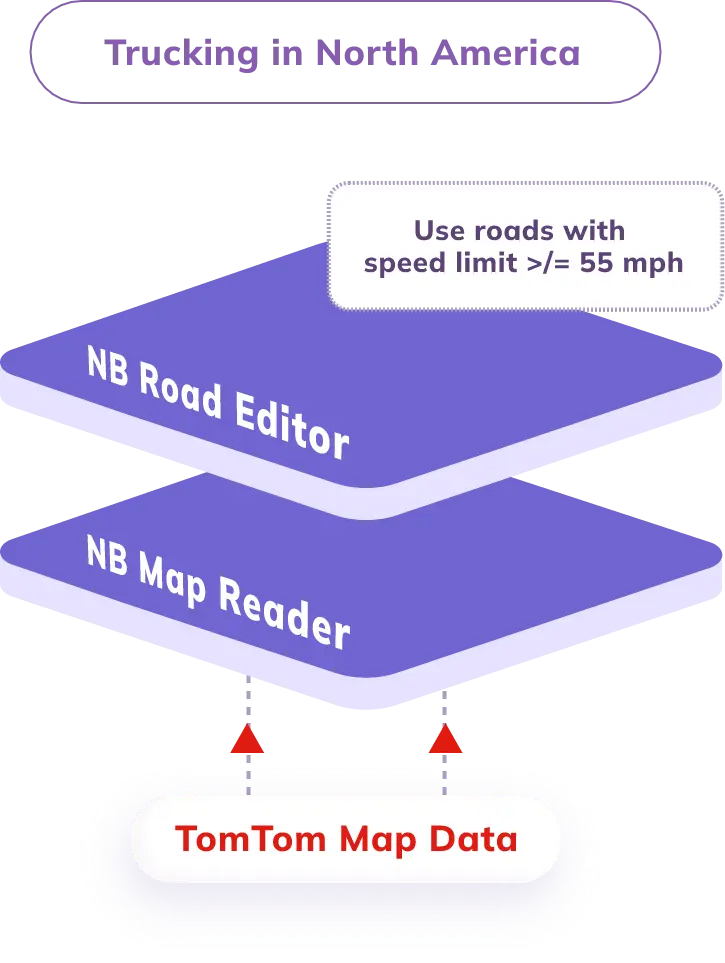
Real-time compliance-aware routing is equally important. Routing systems must detect restricted corridors, toll roads, low-emission areas, or vehicle bans and reroute proactively. NextBillion.ai’s routing APIs support custom avoid lists and geofencing, helping fleets automatically steer clear of noncompliant paths.
Localization underpins everything. Units of measurement, address formats, languages, and geocoding standards vary globally. Accurate address resolution in local contexts reduces reattempts and driver guesswork. With localization-ready APIs, NextBillion.ai helps logistics teams adapt routing to regional nuances without rebuilding systems from scratch.
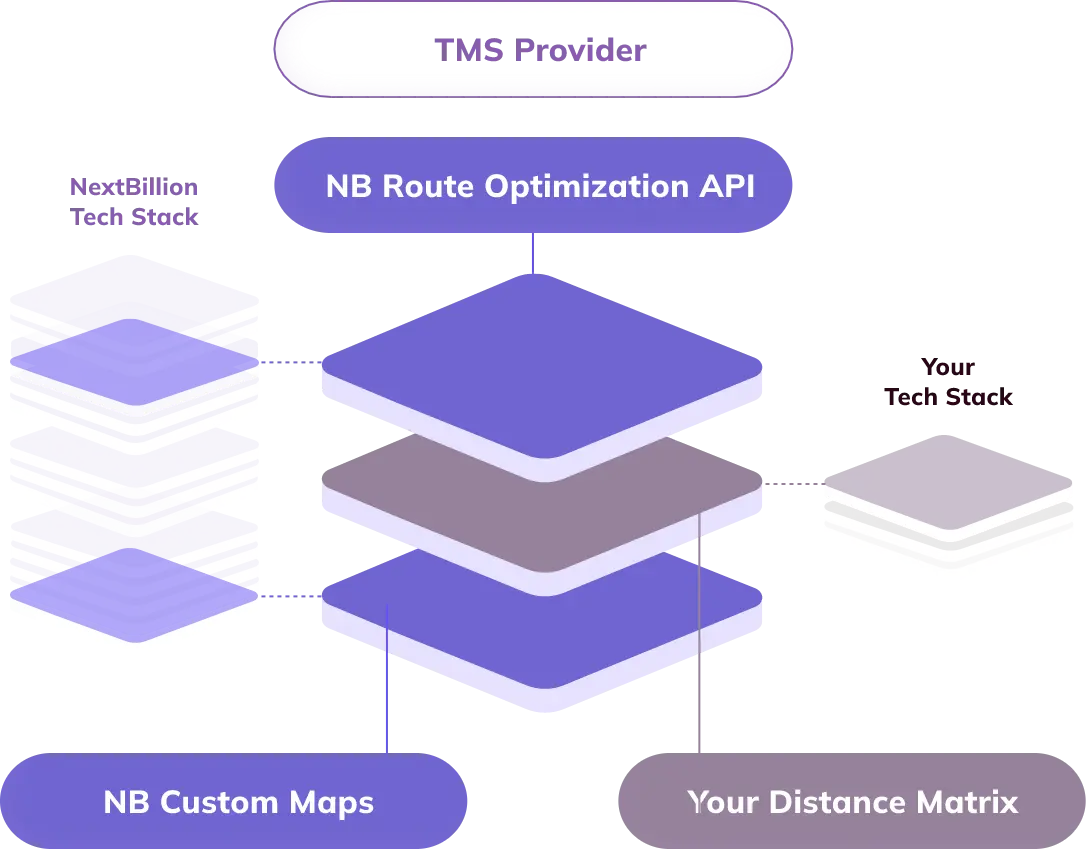
Routing engines today must be regulation-aware, not just optimized for distance or time. Compliance rules define what counts as a “valid route” in different markets and shape planning decisions from the start. Platforms such as NextBillion.ai build compliance handling into their routing logic, reducing manual rule checks.
Examples of rules that directly shape route plans include:
Without compliance-aware routing, businesses face fines, checkpoint rejections, failed deliveries, and safety risks. By allowing region-specific regulatory inputs through APIs, NextBillion.ai enables planners to embed local laws directly into routing workflows rather than treating compliance as an afterthought.
Companies operating across APAC, EMEA, and the Americas benefit from building routing stacks capable of adapting market by market. These steps help:
This modular, API-first approach makes it easier to enter new regions without redesigning routing systems each time.
Route optimization differs across APAC, EMEA, and the Americas due to infrastructure, regulation, fleet type, addressing, and distance patterns. Compliance rules shape route feasibility as much as traffic or distance. A routing solution must therefore be region-aware, compliance-aware, and data-flexible.
NextBillion.ai enables this by providing APIs that support localized maps, configurable rules, cross-border routing, and AI-backed ETAs—allowing enterprises to operate at a global scale without redesigning routing logic market by market.
Shivangi is a seasoned Technical Writer with a passion for simplifying technical concepts. With over 5 years of experience, she specializes in crafting clear and concise documentation for various technical products and platforms.