


Route Optimization API
Optimize routing, task allocation and dispatch
Distance Matrix API
Calculate accurate ETAs, distances and directions
Directions API
Compute routes between two locations
Navigation API & SDK
Turn by Turn Instructions for Drivers & Technicians
Route Optimization Software
Plan optimized routes with 50+ Constraints
Product Demos
See NextBillion.ai APIs & SDKs In action
AI Route Optimization
Learns from Your Fleet’s Past Performance
Platform Overview
Learn about how Nextbillion.ai's platform is designed
Road Editor App
Private Routing Preferences For Custom Routing
On-Premise Deployments
Take Full Control of Your Maps and Routing
About Us
Our story, vision
and mission
Contact Us
Reach out to us for any product- or media-related queries
Write to us at

Table of Contents
There is a lot of noise in the logistics world right now. Everybody is talking about automation, real-time visibility, driver apps, and yes, AI chatbots. But what is often missing from the conversation is this: not all integrations are equal, and not all chatbots are smart enough to belong in a fleet command center. If your chatbot cannot keep pace with breakdown alerts, traffic rerouting, or driver questions about ELD logs mid-shift, then it is just a glorified FAQ widget sitting in a dashboard.
Let us break this down, layer by layer, and look at how integrating AI chatbots into fleet management systems actually works. And what to expect if you want this thing to run without someone refreshing a panel every 10 minutes.
Modern fleets do not run on spreadsheets anymore. They run on APIs, dashboards, real-time data streams, and in most cases, an overworked dispatcher trying to juggle driver locations, customer calls, maintenance alerts, and compliance headaches all at once. That is where AI chatbots enter, not as some fancy UI tool but as a way to offload the clutter.
Drivers on the road do not need another login screen. They need clear and fast answers. AI chatbots integrated into your fleet communication system can handle repetitive communication without needing a dispatcher to tap out every message manually. A driver can ping the chatbot with, “What’s my next stop?” and get a geo-validated response pulled straight from the route plan.
With platforms like NextBillion.ai, the bot can fetch live rerouting data based on traffic congestion, weather blocks, or service windows. Then it can update the driver’s app or onboard screen within seconds. The driver never had to call. The dispatcher never had to pick up. The operation kept moving.
Chatbots also help with real-time instructions, like reminding drivers of cold chain checks, last-mile drop-off protocols, or missing proof-of-delivery uploads before they hit the next stop.
Let us be honest. Dispatchers already have too much on their plate. Most of their day goes into answering the same questions: “Where do I go next?” “Can I skip this stop?” “Did that order cancel?” “Where is the nearest fuel station?”
Chatbots automate those touchpoints. They handle:
So why is everybody talking about these AI bots in logistics circles right now? Because they solve small problems before they grow into massive operational issues. And when scaled, those small wins become serious gains.
A proper chatbot integration means drivers, warehouse staff, and even customers can get instant answers to simple but time-sensitive questions. This is not about asking “what is AI” in a help window. This is about:
Smart logistics chatbots tap into route planning data, GPS telemetry, and order management systems to answer without human delay. In use cases like parcel hubs or cold chain distribution, even a five-minute delay in getting an answer can push cascading delays downstream.
Let us say traffic on a primary delivery corridor shuts down due to an accident. You do not have time to run a reroute in the TMS, check the map, call the driver, and then update the delivery ETA with the customer. A good AI chatbot can intervene as soon as the traffic delay crosses a certain threshold.
It reroutes the driver automatically, pushes the updated ETA into the customer-facing portal, and notifies any downstream warehouses or hand-off partners. All in real time.
What makes tools like NextBillion.ai stand out is the way they pair routing SDKs with chatbot APIs. That allows the bot not just to reply with canned instructions but to dynamically reshape the operational path based on road intelligence.
Not every chatbot belongs on a website support page. Some belong in the cab of your truck, the dispatch ops room, or inside your maintenance alert workflows. Here is where they actually shine:
New drivers joining the fleet often get hit with paper forms, outdated instructions, and a rushed five-minute handoff before their first route. But AI chatbots change that, as they walk drivers through:
Some AI chatbots even integrate with e-learning modules that track completion and performance, offering nudges or reminders if steps are skipped or not understood. That means better prep, fewer mistakes, and a consistent onboarding process without tying up HR or dispatch staff.
This is where chatbots start doing work that used to require a full-time fleet supervisor. Imagine your TCU flags a mileage-based service interval or throws a brake wear code.
A smart chatbot can:
It becomes a vehicle tracking assistant that connects telematics, driver interaction, and maintenance response in one flow. No one has to check an Excel sheet to see which van needs an oil change next week. The bot is already five steps ahead.
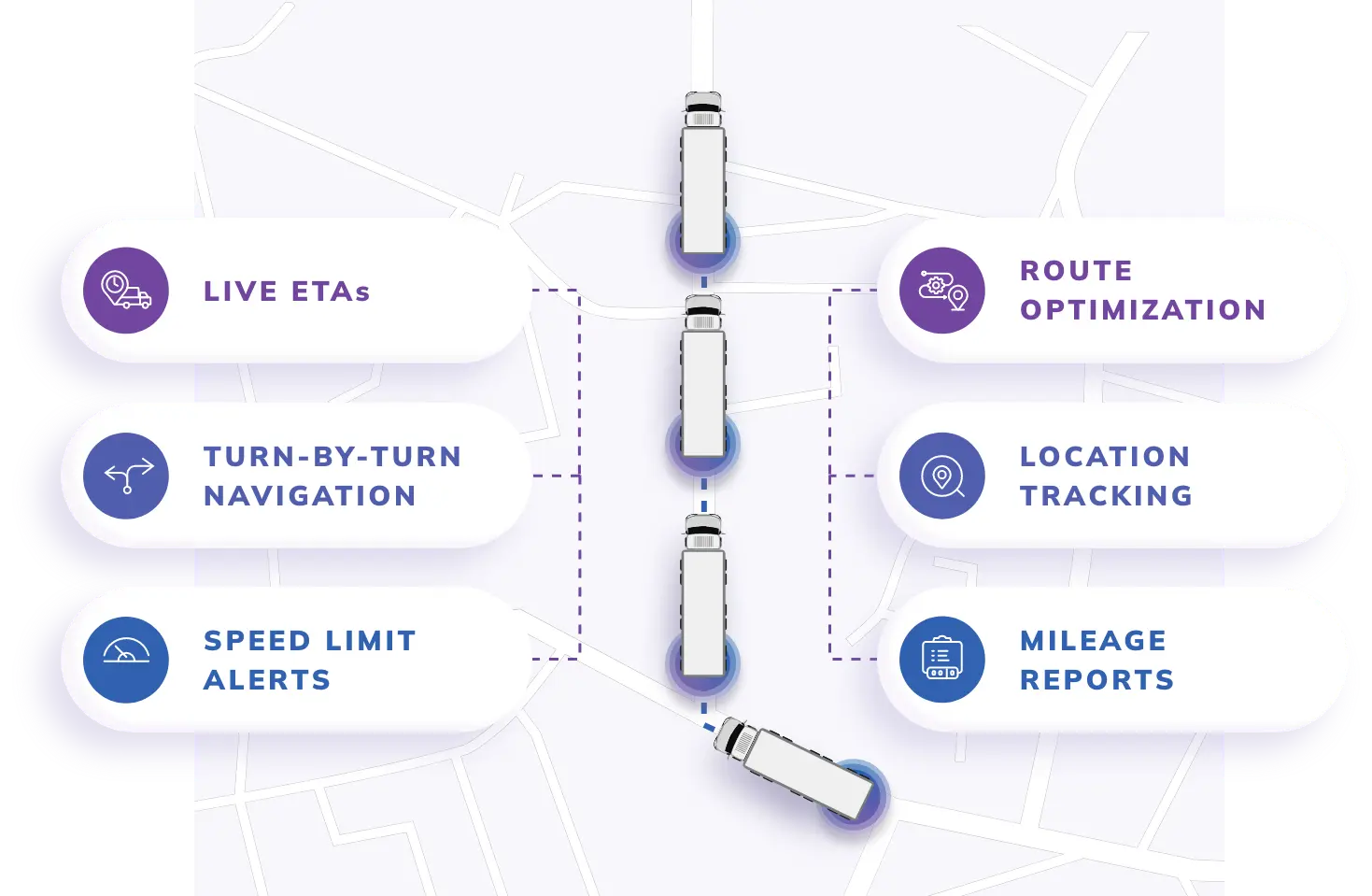
Now we are talking about the wiring underneath. If you want a chatbot that actually pulls weight, not just mimics chat, it needs to plug directly into your fleet systems. This is where the real architecture kicks in.
If your chatbot cannot talk to your fleet management software in real time, it is useless. The gold standard here is REST API or WebSocket-based integration. REST APIs allow synchronous communication for status requests, location updates, and document exchange. WebSockets, on the other hand, enable persistent connections that support real-time event pushing such as reroute instructions or maintenance flags without polling overhead.
NextBillion.ai, for instance, provides SDK-level access to their route engine, allowing chatbots to retrieve, push, and reroute information without delay. This is not just about sharing updates, in fact, it is about live decision loops.
With token-based authentication, webhook callbacks, and field-level query filters, these APIs can handle high-frequency requests from multiple fleets across regions. Integration workflows can also be extended using middleware like Zapier or n8n to trigger automated downstream actions such as sending ETA emails, creating fleet reports, or syncing with CRMs like Zoho or Salesforce.
You want your chatbot to connect with platforms like:
If these integrations are real-time and two-way, your bot can do more than talk, it can act. The proficiency to write back to the fleet system, such as logging a repair ticket or changing a delivery ETA is what makes the difference between a passive chatbot and an active fleet assistant.
It is one thing to type “get route” into a chatbot and another to say “Hey, I hit traffic, should I skip the stop in Sector 9?” and get a useful answer.
That is where NLP comes in. It lets the chatbot understand context. So “I’m running late” means trigger an ETA recalculation, notify the next drop point, and offer break compliance suggestions.
State-of-the-art NLP models trained on fleet-specific corpora can handle fuzzy phrasing, accents, and region-specific slang. Intent recognition engines, like those built on BERT or spaCy pipelines can classify requests into pre-defined operational tasks while entity extractors identify vehicle IDs, driver names, or stop codes on the fly.
With NLP fine-tuned for fleet operations, your chatbot becomes a functional co-pilot. Not just a glorified help desk with buttons. And if you combine it with location data, the chatbot starts to anticipate needs instead of waiting to be asked.
Location-aware NLP engines can use GPS geofencing events to auto-trigger bot conversations. For example, if a vehicle enters a restricted zone, the bot can instantly warn the driver, fetch compliance documents, and log the incident. All without a single human needing to intervene.

You cannot run AI in fleet operations without thinking about what data it touches. And let us be clear, an AI chatbot for fleet management touches a lot of data. It handles location pings, driver IDs, vehicle diagnostics, customer addresses, time stamps, fuel usage patterns, and often, even live camera feeds.
If that data leaks or is misused, your logistics ops do not just slow down, instead they break. This is why integration alone is not enough; strong governance is essential.
Start here: If your chatbot does not use end-to-end encryption for all data transfers, stop everything. Every driver message, every API call, every backend log has to be encrypted in transit and at rest.
Enterprise-grade systems like NextBillion.ai already run TLS 1.3 across their fleet APIs and enforce OAuth2 for user-level access, ensuring that nobody can snoop into sensitive delivery data. The system also maintains time-based tokens and scopes access down to the field level when sharing dispatch updates or driver behavior reports.
Also, there must be role-based access. Not every chatbot interaction should be available to everyone. A driver should never be able to access dispatch analytics or competitor delivery zones just because they are on the same network.
This is not about checking boxes. Fleet data, especially in cross-border operations, is governed by real law. That means your chatbot system has to respect:
And yes, your chatbot has to know this. It cannot store driver shift logs indefinitely. It cannot share personal information with third-party tools without consent. It must log every interaction for audit purposes, and you better have an opt-out protocol that works without needing to email support.
NextBillion.ai configures its chatbots with built-in compliance filters. These filters block any unauthorized data sharing and log all metadata tied to location, command type, and user role.
Let us cut through everything and lay it out clearly. If you are planning to integrate an AI chatbot into your fleet system, here is what you really need to focus on.
The best place to deploy AI in logistics is where the human brain is overworked and underutilized. Manual routing updates, repeated questions from drivers, ETA calls from customers, all of this needs to go. Give it to the chatbot.
The goal is not to replace dispatch operations, but to eliminate their bottlenecks. Human managers should focus on handling exceptions such as blocked routes, damaged shipments requiring rerouting, or cross-border permit challenges. Routine interactions and updates should be handled by the chatbot.
Standalone bots do nothing, as the real magic happens when the chatbot is plugged into your telematics.
You want the chatbot to:
This is why we recommend using fleet automation tools like NextBillion.ai that are built for modular connection. If your chatbot can tap into real-time GPS and maintenance sensors, your business moves from reactive to predictive.
The chatbot cannot stay dumb. Every month, new edge cases hit the road:
You must retrain your chatbot’s NLP models based on this evolving context. Use real transcripts, driver notes, and failed delivery feedback for continuous improvement.
NextBillion.ai provides tools for feedback loop integrations, where you can feed delivery exceptions back into the training layer to make the bot smarter for future runs. This is what makes the system dynamic, and not just fast.
AI chatbots are not gimmicks. They are workhorses when integrated the right way. In 2025, with delivery windows shrinking, fleets expanding, and logistics demands peaking, you cannot afford to keep your comms and routing manual.
If your drivers still call dispatch for ETAs or directions, you are already behind. If your technicians have to email maintenance logs after a breakdown, you are wasting uptime. If your chatbot cannot detect, reroute, or update based on a real-world delay, it is not ready.
Integrating AI chatbots into fleet management systems is not about being trendy. It is about creating an operations stack that responds in real time, without human lag, and without data silos. And that is exactly where NextBillion.ai thrives.
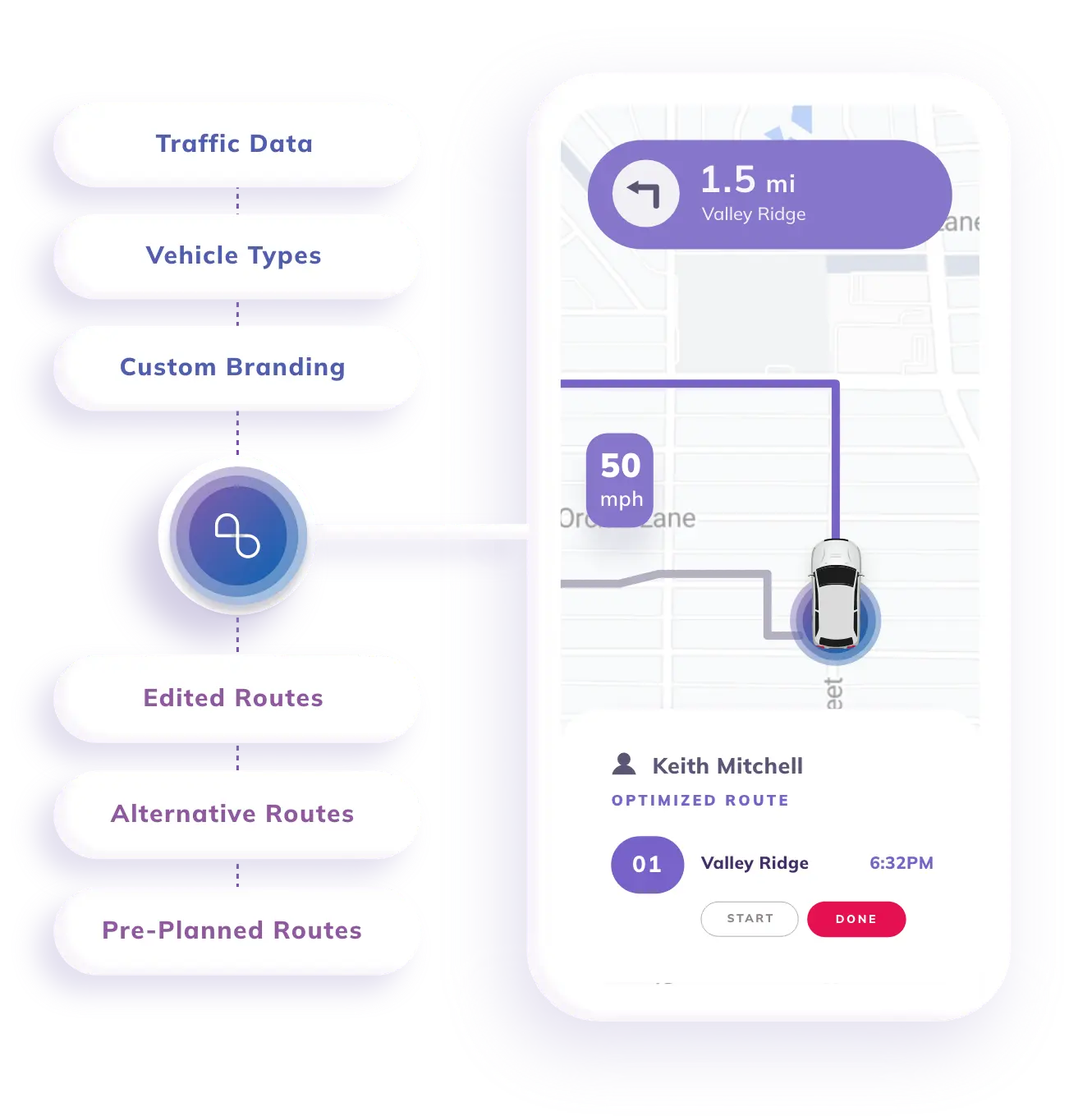
NextBillion.ai does not give you one-size-fits-all bots. It gives you an ecosystem that wraps around your fleet logic, real-time routing SDKs, AI chatbot frameworks, and API-first integration pipelines. You can:
If your fleet is scaling, your AI systems should scale with it, and not hold it back.
Ready to build a fleet that talks, thinks, and adapts in real time? Head over to NextBillion.ai and discover how their chatbot-powered routing system delivers not just automation, but control.
In most US states, a box truck under 26,000 pounds does not require a CDL. You only need a standard Class C license. However, for commercial use, you must register your vehicle under a business entity and ensure proper insurance and DOT compliance.
The average upfront cost is between $25,000 to $45,000, depending on vehicle, licensing, and insurance. Fleet automation tools, including AI chatbot integrations, can be added later to improve delivery scheduling and reduce staffing needs.
You can start alone, but as volume scales, managing routes manually becomes unsustainable. Chatbot integration for dispatch can act as your virtual dispatcher, handling real-time updates and driver coordination with minimal input.
It is an AI-powered chatbot or software module that connects to GPS systems to provide live updates on vehicle location, fuel status, and route adherence. These assistants are often integrated with platforms like NextBillion.ai to support fleet visibility and alerts.
Chatbots handle real-time responses, document delivery confirmation, maintenance scheduling, and driver queries, reducing workload for human dispatchers and speeding up decision-making.
Bhavisha Bhatia is a Computer Science graduate with a passion for writing technical blogs that make complex technical concepts engaging and easy to understand. She is intrigued by the technological developments shaping the course of the world and the beautiful nature around us.