


Route Optimization API
Optimize routing, task allocation and dispatch
Distance Matrix API
Calculate accurate ETAs, distances and directions
Directions API
Compute routes between two locations
Navigation API & SDK
Turn by Turn Instructions for Drivers & Technicians
Route Optimization Software
Plan optimized routes with 50+ Constraints
Product Demos
See NextBillion.ai APIs & SDKs In action
AI Route Optimization
Learns from Your Fleet’s Past Performance
Platform Overview
Learn about how Nextbillion.ai's platform is designed
Road Editor App
Private Routing Preferences For Custom Routing
On-Premise Deployments
Take Full Control of Your Maps and Routing
About Us
Our story, vision
and mission
Contact Us
Reach out to us for any product- or media-related queries
Write to us at

Table of Contents
How many times a day does a dispatcher say “let me check and call you back”? Most of what keeps a fleet manager busy on any given day traces back to a surprisingly short list of root causes. Decisions made without enough information, plans that don’t update when reality changes, and systems that don’t talk to each other. For instance, manual dispatch decisions built on spreadsheets and phone calls can consume 92–97% of revenue, with fuel spend wasted on routes that were never properly optimised.
Dispatch mapping software exists because most of the problems fleet managers deal with daily aren’t really about drivers or vehicles at all; they’re about decisions made with too little information, too late.
Fleets using optimised, real-time dispatch have reported on-time delivery rates compared with fleets still running manual assignment on static routes.
So what are the actual problems this category of software is meant to solve? Let’s find out!
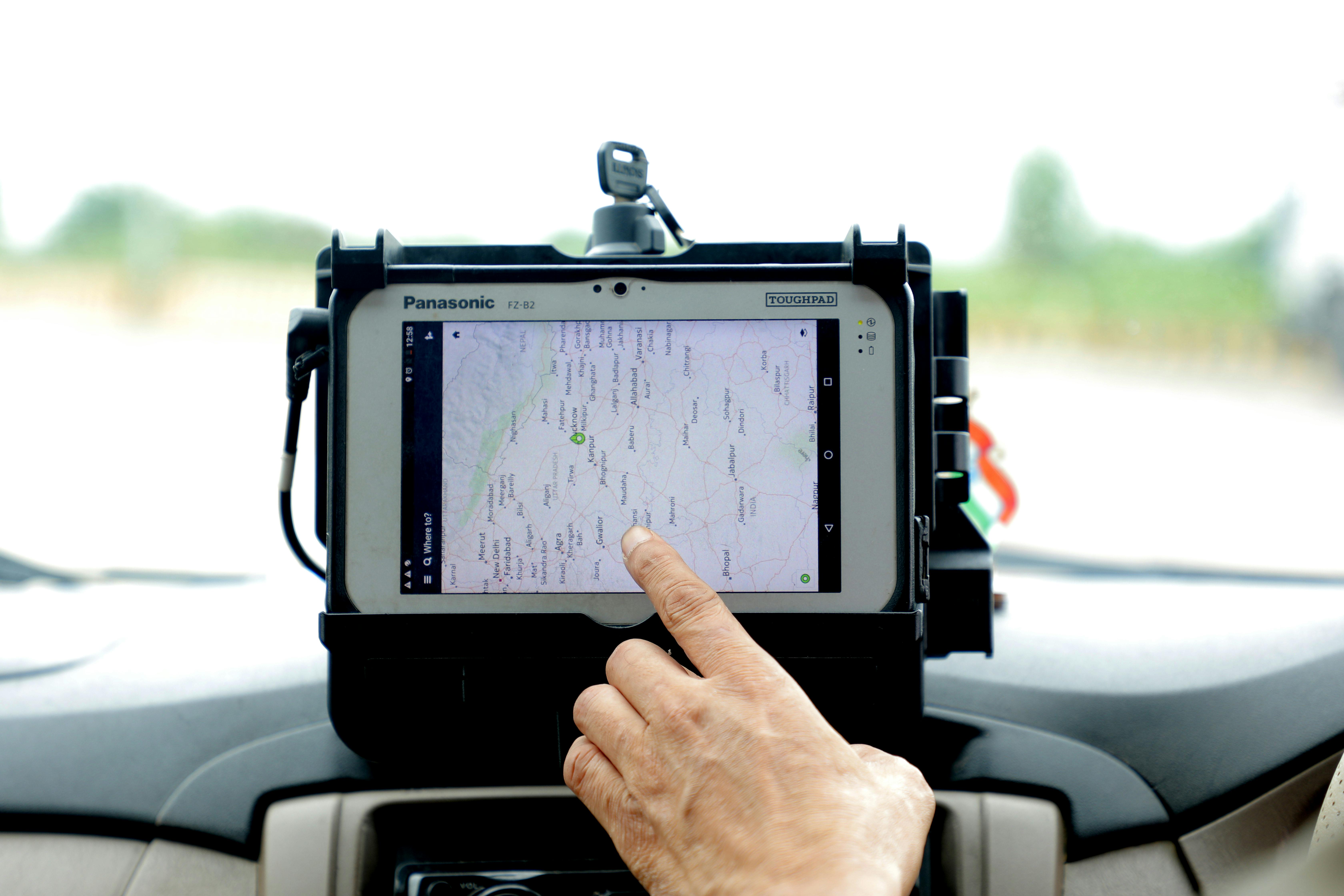
Picture a fairly typical morning for a fleet manager running deliveries or service calls without a connected system. Stops get assigned from memory, or a spreadsheet built the night before. A driver calls in to say they’re running late, and the dispatcher has to guess whether to push the next stop back or find someone else to cover it. Another driver finishes early with nothing to show for the extra capacity, because nobody was tracking it in real time.
None of this is a failure of effort. Dispatchers in this setup are usually working hard, just without the information they’d need to work efficiently. The problems below are what that gap actually looks like once it’s broken into pieces.
The toll isn’t only operational, either. Dispatchers in this kind of setup tend to describe their day as reactive rather than planned, spending more energy putting out small fires than actually improving how the fleet runs. That’s rarely sustainable for long, and it’s a common reason experienced dispatchers eventually burn out or move on.
Ask ten fleet managers what keeps them busy, and the details will differ. Here are some common ones with everyday symptoms:
Everyday Symptom | Underlying Problem |
“Let me check and call you back” | Dispatchers assigning stops by feel, not by data |
A route that looked fine at 8 a.m. falls apart by 11 | Routes that don’t adapt once a driver leaves the yard |
A customer asks where their order is before dispatch knows | No real visibility until a driver calls in |
One bad morning turns into an afternoon of manual replanning | Disruptions requiring a full manual rebuild |
Checking four screens to answer one simple question | Fleet data scattered across disconnected systems |
Drivers grumbling about who got which load | No visible or explainable logic behind assignments |
The problem: in a lot of fleets, deciding who gets a new job still comes down to a dispatcher’s memory of who’s nearby and who seems free, cross-checked against a spreadsheet that’s already a few minutes out of date. It works, mostly, right up until volume climbs or two urgent jobs land at the same time, and “mostly” stops being good enough.
The fix: dispatch mapping software replaces memory with live data. It includes actual vehicle location, actual remaining capacity, and actual time window, and matches jobs to drivers automatically against that data instead of a guess. A dispatcher still makes the call on anything genuinely unusual, but the routine share of assignments stops depending on one person holding the whole day in their head. That matters most exactly when it’s hardest to do manually: a busy afternoon with three urgent jobs landing within minutes of each other.
The problem: a route planned once at 7 a.m. treats the rest of the day as if nothing is going to change. Traffic shifts, a stop gets added, a customer reschedules, and the plan a driver is following is already out of date within the first hour.
The fix: continuous re-optimisation means the plan updates as conditions change, not just once at the start of the day. Fleets running this kind of dispatch have reported on-time delivery rates as high as 98%, against manual dispatch operations that typically run 10 to 15 percentage points lower. The gap usually isn’t the driver’s doing. It’s whether the plan they’re following is still accurate by mid-morning, and whether anyone would even notice if it wasn’t.
The problem: without a live map, “where’s my truck” is a question that gets answered by phone rather than by glancing at a screen. That’s manageable for one vehicle. It falls apart quickly across a fleet of thirty, where a dispatcher genuinely cannot hold thirty separate mental updates in their head at once.
The fix: a live map view turns “where’s my truck” into something anyone on the team can answer without picking up a phone. More usefully, it turns “is this driver about to miss their window” into a question the system flags in advance, rather than one a customer ends up asking first. Customer service teams in particular benefit here, since they stop being the last to know about a delay they’ll be blamed for regardless.
The problem: a single delayed stop, a vehicle breakdown, or a cancelled job shouldn’t require redrawing every route that follows it, but in plenty of operations, that’s exactly what happens. A dispatcher ends up spending the next twenty minutes reworking a plan a system could recalculate in seconds.
The fix: automatic re-optimisation absorbs the disruption and adjusts everything downstream without a person manually touching each affected route. The dispatcher’s job shifts from rebuilding the plan to approving or overriding what the system has already proposed, which is a far smaller and faster task on a busy day, and one that scales without needing to hire another dispatcher every time the fleet grows.
The problem: GPS tracking lives in one tool, driver hours in another, maintenance records in a third, and the dispatch board in a fourth. Answering one simple question- is this vehicle and this driver actually available for this job- means checking all four before making a call, and that’s assuming none of the four systems is out of sync with each other.
The fix: connecting dispatch mapping software to a fleet’s existing TMS, ELD, and maintenance systems collapses those four checks into one screen. The assignment suggestion already accounts for hours, vehicle status, and location before a dispatcher even opens the job, rather than asking them to piece it together by hand every single time, dozens of times a day, every day the fleet operates.
The problem: When the process behind the assignment is not transparent, it takes on an arbitrary air, even if it is not. The drivers discuss the situation, and the question “Why do they keep getting the good route?” becomes a recurring source of friction that has very little to do with the actual work being done, and a great deal to do with how the decision was communicated, or wasn’t.
The fix: when there is an assignment made based on consistency through rules such as proximity, hours, and rotations, rather than through the memory of the dispatcher about which driver had been nice enough to request that particular run, the whole process becomes understandable even when it happens on those days when the particular driver is unhappy about the assignment. This is more important than it may appear, since the cost of replacing a driver is between $25,000 and $50,000 when both lost revenues and costs of hiring are factored in. A driver who understands why they got a particular load tends to accept it, even reluctantly. A driver who has no idea rarely does.
The six problems above don’t change much by industry. What changes is which one bites hardest, and how expensive it gets when it does.

High stop density magnifies visibility gaps fast. A dispatcher who can’t see thirty trucks at once in a dense urban area is flying blind exactly when the volume of exceptions is highest, and a single missed reassignment can cascade into a dozen late deliveries by the end of the shift. The margin for manual error shrinks as stop count rises, which is exactly the opposite of what a growing operation needs.

Trust in assignment logic matters more here than almost anywhere else, since technicians often have preferred territories and specialised skills that make comparisons between colleagues unavoidable. An assignment process that looks arbitrary breeds resentment fast, even when the underlying logic is perfectly sound, simply because nobody outside dispatch can see the reasoning behind it.
A regional HVAC company kept losing technicians to competitors, and exit interviews kept mentioning the same complaint: nobody could explain why some techs got the easy, high-paying jobs every week while others got stuck with long drives and difficult sites. Once assignment logic became visible and rule-based, that specific complaint disappeared from exit interviews within two quarters, even though the actual job mix barely changed.
The systems which are disconnected require the highest amount of resources due to the fact that one particular decision can be based upon the Hours of Service information, vehicle maintenance information, and the delivery windows at the same time. Performing checks in four different systems just for one particular dispatch decision is not only time-consuming, but it is the main thing which can differentiate between the legal and illegal routes. Moreover, the stakes of getting that check wrong are considerably higher than in most other industries.
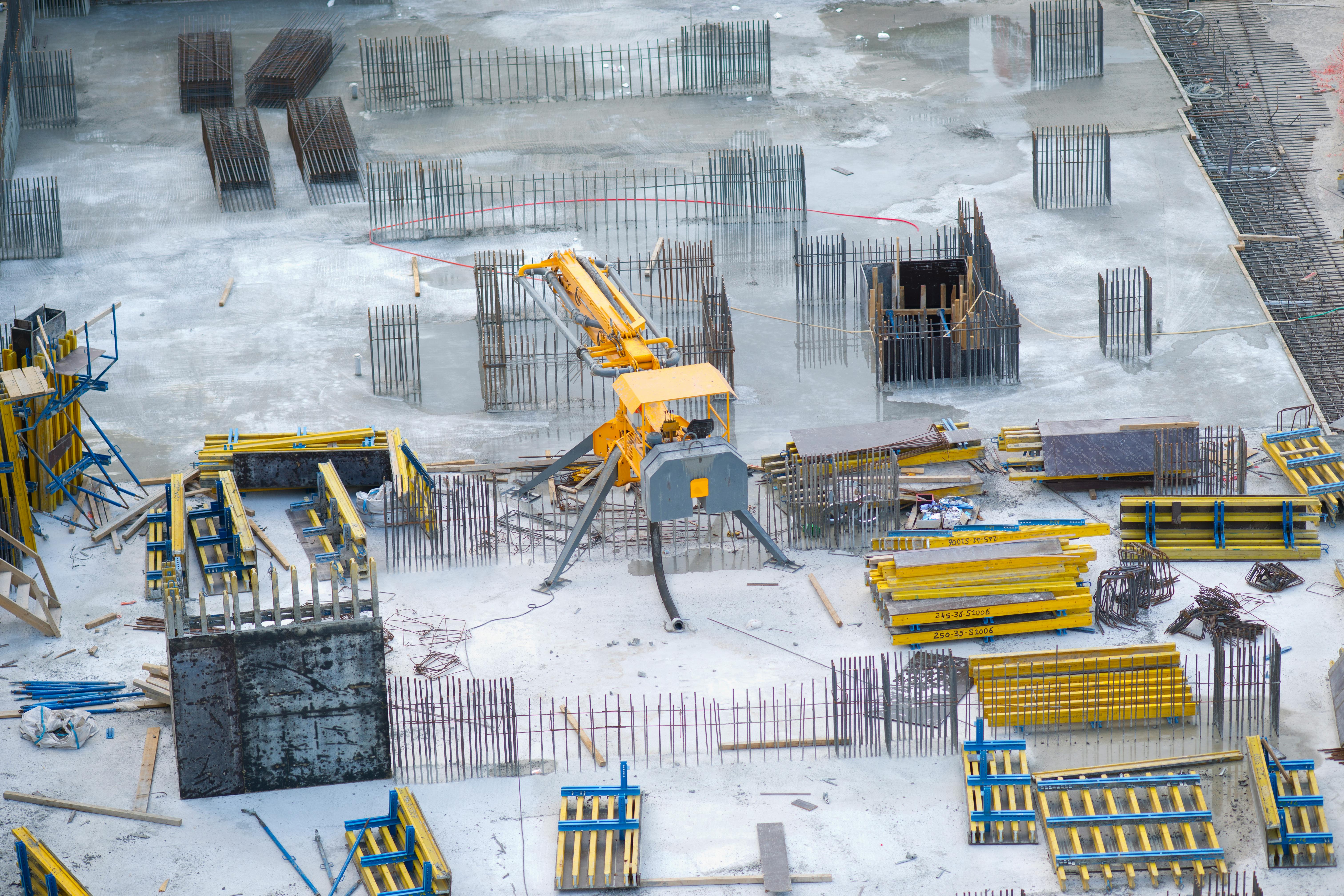
Manual rebuilds are a frequent issue, since the readiness of the job site keeps fluctuating in an unpredictable manner. The dispatcher, who ends up having to manually reconfigure the routes of all trucks in case of an unready job site, loses out on much planning time and spends too much time trying to react.
Not every fleet needs to solve all six at once, and trying to usually just stalls the whole project. A rough order of priority, based on which problem tends to unlock the most improvement in the others:
Dispatchers who’ve built years of intuition around manual assignment sometimes hear “automated dispatch” as a threat to that expertise, and drivers who’ve been burned by badly implemented technology before tend to arrive sceptical. Neither reaction is unreasonable, and both usually settle once the software actually starts saving them time. Here’s how to start:
Start With Propose-and-Approve, Not Full Automation
The smooth rollouts have in common the following approach: letting the algorithm make suggestions but allowing a human to confirm them during the first few weeks instead of making an immediate switch to full automation. This allows dispatchers to witness the work of the algorithm in practice before relying on it completely and gives drivers a clear indication that the new method is not purely automated.
Instead of offering all the improvements at once, choose one proof point that corresponds to whatever issue causes the most trouble now:
Vendor demonstrations cover all six issues theoretically. However, a shorter list of pointed questions gets straight to the point much quicker than going over features:
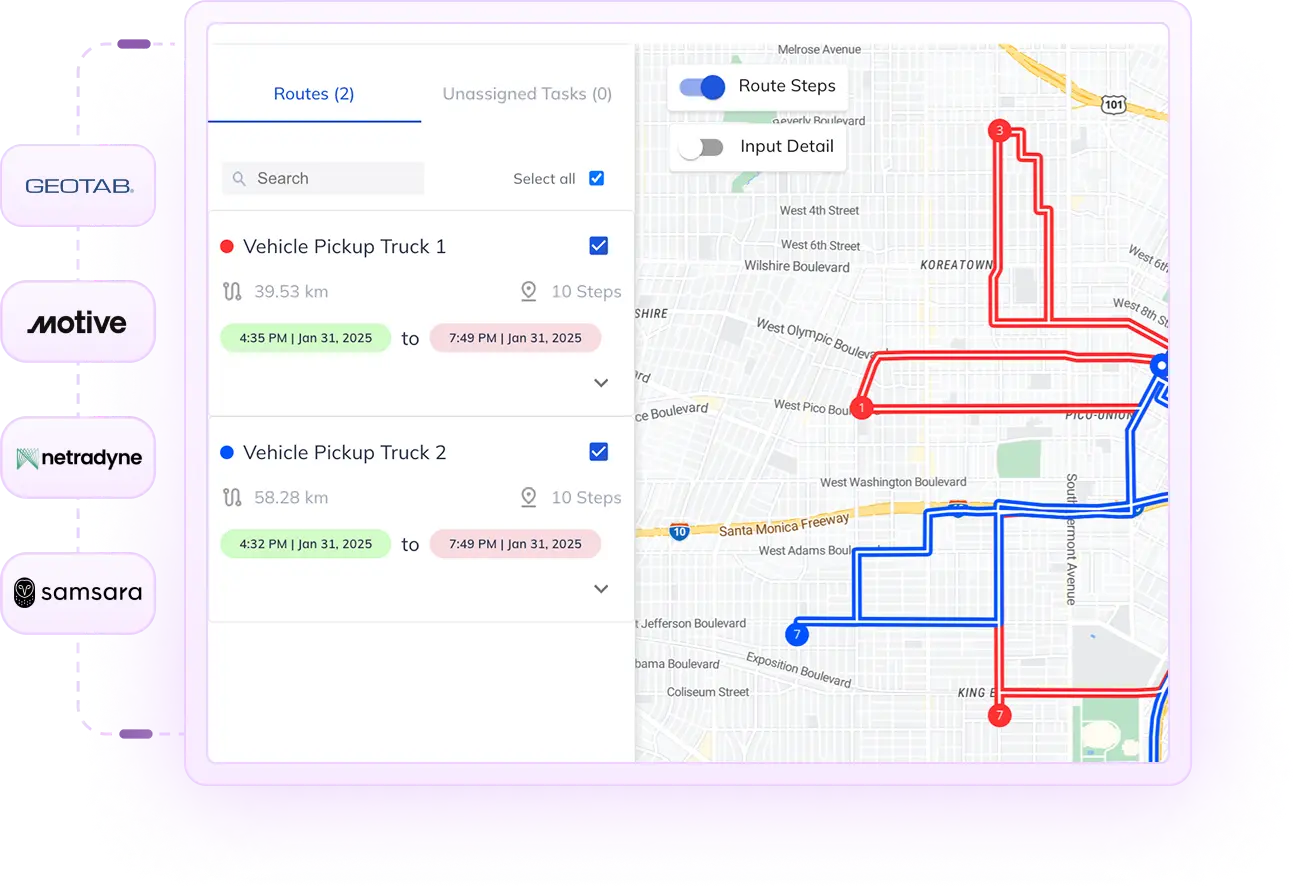
Most of the problems described above share a root cause: decisions get made without current information, because the tools generating that information and the tools making the decision live in separate places. NextBillion.ai’s routing and mapping APIs are built to close that specific gap, giving a dispatch platform the live data and calculation power it needs to solve these problems directly, rather than just displaying a map next to them.
Stop assignment can run on live vehicle location, remaining capacity, and current traffic conditions simultaneously, producing a workable plan in seconds rather than the hours a manual process typically takes. The dispatcher’s role shifts from building the plan by hand to reviewing and approving one that’s already been calculated.
Each vehicle’s location and load level will be displayed on a single screen, which means that the dispatcher, in the case of a disruption, does not have to guess about the availability of any particular driver. The same system makes it clear when one driver is silently overwhelmed while another could use more work, before it shows up as a complaint.
In the case that there is a delay, a cancellation, or a job, the route, and possibly other nearby routes, can automatically be recomputed, so the dispatcher can make decisions based on the recommendation rather than staring at a blank sheet of paper. What previously took a phone call and some guessing can now take only a few seconds of reviewing.
Because routing and tracking run on the same underlying data, on-time percentages, utilization rates, and history at the stop level can be obtained automatically throughout the course of the day, rather than having to build it manually later on. This avoids the reporting lag mentioned before without requiring additional work for anyone.
For teams building or customizing their own dispatch tools, these capabilities are available as APIs that plug into an existing platform, so the underlying routing intelligence can improve without forcing a switch to an entirely new system.
Not every fleet needs to solve all of these problems on the same timeline. Some signs tend to show up as follows:
A fleet manager’s day rarely gets harder because of one big problem. It gets harder because manual stop assignment, blind re-routing, uneven workloads, and delayed reporting all quietly compound at the same time, each one making the others a little worse. None of them looks like a crisis on any single day, but each one quietly raises the cost of running the fleet. Dispatch mapping software doesn’t remove the need for good judgment, but it replaces guesswork with current information at the exact moments that judgment gets used.
Want more insights into the fleet management picture beyond dispatch? Discover our fleet solutions at NextBillion.ai now!
No. Even fleets with a handful of vehicles feel manual coordination costs once stop counts or driver numbers grow past a few per day.
Fleet management often covers maintenance and compliance too. Dispatch mapping focuses specifically on live assignment, routing, and tracking.
Indirectly. Fairer, more balanced workloads and less end-of-day chaos tend to reduce the frustration that drives turnover.
Usually not. Most platforms work with GPS-enabled devices and telematics already common in commercial fleets.
Not really. Some software pricing increases with the number of vehicles in the fleet, which means that a smaller fleet doesn’t spend money on unnecessary enterprise options.
Bhavisha Bhatia is a Computer Science graduate with a passion for writing technical blogs that make complex technical concepts engaging and easy to understand. She is intrigued by the technological developments shaping the course of the world and the beautiful nature around us.