





How is a Well-Maintained Fleet Your Silent Profit Driver

How is a Well-Maintained Fleet Your Silent Profit Driver?

Published: January 20, 2026

What if the biggest drain or boost to your fleet’s profits isn’t fuel prices, delivery volume, or market conditions, but something far quieter happening under the hood? In the fast-paced world of logistics, fleets often lose money not through dramatic failures but through silent inefficiencies that chip away at margins day after day. A well-maintained fleet doesn’t just run better, it earns better, with fewer breakdowns, lower expenses, and higher productivity. Ready to uncover how maintenance becomes a silent profit engine for your fleet? Keep reading the blog to learn more.

Did you know?

  • According to Fleet News, vehicle downtime costs fleets a total of 3.3 billion dollars per annum.

  • Average fleet maintenance costs have now increased to 0.202 dollars per mile, and much of this could be lowered simply through the use of predictive maintenance.

  • Records show that up to 90% of engine-related failures are preventable, making regular preventive maintenance one of the smartest investments a fleet can make.
Well-Maintained Fleet

The Profit Impact of Fleet Maintenance

Fleet maintenance is not merely a line item in the business operation, but rather a strategic financial instrument that defines long-term profitability, competitiveness, and sustainability of any business that depends on fleets. Maintenance has an impact on all economic aspects of operations: depreciation of assets, continuity of revenues, exposure to risk, customer loyalty, and even brand equity. When handled with a smart mind, maintenance is a profit multiplier which transforms vehicles into a predictable source of profit instead of unreliable expense liabilities.

1. Reduced Unplanned Downtime: Protecting Revenue Through Operational Continuity

Sudden mechanical breakdowns of vehicles do not simply stop a truck; they disrupt a whole economic system. With every minute of downtime, it will trigger:

  • Loss of revenue due to missed delivery.

  • Exposure to penalties on SLA breach.

  • Emergency logistics cost bursts.

  • Idle labor payments.

  • Delay in operations on a schedule and route basis.

Due to the uncertainty of downtime, it generates high variance, high cost events disrupting margins.

Industry reports place the direct cost of downtime for a commercial truck at 75 to 125 dollars per hour (1.25 to 2.08 dollars per minute). This does not include lost revenue or customer churn, which often exceed the repair costs.

Example

A distribution truck breaks down halfway to a supermarket chain.

  • The late delivery results in a $400 SLA penalty.

  • A tow and emergency repair cost $650.

  • The driver must be paid for 3 idle hours costing $90.

  • A backup truck is dispatched, adding $120 in fuel and labor.

Single breakdown cost: $1,260 and above.

Preventive maintenance could have prevented this for less than $120.

2. Increased Asset Lifespan and Resale Value: Turning Depreciation Into a Controlled Variable

Uncontrolled stress makes fleet assets depreciate most. Preventive maintenance is lessening this process, which provides businesses with additional years of productive service and end-of-life sale value.

The role of maintenance in generating profits.

  • Long life cycle because of early identification of problems.

  • Less premature replacement and therefore delayed capital expenditure.

  • Better resale due to clean traceable maintenance records.

Proper maintenance enhances the productivity of the assets and the capital recovery.

Example

Two identical vans attain 5 years of service:

Van A: Clean service history, in good condition.

Van B: Abnormal service, apparent mechanical abuse.

Resale values:

  • Van A sells for $13,000

  • Van B sells for $8,500

Difference: $4,500 in recovered capital for a single vehicle.

Across a 50-vehicle fleet, this equals $225,000 in additional resale value.

3. Better Fuel Efficiency: Turning Mechanical Health Into Daily Savings

Fuel is one of the largest controllable expenses in fleet operations. Maintenance increases fuel economy as the engine, tires, and the drive train are maintained to be at their most efficient.

The major fuel-saving reasons due to maintenance.

  • Proper tire inflation and balance decrease rolling resistance.

  • Combinations of clean air and fuel filters enhance combustion.

  • Internal friction is reduced by proper oil viscosity.?

According to the Department of Energy:

  • Proper tire inflation boosts fuel economy by up to 3.3%

  • Fixing a faulty oxygen sensor can improve efficiency by up to 40%

Small percentage returns across a fleet would result in huge financial savings.

Example

A fleet of 80 delivery vans:

  • Mean consumption of fuel per van per year 5,000 liters.

  • An increase of 5 percent will save 250 liters per van per year.

The fleet saves over $70,000+ a year at just 3.50 a gallon of fuel due to increased fuel efficiency.

4. Superior Delivery Performance and Customer Experience

Properly serviced cars not only transport goods but also reliability, the basis of customer confidence and future sales.

How maintenance enhances profitability

  • Increased rates of on-time deliveries.

  • Reduced cases of SLA violations or service breakdowns.

  • Reduced probability of in-transit accidents.

  • Increased bargaining strength of long-run service contracts.

  • Improved brand perception with clean and reliable cars.

Customers equate reliable vehicles with reliable companies.

Example

A logistics provider raises uptime from 92% to 98% through preventive maintenance.

  • Punctual delivery rate increases to 96 percent from 88 percent.

  • Customer churn drops by 12 percent.

  • The firm renews a 3 year contract with $1.4M.

Maintenance served as a revenue protection and revenue expansion strategy.

The Silent Losses of Reactive Fleet Maintenance You Don’t See in the P&L

losses

“Silent losses” are the hidden costs which do not show up in the ‘Repairs & Maintenance’ line item, yet quietly take away profit due to elevated risk, wasted assets and long term damage to the equipment. By taking a fully proactive approach, fleets can find and close these leaks. Below are the deeper dives into those silent costs.

1. Driver Behavior Causing Excess Wear & Tear

Aggressive or bad driving habits greatly speed up vehicle aging, thus incurring costs long before a part really breaks. It is often perceived as more frequent service than a maintenance failure due to this silent decline.

  • Harsh Braking and Acceleration: Harsh braking significantly increases tire and brake maintenance costs, with mean drivers incurring over 60% higher tire expenses annually compared to smoother drivers.

  • Engine Strain and Fuel Inefficiency: Aggressive acceleration and excessive speeding cause unnecessary strain on the engine and transmission, resulting in 10-30% lower gas mileage and more frequent fluid changes and component replacements.
  • Preventive Action: Implementing in-cab monitoring and telematics can track harsh braking, cornering, and acceleration rates. It enables targeted driver coaching that positively impacts maintenance schedules and asset longevity.

2. Inefficient Route Planning = More Maintenance Cycles

Although route planning is generally a logistics activity, its influence on maintenance costs is extensive and frequently ignored. The longer and inadequately selected paths demand increasingly frequent repair and change of parts.

  • Unnecessary Mileage and Service Overruns: Unnecessary mileage caused by inefficient routing adds to the maintenance requirements of the fleet. It also causes more frequent oil changes, tire rotations, and shorter intervals between services like 50,000-mile transmission services, which increases labor expenses.

  • Poor Road Surfaces Driving: The use of improperly planned routes may lead a driver to poorly designed roads. It further leads to increased stress on expensive vehicle parts like suspension systems, steering and body parts. This will result in premature breakdowns.

  • The Objective Cost of Detours: Research has shown that inefficient routing may add to the total operation costs by 10-30% in wasted fuel and wear.

3. Safety incidents → Insurance & Compliance Penalties

The economic impact of a safety event is much greater than the cost of fixing the damaged car. Also,  it resonates heavily in terms of court, administrative, and insurance costs in the years to come.


  • The Multiplier Effect: Studies reveal that the potential indirect vehicle repair costs are four times the actual vehicle repair costs. It includes administrative costs, lost time, replacement driver costs, and litigation costs.

  • Insurance Premium Spikes: When a fleet has a high risk profile in terms of poor safety record/frequency of collisions then the insurance premium becomes extremely high. This profitability can be wiped out over years thereby sometimes cancelling out maintenance savings.

  • Regulatory Fines and Compliance: Accidents may result in regulatory investigations and when the officials detect problems with vehicle maintenance or hours of service of the driver, fleets can face massive fines and penalties. This may damage their compliance score and increase the possibility of subsequent inspections and interventions.

4. Idle Vehicles and Spare Parts Waste

Ineffective inventory and asset use creates financial drag that restricts capital and labor use which is not visible in regular operating reports.

  • Excessive Idling: Unnecessary fuel consumption and excessive engine wear without additional mileage added due to excessive idling cause higher maintenance requirements and can even reduce the lifetime of the engine, thus, waste of the capital asset life.

  • Spare Parts Overstocking: It is common to note that many fleets commonly overstock parts, in order to avoid downtime due to reactive maintenance. This in turn leads to investment in potentially obsolete parts. Conversely, understocking will impose the cost of emergency transport and lead to delays.

  • The Inventory Drag: Inventory management requires proper tracking and auditing to prevent storage expenses, obsolescence, and wasted warranties. This is because poor management results in unnecessary inventory, which holds up capital.

5. Illustrative micro-calculations of silent loss

These illustrations show how minor, frequent maintenance and management failures can translate into huge, unnoticeable losses in a single year on a 50-vehicle fleet.

Silent Loss Category

Annualized Hidden Cost (Illustrative)

Calculation Example

Driver Wear and Tear

$2,480 (10 x $200 + 10 x $240 labor)

Extra $200 per year for premature brake and tire wear on 10 vehicles, plus 2 days of labor per vehicle (8 hours at $30/hour) for unscheduled minor repairs.

Excessive Idling

$35,000 (pure fuel waste)

50 vehicles idling 1 hour/day for 250 days: 50 × 1 × 250 × 0.8 gallons/hour × $3.50 per gallon.

Inefficient Routing

$40,625 (fuel, tire, fluid wear acceleration)

50 vehicles driving 5 extra miles/day for 250 days: 50 × 5 × 250 × $0.65 operating cost per mile.

Administrative Burden

$7,500 (lost management productivity)

Fleet manager spends 2 hours/week on paperwork: 50 weeks × 2 hours × $75/hour.

Total Estimated Silent Loss

$85,605

Combined loss across all categories.


Note: (All values are approximate and intended for illustrative estimation.)

How Shifting from Reactive to Preventive Maintenance Leads to a Well-Maintained Fleet

There are two giants in the world of maintenance strategies, Preventive Maintenance and Reactive Maintenance. Both of these methodologies are critical in the development of the operational philosophy of the contemporary fleets. Fundamentally, they are two contrasting worldviews, one based on anticipation and system awareness, and the other one based on waiting to fail.

Reactive maintenance is only done when a breakdown has occurred. The damage is already done by this time. Cargo halts on the highway, supply chains come to a halt, cars are repaired at inflated prices, and delivery schedules are ruined. It is a plan that is characterized by crisis management but not operational control.

Preventive maintenance (PM) is preemptive. It makes sure that vehicles are maintained in time, vital components are checked before breakdown, and problems are identified in time. Rather than combating crises, PM creates a reserve of trustworthiness around the fleet. This transformation defends uptime instead of addressing downtime, transforming maintenance into a strategic asset.

Reactive to Preventative Maintenance is not a simple operational change; it is a paradigm shift in the way a fleet is structured in addressing the risk, cost, and asset health. Although Reactive Maintenance seems to be less expensive at the moment since nothing is paid until something fails, it is just an illusion. It attributes the concealed costs of downtime, lost revenues, emergency repairs, and degradation of assets.

Preventive Maintenance on the other hand is a planned investment. It stabilizes the operating cost, secures the asset value, mitigates volatility, and provides predictability of operations. In the long run, this change has a fleet that is not only in good condition but systematically more profitable.

In simple terms:

  • Reactive = Resolving issues when they damaged the business.

  • Preventive = Before the problem can injure the business, it is avoided.

Below is how Preventive Maintenance produces a truly well-maintained fleet:

Fewer Breakdowns: Fix issues before they stop you mid-route

Frequent checks of belts, fluids, tires, and brakes help technicians to determine fatigue patterns well before failure. PM transforms failures into a planned service instead of disastrous breakdowns. This safeguards delivery schedules, lessens towing accidents, prevents expensive emergency maintenance, and maintains the productivity of the drivers.

Lower repair costs: Small problems are cheaper to solve than major failures
repair

Mechanical failures follow a chain-reaction logic. A $50 hose ignored becomes a $5,000 engine failure. A worn brake pad becomes a damaged rotor. PM interrupts these chains early.  By managing repairs at low costs and predictability, PM is changing the maintenance budgets from the state of being volatile and reactive to stable and optimized.

Better fuel efficiency: A healthy engine burns less fuel per kilometre
fuel

The efficiency of fuel consumption is a mechanical result. Friction and engine load are minimized by clean filters, proper tire pressure, and frequently replaced oil. In cases where the engines are working as intended, fuel is used more efficiently. Even a slight percentage increase in mileage across a fleet yields huge financial payouts, and PM is a savings generator on a daily basis.

Longer vehicle lifespan: Components wear slower, delaying replacement cycles

Preventive Maintenance is a form of stress management of vehicles. New oil reduces internal friction, replacement of brakes in time preserves the rotors, and healthy fluids decreases thermal stress. In the long run, this reduces the structural wear, increases the lifespan of the components, and postpones the necessity of expensive vehicle replacements. PM transforms the lifespan of assets as an uncertainty to a variable that can be controlled.

Higher uptime: More vehicles stay active and productive every day

Reactive maintenance brings about prolonged, unpredictable downtime. Preventive Maintenance makes sure that the downtime is minimal and planned. Fleets do not lose vehicles days in advance because of unexpected failures but an hour or two during planned service periods. This balances the number of vehicles and maximizes revenue generating capacity.

Improved driver and cargo safety: Safe vehicles reduce accident risks

The state of the vehicle plays a major role in road safety. Accidents are prevented by responsive brakes, high tread tires, and working lights. PM makes sure such safety critical systems perform optimally. The outcome is improved security of the drivers, cargo, and  people, and less liability on the company.

More reliable deliveries: Consistent performance supports SLA commitments

Breakdowns are one of the biggest disruptors of delivery performance. When vehicles rarely fail, fleets hit their delivery windows consistently. Meeting SLAs strengthens customer trust, improves long-term retention, and enhances the company’s reputation as a reliable service partner.

Compliance without stress: Regular checks keep inspections and certificates updated

The operations of the fleet should correspond to high standards of regulation connected with safety, emissions, and roadworthiness. Preventive Maintenance is in accordance or beyond these requirements whereby all vehicles are made to be compliant. This decreases the chances of fines, citation, forced downtime, or inspection failures.

Higher resale value: Well-maintained vehicles retain stronger asset worth

When vehicles reach retirement, their resale value is determined largely by their maintenance history. A clean and well documented PM record indicates that the asset has been taken care of in a responsible manner. The price paid by buyers increases, and the results of the auction become better, and the company receives a higher percentage of its initial investment.

How NextBillion.ai Can Help in Keeping Your Fleet Well-Maintained?

Maintenance of fleets is not merely a mechanical task anymore, it is an information issue. Failure, ineffectiveness, and safety hazards do not happen because of one failed component; they come in forms of patterns: unnecessary mileage, inefficient routing, rough driving, overweight vehicles, unnecessary idle time, and blind spots in the visibility of operation. Reactive maintenance is a failure since it only considers each incident as a single event rather than seeing the system-wide state that led to the incident.

NextBillion.ai solves this by turning fleets into intelligent, self-optimizing systems.
It combines real time telemetry, spatial intelligence, algorithmic routing, and behavioral analytics to reveal the latent forces of operation which hasten wear and tear. Fleets can predict, plan, and avoid faults before they occur rather than waiting until they do.

Simply put, NextBillion.ai is the technological basis of an ecosystem of predictive maintenance, in which the risk is recognized early, vehicle use is optimized, and asset life becomes a variable to be controlled instead of a guess.

Below is a deeper conceptual look at how each component enables this transformation.
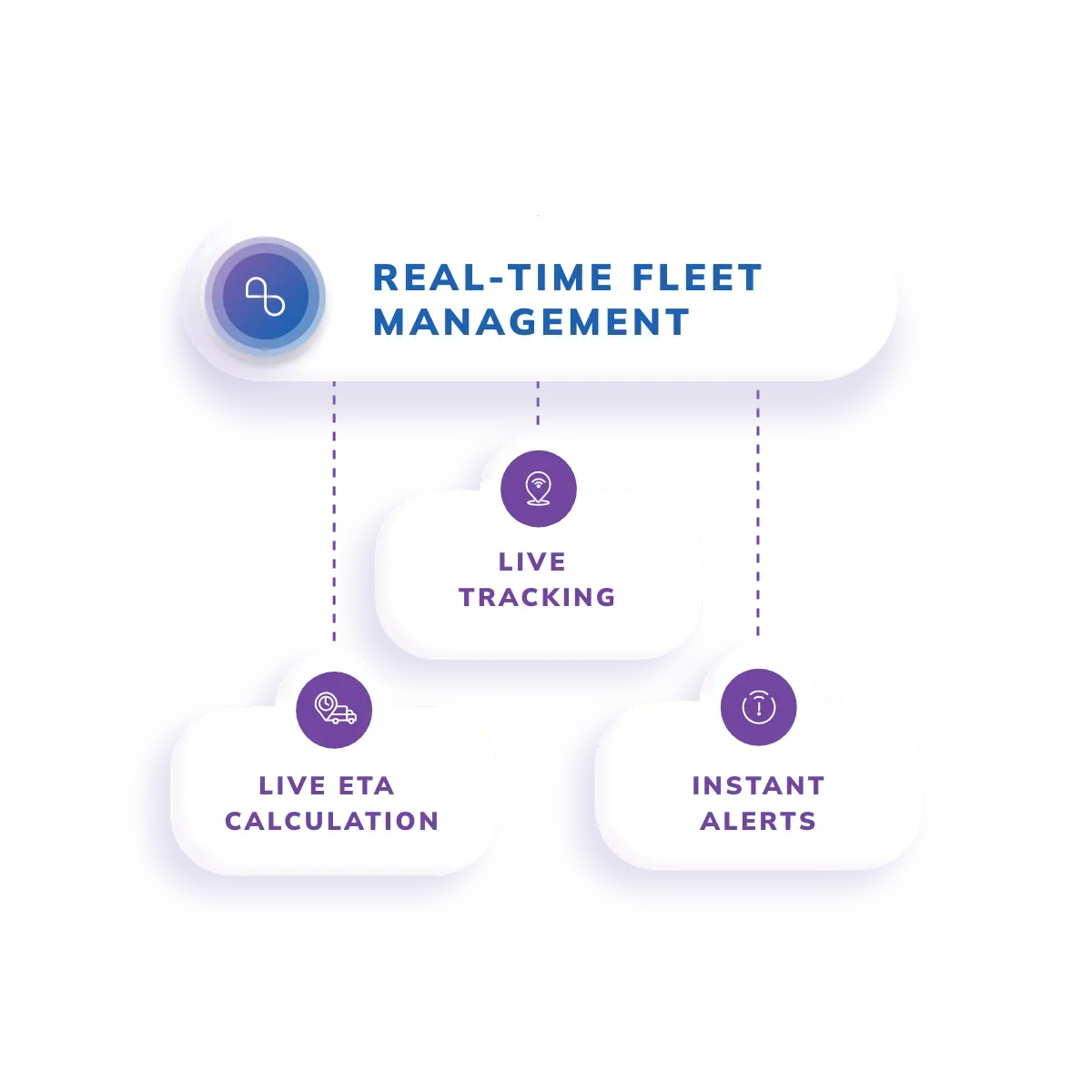
1. Live Tracking API: The Operational Nervous System for Fleet Health
live tracking

The quality of the miles covered is a key factor that determines the degradation of the vehicle, not the number. The Route Optimization API of NextBillion.ai makes sure that vehicles move in the most fuel-efficient and least harmful way.

Conceptual advantages for maintenance:

  • Behavioral Telemetry: The patterns of over speeding, aggressive braking, or excessive idle times are measurable risk factors that can be overlaid onto component wear.

  • Utilization Modeling: Vehicle usage density (how hard a vehicle is worked relative to others) predicts when maintenance windows should be adjusted individually rather than generically.

  • Temporal Degradation Mapping: Trip histories are used together with mechanical service data to generate a time history of stress factors which are used to predict failure.

  • Smart Condition Notifications: The fleet is no longer passively monitored, but it responds to events, that is, it detects anomalies in advance before they turn into failures.

Live Tracking turns the maintenance system into a behavior-driven health model rather than a mileage-driven maintenance system; it is much more precise and economical.
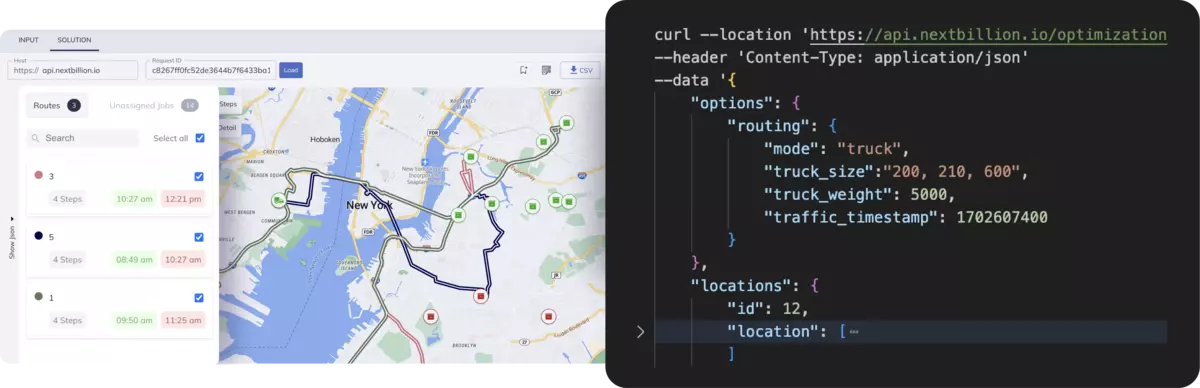
2. Route Optimization API: Controlling the Inputs That Create Wear, Inefficiency, and Stress
route optimization api

Vehicle degradation is strongly influenced by the quality of the miles driven—not just the quantity.

NextBillion.ai’s Route Optimization API ensures vehicles travel through the environment in the least damaging, most fuel-efficient way possible.

Conceptual contributions to maintenance:

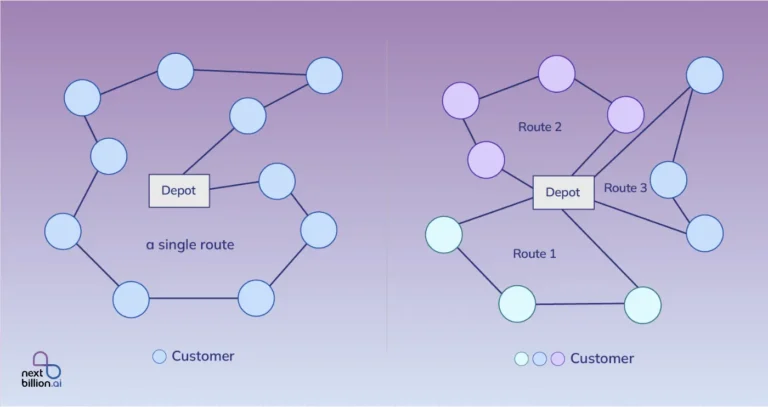
  • Route Stress Profiling: There are routes that cause more stress to engines, tires, and brakes due to the elevation, traffic, or quality of the road. This is avoided by optimization.

  • Load Balancing Among Fleet Assets: Algorithms ensure that a particular set of vehicles is not overused but rather tasks are distributed in the best possible way to increase the overall life of the fleet.

  • Dynamic Risk Avoidance: The real time re-optimization is used to avoid the congestion-related wear of the fleets, the danger of overheating during slow-moving traffic, or the excessive gradient that places excessive stress on transmissions.

  • Lifecycle Cost Optimization: Routes are not only time and distance optimal, but wear cost per mile can be used as a lever of turning routing into a maintenance management tool.

This shifts routing from a logistics decision to a predictive maintenance control mechanism.
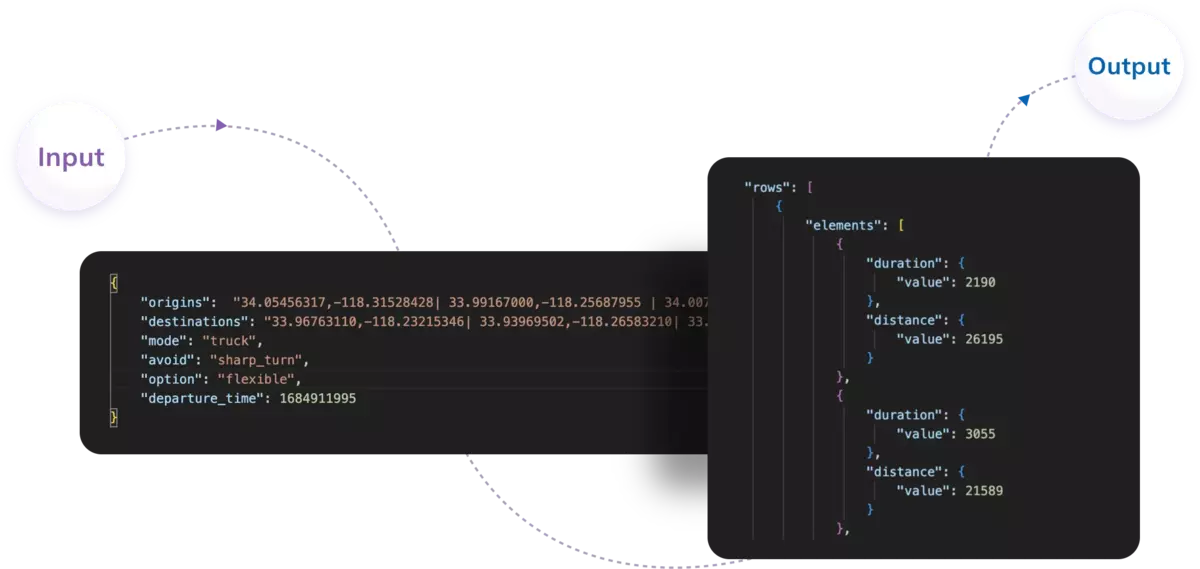
3. Distance Matrix API: The Analytical Engine Behind Maintenance Forecasting
distance matrix api

Although the routing defines the movement of vehicles, the Distance Matrix API is a model of the larger mathematical correlations between distance, time, traffic, and load of operation.

Basically, this API is supporting:

  • Predictive Maintenance Forecasting: Predictive maintenance forecasting is used when matrices are based on actual conditions in the real world instead of being based on generic intervals.

  • Network-Wide Stress Modelling: It is now possible to determine geographic areas, routes, or groups that place undue stress on vehicles in the long run.

  • Cost-to-Wear Modeling: ETAs plus distances and traffic patterns allow fleets to calculate the cost of wearing a particular route variant, an advanced metric that is employed in the maintenance planning of an enterprise.

  • Driver Schedule Calibration: Precise ETAs can be used to avoid aggressive driving as a result of time pressure, which can cause collisions and damage to the car.

The Distance Matrix API therefore constitutes the analytical layer which converts reactive service schedules into predictive and usage-calibrated maintenance schedules.
4. Geofencing API: Intelligence Boundaries That Protect Assets Before Damage Occurs
geofencing api

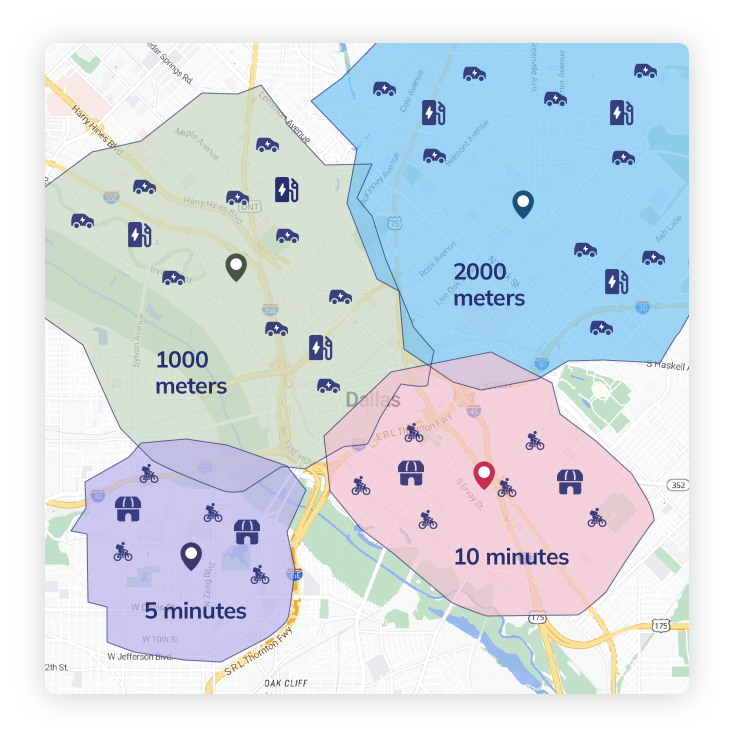
A lot of maintenance problems are not due to mechanical design but exposure to the environment, bad roads, unsafe places, overloading zones, or idle heavy logistic hubs. Geofencing API allows fleets to encode operational wisdom into spatial boundaries.

The main benefits are:

  • Hazard Avoidance Intelligence: Cars will automatically be avoided in areas that are identified to wear down parts more quickly (construction areas, gravel roads, high grades).

  • Rule-based Behavior Control: Vehicles can be sent to maintenance, restricted in their usage, or automatically diagnosed by entering or leaving particular geofences.

  • Geofence-based Maintenance Scheduling: In case a vehicle is regularly exposed to high-stress geofences, it can be taken in earlier.

  • Defense Against Unauthorized Use: Ex off-route or after-hours geofence violations assist in avoiding misuse, one of the largest silent factors of unexpected repairs.

This API makes geography a predictive maintenance parameter.
5. Navigation SDK: Engineering Better Driving Behavior at the Point of Impact
navigation sdk

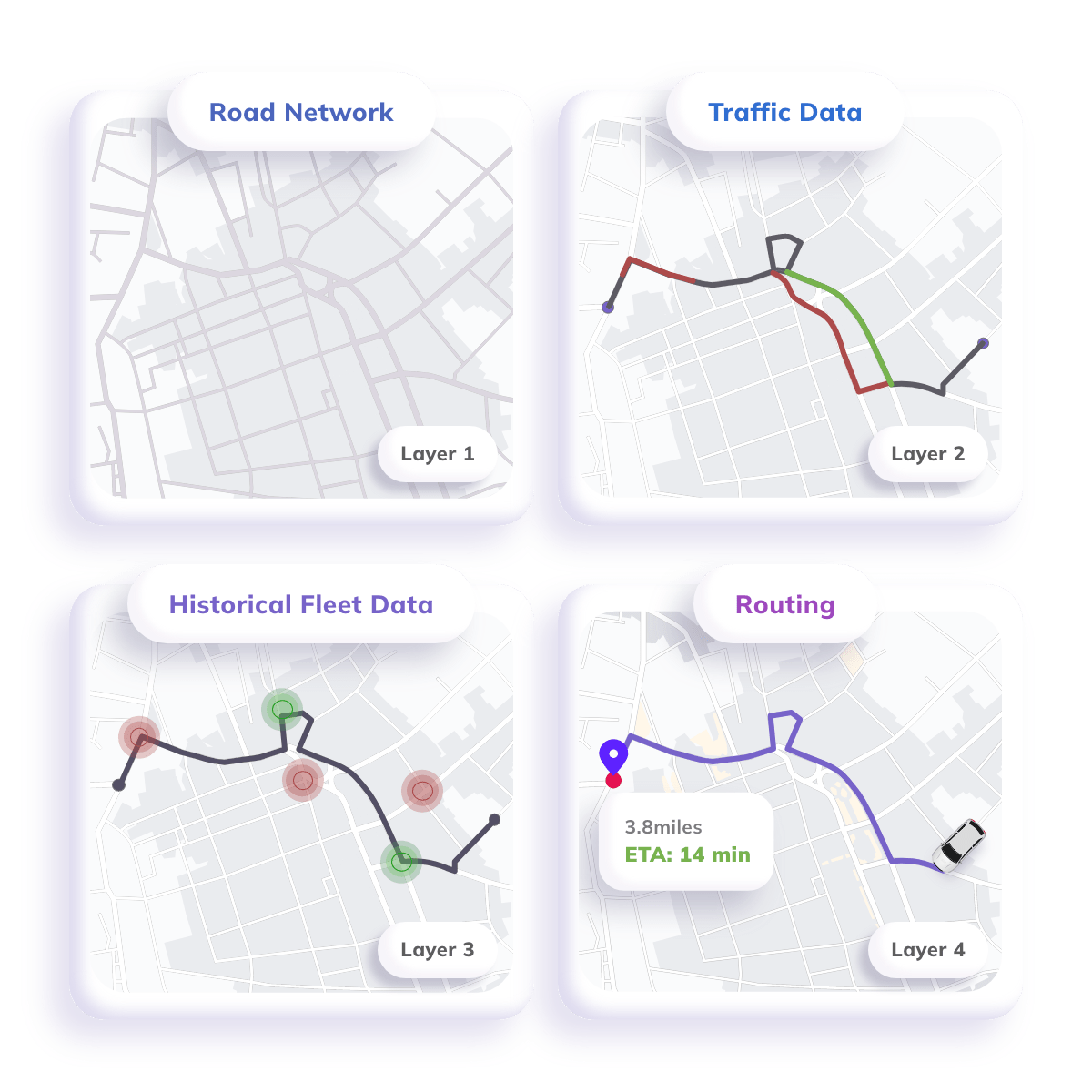
Driver behavior is one of the largest hidden drivers of maintenance costs. The Navigation SDK improves not just navigation accuracy but the quality of driving.

Conceptually, the Navigation SDK enables:

  • Adaptive Driving Behavior Shaping: Drivers do not have to make abrupt moves that increase component stress, thanks to turn-by-turn instructions.

  • Real Time Behavioral Correction: Voice prompts and off-route detection minimize severe turn-taking and avoid the stressful driving patterns.

  • Fuel-Efficient Direction: Optimized, smooth navigation minimizes throttle spikes, braking incidents, and transmission load.

  • Human In The Loop Predictive Maintenance: Drivers are now involved in asset health by receiving feedback, notifications, and situational suggestions.

Ultimately, the Navigation SDK embeds maintenance intelligence directly into the driver’s workflow, shaping behavior that extends asset life.
Conclusion

NextBillion.ai redefines fleet maintenance as an intelligence-driven ecosystem with many aspects, in which:

  • Vehicles don’t just move; they communicate their health.

  • Routes don’t just optimize time; they reduce stress on assets.

  • The distance matrices are not only calculating ETAs, but they are also used in predictive modeling.

  • Geofences are not simply delimitations of areas; they also impose discipline in the operation.

  • Navigation does not only direct drivers, it also forms protective behavior.

With this combination of spatial intelligence, real time data, and algorithmic optimization, a fleet environment is formed in which:

  • Breakdowns are exceptions

  • Downtime is predictable

  • Maintenance costs stabilize

  • Asset lifespan extends

  • Drivers operate more safely

  • Vehicles remain revenue-generating longer

NextBillion.ai enables fleets to switch to predictive, intelligence-driven maintenance systems, which are based on forecasting instead of repairing, allowing fleets to achieve greater uptime, reduced costs, and extended asset life. Connect with us to know more.

About Author

Bhavisha Bhatia

Bhavisha Bhatia is a Computer Science graduate with a passion for writing technical blogs that make complex technical concepts engaging and easy to understand. She is intrigued by the technological developments shaping the course of the world and the beautiful nature around us.

Ready to get started?

Table of Contents