


Table of Contents
Q4 2025 represents a step forward in making NextBillion.ai’s routing platform more intelligent, scalable, and operationally ready. This quarter features the launch of the Traffic Incidents API, along with targeted improvements across Route Optimization, Routing APIs, and the Route Planner to support complex, real-world use cases.
From incident-aware ETAs and taxi-lane routing to hazmat-compliant classifications, webhooks, zone-based planning, and revenue-driven decisions, these updates help teams plan better routes, stay compliant with regulations, and run more efficient, cost-effective operations at scale. This quarter also builds on a key milestone earlier this year; NextBillion.ai joining the Velocitor Solutions ecosystem, expanding our ability to deliver enterprise-grade hardware and software fleet management solutions by combining deep geospatial intelligence with large-scale operational systems.
Here’s what we rolled out in this quarter.
Route Planner Updates
Q4 brings significant improvements to the Route Planner, giving operations teams more visibility, control, and flexibility when planning complex routes.
Historical Requests
Users can now view a list of previously executed route planning request IDs for their account. This makes it easier to retrieve, review, and reuse past route plans when needed.
Revenue-Based Planning
Route Planner now allows users to specify the revenue associated with completing a task. During optimization, the planner compares expected revenue against operational costs to determine whether assigning a task is justified, ideal for use cases where per-task profitability matters.
Layover Rules
Teams can define layover rules that account for continuous driving limits and required breaks. These rules are factored into route planning and ETAs, helping manage driver fatigue and meet regulatory requirements on long or demanding routes.
Allowed and Restricted Zones
Users can create custom operational zones and precisely control which vehicles are allowed or restricted in each area. Route Planner respects these rules when assigning tasks, enabling better vehicle utilization, predictable operations, and reduced operational costs. Watch the demo video here.
Route Optimization API Updates
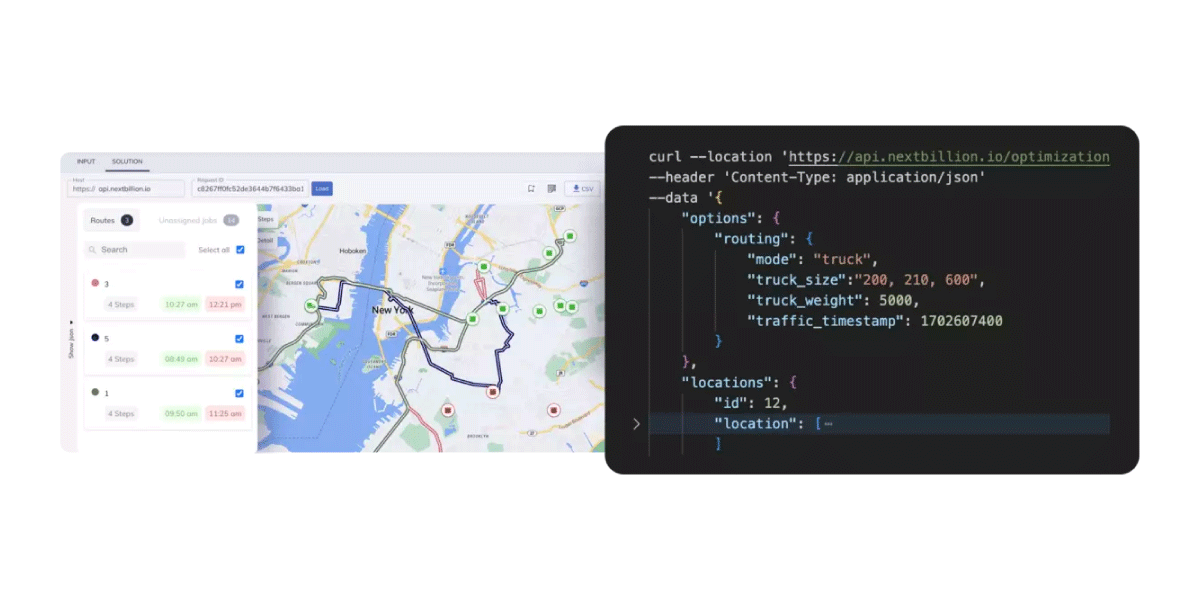
The Route Optimization(RO) API received several upgrades to better handle real-world routing constraints.
Custom Geofences in Route Grouping
Users can now define custom zones and group routes strictly within those boundaries without crossing into other zones. This is especially useful for operations that rely on strict service areas or custom routing heuristics.
Jobs in Overlapping Zones
Tasks that fall within multiple user-defined zones are now assigned correctly to eligible vehicles. Previously unassigned jobs in overlap areas are now handled seamlessly.
Standard UN Hazmat Classifications
The RO API now supports all nine standard UN hazardous goods classifications, allowing users to define hazmat types using commonly recognized categories such as flammable liquids, toxic substances, and gases.
Taxi Lane Support
When optimizing routes for taxi fleets, users can now enable taxi-only lanes to generate more accurate and compliant route plans.
Webhook Support
Users can now provide a custom webhook URL to receive notifications when an optimization request changes status. This is especially useful for large-scale or asynchronous optimization workflows, allowing downstream systems to act as soon as results are ready.
Routing APIs Updates
Q4 also brings targeted enhancements to the Routing APIs for better compliance, clarity, and flexibility.
Prefer Truck Routes
New parameters such as “prefer and truck_type”, make it easier to request truck-compliant routes. Supported vehicle types include b-double, rigid, semi-trailer, road-train, and more. This capability is currently available in Australia and complies with NHVR regulations.
Building on this, Q4 releases introduce Permit-Aware Routing, enabling operators to plan routes that account for restricted roads, vehicle access permits, and regulatory constraints at a granular level. By combining vehicle type, road eligibility, and permit requirements in a single request, teams can proactively avoid non-compliant routes, reduce manual checks, and improve planning accuracy.
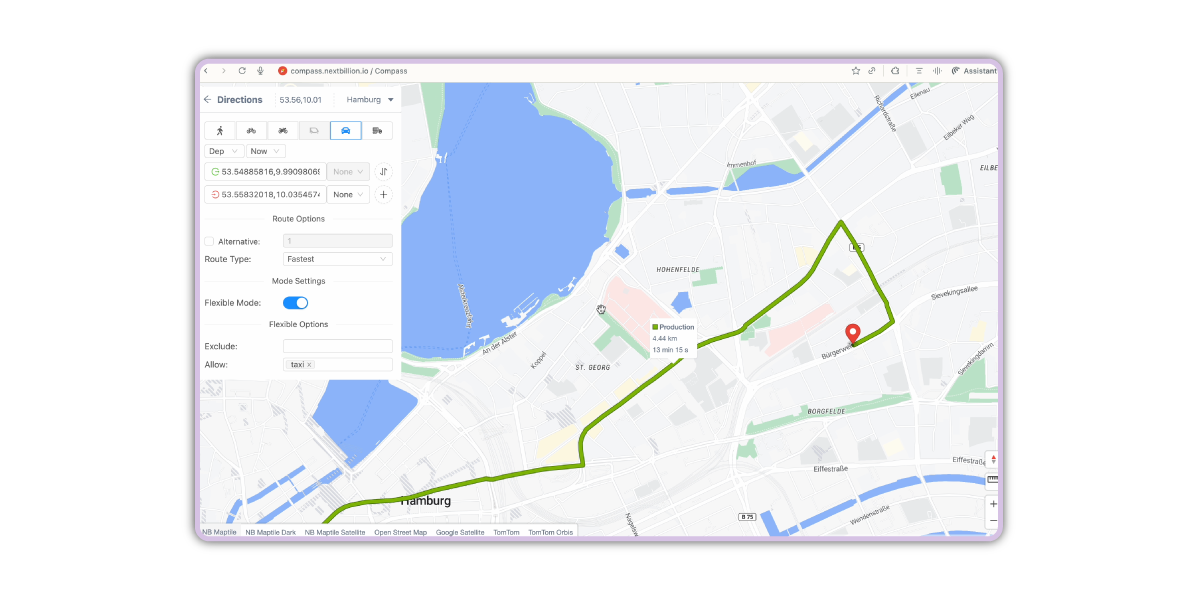
Taxi Lane Routing (allow=taxi)
Routing APIs now support directions and navigation that include taxi-only lanes where applicable, enabling more accurate and realistic route planning in cities with lane-level access rules. By accounting for restricted and priority lanes, routes reflect what drivers are actually permitted to use, resulting in more reliable ETAs and fewer unexpected detours in dense urban environments.
This enhancement is particularly valuable for ride-hailing and urban mobility services, where access to taxi-only corridors can significantly reduce travel times during peak hours. With lane-aware routing built directly into navigation, operators can improve dispatch decisions, maintain regulatory compliance, and deliver a faster, more consistent rider experience. See how it works
Return way_id in Snap-to-Roads API
Responses from the Snap-to-Roads API now include the OpenStreetMap way_id, making it easier to identify and reference the exact road segments used by a snapped route.
Traffic Incidents API – New Product Launch
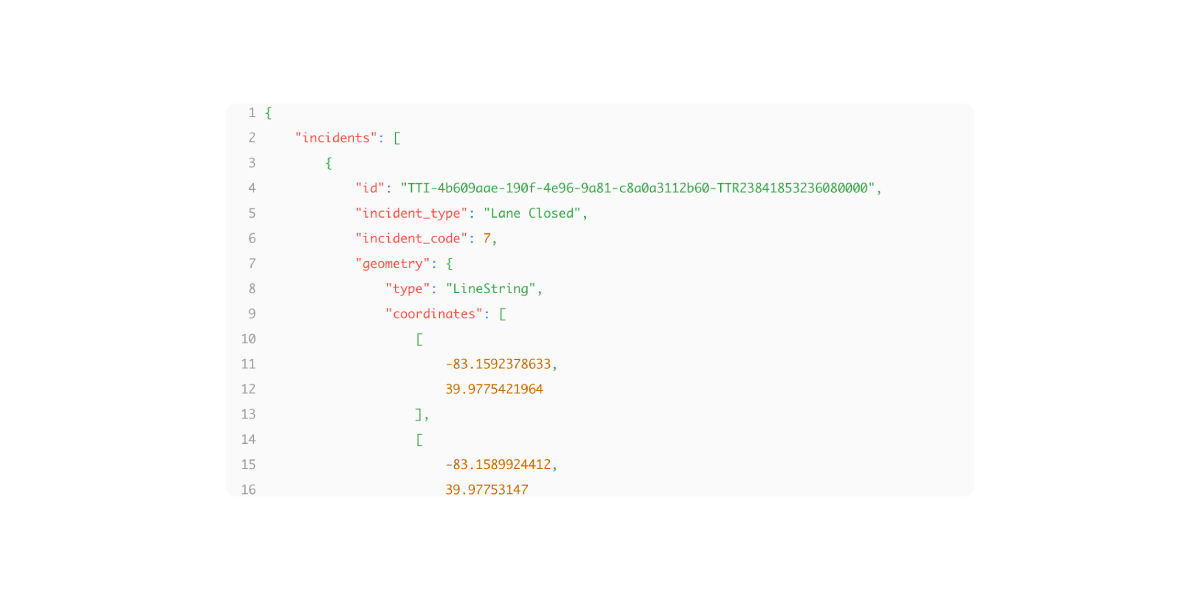
This quarter introduces the Traffic Incidents API, a new capability designed to bring real-time awareness into routing and planning workflows.
Using this API, teams can retrieve traffic-related incidents, such as accidents, road closures, or weather disruptions within a defined area. These insights can be used to update ETAs, select better routes during planning, display incidents on custom maps, or trigger alerts like “road block ahead” on active routes.
The Traffic Incidents API helps teams build more responsive, incident-aware routing experiences that adapt to changing road conditions in real time. Read more about this here.
Platform & Ecosystem Updates
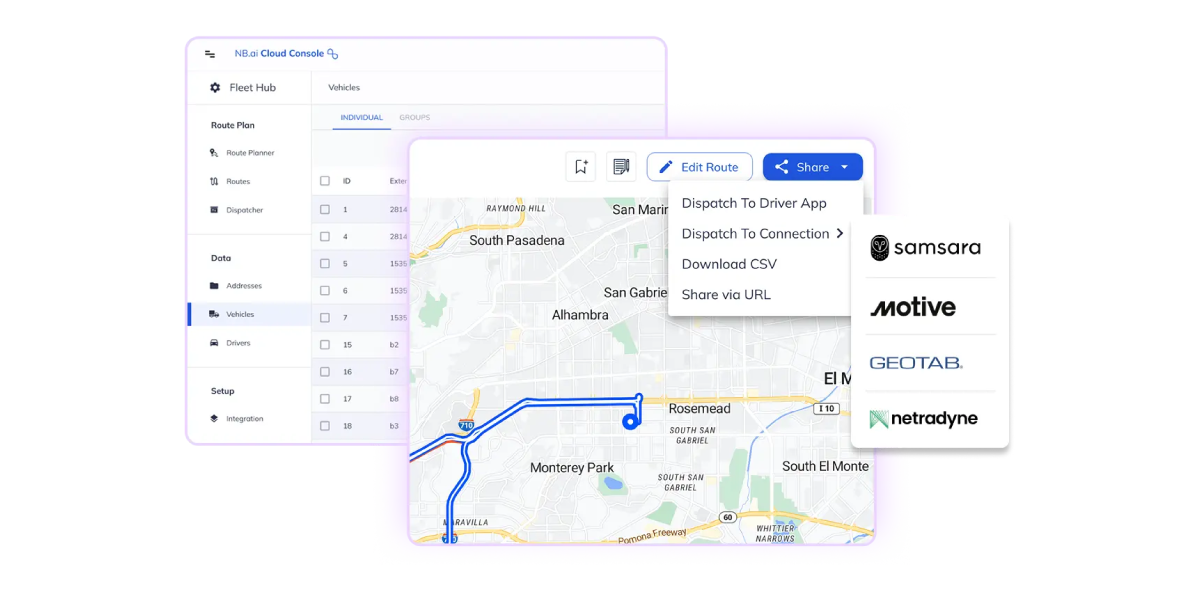
Alongside API enhancements, Q4 also brings improvements across the broader platform. These include updates to the NextBillion Cloud Console, enhanced documentation, and new notebooks and examples designed to make implementation faster and easier.
Roadmap: Looking Ahead to Q1 2026
As we move into Q1 2026, our focus shifts to deeper collaboration with Velocitor to deliver truly end-to-end, enterprise-ready solutions. By combining NextBillion.ai’s routing and location intelligence with Velocitor’s fleet and operational systems, we aim to close the gap between planning and execution and help teams operate with greater speed, accuracy, and confidence.
The upcoming roadmap emphasizes tighter integrations, expanded enterprise workflows, and solutions that connect routing decisions directly to fleet operations and execution systems. This work will enable customers to move seamlessly from optimization to action, unlocking greater efficiency, visibility, and scalability across their operations.
We are excited to build on this momentum in 2026 and continue delivering smarter, more connected location solutions for real-world operations.
Ready to get started?
Request a DemoTable of Contents
Subscribe to our Newsletters
Get the best practices for route planning & optimization, delivered to your inbox.
Subscribe