

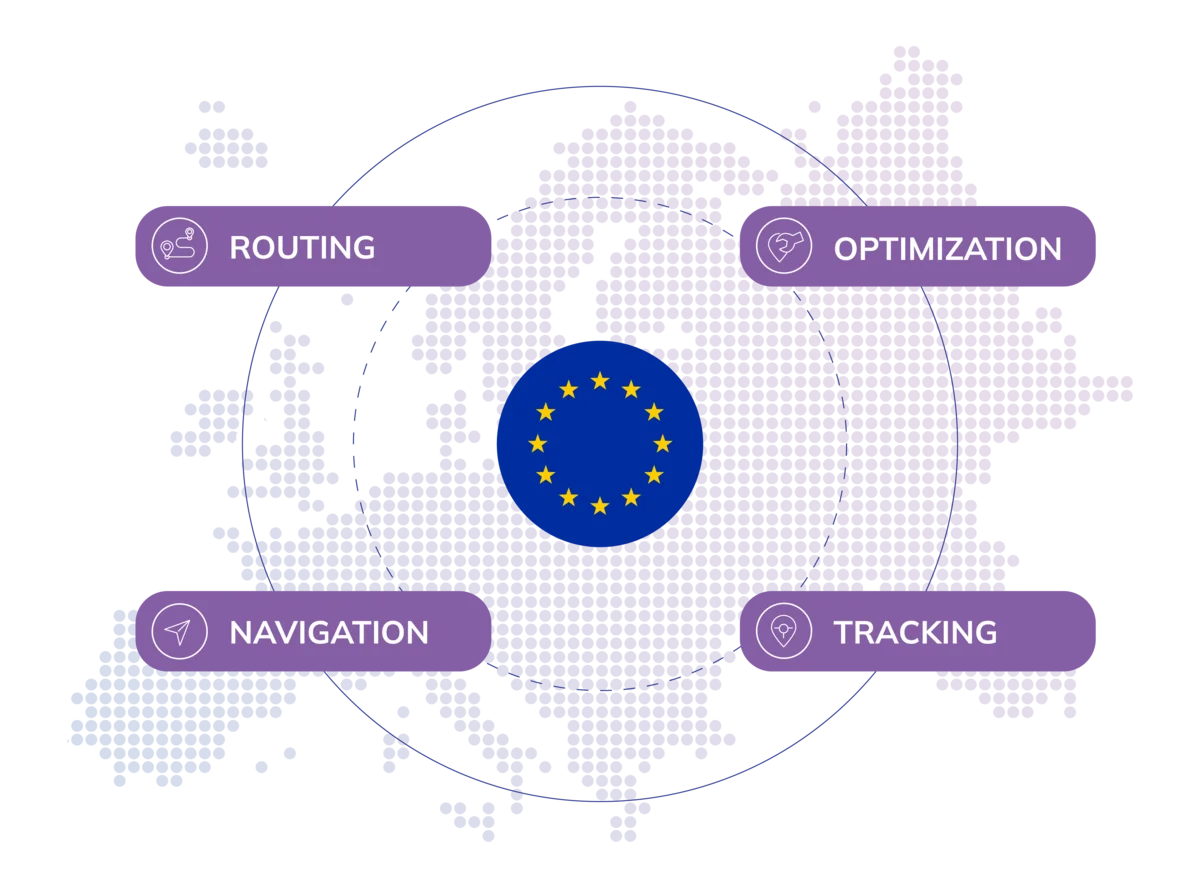
Enterprise-grade Routing, Purpose-built for Europe
AI-powered route planning and optimization software purpose-built for Europe across last-mile delivery, cross-border trucking, field services, hazmat, and waste collection.
Product and tech leaders in large-scale logistics companies use NextBillion.ai APIs











Common Routing Challenges in Europe

320+ Low Emission Zones. One Routing API.
A delivery van entering Paris, Berlin, or Milan without LEZ-aware routing risks automatic fines of up to €280 per trip.

Seven Regulatory Regimes. One Cross-Border Route.
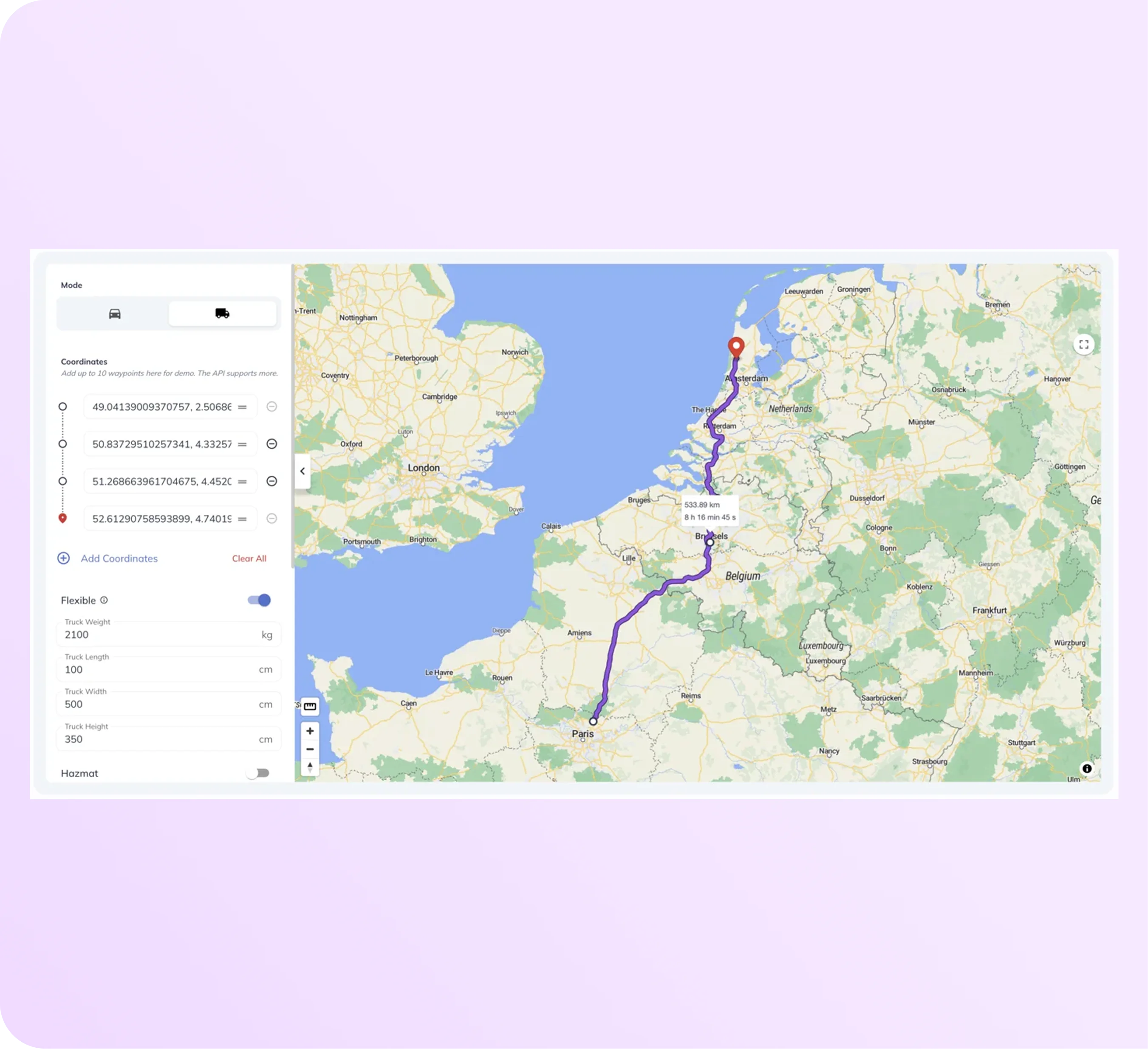
A single truck run from Amsterdam to Milan crosses 4+ zones simultaneously, creating delays and compliance risks.

Geocoding That
Works.
Localized European address quirks that cause major headaches for standard GPS and geocoding systems, costing £11–£17 for every reattempt.
Built for the Complexity Europe
Actually Operates In
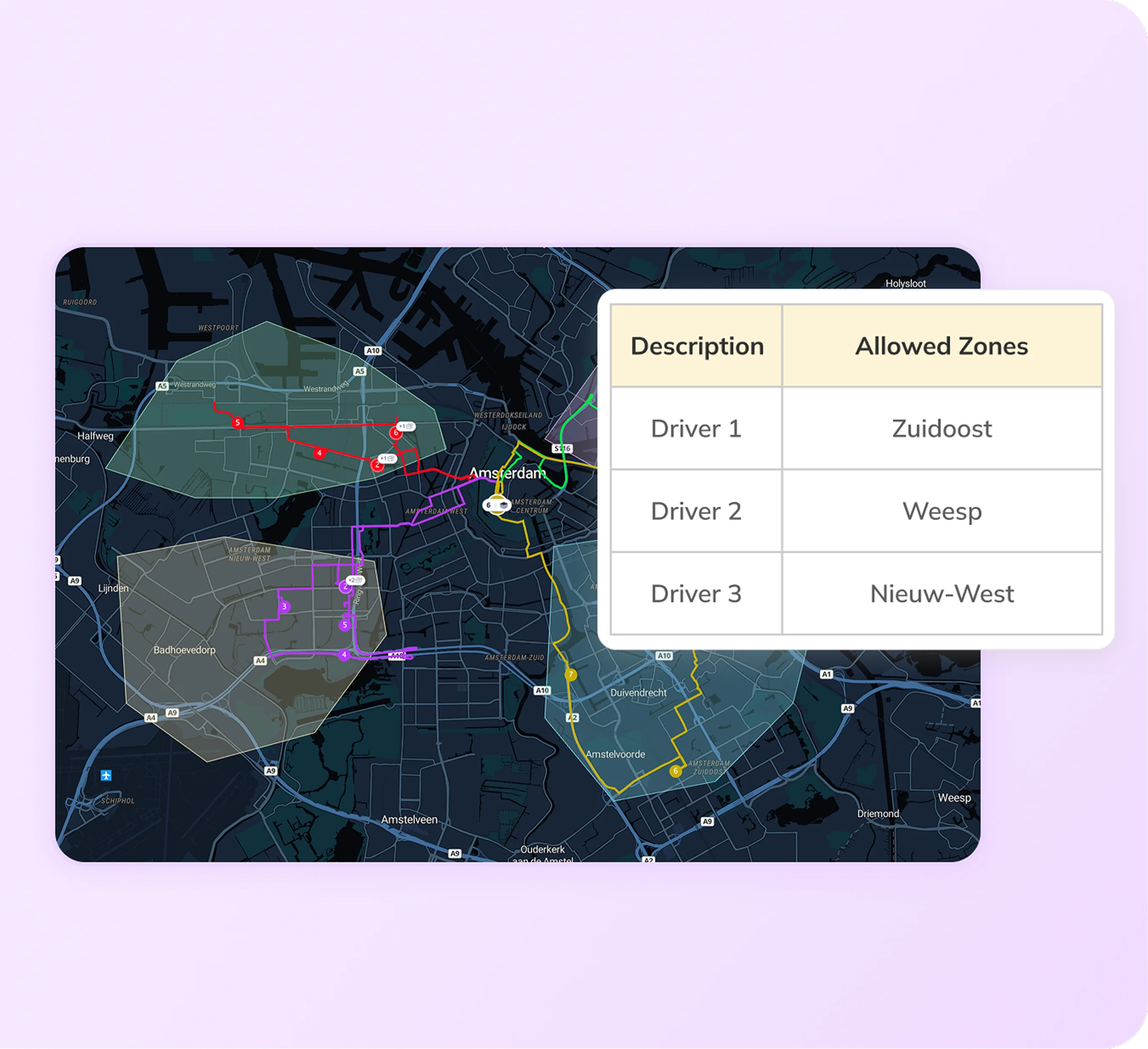
LEZ & UVAR-Aware Routing
Every Low Emission Zone encoded. Every vehicle class matched.
- Real-time vehicle Euro class constraint routing
- ICE vehicles auto-rerouted around restricted zones
- ZEZ pass-through for EVs and cargo bikes
Cross-Border EU Intelligence
One route. Every country's rules applied automatically.
- Country-segment rule switching
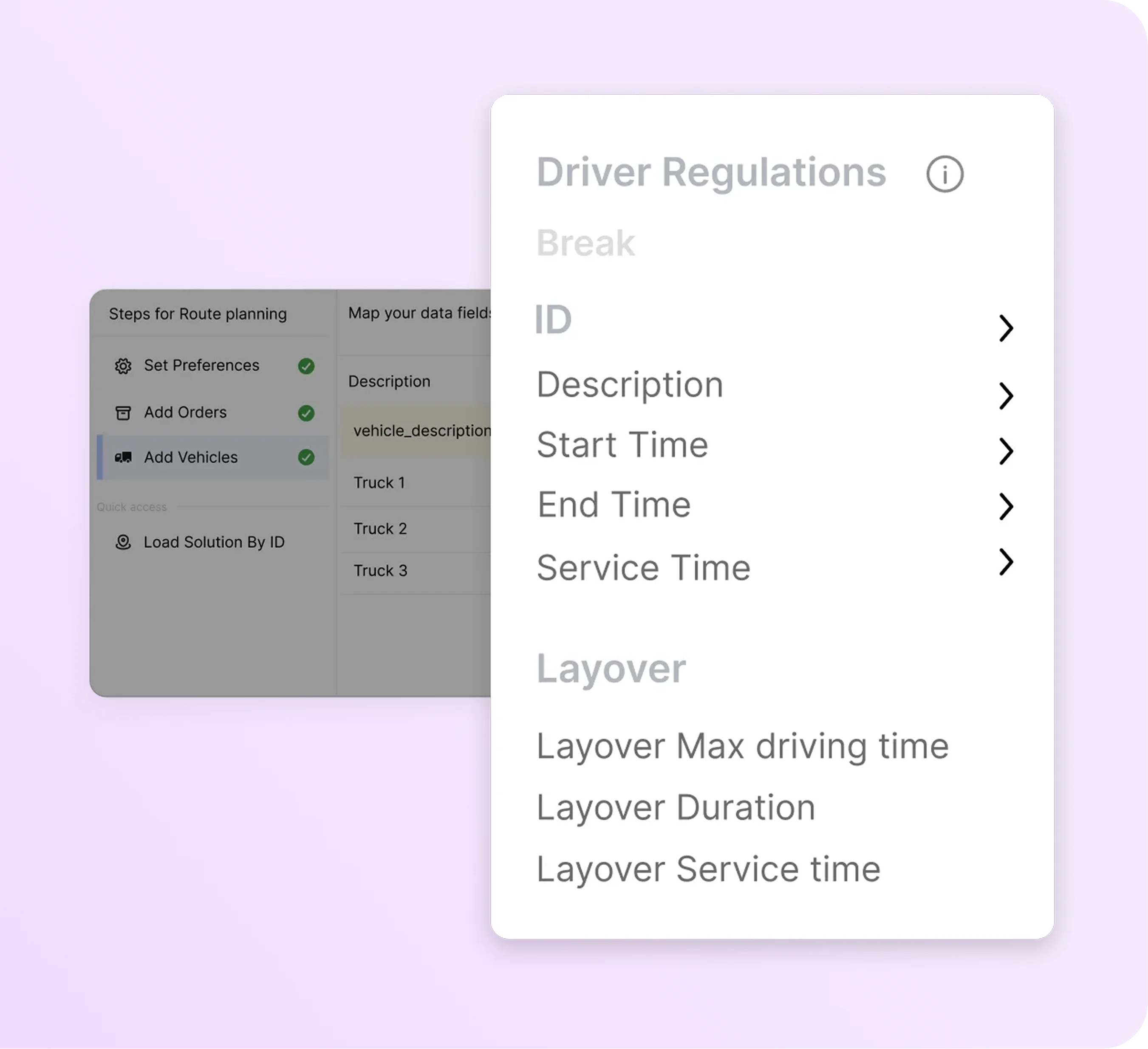
- EC 561/2006 driver hours built into multi-day trip planning
- Smart Tachograph 2-compatible route history output
Routes compliant with local and national regulations
Truck and cargo complaint routes for your fleet.
- On-premise and sovereign cloud deployment
- ADR tunnel category enforcement automatically blocks non-compliant roads
AI-Powered ETA Accuracy
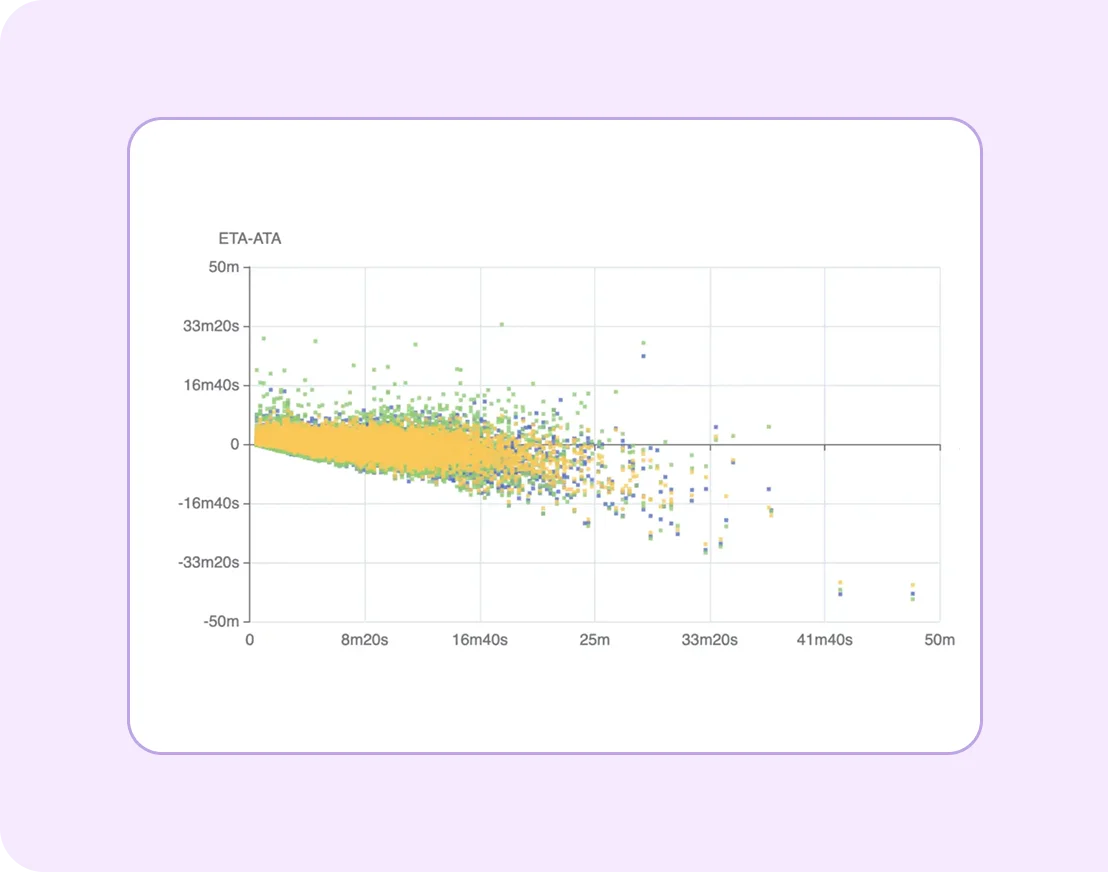
ETAs that reflect how your drivers actually navigate.
- Captain-behaviour learning
- Pedestrian zone, one-way and residential timing restrictions
- Seasonal and event-based traffic modelling
- Sub-second Distance Matrix at unlimited QPS
Industry Use Cases Across Europe
3PL & Freight Forwarders
Encode the full EU regulatory stack across multi-depot, multi-country operations, and re-route in real time when delays occur.
- Constraint-aware routing across EU-27 and UK in a single API call
- Tachograph-compatible route history output for G2V2 compliance
- 5000×5000 distance matrix for depot network optimisation and tender preparation
- On-premise deployment for competitively sensitive route data
Long-Haul & Cross-Border Trucking
Enforce vehicle weight, height, axle count and ADR tunnel category constraints at the planning stage. Country-specific restrictions are applied automatically by country segment.
- HGV routing with weight, height, ADR and Euro emission class constraints
- Toll-cost-aware routing across Maut, Péage, Pedaggio and Autopistas
- EC 561/2006 driver hours: rest stops planned before the driver leaves the depot
- eFTI-ready route data output for cross-border digital freight documentation from 2027
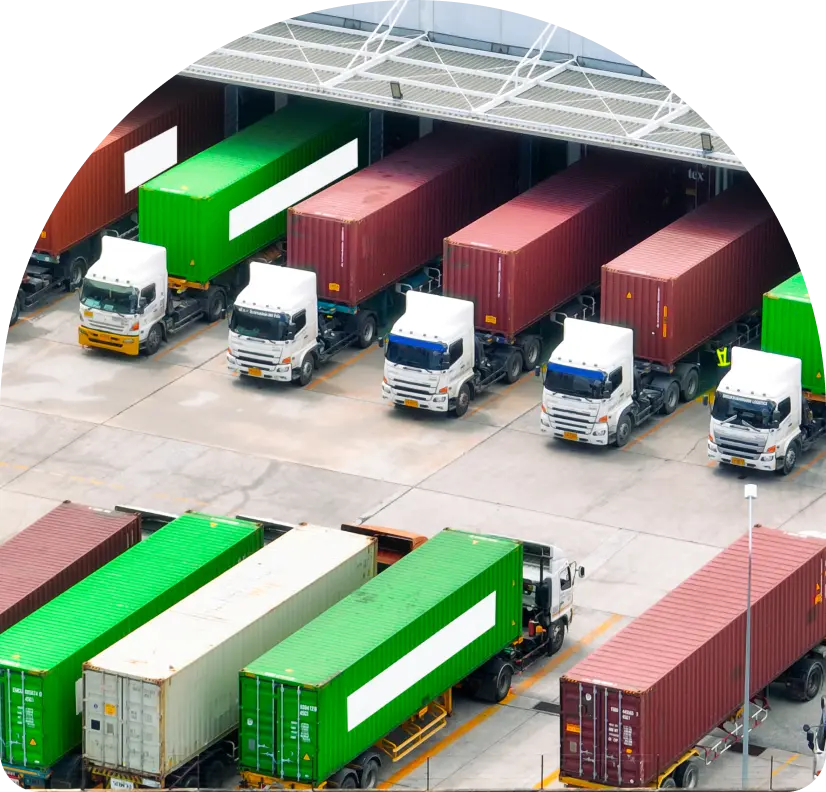

Last-Mile Delivery
Handle 500+ stops per optimisation call with LEZ-aware vehicle assignment, EU-tuned geocoding across entries, and real-time ETA recalculation for live customer tracking pages.
- LEZ/UVAR vehicle-class routing: ICE, EV and cargo bike auto-assigned by zone eligibility
- EU-tuned geocoding handles address formats across all 27 member states
- Dynamic re-optimisation on failed delivery attempts mid-shift
- Custom POI layers for carrier and retailer networks
Q-Commerce & Food Delivery
Achieve sub-30-minute delivery promises by learning how riders actually navigate — accounting for pedestrian zones, one-way streets, and apartment complex entry points specific to European cities.
- Sub-second Distance Matrix at unlimited QPS for real-time order batching and dispatch
- Cycling lane, pedestrian zone and e-bike speed profile routing
- Last-50-metre routing in dense apartment blocks and gated urban developments
- Isochrone API for dark store coverage zone analysis and expansion planning

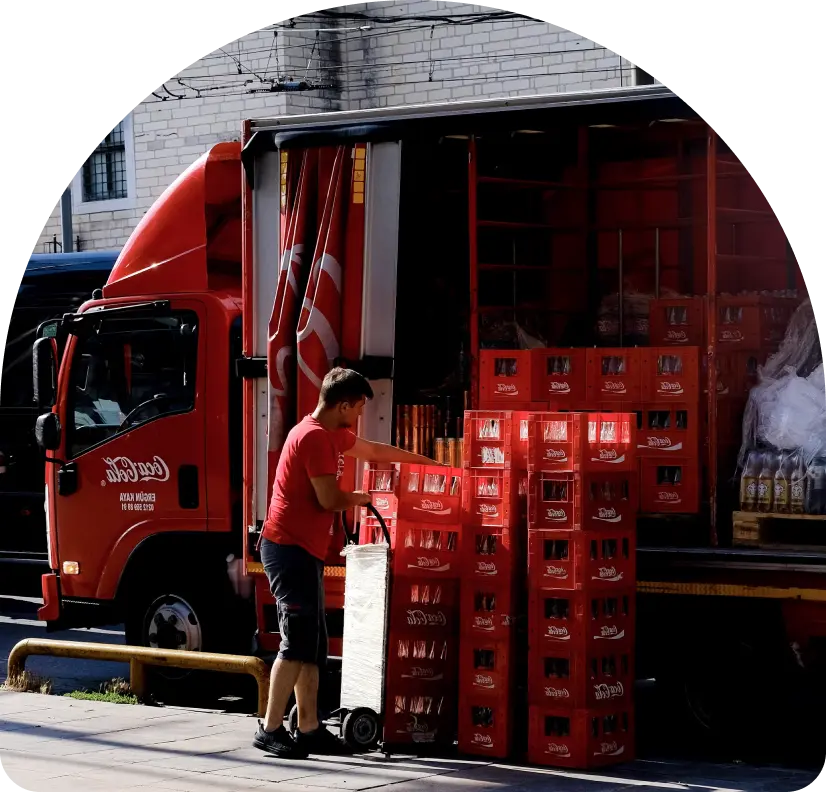
Field Service Management
Route certified technicians to skill-matched jobs across dispersed assets — from smart meter installations and EV charger rollouts to lift maintenance and telecom infrastructure.
- Skills, certification and parts-availability constraints built into technician dispatch routing
- Isochrone API for service territory design and technician base location planning
- EV charger installer dispatch: Fit-for-55 rollout programmes demand large certified workforces
Waste Collection & Environmental Services
Dynamic route optimisation triggered by smart bin fill-level sensors. Vehicle-type-specific routing for rear-loaders, side-loaders and roll-off trucks — with LEZ compliance for the shift to electric and CNG collection fleets.
- Route optimisation with vehicle-type, container-type and collection frequency constraints
- Real-time re-routing triggered by smart bin IoT sensor fill-level alerts
- Multi-stream collection scheduling for EU Waste Framework Directive separation mandates


Construction, Materials & Bulk Distribution
Encode curing-window time constraints and plant-to-site routes that respect HGV weight limits, bridge restrictions and private site access roads invisible to public mapping APIs.
- Curing-window constraints
- Oversized load routing for wind turbines, steel frames and prefab modules
- Road Editor / Custom Maps for private construction site and quarry access roads
- Heating oil and bulk fuel routing with tank capacity and rural access matching

PATIENT TRANSPORT SERVICES
Automate strict vehicle-patient matching by accessibility type while optimizing shared-ride capacity. Prevent contractual fines from missed hospital appointments while maintaining compliance with regional healthcare data regulations.
- Accessibility-based matching matrix
- Shared-ride optimization algorithms for multi-patient shift planning
- Hard appointment time-window constraints with automated buffers
- Localized infrastructure compliant with local requirements

RIDE HAILING, MOBILITY & MAAS
Enforce millimeter-precise ETA quotes that account for European pedestrian zones, one-way streets, and LEZ-restricted corridors. Scale driver-rider matching at millisecond latency without unsustainable API costs or peak-hour rate limits.
- Sub-second Distance Matrix API at unlimited QPS
- White-label navigation SDK for custom in-driver apps
- GDPR-compliant EU data hosting and regional isolation
Enterprise-grade privacy
and security
- SOC 2 type II-certified
- Multi-Factor Authentication
- GDPR- and CCPA-compliant
- Single sign-on
- Custom data retention controls
- Audit logs
- Encryption at rest and in transit
- Role-based access controls
Stay Compliant Across the Europe

Germany
Enforce German Maut toll routing, LEZ class restrictions across 60+ cities, HGV overnight motorway bans, and Smart Tachograph 2 logging. All constraints apply automatically based on vehicle profile before departure.

France
Comply with French Péage tolls, ZFE-m zones across 40+ communes, weekend HGV bans, and Mont Blanc/Fréjus tunnel ADR restrictions. Rules adapt automatically to vehicle Euro class and load type.

Italy
Navigate ZTL restrictions and regional LEZs in Milan, Rome, and Turin. Apply Autostrade Pedaggio toll routing, enforce Alpine tunnel ADR categories, and manage restricted HGV access on mountainous secondary roads.

Netherlands
Handle Dutch milieuzones in Amsterdam, Rotterdam, and Utrecht alongside low-traffic neighborhood rules. Encode toevoeging address formats for precise last-mile delivery, with dedicated cycling lane and cargo bike routing.

United Kingdom
Comply with London's ULEZ, Clean Air Zones in Birmingham, Bath and Bristol, and Scotland's LEZ network. UK data residency option keeps location data in-country to comply with GDPR mandates.

EU Cross-Border
Sync Dutch milieuzones, German Maut, Polish tolls, and Smart Tachograph 2 border logging on a single run. Automatically switch regulatory sets by country segment to maintain Mobility Package cabotage and rest-time compliance.
