
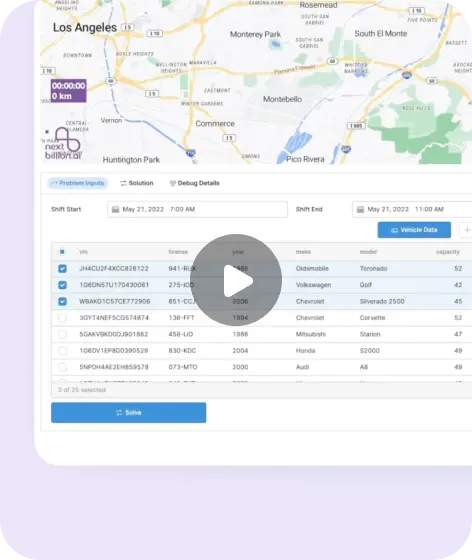


Enterprise-grade Routing, Purpose-built for the GCC
AI-powered route planning and optimization software purpose-built for the GCC — across last-mile delivery, cross-border trucking, oil & gas, and mega-project construction.
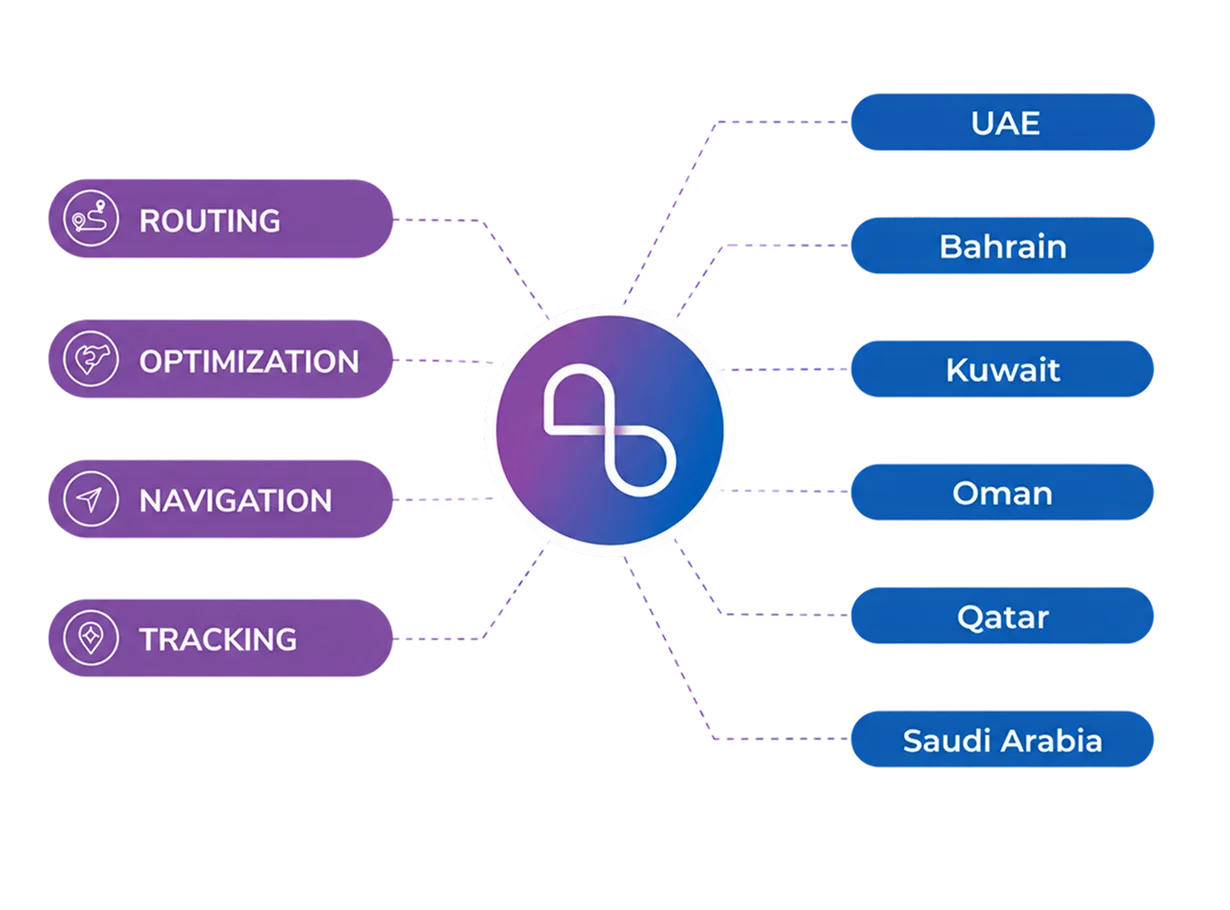
Product and tech leaders in large-scale logistics companies use NextBillion.ai APIs











Common Routing Challenges in
Middle East

Six Countries. Six Regulatory Regimes.
A single GCC cross-border route crosses multiple legal environments simultaneously—from UAE MoEI decrees and Saudi RGA weight codes to Qatar MMUP permits and Oman ROP enforcement.

Systems That Don’t Match the Map
Routing is fractured: Dubai uses MAKANI 10-digit geo-references, Abu Dhabi uses Onwani, and Saudi Arabia’s National Address mandate legally requires SPL-verified coordinates for shipments.

Scaling Past Existing Tools
The region's fastest-growing operations are hitting the architectural ceilings of current routing tools—facing 25-stop limits, zero constraint handling, and no dynamic re-optimisation. Rapid growth demands new infrastructure.
Built for the complexity the GCC actually
operates in
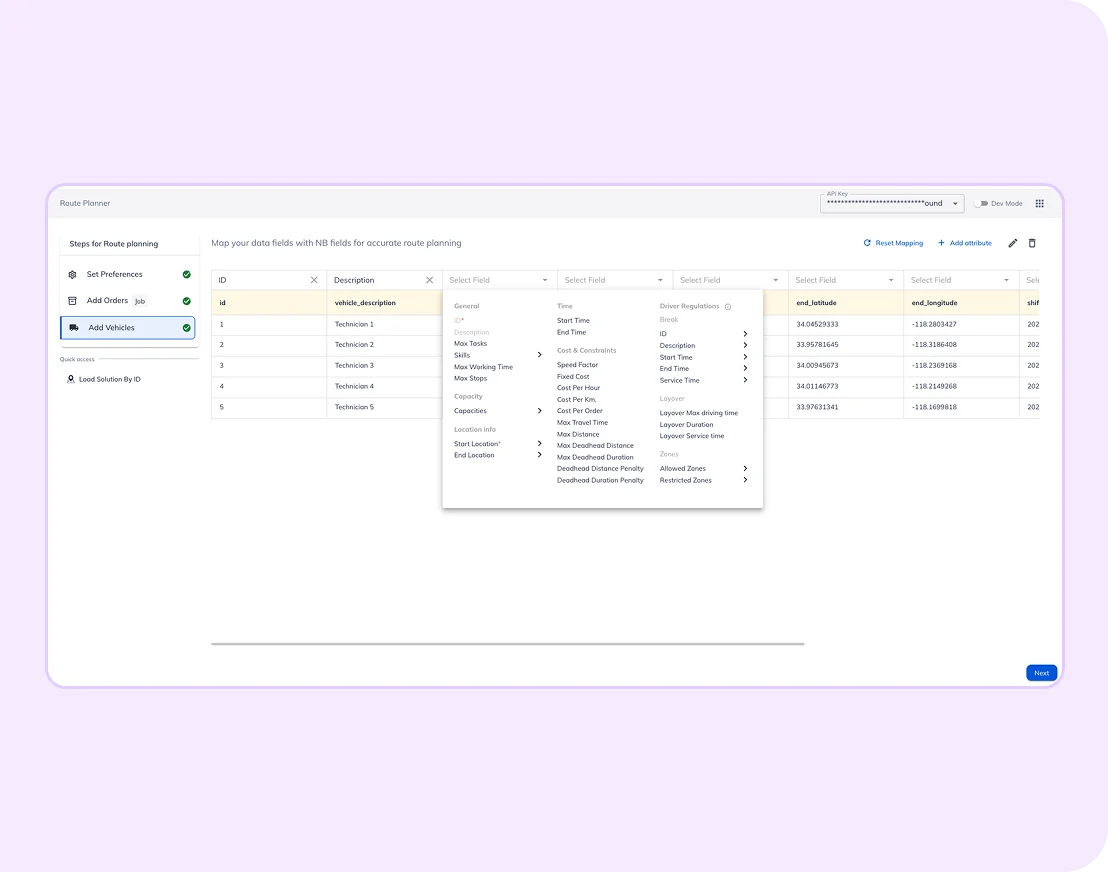
Constraint-Aware Routing
Every regulation, encoded before the driver leaves the depot.
- Hard constraint encoding
- Smart scheduling
- Vehicle profile routing
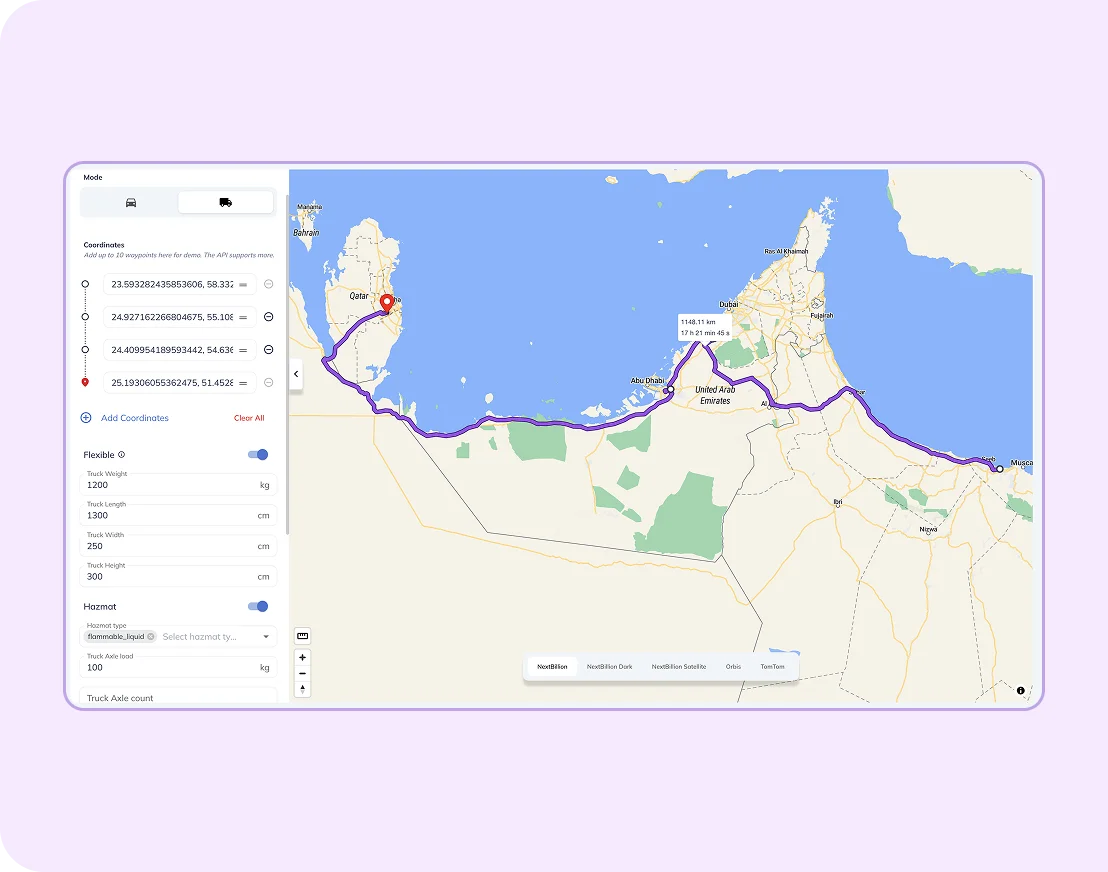
GCC Cross-Border Intelligence
One route. Every country's rules applied automatically.
- Country-segment switching
- Border dwell times modelling
- Unified cross-border engine
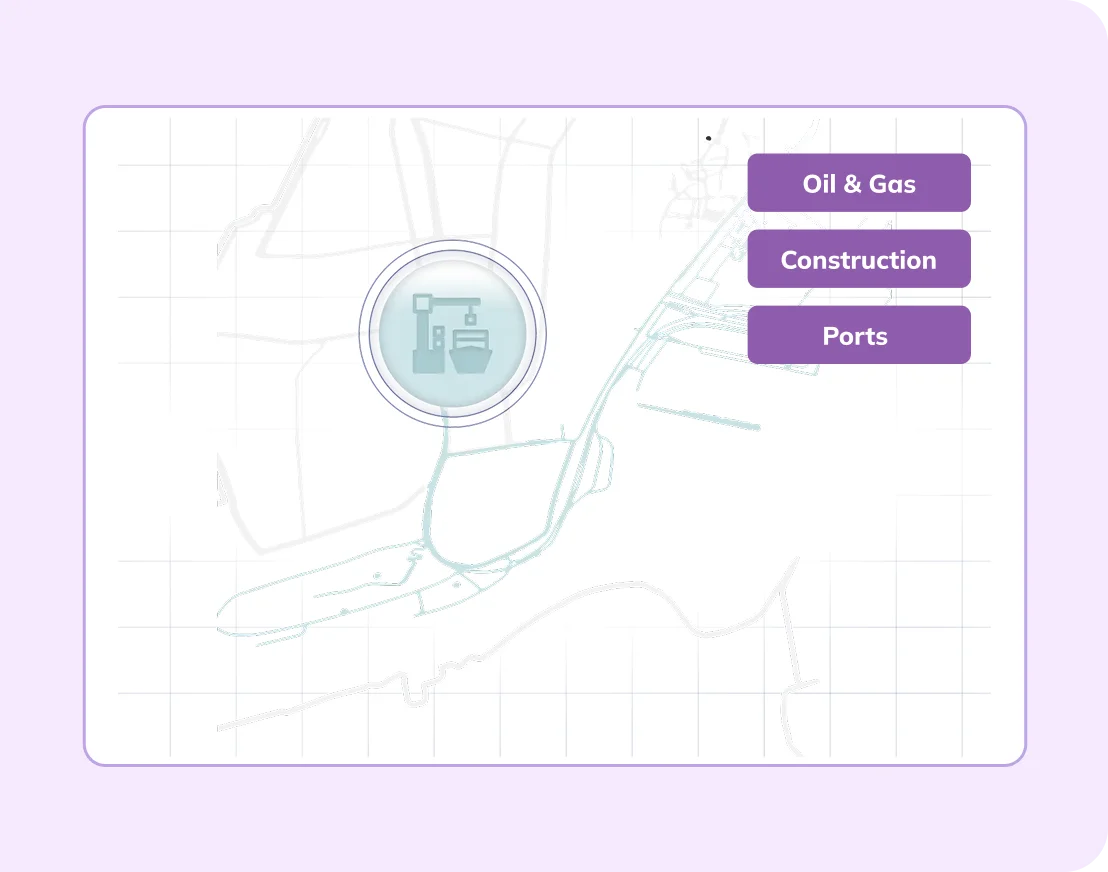
Private Road Mapping
Route to facilities that don't exist on any public map
- Custom road editor
- Sovereign data security
- Private network scheduling
AI-Powered ETA Accuracy
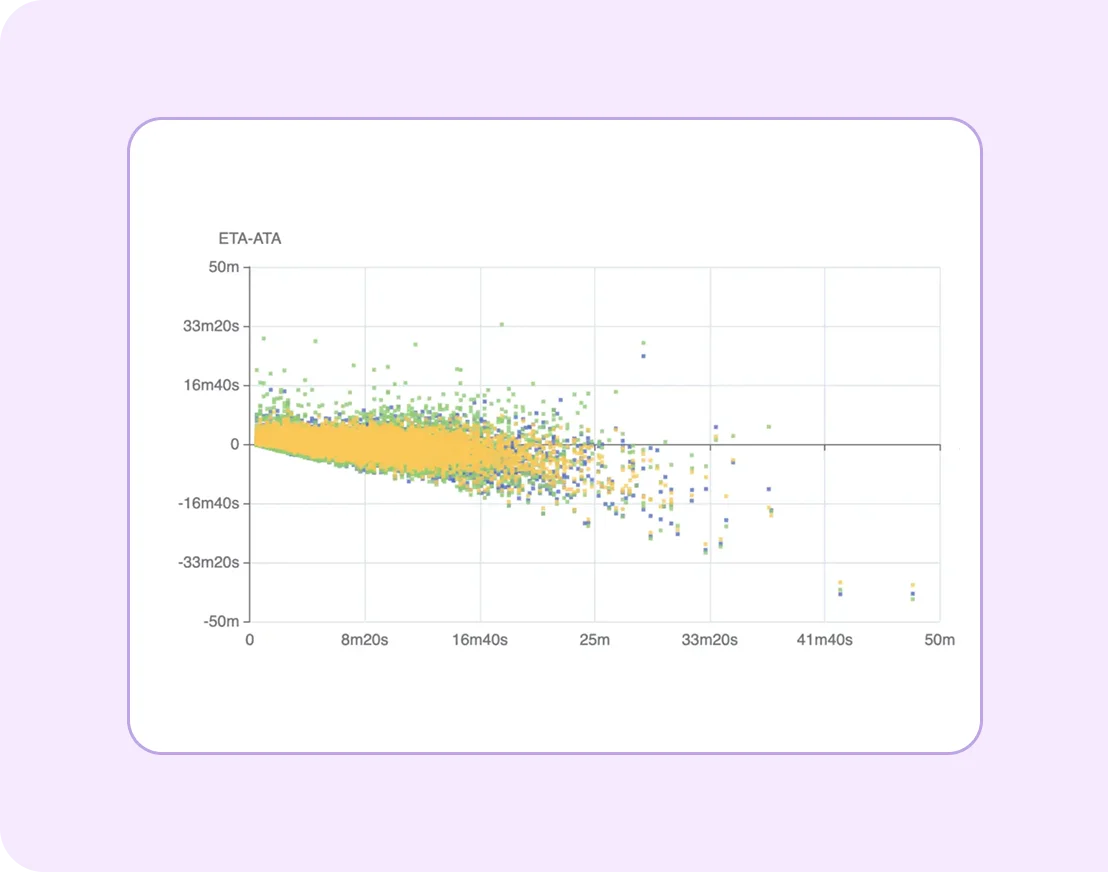
ETAs that reflect how operations actually run — not how they should
- Captain-behaviour learning: AI adapts to how your drivers actually navigate
- Massive-scale matrix
- Granular traffic insights
Industry Use Cases across the GCC
3PL & Freight Forwarders
Encode the full regulatory stack across all six GCC states, optimise across multiple depots and border points, and re-route in real time when delays occur.
Explore trucking solutionsTrucking & Road Freight
Enforce vehicle weight, axle count, and dimension constraints at the planning stage and integrate with telematics systems for full compliance visibility.


Last-Mile Delivery
Handle 500+ stops per optimisation call, re-route dynamically mid-shift, and route to verified SPL coordinates for compliance.
Explore last-mile solutionsFood Delivery & Quick-Commerce
Learn how riders actually navigate, account for seasonal traffic, balance order loads in real time, and leverage Isochrone APIs to isolate delivery zones—ensuring absolute ETA accuracy.
Explore on-demand delivery solutions

Oil, Gas & Energy Companies
Multi-compartment routing, private road mapping, hazmat-compliant routing, and telematics integration that satisfies government platform requirements automatically.
Explore oil and gas solutionsUtilities & Municipal Services
Optimise recurring routes across expanding city districts, dispatch skill-matched technicians, and coordinate multi-depot operations across millions of square kilometres with production-ready infrastructure.
Explore field services solutions

Construction
Digitise unmapped construction corridors and site access roads using Road Editor, encode oversized cargo permits and escort schedules as hard constraints, and coordinate multi-depot logistics from ports to quarries.
Explore construction solutions
Stay Compliant Across the GCC
Keep your fleets compliant with regional transport laws across every
GCC market, ensuring every route is legal, optimised, and efficient.

United Arab Emirates
Encode UAE weight limits, corridor time windows, and vehicle profiles as hard routing constraints to seamlessly comply with Federal Decree on heavy vehicle weights, RTA's multi-corridor truck ban schedule, and Traffic Law's mandatory telematics requirements.

Saudi Arabia
Comply with the RGA Highway Code's per-axle weight enforcement, Saudi Arabia's mandatory telematics and geofencing requirements for cross-border fleets, and the National Address mandate requiring SPL-verified delivery coordinates for all e-commerce shipments.

GCC Cross-Border
A single route from Dubai to Riyadh to Kuwait City crosses three different legal regimes. Constraint sets switch automatically by country segment, models border dwell times as service-time buffers, and generates one compliant route for the entire journey.

Qatar & Gulf States
Route compliantly across Qatar's MMUP permit framework, Kuwait's traffic authority requirements, and Oman's active ROP roadside enforcement. GSO regional weight and dimension standards are applied across Bahrain and emerging GCC markets, with coverage across states.