

Table of Contents
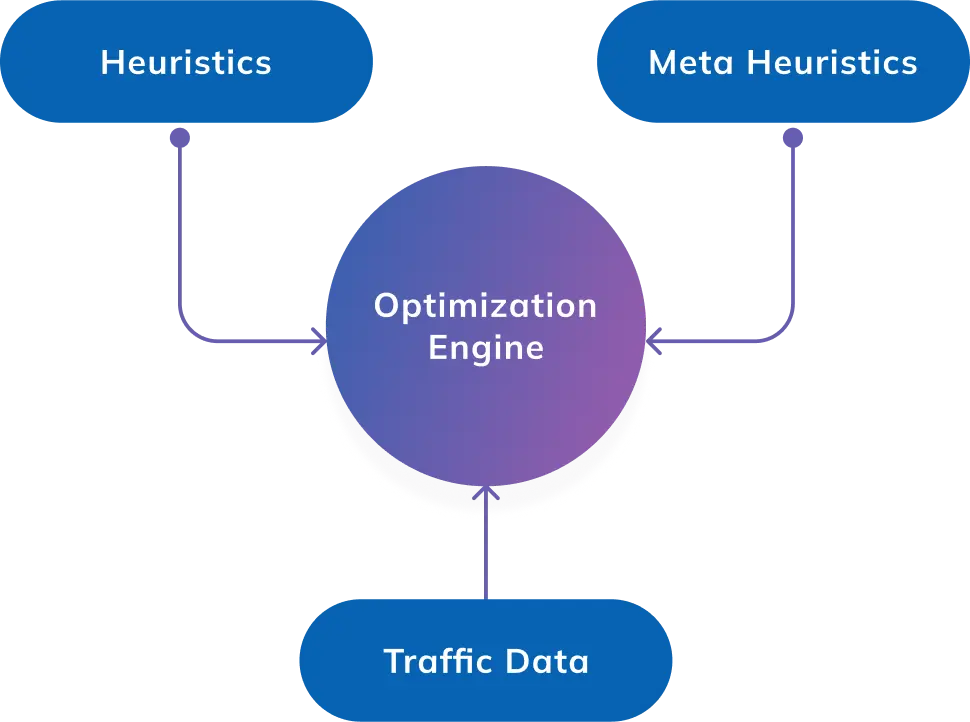
AI route optimization is applied wherever routing decisions must adapt to changing conditions, tight constraints, and high operational scale. The use cases below highlight how AI solves day-to-day routing problems across industries, with a focus on real operational impact rather than theory.
Last-mile delivery and e-commerce fleets operate with high stop density and constant order changes. Peak hours often require dynamic re-routing, while failed or rescheduled deliveries add pressure on already tight schedules.
AI route optimization helps manage dense delivery clusters, re-route drivers during traffic spikes, and adjust routes when deliveries fail or need to be reattempted. This improves on-time delivery rates while reducing manual planning effort. These scenarios are common in same-day delivery fleets and hyperlocal delivery platforms, where routing decisions must be updated continuously throughout the day.
Food and grocery deliveries operate under tight SLAs and involve perishable goods. Peak-hour traffic and short delivery windows leave little room for delays or inefficiencies.
AI route optimization improves ETA accuracy by selecting the shortest feasible routes instead of relying only on distance. It continuously adjusts routes based on live traffic conditions, helping delivery teams meet time commitments even during congestion.
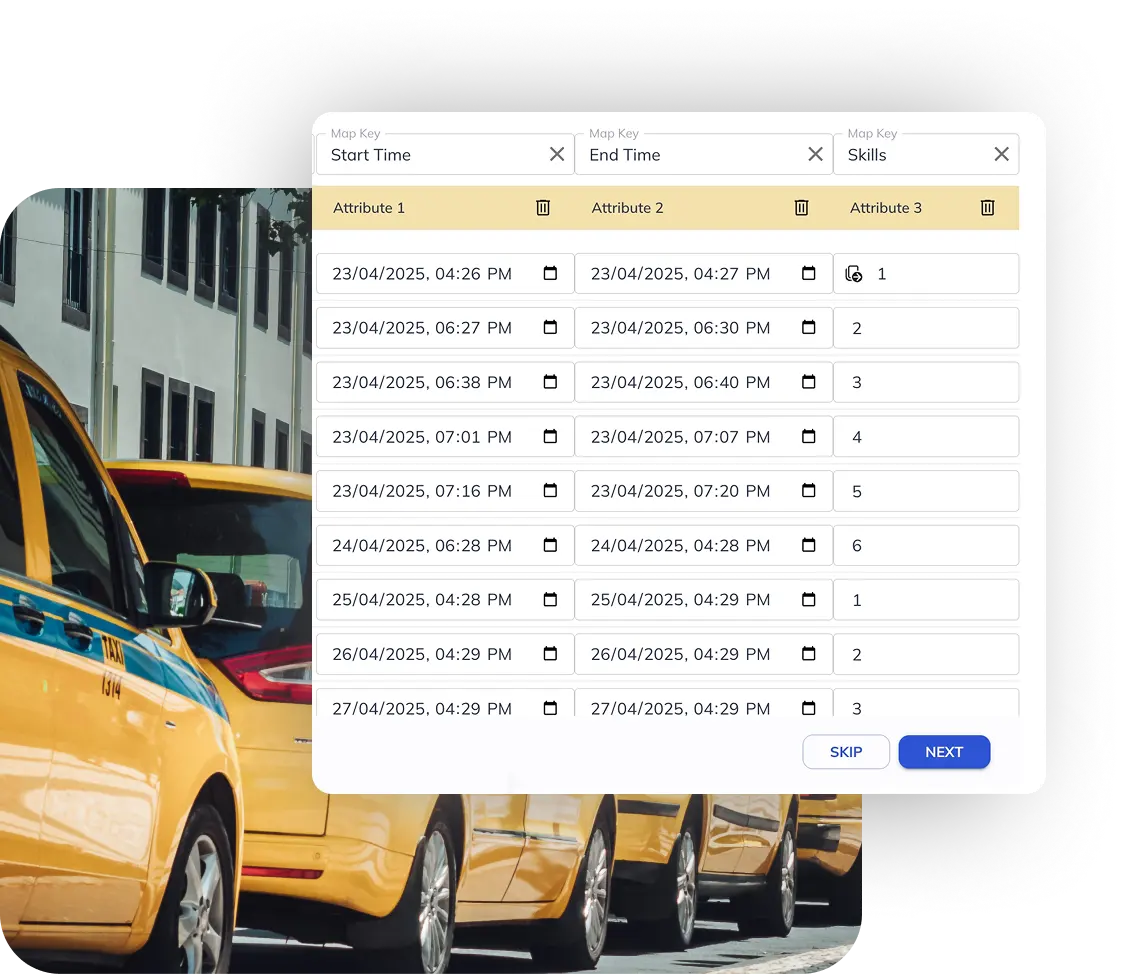
Field service teams must assign the right technician to the right job while managing travel-time uncertainty and shifting job priorities. Static schedules often result in idle time or late arrivals.
AI enables location-aware dispatch by factoring in technician location, job priority, and travel time. Daily routes are optimized to reduce idle time and unnecessary travel, improving both technician productivity and customer response times.
Waste collection and municipal fleets typically follow fixed routes but operate in environments with narrow roads, turn restrictions, and vehicle-specific limitations. These constraints vary by city and neighborhood.
AI route optimization handles these conditions through constraint-aware routing that respects local road rules and vehicle limitations. Routes are sequenced to reduce fuel usage while maintaining service coverage across regions.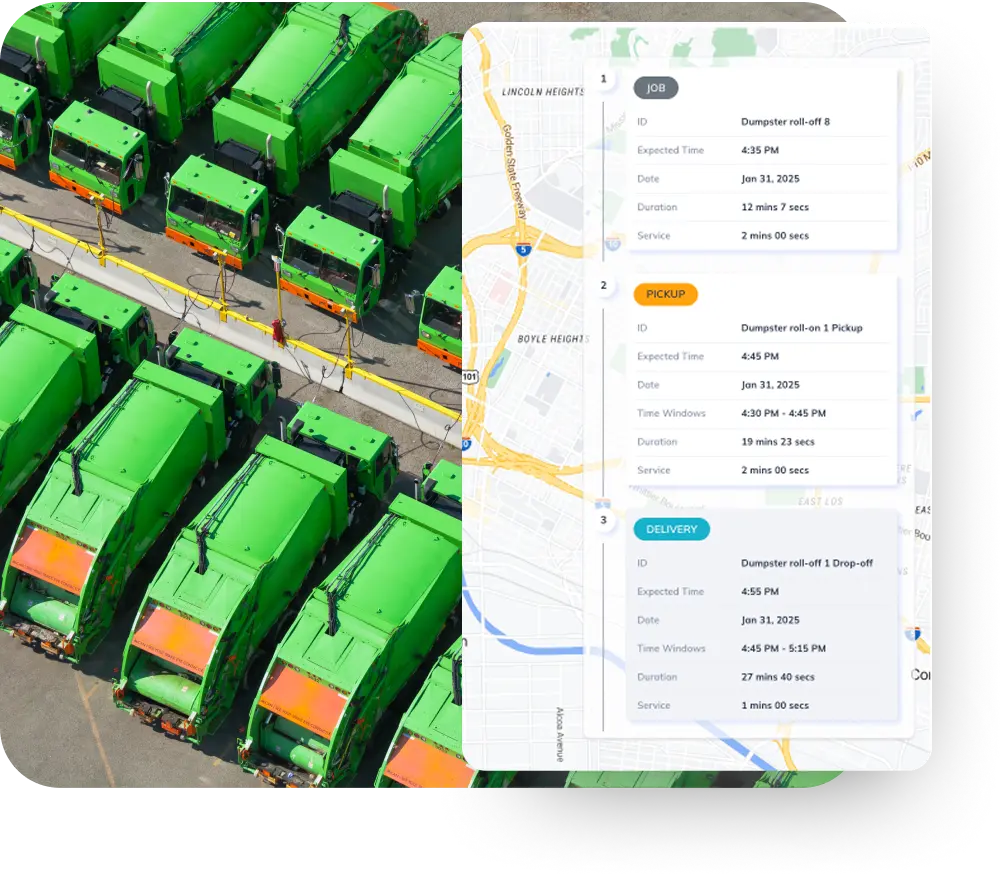
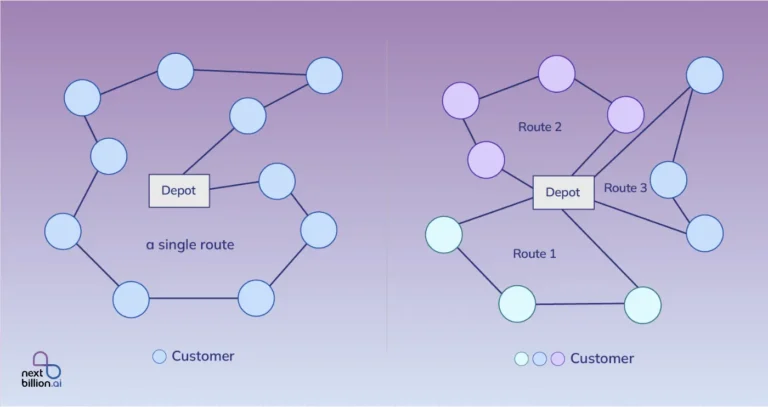
Long-haul and regional logistics operations involve multi-stop route planning across large geographic areas. Routes must comply with driving hours, vehicle restrictions, and regional road regulations while balancing distance, toll costs, and delivery commitments.
AI route optimization evaluates these constraints together to produce routes that are both compliant and operationally efficient, helping fleets maintain delivery reliability over long distances.
Ride-hailing and mobility platforms rely on real-time decisions to match supply and demand. Delays in routing can increase passenger wait times and driver downtime.
AI route optimization helps match drivers to requests in real time, minimize passenger wait times, and reduce deadhead miles between trips. This improves platform efficiency while enhancing the rider experience.
AI route optimization is not limited to a single industry. The real differentiator is how effectively a routing engine handles real-world constraints such as traffic variability, regional road rules, and operational limitations at scale.
Choosing an AI route optimization platform is not just about finding the shortest routes. The real value comes from how well the platform handles real-world complexity at scale. The following capabilities help teams evaluate whether a solution can support production-grade routing operations.
An effective platform must use live traffic and incident data to adjust routes as conditions change. Accidents, road closures, and congestion can quickly make static routes ineffective. Real-time inputs allow routes to be recalculated during execution, improving ETA accuracy and on-time performance.
Routing accuracy depends heavily on map quality. A strong platform supports region-level map intelligence, including local road rules, access restrictions, and non-standard addressing systems. This is especially important in dense cities and emerging markets where map data varies widely.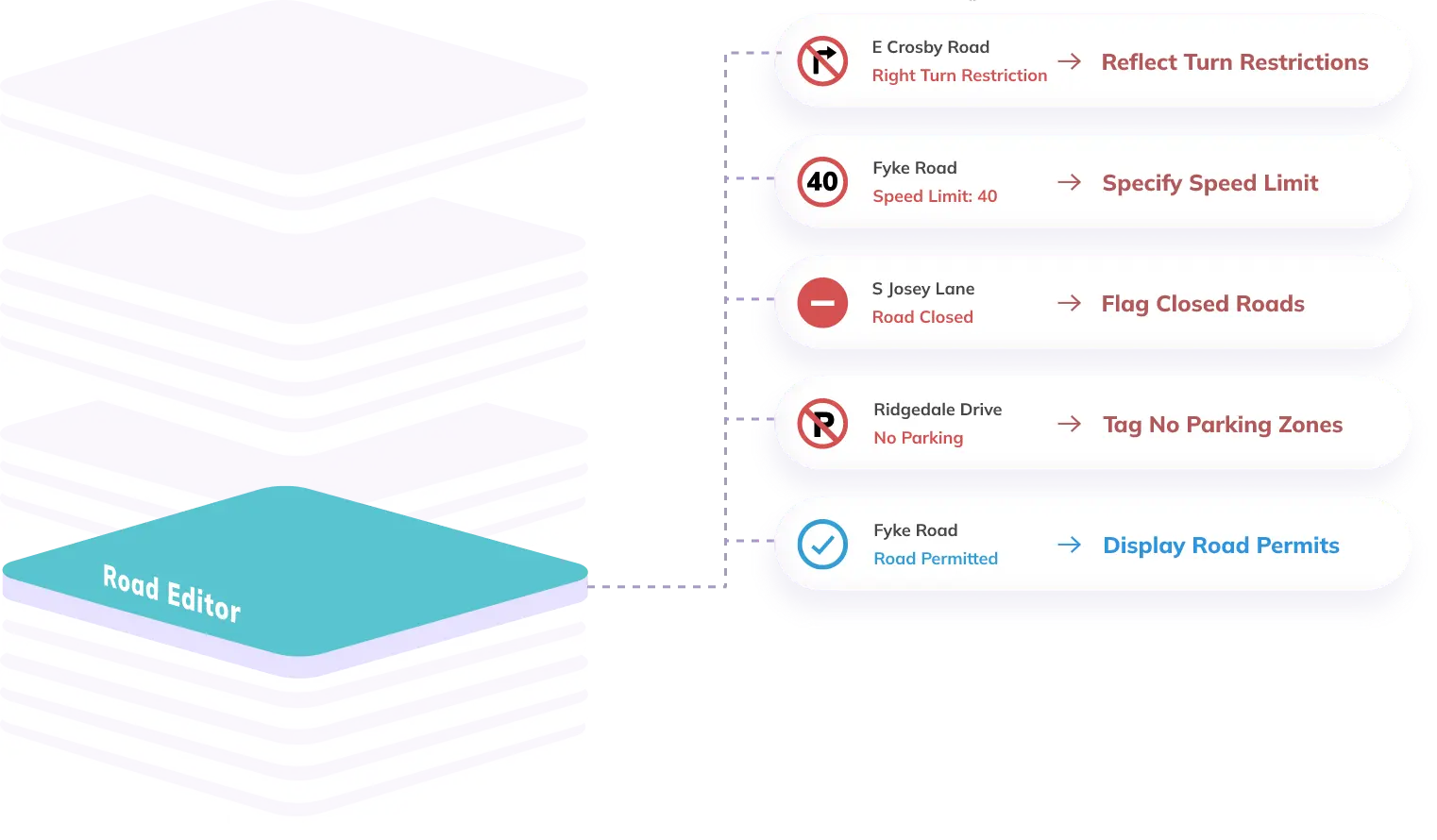
Real-world routing involves more than distance and time. The platform should handle constraints such as vehicle type, load limits, turn restrictions, delivery time windows, service durations, and avoidance rules. Constraint-aware routing ensures routes remain feasible and compliant in day-to-day operations.
As operations grow, routing complexity increases. The platform should scale from hundreds to thousands of stops and support multi-region or multi-country deployments. Consistent performance across different markets is critical for businesses expanding their delivery or service footprint.
Modern route optimization platforms are built as APIs rather than standalone tools. An API-first architecture allows teams to integrate routing logic directly into existing dispatch, order management, or fleet systems. This approach supports automation, customization, and long-term scalability without disrupting current workflows.
NextBillion.ai helps businesses plan and optimize routes using APIs built for real operational conditions. Instead of relying on static maps or manual logic, teams can use its routing APIs to handle large volumes, changing conditions, and regional constraints at scale.
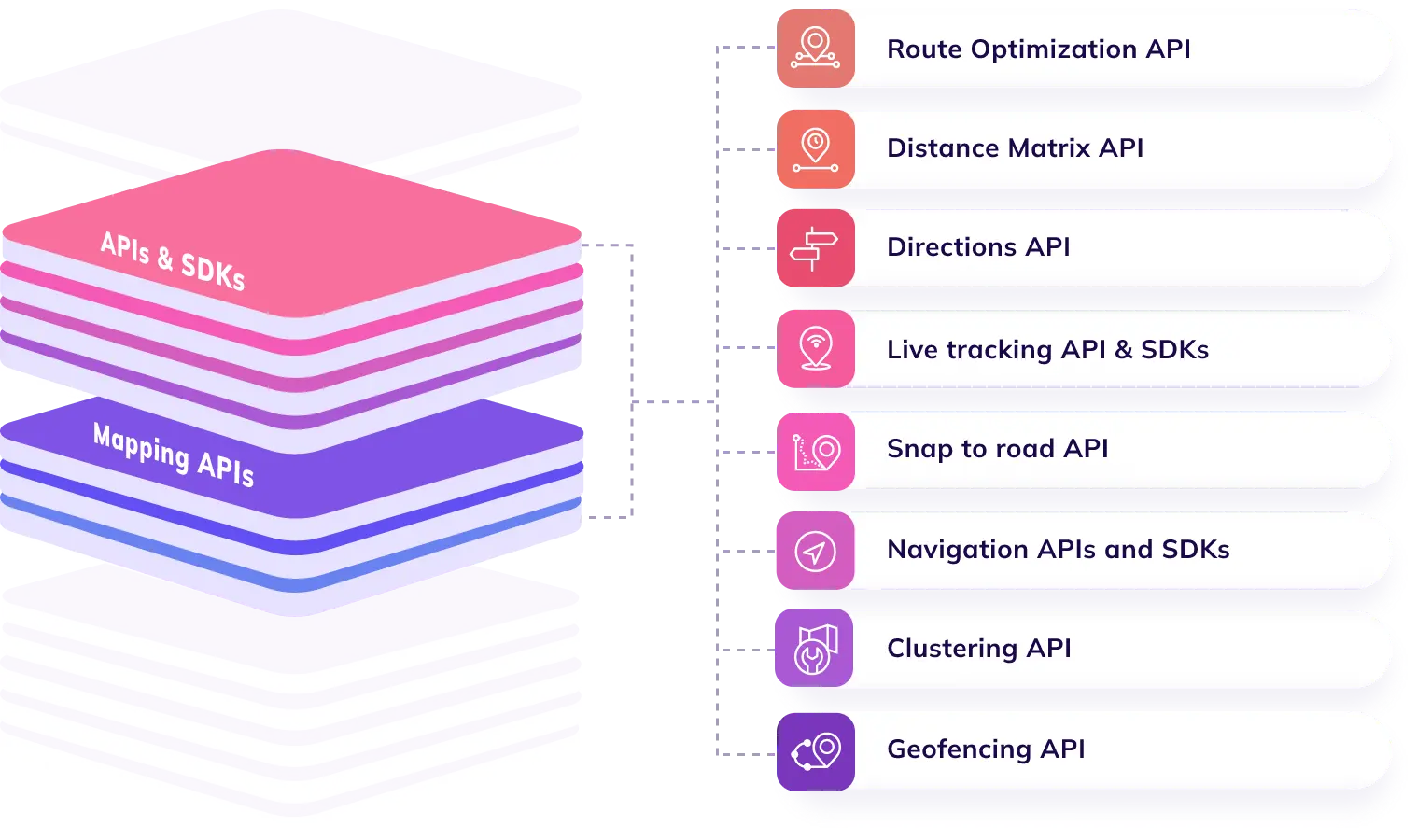
NextBillion.ai is built as an API-first platform, making it easy to plug routing and optimization logic into existing systems. The Route Optimization API is designed for multi-stop routing and supports large route plans without manual intervention.
Alongside optimization, the Directions API and Distance Matrix API help calculate routes, travel times, and ETAs across many locations. These APIs work together to support daily dispatch, planning, and re-routing needs for fleets operating at scale.
Because everything is API-driven, teams can automate routing decisions instead of relying on standalone tools or manual planning.
Routing conditions vary widely across regions, and NextBillion.ai is designed to handle that variability. The platform supports multiple map providers and allows custom map data to be added when default maps are not enough.
This makes it suitable for:
By adapting to local map quality and road behavior, NextBillion.ai delivers more reliable routes in regions where traditional routing tools often fall short.
Real-world routes must follow real-world rules. NextBillion.ai allows teams to define routing constraints directly in the API request, so routes are practical from the start.
These constraints include:
By accounting for these rules during route calculation, NextBillion.ai produces routes that drivers can actually follow, without last-minute fixes or manual adjustments.
Together, these capabilities help teams move from basic route planning to reliable, production-ready routing that works across regions, fleets, and use cases.