


Table of Contents
Renewable energy and modular construction are no longer niche innovations. They are now central pillars of global infrastructure strategy. Governments, utilities, and private developers are accelerating investments in wind farms, solar parks, battery storage, and prefabricated buildings to meet climate targets, reduce costs, and compress construction timelines.
Yet while headlines focus on megawatts installed or buildings assembled in record time, far less attention is paid to the operational engine that makes all of this possible: logistics routing.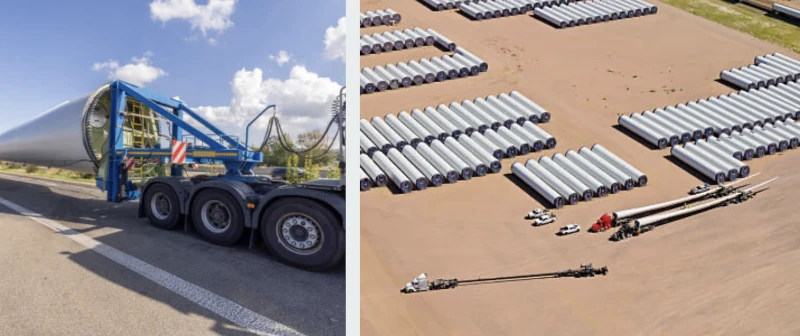
Every wind turbine blade that reaches a remote hillside, every pallet of solar panels delivered to a desert site, and every prefabricated module placed onto an urban construction site depends on routing decisions. These decisions determine:
In renewable energy and modular construction, routing is not a back-office optimization problem. It is a strategic capability that directly affects cost, safety, schedule adherence, and sustainability outcomes.
This article provides a deep dive into routing for renewable energy and modular construction logistics. We will explore:
NextBillion.ai is designed specifically for complex logistics and mobility use cases where constraints, scale, and cost efficiency matter. This makes it particularly well suited for renewable energy and modular construction projects.
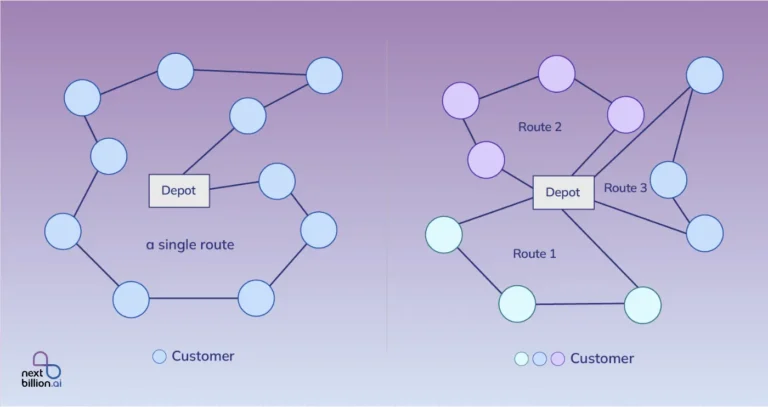
NextBillion.ai’s Route Optimization API enables planners to model:
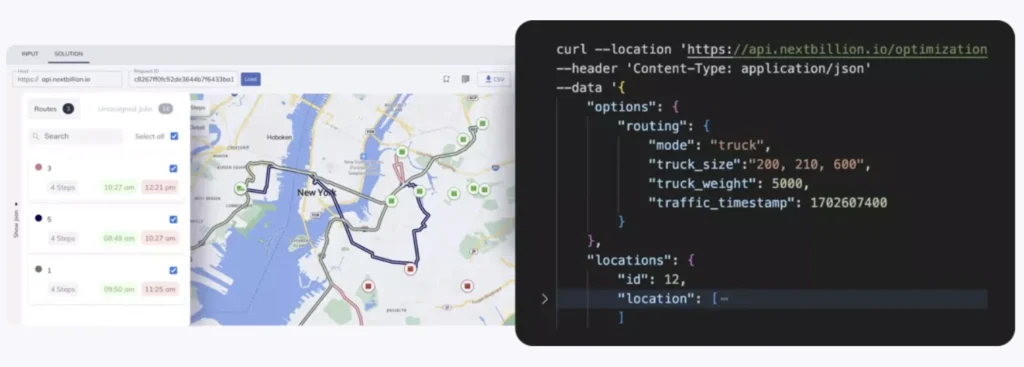
For renewable and modular logistics, this replaces fragile spreadsheets and manual planning with systematic, repeatable optimization.
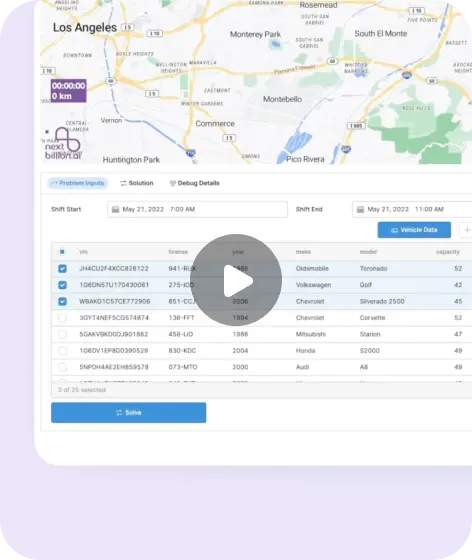
Nextbillion.ai’s Route Optimization API is a powerful tool that helps businesses optimize their delivery routes to maximize efficiency, save time, and reduce costs.
Refer here for more details on Route Optimization APIs.
NextBillion.ai’s Distance Matrix API supports:
This allows teams to run scenario analysis, compare alternatives, and respond rapidly to change a critical capability for infrastructure projects.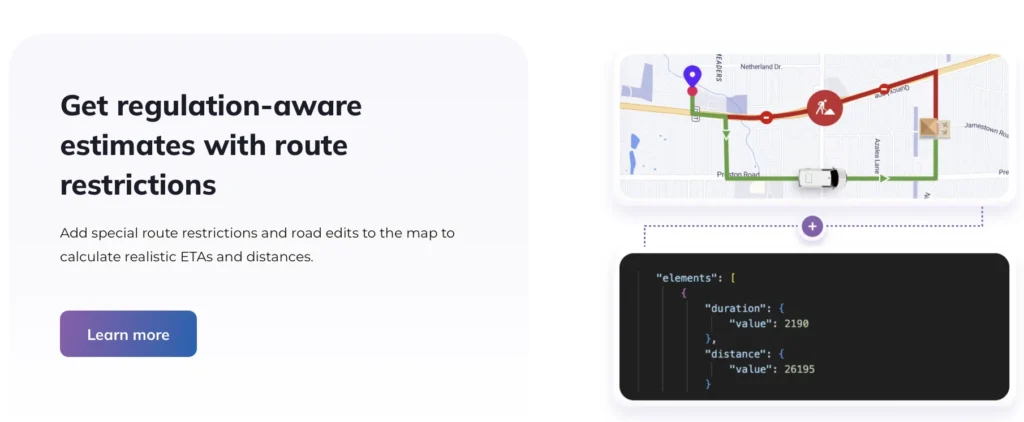
NextBillion.ai’s Distance Matrix API is a powerful tool for computing distances and ETAs between a set of origins and destinations — could be for one-to-many or many-to-many scenarios. Refer here for more details on Route Optimization APIs.
To close the gap between plan and reality, NextBillion.ai offers Navigation SDKs that support:
This ensures drivers follow routes designed for compliance and feasibility, not just convenience.
Infrastructure projects vary widely. NextBillion.ai emphasizes flexibility through:
This makes it suitable for both long-term programs and short, intensive project phases.
Large-scale infrastructure projects demand trust. NextBillion.ai supports enterprise requirements through:
One of the most important distinctions between NextBillion.ai and general-purpose mapping platforms lies in how routing problems are defined and solved. Traditional mapping services primarily optimize for shortest distance or fastest travel time, which works well for consumer navigation and simple delivery use cases. However, renewable energy and modular construction logistics require routing that can simultaneously account for time windows, vehicle capacities, sequencing rules, priority stops, and project-specific constraints. NextBillion.ai is designed around this reality, enabling organizations to encode operational constraints directly into the optimization process. This allows logistics teams to generate routes that are not only efficient on paper, but feasible and compliant in real-world project environments.
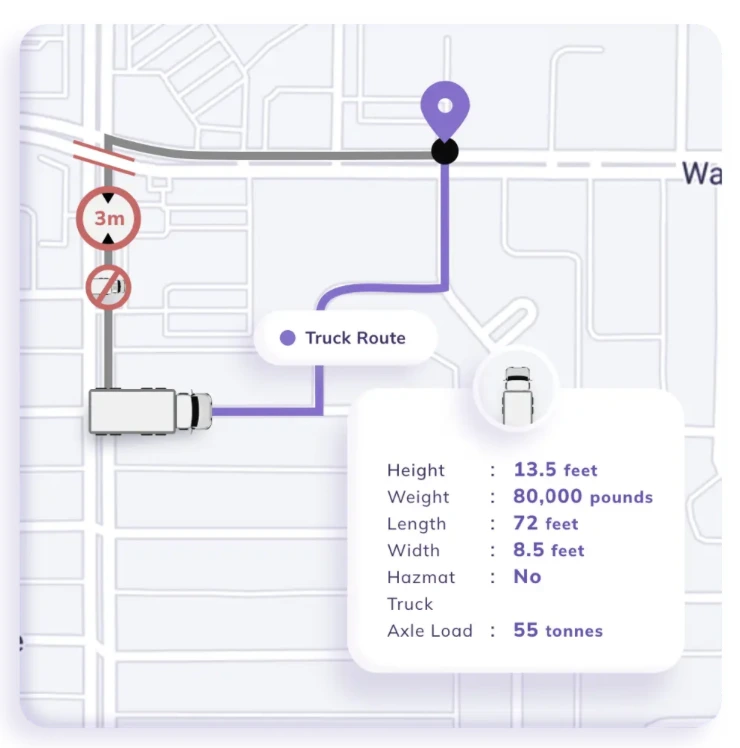
In renewable energy and modular construction, routing must prioritize feasibility and regulatory compliance over convenience. Oversized wind turbine components, heavy transformers, and prefabricated modules cannot rely on standard vehicle routing assumptions. Many general mapping platforms offer limited or inconsistent support for truck routing, and often struggle to reliably account for vehicle dimensions, axle weights, restricted roads, or turning limitations. NextBillion.ai, by contrast, treats truck-aware routing as a core capability rather than an edge case. By supporting vehicle dimension constraints and trucking-specific rules, it enables planners to generate routes that align with permit requirements and reduce the risk of costly last-minute rerouting or compliance violations.
Infrastructure projects depend on accurate ETAs across hundreds or thousands of potential routes, depots, and delivery points. General-purpose mapping APIs can technically compute distances and travel times, but costs and performance often become limiting factors at scale. NextBillion.ai is built to handle high-volume distance and ETA calculations as a foundational capability, making it suitable for scenario analysis, what-if planning, and large-scale dispatch decisions. This allows project teams to continuously evaluate alternatives, adjust schedules dynamically, and respond to disruptions without sacrificing performance or predictability.
A common operational risk in complex logistics is the disconnect between route planning and route execution. When planners use one routing logic and drivers navigate using another, deviations become inevitable especially in constrained environments such as urban construction sites or rural wind farm access roads. Many general mapping platforms focus primarily on navigation, leaving organizations to bridge this gap themselves. NextBillion.ai addresses this issue by offering navigation capabilities that are aligned with its planning and optimization logic. This ensures that drivers, escorts, and field teams follow routes that reflect the same constraints and assumptions used during planning, improving ETA reliability, safety, and operational consistency.
Renewable energy and modular construction projects vary widely by geography, regulation, and operational model. General-purpose routing platforms often offer limited flexibility, forcing teams to adapt their processes to the tool rather than the other way around. NextBillion.ai emphasizes customization as a core design principle, allowing organizations to define custom constraints, optimization objectives, and routing rules tailored to each project. This flexibility makes it possible to handle temporary road closures, special access routes, unique sequencing requirements, and evolving project conditions without extensive workarounds.
The cumulative effect of these differences is a matter of focus. General mapping platforms are designed to serve the widest possible range of use cases, from consumer navigation to light logistics. While powerful in their own right, they are not optimized for the extreme constraint density and operational sensitivity of renewable energy and modular construction logistics. NextBillion.ai, on the other hand, is purpose-built for industries where routing is mission-critical infrastructure. Its capabilities align closely with the needs of wind, solar, and modular projects, making it a natural fit for organizations that view routing not as a utility, but as a strategic enabler of sustainable infrastructure delivery.