


Route Optimization API
Optimize routing, task allocation and dispatch
Distance Matrix API
Calculate accurate ETAs, distances and directions
Directions API
Compute routes between two locations
Navigation API & SDK
Turn by Turn Instructions for Drivers & Technicians
Route Optimization Software
Plan optimized routes with 50+ Constraints
Product Demos
See NextBillion.ai APIs & SDKs In action
AI Route Optimization
Learns from Your Fleet’s Past Performance
Platform Overview
Learn about how Nextbillion.ai's platform is designed
Road Editor App
Private Routing Preferences For Custom Routing
On-Premise Deployments
Take Full Control of Your Maps and Routing
About Us
Our story, vision
and mission
Contact Us
Reach out to us for any product- or media-related queries
Write to us at

Table of Contents
What happens when a permitted load makes a single wrong turn?
One missed exit, one unexpected detour, one moment of confusion, and suddenly your shipment is off its approved route. It exposes your operation to fines, delays, safety risks, and frustrated customers. In the world of permitted freight, where every mile is carefully planned and regulated, there’s very little room for error. That’s where real-time deviation alerts come in.
By continuously monitoring vehicle movement against permitted routes and rules, these alerts give logistics managers instant visibility into when something goes wrong, so they can act before a small deviation turns into a costly violation. Want to know how real-time deviation alerts can help you stay compliant, reduce risk, and keep high-value loads moving smoothly? Keep reading to learn what every logistics manager needs to know.

Permitted freight refers to shipments that are over the normal legal boundaries or a shipment with high risk, and must be clearly authorized by the transportation authorities before it can be transported on the public roads. This usually involves the oversized and overweight (OD/OW) loads, hazardous materials, the superloads, and other special cargo like heavy machinery, prefabricated structures, or energy components. Such shipments cannot be governed by normal freight regulations due to their possible effects on infrastructure and the safety of the people.
Common permits include:

Real-time deviation alerts refer to systems that continuously monitor the live movement of a vehicle against an approved permit plan and alert the stakeholders instantly whenever something goes wrong. At the very basis, they make route monitoring, a post-trip audit, and a live control mechanism.
These systems integrate live GPS feeds with digitized permit routes and geofencing logic. The coordinates of a vehicle are matched to the approved corridor, time windows, and behavioral thresholds as the vehicle is on the move. Whenever a rule is violated or threatened, the system sends an alert. This closed loop between planning, execution, and feedback allows operations teams to intervene while corrective action is still possible, not after damage is done.
Alerts are sent using dashboards in control rooms, SMS, and email for quick notification, and in-cab or mobile interfaces to drivers. Multi-channel delivery guarantees that there is no important signal that is lost, no matter the location of decision-makers.
Here are the most important benefits of real-time deviation alerts:
Reducing Permit Violations and Fines: Timely identification enables the teams to direct drivers back to compliance before the violation is registered and avoid fines and enforcement.
Supporting Audits with Digital Proof: Timed tracks, occurrences, and reactions create a verifiable compliance history that makes audits and inspections easy.
Aligning with DOT Expectations: Active surveillance is professional and accountable, and enhances the relationship with the regulators.
Early Detection of Issues: Active surveillance is professional and accountable, and enhances the relationship with the regulators.
Minimizing Downtime and Costly Reroutes: Quicker decisions minimize wasteful time, re-scheduling of escorts, and costly last-minute route adjustments.
Improving ETA Accuracy: Live deviation information enables planners to give the customers realistic arrival times.
Preventing Physical Hazards: Alerts are used to prevent low-clearance bridges, sharp turns, and weight-restricted structures before the vehicle gets into them.
Improving Driver Decision-Making: The drivers are provided with reasonable instructions in confusing situations, which lessens stress and mental workload.
Lowering Incident and Insurance Exposure: Fewer accidents and near misses translate into reduced claims and premiums.
Proactive Communication with Shippers: Issues are communicated before they become failures, building trust.
Demonstrating Control over High-Risk Freight: Visibility demonstrates that even complicated movements are controlled.
Creating Competitive Differentiation: Advanced alerting becomes a value-added capability in bids and contracts.
This translates regulatory will into machine geometry. Permitted corridors are put in digital form as an accurate spatial route and turn written instructions into a living digital map that can be continuously assessed by systems against reality.
Compliance becomes programmable logic. The rules of movement are coded into the platform by the use of virtual boundaries, checkpoints, and time windows, and the legal language is converted into enforceable terms, which can be tracked by software on a large scale.
Execution becomes continuous data. Every GPS ping and telematics update feeds a real-time model of where the vehicle is, how it is moving, and how that movement compares to what was approved.
Mismatch becomes a signal. As soon as the reality becomes different than the intention, the system raises that difference to the level of an alert. It transforms silent drifting into apparent danger, which is to be addressed.
Signal becomes action, and action becomes record. The dispatchers instruct the drivers to get back on track, organize escorts, or start reroutes, and each decision is recorded to establish an auditable history of the exception management.
The combination of these creates a closed-loop control mechanism of movement wherein planning, execution, monitoring, and correction mutually support each other.
Here are the real-world use cases where real-time deviation alerts make a critical difference:
Heavy Haul Avoiding Low Bridge Strikes
In real heavy-haul operations, one wrong turn can end a move and a career. Deviation alerts assist carriers in avoiding disastrous clearance mistakes by identifying off-road movement in time before the vehicle can get to a low bridge or narrow overpass.
Wind Turbine Blades in Rural Corridors
In wind energy transport across rural corridors, geometry, escorts, and timing must move as one. Narrow roads, tight turns, and maneuvers require synchronized view of the drivers, pilot cars, and dispatch teams, and real-time alerts are essential to the safe performance of maneuvers.
Hazmat Loads Staying Within Approved Zones
For hazardous material shipments, deviation is not just illegal but dangerous. In real-world hazmat moves, staying within designated safety corridors protects communities. It protects the environment from catastrophic exposure, and alerts ensure that any drift from approved zones is caught immediately.
Multi-State Permitted Moves Across Jurisdictions
In permitted operations across multiple states, compliance logic changes across non-existent boundaries. Every state has its rules, routes, and time windows. Real-time notifications make sure that when the shipments change jurisdictions, the transition occurs without any unexpectedness and does not contradict the local permit conditions.
Emergency Reroutes without Compliance Loss
In real-life closures, accidents, or weather crises, success is determined by resilience. Live deviation notifications enable the teams to control emergency routes in real time, ensuring safety and regulatory compliance even when plans need to be changed under pressure.

Real-time freight deviation alert systems are permitted freight solutions that combine several technologies to provide real-time visibility and proactive intervention. Such systems are created to identify off-track movements, unforeseen delays, or environmental irregularities to ensure compliance and safety of the oversized, overweight, and hazardous shipments of materials.
Here are the key technologies used in a real-time deviation alert system:
GPS trackers are highly accurate, high-frequency location updates, which are usually updated every few seconds and allow near real-time knowledge of vehicle position. This stream of coordinates is superimposed on digital maps to form virtual geofences, that is, electronic boundaries that are drawn along the routes and corridors that are approved by DOT, yards, and checkpoints.
When a car violates these limits or goes out of a certain range, like 500 meters out of an approved road, the system automatically produces an alert. In the case of authorized freight, this guarantees instant identification of unauthorized detours. They may subject the carriers to fines, infrastructure hazards, or safety infractions. Both GPS and geofencing are components of the spatial foundation of deviation detection.
Internet of Things (IoT) sensors not only monitor the whereabouts, but also the actual physical state of the load and the surroundings. These sensors constantly record information like temperature, humidity, vibration, shock, and the weight being carried.
In the case of hazmat and sensitive cargo, IoT devices are able to sense dangerous conditions such as excessive heat, the possibility of leakage, or unusual impact. Combined with GPS information, IoT telemetry offers an overall view of not only the location of the asset, but its condition as well. They allow deviation notifications that consider not merely the compliance of the route, but also the integrity of cargo and regulatory safety limits.
Artificial Intelligence (AI) and advanced analytics transform telemetry into foresight. Through historical GPS positions, IoT trends, traffic patterns, and weather patterns, AI models can detect trends that usually lead to deviations or delays.
This facilitates predictive functions, including the ability to anticipate the occurrence of congestion, storms, or driver behavior that can cause a vehicle to go out of its authorized path. The engines powered by AI can suggest dynamic reroutes that will not exceed the limit of the permits, and they balance the compliance with the efficiency of the operations. These insights are brought to the surface using cloud dashboards and mobile applications, which transform data streams into real-time decision support to dispatchers and managers.
There are a number of supporting technologies that enhance a real-time deviation ecosystem. RFID tags allow automated yard scans and checkpoint scans to verify the passage of assets. Marine visibility data is supported by AIS data in multimodal hazmat shipments.
5G networks with high bandwidth and low latency guarantee the spread of alerts in almost real time. Fleet management and TMS systems consolidate these inputs into a single layer of operation, which allows automated operations like notifications, escalations, and compliance logging.
These technologies are combined to create a stack of technologies to provide accuracy, speed, and reliability throughout the deviation detection pipeline.
Implementing a real-time deviation notification system on permitted freight needs to be done in stages that are API led and strike a balance between technical rigor and operational continuity. The aim is to combine GPS, IoT, and fleet systems in a manner that will allow compliance, reduce disruption, and maximize ROI.
Here is how you can precisely implement a real-time deviation alert system:
Begin with the clarification of the business needs, including the identification of deviations more than 500 meters off the route approved by the DOT or the notification of the temperature deviation in hazmat truck loads. Evaluate carrier and telematics APIs to confirm support for endpoints like shipment.status or shipment.eta.updated, and ensure that both REST and webhook mechanisms are available.
Choose partners who provide enterprise-level reliability, for example, 99.9 percent uptime, and current security protocols, for example, OAuth 2.0, to access sensitive shipment information. This stage lays the technical and operational basis of your system.
Use API keys, JWT tokens, or mutual TLS to implement strong authentication and encryption. Store credentials in vaults such as AWS Secrets Manager. Switch on IP whitelisting and webhook signature validation to avoid spoofed alerts and unauthorized access.
To comply with the regulations, anonymize the personally identifiable information in the logs, and implement the policy of GDPR and CCPA. This layer is very important in terms of security because the detection systems usually deal with sensitive locations and hazmat information.
Connect with middleware, such as MuleSoft or Zapier, to do no-code rapid connection, or create adapters in Node.js or Python with more control and scalability. Subscribe to event streams such as shipment.exception for delays and route.deviated for off-path movement.
Asynchronously process messages via message queues such as RabbitMQ or Kafka to handle retries, idempotency, and traffic spikes. Use caching and rate-limiting techniques in order to remain within API limits and remain real-time responsive.
Sandbox environments are used to test deviations before going live and ensure that alerts are fired within tight limits, for example, less than five seconds. Use tools such as Datadog to monitor the health of the monitoring system with a maximum latency of less than 200 milliseconds and a low error rate of less than one percent.
Define service level agreements for carrier and internal response times to permit violations. Also, continuously validate that alerts flow correctly from devices to dashboards to operators.
When the system becomes mature, incorporate AI models into your TMS to unite carrier data with IoT telemetry and determine whether the reroutes will be permit-compliant. Audit quarterly, update APIs to deal with upgrades, and optimize alert thresholds to prevent fatigue.
Such systems can save over 80 percent of manual compliance inspection, over 10,000 dollars a year in fines, and increase the accuracy of ETA to 95 percent or higher. It eventually translates to real operational and financial results.
Start with High-Risk or High-Value Loads
Initiate the deployment of oversized, overweight, hazmat, or mission-critical shipments in which the cost of deviation is the greatest. This enables the teams to confirm system performance in situations that have clear ROI, gain confidence in alerts, and optimize workflows prior to expanding to the larger fleet.
Train Dispatchers and Drivers on Alert Response
Alerts can only be useful when individuals are aware of how to respond to them. Conduct role training to ensure the dispatchers are aware of escalation routes and the drivers are aware of how to interpret in-cab or mobile alerts without distraction. Make it clear that alerts are a guide and not a punitive mechanism, and trust will be built, and quicker responses will be achieved.
Define Clear SOPs for Exceptions
Develop standard operating procedures of various types of alerts, for example, route deviation, dwell overruns, or environmental violations. SOPs must specify the response, the course of action, the escalation point, and how to record results, and be consistent in pressure.
Regularly Update Routes and Permit Data
Road conditions, restrictions, and permits are constantly changing. Have a rigorous procedure of updating approved routes, geofences, and permit constraints to ensure that the alerts are up to date with reality. Obsolete data results in false alarms or even overlooked violations.
Use Analytics to Identify Patterns and Improve Planning
Use historical alert data to reveal common areas of deviation, risky periods, or common trends of driver behavior. Put the insights back into route design, scheduling, and training to minimize future exceptions and transition to proactive optimization as opposed to correcting.
Collaborate with Escorts and Partners
Make visibility and alerts available to pilot car operators, third-party carriers, and key partners. The integrated perspective of movement and risk would allow the coordinated decision-making process in the area, particularly when it comes to complex maneuvers or emergency reroutes.
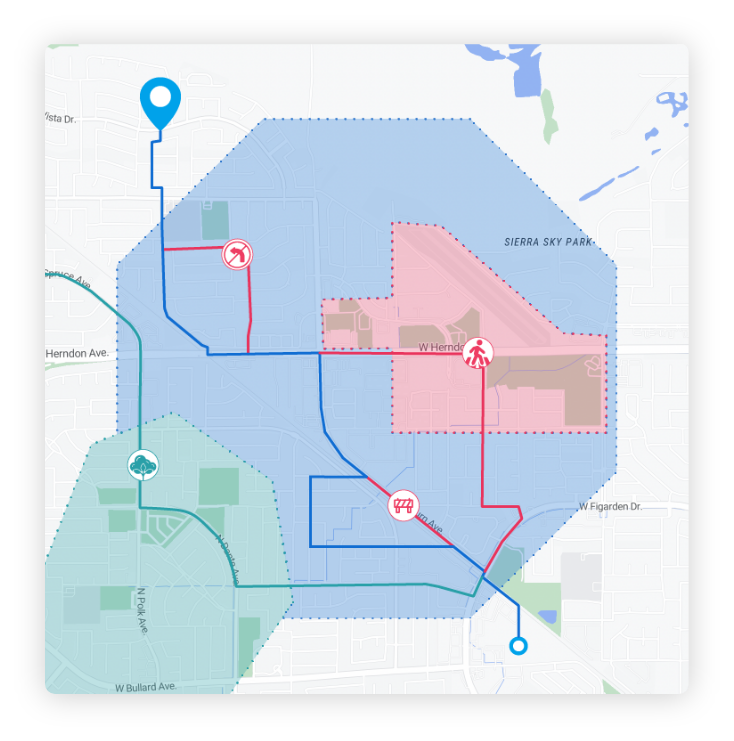
In high-stakes logistics settings, particularly authorized freight, visibility is no longer concerned with the location of assets. It has to do with knowing what their movement is in the present moment. The Live Tracking API by NextBillion.ai takes raw location data and converts it into actionable intelligence to allow businesses to track, analyze, and act on the behavior of assets in real-time.
Live Tracking provides a complex system to control and track vehicles, drivers, agents, and users, and gives them a constant understanding of their location, position, and activity. More significantly, it allows event-based monitoring, in which significant events, such as reaching a task site or passing a border, will automatically create alerts. This marks a shift from passive tracking to active operational awareness.
NextBillion.ai’s Live Tracking API is designed as an operational nervous system for modern fleets. Using its existing capabilities, logistics teams will be able to:
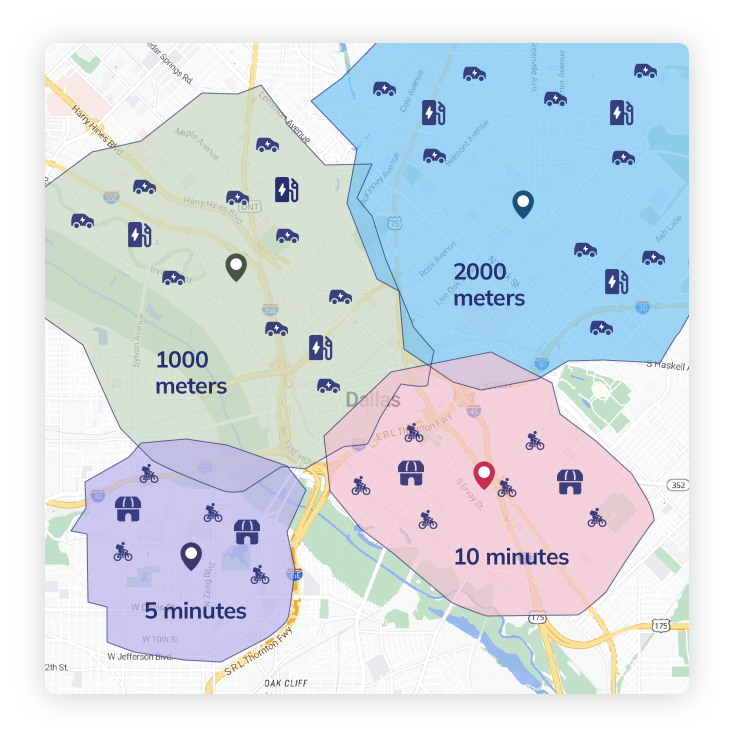
One of the main foundations of real-time progress alerts is geofencing, which can be used to draw virtual fences around areas of operational interest.
With the NextBillion.ai Geofence API, teams may create their own geographic areas, e.g., task locations, yards, depots, or authorized corridors, and combine them with Live Tracking to identify when assets:
These geofences form digital copies of authorized routes and task points in the allowed freight operations, so that all movements are in accordance with the expectations of compliance.
To bring real-time progress alerts to life, Live Tracking combines assets, devices, geofences, and monitors into a cohesive flow. Here’s how it comes together.
An asset represents the entity you want to track, such as a driver, vehicle, or field agent.
When creating an asset:
Once created, the API returns an asset ID, the digital anchor for all future tracking and alerts.
Conceptually, this step is about turning a physical actor into a first-class digital entity within your system.
To make the asset “come alive,” bind a GPS-enabled device that streams real-time location and telemetry data.
This device:
When binding succeeds, the asset becomes a living signal in your operational map.
Next, define the spatial intelligence of your system.
Using a polygon geofence, you specify:
Best practices ensure that polygons:
Once created, the API returns a geofence ID, the spatial trigger point for future events.
Here, geography becomes logic.
Monitors define what behavior matters.
To create a monitor:
This step binds who (asset) with where (geofence) and what (activity), creating the rule that transforms movement into meaning.
Monitors are, in essence, your digital supervisors.
Events are only valuable if they reach the systems that can act on them.
Live Tracking uses webhooks to push event data in real time to your applications: TMS, dashboards, control towers, or alerting systems.
To configure:
A successful “Ok” response confirms that your system is now ready to receive live event intelligence.
This step connects your tracking layer to your decision layer.
Finally, as location updates stream in, whether from real GPS devices or test uploads, the system evaluates each ping against monitor rules.
When the asset’s first location enters the defined geofence:
At that moment, a physical action in the real world becomes a digital signal in your operation, triggering awareness, response, and control.
This is where real-time progress alerts truly begin.

The logistics business is gradually abandoning the reactive system, where the manager is notified too late when the driver has already missed a turn or breached a permit, and is entering an emerging paradigm which is called Predictive Deviation.
Risk in this new model is expected to happen in advance of its occurrence, driven by Artificial Intelligence (AI) and Machine Learning (ML). As opposed to merely reporting failure, systems will be taught to identify early signs of trouble and will direct the drivers out of errors before they occur. The future of logistics management is not about responding faster, but about failing less often.
This evolution marks the shift from traditional geofencing to what can be called predictive navigation. In modern systems, an alert is generated when a vehicle passes a digital boundary, helpful but necessarily late. Artificial intelligence-based applications will go a step further and constantly use real-time information like driver activity, speed trends, lane position, previous areas with hotspots where people miss turns, and current traffic.
The system will take the initiative when there are minor signals that indicate that a deviation may occur. One of the drivers may hear a voice saying something such as, you are 500 yards to a permitted turn, keep on the right. In this future, alerts no longer exist in the form of digital scoldings. They now exist in the form of a co-pilot in the cab, which will help the driver navigate through the complexity.
Multi-constraint AI optimization will be the actual breakthrough in the case of permitted freight. Legal routes are controlled by a fine network of regulations, bridge heights, axle weights, hazmat, time of day, local infrastructure, etc. The AI engines of tomorrow will be able to consume complete state road networks, live DOT feeds, and real-time incident information and provide the compliant routes in a matter of seconds.
When a bridge on the approved route is blocked, the system is not going to simply alert a dispatcher. It will suggest alternative permit-safe routes, start processes of requesting emergency permits, and immediately send the new route to the dashboard of the driver. Routing will be made a living and dynamic process, a process that is in continuous negotiation between regulation and reality.
At the same time, machine learning will unlock deeper insights through driver and route risk profiling. Through the analysis of thousands of historical journeys, AI will determine which exchanges most often result in the separation of the escort, where narrow turning radii create recurring problems, or which drivers are more likely to have difficulties in this or that situation.
In the long run, such intelligence will enable logistics managers to allocate their most experienced drivers to the most difficult moves, eliminate high-risk corridors wherever feasible, and devise specific training initiatives. Risk, which has previously been handled by intuition and experience, is measurable and predictable, which minimizes the incidences and decreases the total insurance exposure.
Looking even further ahead, Vehicle-to-Infrastructure (V2I) integration will push predictive deviation beyond the truck itself. In intelligent cities, intelligent road signs, traffic systems, and bridge sensors will be able to communicate with heavy-haul vehicles. If telematics indicate that a truck is drifting toward a weight-sensitive bridge, the infrastructure can trigger warnings directly on the vehicle’s heads-up display.
The road is not merely a part of the traffic in this interconnected ecosystem, but it is a part of safety and compliance. It leads to a self-correcting logistics network wherein wrong directions are detected before they are followed.
The bottom line is clear: in the intricate world of sanctioned freight, there is no margin for error. Real-time deviation alerts are no longer operational luxuries; they are essential safeguards for cargo, infrastructure, drivers, and the carrier’s financial and legal standing. These systems transform uncertainty into control by eliminating the distance between the dynamic quality of the road and the fixed form of permits. The possibility to monitor, alert, and correct in real time will continue to be the gold standard of specialized logistics, as AI-powered foresight and infrastructure connectivity determine the future of transport.
NextBillion.ai Progress Alert System is a precision-focused, API first platform that removes guesswork in the heavy haul compliance of logistics leaders willing to eliminate it. NextBillion.ai allows fleets to deal with complexity with confidence and scale by integrating permit-specific constraints, including height, weight, and hazmat constraints, directly into routing and alerting intelligence.
Contact us today to have a free demo and take the next step on predictive, compliant, and resilient logistics operations.
Real-time deviation alerts monitor live vehicle movement against approved permit routes and instantly notify teams when a deviation occurs.
They convert route compliance from post-trip reporting into live operational control.
Since even small route deviations may result in permit violation, damage to infrastructure, fines, delays, or safety accidents. Thus, deviation alerts serve as an early warning system of high-risk, controlled movements.
They identify off-route movement, time window violation, and unauthorized stops early enough to take corrective action before violations are imposed. This leaves a traceable electronic record which will aid audits and inspections.
These systems rely on GPS tracking, geofencing, telematics, AI analytics, and integrations with TMS and permit platforms.
Together, they form a closed-loop monitoring and response mechanism.
Yes. They reduce fines and insurance risks as well as operational disruptions by eliminating permit violations, reroutes, and incidents. They also enhance the accuracy of ETA and customer confidence in regulated freight.
Bhavisha Bhatia is a Computer Science graduate with a passion for writing technical blogs that make complex technical concepts engaging and easy to understand. She is intrigued by the technological developments shaping the course of the world and the beautiful nature around us.