



Warehouse Glossary: Key Terms and Common Acronyms

Warehouse Glossary: Key Terms and Common Acronyms Explained

Published: December 12, 2025

Warehouse management involves complex procedures. There are multiple departments to handle the goods transit, and thus, it is essential for the staff members from different hierarchies to understand and respond accurately to the instructions or process updates. 

Recently, I got the chance to visit a logistics company’s warehouse located in Atlanta, Georgia. I noticed the background voices, which were some quick conversations in various sections. 

“Rachel, can you re-slot the A-class SKUs near the cross-dock and cut the travel time with zone picking?” 

“Check the WMS; it’s not tracking the HU hierarchy and is causing issues at pack-out.”

“Sign off QA on the pallet configs and finalize the load plan.”

“The 3PL’s yard management won’t gate-in any trailers without a valid BOL.”

We at NextBillion.ai create AI-powered mapping and routing solutions and understand the criticality of these acronyms for logistics businesses. Whether it is estimating the travel time, optimizing pick paths, or designing APIs for warehouse layouts, the warehouse glossary becomes the key.

Read through the blog post to get a clear understanding of the key terms and acronyms from the warehouse glossary. Let’s first understand the significance of the warehouse glossary terms for shipment firms.

Why Does Warehouse Glossary Matter with AI Routing Capacity?

Warehouse glossary isn’t a coded language, but the logistics-specific terms and acronyms are common in conversation among the employees of carrier storage centers. The vocabulary guide helps in quick and efficient message transfer without the need of emphasizing language structures.
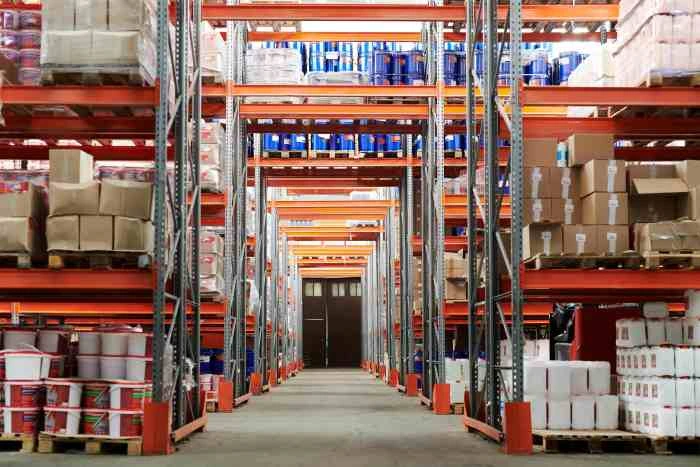
warehouse glossary
The enhanced competition in the transport business necessitates the use of advanced resources, skills, and tactics. Technological integration of AI-powered automation systems requires standardized parameters to generate concise analysis and reports that convey clarity in information. 

For example, beverage delivery businesses are prominently affected by weak routing and warehouse management, which often causes late deliveries, stock perishability, overtime, and fatigue of staff. 

There are different use cases that reasonably define the relevance of staying aware of the warehouse glossaries.

Intercommunication: A prominent aspect is the alignment of warehouse and transport teams to enhance quick and intelligent communication and ensure on-time deliveries. 

Terms like “pick wave,” “dock schedule,” and “ASN” are linked with “dispatch time” or “route lock time.”

Integration of Tools: To explain the integrations between the route optimization API, WMS, and TMS, the managers can use the diagrams and use the acronyms, which are interlinked to the glossary sections.

Quick Configuration: AI route planners are calibrated on the preset parameters of warehouse settings defined through these acronyms. Perfectly defined warehouse glossaries reduce mapping errors, bad assumptions, or re-routing by AI route planners.

Trust Building: Glossaries help the clients to understand the critical points in the contract and thereby build trust in the company’s commitments.

Improved Routing: The warehouse glossary helps the AI system to learn and enhance its routing capacity. 

For example, the order fill rate, OTIF, dock-to-stock, etc., are predefined terms for the route optimization API that hold historical data and KPIs, and a continuous flow of data in the same format regularly updates the tool to improve its reliability.

Training purposes: Onboarding of new managers and staff calls for initial training sessions. The warehouse and logistics glossary eases the process without impacting the workflow of the department. It enables passing of information without a glitch. 

For example, when a subordinate talks about last-mile, cross-docking, or delivery windows, the person can readily relate to the context of information.

Clarity in documentation: The same goes with integrating advanced technology into the system, where warehousing rules remove any possible confusion in the documentation process.

User-friendly Tool Interaction: The warehouse glossaries make the dashboard design easier for configuration and readable for the users. While the data management becomes fast and accurate, it also delivers the intended information.

The warehouse glossary abbreviations typically ensure that humans and the routing system speak the same language when planning, picking, and delivering the orders.

Read: What it takes to create an in-house delivery system in 2025?

Common Warehouse Glossary Terms for Logistics Support

The globally recognized warehouse glossary carries a vast list of terminologies, and it can be segregated into niche-specific business segments. Some shipment firms also add short acronyms on the dashboard to signify efforts in key services.

I have attached here the most important warehouse glossary terms that are essential for employees to understand and operate effectively for efficient output.

1. SKU: 

Stock Keeping Unit, or SKU, is the unique alphanumeric code assigned to each product in the warehouse. It is the fundamental unit of identification at different levels of logistics operations. 

Why it matters: 

  • It is relevant for carrier companies to track the packages in the inventory and process their movement on the transit routes.

  • The coded digits can explain the package’s current location in the warehouse and make it feasible for completing the loading and unloading process.

  • These codes are listed in the inventory reports, pickup and drop-off instructions, and delivery documents.

  • SKU also represents product details or signifies a similar set of items on the rack.

  • It helps the warehouse staff in optimizing product storage and planning efficient shipments.

2. WMS: 

A warehouse management system, or WMS, undertakes the centralized administration of the logistics business. It manages the complete lifecycle of the packages from receiving the orders to picking, packing, storage, and final delivery.

Why it matters:

  • It keeps track of inventory quantities and delivery status. Transporters can depend on the system for managing product shipment plans.

  • It automates package receiving, storage, picking, and loading procedures.

  • It shares the data with the routing solution to keep the trucks and product in sync.

  • WMS also ensures efficient freight management on the most suitable delivery vehicle.

stock inventory at the warehouse

3. BOL: 

A bill of lading, or BOL, is the legal paperwork issued by the delivery agent to the shipper after receiving the delivery orders/goods. The document authenticates the connection between warehouse operations, logistics, and the transport department.

Why it matters:

  • BOL ensures the commitment of the carriers towards fulfilling the delivery conditions.

  • Hence, it is also the record of terms and conditions under which the delivery job gets completed.

  • It is also the declaration of the category, quantity, and current condition of the package to be transferred from the origin to the destination.

  • In many cases, the BOL becomes the ownership agreement for the limited period of the delivery timeline and supports trade finance.

  • It also helps in verifying the delivered goods at the destination. Details like shipment ID, number of pallets, weight, etc. are essential for matching information of goods at the origin and destination.

  • It is also verified at customs clearance, proof of shipment, and resolution of damage.

4. FIFO:

First In, First Out, or FIFO, is actually the fundamental philosophy of the logistics industry’s warehouses. It simply means to prefer dispatching packages that have been on the racks for a longer time than other orders on the list.

Why it matters:

  • The purpose of FIFO is to ensure that delivery packages should be kept waiting for delivery for longer periods of time, which ultimately offends the customers. 

  • Implementation of FIFO at the warehouse operations is a critical task. While the storage system designs with dynamic scheduling help in modifying the load optimization process, the barcode labeling also automates the delivery plans by tracking the delivery schedules in real-time.

  • Overall, the FIFO system mechanism ensures that the delivery schedules will be maintained or otherwise won’t let the package stay in the vicinity without a valid reason. 

Read: What You Should Know Before Starting a Grocery Delivery Business?

5. LIFO:

Last In, First Out, or LIFO, is the opposite phenomenon of FIFO, which applies the principle that the newest or latest entry in the stock item gets picked up first for delivery.

Why it matters:

  • Usually after unloading the stock from the inbound delivery, the pallets get hold of the last pack lifted from the truck, and that’s where the LIFO concept gets applied.

  • If expiry date of the products is not a major concern, the transport companies prefer picking the product packages that are placed at the front row. It keeps the job more efficient. 

6. LTL:

Less Than Truckload, or LTL, is related to the size of the load and signifies leftover space on the delivery vehicle after loading the package on it. In other words, LTL shows incomplete occupancy of the freight option to be utilized in transportation.

Why it matters:

  • With LTL details, the logistics companies can choose a different vehicle for transportation of the package.

  • The companies can also use the empty space to fit-in other pending deliveries on the route. Perfect load and route optimization are essential for managing the deliveries efficiently.

  • Palletized goods that cannot be packed as parcels come under the LTL category, as they cannot be sent with other packages due to the chances of getting damaged.

  • These goods are consolidated with other deliveries and are mostly delivered in sequence of hubs by calculating the LTL of arriving trucks at these centers.  

  • It reduces the transportation charges, improves the truck’s space utilization, and serves small or mid-sized businesses to reach the global market without spending much on the delivery process.

7. 3PL:

Third-party Logistics, or 3PL, is the term used to describe the partnered firm or third-party company with the main transporter organization. It is purposefully done to outsource the work of warehousing fulfillment or transportation in non-reachable regions.

Why it matters:

  • These third-party logistics firms manage inventory space, picking and packing, delivery schedules, and returns on behalf of the client company.

  • 3PLs take the liberty to store or manage the orders through different warehouse centers and initiate processes as per the delivery schedules.

  • They can easily manage the LTL situations and transport goods through efficient modes as required.

8. ASN:

Advanced Shipping Notice, or ASN, is a message or notification sent electronically by the sender to the receiving party or customer. It provides the customary details about the package details before it actually arrives at the destination.

Why it matters:

  • It can be sent by the warehouse management, 3PL, supplier, or factory to its customers or clients.

  • The ASN can be in the form of a textual message that contains information such as purchase order, package arrival date, SKU, product type, quantity, payment details, weight, size, etc.

  • This information helps warehouse and transportation planners to pre-plan dock schedules, labor availability, or space. Then it verifies the actual delivery against the ASN and catches discrepancies early in the supply chain.

9. Barcode:

A barcode is a symbol or pattern of parallel lines, which are 2D codes and are unique identifiers for products or packages enclosed with it. These codes are readable through specific devices.

Why it matters:

  • Barcode stickers are stuck to the delivery packages when the shipper makes the order at the logistics company’s pickup center. 

  • It creates an identification of the item on the WMS, which becomes a medium of showcasing all the relative information to the product, such as, delivery location, package category, schedules, etc.

  • With barcode scanner machines, the logistics staff can retrieve the delivery information after scanning the shipping labels with barcode tags. 

  • So when the package is transferred between hub stations on the route, it automatically confirms ASNs, updates inventory, or assigns storage locations.

  • It is helpful in maintaining the stock records at the warehouse racks. The WMS gets real-time information after scanning the bin or rack during putaway, picking, cycle counts, and moves.

  • Barcodes also enable end-to-end tracking of shipments across the hubs, cross docks, and final delivery while verifying orders and handing off. 

10. Batch Picking:

Batch picking is the process of picking multiple orders through one or more carriers in a single trip. So the pickers don’t go for individual customers and instead manage a bunch of orders through optimized routes.

Why it matters:

  • Under the batch picking method, the system groups together the orders on the basis of close locations from a central point or in a region, the product type, or any other similarity.

  • The delivery operators can extract all the SKUs at once and sort them for shipping.
  • It increases work efficiency for high volumes of orders and is thus preferred by 3PLs and logistics service companies.

  • WMS supports fast and accurate delivery management and generates optimized pick lists.

11. Cross Docking:

Cross Docking is an effective goods transportation method for logistics companies, which involves a lesser stake in the warehouses. This method enables instantly transferring the goods to the outbound delivery vehicles after unloading from the inbound shipments.

Why it matters:

  • The cross-docking procedure serves the purpose of speeding up the delivery and avoiding the package’s resting time at the warehouse.

  • The procedure often involves breaking down the entire shipment into smaller and location-specific units.

  • It saves storage costs and improves customer satisfaction level.

12. Cycle Count:

Cycle Count is part of warehouse auditing procedures. In this format, the team makes consistent efforts to regularly audit a small portion of the tasks, instead of leaving the job for the month’s end.

Why it matters:

  • By following the principle of cycle count, the warehouse administrators continuously rectify the discrepancies in the record and ensure to keep them accurate.

  • Continuous auditing and updating in the data makes sure that the product showing available on the ERP or WMS records is actually available for purchase and can be delivered without backorders or missed shipments.

13. Discrete Picking:

Discrete picking is the idea of completing the orders of one customer at a time. The delivery persons are allotted the next client only after they finish with the first one.

Why it matters:

  • In this format, the delivery agents get the list of items ordered by the customer, and they pick it from the warehouse to complete the delivery.

  • It is most suitable in low-to-medium-sized operations or otherwise for customized, valuable, and special handling items.

  • Minimizes the risk of wrong deliveries.

14. Line:

In the context of warehouse and logistics, lines are single entries of orders for a list of items ordered by the customer. 

Why it matters:

  • The system provides 2 lines to orders with 2 SKUs, even if each line has many units.

  • Lines help in managing picking, packing, and labor work.

  • Each line represents a different product on the customer order and thus helps in building shipment loads.

15. PO:

Purchase Order, or PO, is the formal document authorized by the buyer to the product manufacturer, seller, or supplier. It contains the information about the item ordered, its quantity, and the price paid in advance or in full.

Why it matters:

  • PO is the formal guarantee for the supplier to ship the package, as the buyer cannot deny accepting it.

  • It is also important for the logistics warehouses, as the documents legalize the ownership and responsibility of the items in the storage.

  • POs are essential for the verification of delivered goods during inbound and outbound at the warehouse.

  • These are also accredited in the ASNs, bill of lading, packing lists, and invoices. 

16. Putaway:

“Putaway” is the logistical term for placing the package in its allocated space in the warehouse after receiving it from the shipper. It involves a sequence of steps from receiving and verifying the goods against the PO or ASN to properly storing them on the designated racks or empty spaces.

Why it matters:
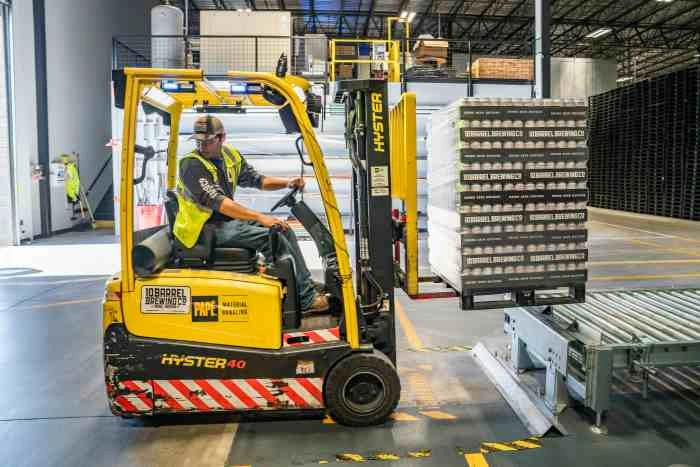
  • It converts an inbound delivery into usable and trackable inventory.

  • Putaway redirects the received packages to an optimal location in the warehouse, after considering all the necessary factors like product type, size, volume, temperature constraints, delivery schedule, etc.

  • It efficiently utilizes the storage space and flow at the dock, which results in scheduled order fulfillment.

putaway of stock inventory

17. Replenishment:

Replenishment is the concept of keeping the picking deck ready with the next package waiting for the delivery schedule. So this involves moving the waiting-in-line goods to the picking station at the right time.

Why it matters:

  • The delivery agents or pickers do not have to wait unnecessarily for the arrival of goods, and thus, they can complete the deliveries as per the optimized route plans.

  • With replenishment, the inventory levels are balanced to fill the empty space or create space for the next inbound orders.

18. Zone Picking:

Zone Picking is the process of creating virtual sections in the warehouse and assigning specific pickup racks or regions separately to each delivery agent and their respective team members. The pickers are only permitted to accept packages from their assigned zones and fulfil orders to any area that belongs to their allocated zone.

Why it matters:

  • This working format helps in minimizing the pickup time and order congestion. 

  • It allows consolidating packages from all the zones into complete orders ready for loading and shipping.

19. Backhaul:

The returning of delivery vehicles to the hub after completing the task is termed “backhaul.” Its purpose is to utilize the return trip of the vehicle with empty space to carry the load of another task or serve any other that requires transport from the nearest point of delivery.

Why it matters:

  • By applying the backhaul idea, the transit companies can generate extra revenue from transporting goods back and forth.

  • It saves the cost of returning an empty truck and serves the goods waiting for pickup by charging them at a lower price.

20. DIM:

Dimensional weight, or DIM, is the overall weight or volumetric weight of the package according to the occupied space. It is measured using the carrier-specific formula through the length, breadth, and height of the box.

Why it matters:

  • The DIM helps in managing the load on the vehicles and warehouse racks.

  • The higher of the DIM and the actual weight of the package is used for billing because the cargos have limited weight-carrying capacity and space for goods.

  • The DIM rating encourages the shippers and packers to efficiently use the compact packaging and avoid air space.

  • DIM justifies the space and weight of the parcel and thus helps the carriers to get optimum charges for the transport.

21. ETA and ETD:

Estimated Time of Arrival and Estimated Time of Departure, commonly known as ETA and ETD, are the time calculations about the delivery vehicle’s movement. It is an approximate time at which the inbound delivery can reach the warehouse and the time at which the vehicle leaves from the warehouse after carrying the load.

Why it matters:

  • ETD is relevant for the staff to know when the loading process is completed and the vehicle has left the premises. Its accuracy ensures that the package was staged on time.

  • ETA alerts the system to be ready with the required labor for unloading the stock, creating empty space, and arranging the required machinery. Warehouses can plan putaway, replenishment, and picking on time.

  • ETA and ETD are the starting and end points for route optimization, which encloses the time windows, delivery schedules, and optimum task allotment.

  • Advanced routing tools provide real-time analysis on the basis of changes in ETAs and ETDs due to traffic, road closures, and other anonymous reasons. This helps in the timely arrangement of resources at the warehouse.

22. SLA: 

Service Level Agreement, or SLA, as the name suggests, is the formal contract between the warehouse service provider, such as a 3PL or logistics company, and the client opting for the storage and transportation service. 

Why it matters:

  • This document is essential, as it contains all the conditions regarding the service offered and agreed upon, such as storage space, picking, packing, transit, and returns. 

  • It includes metrics like on-time delivery, cut-off time, transit time, response time, etc.

23. Lead Time:

Lead Time is the calculation of the total time taken for order completion. It begins with the moment the customer places an order and culminates with the final delivery at their location.

Why it matters:

  • It helps in estimating the average stock required in the warehouse and when the staff should manage replenishment procedures.

  • The dispatchers can track the timings and improvise on the optimized route plans to meet the customer’s expectations and the SLA commitments.

24. Back Order:

Back Orders are part of the items ordered by the customer but could not be delivered with them due to their unavailability at the warehouse when the scheduled order was getting dispatched for delivery. It is to ensure that while half the order was completed, the pending delivery will be shortly done sometime and is not closed.

Why it matters:

  • Back orders create split and delayed deliveries with alterations in route plans for further trips carrying extra load to complete the pending deliveries.

  • It is an indication that demands for the product are increasing, and the dispatchers should communicate realistic dates or lead times to the buyers.

25. Drop Trailer:

Drop Trailers are attached cargo trailers with the delivery tractor or other vehicle carrying it. These trailers are left in the vicinity of the client, who can do the unloading anytime at their convenience. 

Why it matters:

  • The idea is beneficial for the drivers, who do not have to wait for the unloading process. The trailer is taken back to the warehouse on the next suitable schedule when the company sends one of the available drivers, usually returning along this route.

  • The outbound centers get the flexibility to load or unload at their convenience or use the trailers as short-term overflow storage space. And keep the docks and drivers focused on fast turnarounds. 

26. Dispatch:

Dispatch goods are those that are packed and ready to be loaded for their next scheduled movement, whether to the next stoppage hub or to the final destination. It is the link between the warehouse and transportation operations.

Why it matters:

  • It confirms that the order is complete and assigned to the delivery route on a specific transport vehicle.

  • This also includes the confirmation of weight, quantity, and verification of required compliances against the order.

  • Dispatch goods are matched with the routes, suitable vehicles, experienced drivers, and necessary time windows. 

27. Gaylord Box:

Gaylord Box is basically a large container, which is made of plastic or cardboard in variable shapes and sizes, and can fit properly into the transit vans. They are directly attached to the pallets and are designed to hold high volumes of small-sized loose goods for easy transportation. 

Why it matters:

  • These boxes are used for keeping loose machinery parts, mixed inventory, or other small items that do not generally have boxed packaging for convenient load management.

  • Boxing all such items into one large unit makes them easy to handle via pallet jacks and forklifts onto the transport carriers or while shifting inside the warehouse.

  • Packaging in small boxes is costly, while Gaylord boxes are cost-effective, stackable, and reusable.

28. Bin Location:

Bin Location signifies the exact placement of the package in the warehouse. It is the address of the actual shelf where the item sits and aims to identify the rack that holds the shelf or aisle and is placed in a particular zone.

Why it matters:

  • The precise address of the SKU helps in direct putaway, picking and packing, cycle count, and replenishment, which is essential for the loaders to find the package quickly and dispatch it.

  • It improves the trailer’s space utilization, order accuracy, speed, and reduced delivery delays.

29. Slotting:

Slotting is the act of planning and keeping the packages in the warehouse space so that the storage space gets properly utilized. This ensures that the product is easy to reach and locate by the staff for quick dispatch.

Why it matters:

  • The product unloading staff can be instructed to keep the desired SKUs at certain locations depending upon their demand. High-priority items can be placed near the packing stations and dispatch docks for quick route departures.

  • SKUs from a certain group can serve order accuracy, with more predictable loading and improved ETAs/ETDs.

30. Kitting:

Kitting is creating small or large combined kits by grouping specific items in a packaged SKU. Now this kit becomes a single product for picking and shipping.

Why it matters:

  • Picking a single unit saves loading/unloading time of the workers in the warehouse and speeds up task fulfillment.

  • Kitting simplifies packing, labeling, and load building for outbound shipments.

How are Warehouse Glossary Terms Relevant for Routing Solutions?

Routing tools are multi-functional, as, along with finding the best route between the origin and the destination, they also work to manage load, vehicles, inventory, and staff and fulfill many such purposes.

Warehouse management and transportation are interconnected in their operational activities. The warehouse is run by a trained logistics staff, who manage inventory, finance, technical support, etc., while the experienced drivers, delivery agents, loaders, and other workers manage the transport section.

But since they are governed under a single system, knowledge of a common communication vocabulary is critical for the entire team. Logistics companies use automation tools to efficiently manage the tasks and enhance work capacity. 

It is thus essential for the software solution providers to incorporate standard warehouse glossary terms and acronyms while designing the parameters of the tool. The warehouse and technical experts must align on these terms when writing requirements, designing APIs, or mapping processes.

How does NextBillion.ai apply the warehouse glossary in generating instructions?

NextBillion route optimization API puts a strong emphasis on the warehouse terms and acronyms on the API dashboard. When the entire hierarchy of staff members are aware of the glossary, they quickly interpret the automated instructions, whether about SKU, pick path, put away, or slotting.

We reference the standard concepts of warehouse terminology, such as depots, SLAs, zone picking, time windows, etc., for both inbound and outbound schedules. It is helpful in analyzing optimization parameters, routing rules, and KPI metrics analysis.

NextBillion route optimization API allows configuring different constraints and objectives like load capacity per vehicle, maximum stoppages, priority deliveries, or any other parameters that relate to the WMS system. 
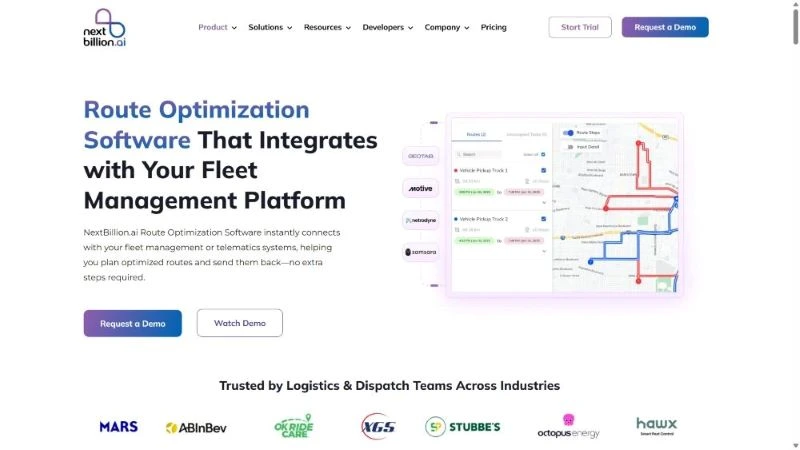
NextBillion route optimization software

From organizations to employees, serving intercontinental deliveries can easily be regulated with NextBillion.ai’s terminology on the dashboard, route plans, loading instructions, or warehouse management system. 

We incubate globally established warehouse glossary terms and acronyms in our documentation system to reduce training time for new onboarding staff at different levels.

They can read the instructions easily, discuss technical integration, or analyze route outputs with the operations, IT, and vendor team without any miscommunications.

How do NextBillion.ai’s routing, distance matrix, and indoor mapping actually work?

The optimization constraints of NextBillion’s routing tool are modeled by coinciding the core terms and acronyms from the warehouse glossary. It describes the movement and storage of packages inside the facility and maps the routes for delivery. 

Some common warehouse terms that matter for the NextBillion AI routing and mapping platform on the basis of logistics and transport operations.

Physical structure and locations

How are the packages managed inside the inventory space?

Warehouse or Distribution Center (DC): NextBillion considers the warehouse or DCs as a node on the delivery route network, and the graphical representation shows multi-depot and last-mile routing.

Aisle or Rack or Bin Location or Shelf: NextBillion digitizes these points or segments to customize the indoor maps to generate accurate pick paths and moving time.

Inventory and product identity

How are the packages uniquely identified inside a warehouse?

SKU: NextBillion has a system to feed the SKU into categories such as fragile, hazardous, heavy, etc., along with specific slotting constraints.

Safety Stock: NextBillion’s task automation effectively routes the picking of extra stock in the warehouse to manage replenishments.

Inbound processes

What are the work management procedures inside the warehouse?

Put away: NextBillion’s AI-powered technology ensures optimized pathways for goods movements inside the premises of the warehouse. It minimizes the walkway and task timings to dock for the final bin while securing the product’s safety.

Slotting: NextBillion.ai’s slotting suggestions shape optimized paths that broadly reduce the travelling distance.

Outbound concepts

How are the delivery orders arranged?

Order Picking: Our tool optimizes the picking tasks with indoor routing, distance matrix, and sequence optimization.

Batching or Cluster Picking: NextBillion’s clustering tool uses multi-stop routing for pick tasks and reduces travelling distance and time.

Wave or Zone Picking: NextBillion.ai incorporates zone constraints while generating pick sequences and work assignments.
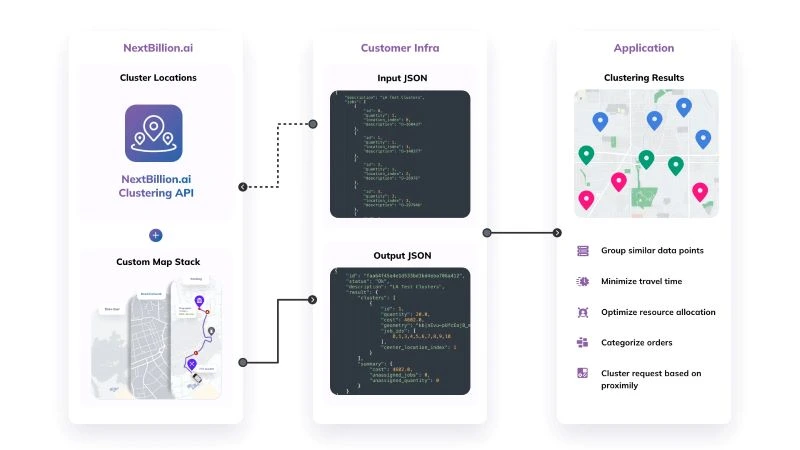
NextBillion clustering api

Order accuracy

Backorder: NextBillion workflows manage backorders to manage vehicle capacity and future routing plans to complete the order.

Cycle Counting: Accurate cycle counts improve route optimization tasks and task reassignment.

System Integration

WMS: NextBillion API integrates with the WMS to customize tasks, locations, and required constraints for optimized routes and sequences.

Depot or Hub: NextBillion connects the depots with the warehouse logic to resolve last-mile routing issues across the delivery routes.

Read: How to reduce last-mile delivery costs using AI technology?

How does NextBillion.ai improve pick efficiency?

Below are a few situations observed in warehouses of logistics companies and how NextBillion.ai tackles these issues to improve workflow.

Issue 1. 

Pickers at the warehouse walk long distances with paper lists, which causes overtime and tiredness. 

Solution:

You need to import the warehouse floorplan on the NextBillion.ai platform, which will convert the racks and staging areas into a map graph. The distance matrix tool, along with route optimization, will generate the shortest pick paths of batchwise orders while following other regulations. Similar to last-mile routing, it will create internal warehouse paths like road networks.

The pickers get turn-by-turn instructions on their Android devices via the NextBillion mobile application. This reduces the total walking distance of the workers by up upto 40% while more than 20% improvement in order lines.
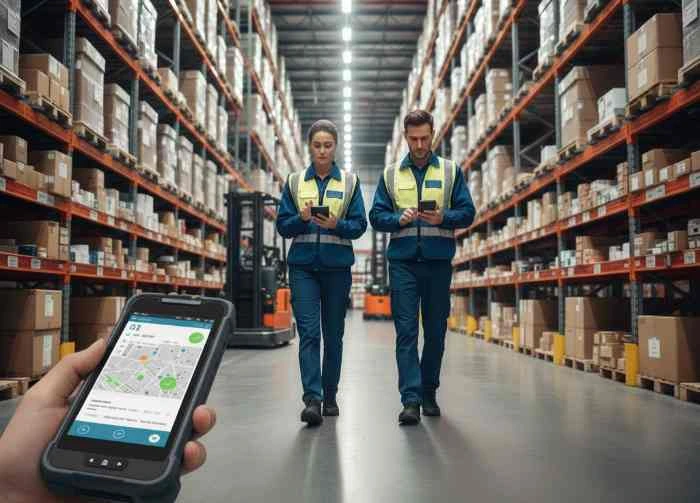
warehouse routing instruction on Android device

Issue 2.

WMS can assign tasks but is unable to sequence them. Local supervisors manage 5-6 warehouses with different floor plans.

Solution:

Integration of WMS with the NextBillion route optimization tool will address the problem of inbound path sequencing for every pick list in each warehouse. You may also add constraints like equipment type, no-go aisles, or time windows before validating the route plans. 

The optimized sequencing facility opens the door to creating feasible layouts for the warehouse, instead of keeping it identical to the others. New onboarding staff can start immediately by following the instructions and do not need to memorize the floor plan.
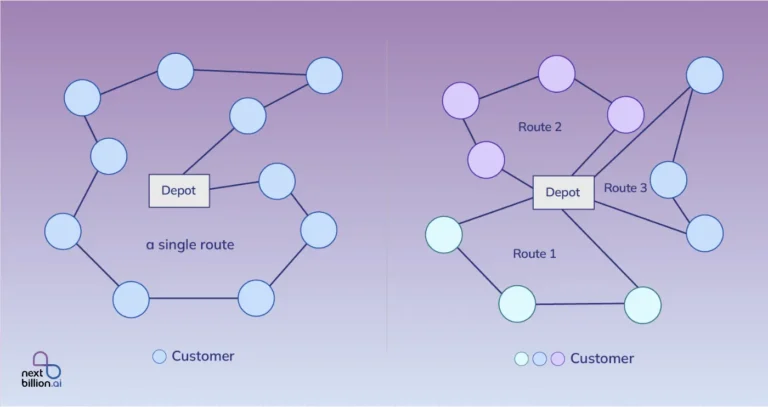

Final Words

The terminologies used in the warehouse glossary are standard to all the major and globally operated logistics and transportation organizations. They manage multiple hub stations and pickup centers that work in collaboration to manage the deliveries on time. 

Business expansion and large volumes of goods require clear and concise communication to streamline the workforce. Common language is beneficial in designing processes, evaluating tools, and collaborating across operations and technology.  

NextBillion API has precisely incorporated the logistics processes, storage entities, and routing constraints in its route optimization engine to provide realistic warehouse management solutions.

About Author

Nitesh Malviya

Nitesh Malviya is a research-oriented professional with a background in Computer Science & Engineering. He served for 7 years as a software consultant and wrote passively in the tech niche before becoming a full-time technical writer.

Ready to get started?

Table of Contents