


Route Optimization API
Optimize routing, task allocation and dispatch
Distance Matrix API
Calculate accurate ETAs, distances and directions
Directions API
Compute routes between two locations
Navigation API & SDK
Turn by Turn Instructions for Drivers & Technicians
Route Optimization Software
Plan optimized routes with 50+ Constraints
Product Demos
See NextBillion.ai APIs & SDKs In action
AI Route Optimization
Learns from Your Fleet’s Past Performance
Platform Overview
Learn about how Nextbillion.ai's platform is designed
Road Editor App
Private Routing Preferences For Custom Routing
On-Premise Deployments
Take Full Control of Your Maps and Routing
About Us
Our story, vision
and mission
Contact Us
Reach out to us for any product- or media-related queries
Write to us at

Table of Contents
What if the biggest threat to your compliance operation isn’t regulations, but a simple PDF file? For years, PDF permits have been treated as a necessary digital upgrade from paper. However, in the contemporary freight and logistics processes, they have turned into silent bottlenecks. PDFs, which are not connected to real-time systems, are static and unstructured. This makes compliance a manual, error-prone process, incapable of keeping up with dynamic routes, evolving regulations, and the pace that is now required of the industry. What looks like “digitization” is often just paper in disguise, creating hidden risk, delays, and operational drag across fleets.
Read on to discover why PDF permits are a compliance nightmare and what smarter, system-driven alternatives look like for modern logistics.

Paper-heavy bureaucracy was replaced by PDF-based permitting as a step on the way to the digital workflow promise. In the early days, permits were written or typed documents that were physically stamped and submitted to the agencies. These paper forms were merely turned into digital images as scanners, email, and document management systems became common. The format changed, but the process did not. Regulators and agencies defaulted to PDFs because they preserved visual fidelity. They were simple to create and functioned on any device without the use of any specialized computer applications.
A PDF appeared official, could be printed when required, and replicated the familiarity of paper. For organizations that were pressured to go digital without necessarily re-engineering the existing processes, PDFs were the least harmful option. This gave the perception of digitization without actual digital transformation. Although the use of PDF eliminated paperwork, it could not turn permits into computable, interoperable, and intelligent. The process was still basically manual, as it was still the human who read, interpreted, retyped, and verified information.
Freight compliance is not a simple matter of having the right document. It is an ever-changing decision-making process influenced by rules, routes, vehicles, time, and real-world situations. In order to know why the static documents fail here, it is useful to see what compliance actually is. Here is why compliance workflows are inherently complex:

Here are the main reasons why PDFs turn into a bottleneck and risk multiplier in the operations of modern compliance:
PDFs are not meant to be computed, but to be presented. Their immobile designs combine text, tables, and graphics in a manner inaccessible to the machine in a reliable manner.
OCR is also able to extract text, but it is difficult with inconsistent formats, scans, handwriting, and complicated layouts, which results in errors and missing fields. Layers of preprocessing, validation, and human cleanup are needed to convert PDFs to structured, usable data. Hence, data extraction is expensive, brittle, and slow.
A PDF does not have the power to impose regulations, place restrictions, or identify inconsistencies. It does not know whether the axle weights are more than the bridge rating or if the route is breaking a time window.
The entire reasoning is in the head of the human reader. This manual interpretation brings about variability, error due to fatigue, and misreading of conditions, exceptions, or fine print. Compliance becomes as strong as the least attentive moment.
A PDF captures compliance at a single point in time. When a bridge is closed, a route is altered, or a detour is necessitated by the weather, the PDF is not adjusted. The permit becomes outdated as soon as the conditions change, but the operations are carried on as though the permit were still valid. This freezes compliance in the past while reality moves on.
The PDFs reside in e-mails, shared drives, portals, or local folders. They are detached from the systems that actually run the business. They are not inherently linked to TMS platforms, routing engines, telematics, or dispatch tools. The teams find themselves duplicating information between systems, forming silos in which compliance knowledge is distributed unevenly and inconsistently in planning, permits, and execution.
While PDFs can be stored, they do not capture the reasoning behind decisions. There is no structured record of which rules were applied, what alternatives were considered, or why a route was approved. Organizations are able to present the document when there is a need to audit, dispute, or incident, but not the decision logic. Compliance degrades into document archiving rather than accountable, explainable governance.
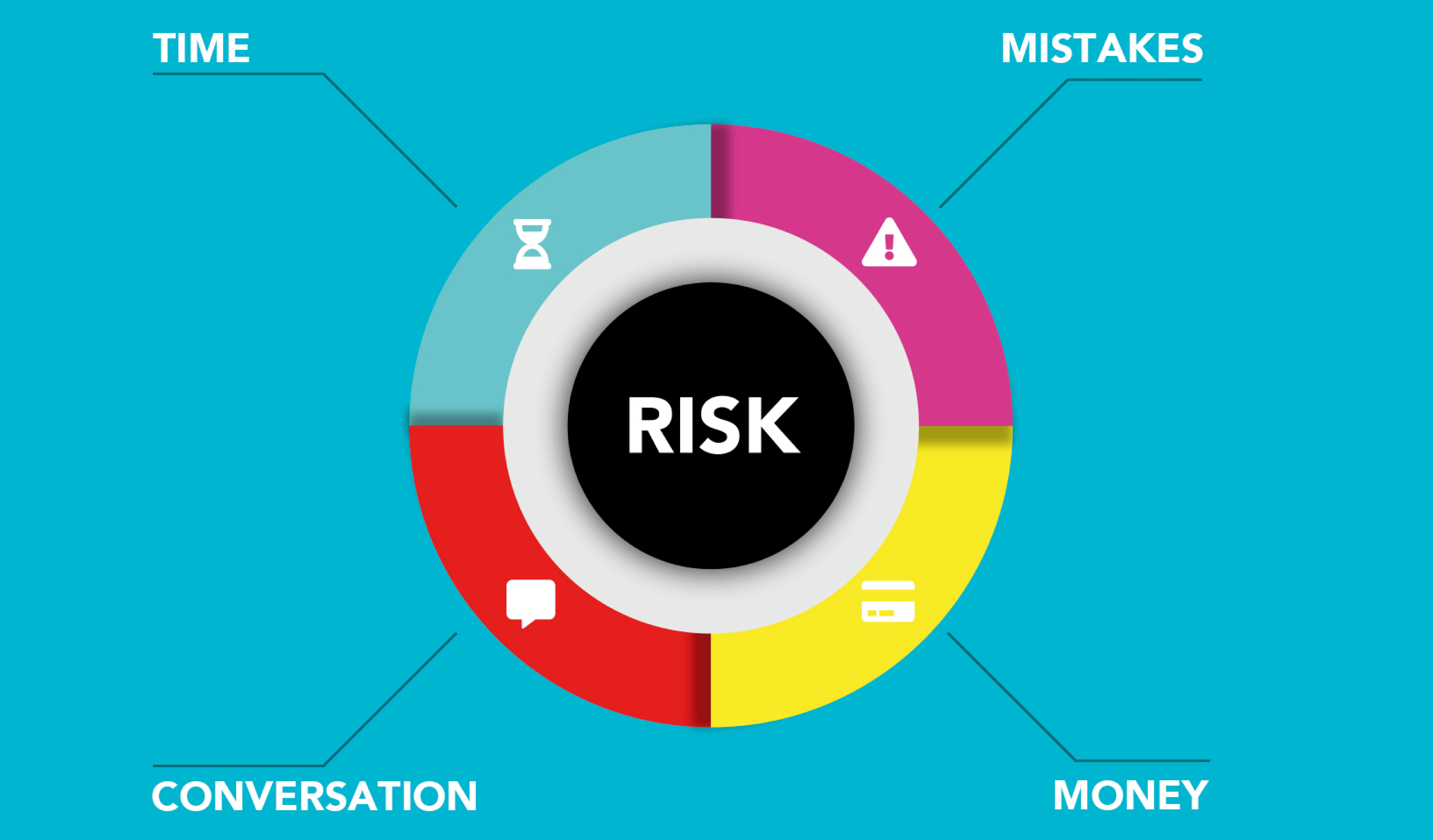
The following are the main operational risks that are caused by using PDF permits in freight compliance:
PDF permits turn compliance into a reading and interpretation exercise rather than a controlled system process. Critical constraints like height limits, axle groupings, route exceptions, or time windows are hidden in dense text and hodgepodge formats. Narrative language needs to be converted into operational choices, and this brings ambiguity at each stage.
Thus, compliance ceases to be rule-based. It becomes perception-based, in which the results are determined by how every individual interprets the document instead of the existence of a common system of truth.
Every PDF friction in the workflow. It has to be received, opened, and scanned in order to determine its relevance, extract key fields, and disseminate it to others. Once the permits are altered, the cycle starts afresh. This puts in place a latency layer between operational execution and regulatory approval. Thus, PDFs add the cost of time as an invisible cost of compliance, and speed and responsiveness are structurally impossible at scale.
Since PDFs are not part of routing systems, there is no native method of checking whether a planned route is disobedient to permit conditions. Conformity is a post-designing test, not part of the design. This is a reversal of the logic of safety: rather than creating routes that are safety-compliant by design, teams hope that routes happen to align with what the PDF allows.
When compliance relies on human interpretation, the entire risk of human error is transferred to the organization. Lapses in footnote or misinterpretation of an exception can result in violation, bridge strikes, or road closure. This leads to a trend of operational vulnerability as the business takes in regulatory fines, insurance risk, and scrutiny. Conceptually, PDFs externalize risk from systems into people.
PDF workflows reward experience over systems. The people who “know how to read permits” become the safety net. This forms knowledge silos, burnout, and brittleness. The system becomes poor when those people are not available. Compliance is a social phenomenon that is glued by memory and heroics, and not a designed capacity that is part of infrastructure.

Below are the hidden costs that PDF-based workflows quietly impose on compliance operations:
PDFs always involve micro-operations: file saving, renaming, email attachment, folder uploading, and receipt confirmation. None of this work enhances the quality of compliance, but it takes up team attention. PDFs turn knowledge work into file management, draining cognitive bandwidth from higher-value decisions.
To make PDFs usable, organizations invest in OCR tools and manual re-entry. This generates a second workflow whose only aim is to reverse the restrictions of the first. Mistakes during extraction create downstream exceptions, which need further human intervention. The organization spends money twice to acquire the PDF and to get out of the same.
The PDFs get outdated immediately when the routes, loads, or schedules are altered. The teams have to pursue new versions, compare documents, and unify differences. This generates compliance churn, whereby time is used to ensure that things are in line instead of making better decisions. PDFs freeze compliance in time while operations continue to move.
New employees must learn dozens of document formats, regulatory styles, and unwritten interpretation rules. They learn how to read paperwork instead of learning systems. This prolongs the ramp-up period and risk in the initial stages. Conceptually, PDFs raise the cognitive barrier to entry, making compliance expertise harder to scale.
Compliance can never be completely automated in organizations as long as it is entrenched in documents. It cannot be fully automated in terms of validation, routing, or risk assessment. Each PDF is a choice that was not systematized. In principle, PDFs entrap compliance into an analog mindset, preventing the shift from labor-driven scale to intelligence-driven scale.

The next in line are the underlying causes of why PDF fundamentally hinders automation and AI in compliance processes:
AI systems need structured and clean repeatable inputs. By nature, PDFs are layout-based and human-centric, but not data-centric. They combine headers and tables, footnotes and narrative text in a manner that varies from agency to agency.
PDFs transform compliance into an unstructured perception issue as opposed to a data issue. Teams need to make guesses about the structure, infer meaning, and normalize ambiguity before AI is able to reason. This noise pollutes the pipeline where it starts, and there can never be as much reliability in any downstream automation as there can be.
LLMs are capable of summarizing and interpreting permit language, but compliance requires exactness. A model that understands a limit is not the same as a system that enforces it. LLMs are advisory without being based on structured rules and routing logic. They might be correct, but they do not ensure the respect of all the axle groups, bridges, or time windows. LLMs add intelligence to language, but PDFs deny the structure it needs to act safely.
PDFs are static artifacts. They are not aware of whether a trip has been successful or failed, and whether it has been in violation of a condition or not. Results exist in different systems or in the memories of people. Since permits and execution outcomes are not linked in a structured way, systems are unable to learn.
AI models cannot be improved, and rules cannot be developed through evidence. PDFs break the learning loop, freezing compliance in a state where every shipment is treated as if the past never happened.
Compliance should be rethought as a computational property within the freight processes, in which systems are aware of the legality as they are aware of costs or times. To substitute document-centric workflows, compliance should be redesigned as a computational property.
Modern compliance begins with permits expressed as structured data, not narrative text. All clearances, axle limits, escort regulations, time windows, and route segments are typed fields that have semantics. This enables the systems to check the constraints, match them with vehicle profiles, and automatically reason about conflicts. This way permits stop being human-readable artifacts and becoming executable representations of regulatory intent.
APIs transform permits into streams of data as opposed to payloads stored in inboxes. By routing engines, TMS platforms, and dispatch systems, API-first exchange permits may be issued, updated, revoked, and queried in real time. Thus, compliance is no longer fetch and forward, but a subscribe and synchronize process, which brings all systems to the same source of living truth.
The next-generation permits do not simply indicate permissions. They encode logic. They are aware of the bridges, corridors, time windows, and vehicle features that they use. Combined with routing intelligence, permits are constraint layers which actively construct feasible paths. This fuses regulatory logic with geospatial logic, making compliance inseparable from route computation itself.
In dynamic networks, legality decays. Construction, weather, traffic incidents, and load changes can invalidate a route minutes after dispatch. Continuous validation considers compliance as a real-time control loop, with each change of material re-initiating feasibility checks. In principle, compliance is an execution property, not an execution certificate that is granted at planning time.
When compliance is embedded inside TMS, dispatch, and navigation systems, it becomes invisible but omnipresent. Planners cannot create infeasible loads. Drivers are not able to go along the illegal routes. Exceptions come into the picture automatically. Safety is not a parallel process anymore, but rather an inherent behavior of the operating system of freight.
This transformation is not about replacing PDFs with prettier screens. It is about redesigning compliance as an interconnected, system-native capability:
Treating permits as data enables canonical schemas that define what a permit is across jurisdictions and platforms. Field-level validation is used to verify constraints are complete and internally consistent, whereas versioning maintains lineage as permits change. This forms a compliance substrate, a common language, which both machines and organizations can depend on.
Digital compliance recognizes that legality exists in time. Permits must adapt to route changes, detours, enforcement updates, and revocations. Systems reconcile planned intent with live reality continuously. Conceptually, compliance becomes a process of alignment between regulation, routing, and execution, rather than a static artifact stored for reference.
The compliance process is a closed-loop process when TMS, routing engines, telematics, and permit platforms interact. Routes tell the feasibility of permits. Permits constrain routing. Telematics check implementation. Learning models are fed by outcomes. This is cybernetic compliance: sensing, reasoning, acting, and correcting in real time.
Here is a comparison capturing how PDF-based permitting falls short across operational, technical, and strategic dimensions, and what modern digital compliance demands instead:
Dimension | PDF Permits | Digital Compliance Systems |
Format | Unstructured documents | Structured, machine-readable data |
System Readiness | Human-readable only | Machine-computable by default |
Validation | Manual interpretation | Automated rule-based checks |
Real-Time Awareness | Static snapshot | Continuous live validation |
Routing Integration | Detached from routing | Embedded in constraint-aware routing |
Workflow Fit | Lives in emails and folders | Native inside TMS and dispatch |
Error Risk | High, human-driven | Low, system-enforced |
Speed | Slow, handoff-heavy | Instant via APIs |
Auditability | Stores files | Stores decisions and logic |
Scalability | Breaks at scale | Scales through automation |
AI Readiness | Noisy, ambiguous inputs | Clean, structured inputs |
Change Handling | Requires new PDFs | Event-driven revalidation |
Role of Documents | Source of truth | Rendered views only |
Compliance Model | After-the-fact inspection | By-design enforcement |
Outcome | Reactive and brittle | Proactive and resilient |

The next generation of freight compliance will resemble intelligent infrastructure more than administrative paperwork:
Regulators will reveal the authorization of services, not portals. The fleets will request, update, and cancel permits programmatically in the process of route planning. Compliance will become a common digital utility, just like traffic information or weather reports.
AI will precisely interpret overlapping rules across jurisdictions, detect subtle conflicts, and propose compliant alternatives when constraints collide. Instead of substituting regulation, AI implements it on a large scale. This makes regulatory complexity a navigable decision space rather than a manual burden, conceptually.
Live digital replicas of infrastructure, restrictions, and traffic will allow permits and routes to be simulated before wheels turn. Fleets will be able to check the viability in actual circumstances, not in presumed circumstances. This enables preemptive compliance, catching failures in silico before they become incidents on the road.
All events, including the new closure, reroute, load change, or enforcement update, will result in automated system-wide revalidation. The compliance is responsive rather than based on planned reviews.
Audit-ready evidence will be automatically generated in the form of execution logs, route histories, constraint checks, and decision trails. Systems will create verifiable compliance narratives out of data rather than storing PDFs.
Transitioning away from PDFs is not a rip-and-replace exercise. It is a staged evolution from document workflows to system-native compliance, where each step builds capability while reducing operational risk.
The first step is to acknowledge reality: PDFs will not disappear overnight. The legacy permits can be converted into structured fields with the help of extraction layers based on OCR, NLP, and human-in-the-loop review.
Although not perfect, this provides an intermediate solution that transforms documents into data and reveals where ambiguity, inconsistency, and loss of meaning take place. This stage brings into the limelight the hidden price of documentation and provides the impetus towards genuine digitization.
Once data is flowing, fleets must define what a permit means in machine terms. Canonical schemas reflect constraints like corridors, axle limits, escorts, time windows, and exceptions in standardized fields having clear semantics. This is the foundation of interoperability between jurisdictions and vendors. This is conceptually defined as the development of a common language of compliance that can be reasoned over by systems, not merely stored.
Permit data must immediately shape routing and dispatch decisions. By embedding permit checks into TMS workflows and route computation, infeasible plans are blocked at creation rather than discovered in the field.
The concept of early integration means that compliance is not an audit operation but a design constraint of operations. Thus, the concept of legality is a first-class input to planning, along with cost and service.
NextBillion.ai enables fleets and logistics platforms to move from document-driven permitting to system-native compliance by providing the geospatial and routing intelligence required to make permits executable, not just readable. It provides the layer of spatial truth in which the regulatory intent, infrastructure reality, and the operational decisions are brought together into a single layer of computation.
The NextBillion.ai routing engines are commercial truck-specific. The height, weight, axle configuration, hazmat type, and bridge clearances are not added to route calculation as filters, but are directly incorporated into the calculation. The platform does not create routes and test their feasibility. It only creates physically and legally viable paths at the beginning. Thus, routing is turned into a compliance engine. Each road is an indication of possibility. Safety and legality are no longer properties that are to be checked, but properties of the algorithm itself.
At the core of NextBillion.ai is high-fidelity map data enriched with truck-relevant information, including vertical clearances, load ratings, turn restrictions, lane geometry, tolls, and restricted corridors. This converts maps into operational safety layers representing engineering and regulatory reality as simple connectivity graphs.
Geography is a dynamic system of restriction and not merely a passive setting. The road network itself turns into a living compliance model where every segment knows what it can safely support.
NextBillion.ai offers API-first routing, distance matrices, geocoding, and map matching solutions, which are directly integrated with TMS, dispatch, and compliance solutions. Rather than inter-team and system exchange of PDFs, structured route and constraint intelligence flow is automatically exchanged across workflows.
Compliance is a service rather than a file. Intelligence is streamed, synchronized, and shared in real time, eliminating the latency and fragmentation of document-based handoffs.
NextBillion.ai allows permits to be represented as dynamically compiled rules. The permits can influence the route generation, justify the feasibility, and be re-assessed in a continuous manner as the conditions change. Routes made by fleets are loop-based and not extraneous.
Ideally, permits cease to be fixed approvals and become dynamic constraints that are involved in computations. Legality is no longer something you carry. It is something the system continuously enforces.
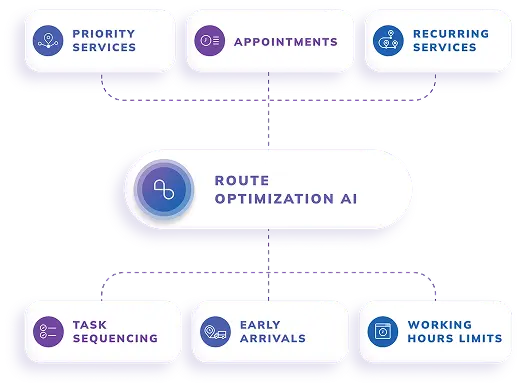
AI models require precise spatial context to make risk reasoning, and LLMs require grounded information to justify decisions. Both are anchored by NextBillion.ai, which offers the spatial truth layer. Route outputs, constraint attributes, and map context drive AI-based route optimization and power LLM explanations, such as why a route is restricted or what condition triggered a violation.
NextBillion.ai is used to do real-time and constraint-aware rerouting as traffic, closures, weather, or enforcement updates are received. Fleets are able to automatically come up with safe alternatives that do not violate vehicle and permit limits during execution. This forms living paths which are responsive to reality rather than presupposing fixed conditions.
NextBillion.ai cloud-native architecture supports high-throughput and low-latency inter-region and inter-fleet routing. Be it testing of routes at load creation, very large what-if simulation, or control of real-time operation, the platform scales without compromising accuracy. This renders compliance intelligence operational at enterprise scale, making safety and legality as fast and dependable as core logistics functions.
Maps become a compliance infrastructure with NextBillion.ai. Fleets are able to create viable paths, implement permit logic, check in real time, and track performance on one geospatial platform.
This allows them to be moved off PDF-based compliance onto digital, API-based systems where legality is not derived from documents, but is calculated, enforced, and audited by design.
Ready to move beyond PDFs and turn your routes into compliance engines? Learn how NextBillion.ai can assist you in creating digital-first freight compliance, consisting of constraint-aware routing and geospatial intelligence. Discuss with our team and get started.
PDFs solved a distribution problem, not a compliance problem. They facilitated the sharing of permits, but not reasoning about them, verifying them, or modifying them to suit change. In the modern freight business, the existence of fixed documents is a dynamic risk, which fixes the legality at a certain point, but the network is constantly changing.
Compliance in the real sense needs structured data, executable logic, and running intelligence at routing and execution speed. The replacement of PDFs is not an upgrade of tools. It forms the basis of safe, scalable automation, where legality is calculated, applied, and demonstrated by systems, and not derived out of files.
PDF permits are static, unstructured documents that require manual interpretation and data re-entry.
They cannot adapt to route changes, real-time conditions, or automated validation.
PDFs rely on human reading instead of system enforcement, increasing the chance of errors and misinterpretation.
This exposes fleets to violations, fines, delays, and safety incidents.
No. PDF permits are detached from routing engines, TMS platforms, and telematics systems.
This forces teams to manage compliance outside operational workflows.
AI systems require structured, machine-readable data, which PDFs do not provide reliably.
As a result, compliance logic cannot be enforced or learned at scale.
Digital, API-driven permit data integrated directly into routing and dispatch systems replaces PDFs.
This enables real-time validation, audit-ready traceability, and compliance by design.
Bhavisha Bhatia is a Computer Science graduate with a passion for writing technical blogs that make complex technical concepts engaging and easy to understand. She is intrigued by the technological developments shaping the course of the world and the beautiful nature around us.