


Table of Contents
Indoor navigation has not evolved as fast as outdoor routing. While outdoor systems use advanced algorithms, traffic data, and optimization models, most indoor solutions still rely on basic navigation and static paths.
Modern enterprises operate inside complex indoor environments such as warehouses, factories, hospitals, campuses, transport hubs, where movement is frequent, multi-point, and operationally critical. Yet most indoor routing solutions are not designed to handle dynamic conditions, optimized path planning, or AI-driven decision-making at scale.
The partnership between Pointr and NextBillion.ai addresses this gap by introducing an advanced indoor routing architecture that combines high-accuracy indoor positioning with AI-powered route optimization. Together, the platforms enable intelligent, multi-point indoor navigation built for real-world operational complexity.
Below is an overview of how the Pointr–NextBillion.ai partnership powers end-to-end, indoor routing & navigation.
The Challenge: Why Routing & Navigation Break in Indoor Environments
Most navigation systems operate within clear boundaries either indoors or outdoors. They struggle when journeys move between the two. Indoor navigation and outdoor routing are usually handled by separate systems, built on different data models and operating independently.
When a journey moves from the road network into a building entrance, navigation frequently breaks; especially in large, complex environments such as campuses, hospitals, convention centers, and transit terminals.
This disconnect results in:
- Fragmented routes: Guidance loses context at transition points like entrances, exits, parking structures, or campus pathways.
- Manual handoffs: Users are forced to switch between apps or rely on signage and staff directions to complete a single journey.
- Operational inefficiency: Confusion increases delays, missed appointments, and support burden and degrades the overall navigation experience.
And the problem becomes even more pronounced for multi-point journeys, where movement spans buildings, outdoor walkways, pickup/drop-off zones, and multiple destinations.
The Solution: A Unified Indoor Routing Architecture
At the core of the Pointr–NextBillion.ai partnership is a shared routing architecture designed to treat indoor spaces as part of a single, continuous environment rather than separate systems.
- Pointr provides high-accuracy indoor positioning, mapping, and navigation across buildings, campuses, and complex indoor environments.
- NextBillion.ai extends this intelligence outdoors with AI-powered routing, navigation, and ETA computation across road networks.
Together, they form a unified routing graph that spans
- Indoor paths and indoor POIs (rooms, floors, departments)
- Transition zones (entrances, exits, parking structures, drop-off/pickup areas)
- Outdoor road networks (driving + walking segments)
How it works
- Connected nodes: Entrances, exits, drop-off zones, and parking areas are modeled as routing nodes within a unified graph.
- Continuous calculation: Routes are computed end-to-end without switching systems or recomputing paths mid-journey.
- Seamless transitions: Guidance remains continuous as users move across indoor and outdoor environments.
How the Pointr–NextBillion.ai Integration Simplifies Development
Building navigation across indoor and outdoor environments requires integrating multiple systems and managing complex handoffs. The Pointr–NextBillion.ai integration simplifies this by treating indoor and outdoor navigation as a single workflow.
Pointr delivers accurate indoor positioning and navigation, while NextBillion.ai handles outdoor routing, navigation, and ETAs, enabling routes to be calculated as one continuous journey.
For developers, this removes the need to stitch together routing logic or handle transitions manually. Entry points, exits, parking areas, and pickup or drop-off zones are handled within the routing layer, reducing integration effort and maintenance. Teams can focus on building user experiences and scaling applications, rather than managing routing complexity across environments.
Supporting Multi-Point and Multi-Route Journeys
End-to-End Journeys Across Multiple Destinations
Many navigation journeys involve more than a single origin and destination. The Pointr–NextBillion.ai integration enables true multi-point routing by allowing developers to define multiple waypoints within a single route, spanning buildings, unmapped paths, and road networks while maintaining continuous guidance.
Seamless Indoor Route Continuity
Indoor routes, entry-exit points, and transition zones are treated as part of one unified routing graph. Routes do not break at entrances, exits, walkways, or parking areas, eliminating the need for manual handoffs or re-routing as users move between environments.
Unified Waypoints and Simplified Routing Logic
Developers work with a single set of waypoints for indoor locations. Destinations such as rooms, floors, streets, or drop-off zones are resolved through one routing layer, reducing implementation complexity and edge-case handling.
Flexible Routing for Complex Scenarios
The combined platform supports ordered routes, dynamic re-routing, and alternative paths. Routes can adapt to changing conditions without losing context, enabling reliable navigation for complex environments like campuses, transport hubs, healthcare facilities, and operational workflows.
Key Multi-Point Routing Use Cases Enabled by this Integration
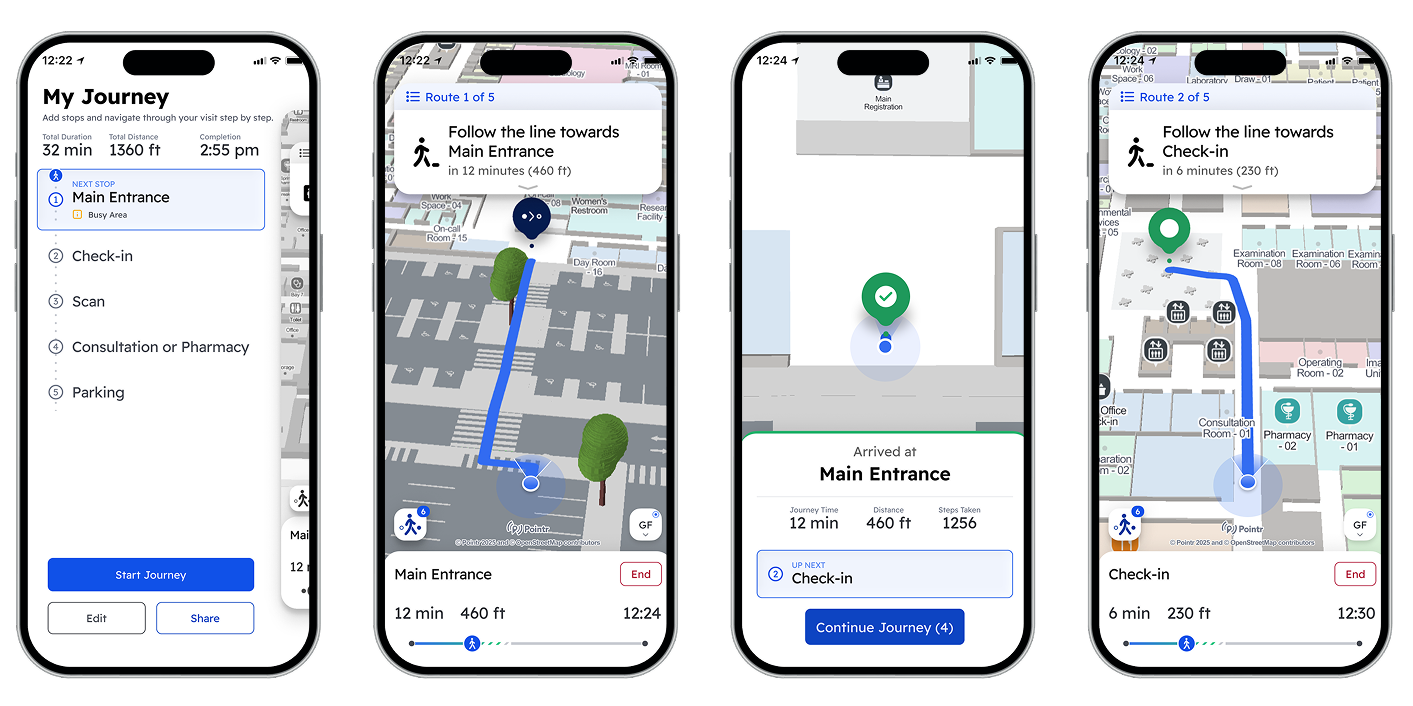
- Healthcare — Patient Journey: Patients can navigate seamlessly from the main entrance to check-in, labs or scans, and consultation or pharmacy, before heading back to parking or the exit using Mark My Car for an easy return.
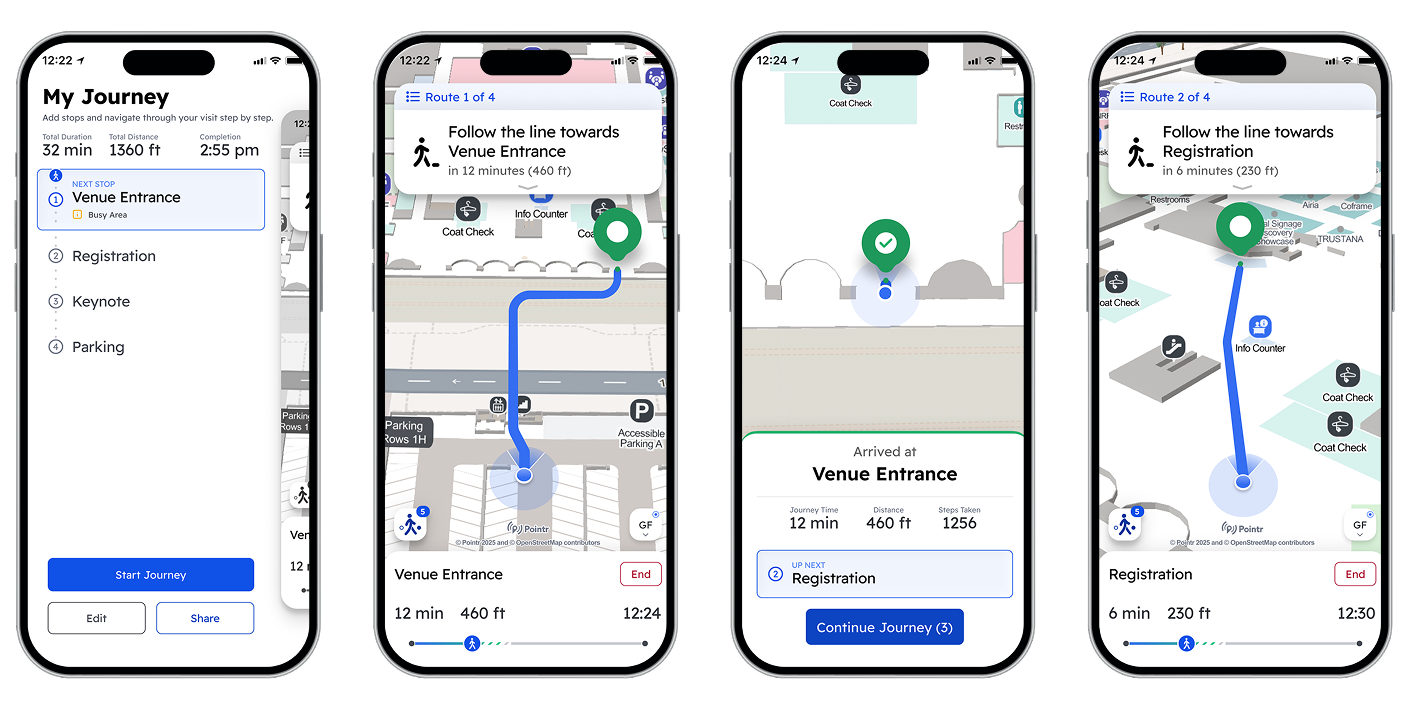
- Event — Attendee Journey: Attendees move smoothly from the venue entrance to registration, then on to sessions or keynotes, and finally back to parking, with Mark My Car helping them leave without confusion.
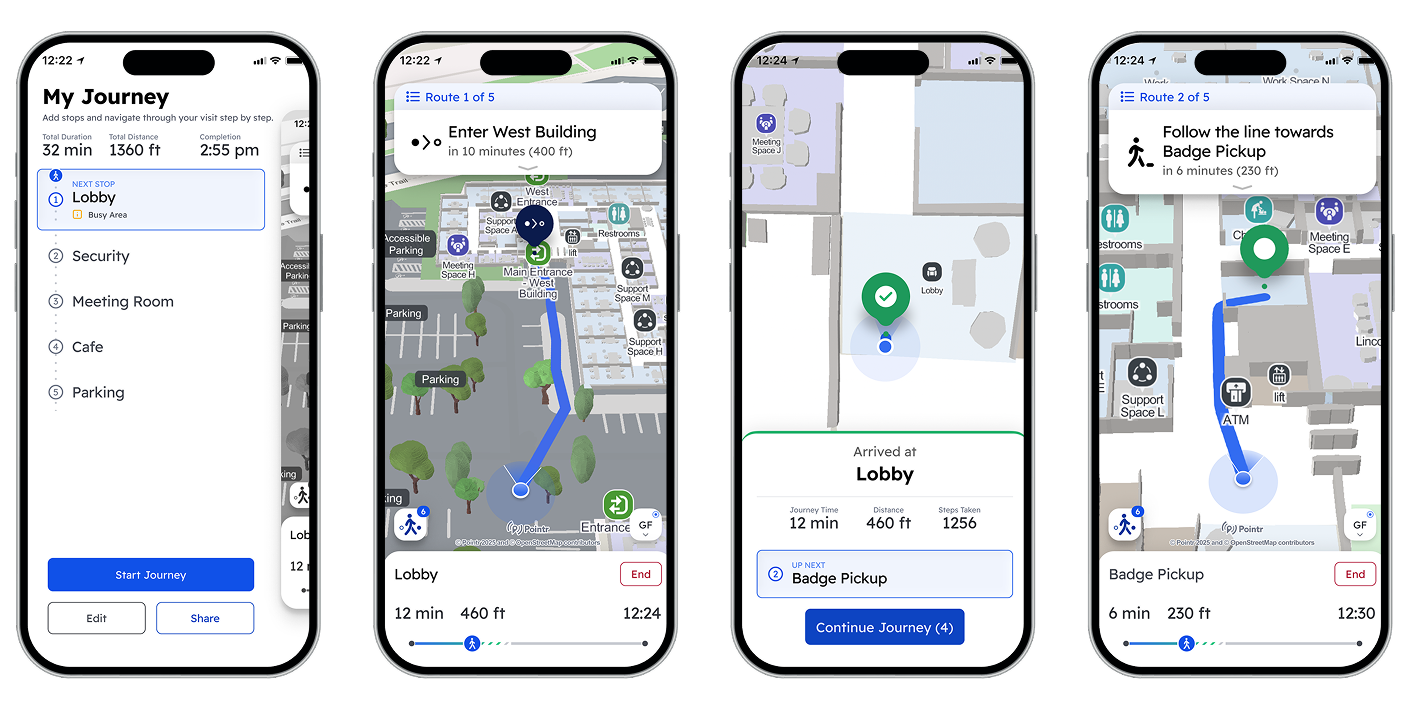
- Workplace — Visitor Journey: Visitors are guided from the lobby through security or badge pickup, to the meeting room, cafe and back to parking at the end of the visit, ensuring a smooth, guided experience throughout.
- Warehouses & Fulfillment Centers: Find the best indoor paths across aisles, zones, and floors to speed up picking and reduce walking time.
- Factories & Manufacturing Plants: Optimize movement across production lines, storage areas, and restricted zones to improve throughput and streamline internal logistics.
- Ports & Large Logistics Hubs: Plan efficient routes across terminals, warehouses, and checkpoints within large indoor and semi-indoor environments.
- Distribution & Cross-Dock Facilities: Optimize routes between inbound docks, sorting areas, and outbound zones to reduce congestion and handling time.
What It Means Going Forward
By integrating Pointr’s indoor positioning with NextBillion.ai’s AI-powered routing and navigation, the partnership removes long-standing friction in indoor route optimization. Developers can plan and execute multi-point journeys through a single, continuous routing layer without managing system handoffs or fragmented logic.
This unified approach enables scalable, reliable navigation across complex environments, from individual buildings to large campuses and urban infrastructure.
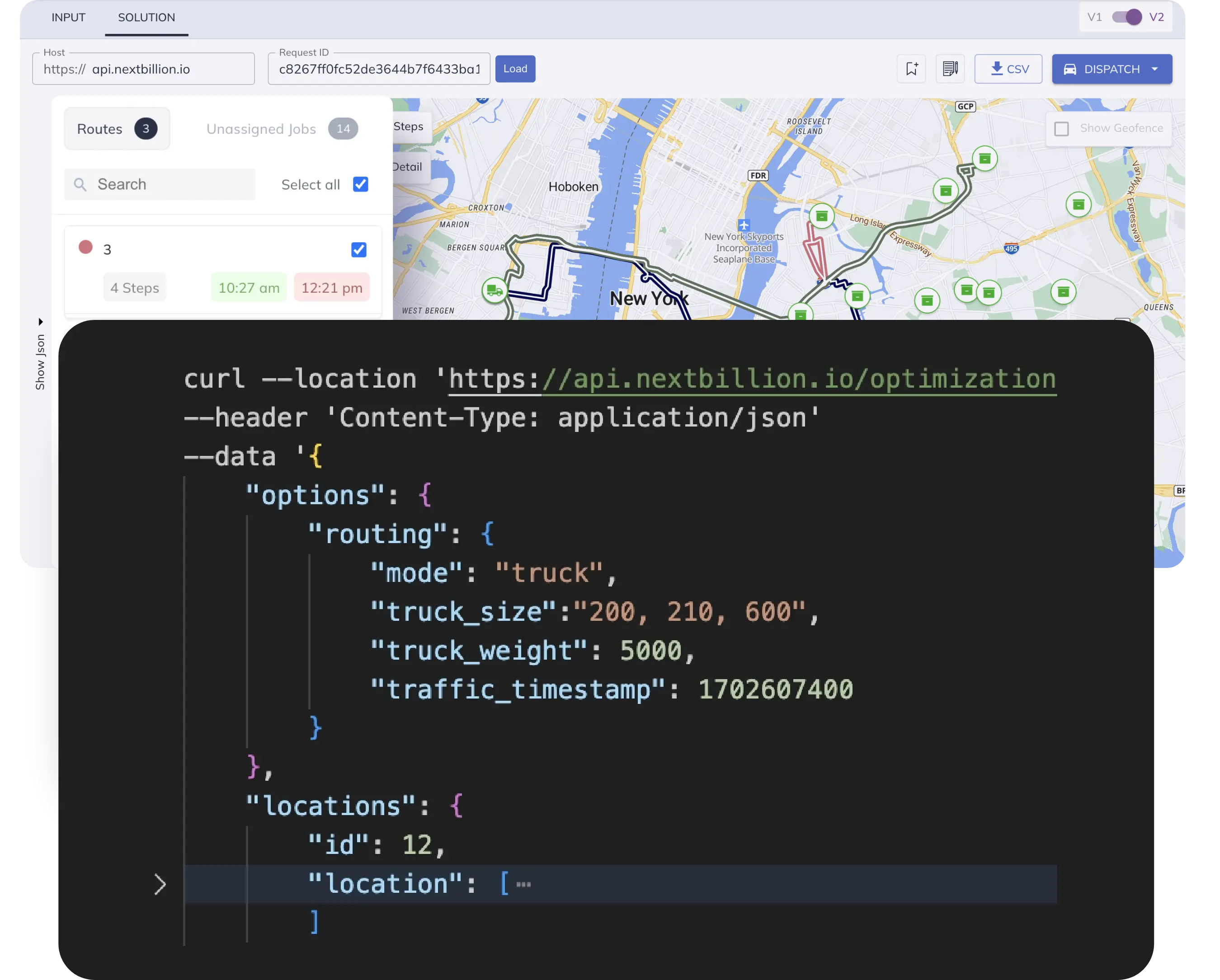
Discover the APIs behind unified indoor routing and start building your own customized navigation plan today!
Ready to get started?
Request a DemoTable of Contents
Subscribe to our Newsletters
Get the best practices for route planning & optimization, delivered to your inbox.
Subscribe