What accuracy does NextBillion.ai's Live Tracking API provide for driver location?
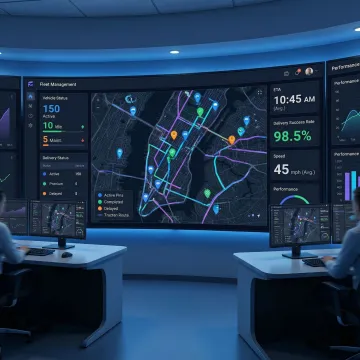
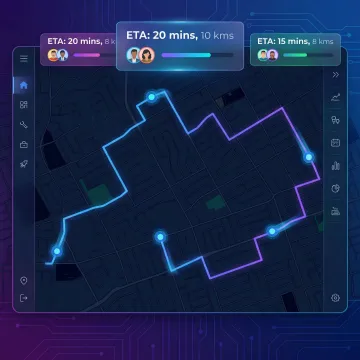
The Live Tracking API tracks vehicles and drivers to up to 1-meter accuracy in real time. This level of positional precision is sufficient for geofence-based automation, proof-of-delivery confirmation, and route adherence monitoring. In low-connectivity zones — rural delivery areas, tunnels, underground docks — the API maintains accurate location history through offline buffering and syncs when connectivity is restored.
How does the platform handle GPS drift and noisy location data from driver devices?
The Snap-to-Road API corrects raw GPS traces by aligning coordinate sequences to actual road segments in the road network. It eliminates common GPS artifacts — positions placed inside buildings, impossible diagonal cuts, parallel-street jumps — and returns road-snapped positions enriched with speed limits, road classification, and curvature data. This ensures downstream mileage reports, compliance records, and behavioral analytics are based on ground truth, not raw GPS approximation.
Can the platform track drivers when there is no mobile connectivity?
Yes. The Live Tracking API buffers location data locally on the driver's device whenever network connectivity drops, then automatically syncs that buffered data once connectivity returns. This matters for rural delivery routes, tunnels, underground docks, and parking structures where cellular signal is unreliable. Fleets get continuous, gap-free tracking records for compliance documentation, mileage calculations, and post-trip analysis, regardless of how patchy connectivity was during the trip.
What types of automated alerts can operations teams configure for driver tracking?
Operations teams can configure event-triggered alerts for vehicle speeding beyond defined thresholds, excessive idling, geofence entry or exit events, unauthorized vehicle movement outside scheduled hours, and route deviation. These alerts enable proactive intervention before incidents escalate into compliance violations, fuel waste, or asset misuse — without requiring manual monitoring of every vehicle in the fleet.
Does the platform support mileage reporting and driver reimbursement automation?
Yes. The Live Tracking API compiles accurate, auditable mileage reports for every trip and driver. When combined with the Snap-to-Road API, raw GPS traces are cleaned and road-aligned to eliminate drift-induced distance errors. The resulting records are suitable for driver expense reimbursement, tax compliance, fleet utilization analysis, and regulatory reporting — and stand up to audit scrutiny without manual verification.
How does real-time driver tracking integrate with route optimization and dispatch?
Live location data from the tracking platform feeds directly into the Route Optimization API for live ETA recalculation as on-road conditions change, the Route Dispatch API for real-time route updates pushed to driver apps, and the Geofencing API for automated boundary event handling. This creates a fully automated, closed-loop operations workflow — from route planning through live monitoring and post-trip analysis — within a single platform.
Which mobile platforms and fleet management systems does the tracking solution integrate with?
The Live Tracking solution ships as a REST API with native SDKs for Android, iOS, and Flutter, so engineering teams can embed tracking directly into driver and dispatcher apps. It integrates with enterprise telematics platforms including Samsara, Geotab, and Motive, plus CRMs like Salesforce and ERPs such as SAP and Microsoft Dynamics 365. Location data flows bidirectionally, so fleets keep using existing dispatch, billing, and reporting systems without standing up parallel tracking infrastructure.
Can the platform produce legally defensible trip records for compliance and audit purposes?
Yes. The Route Reconstruction API rebuilds a complete, timestamped trip history from raw and offline-buffered location data, road-snapped for accuracy. Combined with the Live Tracking API's continuous positional record and configurable event logs (geofence entries, speeding, unauthorized movement), fleets can produce trip records suitable for compliance documentation, dispute resolution, and internal audit review, without relying on manual reconstruction from driver logs or disconnected systems.
What is the best real-time GPS vehicle tracker for a commercial fleet?
For commercial fleets, the best option is typically an API-based platform rather than a standalone consumer tracker, since fleets need location data to flow into dispatch, route optimization, and compliance systems. Key criteria include positional accuracy, offline buffering for low-connectivity areas, configurable alerts for geofence and speeding events, and integration with existing telematics, CRM, or ERP tools already used by the operations team.
Does real-time driver tracking support FMCSA and DOT compliance requirements?
Real-time tracking supports compliance workflows by producing continuous, timestamped location and mileage records that operations teams can use alongside required FMCSA and DOT documentation, such as hours-of-service and driver logs. Road-snapped trip histories and audit-ready mileage reports help substantiate records during inspections or audits. NextBillion.ai's tracking platform does not itself certify compliance; it supplies the underlying location data fleets need to support their own compliance processes.