What is grocery delivery route optimization software?
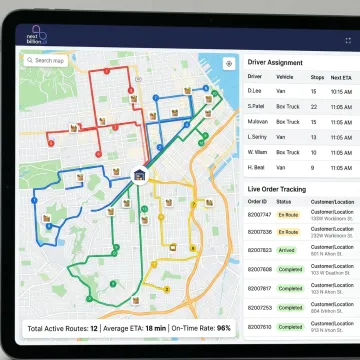
Grocery delivery route optimization software helps operators plan and dispatch the most efficient delivery routes across many orders, drivers, and stores. It accounts for constraints like delivery windows, vehicle capacity, shift times, traffic, and order priority. For grocery teams, it also supports dynamic re-optimization as new orders arrive, helping reduce cost per drop while improving ETA accuracy and on-time performance. Unlike static route planning, this software continuously recalculates as conditions change, whether that is a canceled order, a driver delay, or a new same-day request added after routes are already dispatched.
How does route optimization help grocery delivery operations?
It improves both efficiency and customer experience. Better route sequencing reduces miles driven, fuel use, and idle time, while smarter driver assignment helps more orders get delivered on time. Grocery operators also benefit from tighter control over scheduled windows, same-day fulfillment, and peak-hour demand spikes. The result is lower operating cost, better fleet utilization, and more reliable delivery promises. It also reduces manual dispatcher workload, since routes adjust automatically instead of requiring constant manual reshuffling when orders or driver availability change mid-shift.
Can the software handle same-day and on-demand grocery deliveries?
Yes. NextBillion.ai is designed for same-day, scheduled, and on-demand delivery models. The platform supports real-time driver assignment, live ETA calculation, and dynamic route re-optimization when orders are added mid-shift or conditions change on the road. That makes it well suited for grocery, quick-commerce, and hyperlocal delivery operations where speed, flexibility, and dispatch accuracy are critical.
Does it support multiple stores or depots?
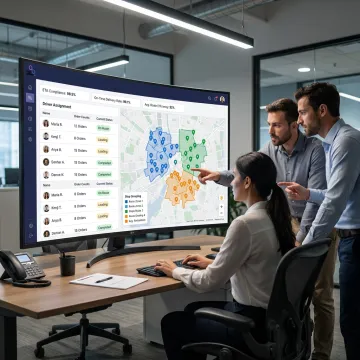
Yes. Multi-depot routing is a core capability. The platform can determine which store or fulfillment point should serve each order, cluster deliveries by depot catchment, and optimize routes within each location’s operating constraints. This is especially useful for grocery brands running dark stores, regional hubs, or store-based fulfillment networks that need to balance workload and maintain fast delivery coverage.
Can I integrate this with my existing grocery delivery platform?
Yes. NextBillion.ai offers APIs, SDKs, and no-code tools that can integrate with existing order management, dispatch, telematics, and fleet systems. Teams can embed route optimization, tracking, navigation, and geofencing into their own applications or workflows. With solutions engineering support and a typical production go-live within one week, integration is designed to be practical for both product and operations teams.
How is pricing structured for grocery delivery teams?
Pricing is available in per-vehicle, per-order, and per-API-call models, with predictable fixed monthly fee options for teams that want to avoid usage volatility. This is especially valuable for grocery operators facing seasonal spikes, promotional surges, or frequent re-optimization. Instead of costs rising unpredictably with every routing call, pricing can align more closely with fleet size or delivery volume.
Does the platform provide live tracking and customer ETAs?
Yes. The platform includes live tracking APIs and customer-facing visibility capabilities so operations teams and end customers can monitor delivery progress in real time. It supports ETA updates, route adherence monitoring, and event-based notifications. For grocery delivery, this helps reduce support inquiries, improve transparency, and give customers more confidence in narrow delivery windows or time-sensitive orders.
Is NextBillion.ai secure and enterprise-ready?
Yes. NextBillion.ai provides a 99.9% uptime SLA and supports cloud-based as well as on-premise deployment. The platform is available through AWS Marketplace, Google Cloud Marketplace, and Azure Marketplace, and it is backed by SOC 2 Type II, GDPR, CCPA, and ISO/IEC 27001:2013 compliance. These capabilities make it suitable for enterprise grocery and logistics operations with strict data handling, uptime, and vendor security review requirements, including multi-region retail chains and grocery brands operating under internal compliance or procurement standards.
How do you optimize grocery delivery routes as order volume grows?
As order volume grows, routing needs to account for more stops per driver, tighter time windows, and more frequent mid-shift changes. NextBillion.ai handles this by re-optimizing routes dynamically rather than relying on a fixed plan built at the start of the day. This lets operators add drivers, shift store assignments, or absorb order spikes without manually rebuilding routes from scratch.
What should I look for in the best software for optimizing grocery delivery route planning?
Look for software that handles real constraints specific to grocery delivery: multiple stores or depots, narrow delivery windows, high stop density, and mid-shift order changes. It should support dynamic re-optimization, not just one-time route planning, along with APIs for integrating into existing order management and dispatch systems, and pricing that scales predictably with order or fleet volume rather than unpredictable per-call charges.